 Ezra Klein on the problems with government-sponsored housing agencies:
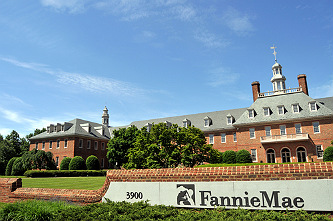
Fannie Mae and Freddie Mac are what happens when ideological compromise goes horribly wrong. On the one hand, they’re supposed to make housing more affordable. On the other hand, they’re private companies, because you wouldn’t want some sclerotic government agency at the center of this. The result? Profit-maximizing corporations that enjoy the government’s backing.
This is hardly the most important thing in the world, but this is wrong in an interesting way. Fannie Mae and Freddie Mac were converted into semi-private organizations (GSEs, or government sponsored enterprises) by LBJ in 1968. But it wasn’t for ideological reasons. It was because Johnson was spending a lot of money on the Vietnam war, which was running up federal borrowing, so he wanted to get Fannie and Freddie’s debt off the government’s books. This would, technically, reduce federal debt issuance and make his Vietnam/Great Society deficits less alarming.
In other words, it was purely political and financial legerdemain, entirely ideology free. And ironically, it’s almost precisely analogous to what big banks did during the late housing bubble, taking huge amounts of debt nominally off their balance sheets while, in reality, remaining responsible for it. When the shit hit the fan, the bankers had to pay the bills, and as it turns out, so did Uncle Sam for its GSEs.
So what to do about Fannie and Freddie? The conventional wisdom is that the entire housing market would collapse without them, but I’m not so sure about that once we manage to extricate ourselves from our current troubles. As a further little bit of history trivia, FDR’s original plan for the FHA was that it would work with private organizations that would guarantee home loans. But after a couple of years it became clear that no private sector organizations were interested in taking on this job, so Fannie Mae was created to do it instead. Whether it’s still true that the private sector is uninterested in this business in an era (or so I’m told) of endless financial innovation, I’m not so sure about. And if it turns out that it is? Well, other countries managed to muddle along for years without equivalent agencies. We probably can too.