• Civics is Alive and Well in American High Schools

    Tom Edsall quotes some guy complaining that people are stupid these days because high schools don’t teach civics anymore. “The students don’t know about civics, they don’t know about our history, our government, our constitution. Politicians say they are going to give people things for free to get elected.” Atrios comments:

    It’s certainly possible it’s true in some sense, in that there’s no course of study actually called “civics” but it’d be nice if Edsall provided some judgment about whether this guy is just mainlining Limbaugh or if he has an actual point.

    Say what? No course of study called civics? I took senior-year civics from Mr. Avis back in 1976 because I had to if I wanted to graduate, and the California minimum course requirements continue to include “a one-semester course in American government and civics.” Ditto for Pennsylvania. Here’s a PDF describing the civics requirement in detail for all grades, including high school.

    Looks to me like civics is alive and well, and continues to be called “civics.” So what’s the problem?

  • Football in Lo-Def Really Sucks


    For the first time in a couple of years I’m watching a football game in lo-def. It’s like a big blur of colorful blobs moving randomly around the screen. It’s hard to believe we used to watch games like this all the time.

    And why am I watching a game in lo-def? Because the Pac-12, like every other major conference, decided last year that it wanted its own network. So now, instead of local games being shown on ESPN or CBS or ABC or Fox Sports or any of the other fine hi-def channels I already get, they’re frequently shown on the Pac-12 network instead. My cable provider, however, doesn’t provide the high-def version of the network with either their basic package, or their advanced package, or even their advanced premier package, which I have. They only provide it with the package that includes whole-home DVR. This is so obviously predatory that there’s no way I’d sign up for it. But hey — I guess if the Pac-12 signs a $3 billion deal, then someone has to pony up that $3 billion.

    Not me, though. Enough’s enough.

    POSTSCRIPT: I know, I know: whine, whine, whine. But it’s a weekend, and it’s my God-given right to whine about my cable carrier and the greediness of modern college sports. Feel free to add your own personal whines in comments.

  • One More Round on the YouTube Bleg

    I’m going to test everyone’s patience by taking one last shot at seeing if anyone can solve my YouTube problem. To recap: several weeks ago YouTube videos stopped playing on my computer. I’ve uninstalled Flash completely and reinstalled it. I’ve tried going back to a previous version of Flash. I’ve dumped my cache. I’ve uninstalled and reinstalled my browser. Nothing has worked. Some YouTube videos play, while others simply display a blank black rectangle. I haven’t been able to figure out any pattern that accounts for which ones play and which ones don’t.

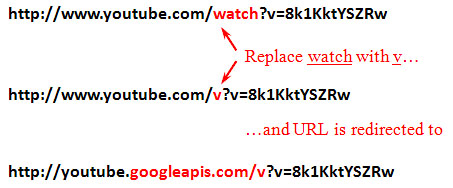
    The obvious suspect is some kind of interaction between Flash and my Opera browser — and this is an especially good suspect since YouTube continues to work fine on Firefox. However, I don’t really have a clue what the problem here could be, so instead I want to ask about something else. It turns out that if I manually change the URL of a YouTube video, replacing “watch” with “v,” the URL is then redirected and the video plays in full screen mode. This works 100% of the time. So here’s my question: does anyone have any idea what’s happening here? What’s the significance of “v” in a YouTube URL?

    UPDATE: I’m still not sure about the “v” thing, but I seem to have obtained a fix for my problem. Thanks to commenter Rajeev Raizada for the pointer!

  • Mitt Romney’s Cynical Tax Ruse


    So this afternoon’s big news is that Mitt Romney finally released his 2011 taxes. He paid $1.9 million on $13.7 million in income, for an effective tax rate of 14.1%.

    But there’s more! His tax rate would have been about 9% or so, but he decided not to deduct all of his charitable contributions in order to get his tax rate up to 14%. Why? Here’s the official statement:

    “The Romneys [] limited their deduction of charitable contributions to conform to the governor’s statement in August, based upon the January estimate of income, that he paid at least 13 percent in income taxes in each of the last 10 years,” said R. Bradford Malt, Mr. Romney’s trustee.

    Huh. So he did this specifically in order to fulfill his promise from August? Apparently so:

    Campaign spokeswoman Michele Davis said in a statement that Romney “has been clear that no American need pay more than he or she owes under the law. At the same time, he was in the unique position of having made a commitment to the public that his tax rate would be above 13 percent. In order to be consistent with that statement, the Romneys limited their deduction of charitable contributions.”

    This is….weird. Not that Romney would do this solely in order to avoid a single-digit tax rate that might be a political liability, but that he’d actually admit that he did it solely to avoid a single-digit tax rate that might be a political liability. Very odd. But I guess he felt like had no choice. There was no subtle way of increasing his tax bill that might go unnoticed, so that left only the charitable deduction dodge, something that reporters would obviously discover within minutes of paging through his return. He could hardly claim that he had done this out of the goodness of his heart, so he had to fess up that it was a purely cynical maneuver to avoid a politically dicey 9% tax rate.

    But how much good will that do him? Won’t that 9% rate (or whatever it turns out to be) still get plenty of attention? I’ll bet it will.

    Poor Mitt. He’s between a rock and a hard place. He either reveals that he paid only 9% in taxes, or else he publicly acknowledges that he fiddled with his returns to avoid looking like the tax-avoiding plutocrat he is. What a choice.

    Nick Baumann and Adam Serwer have more on Romney’s tax returns here.

    UPDATE: I’m actually seeing conflicting estimates about what Romney’s tax rate would have been if he’d taken his full charitable deduction. Maybe 9%, maybe 11%, maybe 12%. It’s a tricky bit of arithmetic because Romney’s taxes are so low that the AMT kicks in, and there’s no telling exactly how that affects his total tax liability. I’ll update this post if I see an authoritative estimate.

  • Friday Cat Blogging – 21 September 2012

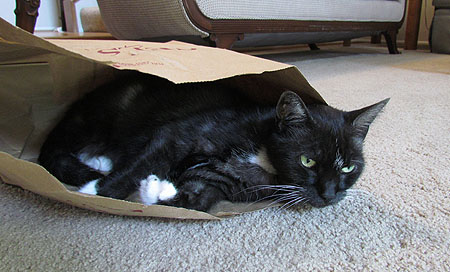
    Domino would like everyone to know that she’s even more of a moocher than the 47%. Not only does she pay no federal income tax, but she also pays no sales taxes, no property taxes, no payroll taxes, and no excise taxes. She’s part of the 1% that pays no taxes at all, and she thinks all of you who do pay taxes are a bunch of suckers. I tried to explain to her my role in the taxpaying ecosystem, and the tax incidence on cats that this implies, but she just ignored me and crawled into her bag. As long as Uncle Sam doesn’t tax afternoon naps, she’s happy.

  • The Generic Congressional Ballot: Take 2

    Yesterday I asked whether the results of generic congressional polling were a good predictor of the actual national House vote. I was skeptical because conventional wisdom says that Republicans usually outperform the generic ballot. Today, Sam Wang produces the following historical numbers from Real Clear Politics:

    2010 Polling average, R+9.4%. Outcome: R+6.6%. [R delta = -2.8%]
    2008 Polling average, D+9.0%. Outcome: D+10.9%. [R delta = -1.9%]
    2006 Polling average, D+11.5%. Outcome: D+7.9%. [R delta = 3.6%]
    2004 Polling average, tie. Outcome: R+2.6%. [R delta = 2.6%]
    2002 Polling average, R+1.7%. Outcome: R+4.6%. [R delta = 2.9%]

    “R delta” represents whether Republicans did better or worse than the generic ballot results, and it turns out that sometimes they do better and sometimes they do worse. I’ll toss out two comments. First, this shows that I may have been out of date. My belief that Republicans outperform the generic ballot was based on data through 2006, and in fact, Republicans did outperform the generic ballot in 2002-06. However, they’ve underperformed in the two most recent elections. So I need to update my priors.
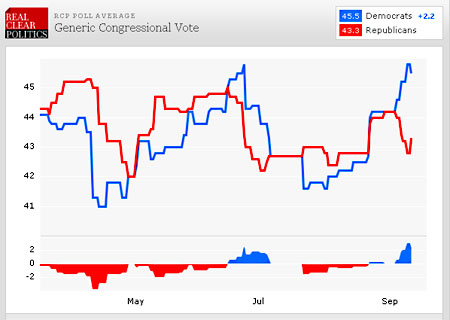
    Second, these results are for the final week of polling. It makes sense that the generic ballot would converge toward the actual national vote a few days before the election. But how about earlier? This is a little quick and dirty, but here are the average generic ballot results for the few days around September 1:

    2010 Polling average, R+4.8%. Outcome: R+6.6%. [R delta = 1.8%]
    2008 Polling average, D+8.4%. Outcome: D+10.9%. [R delta = -2.5%]
    2006 Polling average, D+11.3%. Outcome: D+7.9%. [R delta = 3.4%]
    2004 Polling average, D+0.7%. Outcome: R+2.6%. [R delta = 3.3%]
    2002 Polling average, R+2.0%. Outcome: R+4.6%. [R delta = 2.6%]

    It looks to me that a couple of months out, the generic ballot really does underweight how well Republicans will do. The only exception is 2008, which turned into a Democratic landslide. So I’d probably subtract two or three points from the current RCP generic poll average, which has Democrats ahead by 2.2%. In reality, this probably suggests that Republicans will win the national vote by a point or a bit less, and given their incumbency advantage, that might translate into a one or two-point lead in actual number of seats won.

    This is very, very rough. Consider it extremely tentative. I’d be pretty interested in a more rigorous look at this if anyone wants to do it.

    UPDATE: Why did I choose September 1? Because I’m an idiot and forgot what month it is. October 1 would have been better, or even September 21 if I wanted to use today’s results. In any case, my interest in a more rigorous analysis stands. Mid or late-September would probably be a better comparison point, though.

  • House Passes Extra-Terrible Pro-Coal Bill Before Heading Home

    <a href="http://www.shutterstock.com/pic.mhtml?id=79708603&rid=623645">antoni halim</a>/Shutterstock


    One of the difficult things about being a policy-minded environmental blogger these days is deciding what merits weighing in on. The House passes crazy measures rolling back environmental and health protections, and then the Senate…just does nothing with those bills. But on Friday, the House passed a monumentally terrible bill that is worth pointing out, as it would undo many laws—old and new—dealing with coal.

    The “Stop the War on Coal Act” (H.R. 3409) would take away the power to regulate a lot of things—mountaintop-removal coal mining, greenhouse gas emissions, coal ash disposal, mercury and air toxins. Democrats on the Energy and Commerce Committee calls the the legislation the “single worst anti-environment bill to be considered in the House this Congress.”

    It’s just all kinds of bad—throwing out many rules dealing with coal and preventing the EPA and the Department of Interior from regulating in the future. That includes both coal mining and coal burning in power plants. The House passed the bill by a vote of 233 to 175, which included 19 Democrats who voted for it as well. This is the last vote the House will take before the election, which is no coincidence. The bill isn’t going pass; it’s only meant to be an instrument to bludgeon Obama and other Democrats, which has been very clear from Republicans’ remarks.

  • Chart of the Day: Turning the Entire Planet Into a Tropical Zone Might Be Bad for Economic Output

    People in hot climates don’t work as hard as people in more temperate climates. It’s hot! You get tired more quickly. You need to take more breaks. You don’t get as much done.

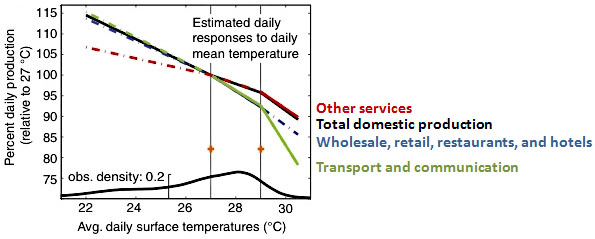
    This is hardly a new insight. But it turns out you can measure how much less people work when the temperature goes up. And the answer is: about 2% less for every extra degree Celsius (see chart below). A recent natural experiment confirmed this, when the Japanese government asked businesses to use less air conditioning after the Fukushima earthquake and tsunami. Productivity decreased at just about the predicted rate.

    But earthquakes and equatorial latitudes aren’t the only things that raise temperatures. Global warming does it too. So what does that mean for worker productivity in the future? Solomon Hsiang, a sustainable development post-doc at Princeton, explains:

    In my 2010 PNAS paper, I found that labor-intensive sectors of national economies decreased output by roughly 2.4% per degree C and argued that this looked suspiously like it came from reductions in worker output.

    [From a later post] Reductions in worker output have never been included in economic models of future warming [] despite the fact that experiments fifty years ago showed that temperature has a strong impact on worker output []. In my dissertation I did some back-of-the-envelope estimates using the above numbers and found that productivity impacts alone might reduce per capita output by ~9% in 2080-2099 (in the absence of strong adaptation). This cost exceeds the combined cost of all other projected economic losses combined.

    Of course, maybe robots will be doing all our work for us by then. But maybe not. It’s yet another reason — in addition to famines, drought, drowned cities, and the death of millions — to think that turning the entire world into a tropical zone might not be such a great idea.

    Via Andrew Gelman at The Monkey Cage.

  • Why Congress Won’t Pass Popular, Bipartisan Bills


    Matt Yglesias remarks today that increasing the number of visas for high-skill workers is a popular, bipartisan idea. And yet, it hasn’t happened. Matt says this is because legislators don’t really want to pass a bill, they simply want to score partisan points:

    So Texas Republican Lamar Smith’s challenge was to write a bill that did what the tech companies wanted (more visas for skilled foreigners) but that wouldn’t actually pass the House of Representatives. He took a two-step approach to this. One was to ensure that each new visa for a skilled foreigner would be offset by one fewer visa allocated under the current system. That helped gin up Democratic opposition. Then the House leadership ensured the bill would be introduced under rules that required a two-thirds vote for passage. The combination of the ruleset and the poison pill was sufficient to achieve Rep Smith’s objective—overwhelming GOP support for a bill tech companies love and that failed in the House.

    Conversely, the way Democrats like to play this issue when they have the majority is by linking increased immigration of high-skill foreigners to a broader comprehensive immigration reform package that creates a path to citizenship for current undocumented residents. That way it’s Republicans who block what the tech companies want.

    It’s true that in-caucus scheming plays a role here, but overall I have a more transactional take on this. Whenever there’s a contentious bill on the table, at least a few pundits will start to suggest that instead of something big, Congress should “go small.” Why not just pass the two or three things that everyone agrees on and leave the hard stuff for later?

    But the reason is obvious, and it’s not wholly down to partisan cynicism: it’s those easy parts that help grease the skids for the bigger, harder-to-pass bill. If you pass all the popular stuff on its own, you’re left solely with a bunch of controversial and/or unpopular bits, and what chance does that have to pass? About zero. Passing the small, popular bits on their own basically dooms your chances of ever sweetening up a comprehensive bill enough to get a majority of Congress to swallow it in the face of all the sour bits they’re going to have to swallow alongside it. So you save those bits for later. That’s politics.

  • How the Tea Party Killed Mitt Romney

    Via Ed Kilgore, Ron Brownstein tells us today that Mitt Romney’s problems aren’t due to an incompetent campaign. They’re due to decisions he made a long time ago:

    Of all Romney’s primary-season decisions, the most damaging was his choice to repel the challenges from Perry and Gingrich by attacking them from the right—and using immigration as his cudgel. That process led Romney to embrace a succession of edgy, conservative positions anathema to many Hispanics, including denouncing Texas for providing in-state tuition to the children of illegal immigrants; praising Arizona’s immigration-enforcement law; and, above all, promising to make life so difficult for the estimated 11 million illegal immigrants that they would “self-deport.”

    ….Romney’s inability to dent Obama’s support among Hispanics (or other minorities) means the GOP nominee probably can’t win without attracting at least 61 percent of white voters. Yet a second early decision has greatly compounded that challenge. Through the primaries, Romney embraced an unreservedly conservative social agenda (such as defunding Planned Parenthood and allowing employers to deny contraception coverage in health insurance plans), especially after Santorum emerged as his principal rival. That positioning helps explain why polls consistently show Obama drawing a majority of college-educated white women—not only the most socially liberal sector of the white electorate but also the fastest-growing. If Obama can hold a majority of those women and match his 80 percent with all minorities in 2008, Romney would have to carry two-thirds of all other whites to win—as much as Ronald Reagan won among those remaining voters in his 1984 landslide.

    Sure. This is just another way of saying that the Tea Party has been Romney’s downfall. They forced Romney too far to the right and didn’t give him the room (or the trust) to move back toward the center during the general election.

    My basic take on this election has been pretty much the same since the first day: incumbent parties don’t lose the presidency after a single term unless the economy really sucks. (It’s only happened once in the past century — though in 2004 Bush came close to making it twice in a century.) But although the economy right now is in poor shape, it’s not in terrible shape, and this means Obama is the likely winner of a close election. But the key word here is close. The economy for the past year has been weak enough that a good challenger had a real chance to win.

    In other words, the fundamentals predicted a fairly close election, which means that the candidate and the campaign really mattered this year. All that horserace stuff played a real role. But the tea party made it impossible to play that role smartly. They’ve moved so far outside the mainstream that they make demands on politicians that doom them in a general election.

    We saw this dynamic play out already in 2010. In congressional elections, the tea party probably helped Republicans win more conservative districts than they otherwise would have. But when you move up to the Senate, where you need to have a broader appeal, the tea party foisted several terrible candidates on the GOP, causing them to lose at least three winnable races. And now, in a presidential election, which requires the broadest appeal of all, Mitt Romney’s subjugation to the tea party has all but ruined him. Sic transit etc.