• Microsoft Betting on Business Users in Surface 3 Introduction


    Microsoft introduced the Surface 3 today, a bigger, faster Windows tablet aimed at the business market. But Jay Yarow notes that the entire Surface venture has been a huge money sinkhole:

    As a result, lots of people wonder what Microsoft is doing. Why is it even bothering to make the Surface? Shouldn’t it just kill the Surface?

    The easy answer is yes, Microsoft should just ax its money-losing Surface business. But the correct answer is that it should continue to invest in Surface despite its early troubles. 

    Microsoft’s Windows business is seriously threatened right now. The rise of Apple’s mobile software, iOS, Google’s mobile software, Android, and Google’s lightweight desktop OS, Chrome, have all diminished Windows. At one point, Windows was running 90% of personal computing devices; today it’s about 20%. 

    If Microsoft doesn’t make the Surface tablet, there’s a chance no one will make Windows tablets. Why would Samsung, which has had massive success with Android, even waste its time with Windows? Why would HTC, or Lenovo, or any other company put significant resources toward Windows for tablets?

    I don’t know if that’s true or not. It’s possible, in fact, that the competition from Microsoft has actually kept some tablet makers out of the market. Why even bother competing when one of the players gets the OS for free?

    I won’t pretend to know which is true, but I sure hope Microsoft is guessing right, because I have a vested interest in Windows succeeding in the tablet market. I used an iPad for about a year, and then an Android tablet for a year. Then I bought a Dell Venue Windows tablet, and as I’ve mentioned before, it’s head and shoulders better than either one. As a longtime Windows user, I suppose my objectivity is suspect, but I honestly didn’t expect it to be very good. It is, though. The Modern UI is genuinely brilliant, and performance is smooth and fast even with an underpowered Atom processor. Add to that the fact that you can slap on a keyboard and switch to the desktop UI, and you have a tablet that can do just about anything.

    Its big Achilles’ heel, of course, is the feebleness of its app ecosystem. I was pleasantly surprised that I had no trouble finding very nice apps for everything I wanted to do, but obviously that was just a bit of luck. There are plenty of apps you can’t get for Windows, and if one of them is an app you just have to have, then you’re out of luck.

    In any case, I like my Windows tablet, but I know that its future success depends on selling lots of units. And that in turn depends on the availability of lots of apps. So I sure hope Microsoft is making the right call with its Surface product line.
  • How the Koch Brothers Became the Koch Brothers


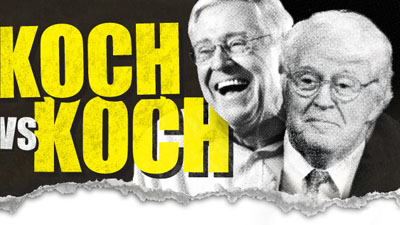
    Need some lunchtime reading? We have a long excerpt up from Daniel Schulman’s new book about the Koch brothers, Sons of Wichita: How the Koch Brothers Became America’s Most Powerful and Private Dynasty, and if you want to learn how and why David and Charles Koch became such ruthless fighters for the conservative cause, this will tell you. Long story short, they got it from their family. Their father passed down an obsessive, conspiratorial conservative streak, and endless fights with their brothers toughened them up for the political arena.
    The excerpt is here. Enjoy.

  • Chris Christie Takes Blowhardism on the Road


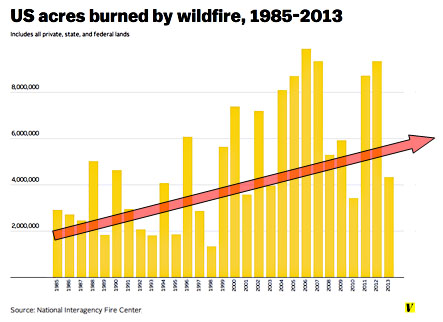
    Being a blowhard has worked well for Chris Christie at home, so it’s no surprise that he endorses blowhardism as a foreign policy too. In a speech on Sunday, he assured everyone that a Christie administration would….would…..well, something:

    In Sunday’s speech, with rhetoric reminiscent of President Bush’s first speeches after 9/11, the governor made a moralistic case for clearly distinguishing between “good” allies and “evil” enemies.

    ….Though Christie offered few specifics, he particularly trashed Obama’s policies on Russia, Syria, and Iran. “We see Russian activism once again rearing its head in the world, we see an America that backed away from a commitment made by the president of the United States in Syria, we see a country, our country, permitting even a thought of a terrorist state like Iran having nuclear capability,” he said. “Here’s something that should not be up for debate, that once you draw that red line, you enforce it — because if you don’t, America’s credibility will be at stake and will be at risk all over the world.”
    There should be a constitutional amendment or something banning speeches like this unless you’re willing to explain, in some detail, exactly what you would have done instead. Cut and run, like Christie’s hero Ronald Reagan did in Beirut? Lie your way into a disastrous war like his hero George Bush did? Or what? I’m really tired of hearing nonsense about how we should have “supported” one side or another in Egypt or Syria or Ukraine. Or how we should have sent heavy arms over, even though no one was trained to use them and in some cases we didn’t even have anyone reliable to send them to. Or that somehow just giving another “evil empire” speech would have sent the mullahs screaming into the night.

    We didn’t win the Cold War because Reagan gave some speeches. We won because of low oil prices, a foolish war in Afghanistan, poor harvests, and the effective bankruptcy of the Soviet Union. We’re not going to win any of these other conflicts with bluster either. So let’s hear it. Is Christie planning a military strike against Iran? Troops on the ground in Syria? Cruise missile strikes against Russian troops massed on the Ukrainian border? If Christie doesn’t have the guts to say this stuff outright, he should keep his bluster to himself. Without specifics, this is just laughable schoolyard bravado.

  • AT&T Plans to Start Screwing You Over in 2018


    From Brian Fung:

    AT&T has announced it’s buying DirecTV in a $49 billion deal — an enormous acquisition that could turn one of the nation’s top telecom companies into a formidable player in the pay-TV market. And the agreement is sure to be examined closely by federal regulators.

    To help win their approval, AT&T is offering to abide by net neutrality principles for three years: the company would not block Web sites; it would also not discriminate against certain Web content by slowing down or speeding up different lanes of Internet traffic to customers.

    This is practically a promise to begin implementing slow-lane service for non-favored websites in 2018. It’s what every ISP in the country wants to do: make a few fuzzy, short-term promises in order to get approval for the rules they want; remain on their best behavior for a few years; and then steadily start putting the hammer down in small enough increments that they hope nobody notices.

    Hey, it worked for the financial industry! Why not internet providers too?

  • Republicans Would Rather Blow Up the Budget Than Admit That Global Warming Is Real


    It seems like every year we have lots of wildfires out west, and every year there’s not enough money to fight them. How come? Brad Plumer provides the nickel explanation:
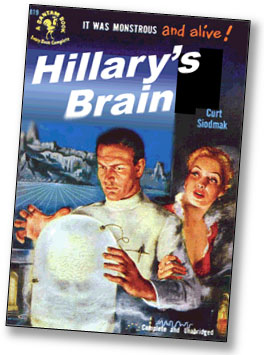
    The first key fact to note here is that US wildfires have gotten much bigger over the past three decades. There’s some variation from year to year, but the overall trend is upward. One recent study in Geophysical Research Letters found that wildfires in the western United States grew at a rate of 90,000 acres per year between 1984 and 2011. What’s more, the authors found, the increase was statistically unlikely to be due to random chance.

    ….Put it all together, and many experts and politicians have argued that the way Congress plans for wildfires has become obsolete and counterproductive. Right now, Congress gives agencies like the US Forest Service a budget for fire suppression that’s based on the average cost of wildfires over the previous 10 years. Of course, if wildfires are getting bigger over time, that’s going to create constant shortfalls.

    The problem should be pretty obvious. If you take a look at the chart above (to which I’ve added the handy trend line), you can see that the average of the past ten years is going to be where the line was around 2008. That’s roughly 5 million acres. But the trend line keeps going up, and in 2014 you can figure that it’s likely to be around 6 million acres.

    Obviously there’s a large amount of variability, and even if you plan rationally you’re still going to fall short some years. Still, at least you’d come closer. So why not do it?

    I’ll take a guess: Aside from the fact that members of Congress always prefer rosy forecasts so they can pretend their budgets are more balanced than they really are, there are the reasons that wildfires keep getting bigger and deadlier. One culprit is poor forestry practices. There are invasive species. And there’s global warming.

    Oh yeah: global warming. That’s the big one. If Republicans in Congress acknowledged that wildfires were getting steadily bigger over time, it would be tantamount to admitting that global warming is real. And we can’t have that, can we?

  • What’s the End Game for the Trigger Warning Movement?


    “Trigger warnings” are having their 15 minutes of fame this year, and a New York Times piece about them this weekend made the rounds of the blogosphere. Apparently some activists want trigger warnings for books like The Great Gatsby and Huckleberry Finn:

    Colleges across the country this spring have been wrestling with student requests for what are known as “trigger warnings,” explicit alerts that the material they are about to read or see in a classroom might upset them or, as some students assert, cause symptoms of post-traumatic stress disorder in victims of rape or in war veterans.

    The warnings, which have their ideological roots in feminist thought, have gained the most traction at the University of California, Santa Barbara, where the student government formally called for them….Bailey Loverin, a sophomore at Santa Barbara, said the idea for campuswide trigger warnings came to her in February after a professor showed a graphic film depicting rape. She said that she herself had been a victim of sexual abuse, and that although she had not felt threatened by the film, she had approached the professor to suggest that students should have been warned.

    Ms. Loverin draws a distinction between alerting students to material that might truly tap into memories of trauma — such as war and torture, since many students at Santa Barbara are veterans — and slapping warning labels on famous literary works, as other advocates of trigger warnings have proposed.

    Maybe somebody can help me out here. Not snarky “help,” mind you, but real help. As you might expect, I’m not especially sympathetic to the trigger warning movement, which seems more appropriate for explicitly safe spaces (counseling groups, internet forums, etc.) than for public venues like university campuses. But put that aside. What I don’t get is what anyone thinks the point of this is. You’re never going to have trigger warnings in ordinary life, right? So even if universities started adopting broad trigger policies, it would accomplish nothing except to semi-protect sensitive students for a few more years of their lives, instead of teaching them how to deal with upsetting material.

    Now, you could make this same argument about a lot of things. But in other cases—for example, a university policy aimed at racism or disabilities or whatnot—it would presumably be done in the hope that it might influence public policy and eventually lead to changes in the wider world. But does anyone have this hope for trigger warnings? It doesn’t even seem feasible to me.

    But maybe I’m just demonstrating a lack of imagination here. In any case, I’m curious about what the ultimate point is. Are supporters of trigger warnings just hoping to give kids a few more years of refuge from the outside world? Or do they somehow think that these policies might spark the outside world to change? I’ve never really heard anyone explain what the end game is here, and I’d like to hear it.

  • Hillary’s Brain: A New Classic of American Sleazance Fiction from Karl Rove


    Steve Benen thinks that Karl Rove’s drive-by shot at Hillary Clinton has failed:

    If Karl Rove hoped to generate some chatter with his cheap shot at Hillary Clinton last week, he succeeded — the political world has now been chewing on the “brain damage” story for nearly a week. But by all appearances, Rove has started a conversation that’s focused more on his propensity for sleazy tactics than the former Secretary of State’s health.

    ….Nearly all the major Sunday shows discussed Rove’s latest salvo, but the focus was on Rove, not Clinton and her 2012 illness. Sen. Claire McCaskill (D-Mo.) blasted Rove for “struggling to be relevant.” Sen. Dianne Feinstein (D-Calif.) dismissed Rove’s rhetoric as “stupid” and “pathetic.” Former Mayor Michael Bloomberg (I) called Rove’s offensive “outrageous.”

    Karl Rove wanted to manufacture a story about Hillary Clinton. He instead created a story about Karl Rove.

    I disagree. The press has been talking about Rove’s sleazy tactics for more than a decade. Rove is used to that and obviously doesn’t care. There’s just nothing new on that front, and even if this did somehow damage Rove, it wouldn’t have any effect on the Republicans actually running against Hillary in 2016.

    But there’s not much question that Rove has generated a lot of buzz about Hillary’s health. By itself, this isn’t a big deal, but as part of the nonstop mudslinging that Hillary will have to endure for the next couple of years, it’s perfect. Every one of these incidents will be designed to sow a small seed of doubt, and eventually one or two of these seeds might catch on and blossom into an acorn. And from tiny acorns, mighty oaks sometime grow. Mission accomplished!

  • Friday Cat Blogging – 16 May 2014


    This is nature red in tooth and claw. Today, Domino can barely even rouse herself to stare disdainfully at the camera. To make up for her lethargy, however, we have additional wildlife blogging this week. Our mama hummingbird has built herself a little hummingbird nest and is now patiently waiting for her teensy tiny little eggs to hatch. When I took this picture, Domino was plonked out about five feet away, blissfully unaware that anything was going on. Jasmine probably would have scoped this situation out pretty quickly and figured out a way to shinny up the bush and snag the eggs. But Domino? Anything more difficult to hunt than a bowl of cat food is just not on her radar. At our house these days, the wildlife all lives in a state of peaceful coexistence.

  • “That’s Covered By Our Insurance?” “Correct.”


    Here’s an excerpt of a recorded telephone conversation between David Cienfuegos’s wife and a rep from Anthem Blue Cross (“Howard”) prior to a surgery that Cienfuegos underwent:

    Wife: So how can I find out if the doctor we’re working with is contracting with Anthem?

    Howard: If you know the doctor’s name, I can look them up for you.

    Wife: The doctor who is doing the procedure … is Dr. Werthman, W-e-r-t-h-m-a-n.

    Howard: Philip?… Yes, that doctor is in-network.

    Wife: Oh, OK. So when I submit my claim form, that goes towards the in-network deductible?

    Howard: Correct…. That is correct.

    Wife: I just wanted to then confirm that the procedure, veri — I’m sorry, what was it called again? I know I gave you the name.

    Howard: Uh, varicocele. I am not quite sure how you pronounce it.

    Wife: Varicocele. That’s covered by our insurance?

    Howard: Correct.

    You’ve probably guessed the punchline already: After the surgery, Anthem denied Cienfuegos’s claim, saying his doctor was out of network and the procedure wasn’t covered. This is the kind of innovation and cost-cutting efficiency that makes it so important to keep private insurers at the core of our health care system.

  • People Aren’t Buying Houses Because They Have No Money


    This is from the “Gee, ya think?” file. It’s from a Financial Times story summarizing various theories about why the housing market has turned flat. After acknowledging that none of the usual theories seem “quite sufficient” to explain things, we get this:

    [Sam Khater, deputy chief economist at Corelogic] said he believes “it’s structural”, pointing out that as long ago as the 1990s, there was growth in population and employment, “but during that entire time period we have not had median incomes growth”.

    Although the US economy has added several million jobs in the last few years, there has been little incomes growth for the average American, and that may have reduced housing demand. New household formation has been exceptionally low, with many adults in their 20s and 30s continuing to live with their parents.

    That helps to explain some of the divergent trends in the housing market. For example, builders are putting up much bigger homes, to cater to wealthy Americans who are doing well, which helps to explain why the number of starts is low.

    Yeah, that could explain it, all right.

    None of this snark is meant for Robin Harding, who wrote this piece. At least he put a spotlight on the obvious problem of stagnant incomes. That’s more than most business writers have managed to do.