
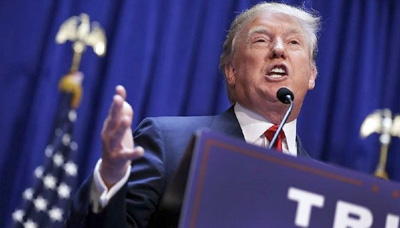
• Donald Trump Has Secret Policy Papers He Refuses to Let the Public See


    Gabe Sherman writes today about the vicious backstabbing that’s taking place inside the Trump campaign. “Considering they have a staff of, like, three people at headquarters, there’s a lot of infighting,” one source told him.

    Unsurprisingly, the biggest friction seems to be between longtime Trump advisors and younger newcomers hired specifically for the campaign. But the biggest spats were apparently between two of the political hires: advisor Sam Nunberg and campaign manager Corey Lewandowski. This particular piece intrigued me:

    Nunberg’s firing and the turmoil it’s caused in Trumpworld illustrates the difficulty Lewandowski has faced wresting control of the campaign. For months, according to a source, he’d been at odds with Nunberg. Not long after becoming campaign manager, Lewandowski instructed Nunberg, who’d been a Trump adviser for several years, to work from home instead of headquarters, a source said. Nunberg felt further marginalized when Lewandowski had him bumped off several campaign trips. The biggest flashpoint, however, was Lewandowski’s refusal to release detailed policy papers Nunberg had written for Trump. “The campaign was getting killed for having no substance, and Corey wouldn’t release them,” a source close to the campaign explained.

    Oh, please, please, please: someone leak me a copy of these “detailed policy papers.” I want to see them so much. I’ll bet the blog would write itself for a week.

    On a more serious note, this can’t possibly be a true dispute between Lewandowski and Nunberg. Either Trump wants policy papers or he doesn’t. And if he does, he either liked Nunberg’s drafts or he didn’t. Whatever happened here, it happened because Trump wanted it that way.

    And my guess is that Trump knows perfectly well that policy papers are a no-win proposition for him. Once released, he’d have to defend everything in them, and he’d have to do it seriously. The press would lose interest quickly as he became just another pol. He’d much rather tell entertaining whoppers about sending Carl Icahn to negotiate with China, or unilaterally charging Ford a 35 percent tax if it built a factory in Mexico. That gets the crowd pumped, and this stuff is so transparently absurd that no one ever bothers trying to get him to defend it. That would ruin all the fun. For Trump, then, the blowhard approach works better; it’s more amusing; and it takes a lot less time. No need to fix things until they’re broken.

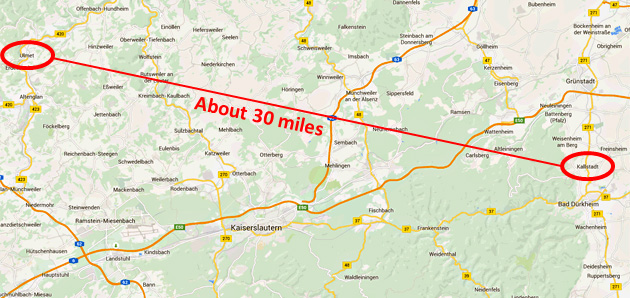
    BY THE WAY: As long as we’re on the subject, you may be fascinated to know that I share a pretty classy genealogy with Trump. My Drum ancestors come from the village of Ulmet in Germany, where the name is spelled variously Drum, Drumm, Trumm, and Trump. The Donald’s great-grandfather, Christian Johannes Trump, hails from Kallstadt, a village about 30 miles away in the state of Rhineland-Palatinate. More than likely, there’s some shared ancestry if we just go back a few centuries.
  • Tonight’s Debate Agenda


    What, you thought this post was about the agenda for the debate itself? Nah. It’s on Fox News at 9 pm Eastern and that’s all you need to know.

    No, this is about the agenda here. Like the blogging dinosaur I am, I’ll be liveblogging the Republican debate tonight. I know the kids all use the Twitter thingie for this kind of stuff, but if, like me, you’re just too old to keep up with 100 mph Twitter snark, come on over here and refresh your browser every few minutes. It’s the retro way of enjoying the debate!

    You can even participate your very own self in comments. However, unlike Twitter, no one will see your pearls except for other commenters. You may decide for yourself if that’s an upside or a downside.

  • Blame New Media for the White House’s Obsessive Control Over Foreign Policy


    A couple of days ago Karen DeYoung of the Washington Post wrote a long, interesting piece about Obama’s National Security Council. The basic story was simple: the NSC under Obama has gotten too big, too sclerotic, and has centralized foreign policy too much in the White House. It was enlightening, and yet….it seemed familiar. Like I’d read it before. Maybe during every presidential administration of my adult life.

    But I wasn’t sure, since this stuff isn’t really in my wheelhouse, so I didn’t write about it. However, this stuff is very much in Dan Drezner’s wheelhouse, and he agrees: “There’s not a whole lot that’s different in these complaints from past ones, except that the Obama White House has probably been more successful at centralizing foreign policymaking authority than the prior two administrations.” Still, he did find at least one new thing under the sun:
    Reading through her story, there are two things that stand out — one that’s old and one that’s new. The old complaint is that agencies and staffers who don’t get their policy preferences enacted are, shockingly, not thrilled with the policy process. And everything I have heard from White House staffers about President Obama suggests that in recent years the NSC process has produced policy options that are far more hawkish than his own policy preferences. So he swats them down, and underlings get grumpy.

    The new complaint is the reason behind the NSC’s micro-management of foreign policy: fear of political fallout.

    “Benghazi is a good example,” the former official said, “and . . . Ebola. That can’t just be left to CDC and State and others to manage. No. You have to have a czar and a whole team of people. And why is that? Because the politics on this issue have become so much more corrosive and challenging that it’s a natural instinct for the White House to say, ‘We’ve got to have an eye on this. On everything.’ ”

    This is a problem that will not go away with this administration. If future White Houses react to any foreign policy setback by centralizing control in the White House even further, then this administration’s policy process will look Balkanized by comparison.

    So the question is: Is political fallout really more toxic than it used to be, or are modern White Houses just more sensitive to it? And if the fallout really is more toxic, why? Is it because politics is genuinely more toxic nowadays, or because modern media magnifies and accelerates it?

    We’re obviously living in a pretty toxic political era right now. But we’ve lived through those before. It always seems worse when it’s happening right now, but the Clinton era was pretty damn toxic; the Reagan era was pretty toxic; the sixties were pretty toxic; McCarthyism was pretty toxic, etc. And make no mistake: this stuff affected White House decision making viscerally. It just doesn’t seem all that visceral when you’re only reading about it in history books.

    So if the modern era isn’t uniquely toxic, why is foreign policy becoming ever more centralized? Partly because everything is. The modern White House controls policy of all kinds far more than in the past, while cabinet departments have steadily lost influence over the past half century.

    Beyond that, I think it’s the media environment that’s driven a lot of the recent centralization. There’s just too damn much of it. And it’s endless. It’s on cable TV, it’s on blogs, it’s on social media, it’s on talk radio, it’s on email chains—and you can lose control of a situation in the blink of an eye. All media, from the New York Times down to the dumbest daily email blasts, thrives on the latest shiny toy. And if something catches on, it can take off literally in hours. You might not even realize it’s gathering steam until it blows up and becomes 24/7 cable news fodder. It’s nearly impossible to react to that kind of feeding frenzy, and it’s completely impossible if decisionmaking is decentralized. Your only faint hope is to have your team in the White House obsessively monitoring this stuff and able to react almost instantly.

    This is a bad thing. In the same way that Wall Street trading has gotten too fast and too complex for humans to effectively control, so has political life. Good decisions simply can’t be made in minutes or hours. And yet, they have to be. Obviously this increases the risk of bad decisions, but it also increases the defensive, circle-the-wagons approach of modern administrations, which seem to be perpetually at war with the press.

    And they are. Not because the mainstream press is any more antagonistic than in the past, but because the structure of the entire press pyramid is now inherently more dangerous to the White House than in the past. No obvious answer presents itself to this problem.

  • Tonight’s Winner Depends As Much on the Media As It Does on the Candidates


    Political scientist John Sides tells us four important things about tonight’s GOP debate. I’d focus on the last one:

    4) The media’s reaction to the debate may matter more than the debate itself. Most people won’t watch the debate. Heck, most Republican primary voters won’t watch the debate. So, how do people form impressions of who wins a debate? The news media plays a crucial role.

    In 2012, I discussed a noteworthy experiment by Kim Fridkin and other scholars at Arizona State University. During the 2004 campaign, they showed people some footage of the third presidential debate; or the debate, plus 20 minutes of post-debate commentary on NBC; or the debate, plus 20 minutes’ time to read commentary on CNN.com….Those watching the debate tended to think that Kerry had won, as did those who read analysis on CNN. But those who watched the NBC postmortem had the opposite impression.
    ….The news media does a lot of interpretive work for us — framing events in particular ways, telling us how to interpret these events, and so on. Those judgments are sometimes explicit and sometimes phrased in passive voice constructions (“Senator Smith was widely seen as victorious”) or sourced to, well, others in the news media (“Many commentators saw Senator Smith as victorious”). So even if you don’t watch the debate, you may be able to tell which candidate, if any, will benefit — and whether that candidate is someone other than Trump. Just read the news on Friday.

    This is absolutely true, and it’s even true in a meta way: news commentary affects the way other news commentators view the debate. Conventional wisdom can congeal very quickly after a debate, as pundits get themselves into sort of a vicious circle of not wanting to be seen as the odd man out. It’s peculiar that this matters to them, but it very plainly does.

    And there’s not much you can do about it. That’s why I make it a point to turn off the TV and write my debate wrap-ups before I hear what anyone else has to say. I’ve found that other commentary affects me, mostly by making me a little nervous about saying what I initially thought. That’s stupid, but it’s human nature. So now I write in isolation and then publish. Then I turn on the TV and start reading my Twitter stream. If that affects my conclusions, I put it in a separate post. But at least the very first one is set in amber, maybe prescient or obtuse, but genuinely mine.

    In any case, I agree with Sides and the research he cites. You can see public reaction to debates change surprisingly quickly between the insta-polls, mostly taken before the media weighs in, and polls taken in the day or two afterward. The latter are overwhelmingly populated by people who didn’t even watch the debate, but heard about the winners and losers from wherever they consume news. And that’s the impression that sticks.

  • Donald Trump and Bill Clinton Collide in Best Conspiracy Story Ever


    Oh man, this is the best Clinton conspiracy story ever. Except apparently it’s true:
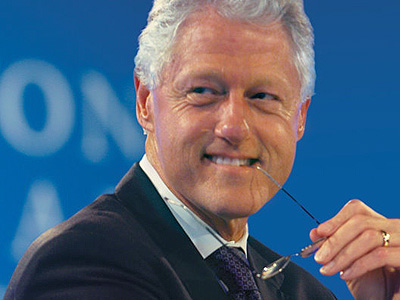
    Former president Bill Clinton had a private telephone conversation in late spring with Donald Trump at the same time that the billionaire investor and reality-television star was nearing a decision to run for the White House, according to associates of both men. Four Trump allies and one Clinton associate familiar with the exchange said that Clinton encouraged Trump’s efforts to play a larger role in the Republican Party and offered his own views of the political landscape.

    ….The tone of the call was informal, and Clinton never urged Trump to run, the four people said. Rather, they said, Clinton sounded curious about Trump’s moves toward a presidential bid and told Trump that he was striking a chord with frustrated conservatives and was a rising force on the right.

    One person with knowledge of Clinton’s end of the call said the former president was upbeat and encouraging during the conversation, which occurred as Trump was speaking out about GOP politics and his prescriptions for the nation.

    Conservative heads must be exploding right about now. Is the Trump candidacy just a devious Clinton scheme to screw up the Republican primaries? It’s just the kind of thing a Clinton would do, after all. Did Bill know that Trump would confirm every horrible stereotype of conservative intolerance that moderates have of the GOP, thus ensuring a Hillary win in November? Or was it really just a casual call and Trump is still the real deal? Or…or…maybe the whole thing is yet another Trump PR stunt? Or maybe Bill has a mole inside the Trump campaign? OMG, OMG, OMG.

    Anyway, the most fascinating thing about this is not the fact of the phone call itself, but the fact that four Trump allies spilled the beans to the Post reporters. That’s not just one loose-lipped nitwit. It’s as if Trump wanted this to get out. But why? And why the timing right before the first debate? Does Trump want to make sure he gets asked about this?

    And how does this affect Trump’s candidacy? Does it make him less attractive to tea partiers, since he was consorting with the devil a few months ago? Or is it a net positive, because it makes him more attractive to moderates, who figure maybe Trump is OK if Bill Clinton encouraged him to “play a larger role”?

    I dunno. I just want to know what conservative Trump supporters are thinking about this. I don’t see anything yet at Red State or The Corner or Hot Air or Power Line or Breitbart. Maybe they just haven’t caught up. Or maybe they don’t trust the reporting of the hated mainstream media in the first place. Stay tuned.

  • Abortion Supporters Need to Start Fighting Back


    Katha Pollitt cringed when she saw Planned Parenthood president Cecile Richards apologizing for the “tone” of the doctors caught in secret videos last month discussing the distribution of fetal tissue for medical research. Why, she asks, are abortion supporters so often in a defensive crouch?

    One reason is that “we fall in with messaging that unconsciously encodes the vision of the other side.” We talk about “agonizing” choices and fetal abnormalities, instead of just frankly defending the idea that most abortions are voluntary and are made for the simplest of reasons: because the mother didn’t want a child at that particular time. “When we gloss over these truths we unintentionally promote the very stigma we’re trying to combat. What, you didn’t agonize? You forgot your pill? You just didn’t want to have a baby now? You should be ashamed of yourself.”
    But there’s also a second reason:

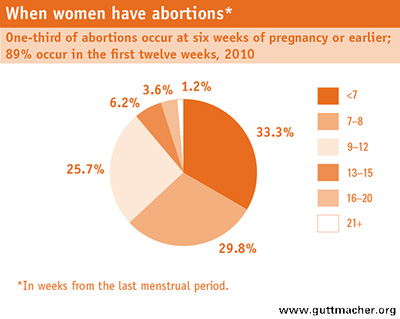
    Too many pro-choice people are way too quiet. According to the Guttmacher Institute, nearly one in three women will have had at least one abortion by the time she reaches menopause. I suspect most of those women had someone who helped them, too — a husband or boyfriend, a friend, a parent. Where are those people? The couple who decided two kids were enough, the grad student who didn’t want to be tied for life to an ex-boyfriend, the woman barely getting by on a fast-food job? Why don’t we hear more from them?

    It’s not that they think they did something wrong: A recent study published in the journal Psychological Medicine finds that more than 95 percent of women felt the abortion was the right decision….It is understandable that women who have ended pregnancies just wanted to move on. Why should they define themselves publicly by one private decision, perhaps made long ago? I’ll tell you why: because the pro-choice movement cannot flourish if the mass of women it serves — that one in three — look on as if the struggle has nothing to do with them. Without the voices and support of millions of ordinary women behind them, providers and advocates can be too easily dismissed as ideologues out of touch with the American people.

    There’s an analogy here to the gay rights movement. As long as gays stayed largely closeted, it was easy for most people to think there weren’t very many of them, and anyway, the few who were out there were in distant places like San Francisco and New York City. As more and more gays came out, that view was forced to fade away. The guy you chat with at the gas station is gay? The woman who’s been checking you out at the grocery store for the past ten years? Huh. They seem pretty unthreatening.

    The same is true of abortion. It’s easy to assume that most abortions are provided not to your kind of people, but to others who can be easily ignored or stigmatized. Inner city welfare recipients. Irresponsible teenage girls. Careless slackers who can’t be bothered to refill their prescriptions. But when it turns out your next-door neighbor had an abortion? Or the waitress at the diner you go to for lunch? Or your doctor? Then it gets a little harder to think of it as something unusual and sort of icky. It’s just something people do.

    The difference, of course, is that having an abortion isn’t a permanent lifestyle. Gays had a lot of incentive to come out: it meant they didn’t have to live a lie every day. But abortion rarely comes up in casual conversation. Keeping it private isn’t really much of a burden. So why bother telling everyone?

    Because Pollitt is right: everyone needs to know. Aborting a fetus isn’t murder. It’s not something to be ashamed of. It’s something to do if you get pregnant and don’t want a child at the moment. That’s it. And more people need to know it.

  • Don’t Panic! (Donald Trump Edition)


    Over the past few decades, how many times have you heard variants of this pearl of wisdom from political pundits?

    The American public is sick and tired of politics as usual. They’re angry at Congress and angry at the president. You can almost feel it out on the campaign trail. That’s why _______ is getting so much support. He’s different. He doesn’t represent politics as usual. He taps into that anger.

    We heard this about Herman Cain (and a cast of thousands of others) in 2012, Rudy Giuliani in 2008, Howard Dean in 2004, John McCain in 2000, Pat Buchanan in 1996, Ross Perot and Jerry Brown in 1992, Gary Hart in 1984, John Anderson in 1980, etc. etc.
    Do you notice how many of these folks won their party’s nomination? Let’s see: carry the one, ten plus three equals….oh yeah. That would be zero.

    Look: we’re in the silly season right now. It’s August. Congress is about to go into recess. We still have six months before anyone actually votes. Nobody’s paying much attention to the Republican race except political junkies. News is in short supply. And whatever else you can say about him, Donald Trump makes good copy. For now, everyone’s got the popcorn out and they’re enjoying the show, right along with Ant-Man and Mission Impossible.

    So, sure, Trump is a political outsider channeling voter anger blah blah blah. That’s not exactly a daisy fresh strategy. Nor a winning one. But Trump is like a housing bubble: you know he’s going to burst, but he can last a lot longer than you think. That’s what’s happening now: it’s been seven whole weeks since Trump announced his candidacy and he’s still polling well. ZOMG! So a lot of pundits have decided he’s the real thing and are penning columns that apologize for writing him off earlier.

    They will regret that. Seven weeks is nothing. Every candidate on the list above lasted longer than seven weeks. But they all flamed out eventually. So will Trump.

    The only advice I have on presidential campaigns that’s genuinely useful is this: Don’t panic. In the end, the bubbles will all burst, fundamentals will take center stage, and the winner will be someone fairly ordinary. In this case, it will almost certainly be Jeb Bush or Scott Walker, though there are a few other possibilities too.

    But Trump? Nope. So hold off on those apologetic columns for a little while longer. You won’t be sorry.

  • Iran Nuclear Deal Now Looks Almost Certain to Pass


    Yesterday, three Democratic senators announced their support for President Obama’s Iran deal: Tim Kaine of Virginia, Bill Nelson of Florida, and Barbara Boxer of California. Nelson and Kaine were both thought to be part of the pool of possible No votes, so their support changes the voting math in the Senate considerably. Greg Sargent explains:

    Take Nelson and Kaine out of that pool, and you’re left with around seven Senate Dems who seem like they could genuinely still vote No. Seven others who are thought to be undecided, or at least who can’t be ruled out as No votes: Harry Reid, Chris Coons, Benjamin Cardin, Joe Manchin, Cory Booker, Kirsten Gillibrand, and Tom Carper. If all of them vote No, that’s 14 Senate Dems opposing the deal. Opponents need 13 in order to get 67 Senators to override Obama’s veto of a measure blocking the accord.

    So opponents need to basically run the table, getting all but one of those 14 Senators. Carper is now leaning towards the deal. So is Joe Manchin. That is going to be very hard to pull off.

    Yep. I never really understood why Republicans agreed to a bill that effectively allowed the Iran deal to pass with the support of only one-third of the Senate, but they did. The result is that it will almost certainly pass, especially now that Obama is starting a serious push for votes. Opponents don’t have much hope left.

  • Dreaming about Debates


    Ed Kilgore tells us about his night:

    Ugh, dreamed about the Voters First Presidential Forum a good part of the night. ‘Twas even more boring the third time around.

    Oh lordy. I wonder if I dream about stuff like this? Probably. So even though it would frustrate Freud, I think it’s all for the best that I never remember my dreams.

  • Today’s Cliffhanger: Will Rick Perry Make It To the Main Debate Stage?


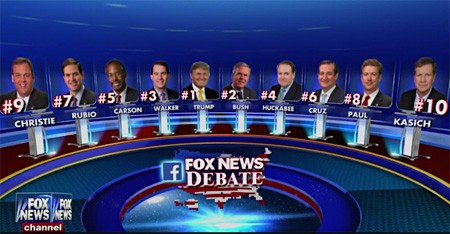
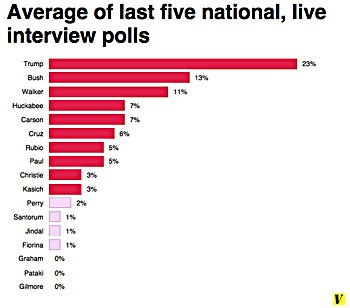
    Vox’s Andrew Prokop takes a look at the polls released today and gives us his projection of who’s going to make the cut for the main stage in Thursday’s Fox News Republican debate:

    Fox has said it will average the last five national polls before 5 pm today, and New York magazine’s Gabriel Sherman has reported that the network will use only live interview polls. If that’s the case, polls by NBC/WSJ, Monmouth, CBS News, Bloomberg Politics, and Fox News itself will be averaged….The candidates excluded from the primetime debate appear to be Rick Perry, Rick Santorum, Bobby Jindal, Carly Fiorina, Lindsey Graham, George Pataki, and Jim Gilmore.

    That’s kind of too bad about Perry. He’s been saying the occasional interesting thing lately, and while he’s unlikely to win, he seems more likely to me than Carson or Huckabee or Cruz.

    My guess is that no one has any problem with the other six who didn’t make it. Their support is minuscule and they don’t seem even remotely likely to improve much. But Perry? His formal qualifications are good—12 years as governor, ran once before in 2012—and you never know about all that Texas money sloshing around. And there’s really no downside. His famous “oops” from last time around was the most memorable moment of the debate cycle. If he does something as dumb this time, at least we’d get some good entertainment value out of it.

    Anyway, we’ll get the official word on all this from Fox in a couple of hours. I know you’re all waiting on the edges of your seats. As for me, it’s lunchtime in California. So I’m going to go get some lunch.

    UPDATE: Yep, this is how it turned out. Official Fox News announcement here.

