If you want to read about President Trump’s just-released budget, the rest of the news media has you covered. They have articles about cuts to food stamps, cuts to the border wall, cuts to the NIH, cuts to health research, cuts to Medicaid, cuts to the State Department, cuts to the EPA, trillions and trillions in cuts all over the place, and explainers about why 3 percent growth projections are ridiculous. Here’s the tl;dr version: Trump’s budget proposes huge cuts in spending on the poor along with preposterous assumptions about how much revenue they’ll raise. The details really don’t matter much since no one in Congress will read it. It’s just a statement of Trump’s callous guiding values.
So I’m mostly going to skip the whole thing unless someone points out something especially amusing. And someone has! Section 2 of the budget document is titled, “What went wrong: Inheriting $20 trillion in debt and a broken, stagnant economy.” Sure enough, it contains page upon page of woe. That Obummer dude sure did screw up the economy something fierce.
However, a reader emails to point out something he thinks I’d appreciate: “Note the cherry picking of dates going on around pages 6 and 7 of the just-released Trump budget. Just as do the climate ‘skeptics,’ the authors of the Trump budget document pick inconsistent starting dates when they calculate growth rates of various things in order to get the good or bad results they desire. The best, perhaps, is the growth rate for real private nonresidential fixed investment.”
Hmmm. Real private nonresidential fixed investment, you say? Here’s what the budget document says:
Due to high taxes, high regulations, and poor economic policies, real private nonresidential fixed investment has grown by only 1.3 percent each year (on a fourth quarter-over-fourth quarter basis) since 2007, compared to 4.9 percent annually before the recession.
Yikes! That sucks. Is it true? I admit that I can’t quite replicate their numbers, but let’s call it close enough for government work. It’s pretty nearly correct.
Of course, it only works if you start precisely at 2007 so that you include the big drop from the recession. Here’s what it looks like over the longer term:
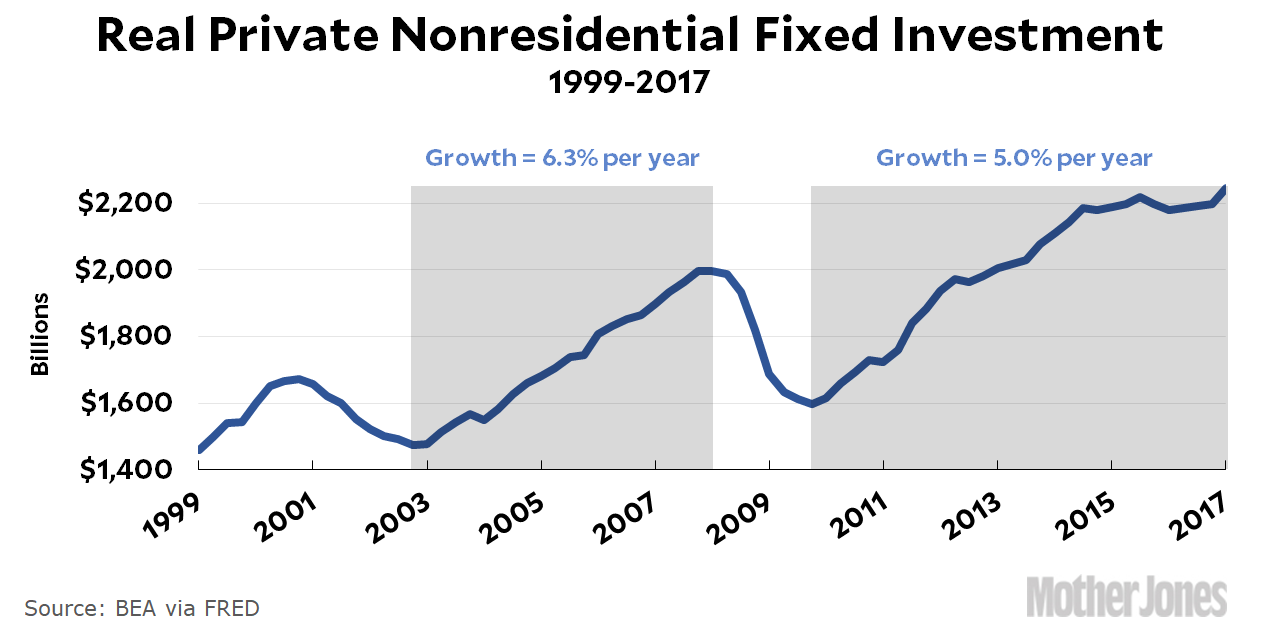
It doesn’t really look all that different anymore, does it? In fact, since the Bush-era growth rate caused a massive property bubble and subsequent massive crash, we might well prefer a wee bit less growth than we had before 2007.
I suppose it says something disturbing about me that I find this kind of technocratic lying with statistics more interesting than a thousand words about how the cuts to food stamps will hurt the poor. Then again, if you made it this far, it probably says something disturbing about you, too. In any case, I figure this is my comparative advantage. Everyone is writing about food stamps, but who else will point out the obscure but telling lies like this?