• Less Liberal Contempt, Please


    Michael Tomasky writes today that elite liberals need to make peace with middle America. We need to be willing to welcome folks to our side of the aisle even if they don’t agree with every single liberal piety:

    There are plenty of liberals out there in middle America, and plenty of liberalish moderates, and plenty of people who lean conservative but who aren’t consumed by rage and who think Barack Obama is a pretty cool guy and who might even have voted for him. These people are potential allies. But before the alliance can be struck, elite liberals need to recognize a fundamental truth: All of these people in middle America, even the actual liberals, have very different sensibilities than elite liberals who live on the coasts.

    First of all, middle Americans go to church….Second, politics simply doesn’t consume middle Americans the way it does elites on the coasts….They talk kids, and local gossip, and pop culture, and sports….Third, their daily lives are pretty different from the lives of elite liberals. Few of them buy fair trade coffee or organic almond milk. Some of them served in the armed forces. Some of them own guns, and like to shoot them….Fourth, they’re patriotic in the way that most Americans are patriotic. They don’t feel self-conscious saluting the flag.

    ….We need to recognize that in vast stretches of this country, hewing to these positions doesn’t make someone a conservative.

    There’s nothing especially new here. It’s basically the old problem of Reagan Democrats, which liberals have been wrestling with for a couple of generations. I’d argue that it has two fundamental origins.

    First, the great sort. A century ago, hardly anyone had more than a high school education. Both of my grandfathers were plenty smart enough to go to college, but neither one did because they couldn’t afford it. (I don’t need to bother telling you about my grandmothers, do I?) Because of this, people of widely different intelligence mixed together all the time. There wasn’t really much choice.

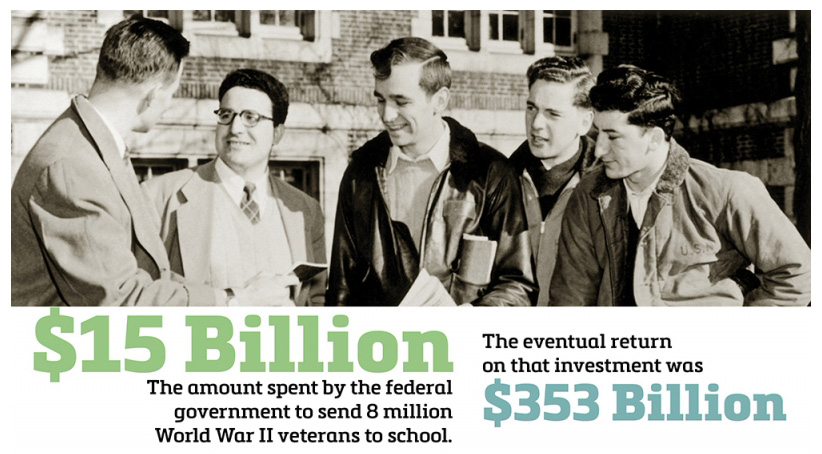
    After the war, that changed. College became widely available, and nearly everyone who was smart enough to go, did so. Thirty years later, their kids mostly went to college too. But among the postwar generation that didn’t go to college, their kids mostly didn’t either. Since then, there’s been yet another generation, and we’re now pretty solidly sorted out. Those of us with college degrees marry people who also have degrees. Our kids all go to college. Our friends all went to college. And we live in neighborhoods full of college grads because no one else can afford to live there.
    On the other side, it’s just the opposite. Your average high school grad marries someone who’s also a high school grad. (If they get married at all.) Their kids are high school grads. Their friends are high school grads. And their neighborhoods are full of high school grads.

    The two groups barely interact anymore. They don’t really want to, and they’re physically separated anyway. (More and more, they’re also geographically separated, as liberals cluster in cities and conservatives live everywhere else.)

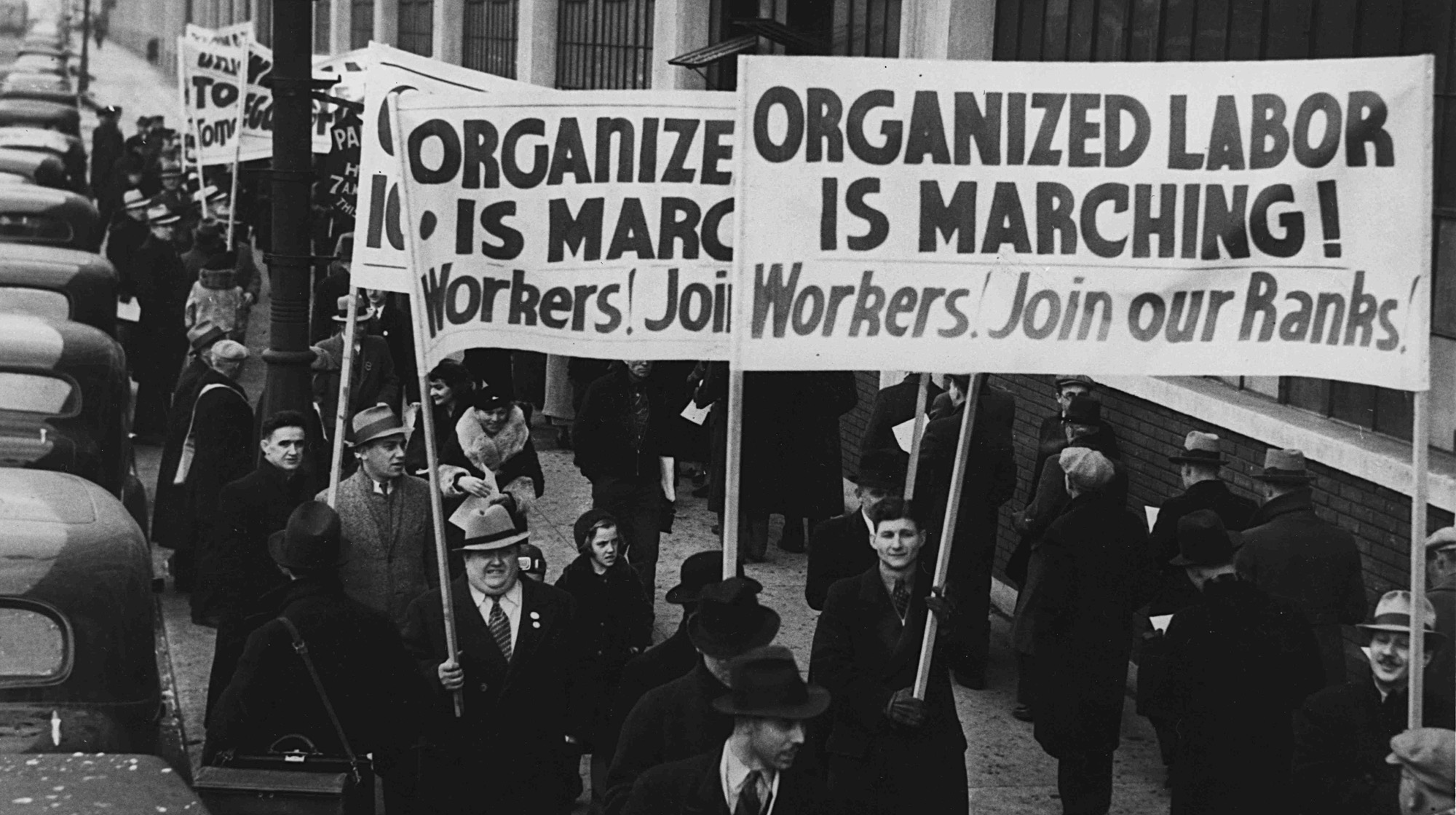
    Second, there’s the decline of unions. Fifty years ago, the working class commanded plenty of political respect simply because they had a lot of political power. No liberal in her right mind would think of condescending to them. They were a constituency to be courted, no matter what your personal feelings might be.

    But young liberals in the 60s and 70s broke with the unions over the Vietnam War, and the unions broke with them over their counterculture lifestyle. This turned out to be a disaster for both sides, as Democrats lost votes and workers saw their unions decimated by their newfound allies in the Republican Party. By the time it was all over, liberals had little political reason to care about the working class and the working class still hated the hippies. Without the political imperative to stay in touch, liberals increasingly viewed middle America as a foreign culture: hostile, insular, vaguely racist/sexist/homophobic, and in thrall to charlatans.

    By the early 90s this transformation was complete. On the liberal side, elites rarely interacted with working-class folks at all and had no political motivation to respect them. Republicans swooped in and paid at least lip service to working-class concerns, and that was enough. It didn’t put any more money in their pockets, but at least the Republicans didn’t sneer at their guns and their churches and their fatigue with rapid cultural change.

    I don’t think there’s any good answer to the great sort. Certainly not anytime in the near future. But this affects Republicans too, so it doesn’t have to be a deal breaker. The bigger problem, I think, is the decline of unions, which broke the political ties between working-class and middle-class liberals. There’s no realistic way that unions are going to make a comeback, which means that liberals need to come up with some other kind of working-class mass movement that can repair those ties. But what? This has been a pet topic of mine for years, but I’m no closer to an answer than I was when Reagan took office.
    In the meantime, we can still try to do better. Rhetorically, the big issue dividing liberal elites and middle America is less the existence of different lifestyles, and more the feeling that lefties are implicitly lecturing them all the time. You are bad for eating factory-farmed meat. You are bad for enjoying football. You are bad for owning a gun. You are bad for driving an SUV. You are bad for not speaking the language of microaggressions and patriarchy and cultural appropriation. Liberals could go a long way toward solving this by being more positive about these things, rather than trying to make everyone feel guilty about all the things they enjoy.

    Substantively, liberals might have to shift a little bit, but not by a lot. We don’t have to become pro-life, but we need to be more tolerant of folks who are a little uneasy about the whole subject. We don’t need to become Second Amendment zealots, but we should be more tolerant of folks who don’t want to be sneered at for keeping a gun around the house for self defense. We don’t need to tolerate racism, but we should stop badgering folks for not being able to express themselves in the currently approved language of wokeness.

    It goes without saying—which is why I need to make sure to say it—that the whole point here is to broaden our appeal to people who are just a little bit on the conservative side of center. That is, persuadable, low-information folks who agree with us on some things but not on others. The hard-right conservatives are out of reach, and there’s no reason to try to appeal more to them.

    In the same way that right-wing Republicans need to learn how to talk about women’s issues (see Akin, Todd), Democrats need to learn how to talk about middle America. No more deplorables. No more clinging to guns and religion. Less swarming over every tin-eared comment on race.

    In general, just less contempt. Does it matter that working-class folks often display the same contempt toward us? Nope. As any good lefty knows, contempt from the powerful is a whole different thing than contempt from the powerless. We need to do better regardless of what anyone else does.

    Can we do it? It’s worth a try.
  • Chart of the Day: The Sean Spicer Show


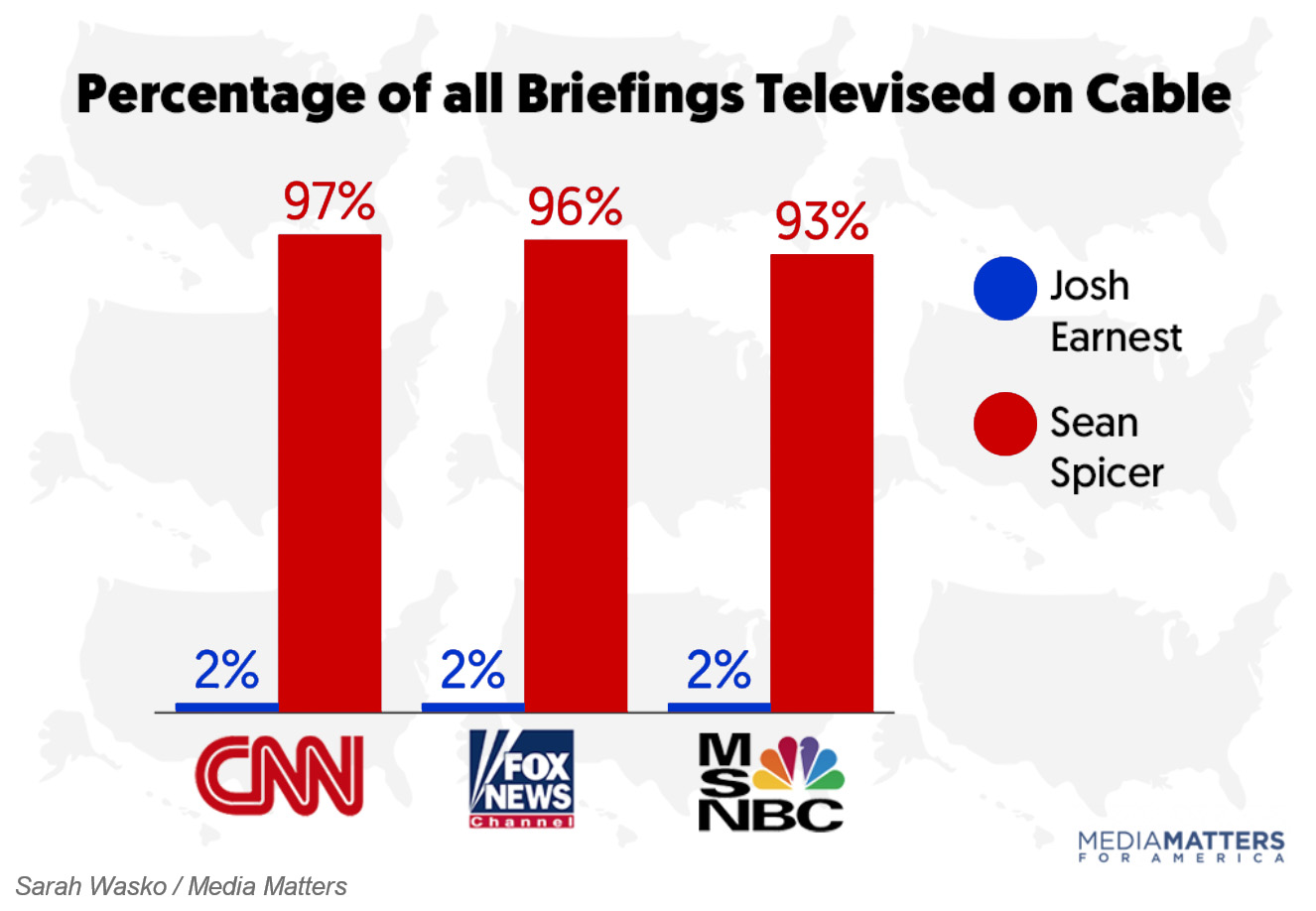
    Here’s a fun chart from Media Matters:

    (Note: I have switched the colors in the graph to the correct red-state-blue-state representation.)

    The remarkable thing here is not that President Obama’s press secretary was televised so little. That’s normal. The remarkable thing is that President Trump’s press secretary is televised so much. This is, pretty obviously, not because Spicer is singularly transparent and produces loads of news. It’s because the guy is a train wreck and we can’t look away.

    But here’s a question: the standard excuse for this is that Spicer gets great ratings. But does he? I know he did in his first few weeks, but are his ratings still higher than ordinary news? I can’t seem to find any evidence one way or another.

  • Lunchtime Photo


    Today’s picture has been personally curated by my mother from my vast backlog of lunchtime photos. To me, it’s an orange rose. To the rest of you, it’s an Easy Does It®, an All-American Rose Selection in 2010. Parentage is (Queen Charlotte x Della Balfour) x Baby Love. Would it really smell as sweet by any other name?

  • Senate Intelligence Committee Gets Ready to Start Dishing Out Subpoenas

    Michael Cohen is in the news again. Not for this:

    But because he’s been “invited” to testify before the Senate committee investigating the Trump-Russia connection:

    I declined the invitation to participate, as the request was poorly phrased, overly broad and not capable of being answered,” Cohen told ABC News in an email Tuesday.

    After Cohen rejected the congressional requests for cooperation, the Senate Select Intelligence Committee voted unanimously on Thursday to grant its chairman, Sen. Richard Burr of North Carolina, and ranking Democrat, Sen. Mark Warner of Virginia, blanket authority to issue subpoenas as they deem necessary.

    Martin Longman didn’t expect this:

    It’s still a bit premature to be effusive or unreserved in my praise here. But I have to give credit where it is due. The Republicans on the Senate Intelligence Committee have shown courage here and real indications of seriousness. I wouldn’t have predicted it but I’m willing to acknowledge it now.

    The Senate Intelligence Committee has historically been more serious and bipartisan than most committees, so this is probably not quite as surprising as it seems. Nonetheless, it’s good to see some confirmation that there are still a few redoubts of integrity in Donald Trump’s Washington DC.

  • America the Beautifull


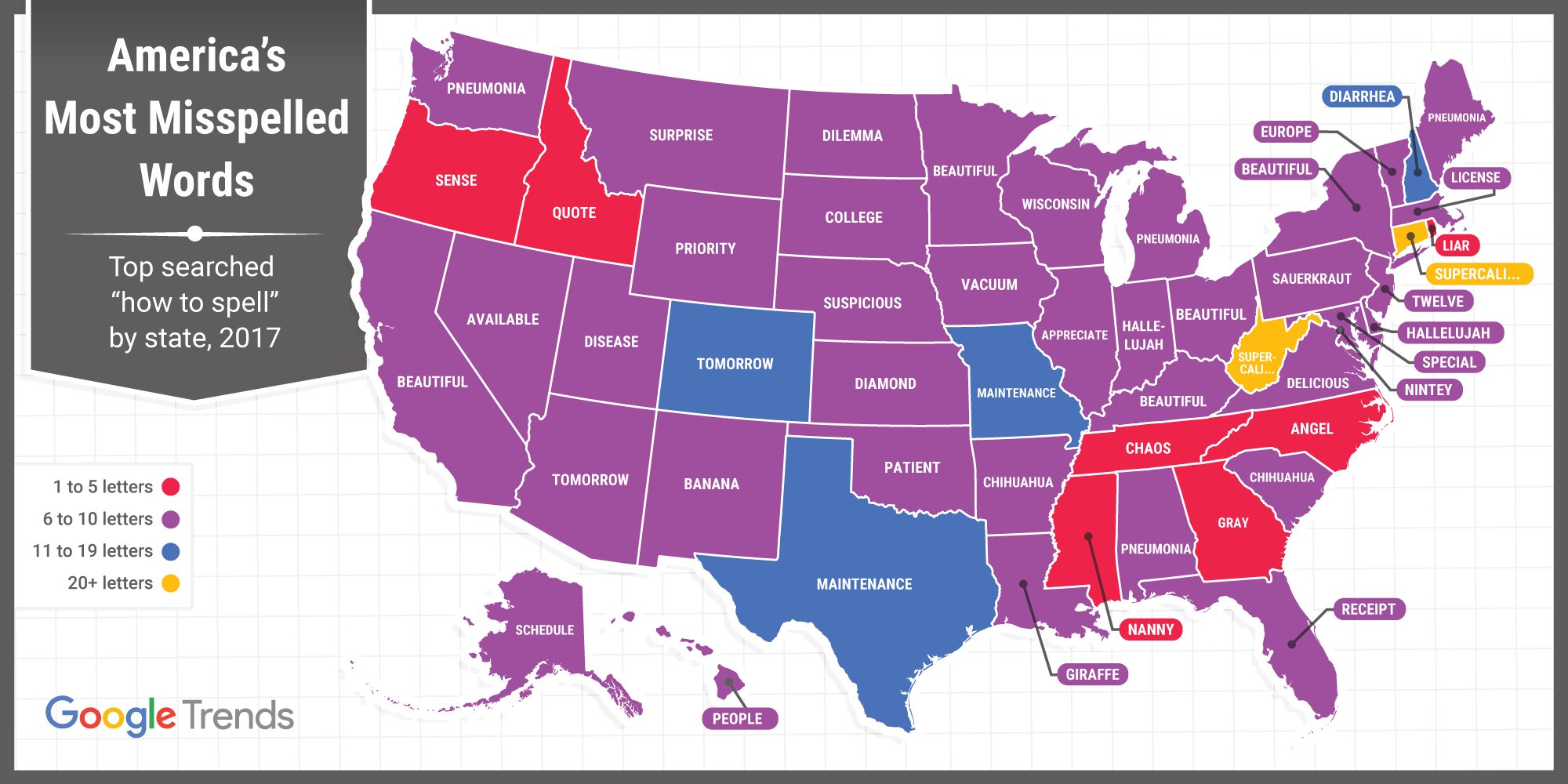
    Google’s Simon Rogers presents us with a map of the words each state’s residents query most often:

    Hmmm. Beautiful is the winner, coming up #1 in five different states. Pneumonia is next. It’s #1 in three cold, northern states—which makes sense—but also in Alabama for some reason. There are also several unique oddities:

    • In Idaho, they want to know how to spell quote. Do they quote people a lot in Idaho? And why do they have trouble spelling it?
    • In Wisconsin, they want to know how to spell Wisconsin. This is a serious failure of their primary school system.
    • In Washington DC, they want to know how to spell nintey, a word that doesn’t exist. That seems appropriate. Perhaps this is a misspelling of ninety by the mapmaker? If so, why does ninety occupy so much attention in DC?
    • Lots of people in Vermont are apparently thinking of fleeing to Europe, but only after they figure out how to spell it. Ditto for South Dakotans who want to go to college.

    The headline of this post is a Twitter test. How many people do you think will correct me because they don’t actually click the link?

    UPDATE: Yes, Washington DC is fixated on ninety. But why?

  • Kids Are Playing Too Damn Much These Days


    The Washington Post reports that rigorous instruction is being done earlier and earlier these days:

    A group of students at Woodside Community School in Queens peered up at their teacher one morning this month, as she used an overhead projector to display a shape. It looked like a basic geometry lesson one might find in any grade school, except for the audience: They were preschoolers, seated cross-legged on a comfy rug.

    “What attributes would tell me this is a square?” asked the teacher, Ashley Rzonca.

    A boy named Mohammed raised his hand, having remembered these concepts from a previous lesson. “A square has four angles and four equal sides,” he said.

    Oh please. When I was in preschool we had to solve a differential equation in our heads before we got our chocolate milk.1 This is nothing. Kids these days need to toughen up.

    1Apologies. I’m exaggerating. I didn’t even go to preschool. Differential equations didn’t come until first grade.

  • At the State Department, Sometimes Silence Speaks Volumes

    The State Department held a briefing today. Dave Clark, a reporter for Agence France Presse, asked acting assistant secretary Stuart Jones a pointed question about President Trump criticizing Iranian democracy while standing next to officials of Saudi Arabia—not exactly a beacon of democracy itself. “How do you characterize Saudi Arabia’s commitment to democracy?” he asked. Is democracy a barrier against extremism? Here’s the reply:

    This is being characterized as a 20-second silence, but in fairness I think it was more like 19 seconds. That kind of exaggeration is typical of the fake news media.

  • The Paris Climate Accord Is Superficial. That’s Why Trump Wants to Kill It.


    The Paris climate accord is not legally binding. At any time, the United States can simply announce that its goals have changed and release a new, less ambitious plan to reduce greenhouse gas emissions (a “Nationally Determined Contribution” in Paris-speak). Since everything is entirely voluntary and there’s no legal enforcement mechanism for any of it, David Roberts says there’s no reason to consider pulling out:

    Trump can weaken the US NDC, without penalty. He can roll back all of Obama’s carbon regulations, without penalty. He can simply fail to meet the targets of the NDC, without penalty. All he has to do is explain himself at the five-year review, and the explanation can be as minimal as he likes.

    Paris’s only constraint on Trump comes through intangibles like reputation and influence. It imposes absolutely no practical or legal constraint on his actions—not on trade policy, not on domestic energy policy, nothing.

    That means all talk of Paris being a “bad deal” for the US, or hurting US trade, or affecting the US coal industry in any way, is nonsense. Paris does not and cannot do any of those things. The US voluntarily offered up an NDC and can voluntarily offer up a different or weaker NDC any time it wants.

    This is an awkward fact for the nationalist contingent. They need Paris to be a boogey man. So they’ve ginned up a novel legal argument.

    This novel legal argument is even more comical than these kinds of paper-thin justifications usually are, and you can read all about it at the link. But I think Roberts misses the point. Since Paris is voluntary, there’s no concrete reason for Trump to pull out or to stay in. The United States can do whatever it wants either way. The whole thing is about signaling, and that’s something that rules Trump’s world. Barack Obama considered it important to signal that America was committed to addressing climate change. Trump is committed to a worldview in which climate change is a hoax. He wants a dramatic way to signal this, and pulling out of Paris would be just the ticket.

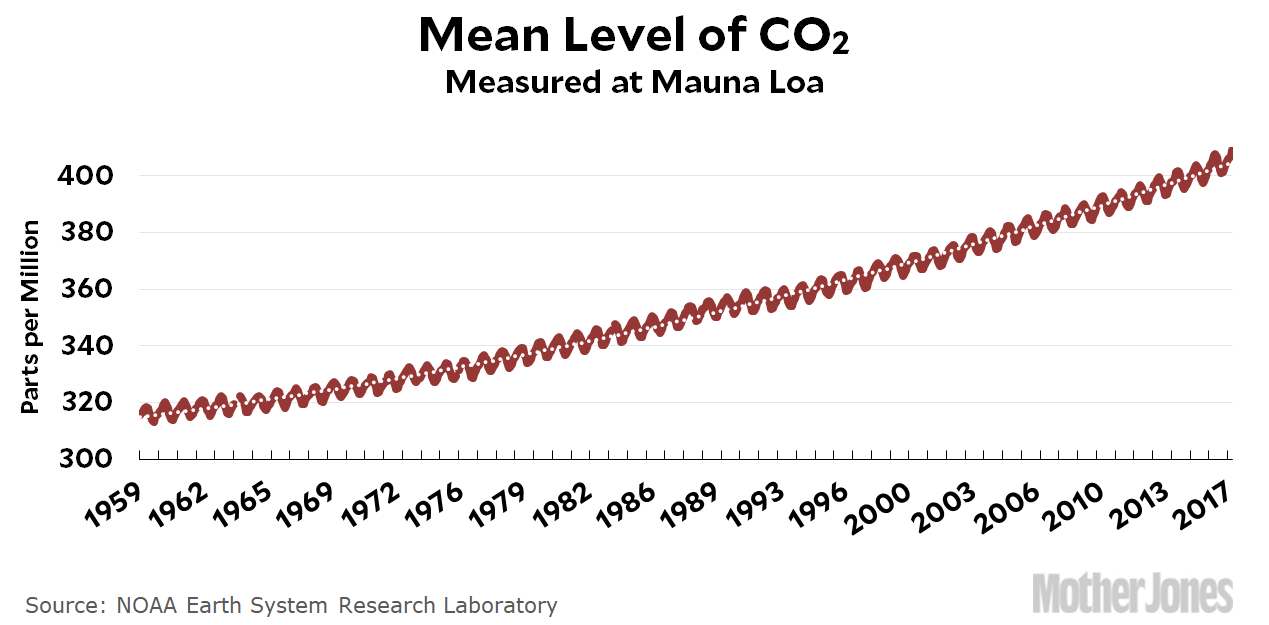
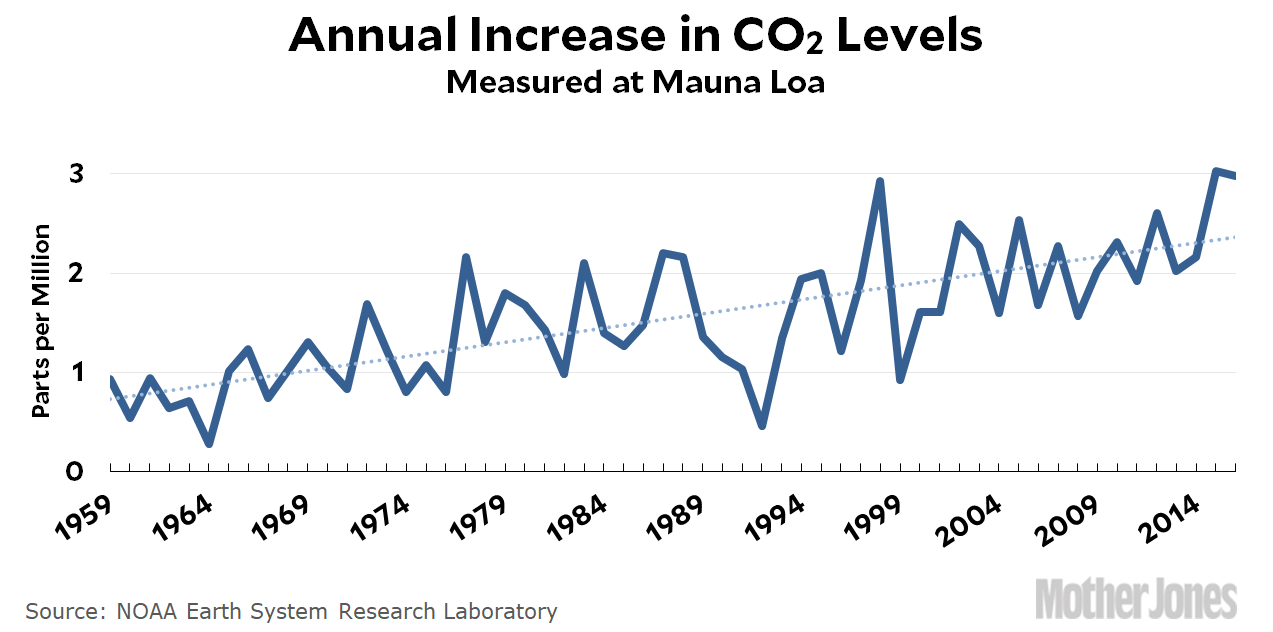
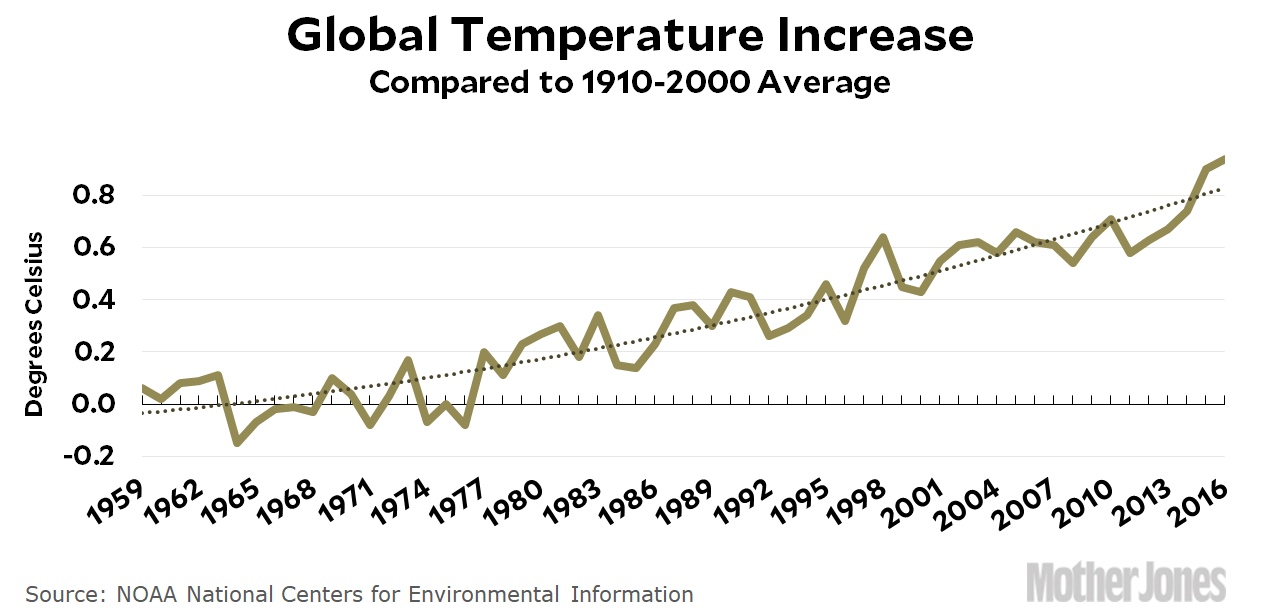
    Needless to say, you can decide for yourself if climate change is a hoax. The data is very clear and easily obtainable.

  • Leaking Is More Science Than Art These Days


    Is the intelligence community going overboard with the leaks?

    I don’t have a firm opinion about this yet, but I will say this: Whoever is leaking the dirt about Jared Kushner is doing a very considered job of it. Instead of just dropping a big bomb, they seem to be very carefully dropping one tiny new item every few days. First we hear that a person “close to Trump” is part of the FBI investigation. Then we hear it’s Kushner. Then we hear it’s about Russia. Then we hear it’s about setting up backchannel comms. This guarantees a steady drip of new headlines and keeps the story in the news for weeks and weeks. It’s the most damaging possible way of handling leaks like this.

    I’ll cop to some partisan feelings about this. Is it wrong to deliberately string this stuff out in order to cause maximum damage? Sure, of course. But it’s also what Julian Assange did to Hillary Clinton. It’s what Judicial Watch did to Clinton. It’s what the FBI did to Clinton. It’s what Republican congressional committees did to Clinton. This is just the way the game is played these days, and there are no innocents on either side of the aisle.

  • The Dead Pool – 30 May 2017


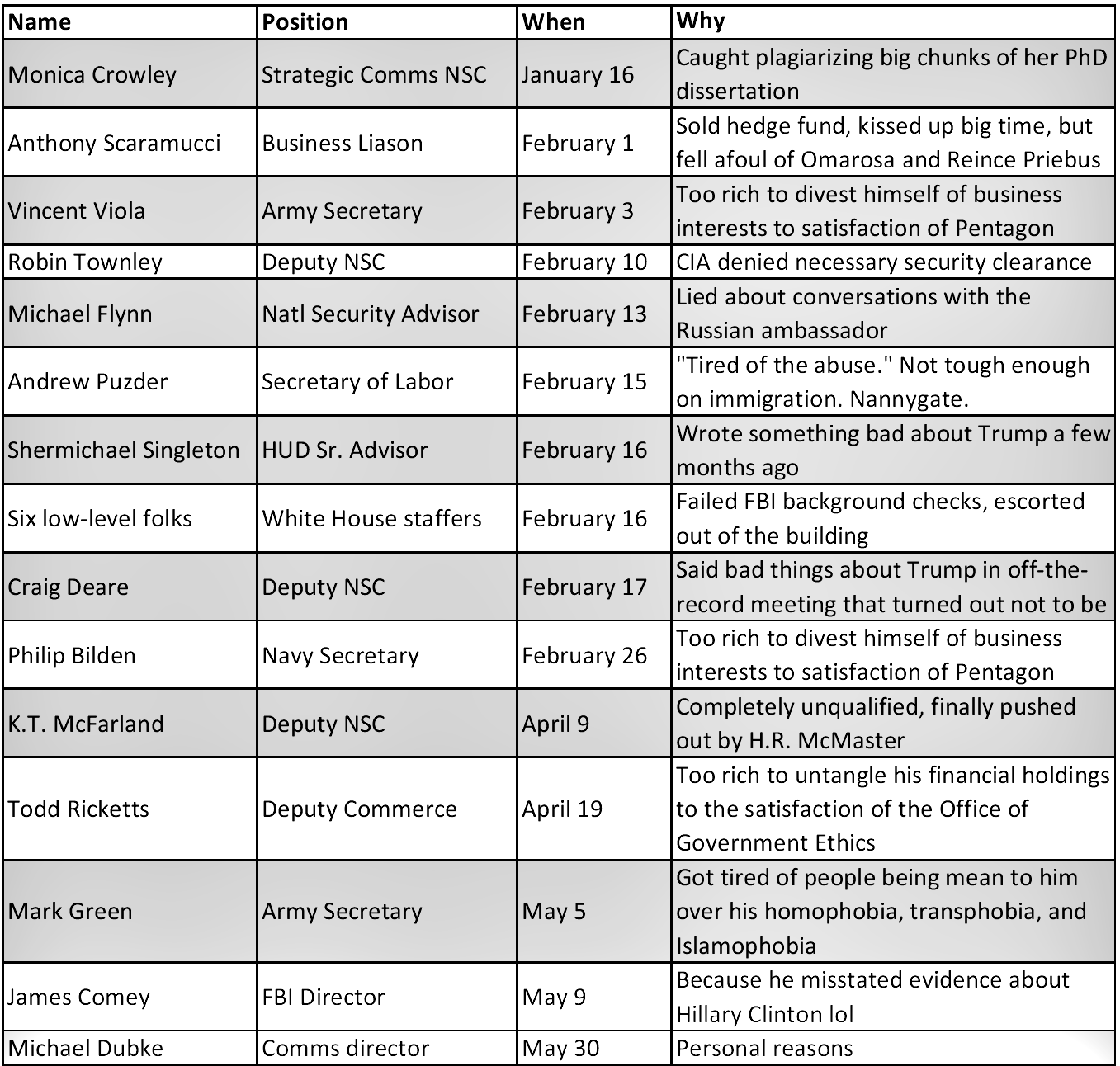
    As Donald Trump is (yet again) pondering a “broad shakeup” of his staff because he can’t conceive that his problems might be of his own making, his communications director has resigned. Michael Dubke says it’s for “personal” reasons, but it seems more likely that he’s getting out while the getting is good. Why wait to be fired as part of a Jared-Ivanka-Donald purge, after all?