• Tillerson: Trump Doesn’t Speak for the State Department

    Secretary of State Rex Tillerson talks to Chris Wallace today about American values:

    https://www.youtube.com/watch?v=fl7iZUTTrD0

    Here’s a paraphrase:

    WALLACE: Foreign leaders are questioning the president’s values.

    TILLERSON: The State Department represents American values.

    WALLACE: And the president?

    TILLERSON: No one doubts the commitment of the American government.

    WALLACE: And the president?

    TILLERSON: The president speaks for himself.

    WALLACE: But not for you?

    TILLERSON: I’ve made my own comments about that.

    So Tillerson has now joined Mnuchin, Cohn, Mattis, and the service chiefs in distancing himself from his president. Cabinet meetings must be a real joy these days.

  • Trump Asked Sessions to Drop Arpaio Case

    Sigh:

    As Joseph Arpaio’s federal case headed toward trial this past spring, President Trump wanted to act to help the former Arizona county sheriff who had become a campaign-trail companion and a partner in their crusade against illegal immigration. The president asked Attorney General Jeff Sessions whether it would be possible for the government to drop the criminal case against Arpaio, but was advised that would be inappropriate, according to three people with knowledge of the conversation.

    ….Responding to questions about Trump’s conversation with Sessions, White House press secretary Sarah Huckabee Sanders said, “It’s only natural the president would have a discussion with administration lawyers about legal matters. This case would be no different.”

    I guess nobody is surprised about stuff like this anymore, but honestly it’s like living in a banana republic these days. I wonder if Trump will ever learn that the criminal justice system is not just a plaything of the president?

    Nah.

  • Bad History and the Civil War: Survey Results!

    Yesterday I asked the hive mind about how the Civil War was taught in high school back in the 70s and 80s. The whole thread is worth reading, but here are a few highlights.

    First, I got a number of responses from folks who were in high school in the 50s and 60s. Unsurprisingly, most of them remember a pretty gauzy view of the war, and not just in the South. For example:

    MG: We spent about half the year studying the Civil War in my 5th grade social studies class in 1971-1972 at Cayuga Heights Elementary School outside of Buffalo, NY. I was a pretty good student, and here’s what I still remember:
    1. The war was fought over tariffs. Lincoln only decided to free the slaves as an afterthought.
    2. Lee was a great general.
    3. Stonewall Jackson was courageous
    4. JEB Stuart was a great cavalry leader
    5. Pickett’s charge was a bloodbath.
    6. Sherman’s march to the sea: He terrorized civilians and burned Atlanta to the ground.
    7. General Grant drank and smoked cigars.
    8. After the war, “carpetbaggers” from the north came and stuck their noses in the South’s business.

    nancy: Missouri in the 50s….I remember being taught Grant was a drunk and loser.

    paulgottlieb: I was born in 1943, and the American History I took as a child totally reflected the Dunning School bullshit: Firm but fair masters, happy, childlike slaves, and the rest a society of noble and courageous cavaliers and refined Southern Belles. And after the tragic War of Northern Aggression, the plague of greedy slimy carpetbaggers invading the South and creating a disastrous era of misrule by clown-like Negros and greedy Northerners. And this is how history was taught in the Chicago public schools. I can only imagine how it was taught in South Carolina

    In the 70s and 80s, things got better:

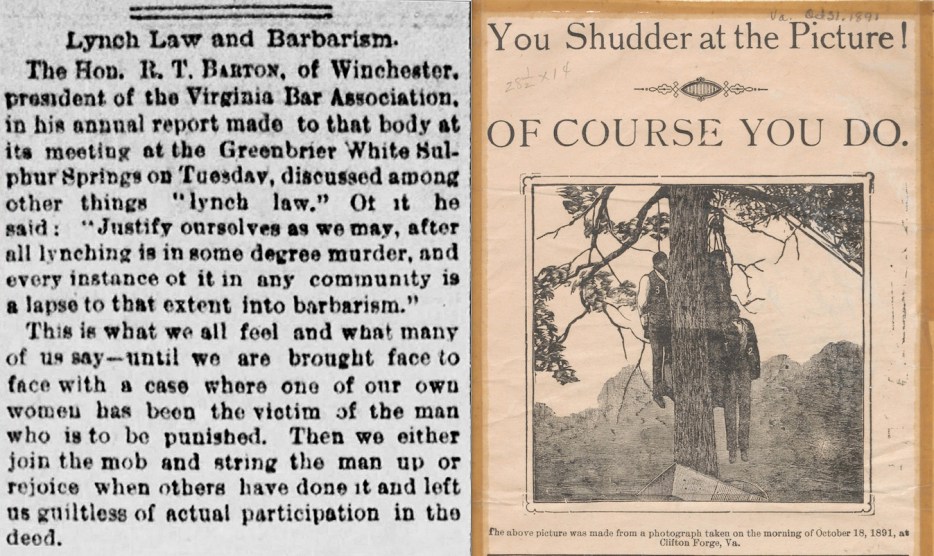
    emustrangler: Vermont in the 90’s seemed pretty fair. Reconstruction was given relatively brief treatment (I suspect not to cover up history, but because it is both kind of a downer, and because it didn’t involve any wars), but what was taught seemed pretty accurate and straightforward. There was a nod to “other issues” in teaching the causes of the Civil War, but slavery was treated as the primary issue of contention. The KKK, lynchings, etc were discussed. Jim Crow got a lot of attention.

    Vault Boy: North Florida in 2011 here….They didn’t shun from teaching the centrality of slavery in everything that led up to the Civil War, or as the primary cause that framed all the other causes (states’ rights, economic factors, etc.). If there’s one thing I can think of, the curriculum did mention how groups like the Klan stopped African Americans from voting, but didn’t really go into how widespread the terrorism and extrajudicial violence really were.

    Mateo: So I was in school during the 90s in NYC. We were more or less taught how evil slavery was, how the Civil War started (to a point, anyway—I wasn’t taught how the North benefited from slavery, for example, until later in life), the major battles, Reconstruction and the years before and going into Jim Crow. It was pretty explicit in its idea that slavery was the singular reason and justification for the war.

    Guscat: I studied US history in high school in the South in the 1970s. To be honest, I knew a lot more about history than my teacher did but he was very good for the period. He made it clear slavery was the main cause of the Civil War….He pretty much skipped over Reconstruction which in all fairness is a messy, in many ways kind of tedious time in US history (I read Eric Foner’s book which I found tough going and I love academic history books).

    royko: I was in public school in the suburbs of Chicago in the late 80s / early 90s….Slavery was front and center in the Civil War, as taught….Reconstruction came with negative connotations. The subtext (as I said, they were trying to be objective) was that Reconstruction somehow messed up wonderful Lincoln’s dream and led to carpetbaggers and unsavory things. And then it ended.

    prettyboywally: In Colorado in roughly 1987, I learned (and remember the textbook saying) what you’ve outlined: Equal rights forced on an unwilling white population, sullen resistance from day one until southerners were able to convince or compel the federal government to quit trying. I remember it being characterized as a briefly hopeful period, during which blacks were elected to office and able to access some of the rights they had been promised, followed by an increasingly violent period in which the KKK’s terrorism and the army/government’s frustration resulted in a desertion of black people to their fates. No nonsense about bad black government, but some mention of carpetbaggers and scalawags and their capitalizing on a defeated South to make money.

    The strongest sense I got from reading the post-70s commenters is that current instruction about the war itself is fairly good, but the Reconstruction era and beyond gets very little attention. The biggest problem isn’t so much that Reconstruction+ (i.e., 1865-1900) gets sugarcoated—although there’s clearly still some of that—but that it simply gets ignored. It’s a day or two in class and two or three pages in the textbook. Then it’s off to the robber barons and the Spanish-American War.

    I can imagine a bunch of excuses for this. It spares the feeling of Southerners. The bare truth is really brutal—maybe too brutal for high school. Reconstruction proper lasted “only” a decade, so a few days out of 180 in the school year is fair. It shows the United States in perhaps its worst light ever—racist, vicious Southerners who were enabled by racist, apathetic northerners—and national history courses in all countries tend to glide over the worst parts of their history.

    The other topic that got a lot of discussion was the role of popular culture. A number of people suggested that their sense of the war owed a lot more to movies and TV shows than to history classes. As we’ve progressed from Gone With the Wind to Roots to 12 Years a Slave, the gauzy view of the Civil War has dwindled. But there’s an obvious problem here: popular culture may have gotten better in its portrayals of slavery and the Civil War, but not Reconstruction+. The reason is equally obvious: slavery and the war are dramatic, while Reconstruction+ is tedious and dreary. There are no exciting action sequences during Reconstruction+ and no happy endings. But Reconstruction+ is at least as important as the Civil War itself, and without it there’s a whole lot of later American history that you can’t really understand.

    Needless to say, Reconstruction+ could be made both exciting and accurate. Maybe it’s time for someone to do a Roots-like miniseries that portrays the hard truth about Reconstruction+ through the eyes of a few characters that it follows for 30 or 40 years. Why not?

    POSTSCRIPT: Is there a name for the entire period from 1865-1900? I’ve been using the extremely awkward Reconstruction+ in this post, but only because I don’t have anything better.

  • Today’s Trump O’Clock Roundup

    It’s been a fascinating afternoon. Here’s a roundup:

    • Hurricane Harvey will be hitting the Texas coast tomorrow morning. “This is right up President Trump’s alley,” said Tom Bossert, a Homeland Security adviser. “Not only has he showed leadership here, but his entire focus has been on making America great again. He is focused on the Americans who voted him into office, he’s focused on the Americans who didn’t vote him into office.” That’s good to hear, I guess.
    • Trump is also focused on undocumented immigrants. He’s urging everyone to evacuate the coastal areas, but he’s also decided to keep all Border Patrol checkpoints open as long as possible. So you have your choice: you can either stay put and risk dying, or you can evacuate and risk being picked up by the Border Patrol. Quite a guy, our president.
    • While everyone was focused on the hurricane, Trump also decided to pardon Sheriff Joe Arpaio. A court ordered Arpaio to stop racial profiling, and then held him in contempt when he refused. Trump’s white base should be thrilled by the pardon.
       
      With this action, Trump is basically saying that courts have no authority to enforce the law on agents of the state. I wonder if it will be challenged in court? Everyone always says the pardon power is absolute, but I don’t think that’s ever been tested. After all, the language of the First Amendment is also absolute, but the Supreme Court has carved out all kinds of exceptions. (But who would have standing to sue?)
    • Sebastian Gorka has resigned from his White House position doing… something. No one has ever figured out what. “Given recent events,” he wrote in his resignation letter, “it is clear to me that forces that do not support the MAGA promise are – for now – ascendant within the White House. As a result, the best and most effective way I can support you, Mr. President, is from outside the People’s House.”
       
      But did Gorka resign or was he fired? Here’s the New York Times: “One of the officials said that the president’s chief of staff, John F. Kelly, had telegraphed his lack of interest in keeping Mr. Gorka over the last week in internal discussions. Mr. Gorka, a deputy assistant to the president, had been on vacation for at least the last two weeks, with no clear assigned duties to hand to others, that official said.”
    • And just to finish off the day, Trump signed an executive order officially banning transgender people from serving in the military. What a dick.

    That was Trump O’Clock on Friday, the 25th of August. Join us tomorrow for another edition.

  • Bad History and the Civil War: A Survey

    I’m not sure how to research this, so I’ll just ask the hive mind: How is the Civil War and the Reconstruction Era taught these days? I’m not so much talking about the South as I am about everywhere else.

    Due to an odd set of events, I never took an American history course that covered this era, and my experience would be 40 years old anyway. Nonetheless, I read a fair amount on my own back in the 80s, and roughly speaking it was all pretty consistent: lots of arguments about slavery in the antebellum period; secession of the Southern states, mostly due to slavery, followed by the war itself; a short try at doing the right thing in the decade after the Civil War; massive resistance to doing the right thing by whites in the South; and the eventual end of even that much when northerners got tired of the whole thing. Then we got lynchings, disenfranchisement, Jim Crow, and so forth.

    That’s the tl;dr version, and I don’t mean to imply that every author described things the same way. But none of the stuff I read evaded the subject of slavery or retailed a gauzy portrait of the antebellum South. Nor did anyone suggest that freed slaves misruled the states they controlled, or that the rebellion against Reconstruction was anything other than simple white supremacy. There was no “Lost Cause” nonsense and no Gone With the Wind nostalgia.

    In other words, I never had to “unlearn” bad history about the Civil War. The current view of the Civil War era is one that I’ve had since I first learned about it. In fact, I was surprised to learn in later years that bad history even existed.

    So my question is this: for most people, everything they ever learned about the Civil War came from high school or college history classes. So how was this stuff taught back in the 70s? Was there really a lot of bad history, which is why so many people now have to unlearn it? Was the bad history confined to the South? Or did the bad history mostly ooze into people’s minds via popular culture one way or another?

    I’m just curious. If you took a class during the 70s or 80s that covered the 1860-1900 period—in either high school or college—what were you taught? And what part of the country were you in when you learned it? Let us know in comments.

  • Another Look at Corporate Concentration in America

    Is American business more concentrated than in the past? That is, do big companies control more of the market and therefore wield more market power? A knowledgable correspondent recommends a new paper by “the guru on measuring concentration in the U.S.” It contains several measures of concentration, but it seems like the best is their calculation of a GINI coefficient. This is the same GINI that’s typically used to measure income inequality. Zero means every business is of equal size while one means a single business controls the entire market. Here it is for the past three decades:

    This suggests that concentration has been steadily increasing since at least 1988. And that’s exactly what the authors, Lawrence White and Jasper Yang, conclude: “We find that there has indeed been a moderate but continued increase in aggregate concentration since the mid 1990s.”

    But that’s not the whole story. White and Yang also say a few other things:

    • “The level of aggregate concentration in the U.S. economy has little connection to the state of competition in relevant markets and thus to antitrust policy in the U.S.”
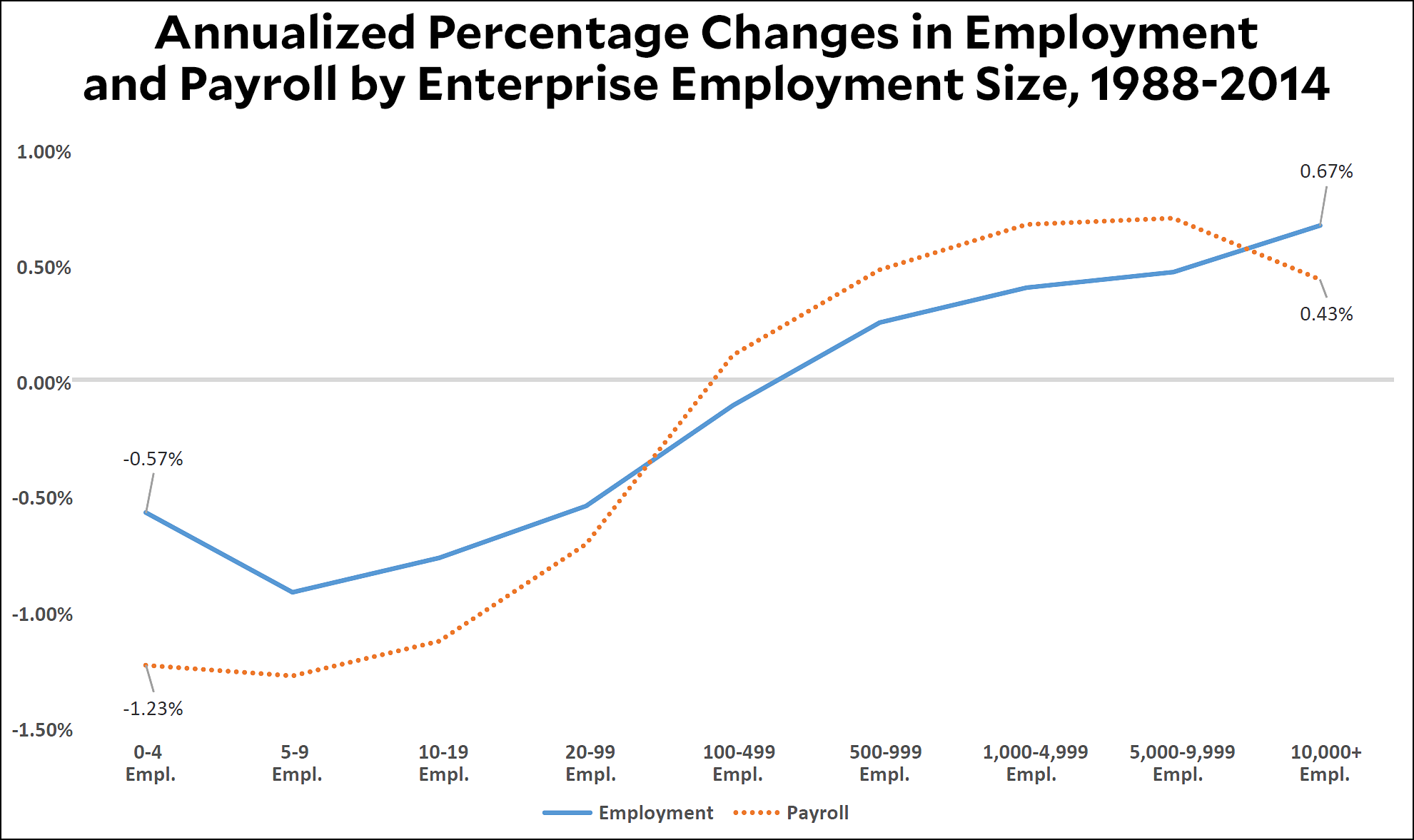
    • Since 1988, big companies have gotten bigger and small companies have gotten smaller. The difference is fairly dramatic:

      Over time, these changes add up. Since 1988, big companies have outgrown small companies by 30-40 percent.

    • However, when you look at simpler measures of size, there’s not much to see. Total employment and payroll of the biggest companies has changed only slightly.
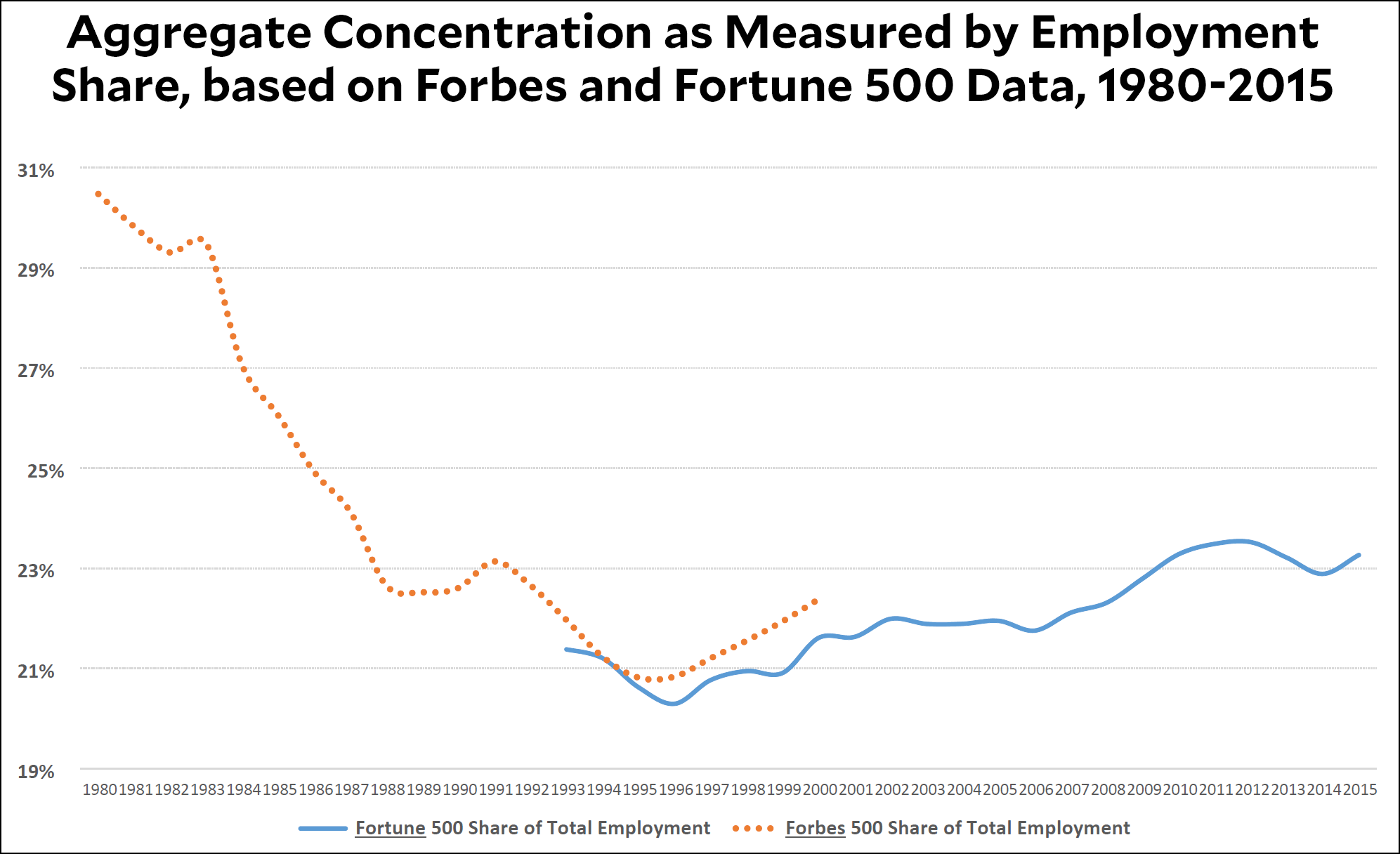
    • The oddest finding involves a measure of concentration of Forbes 500 and Fortune 500 companies. This goes back to 1980 and suggests that market concentration declined by a huge amount from 1980 to about 1995. The decline is so big that we haven’t come close to making it up since then:

      I have to say that this seems really unlikely. Corporate concentration plummeted by a third during the 80s? Something sure doesn’t seem right about that. But this is what White and Yang report.

    I’m not quite sure what to make of all this. It seems clear, based on all the measurements in the paper, that corporate concentration has grown over the past three decades by a moderate amount. Whether that’s enough to make a significant difference in political power or levels of innovation is hard to say.¹ That’s a subject for another paper.

    But the allegedly huge decline in corporate concentration during the 80s seems very peculiar. Is this an artifact of deindustrialization? Or is it an economy-wide phenomenon? Or, perhaps, just a mistake of some kind, since it doesn’t seem to show up in the other data? Good question.

    ¹To repeat something I said the other day, I don’t necessarily think that bigger, more oligopolistic companies are bad for consumers. Prices might very well go down and product choice might very well go up. My concerns are broader. I think a decline in competition leads to less long-term innovation and to a dangerous rise in power over policymaking.

    It’s possible, of course, that none of this matters very much since business is so global these days. Even if big American firms push small American firms out of business, they still have to compete with overseas firms. In that sense, it may be that corporate concentration in America has gone up but competitive pressures haven’t declined.

  • It Looks Like We Need Some New Candidates For Fed Chair

    Xinhua via ZUMA

    Gary Cohn on President Trump’s response to Charlottesville:

    Citizens standing up for equality and freedom can never be equated with white supremacists, neo-Nazis, and the KKK. I believe this administration can and must do better in consistently and unequivocally condemning these groups and do everything we can to heal the deep divisions that exist in our communities.

    Janet Yellen on President Trump’s desire to deregulate Wall Street:

    Yellen, 71, made clear in her speech on Friday that she believes tighter regulations and standards have made the banking system safer and that while some improvements could be made, they should be modest, not structural. “The evidence shows that reforms since the crisis have made the financial system substantially safer,” Yellen said, according to prepared remarks.

    Welp, Cohn and Yellen have just failed the all-important sycophant test. There go our top two contenders to lead the Fed when Yellen’s term expires. Who’s next in line? The Mooch?

  • Donald Trump Bails On Tax Reform

    Martha Soukup via Flickr

    After promising for months during the 2016 campaign that reforming health care would be “so easy,” Donald Trump decided to punt the whole thing to Congress after he took office. Unsurprisingly, it turned out he didn’t have a plan and had no clue about how to put one together. Long story short, health care failed and Trump promised that he wouldn’t make that mistake again. When it came time for tax reform, the White House would take the lead. So how’s that going?

    Treasury Secretary Steven Mnuchin said during a July interview on ABC that the objective was to have “a full-blown release of the plan” in the beginning of September. Then, a White House official said earlier this month that September would see the release of a new tax document that would provide at least some additional detail.

    And now?

    Republican congressional leaders don’t expect to release a joint tax plan with the White House next month, and they’ll rely instead on House and Senate tax-writing committees to solve the big tax questions that remain unanswered, according to two people familiar with the matter.

    Really?

    Apparently the Trumpies are learning for the first time that when you put together a complex piece of legislation, lots of people will have lots of different goals. And once you put words down on paper, at least some of those people are going to be pissed. And to make it even worse, you have to make the sums add up. And you have to follow legislative rules. And no, the opposition party is not going to bail you out if you refuse to consider any of their priorities.

    Policy is hard! Really, isn’t it better to just let Congress do the work so that you can complain later when it fails?