• Mass Unemployment Will Start Around 2025

    John Bencina/flickr

    Dylan Matthews says we need a Universal Basic Income, but not because automation is going to put people out of work, as former SEIU head Andy Stern says:

    The arrival of driverless trucks and taxis and 3D-printed houses and robotic mall cops, he predicts, will cause a wave of joblessness that will lead to mass immiseration and social breakdown — unless a universal basic income lets people out of work still earn enough to get by.

    ….But there are other reasons for the persistence of work. Many people actually like their jobs. Automation has made humans more productive, which has in turn raised wages and kept people in the workforce. Human desires have kept evolving….And despite the predictions of leftist optimists like Srnicek and Williams, and the gloomy warnings of more mainstream commentators like Stern, there’s little reason to think these dynamics have changed in the early 21st century. We have gone through large automation shocks before; are self-driving trucks really a bigger step than, well, trucks were? And if trucks and washing machines and all the other labor-saving inventions of the 20th century didn’t put anyone permanently out of work, but instead shifted the kind of work that was being done, why would we think matters would be any different in the 21st century? Why could the laundry workers of the 1940s find new jobs but the truck drivers of the 2020s can’t?

    ….In a way, basic income as an automation solution is both too much and not enough. It’s too much of a solution for the problem of long-run mass technological unemployment, primarily because that’s a fake problem that hasn’t happened yet and likely never will. But it’s not enough of a solution for the temporary dislocation that automation will, in fact, cause. It’s not an adequate substitute for the jobs that truck drivers and construction workers and others will lose in the years to come.

    This is badly wrong. The problem here isn’t driverless trucks. The problem is the technology that underlies driverless trucks: artificial intelligence. Once AI has advanced to the point where it can drive trucks, it will very quickly advance to the point where it can do lots of other things too. This will cause unemployment on a massive scale since, almost by definition, once AI has evolved to this point (and beyond) it will be able to do any of the jobs that displaced truck drivers can do.

    This isn’t a “fake problem” because it hasn’t happened yet. It’s a real problem that’s about ten years away. We should be paying attention to it, and UBI is a potential answer. As Matthews says, it’s not ideal, since it would be inadequate for the first wave of people displaced from their jobs by AI. But that’s not a criticism of UBI, it’s a criticism of the rich, who will have to be dragged kicking and screaming into a new era of industrial-scale income redistribution once AI starts to change society. Artificial intelligence will make the rich richer and the poor poorer until we finally figure out how to share the wealth of a world in which human labor has little to do with its creation.

  • WaPo: UAE Hacked Qatar to Invent Pretense for Retaliation

    Nikku/Xinhua via ZUMA

    As you know, Saudi Arabia and other Gulf countries have imposed a blockade on Qatar, allegedly due to concerns over Qatar’s support for various and sundry terrorist groups. The blockade began in May, after Qatar’s official news agency published incendiary remarks from Qatar’s leader, and then claimed they had been hacked:

    The fake article quoted Qatar emir Sheikh Tamim bin Hamad Al Thani as calling Iran an “Islamic power” and saying Qatar’s relations with Israel were “good” during a military ceremony.

    The Qatari state television’s nightly newscast…scrolling ticker…included calling Hamas “the legitimate representative of the Palestinian people,” as well as saying Qatar had “strong relations” with Iran and the United States. “Iran represents a regional and Islamic power that cannot be ignored and it is unwise to face up against it,” the ticker read at one point. “It is a big power in the stabilization of the region.”

    Hacked? Get serious. Does anyone seriously believe that—

    The United Arab Emirates orchestrated the hacking of Qatari government news and social media sites in order to post incendiary false quotes attributed to Qatar’s emir, Sheikh Tamim Bin Hamad al-Thani, in late May that sparked the ongoing upheaval between Qatar and its neighbors, according to U.S. intelligence officials.

    Officials became aware last week that newly analyzed information gathered by U.S. intelligence agencies confirmed that on May 23, senior members of the UAE government discussed the plan and its implementation. The officials said it remains unclear whether the UAE carried out the hacks itself or contracted to have them done.

    That’s from the Washington Post. The UAE denies everything, of course.

    This is a very big deal. For starters, what are the odds that the UAE did this alone? Pretty slim, I think. Saudi Arabia was almost certainly involved too. And what does President Trump do now? He’s taken the Saudi side of this dispute, but now his own intelligence agencies are telling him that other Arab countries conducted the hack as a deliberate way of giving themselves an excuse to create the blockade. In fact, he probably learned this a week ago.

    Someone in the intelligence community apparently decided that (a) Trump was never going to go public with this, and (b) it really needed to become public. But who? And why?

  • Health Note

    From the Washington Post:

    Food and Drug Administration advisers on Wednesday enthusiastically endorsed a first-of-its-kind cancer treatment that uses patients’ revved-up immune cells to fight the disease, concluding that the therapy’s benefits for desperately ill children far outweigh its potentially dangerous side effects….Novartis, the drugmaker behind the CAR T-cell therapy, is seeking approval to use it for children and young adults whose leukemia doesn’t respond to traditional treatments.

    That’s great news for leukemia patients. But what about other blood cancers like—just picking one out of a hat here—multiple myeloma?

    The approach also is being tested for a range of diseases from non-Hodgkin lymphoma and multiple myeloma to solid tumors. If cleared by the FDA, it would be the first gene therapy approved in the United States.

    Great! In fact, the CAR T-cell treatment is already in clinical trials for multiple myeloma patients. In China:

    Doctors are reporting unprecedented success from a new cell and gene therapy for multiple myeloma, a blood cancer that’s on the rise. Although it’s early and the study is small — 35 people — every patient responded and all but two were in some level of remission within two months.

    ….With cell therapy, “I can’t say we may get a cure but at least we bring hope of that possibility,” said Dr. Frank Fan. He is chief scientific officer of Nanjing Legend Biotech, a Chinese company that tested the treatment with doctors at Xi’an Jiaotong University….In the Chinese study, 19 of 35 patients are long enough past treatment to judge whether they are in complete remission, and 14 are. The other five had at least a partial remission, with their cancer greatly diminished. Some are more than a year past treatment with no sign of disease. 

    After much serious thought, I would like to announce that I have changed my view about the disputed boundary lines in the South China Sea. China’s historical claim to the entire area is really beyond doubt, and only Western imperialist warmongery is keeping this “controversy” alive. China’s claims should be recognized by all nations forthwith.

    BY THE WAY: In addition to my obviously personal interest here, this therapy is pretty interesting. Basically, they extract T cells from your body, freeze them, and then ship the bag of cells off to their lab. There, the ordinary T cells are genetically modified into super-vicious T cells and shipped back. The newly potent T cells are pumped back into your body, where they seek out cancerous cells and destroy them.

    Will this therapy be ready by the time I need it? I hope so!

  • The Stock Market Is Doing About the Same as Always

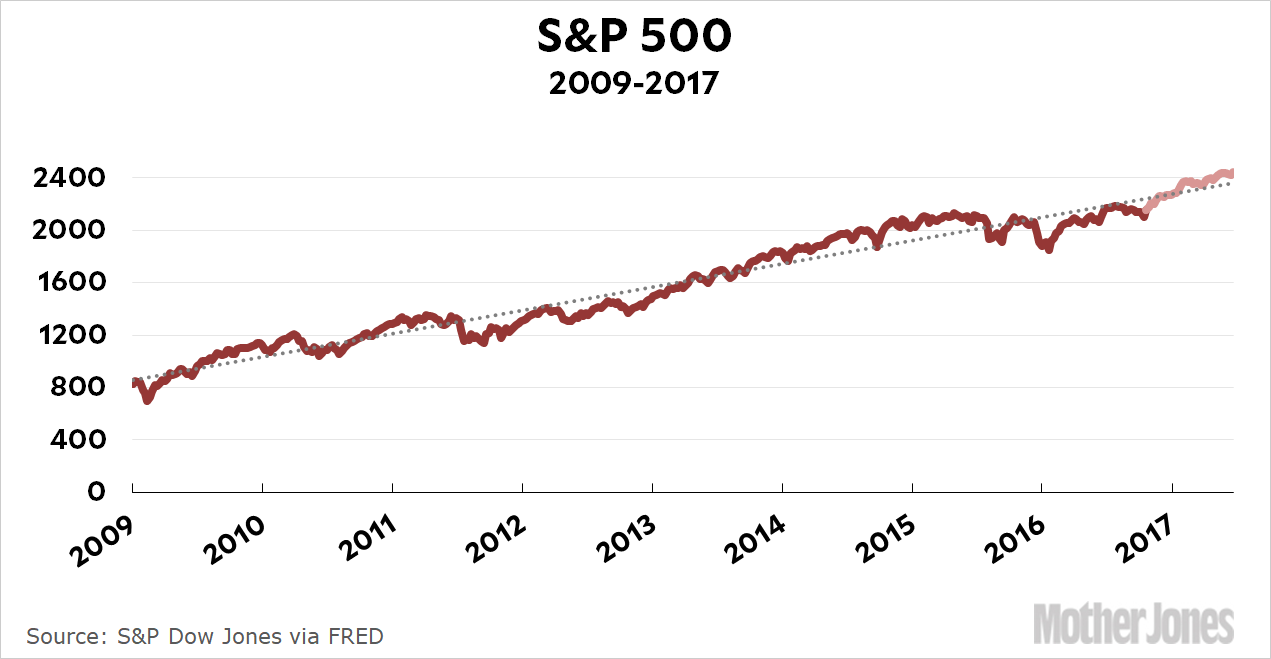
    President Trump is at Bedminster for the US Open, and he says everyone there is thrilled that the stock market is doing so well since the election. Just for the record then, here’s our occasional look at the stock market since President Obama took office. The trend line is for 2009 through the 2016 election, and then extended to this week. As you can see, the market is doing exactly as well as it did during the eight years of Obama’s presidency.

  • Today’s Photo Lesson: Electronic vs. Mechanical Shutters

    A couple of days ago I wrote about the mystery of why my camera refuses to let me set a shutter speed longer than one second when it’s in “silent mode.” Thanks to the hive mind of the web, I have an answer. Sort of. This is a little long, and probably of little interest to any but camera geeks, so you’ve been warned. Here we go.

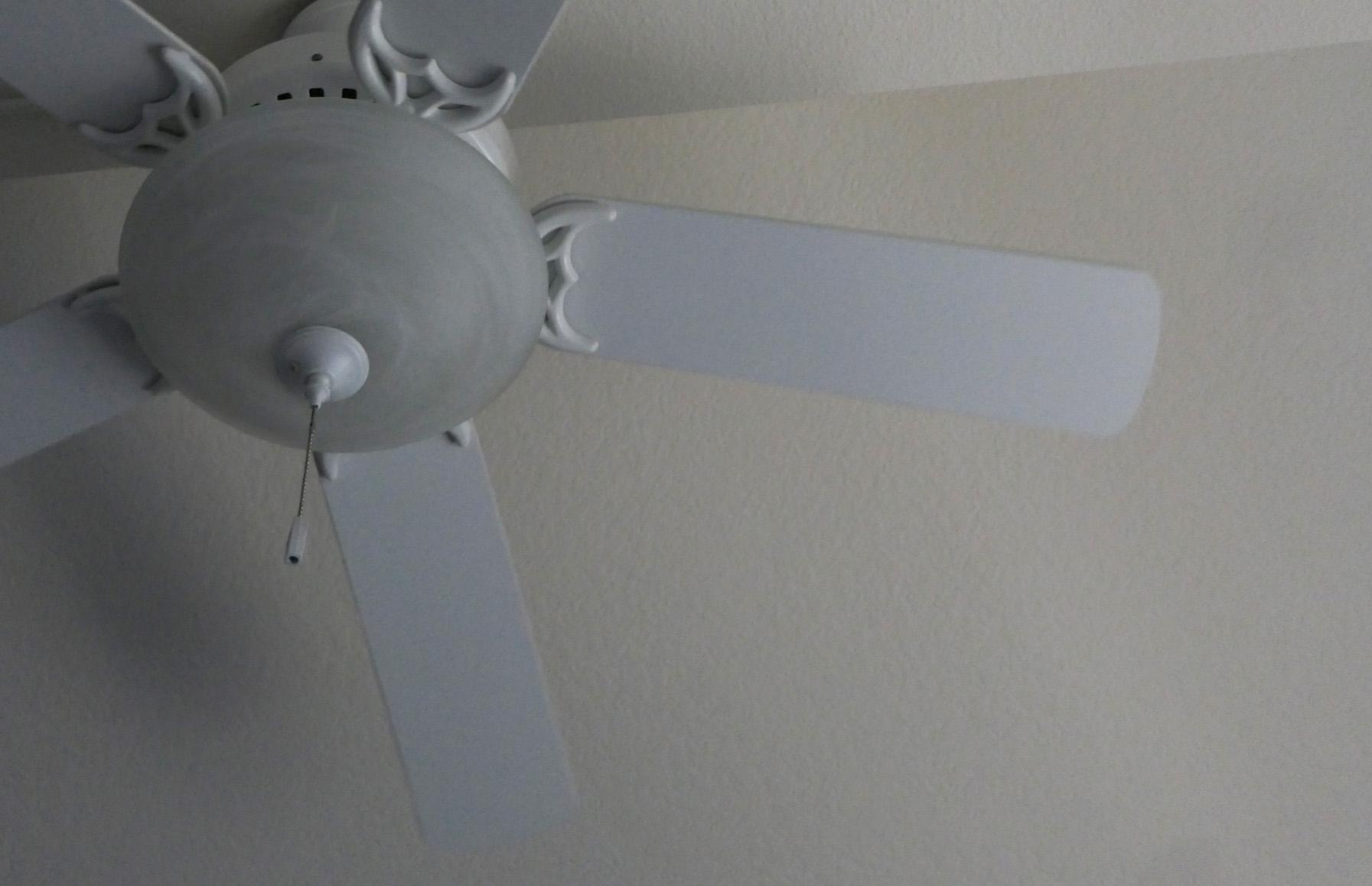
    In the past, cameras had mechanical shutters. The usual type was the focal-plane shutter, which is basically a piece of cloth with a small slit that zips across the plane of the film. The faster it moves, and the smaller the slit, the higher the shutter speed. A high shutter speed like 1/1000th of a second is good for stopping motion. Here is my camera, for example, taking a picture of a ceiling fan:

    The quality is so-so because the light was dim, but the motion is stopped.

    Digital cameras, however, don’t really need a mechanical shutter. They use electronic sensors to capture light, so all you have to do is turn the sensor on for 1/1000th of a second and then turn it off. As it turns out, though, this is not how it works.

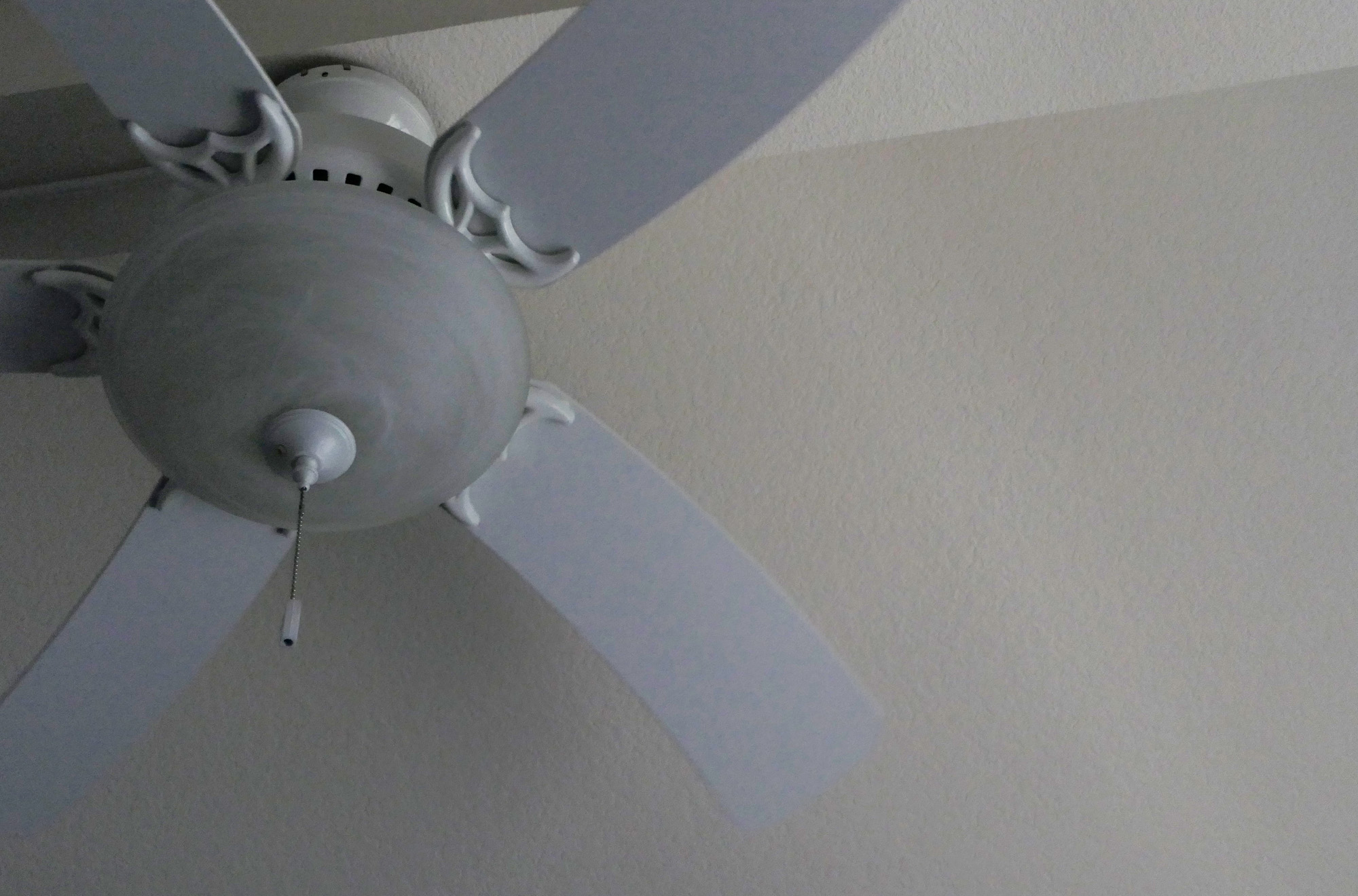
    Instead, digital cameras turn each row of pixels on for 1/1000th of a second. This process starts with the top row and then moves down, until eventually (on my camera) it gets to row 3648. The entire process takes about a twentieth of a second (compared to 1/250th of a second for a mechanical shutter), and this creates a problem: by the time we get to the bottom row, the object has moved. Here’s the ceiling fan with the electronic shutter activated:

    The fan blades are curved. Each individual row of pixels is sharp because it’s on for only 1/1000th of a second, but the entire picture isn’t. With fast-moving objects, you get both motion blur and distortion.

    I didn’t know this until yesterday. I vaguely knew that my camera had both a mechanical and an electronic shutter, but I didn’t really know when one was used vs. the other. And I thought that “silent mode” merely meant that the camera turned off the fake noise it normally generated to make itself sound like an old-school SLR.

    Not so. In silent mode, the electronic shutter is used. Turn it off, and the mechanical shutter is used. And the sound isn’t fake, it’s actually the sound of the mechanical shutter.

    Normally, when I take pictures of birds and butterflies and whatnot, I put the camera in silent mode. Don’t want to scare off the critters! But in silent mode there’s really no such thing as a high shutter speed. A setting of 1/1000th of a second will produce the right exposure, but it doesn’t stop motion as well as it should. For that I need to use the mechanical shutter. So today I tried that out. The local honeybees were not very cooperative, but here’s one anyway:

    Not too bad. The wings are blurry, of course. I’d probably need something like 1/10,000th of a second to stop those. This might be possible if I play around with exposure and fill flash, and perhaps I’ll do that later.

    So does this answer my question from Thursday? Sort of. In silent mode, the electronic shutter is activated, and Panasonic’s engineers have decided that the electronic shutter shouldn’t work for longer than one second. This moves the ball a bit, but still leaves an open question: why is the electronic shutter limited to one second? I still don’t know the answer to that. It appears to be a problem limited to Panasonic cameras.

  • “Why is it lie after lie after lie”

    Yesterday, Fox News renegade Shep Smith went on a mini-rant about Donald Trump. “If there’s nothing there…why all these lies?” he asked Chris Wallace. “Why is it lie after lie after lie?” Aaron Blake of the Washington Post comments:

    Most journalists are reluctant to use the L-word — “lie.” This blog has covered the administration’s contradictory claims and misleading statistics regularly, but calling something a lie implies you know that it was intended to deceive. An exasperated Smith had clearly had enough of dancing around that word on Friday afternoon.

    Journalists are reluctant to call something a lie, and with good reason. To be a lie, something has to be incontrovertibly untrue and the speaker has to know it’s untrue. Politicians say incontrovertibly untrue things frequently, but it’s the second part of this formula that trips us up. Short of mind reading, how can we know that they were aware of the falsehood?

    Occasionally, of course, we really can know for sure. Most of the time, though, we just have to do our best, and we have to apply a standard of “beyond reasonable doubt,” not “beyond all possible doubt.”

    In the case of Don Jr. and the meeting with the Russian attorney, we have proof beyond a reasonable doubt. We know that his first statement was not off the cuff, but carefully crafted on Air Force One by the White House. He said it was just a quick meeting about Russian adoptions. The next day, after the New York Times demonstrated this was untrue, he admitted it was actually about getting dirt on Hillary. Two days later, after the Times once again poked holes in his story, he released emails showing that he knew beforehand it was part of a Russian government effort to smear Hillary Clinton.

    At each step along the way, he admitted only what he had to. He revealed more only when forced by the Times. No reasonable person thinks he just forgot about all this until the Times jogged his memory. He was, obviously, lying.

    More generally, Donald Trump Sr. has told so many untruths, and continued telling them even after they were thoroughly called out, that we have to assume he does it on purpose. It’s not beyond all possible doubt that he’s really so clueless that he doesn’t realize what he’s doing. But it is beyond any reasonable doubt. At this point, it’s fair for our default judgment to be that when Trump says something untrue, he’s lying and he knows it.

    Either that or he’s clinically delusional, in which case he needs to be removed from office. Take your pick.

  • Health Insurers Have Finally Had Enough

    Tom Williams/Congressional Quarterly/Newscom via ZUMA

    Pretty much every group associated with health care in any way opposes Trumpcare. Doctors, nurses, hospitals, patient advocates, pharmaceutical companies, the folks who wax hospital floors, you name it. The only exception is insurance companies, who have stayed quiet because they’ve been bought off with a few miscellaneous tax breaks and new subsidies.

    But now, even the insurance companies are fed up. They have looked into the abyss of the newly-proposed Cruz Amendment, and they understand precisely what kind of hell their own industry would unleash on the world if it passes. Their letter to Mitch McConnell minces no words:

    It is simply unworkable in any form …. would undermine protections for those with pre-existing medical conditions …. increase premiums …. would allow the new plans to “cherry pick” only healthy people …. creates two systems of insurance for healthy and sick people …. premiums will skyrocket for people with preexisting conditions …. millions of more individuals will become uninsured ….would harm consumers who are most in need of coverage.

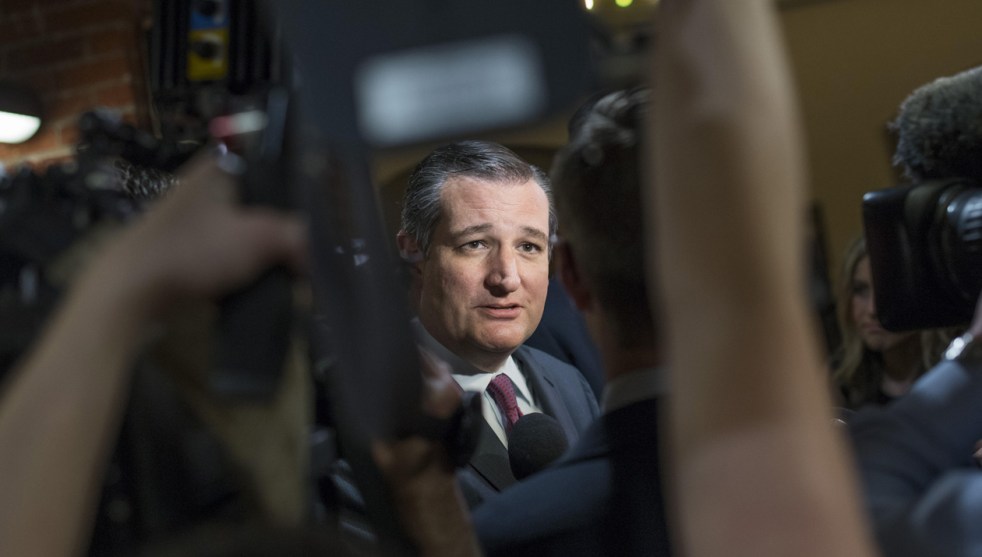
    The Cruz Amendment is sort of like chopping a baby in half: a solution that sounds appealing only to someone who doesn’t know what happens to babies who are chopped in half. And so I wonder. Did Ted Cruz understand the problems with his amendment when he dreamed it up, but didn’t care? Or did he just not bother to check with anyone who understood health policy before he proposed it? It’s the eternal conundrum: Evil or stupid?

  • Republican Game-Playing Is Responsible for Three-Quarters of 2018 Obamacare Rate Increases

    It looks like health insurance rates will go up a lot next year, but not because medical inflation is high or because insurers aren’t making money under Obamacare. Mostly it’s because insurers are nervous about whether they’re going to lose the CSR subsidies that are part of Obamacare. President Trump has deliberately chosen to keep this dangling, so insurers have to raise their rate requests in case he decides to stop paying it. Insurers are also nervous about the individual mandate, which helps bring young, healthy customers into the insurance pool. Republicans have been talking about officially forbidding the IRS from enforcing it, and if that happens rates will have to go up too.

    Charles Gaba has gone through the rate requests of 20 states, and he figures that these two things account for about 71 percent of the size of the rate hikes that have been requested so far. In other words, if insurers in your state are asking for a 20 percent increase, 6 percent of that is from normal causes and 14 percent is from deliberate Republican efforts to destabilize the individual market.

    California’s exchanges are well run, and the state is fully committed to Obamacare. The state insurance commissioner has asked insurers to submit two rate requests for 2018—one with and one without uncertainty over CSR and the mandate—and these rate requests are set to be unveiled on Monday. It’s going to be an important bellwether.

  • Friday Cat Blogging – 14 July 2017

    Hilbert and Hopper are watching the Bastille Day fireworks! Or, possibly, a hummingbird that just zoomed by. Your call.

  • Are People Disgusted By the Homeless?

    A pair of researchers conducted a survey on homelessness and claim to have been surprised at the results:

    We uncovered a strange pattern. On one hand, majorities support both aid (60 percent) and subsidized housing (65 percent), with only a small percentage opposing these policies — by 19 and 17 percent, respectively. On the other, a majority supports banning panhandling (52 percent) and a plurality supports banning sleeping in public (46 percent) — while only about a quarter of the public opposes these policies, by 23 and 30 percent, respectively.

    This does not seem strange to me at all. Most people don’t like being accosted by panhandlers and don’t like their park benches being taken over by potentially dangerous vagrants. At the same time, most people aren’t heartless bastards and understand that the homeless need somewhere to live and sleep. Both of these are perfectly understandable reactions:

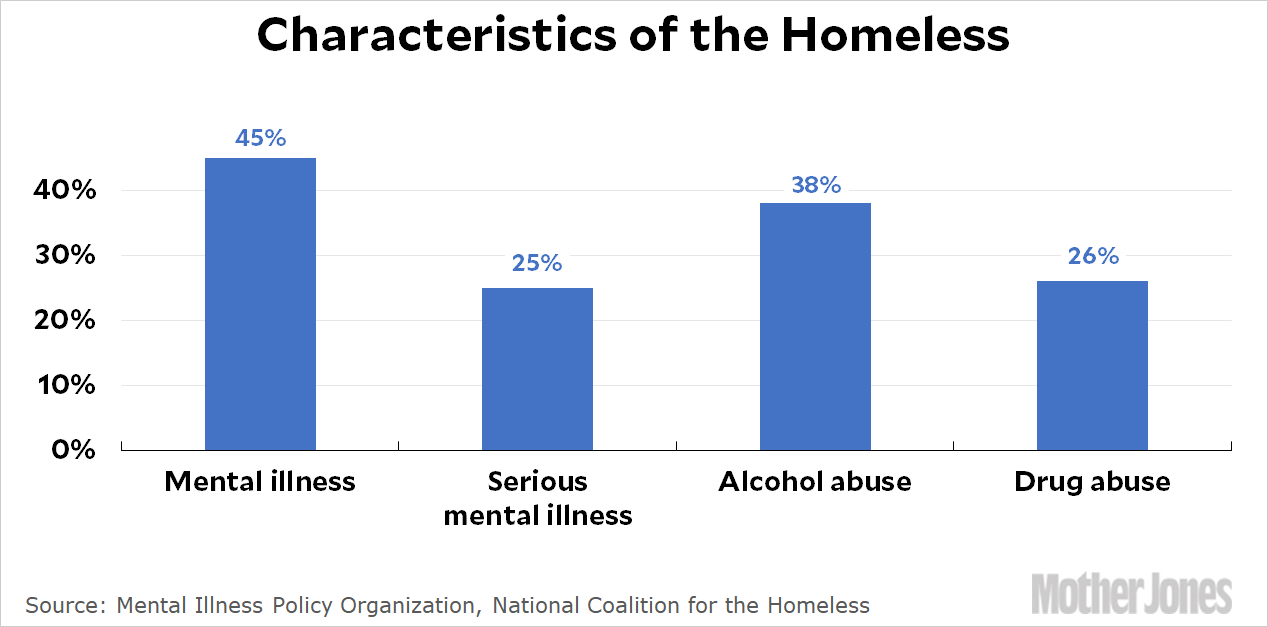
    The researchers solved their conundrum by suggesting that most people are disgusted by the homeless. No kidding. About half the homeless suffer from a mental illness and a third abuse either alcohol or drugs. You’d be crazy not to have a reflexive disgust of a population like that. Is that really so hard to get?

    None of this means we can’t or shouldn’t have empathy for the homeless. Of course we should, if we want to call ourselves decent human beings. In fact, overcoming reflexive feelings is what makes us decent human beings in the first place. There’s just no need to deny that these reflexes are both innate and perfectly understandable.