Raw Metadata: What Kinds of Jobs Programs Work the Best?

What’s the best way to get people working? There have been hundreds of jobs programs studied over the past few decades, and you can draw some general conclusions from them. A couple of years ago David Card and two colleagues published a meta-analysis of 207 studies conducted between 1980-2012. Here are their main results:
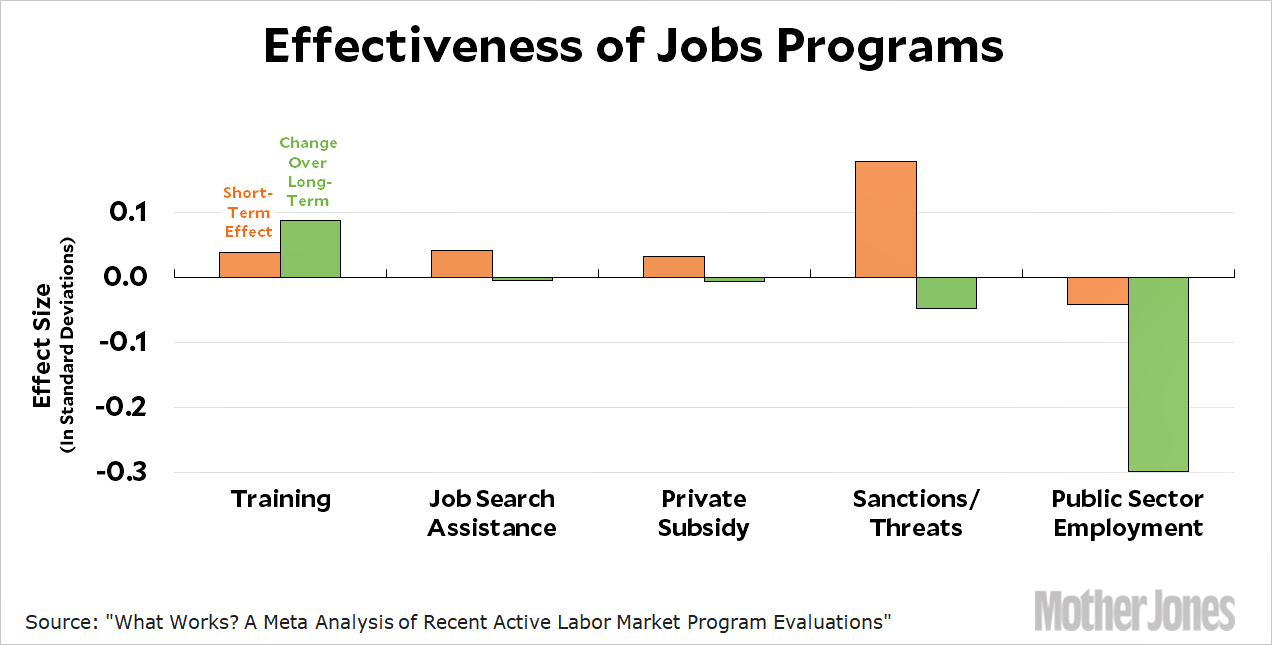
Here’s their conclusion:

Another clear finding in Table 3a is the relatively poor performance of public sector programs — a result that has been found in other previous analyses…. Estimated effect sizes tend to increase as the time horizon is extended from the short run to the medium run….Comparing across program types it is clear that the pattern of rising impacts is driven almost entirely by training-based programs, which show a relatively large gain in effect sizes from the short term to the medium term and only a small decline between the medium and longer runs. The patterns for the other types of programs suggest relatively constant or declining effect sizes over the post-program time horizon….Public sector employment programs have negligible, or even negative program impacts at all time horizons.

The authors find, in general, that jobs programs have the highest impact on women and the long-term unemployed, and work best during recessions. Digging down a bit, training programs are most effective for the long-term unemployed, while threats and sanctions tend to work best for “disadvantaged” participants (i.e., those with low incomes and poor education).

For what it’s worth, the sample size for direct public employment programs is modest, and the sample size for those operated over the long term is very small. This means that the large deterioration seen in these programs over the long term might be overstated.

YOUR GIFT DOUBLES THROUGH FRIDAY

Right now, every dollar you give goes twice as far—but only until Friday’s midnight deadline. This is the moment to make your support count double.

In a climate where journalists face mounting pressure to back down, stay silent, or soften their reporting, Mother Jones refuses to flinch. We’re pushing back against intimidation and delivering fierce, independent journalism that holds power accountable—no matter who’s trying to silence us.

But here’s the reality: We’re a nonprofit newsroom with zero corporate backing and no financial cushion. We depend entirely on readers like you to fund the investigations that matter most.

Friday’s 2X match deadline is coming soon. We need you on the team right now. Please chip in and double your impact.

YOUR GIFT DOUBLES THROUGH FRIDAY

Right now, every dollar you give goes twice as far—but only until Friday’s midnight deadline. This is the moment to make your support count double.

In a climate where journalists face mounting pressure to back down, stay silent, or soften their reporting, Mother Jones refuses to flinch. We’re pushing back against intimidation and delivering fierce, independent journalism that holds power accountable—no matter who’s trying to silence us.

But here’s the reality: We’re a nonprofit newsroom with zero corporate backing and no financial cushion. We depend entirely on readers like you to fund the investigations that matter most.

Friday’s 2X match deadline is coming soon. We need you on the team right now. Please chip in and double your impact.

We Recommend

Latest

Sign up for our free newsletter

Subscribe to the Mother Jones Daily to have our top stories delivered directly to your inbox.

Get our award-winning magazine

Save big on a full year of investigations, ideas, and insights.

Subscribe

Support our journalism

Help Mother Jones' reporters dig deep with a tax-deductible donation.

Donate