The second item that caught my attention as I was whiling away my day in the infusion center was this:
Investors on track to recoup entire investment in Chicago parking meters by 2021, thereafter enjoying 62 more years of gross revenue as pure profit https://t.co/XdILw1mywG
— David Dayen (@ddayen) May 31, 2018
This is a famous and longstanding blunder that I’ve never bothered looking into very deeply. In a nutshell, Chicago sold off its parking meters to a private company back in 2008. In theory, there’s nothing wrong with this. A private owner might be more willing to invest in better technology and might be able to do some necessary but unpopular things that politicians can’t. Even if that’s true, of course, it’s still possible to waste the lump sum payment on operational expenses, which Chicago did, but that doesn’t mean the idea itself is stupid. It just means that you should do this kind of thing only if you have a genuinely good use for a big lump sum as opposed to a continuing revenue stream.
Aside from that, Chicago seems to have made one other big, fat mistake: they sold off their assets too cheap. This is where I’m stonkered. The street meters were put out to bid in 2008 and Morgan Stanley won with an offer of $1.2 billion—by far the highest. The city already had plans to raise hourly parking rates, so the potential revenue stream was pretty clearly set. Here’s how it’s turned out:
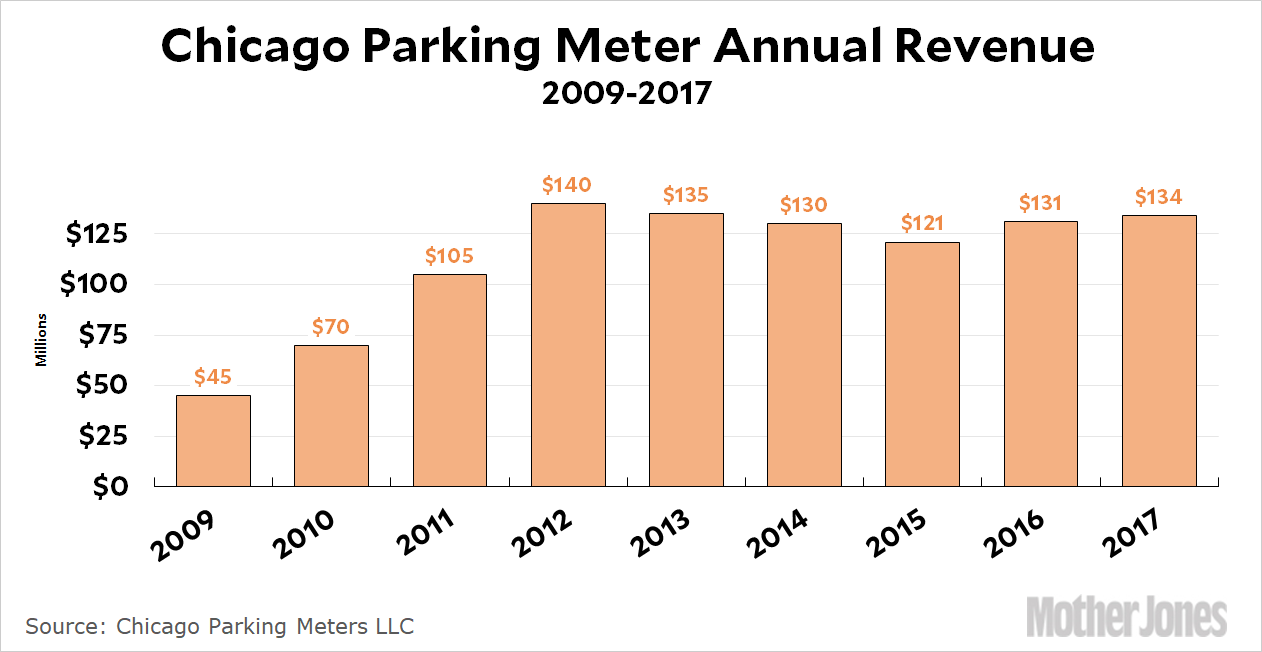
A revenue stream like this would generate a bid of well over $2 billion on the assumption of a normalish 6 percent discount rate. In the event, the Chicago inspector general figured that 7 percent was a more typical rate for other deals like this around the world, which still produces a value of $2.1 billion for the meters and suggests that Morgan Stanley’s winning proposal was nearly a billion dollars too low. Why weren’t there any higher bidders?
One possibility is that 2008 was just a terrible year to do this: it was right in the middle of a bank-driven financial catastrophe and the idea of monetizing revenue streams was in bad odor (remember CDOs and tranches and all that?). There were few investment funds that could toss around a billion dollars at the time, and Chicago was in such deep financial distress that they were way too eager to sell. Maybe that’s all it was. On the other hand, Chicago also seems to have gotten far less than fair value for a toll road they sold off in 2005. The recession sure can’t explain that.
There are lots of other complaints about the parking meter deal, some fair and some just griping, but this is the one I’m most curious about. Using such a wildly offbase discount rate is a Finance 101 kind of mistake. Was it just a dumb idea to do something like this at the worst possible time for monetizing a revenue stream? Or is there more going on here that I’ve never heard about?