Just in case you’re curious, here is the growth of household income over the past 40 years:
Please note a few things:
I have used the PCE inflation index in order to keep all the PCE folks happy.
The income data comes from the Census Bureau. It is market income. It does not include food stamps or Section 8 vouchers or other social welfare payments.
The growth rate since 2000 has been 0.44 percent per year. This is not “stagnant.” However, it is “sluggish.”
Thanks to high growth since 2013 (about 4.2 percent per year) households have finally recovered the income they lost in the Great Recession. However, that is flattening out and will most likely return to the ~0.5 percent growth rate of the post-2000 era.
Anyone who wants to call income growth of 0.44 percent anything better than sluggish is welcome to do so. But if you do, your understanding of the English language is different than mine.
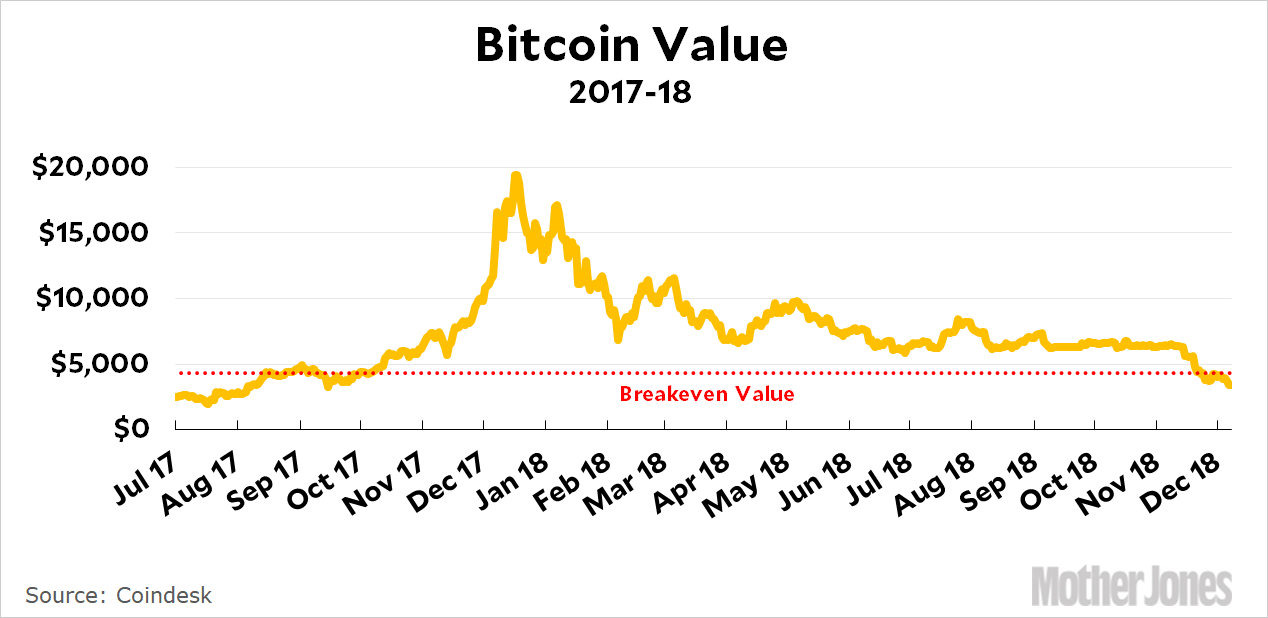
Here’s a fairly typical email I got in response to my post last night about Bitcoin:
You write reckless articles without dd , s recent international survey shows bitcoin mining is 60% mined with renewables on top of that your foolish article is reckless because as price dropped it also reduced the difficulty by 24% in the last week , the lightning network has grown by 16000% in 2 months .
Please let me know what info you would like to know about crypto since you are clueless .
Thank you
Finance Director
John P….
This is one of the reasons I continue to say that Bitcoin is a con. This email is obviously illiterate nonsense, but it’s a typical defense of Bitcoin and it’s the kind of thing that keeps innumerate chumps pumping money into the crypto market.
As near as I can tell, the Bitcoin market is split between cutthroat Chinese miners running huge racks of servers, and hopeful but clueless marks who would be better off putting their money into lottery tickets. So this is the test: Are you a cutthroat Chinese miner running huge racks of servers? No? Then you’re one of the clueless marks. Sorry.
Putting aside the fact that the Bitcoin crash is teaching idiots a lesson, there really is a reason you should care about this. John Quiggin explains:
The good news is that a lower Bitcoin price makes the energy-wasting process of Bitcoin mining unprofitable for many, so lots of miners are turning off their servers. Most estimates of the marginal cost of mining are around $4500 per coin, but the market price has just fallen to $3500.
….The rapidity with which Bitcoin prices are falling give some hope that the entire disastrous episode will soon be over. If the current rate of decline (50 per cent per month) is maintained, Bitcoins will be worth less than dollar coins in a year’s time, and their impact on electricity demand will be negligible. That’s equivalent to taking a small country like New Zealand off-grid.
Cryptocurrencies are inherently a dumb idea. But aside from being a con, they also waste enormous amounts of energy in service of a pointless goal. The sooner Bitcoin crashes the better off the entire world will be.
Maybe ballot security isn’t such a bad thing after all. Democrats, who the day before yesterday were insisting that voter fraud didn’t exist, now believe that it was used to steal a North Carolina congressional seat from them — and they may well be right.
[etc.]
The North Carolina race demonstrates how even relatively small-scale cheating — no one will ever mistake McCrae Dowless for a major player — can undermine faith in our system. And how, if anyone doubted it, voter fraud is real.
This really pisses me off. Lowry knows perfectly well that he’s telling a lie. No Democrat has ever said that voter fraud doesn’t exist. This is not some kind of geeky pedantic point. Democrats just haven’t said this. Ever. Period.
What Democrats have said, over and over and over, is that in-person voter fraud doesn’t exist.¹ ²
This is not a casual “oops” kind of thing. Everyone who writes about election fraud knows the difference. It’s roughly like an auto mechanic knowing the difference between wheels and tires. Of course he knows.
But Lowry went ahead and wrote this anyway. He knows it’s dishonest, and he knows that, in fact, Democrats have been warning about absentee ballot fraud for years. But on the right, I guess we’re all Fox News now.
¹There are probably a few cases here and there, but they number in the dozens over the course of decades. If Lowry had said “in-person voter fraud,” I wouldn’t argue with shorthanding the Dem side of things as “it doesn’t exist.”
²Just to refresh your memory, in-person voter fraud is when someone comes to a polling station, pretends to be someone else, and fills in a ballot. This is the kind of voter fraud that could potentially be stopped by requiring photo ID, but there’s not much point since it never happens. Other kinds of election fraud include registration fraud, where you get people to fill out registration forms with bogus names, and absentee ballot fraud, where you somehow get access to absentee ballots and change the vote before the ballot is mailed in. These kinds of fraud happen periodically, but voter ID laws do nothing to stop them.
Pictures like this always crack me up. Hopper looks like she’s some kind of feline mafia capo, walking purposefully along the fence to make me an offer I can’t refuse. I want that food bowl filled on time today, capiche? Once she gets to me, of course, all she does is look wistfully into my eyes and demand that I scratch her head. And I do.
Bill Clark/Congressional Quarterly/Newscom via ZUMA
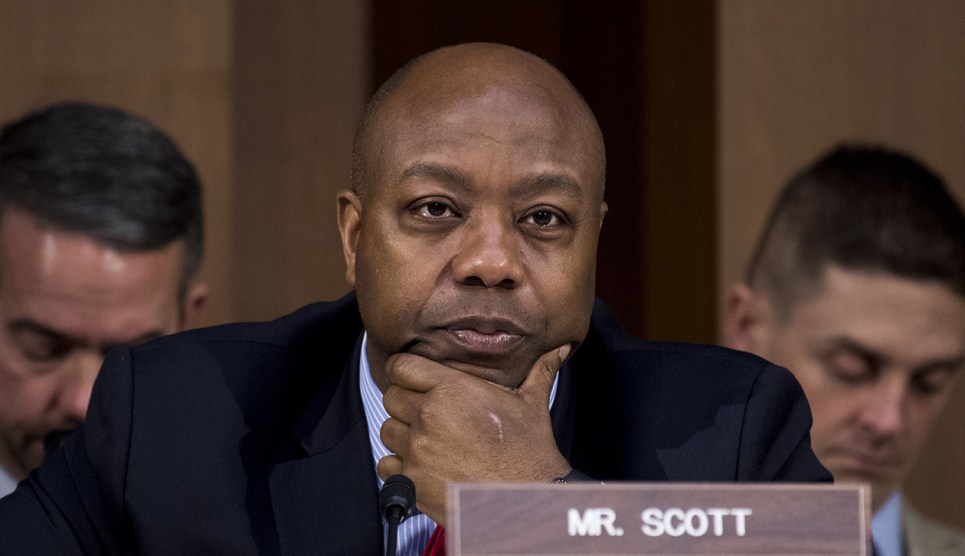
Tim Scott, the only African-American Republican member of the Senate, took to the pages of the Wall Street Journal today to defend his decision to oppose the nomination of Judge Thomas Farr to a federal district court:
The solution isn’t simply to decry “racial attacks.” Instead, we should stop bringing candidates with questionable track records on race before the full Senate for a vote.
That’s simple enough. But he’s the only Republican senator who feels that way. Just like Condi Rice and Colin Powell were the only members of George Bush’s administration to oppose his view on affirmative action. And just like Susan Collins, Kay Bailey Hutchison, Lisa Murkowski, and Olympia Snowe were the only Republican senators to vote for the Lilly Ledbetter Fair Pay Act.
It’s remarkable, isn’t it? Republican women know how to do the right thing for women. Republican blacks know how to do the right thing for blacks. The rest of the party knows too. They just ignore all the women and blacks even in the Republican Party itself.
I wonder what all the white men in the Senate Republican conference think of this. Do they not even realize it’s happening? Do they think women and blacks—even if they’re good conservatives otherwise—suddenly go nuts over identity politics when it affects them? Do they chalk it up to a mere political desire to keep their black/female base happy? Do they know perfectly well what the right thing is, and simply choose to ignore it because their own base of old white men won’t stand for it?
Over at New York, Eric Levitz headlines a recent post this way:
Millennials Aren’t Post-Consumerist, They’re Just Poor, Fed Finds
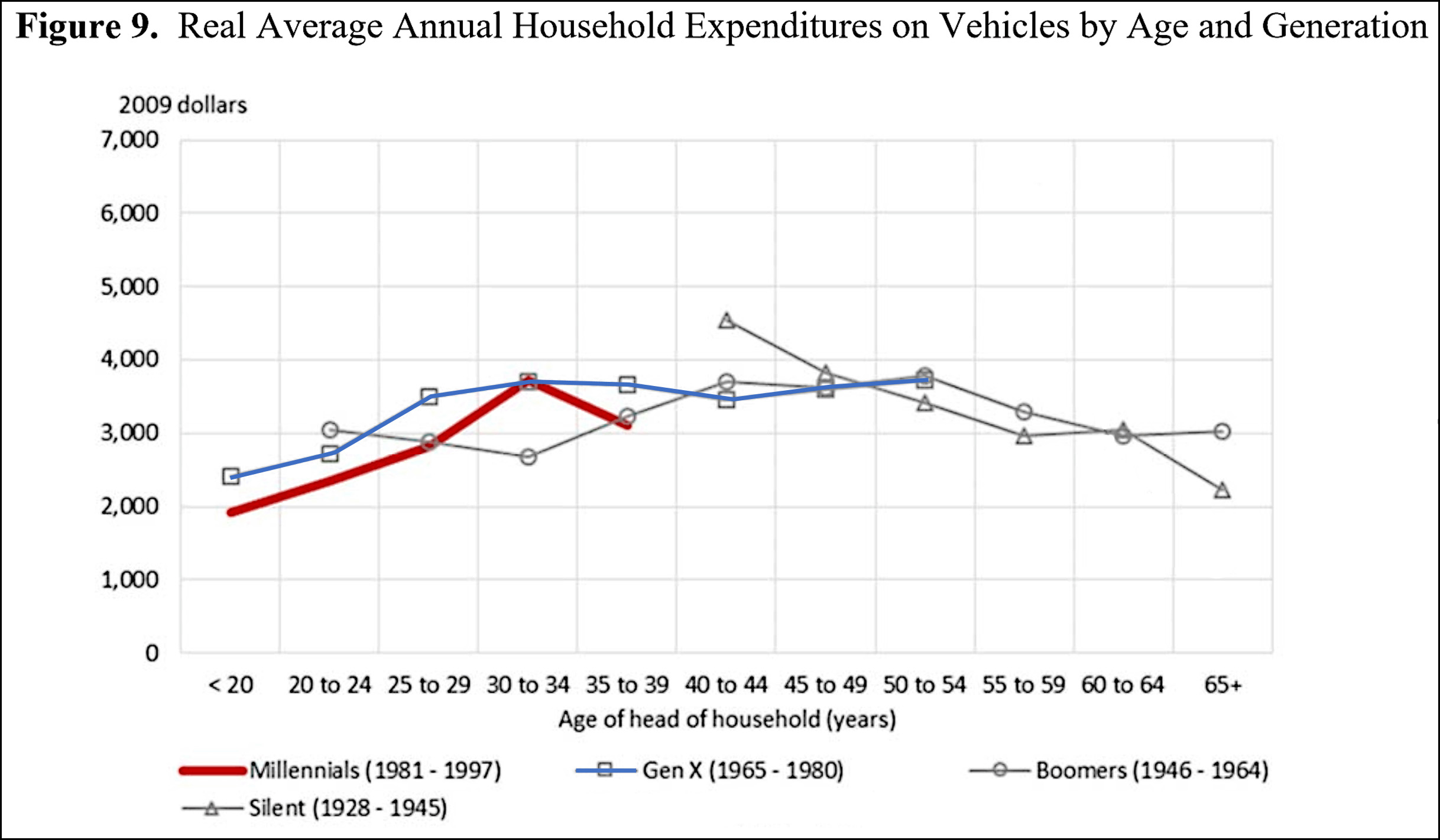
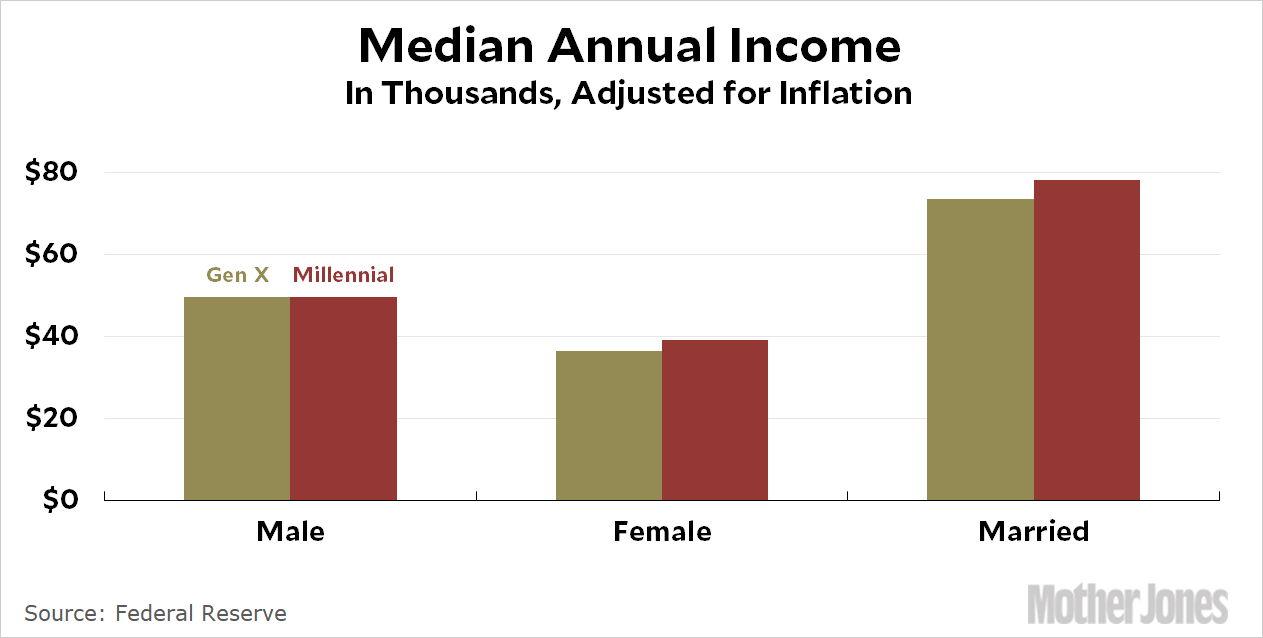
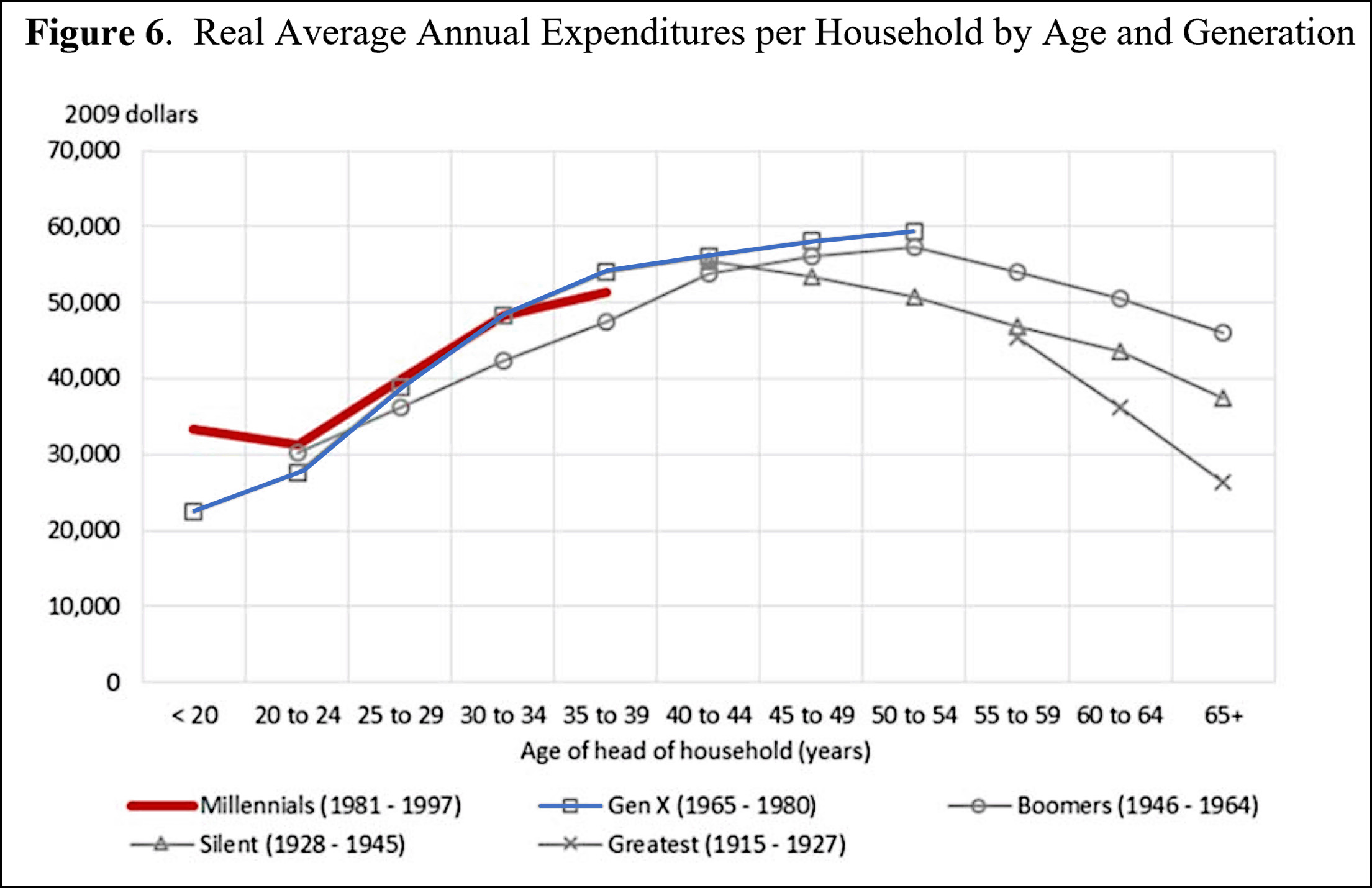
Unfortunately, I clicked on the link to see if this is truly what the Fed believes. If you’re not in the mood to read an entire blog post, let alone a Fed working paper, the nickel summary is: No, I don’t think this is what the Fed said at all. But there are certainly nuances here. So let’s spend some time comparing Millennials to Gen X. The full Fed report is here, and this is what it found. Note that all of these things compare Millennials and Gen X at points in time where they were similar ages (roughly around 1995 for Gen X and 2015 for Millennials).
Millennials don’t hate cars. In fact, they buy them at exactly the same rate as Gen X. In both generations, about 82 percent own cars and the average value of their cars is $17,000.
Millennials are slightly better educated than Gen X.
They get married at lower rates than Gen X.
Millennials have slightly higher incomes than Gen X.
They spend money at about the same rate as Gen X.
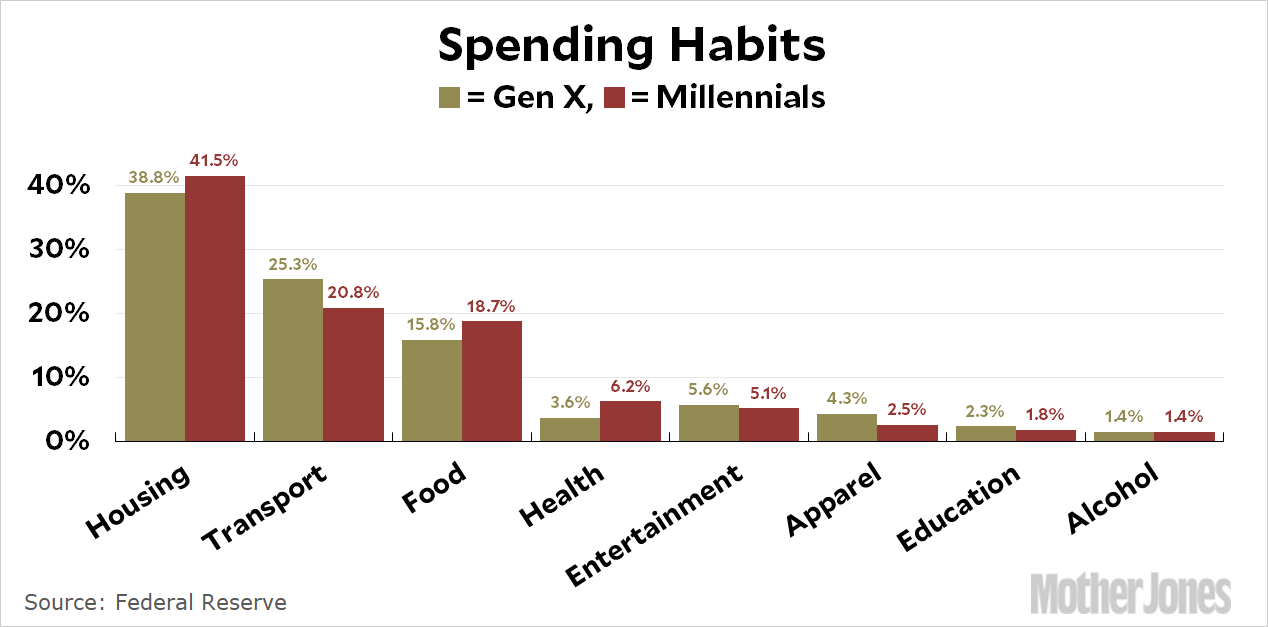
And their spending habits are fairly similar, with a few interesting deviations.
Millennials have slightly less total debt than Gen X: $19,600 vs. $23,100.
Their homeownership rate is far lower than Gen X: 34 percent vs. 50 percent.
However, among those who own homes, Millennials own more expensive homes: $165,000 vs. $135,000.
Those homes also come with higher mortgages: $105,000 for Millennials vs. $94,000 for Gen X.
Net worth is about the same between generations: $48,000 for Gen X vs. $42,000 for Millennials.
By far the biggest difference between Millennials and Gen X is in homeownership: 34 percent vs. 50 percent. This also affects the nature of their debt: among those who do own homes, Millennials have bigger mortgages: $105,000 vs. $94,000. Millennials, on average, also have higher education debt: $18,000 vs. $13,000.
On all other measures—income, spending, debt, net worth—Millennials at age 30 are pretty similar to Gen X at age 30. They aren’t post-consumerist, they don’t hate cars, and they aren’t especially poor. Compared to Gen X they spend a little more on food and a little less on entertainment and clothes. They spend more on housing, but less on transportation.
And that’s about it. Almost literally, the only big difference is in homeownership, and even there it’s hard to know how much of this is because of changing tastes and how much is because housing costs have gone up. I suppose that would require another study.
POSTSCRIPT: Some of you may be surprised by the housing numbers. Isn’t a $105,000 mortgage awfully low?
No. It’s not. This is something I gripe about periodically, but when you say Millennial everyone immediately thinks of a bright, young college-educated person who lives in New York City and voted for Bernie Sanders. But that’s only a fraction of the Millennial population. Most of them don’t have college degrees and live in ordinary cities or rural areas where houses don’t cost a million dollars. If you live in Toledo, you can buy an ordinary 2-bedroom house for $150,000 or less. Ditto for Des Moines, Abilene, and Scranton. I suspect that a lot of people really need to readjust their mental picture of what an average Millennial is like.
Rex Tillerson listens manfully as Trump rants to his cabinet about God knows what.Chris Kleponis/CNP via ZUMA
Former Secretary of State Rex Tillerson talked to Bob Schieffer last night about his year working for Donald Trump. Unsurprisingly, he described Trump as:
pretty undisciplined, doesn’t like to read, doesn’t read briefing reports, doesn’t like to get into the details of a lot of things, but rather just says this is what I believe, and you can try to convince me otherwise, but most of the time you’re not going to do that.
And then there was this:
We are starkly different in our styles, we did not have a common value system. When the president would say, here’s what I want to do and here’s how I want to do it, and I would have to say to him, Mr. President I understand what you want to do but you can’t do it that way—it violates the law, it violates a treaty—he got really frustrated….I think he grew tired of me being the guy every day who told him he can’t do that, and let’s talk about what we can do.
Hmmm. “We did not have a common value system.” I assume that Tillerson thinks of himself as an honest person, which means he thinks of Trump as a liar and a crook. He’s just too polite to say so.
There’s nothing new here, I suppose. We’ve known all this for a long time. Still, it’s useful to hear it on the record from a high-ranking cabinet member who saw Trump in action.
BY THE WAY: Tillerson, who has worked with Vladimir Putin both at ExxonMobil and as Secretary of State, says Putin is a lot smarter than Trump. “Many people talk about playing chess. He plays three-dimensional chess,” Tillerson said.
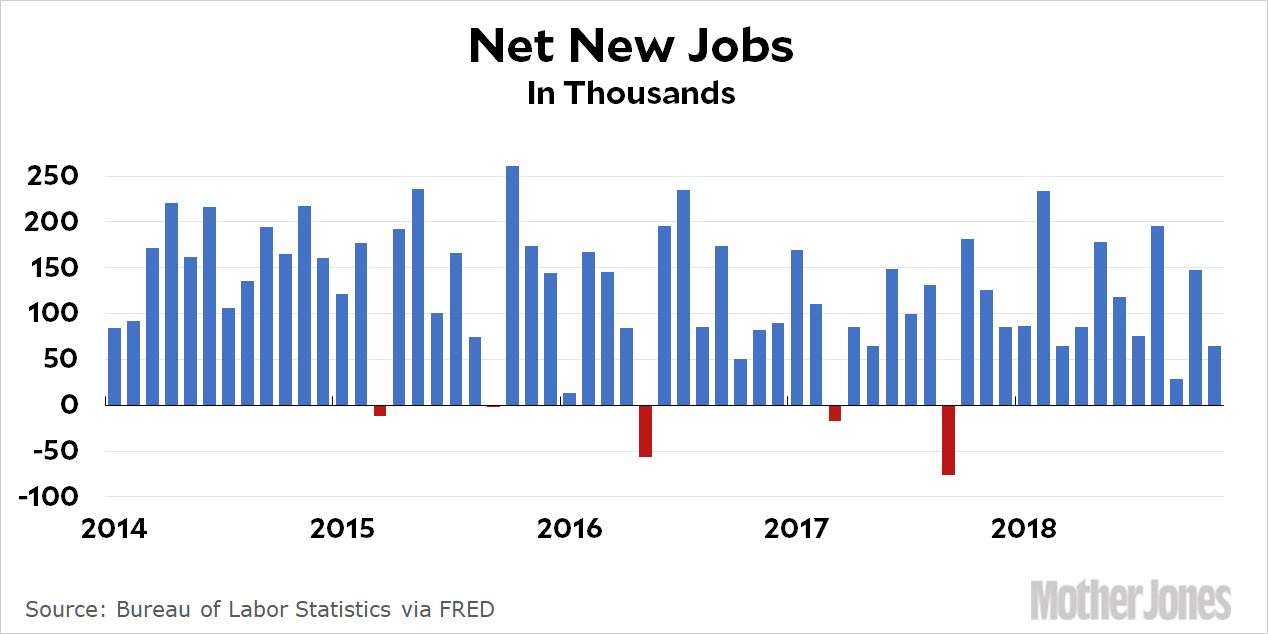
The American economy gained 155,000 jobs last month. We need 90,000 new jobs just to keep up with population growth, which means that net job growth clocked in at an anemic 65,000 jobs. The unemployment rate stayed steady at 3.7 percent.
There was a big drop in the number of people who work part-time for non-economic reasons (i.e., they work part-time by choice), but it wasn’t clear what happened to them. Did they quit entirely and go back to housekeeping, or did they take up full-time work? Its unclear from the other numbers, but either way it’s probably a measure of a fairly strong economy.
Earnings of production and nonsupervisory workers increased at an annual rate of 3.8 percent. With inflation running at about 2.5 percent recently, that’s a real annualized increase of 1.3 percent. Not bad.
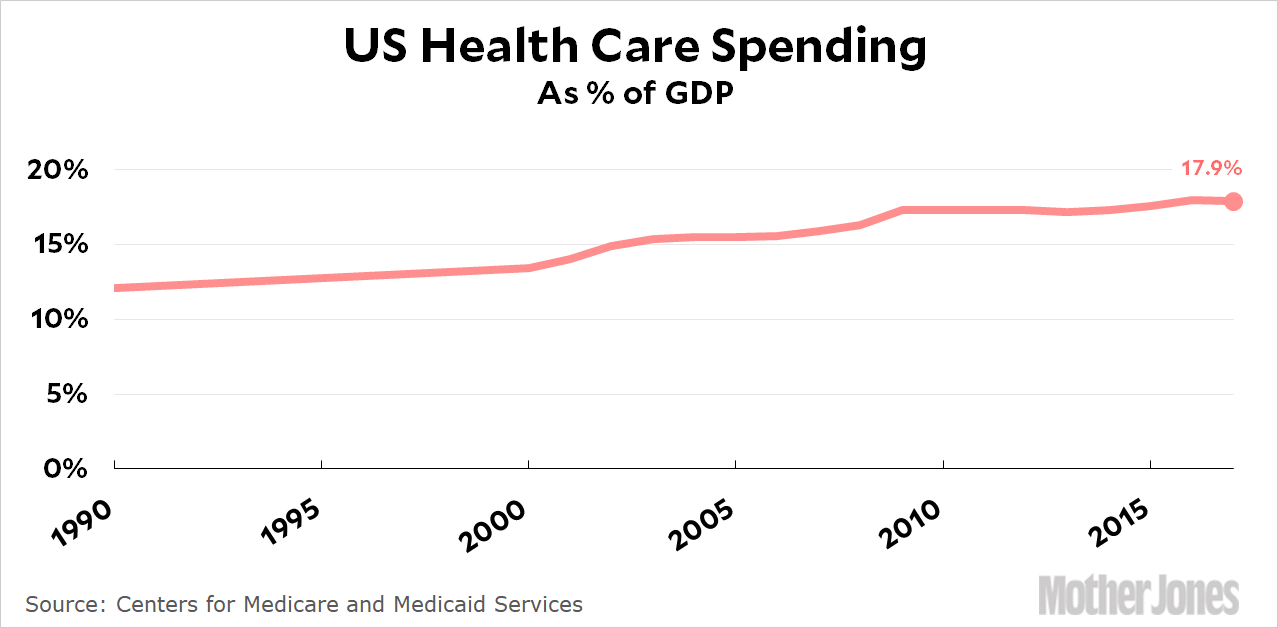
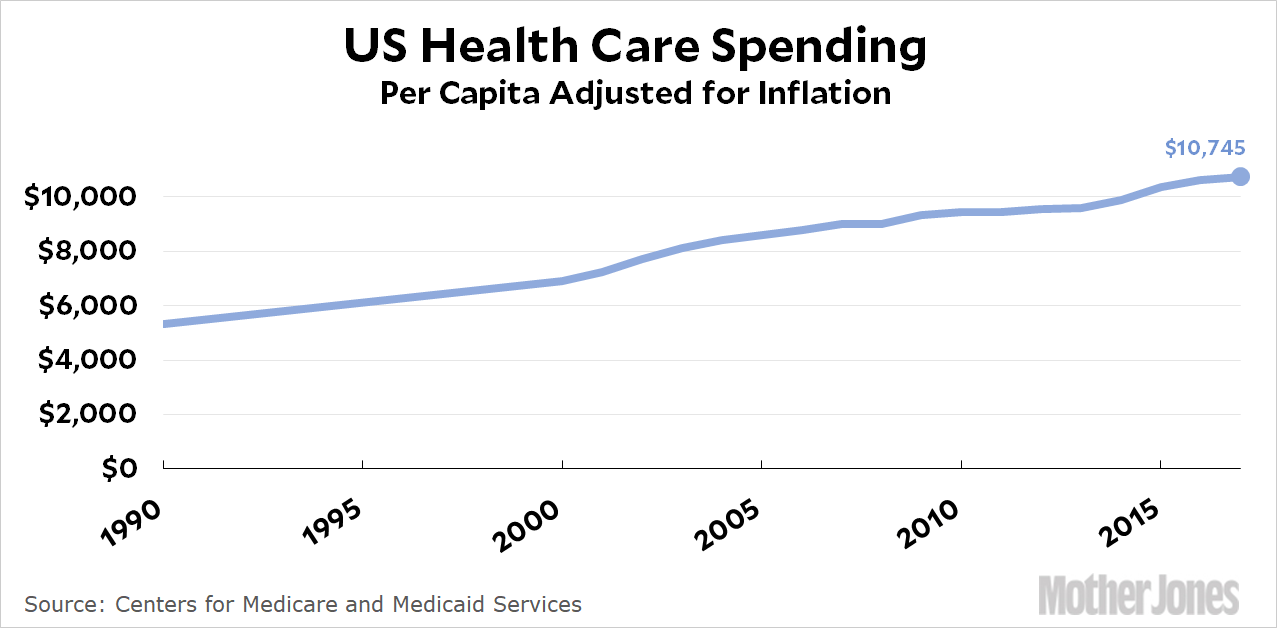
Health care spending as a share of GDP declined in 2017. That’s only the second time this has happened in recent history, and it continues a trend of nearly zero growth since 2009. Per capita spending was up, but only slightly:
That’s a 1.1 percent increase over 2016—not quite flat, but pretty close.
We still spend way more on health care than any other country, but our growth rate has been flattening for many years. Once again, this is evidence that the spending slowdown which started in the mid-aughts wasn’t an anomaly. The enormous spike that began in the early 80s was. We’re now getting back to the 1950-1980 normal, and there’s every reason to think that’s going to last for a while.
Billionaires own the media,
but they don’t own us.
At Mother Jones we know these aren’t conventional times, and they require unconventional coverage. That’s what deliver every day: fierce, independent journalism you can’t find elsewhere. Perhaps never in the history of our country has that been more necessary than now. But we can’t do it without reader support—your support. Please chip in today.
Billionaires own the media,
but they don’t own us.
At Mother Jones we know these aren’t conventional times, and they require unconventional coverage. That’s what deliver every day: fierce, independent journalism you can’t find elsewhere. Perhaps never in the history of our country has that been more necessary than now. But we can’t do it without reader support—your support. Please chip in today.