• Friday Cat Blogging – 11 May 2018

    We have a raised planter bed in our backyard, and lately Hopper has decided it’s her new favorite place to take a nap. It’s quiet and shady and provides a terrific opportunity to roll around and then track dirt into the house. In today’s picture, she’s giving me that squinty cat look which suggests I’ve taken plenty of pictures already and can I now just leave her in peace to snooze the day away?

  • AT&T Takes Bold Action to Pretend It Disapproves of Michael Cohen

    From the Wall Street Journal:

    AT&T Inc. boss Randall Stephenson said it was a mistake to hire Trump attorney Michael Cohen and ousted the telecom’s giant’s top Washington executive after his office paid Mr. Cohen $600,000 last year. The company told employees Friday in an internal memo that Senior Executive Vice President Bob Quinn was retiring, but people familiar with the matter said the policy chief was forced to leave.

    I realize I’m just saying the sky is blue here, but I want to point out that Randall didn’t fire Quinn because he hired Cohen. That happened a year ago and Randall has been fine with it ever since. He only fired Quinn when the arrangement became public and “something had to be done.” So he did something.

    POSTSCRIPT: Since writing my last post, I have had a cookie. A lemon Oreo. But I am still feeling crabby.

  • Symbolic Labor Bill Should Have No Trouble Getting Democratic Support

    Jim West/ZUMA

    Eric Levitz says that every Democrat should back “Bernie Sanders’s new labor bill”:

    On Wednesday, Bernie Sanders introduced the Workplace Democracy Act, a bill that aims to increase America’s unionization rate….Thirteen of Sanders’s Democratic colleagues have signed onto this legislation — including virtually every suspected 2020 hopeful in the upper chamber (Cory Booker, Kirsten Gillibrand, Elizabeth Warren, and Kamala Harris are all represented). And yet, a wide array of (self-identified) progressive senators — including ones from states with strong labor presences — have not signed onto the bill.

    Somebody should stop me if I’m missing something big, but this bill is basically card check plus a few other things. In other words, it’s the Employee Free Choice Act, which garnered 47 cosponsors in 2008 (92 percent of all Democrats in the Senate), but then slumped to 41 cosponsors (71 percent of all Democrats) when it actually had a chance of passing in 2009. Since the bill has no chance of going anywhere with a Republican in the White House, we’re politically in the same situation as we were in 2008. This means that Bernie’s bill should have no trouble getting cosponsorship from nearly every Democrat.

    If the bill had a real chance of passing, that would be a whole different story. Probably a bunch of Democrats would drop out, citing some detail or other as unacceptable. But as long as it’s just symbolic, it should be able to do at least as well as those dozens of Republican votes to repeal Obamacare back when it had no chance of passing either.

    POSTSCRIPT: I seem to be feeling a little grumpy and cynical this morning, no? Perhaps I need some cookies.

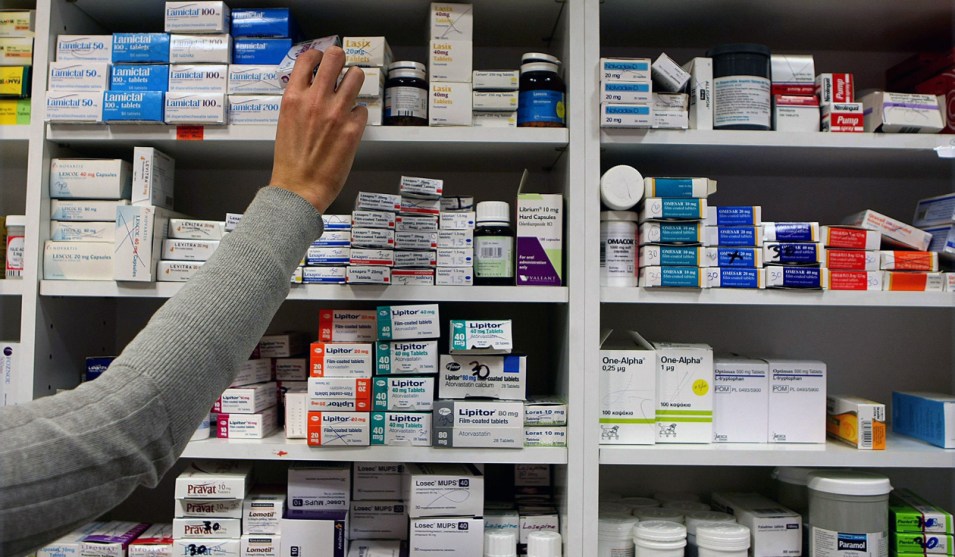
  • Trump Proposes to Cut Drug Prices by Allowing Companies to Charge More

    Julien Behal/PA Wire via ZUMA

    From the New York Times:

    President Trump will lay out on Friday a broad strategy to reduce prescription drug prices, but in a break from one of his most popular campaign promises, he will not call for Medicare to negotiate lower prices with drug manufacturers, senior administration officials said.

    I am shocked that Trump is breaking this campaign promise. Who would ever have guessed? So what will he be proposing?

    The administration will, as expected, put pressure on foreign countries to relax drug price controls, in the belief that pharmaceutical companies can then lower prices in the United States.

    So Trump is proposing to increase drug prices overseas and then do nothing to leverage this into lower prices here. Sounds great! I can hardly wait for this novel approach to slash my prescription bill.

  • What Made Marxism So Deadly?

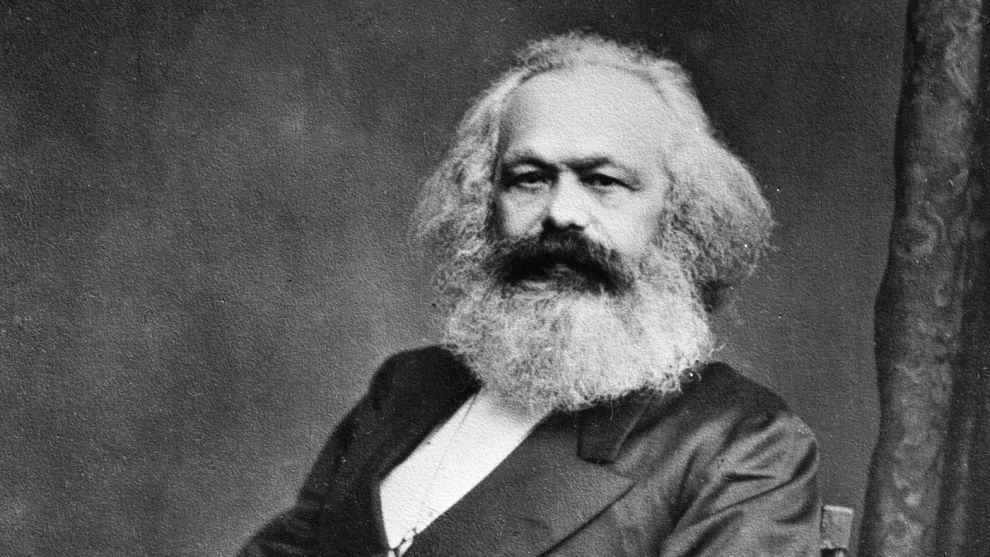
    Karl Marx: His economic theories weren't that great, but he sure rocks a helluva beard.

    Brad DeLong points me to Noah Smith, who uses the occasion of Karl Marx’s 200th birthday to muse about the many, many failings of real-world communism:

    For those who have read history or lived through the 20th century, it’s hard to forget the tens of millions of people who starved to death under Mao Zedong; the tens of millions purged, starved or sent to gulags by Joseph Stalin; or the millions slaughtered in Cambodia’s killing fields. Even if Marx himself never advocated genocide, these stupendous atrocities and catastrophic economic blunders were all done in the name of Marxism. From North Korea to Vietnam, 20th century communism always seem to result in either crimes against humanity, grinding poverty or both. Meanwhile, Venezuela, the most dramatic socialist experiment of the 21st century in a nation with the world’s largest oil reserves, is in full economic collapse.

    I realize I’m barging into a conversation that’s been going on for many decades, and also that I’m woefully inadequate to comment. But I’m going to comment anyway. It strikes me that Smith has the causation backward here. It’s not that Marxism inherently leads to crimes against humanity, but that ruthless autocrats—the kind likely to commit crimes against humanity—find Marxism a convenient economic doctrine to adopt.

    Why convenient? Because autocrats desire centralized control, and Marxism delivers by insisting that the state should own the means of production. Autocrats also like to pose as populists, and Marxism delivers there too. Even more conveniently, Marx himself said that full communism would take a long time to develop, which provides an endless series of excuses for underachievement. Also conveniently, Marxism contrasts itself explicitly to market capitalism, which provides autocrats in poor countries with an automatic enemy in the capitalist West to keep the masses enthralled.

    All in all, if I were an autocrat, I’d probably find Marxism pretty congenial. Would I care about what Marx actually wrote or what his economic ideas really were? Not really. Every autocrat has his own national version of Marxism anyway.

    As for the grinding poverty, that’s because Marxism is (a) deeply flawed, (b) adopted only by poor countries in the first place, and (c) generally just a thin veneer over the usual autocratic kleptocracy that’s impoverished countries for centuries.

  • Donald Trump to Propose Biggest Drug Reform In All of History Tomorrow

    GMVozd/Getty

    If you’ve been waiting on the edge of your seat for Donald Trump’s thoughts on how to reduce prescription drug prices, your wait is finally over:

    President Trump will deliver Friday afternoon a twice-delayed, much-anticipated speech about his plan to lower drug prices — after a year when harsh rhetoric against drugmakers was accompanied by little action….“What I’m hearing is that they’re looking at a clean slate and going after everybody: the drug companies, the pharmacy benefit managers, everyone,” said one health care lobbyist, who spoke on the condition of anonymity to speak frankly.

    Hahaha. Of course he’s going after everybody. Trump is a man of the people, after all. And of course your source needs anonymity to offer up a pearl of praise like this to the great man.

    So in reality, what can we expect? I quail to even think about it. And more to the point, how likely is it that his strategy to get it through Congress will consist of more than a few tweets? Zero?

    If I had to guess, I’d say that Trump might propose some modest reforms aimed at reining in massive price increases for orphan drugs. It would be popular, and his FDA chief supports it. He might also propose some new rules prohibiting drug companies from trying to keep generic competitors off the market. This is about the most I’d expect. Beyond that, I imagine it will be predominantly corporate-friendly stuff—and if congressional Republicans even bother spending any time on this, that’s probably all that will remain by the time they’re finished with it.

  • Wages Are No Longer Growing At All

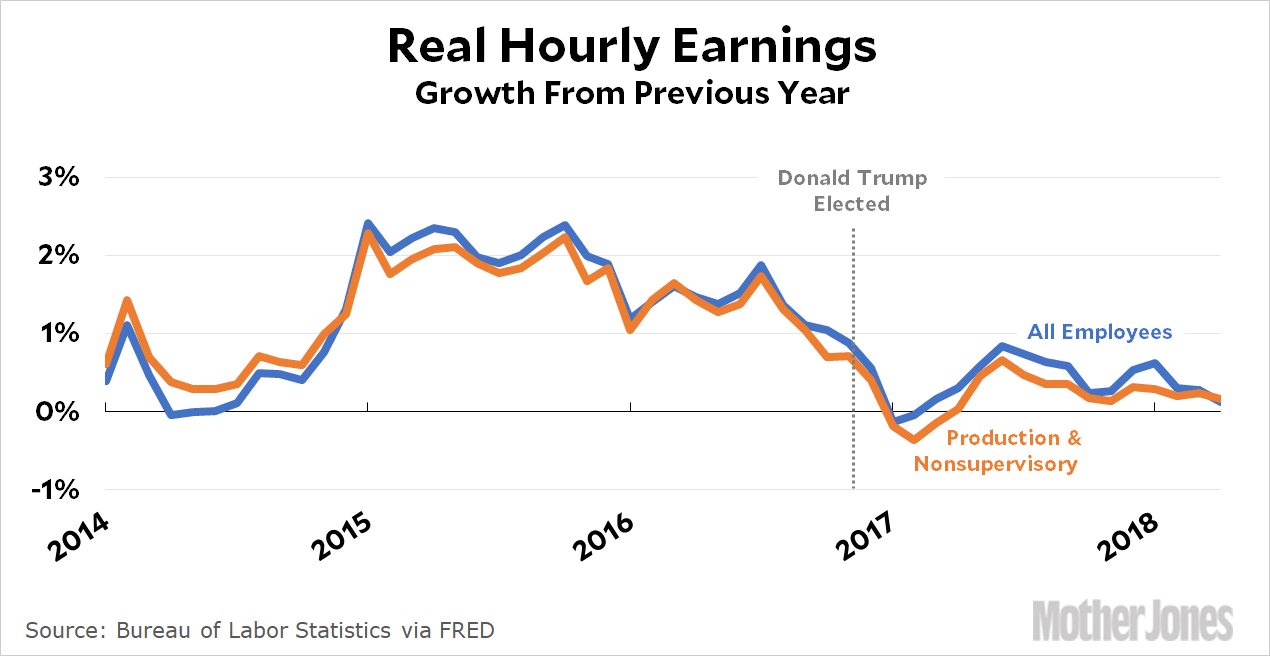
    The inflation figures for April are in, which means we can take a look at how much wages went up last month. First, here’s a broader look:

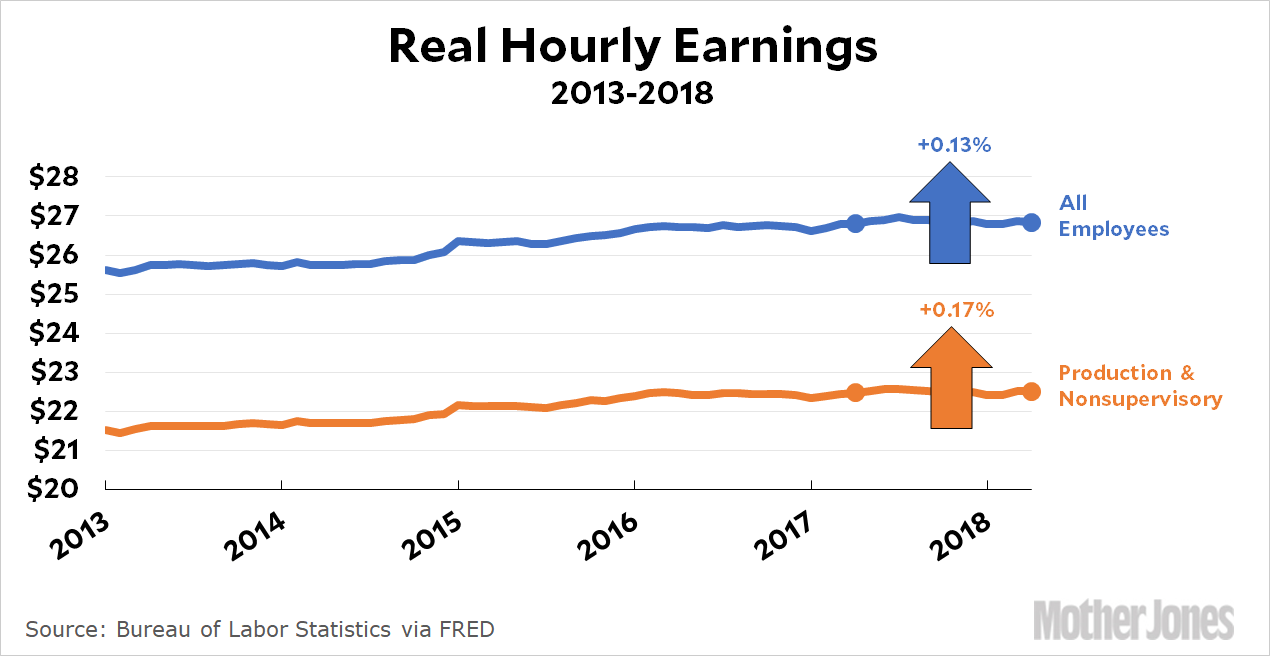
    Up through 2016, wages were rising at about 1 percent per year (adjusted for inflation).

    In the past 12 months, wage growth slumped to 0.13 percent. For blue-collar workers, wage growth was 0.17 percent.

    In April, wages fell slightly. Wages for blue-collar workers were flat. The growth rate has been heading down, down, down.

    Here’s a chart showing wage growth over the past few years. It’s totally unfair to point out the month Donald Trump was elected, but what can I do? I’m all about the facts, you know. In any case, no worries here. The CEOs and other rich folks who really elected Trump are doing great, even if the blue-collar workers who supposedly elected him aren’t getting anything out of his presidency. The Republican Party suckered them again.

  • Lunchtime Photo

    A couple of weeks ago it was duckling season, so gosling season can’t be far behind, can it? Indeed not. Our lake is now full of adorable baby Canada geese. Aren’t they the cutest little things you’ve ever seen?

    A question for the bird people: the particular brood that I saw the other day had 11 goslings. That’s not possible, is it? What kind of goose could sit on a nest with 11 eggs in it? Do multiple geese share daycare duties if their eggs hatch at the same time? Or what?

    UPDATE: Yes, it turns out that Canada geese often form “creches” of goslings from several different nests. Here’s a picture of a 40-gosling creche on the Thames a few years ago, courtesy of the Daily Mail.

    May 1, 2018 — Irvine, California
  • Rooftop Solar Will Make California Homes More Affordable

    West Coast Surfer/DPA via ZUMA

    As you may know, California has decided to make rooftop solar mandatory in all new houses starting in 2020. But you might not know this:

    In addition to the solar mandate, the commission approved new insulation and air filter requirements for newly built homes. In all, the new residential requirements are expected to make a single-family house $9,500 more expensive to build on average, but save $19,000 in reduced utility bills over a 30-year period, according to the Energy Commission. Monthly mortgage payments should rise by an average of $40, but utility bills should fall by $80, a commission analysis says.

    The $9,500 estimate you keep hearing about includes not just the solar panels, but also the new insulation and air filter stuff. And it’s all likely to make homes in California less expensive by the only metric that matters: monthly payments.

    I don’t have a strong opinion about this mandate because I haven’t spent any time digging into it. Tentatively, I’d say that it sounds like a good idea even if it’s not the best idea ever. There’s no law that says we can’t have both rooftop solar and utility-scale solar, after all. We have lots of sunshine in California, so why not make use of it as broadly as we can?

    Rooftop solar does present genuine issues for utilities, especially if it includes net metering (the ability to sell excess power back to the grid). Still, these issues aren’t insurmountable, and utilities generally protest too much. Solar and wind are the future until something better comes along, and I’m perfectly happy to live in a state that not only cares about climate change, but also has a powerful hedge against future increases in the price of gas and oil.

  • The Donald Trump Era in America Is Coming to a Close

    This is more or less what American politics is still about. But not for much longer.

    How bad are things today? And by “things,” I mean Donald Trump.

    Pretty bad. Trump is like a kid who finally gets to make his own dinner and decides to have chocolate pizza covered with marshmallows along with a chocolate shake and then some chocolate pudding for dessert. When it’s all over, we’re going to wake up with a bad stomach ache.

    However, because I am who I am, I believe that Trump is an aberration, not a harbinger of the future. Liberalism tends to come in short spurts in America, followed by longer periods of conservatism as everyone takes a breather. The Obama presidency was a pretty modest contribution to liberalism, and I suspect that our breather will be fairly modest too.

    This is all some throat clearing before I say that I’m happy to see that Ezra Klein is coming around on this too, for a related but distinct reason:

    In White Rage, Carol Anderson reflects on the protests in Ferguson, Missouri, and the way the nation has always been transfixed by black rage, by images of “rampaging, burning, and looting.” But not all rage is so visually arresting….When President Franklin D. Roosevelt justified his abandonment of anti-lynching laws because, otherwise, the Southern Democrats who chaired powerful committees would “block every bill I ask Congress to pass,” he was genteelly operating within the customary boundaries of a transactional political system, but he was cooly rationalizing a morally gruesome choice.

    ….Thinking back on those eras is a reminder that, in America, periods of racial progress have always triggered periods of political instability. The Civil War is the most profound and bloody example but far from the only one. Richard Nixon, the last president to evince so little respect for constitutional norms, was also a “law and order” candidate who promised to represent a silent majority frustrated by rapid racial advancement and unnerved by black anger.

    Viewed from this perspective, it is not surprising that the first African-American president was followed by a candidate like Trump, who promised to put the restoration of America’s dominant political majority above the niceties of normal politics, who is visibly enraged by Black Lives Matter protests and kneeling NFL players.

    As always, I’d like to add one thing to this: even granting everything Klein says, Trump won only barely, and only thanks to a bizarre confluence of outside circumstances. It’s a huge mistake to ascribe too much historical importance to something that squeaked into existence by less than 1 percent of the vote in three states. Trump may be president, but not because America suddenly underwent a vast change of heart:

    I wonder often about how this period in American life will look to future historians. One possibility that has been much discussed is that it will be seen as the dawn of America’s descent into illiberalism. But another possibility — one that’s less often considered — is that it will eventually look like the turbulence that has always accompanied racial progress in this country, and it will eventually be seen as modest compared to the upheavals of our past.

    This depends, of course, on what happens next — on the judgment Americans render on Trump in 2020, on whether our political institutions or fundamental freedoms are weakened in the meantime, on the way we navigate the demographic turbulence already disrupting our politics. But America has absorbed worse than this into its story of progress. As Anderson says, we are an aspirational country, and the power of being an aspirational country comes in having something to live up to. Now it is our generation’s work to write the next chapter.

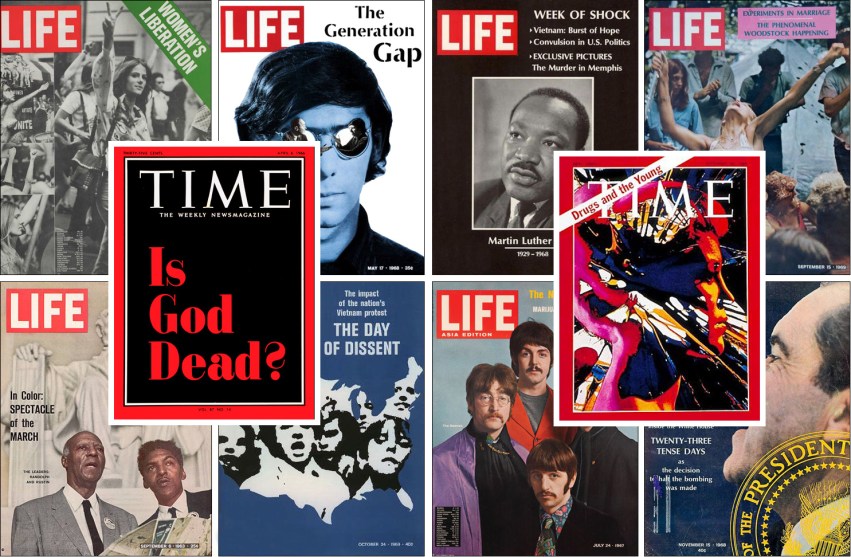
    Quite so. Trump tells us far more about the Republican Party than he does about America. One man of Trump’s limited abilities is just not enough to change America’s destiny right now. Climate change is real. Demographic change is real. Artificial intelligence is real. Trump may be able to delay our reckoning with the future, but these are the things that are going to mold our next few decades no matter how much they frighten Trump’s base of white voters. Donald Trump, far from being the birth of something new, almost certainly represents the last gasp of the great cultural battle that began in the 1960s and is now, finally, almost exhausted. We have different fights ahead.