• Defending Al Franken For Real

    Al and Franni in the capitol building on the day Franken resigned.Ron Sachs/CNP via ZUMA

    I am loath to write a defense of Al Franken because—well, because I’m a coward. I know that doing this will produce nothing except a tsunami of criticism from people who think I’m just another apologist for rape culture who refuses to believe women who say they’ve been harassed. But hell. What’s the worst that can happen? Nothing much. And if I’m afraid to do this, I can only imagine what it’s like for someone who might actually have something to lose. So let’s do it.

    Two things before I start. First, I can’t prove anything. No one can. All I can do is lay out a fact pattern and suggest where it leads. Second, I am not arguing that Franken was punished too harshly for conduct that’s not a big deal. I’m arguing for actual innocence. That is, I’m suggesting that he just didn’t do the stuff he’s accused of.

    OK. There were eight women who accused Franken of inappropriate contact. Let’s go through them.

    As near as I can tell, three of the women most likely misrepresented what happened. Leeann Tweeden, Franken’s initial accuser, certainly lied profusely, as Jane Mayer documented yesterday, so I don’t need to say much more about her. She made her accusation on a right-wing radio talk show, so her motivation for this is hardly a secret.

    Stephanie Kemplin says Franken cupped her breast when she posed for a photo with him during a 2003 USO tour. However, the photo shows Franken behind a table and Kemplin in front of it. It’s hardly plausible that Franken could have reached her breast from that position even if Kemplin adjusted her stance before the picture was taken.
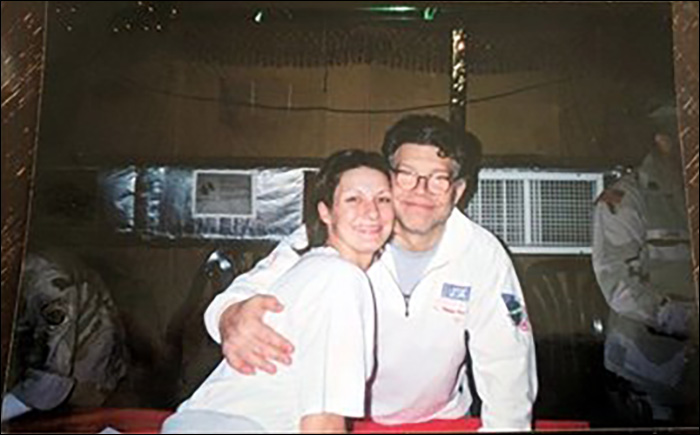
    Tina Dupuy says that at an inauguration party in 2009 Franken “put his hand on my waist, grabbing a handful of flesh.” The picture she produced is bizarrely cropped and low-res, even for 2009, and I’ve tried to enhance it a bit below:

    It’s impossible to say for sure, but it looks as if Franken’s arm is in front of Dupuy, not behind her. It’s hard to tell, though, because the artifacts in the image are far more conspicuous right in that area. It looks to me like someone crudely photoshopped that part of the image with a blur brush, though it’s impossible to say for sure. In any case, the picture as it stands doesn’t support Dupuy’s case. I’d very much like to see the original.

    Apart from these three, there are four women who insisted on remaining anonymous. There are, obviously, sometimes good reasons for anonymity, but it’s also true that it provides a shield for accusers who don’t want to be questioned too closely about their charges.

    • Anonymous #1 says Franken groped her butt at a 2007 women’s political caucus event in Minneapolis. A friend says she was there for the grope, but there’s no photo.
    • Anonymous #2 also says Franken grabbed her butt at a fundraising event in 2008. She fled to the bathroom, but says Franken suggested he follow her. There’s no photo.
    • Anonymous #3 says Franken tried to kiss her on the lips on a stage in front of 750 people in 2006. There is no photo.
    • Anonymous #4 says Franken tried to kiss her in a radio studio at the end of an interview in 2006, claiming it was “his right as an entertainer.” There were other people in the studio, but none of them have corroborated her story.

    Of these four, #2 implausibly suggests that Franken tried to follow her into the bathroom in full view of everyone at a fundraiser. #3 says Franken tried to kiss her in full view of hundreds of people. #4 makes a claim that seems unlikely on its face—it’s a small room with several other people right there—and produces no corroboration. That leaves only #1, about whom we can’t say much. I’d sure like to see the photo, though.

    Finally, there’s Lindsay Menz. She says that Franken grabbed her butt while she was posing for a picture with him at the Minnesota State Fair in 2010. The picture is a head-and-shoulders shot, so it provides no evidence one way or the other. Franken allegedly did this even though Menz’s husband was right nearby. This is hardly impossible, but it doesn’t seem very likely.

    Of these eight, then, six are pretty implausible on their face. The other two incidents might have happened, or they might simply have been normal accidents. Or it might be that Franken actually had his arm around their waist but just low enough to startle them into thinking he was grabbing their butt.

    But this isn’t all. Consider all of the following:

    • Nobody had ever so much as whispered anything untoward about Franken before 2017.
    • After Franken resigned, the allegations stopped dead. I know there’s not much point in coming forward once Franken was gone, but if Franken was really a serial groper I’m surprised not to have heard so much as another peep since December 7, 2017.
    • Franken did not have a reputation in the Senate as someone “not to be alone with” or “not to be in an elevator with.”
    • Every single person who has ever worked with Franken—literally every single one, as near as I can tell—has defended him, saying they never saw him engage in inappropriate behavior. This doesn’t gibe with the image of an insane risk-taker who grabs butts and tries to kiss women in broad daylight in front of large crowds.
    • As I mentioned yesterday, no one has come forward saying “everyone knew” about Franken. This is a surprising omission since it’s drearily inevitable in most sexual harassment cases.
    • Leeann Tweeden’s public accusation came exactly seven days after the Washington Post ran a story about Roy Moore’s alleged child molestation. This is suspiciously precise timing: it either forces Democrats to throw Franken under the bus or else forfeit the high ground in the campaign against Moore. Add to this the fact that Tweeden surrounded her story with a thicket of lies—which isn’t necessary if you’re telling the truth—and there is something mighty fishy going on here.

    As strong as I think this fact pattern is, it has a gigantic hole: if Franken is innocent, why did eight separate women come forward to accuse him? Was this some kind of coordinated attack? I admit that hardly seems likely.

    In the end, I think Franken is most likely innocent, but I have no good explanation for what produced a sudden deluge of harassment allegations against him. If it was a ratfuck, it was surely one of the most genius ratfucks of all time.

    Either way, though, I think Franken was treated badly. Given his previous reputation and the weakness of the allegations, he certainly deserved some kind of investigation and a chance to defend himself. Instead he was jettisoned “for the good of the party.” I find that pretty despicable.
  • A Short Primer on Modern Nuclear Reactor Design

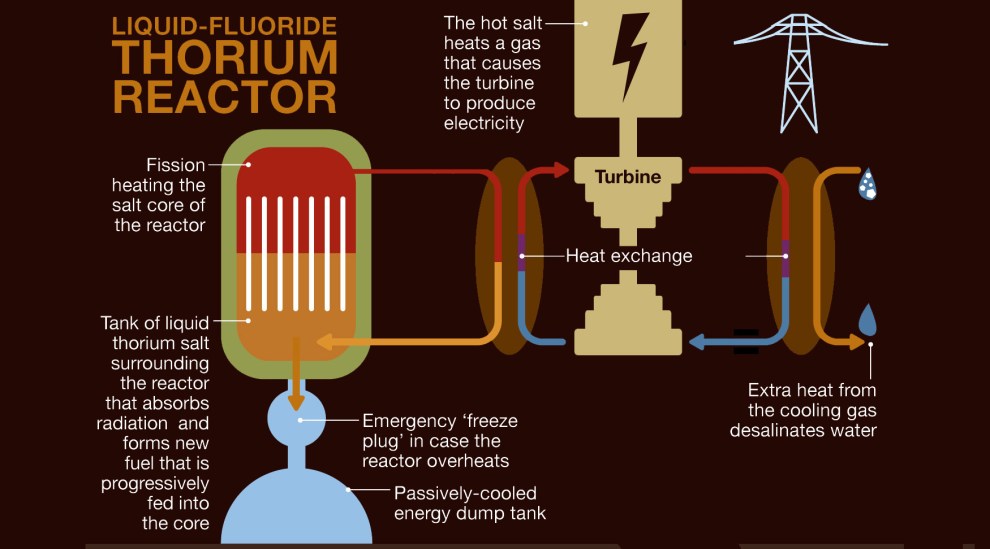
    My post this morning about nuclear power touched off a considerable Twitter conversation, most of it based on misconceptions about modern nuclear reactor designs. I don’t want to get into a long defense of nuclear here, but I thought it might be worthwhile to at least provide a brief primer for people who haven’t really kept up with developments since Three Mile Island. Here are some of the main points:

    • Thorium. Back in the Atoms for Peace days, nuclear power was inextricably bound up with nuclear weapons development. This meant that uranium became the fuel of choice for nuclear reactors, and the fact that it produced plutonium as a byproduct was viewed as a good thing. But there’s always been another good choice of fissile material: thorium, which is far more abundant than uranium and makes a perfectly good fuel for electricity production. The first thorium reactor was built in 1965 and worked well, but the technology was never pushed forward after that. Recently interest in thorium has been renewed, and there are now thorium research reactors in use around the world. India is particularly interested in commercializing them because they have huge reserves of thorium.
    • Thermal breeders. Even though thorium is more abundant than uranium, there’s still not an infinite supply of the stuff. This means that breeder reactors, which produce more fuel than they use, will almost certainly need to be part of the solution for any long-term buildout of nuclear capacity. They’ve been a subject of study forever, but they have a number of drawbacks, one of which is that they turned out to be very expensive to design and build. However, thermal breeder designs for thorium plants, which rely on lower-speed neutrons in the breeding process, are likely to be less expensive.
    • Meltdowns. All the original designs for nuclear reactors used pressurized water to cool the nuclear core. If something goes wrong, the water stops flowing and the core melts down. Modern designs have done away with pressurized water and instead use gas or molten salt as cooling fluids. This makes the reactor all but immune to meltdowns. This technology can be used with both thorium and uranium designs.
    • Nuclear waste. This is the big one. Even modern designs produce waste, and we still don’t have any great ideas about how to dispose of it. However, thorium breeders produce less waste, and in particular, they produce less of the longest-lasting waste. Storing what’s left on site is, for now, probably a viable solution.
    • Nonproliferation. This has always been an issue with nuclear reactors, but once again, thorium helps on this front because it doesn’t produce anything useful for making a bomb.

    None of this is uncontroversial. There are plenty of technical and engineering issues that you can read about if you’re interested. Just for starters, we have only limited experience with thorium reactors because of our decision decades ago to focus on uranium.

    However, many of these points also apply to uranium reactors. They generally go under the rubric of Gen III or Gen IV designs, which you can read more about here. Even if you’re opposed to nuclear development, it’s worth boning up on this stuff so you don’t sound like an idiot when you get into a conversation with someone who knows something about the current state of the art.

    It’s also good to keep in mind that every energy source has drawbacks. Would a huge buildout of nuclear cost a lot? Sure, but the same is true of solar and wind. Is nuclear waste a problem? Yes, but solar is only viable in parts of the world with lots of sun, and large-scale wind creates serious land-use issues. Is nuclear more expensive than oil and gas? At the moment, yes, but the costs of nuclear can come down if we invest in research. Besides, moving to a carbon-free world isn’t going to be free no matter how we do it. If the world isn’t willing to build out nuclear just because it would cost a few percent of GDP, then it means that the world is flatly unwilling to address climate change in any serious way at all. After all, any solution that takes money and not much else is by far the most feasible plan we have.

    In the end, no one technology will rid us of our dependence on fossil fuels. Some of the answer will come from thorium reactors, some from uranium reactors, some from solar, some from wind, and who knows—maybe someday it will even come from fusion power plants. The only certain thing is that all of these technologies deserve buckets of money for research to make them ever cheaper, more reliable, and easier to maintain.

  • Today in News You Can’t Use

    Kevin Drum

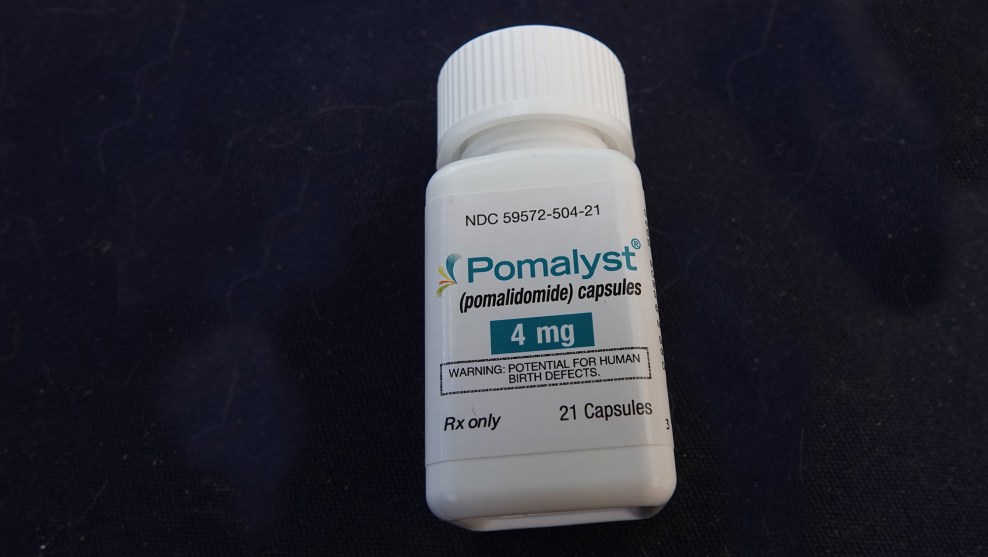
    Today, LA Times columnist David Lazarus answers a question I’ve been curious about for some time: where do the generic names for drugs come from? For example, the two chemo drugs I take are Pomalyst™ and Darzalex™, aka pomalidomide and daratumumab. But where do those generic names come from?

    The answer, it turns out, is two women who work for USAN, the United States Adopted Names program. Stephanie Shubat explains how they come up with generic names for pharmaceuticals:

    Shubat said this is done primarily by assigning uniform “stems” to drug names — that is, drugs with similar structures or purposes will have similar-sounding names, or parts of their names. The anti-anxiety drug lorazepam, for instance, would share “azepam” with similar medications; cortisone derivatives would have “cort” somewhere in their generic name.

    The artistry comes in the assignation of a prefix, Shubat said. Unlike with celecoxib, the prefix shouldn’t hark back to the name-brand drug. Nor should it be potentially offensive in any language….She also said USAN will put the kibosh on generic names that include the letters W, K, H, J and Y, because they could create confusion abroad for non-English speakers with different pronunciations….“Sometimes I look at license plates for new prefix ideas,” Shubat confided. “Sometimes I borrow from the names of cats or dogs.”

    I figured out the “stem” part of this long ago, since similar drugs usually have identical stems. But I could never make any sense out of the stuff before that. I always figured it must have something to do with the specific chemical compound, but boy was I wrong. It comes from license plates and cat names. Yeesh.

    However, I’m curious about Shubat’s claim that they no longer allow generic names that are too similar to the trademarked name. Take a look at the two chemo drugs I use. Both of them borrow the first three letters of the trademark name as the first three letters of the generic name. Apparently the pharmaceutical folks are trickier about getting their way than Shubat thinks.

  • Regulated Capitalism Is the Answer to Global Warming

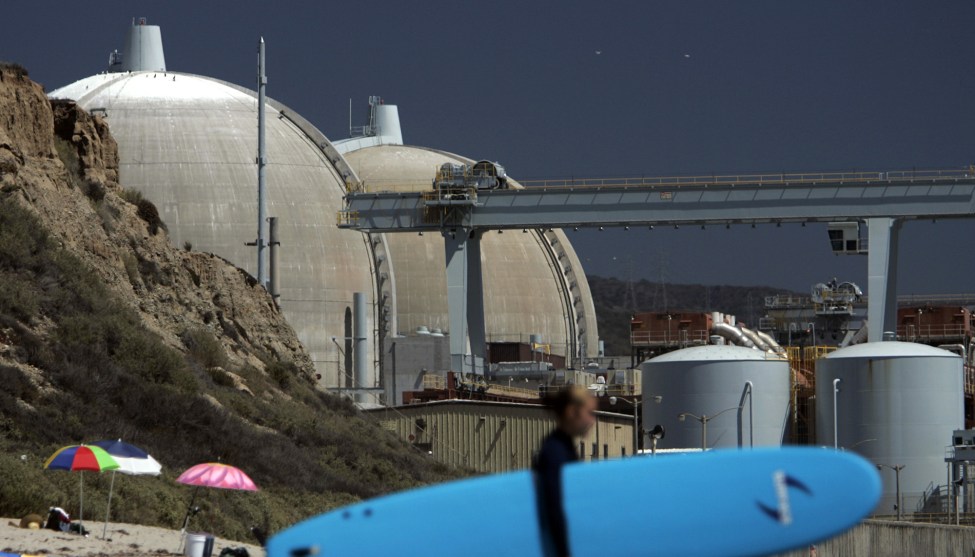
    Mark Avery/Orange County Register/ZUMA

    Over at National Review, Wesley Smith articulates one of the core beliefs of many conservatives:

    Environmentalism is growing increasingly anti-capitalist and anti-human….Writing in the New Statesman, British journalist Paul Mason argues that to stop global warming, we have to put the government in complete, iron-fisted control of, well everything….“Few people are yet prepared to accept that, to save the planet, we have to end capitalism — and on a timescale that even an ardent Leninist might find optimistic….It is, of course, easy to imagine a non-carbon form of capitalism — as long as you admit that it’s like imagining a non-racist form of Nazism: theoretically possible but unlikely, given the historic patterns already set.”

    AOC’s chief of staff, Saikat Chakrabarti, one of the architects of the Green New Deal, has admitted the same thing: “The interesting thing about the Green New Deal,” he told a reporter in May, “is it wasn’t originally a climate thing at all. Because we really think of it as a how-do-you-change-the-entire-economy thing.”

    The notion that liberals don’t really care about the environment, but just want to control the economy, is an old conservative accusation. It fits in with their belief that liberals don’t really care about racism (in fact, we want to keep it alive so we have something to get out the black vote) and don’t really care about the poor (we just suffer from class envy and want to take everything away from the rich). Still, it doesn’t help the climate change cause when folks on the left publicly admit that controlling the economy really is their main goal and climate change is just the excuse.

    And for Paul Mason’s benefit, I’d like to point out just how easy a non-carbon form of capitalism would be—and not just to imagine, but to accomplish. Here it is:

    Over the next ten years, build about 5,000 standardized 5 TWh nuclear reactors worldwide and retire all fossil-fuel plants. Mandate a 20-year switch to electric vehicles. This would cost around $3 trillion per year, which isn’t much, and would cut carbon emissions by about 80 percent. Done.

    Note that I’m not recommending this, nor saying that it would be mere child’s play. I’m just saying it’s far more feasible than reconstructing the entire global economy over the next decade and it would cost far, far less than, say, a World War II effort—which would amount to about $20 trillion per year in today’s dollars. Nor does it require any new technology. We have excellent Gen IV plans ready to go for safe and reliable nuclear plants, and battery technology keeps getting better every year. Spend another trillion dollars a year on wind and solar and we’d be in pig heaven.

    Now, this would, obviously, require a vast global agreement to outlaw fossil fuel plants and build nuclear reactors. One way or another, this would demand government interference in the free market. However, the interference would be relatively small (a few percent of GDP) and very tightly focused. Nothing outside the power and vehicle sector would be much affected.

    This is not our best solution to climate change. But it’s certainly a feasible one and would allow all of us to continue living our energy-intensive lifestyles at a cost so low we’d barely notice it. That’s the power of capitalism, if we’re willing to harness it.

  • The Budget Deficit Is All About Taxes, Not Spending

    Yesterday I put up a chart showing the level of discretionary federal spending over the past 40 years. I did this because the news hook for it was the budget deal that Congress and President Trump agreed to, which was solely about discretionary spending levels for the next two years.

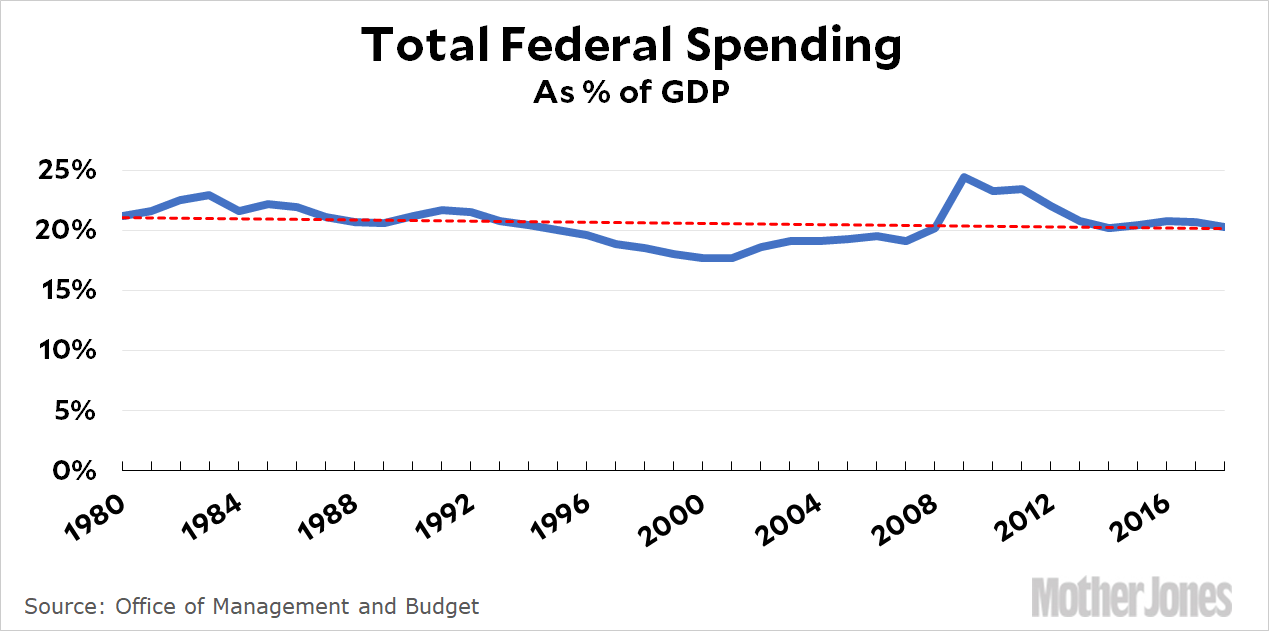
    But naturally a lot of people thought this was just some kind of trick. What about all federal spending, including stuff like Medicare and Social Security, which we all know is spiraling out of control? Here it is:

    The trendline is still slightly down. Roughly speaking, the federal government spent about 21 percent of GDP during the Reagan era, less than that during the Clinton era, and then stabilized at about 20 percent during the Obama era. There is simply nothing here that is out of control.

    Now, these numbers are likely to go up as the baby boomers continue to retire, but that’s due to demographics, not profligate spending. We have a moral and practical commitment to fund Medicare and Social Security for future retirees, and we’ve known for decades that retiree spending will go up a few points of GDP in the 2020s and 2030s. But even at that, it’s unlikely to rise above 23 or 24 percent of GDP. It’s simply not a big problem.

    Now, one thing we do have is spiraling budget deficits. Why? As you can see, it’s not because spending is out of control. It’s because Republicans are dedicated above all to cutting taxes on the rich and therefore refuse to fund the government properly. It’s all about taxes, not spending.

  • Remembering Mark Kleiman

    I’ve been kind of depressed today, which explains the explosion of charts this afternoon—yes, making charts is the kind of thing I do to distract myself—and one of the reasons is that last night I heard about the death of Mark Kleiman.

    To most of the world, Mark was a brilliant criminology scholar with a particular expertise in drug policy. To me, he was a friend and fellow blogger who just happened to also be a brilliant criminology scholar. Mark began blogging back in 2002, the same as me, and since he taught at UCLA I saw him pretty regularly at get-togethers of one kind or another. He was voluble and opinionated—I’m pretty sure he disapproved of every attorney general ever—but invariably fairminded in his field. He was always helpful when I needed help, and I owe him at least some of the credit for my work on lead and crime. Unlike most other criminologists, he took the lead hypothesis seriously, and that was one of the things that gave me the push to take it seriously myself.

    Mark was also a deep-dyed Democrat, in a sort of cultural east-coast way that we don’t quite seem to have in California. He was born and raised a baby boomer in Baltimore—Thomas D’Alesandro Jr., mayor—and came to California only in his mid-40s, when UCLA opened the Luskin School of Public Affairs. In 2015 he moved back to the east coast, taking a position at NYU. I didn’t see him much after that, but we continued to email and, of course, to sometimes link to each other, as old-school bloggers do. Out of curiosity, I checked to see what our last email conversation was about. It was from April, and he was (of course) offering some advice, in this case the name of his old dentist in Los Angeles.

    Oh, and by the way, he added, I’ve been having a few health issues: “Bottom line: glottic carcinoma cured, new kidney working well, heart problems seem to be resolving.” But that was in April. Eventually, the kidney transplant failed to take, and that’s what did him in.

    I don’t have a lot of Mark stories, but I’ll tell you perhaps the most Mark thing I know. His best known book is When Brute Force Fails, an examination of how best to punish criminals in order to keep them from committing crimes again. The acknowledgements are 11 pages long because he—literally—thanks practically every single person he’s ever known, from his first grade teacher (Rhoda Bennett) to all the bloggers he called friends. I’m proud that I was one of the ones he mentioned.

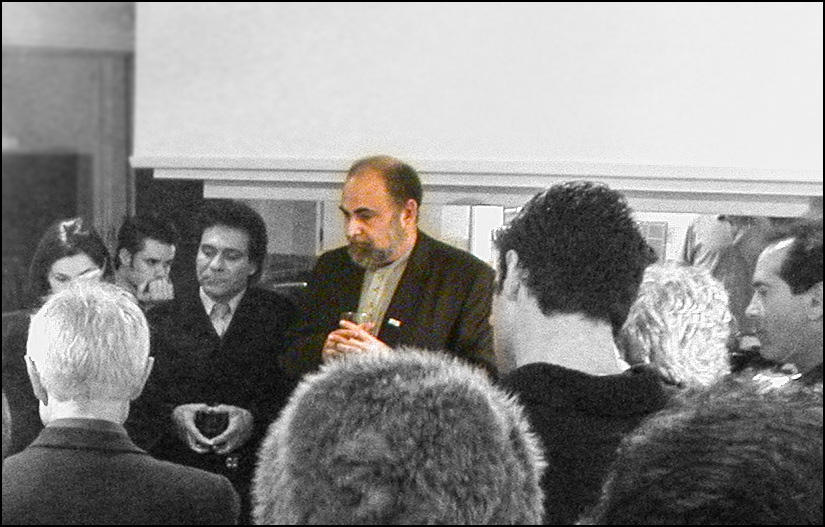
    Mark Kleiman at a fundraiser for Wes Clark in 2003
  • Taxes Are Down, Down, Down

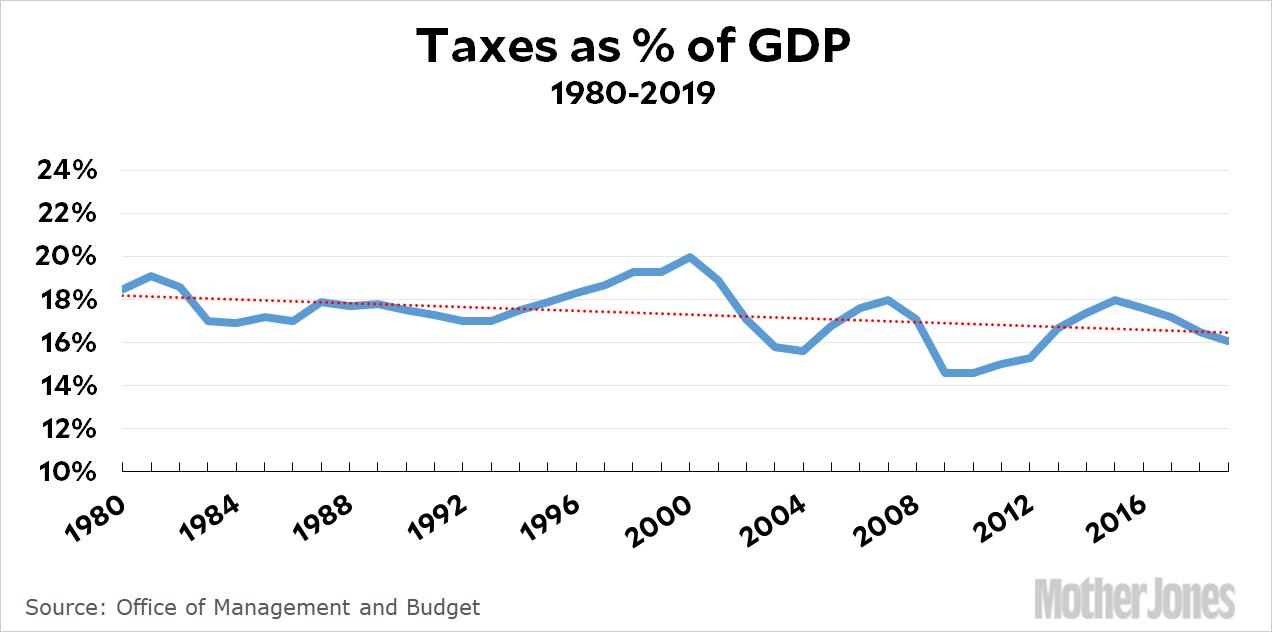
    As long as I’m making budget charts, here’s another one for you:

    Over the past 40 years, the total federal tax burden in the US has declined from about 18 percent of GDP to about 16 percent of GDP. Keep this in mind the next time you hear some Republican on TV moaning about the immense weight of taxes in our country.

  • Why Does the Wall Street Journal Editorial Page Lie So Much?

    As I was perusing reaction to the budget deal earlier this afternoon, I happened to run across the Wall Street Journal’s editorial opinion. It was generally uninteresting (they want entitlement cuts), but I was amused by their disapproving description of the slush fund used to bankroll overseas wars:

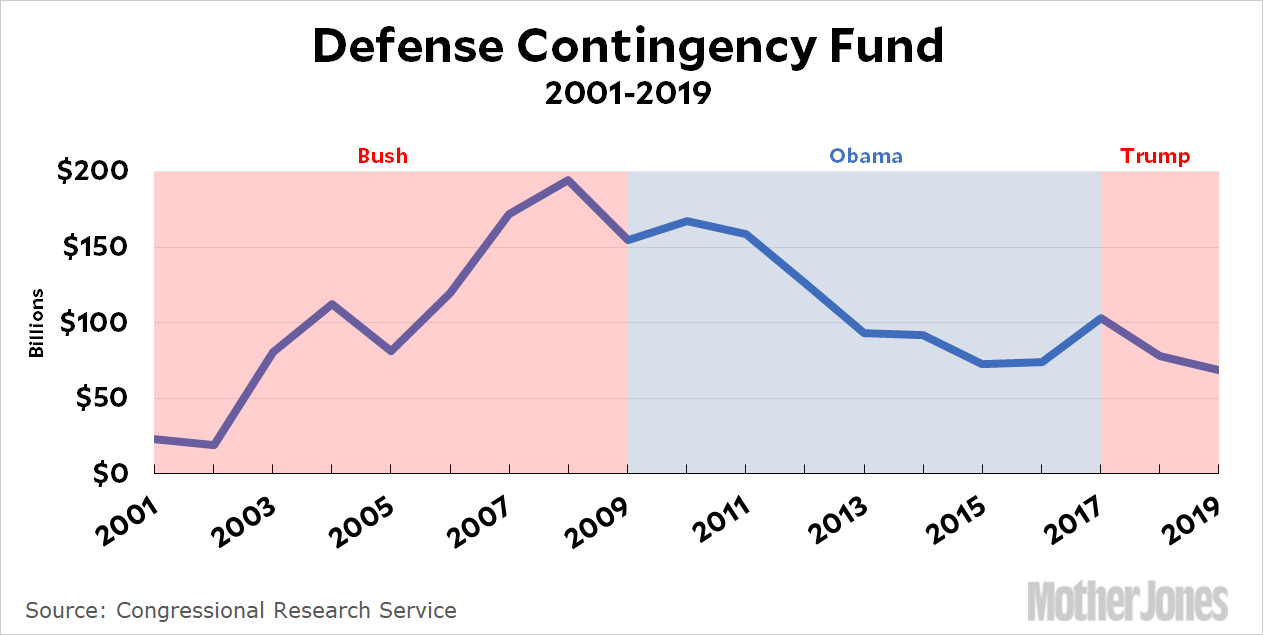
    The defense contingency fund is a gimmick from the Obama era that might not pass Congress again.

    Here is a history of the gimmick “from the Obama era”:

    The contingency fund, as anyone who was alive at the time knows, was a Bush-era gimmick that Obama steadily cut back. I can assure you that the editorial board of the Journal knows this perfectly well.

    This is why you can never trust a word they say. Even on something as trivial as this, they feel the need to flatly lie. It’s pathological.

  • Today’s Budget Deal Is Fine

    Congressional Democrats have reached a spending deal with President Trump. According to news reports, it increases discretionary spending by $320 billion compared to the caps set in the 2011 Budget Control Act. Budget hawks are outraged:

    “It appears that Congress and the president have just given up on their jobs,” said Maya MacGuineas, president of the Committee for a Responsible Federal Budget, which blasted out a statement arguing the tentative deal “may end up being the worst budget agreement in our nation’s history.”

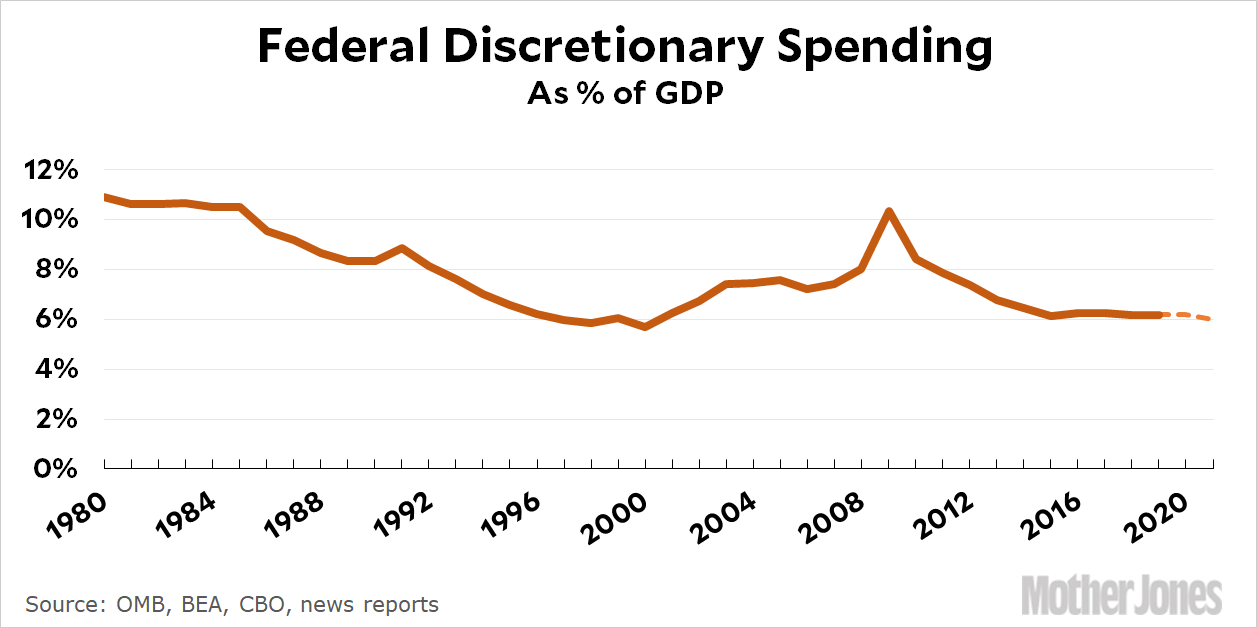
    Yes. They’ve just given up. Here is a chart showing discretionary spending over the past 40 years:

    Discretionary spending has been declining steadily for four decades, interrupted only by the Iraq War and the Great Recession. The new budget deal will keep it at about 6 percent of GDP, the same as it was in 2000 and far less than it was in 1980. This is hardly a picture of a budget that’s skyrocketing out of control.

    If the hawks want to gripe about mandatory spending—primarily Medicare, Medicaid, Social Security, and other social welfare programs—that’s fine. Gripe away. But today’s budget deal has nothing to do with that. It’s solely about discretionary spending levels, and there’s simply no reason to think either that discretionary spending is a big problem or that today’s deal will make it into one.