According to two sources with direct knowledge, Trump began commenting in the West Wing about how awful press coverage had been of the Porter scandal and “how terrible” it looked that the White House was forced to back down.
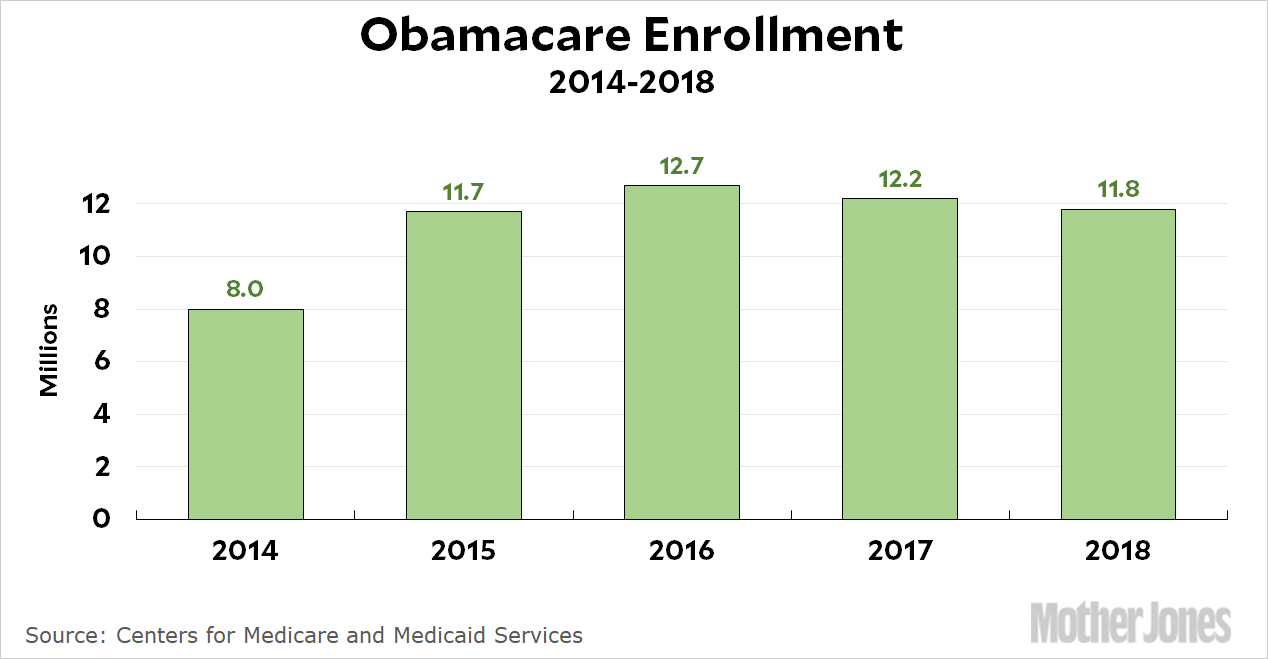
A few states held the Obamacare enrollment period open until January 31, so we’re only now getting final enrollment numbers. Here they are:
It turns out that my optimism about meeting or beating last year’s number was misplaced. There just wasn’t very much additional enrollment after December 15. The only caveat here is that there was an unintended consequence of Donald Trump’s elimination of cost-sharing subsidies: in some states, silver policies became less expensive off-exchange than bronze policies on-exchange. California, for example, actively encouraged customers who didn’t qualify for subsidies to buy policies outside Obamacare. Charles Gaba thinks this probably had a significant effect on Obamacare enrollment, but of course it didn’t affect the net number of people who got health insurance. They just got it somewhere else. We won’t have reliable numbers on this for a while, but it’s something to keep in mind.
All in all, I wish the Obamacare numbers were higher, but a 3-4 percent drop isn’t too bad considering the deliberate sabotage campaign that came out of the White House. Next year could be grim, though, as yet more sabotage combines with the end of the individual mandate to spike premiums again. The war isn’t over yet.
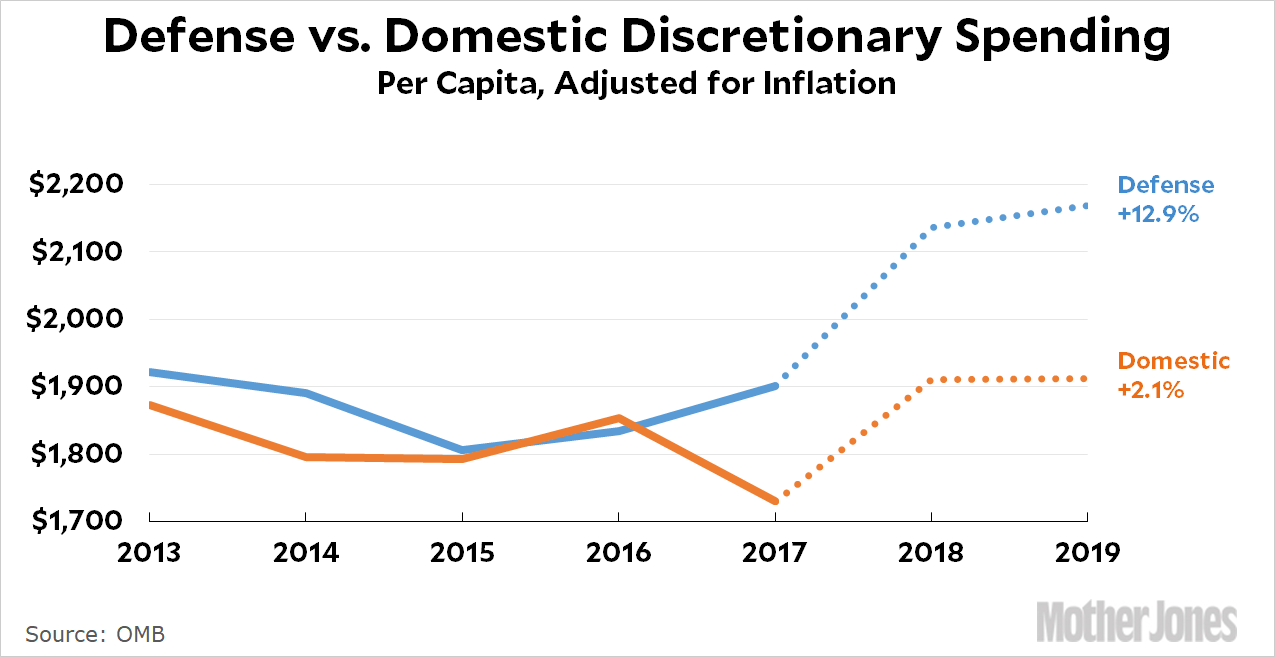
The Senate has agreed to a two-year deal that raises both defense and domestic discretionary spending well above the sequester levels in the Budget Control Act. Here’s how this has played out since 2013, when the budget sequesters first went into effect:¹
Democrats are happy with the additional domestic spending, but Republicans have basically won this round. Domestic spending is up, but a lot of that is disaster funding that Congress almost certainly would have eventually approved anyway. Meanwhile, total defense spending comes to $700 billion this year, which is exactly what President Trump has been demanding. I guess this means he now has the money to develop the itsy-bitsy nukes he wants in order to fight itsy-bitsy nuclear wars.
¹In theory, anyway. Every year Congress comes to an agreement to bust the budget caps, just as they have this year.
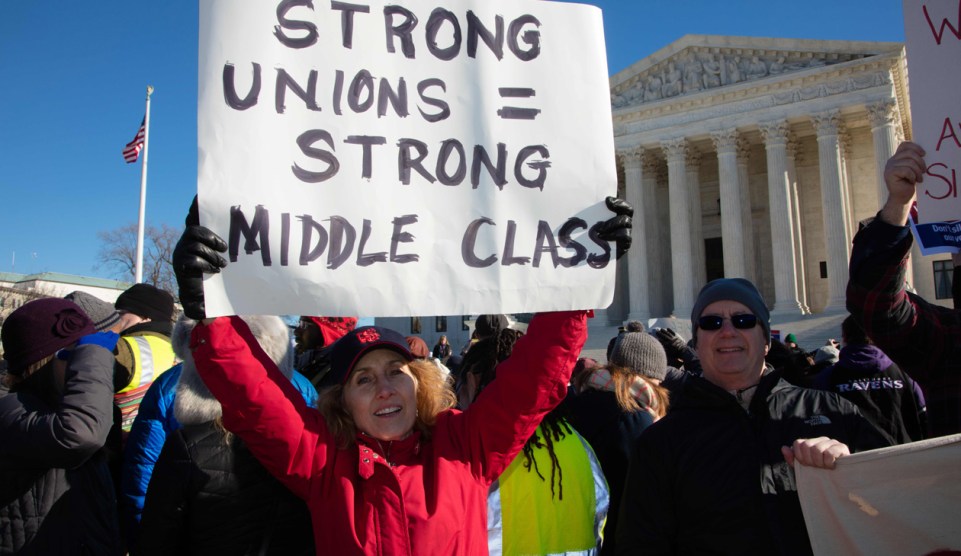
Illinois Gov. Bruce Rauner launched an attack on union dues a couple of years ago, and any day now the Supreme Court is likely to hand him a victory:
The “money is speech” doctrine is back and at the heart of a case to be heard this month that threatens the financial foundation of public employee unions in 22 “blue” states….At issue in the union case is whether public employees can be required to pay a fee to cover the cost of collective bargaining and resolving grievances, even if they have personal objections to the union.
….Rauner’s challenge to union fees is likely to win favor from the court’s five more conservative justices, all of them Republican appointees. Two years ago, the court was set to strike down mandatory union fees in a case brought by a California schoolteacher. But the sudden death of Justice Antonin Scalia left the court split 4 to 4. Once Justice Neil M. Gorsuch, appointed by President Trump, was confirmed to fill Scalia’s seat, the court said it would decide the union fees issue in the case from Illinois.
Union members have been griping forever that Democrats don’t do enough for them. That’s probably true, since even when Dems are in power there’s no chance of passing any union-friendly legislation. Unions are second only to tax increases in the pantheon of Republican loathing.
That said, at least Democrats don’t try to tear unions down. When union members decide to “teach Democrats a lesson” in places like Michigan, Wisconsin, and Pennsylvania—and either stay home in disgust or else vote for Donald Trump to “send a message”—this is what happens.
Rep. Tom Rooney says the atmosphere on the House Intelligence Committee is “absolute poison”:
Rooney said one reason for the tension is an erosion of trust, exacerbated by an ongoing ethics investigation into the “entire Republican staff,” including “the woman up front that answers the phone” for alleged leaks. He later added that the matter was being handled by the Office of Congressional Ethics.
Leaks, you say? From Republican staffers? I am shocked.
So, Twitter. It’s terrible. It’s a cesspool of misogyny and racism and trolling. The Russians use it to interefere with our elections. It has driven American discourse into the gutter. And then there’s Donald Trump. Enough said about that.
Will no one defend Twitter? I will. I find it enormously useful. It’s one of the greatest social media platforms ever invented. Since I’m not a huge fan of Facebook, I’d even go so far as to say it’s the greatest.
Why is it so great for me and so horrible for others? Part of the reason is that I’m a straight white male, so I don’t get the level of abuse that some people get. But there’s another reason: I’m careful about how I use it. I don’t follow zillions of people. Just those who have something serious to say and say it sensibly. If someone regularly pisses me off, I stop following them. And I mostly ignore my mentions when there’s some kind of firestorm going on about my latest offense against common decency.
That last one is the problem, of course. Personally, I find the firestorms kind of amusing, not threatening. Obviously that’s not the case for a lot of people. Should they just turn off mentions? You can still get a lot of use out of Twitter if you do that, but it obviously cripples the experience. Alternatively, you can block or mute the assholes, but that can turn into a full-time job. What’s the answer?
I’m not a fan of heavy-handed approaches. I’d just as soon not have the Twitter overlords deciding who can speak and who can’t. But why not give us more control over who we listen to? There are some tools already available for that, but here’s my proposal: an asshole filter.
Linguistic evaluation algorithms are pretty good these days, and I’ll bet Twitter could create one that distinguishes mindless insults from legitimate responses. Let’s say it evaluates tweets and gives them a score from 0 to 100. Users are then allowed to set their own level. Set the filter to 0, and everything comes through. Set it to 100, and anything with even the slightest hint of aggression or invective gets muted. Depending on your mood, you might want to set it differently on different days. You could still block specific accounts, of course, and maybe the filter would even allow you to define a list of words specific to you that are dead giveaways of bad behavior.
This would be voluntary. It wouldn’t censor anyone. It would allow everyone to tune Twitter to their own tolerance for assholes. And presumably it would get better over time as you marked tweets that the filter missed. This approach works pretty well for spam filters on email, so why not on Twitter?
The problem with Twitter is not that assholes can use it. They can use every other medium too. Nor did Twitter invent assholes. They’ve always been out there. The problem is that Twitter essentially forces us to listen to assholes. Other mediums don’t. Twitter should allow us to tune them out too.
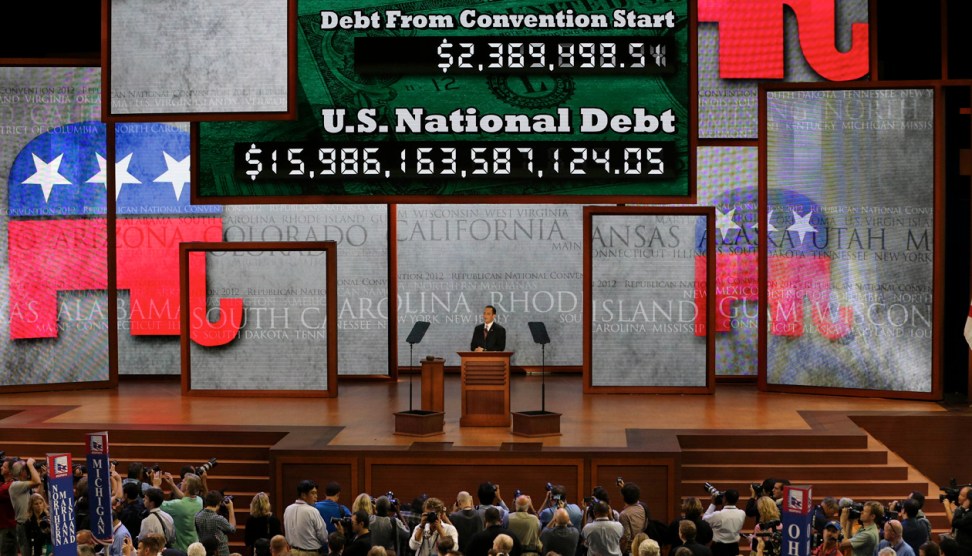
Republican lawmakers in 2011 brought the U.S. government to the brink of default, refused to raise the debt ceiling, demanded huge spending cuts, and insisted on a constitutional amendment to balance the budget.
On Wednesday, they formally broke free from those fiscal principles and announced a plan that would add $500 billion in new spending over two years and suspend the debt ceiling until 2019. This came several months after Republicans passed a tax law that would add more than $1 trillion to the debt over a decade.
With all these changes, the annual gap between spending and revenue in 2019 is projected to eclipse $1.1 trillion, up from $439 billion in 2015….The debt binge caps off a major reversal for the Republican Party, which has been swept up by President Trump’s demands for more spending and tax cuts at a time when the public seems to care less about debt than it has in years.
The wide-eyed tone of this story really grates. Republicans always care about the deficit when a Democrat is president. They always stop caring when a Republican is in office. And the public “seems” to care less about the debt because Republicans aren’t filling the airwaves with debt clocks and dire warnings that we’re going the way of Zimbabwe.
At the risk of stating the obvious, it’s worth noting that “scandal” narratives don’t live or die depending on how bad the scandal is. They thrive when they generate lots of news coverage. And the way to generate lots of news coverage is to generate lots of news.
Take Donald Trump’s refusal to release his tax returns. That got covered. Once. But then there was nothing to follow up on, so it died. It may have been outrageous, but beyond the fact of the refusal itself, there’s not much to say about it and not much you can dig up.
Conversely, consider the following scandals:
Benghazi
IRS tea party targeting
Hillary’s emails
The Nunes memo
Uranium One
The Clinton Foundation
Some of these are better scandals than others, but what they all have in common is that they produced a steady drip of news. Here are the kinds of things that can produce news:
FOIA requests
Congressional hearings
Leaks from congressional hearings
Document releases
Law enforcement investigations
Presidential tweets
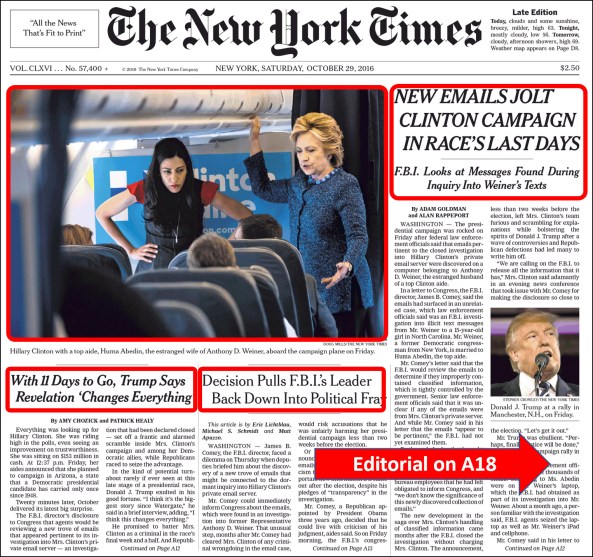
The Hillary email affair is probably the archetype here. Judicial Watch submitted FOIA requests and got a judge to order the emails released to the public. Congressional hearings went on endlessly. The FBI investigated whether classified material had been mishandled. Every few weeks there was a new tranche of emails to pore over. And of course all of these things generated leak after leak after leak.
Now that’s a scandal. There’s constant news, so it stays in the public eye regardless of how serious it is. By the time it’s over, so much stuff has been released that most people have no idea how it ended. They just know that they’ve been hearing about it for over a year, and where there’s smoke there’s probably fire.
Most of the scandals that liberals tried to pin on Donald Trump were the exact opposite of this. They were one-offs that generated a day or three of news, but not much more. Even the Access Hollywood video was like that. Once you’ve seen it, you’ve seen it. Trump is a pig, and either you care or you don’t. After a few days, there’s no more blood to be squeezed out of the onion.
The lesson here for the press is not to give something more coverage than it deserves just because lots of different actors are working together to generate daily news. The lesson for Democrats is to find better scandals and promote them more effectively.
And we respect that! But maybe you’re of a mind to support our work directly instead? We have until December 31 to raise the last $400,000 we need to keep our nonprofit newsroom running at full strength into 2026. Will you make a gift today?
We noticed you have an ad blocker on. Can you pitch in a few bucks to help fund Mother Jones' investigative journalism?
Billionaires own the media,
but they don’t own us.
At Mother Jones we know these aren’t conventional times, and they require unconventional coverage. That’s what deliver every day: fierce, independent journalism you can’t find elsewhere. Perhaps never in the history of our country has that been more necessary than now. But we can’t do it without reader support—your support. Please chip in today.
Billionaires own the media,
but they don’t own us.
At Mother Jones we know these aren’t conventional times, and they require unconventional coverage. That’s what deliver every day: fierce, independent journalism you can’t find elsewhere. Perhaps never in the history of our country has that been more necessary than now. But we can’t do it without reader support—your support. Please chip in today.