• Here’s the Latest Stupid Conservative Conspiracy Theory

    Tong Wu/TNS via ZUMA

    It’s hard keeping up with conservative conspiracy theories. Did you know that for the past week the usual suspects (Hannity, Drudge, etc.) have been circulating the bombshell news that we now have PROOF the FBI was conspiring against Donald Trump during last year’s campaign? Naturally this involves Peter Strzok and Lisa Page, the two FBI agents who were conducting an affair and have had their entire text message history laid bare to the world. And just as naturally, congressional Republicans are investigating it.

    Long story short, last week John Solomon wrote a piece for The Hill about the Republican investigation. His article suggested that Page and Strzok had advance knowledge of a Wall Street Journal piece, which means they may have been the ones who leaked it. In the hands of the idiot conspiracy loons at Gateway Pundit, this became “Obama’s Deep State FBI and DOJ Caught Synchronizing Anti-Trump Classified Leaks to Liberal Media.” By now it’s probably entered the eternal lore of the right-wing grievance industry.

    Ryan Reilly and Nick Baumann have looked into the whole thing over at HuffPo and produced 2400 words of debunking. Here’s a quick summary:

    • Reporters usually call the FBI for comment on stories like this, and word spreads pretty quickly. This is most likely why Strzok and Page knew the Journal article was coming.
    • The article in question wasn’t anti-Trump. It was anti-Hillary.
    • Strzok and Page seemed pretty annoyed by the fallout from this leak.

    I can’t say that I really care about this story, which is obviously ridiculous, except as an example of how this stuff spreads in the right-wing universe. Strzok and Page have become the Susan Rice of Russiagate, all-purpose villains whose lives are casually ruined in service of smearing Democrats. Nobody else is paying any attention to this dumb story, but among the conservative ALL CAPS crowd, it’s probably holy writ already.

    POSTSCRIPT: I probably don’t need to add this, but everyone already knows the real story here: there was only one set of politically-motivated leakers in the FBI during the 2016 campaign, and that was the New York office, which was virulently anti-Hillary. They were the ones who apparently forced James Comey to reopen the Hillary Clinton email investigation 11 days before the election.

    It’s this obvious fact that seems to have been responsible for the furious pushback from conservatives. Donald Trump can’t bear the thought that people believe the FBI was responsible for his victory, so he’s busily smearing the entire organization and promoting stories about the FBI being anti-Trump. Naturally, his fans are all playing along.
  • Rising Opioid Deaths: Is the Cause Economic Despair Or Skyrocketing Supply?

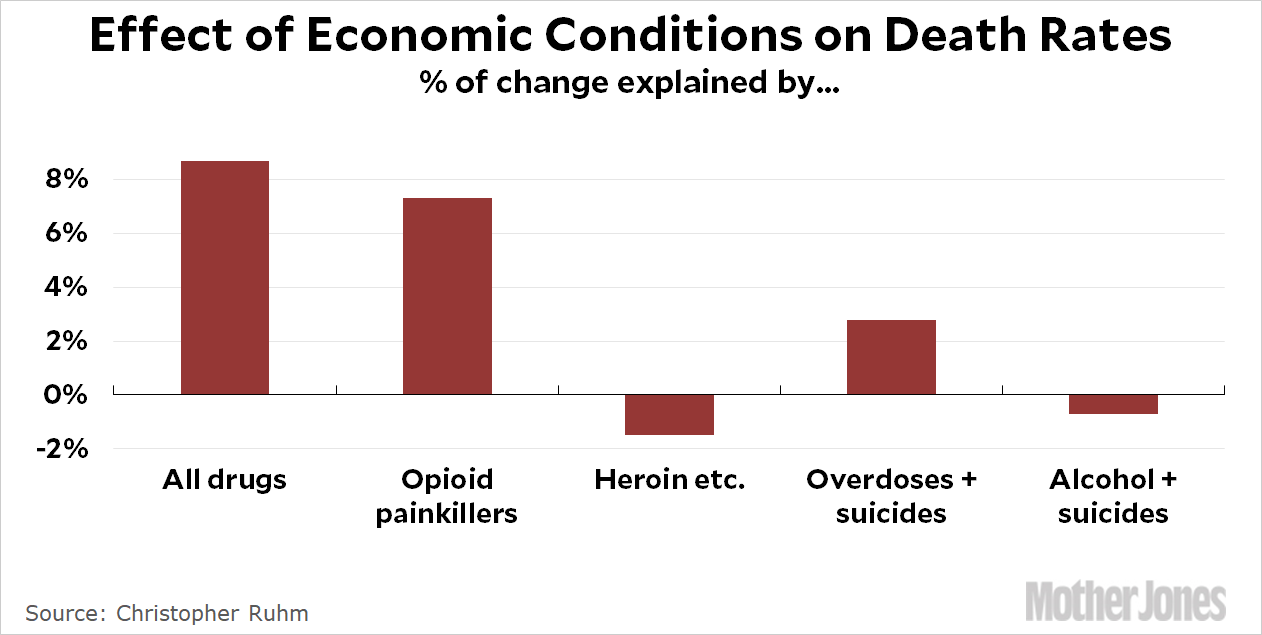
    How much has the opioid epidemic been a response to poor economic conditions? Eric Levitz points us today to a new paper from Christopher Ruhm of the University of Virginia. He examined changes in economic conditions at the county level to see how much this explained the change in death rates from opioids. In order not to keep you in suspense, the answer is “not much”:

    Economic conditions explained only 8 percent of the change in overdose deaths from all drugs and 7 percent of the change in deaths from opioid painkillers—and even that small effect probably goes away if you control for additional unobservable factors. It explained none of the change in deaths from heroin, fentanyl, and other illegal opioids. Ruhm comments:

    These results suggest that the “deaths of despair” framing, while provocative, probably do not explain the main sources of the fatal drug epidemic and imply that efforts to improve economic conditions in distressed locations, while desirable for other reasons, are unlikely to yield significant reductions in drug mortality. Such results probably should not be surprising since drug fatalities increased substantially – including a rapid acceleration of illicit opioid deaths – after the end of the Great Recession (i.e. subsequent to 2009), when economic performance considerably improved.

    Ruhm concludes that the real reason for the rise in deaths from opioids is simple: it’s because they were there. We’ve long known that illicit drugs are faddish—heroin in the 70s, cocaine in the 80s, marijuana in the 90s—and the fads depend a lot on which drugs are in wide supply. In this case, when the supply of OxyContin skyrocketed, so did overdose deaths from OxyContin. Ditto for fentanyl, the current scourge. Wait a decade and it will be something else.

  • Lopez-Claros Replies to Charges of Gaming World Bank Rankings

    Yesterday I linked to a Wall Street Journal article which reported that the World Bank had gamed its “Doing Business” rankings to make Chile look worse during the years it was governed by a socialist president. Paul Romer, the chief economist of the Bank, promised to review the rankings and republish them without the methodological changes that had hurt Chile’s rankings.

    Today, the director of the group that published the rankings, Augusto Lopez-Claros, responded:

    As you may know, the Doing Business project was the subject of an external review by an international panel of experts which provided a number of recommendations in 2013. Partly on the basis of these recommendations…the Bank decided to enter into a multiyear process of methodological improvements, to broaden the coverage of the business environment factors captured by the indicators and to better adapt the definition of some of the indicators to ongoing changes in the global economy.

    ….You noted the deterioration in Chile’s rankings over the past several years. Yes, it is the case that some of this deterioration reflects some of the methodological changes introduced….But Chile’s rankings also deteriorated because other countries were doing more during the period you focused on. To take an example, if you look at the reports DB2014 through DB2017, you will see that Chile introduced a total of 2 reforms during this 4-year period, whereas Mexico introduced 8 and Colombia 6. Not surprisingly, Mexico overtook Chile as the country with the best business environment in Latin America, as captured by the Doing Business indicators.

    ….The claim that the above methodological changes somehow targeted Chile is wholly without merit. You may be aware that during the last several years the World Bank negotiated with the Bachelet administration the opening of a research hub in Santiago, the first such center in Latin America….That the Bank or its staff, during the middle of the negotiations that led to the establishment of this center would have targeted Chile to adversely affect its Doing Business rankings is bizarre beyond measure….Chile’s ranks in the last several years have dropped for the reasons outlined above. None other.

    Lopez-Claros’s full reply is here. It’s pretty obvious that there’s some significant internal politics going on here, and obviously I’m in no position to evaluate it. I’m sure we’ll hear more about this shortly.

  • Yet More California Charts

    Earlier today I posted a bunch of charts about California. This was in response to a Kerry Jackson piece in the LA Times arguing that California was screwed up six ways from Sunday, none of which was true. But one thing he mentioned was intrusive land-use regulations. I didn’t bother with that one because I couldn’t figure out how to measure it. Over lunch, however, it kept rolling around in the back of my head, so I took a crack at it when I got back home.

    There’s no single metric for this, so I looked around for state rankings based on a basket of measurements. I found two that looked promising: one from the Cato Institute and the other from a set of researchers at Wharton. Unfortunately, they differed wildly, which is a good reason to think this whole task is basically hopeless. But this is a blog, so why not just average the rankings and use that? Good enough.

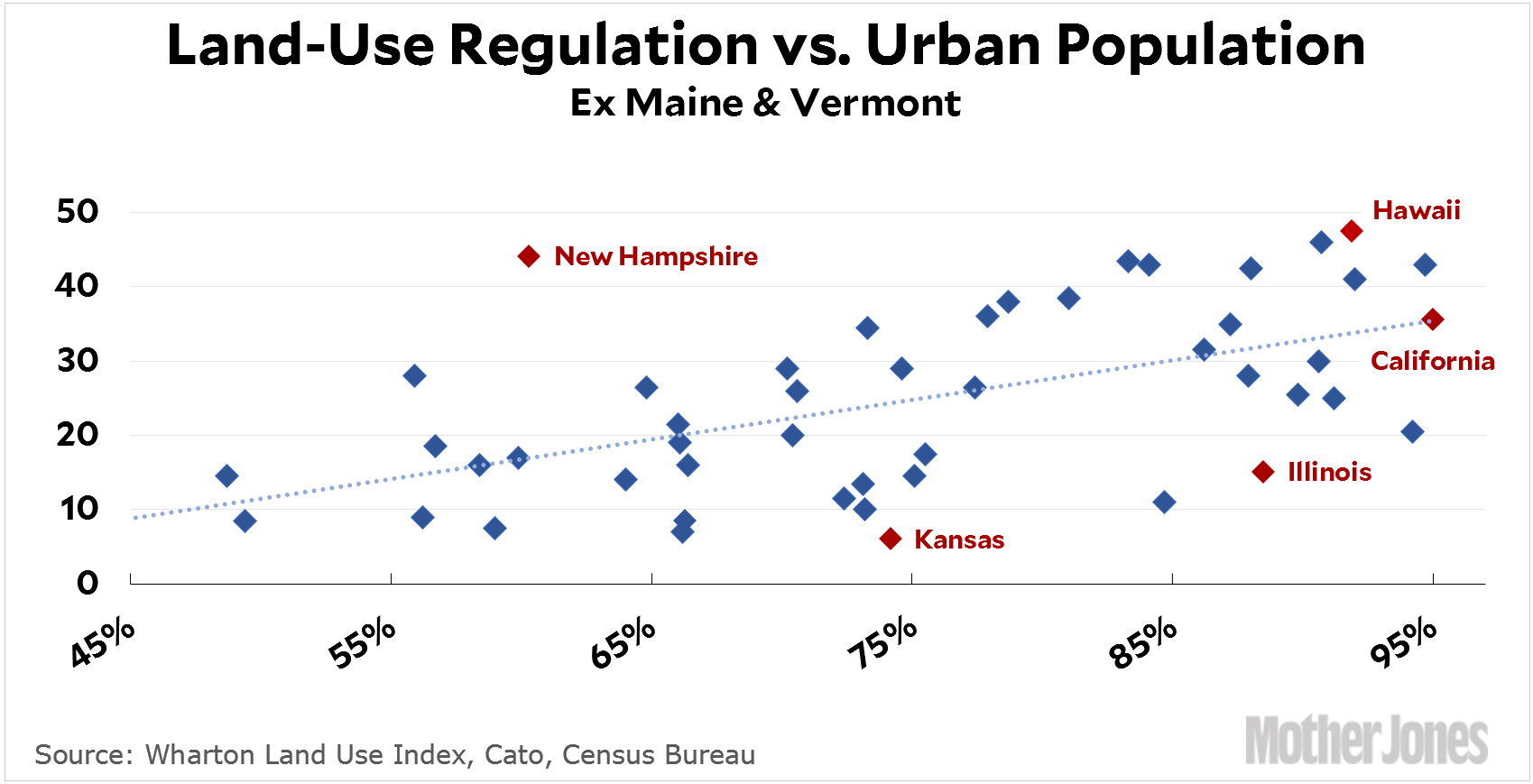
    Now, as everyone recognizes, cities have more stringent land-use regulations than rural areas. This is not unique to California, so I went ahead and plotted land-use rankings vs. percent of urban population to see where California fit. Here it is:

    Maine and Vermont were weird outliers, so I excluded them. It didn’t really change anything, but it makes the chart easier to read. Basically, states above the trendline have tougher land-use regulations than you’d expect based on how urban they are. New Hampshire and Hawaii are in this category. States below the trendline have relatively lax land-use regs. Kansas and Illinois are in this bucket. And California? It has fairly stringent land-use regs, but that’s because it’s 95 percent urban. It’s smack on the trendline, which means it’s dead average. There’s nothing out of the ordinary here.

    It’s worth noting that the rankings of land-use regs are highly debatable, and I’m regressing a continuous value against a ranking, which is a statistical no-no. That said, this probably provides a quick-and-dirty rough sense of where things stand. California just doesn’t appear to be anything other than average on this score.

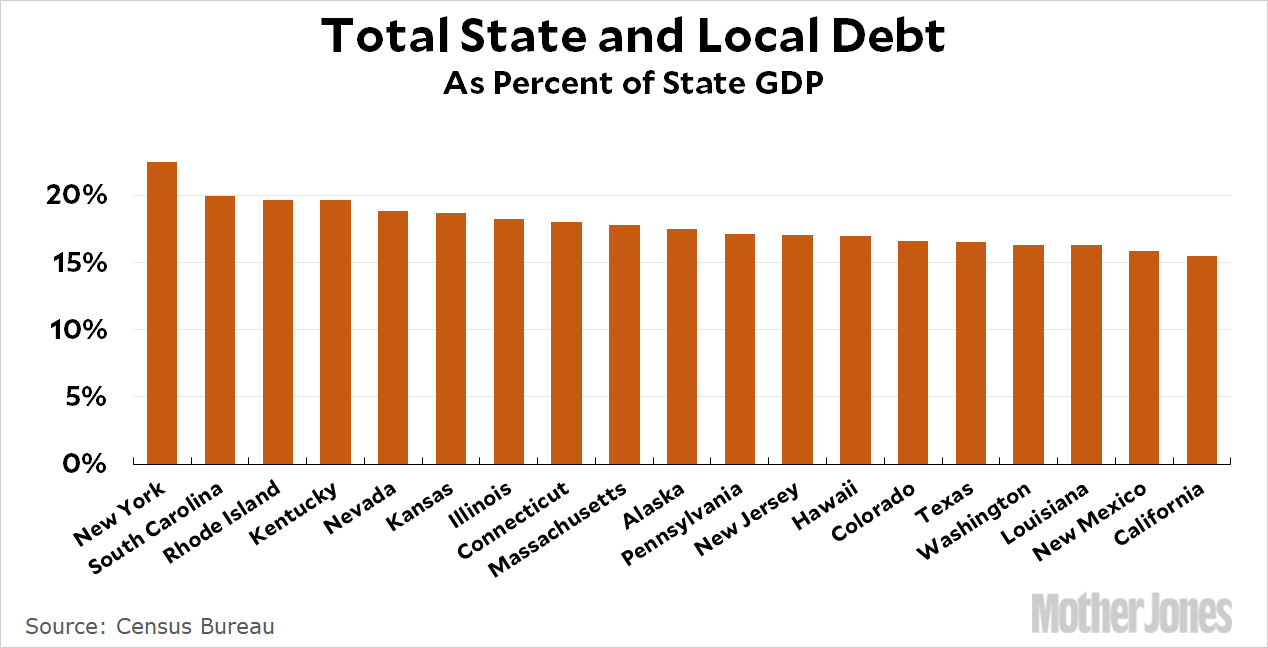
    I also got a couple of requests. A conservative wanted me to show California’s debt. Here it is:

    California ranks 19th, and that’s only because I included local debt. If you look solely at state debt, California ranks 28th. So there’s nothing out of the ordinary here either.

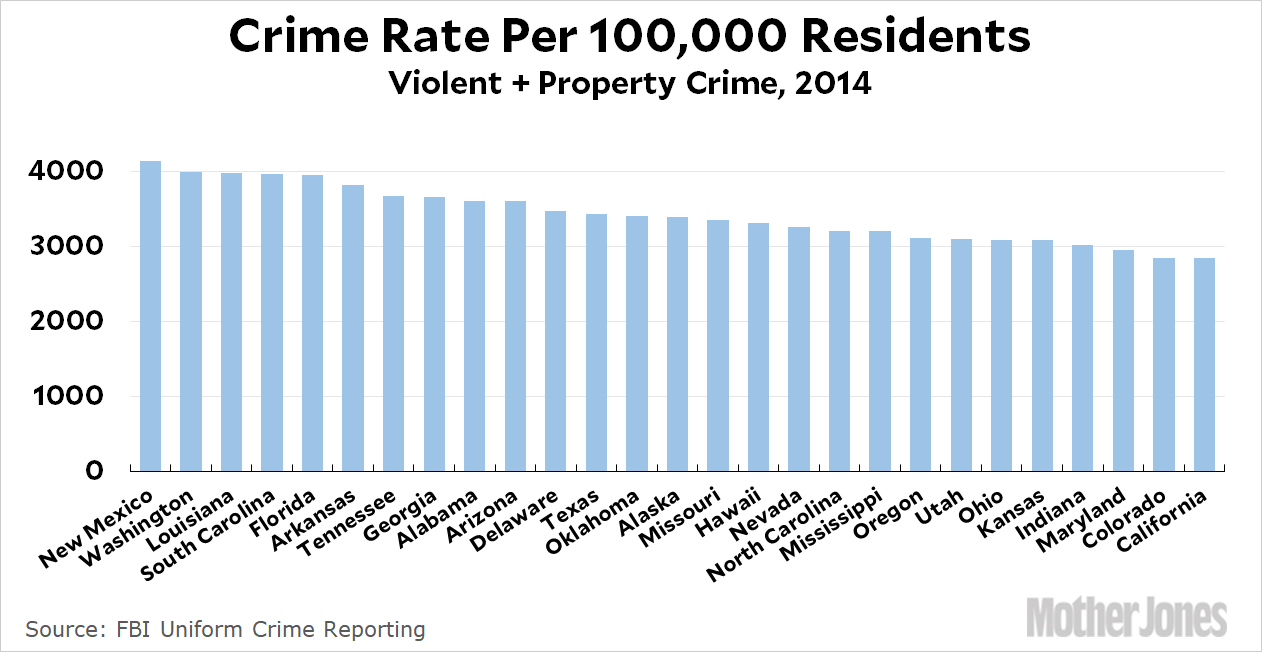
    Another reader wanted to know about crime rates. No problem:

    California ranks 27th in overall crime rate—despite the fact that it’s a highly urban state. It’s 17th in violent crime and 29th in property crime.

    On all of these metrics, California appears to be dead average. Haters gonna hate, and I don’t doubt that you can find plenty of measures that California does poorly on. Basically, though, California is a liberal, high-tax, high service state with strong environmental regulations, and it nonetheless has a strong economy and pretty average rankings on most economic and social measures. This is annoying to conservatives, but there you have it.

  • Bitcoin Makes Tulips Look Cheap

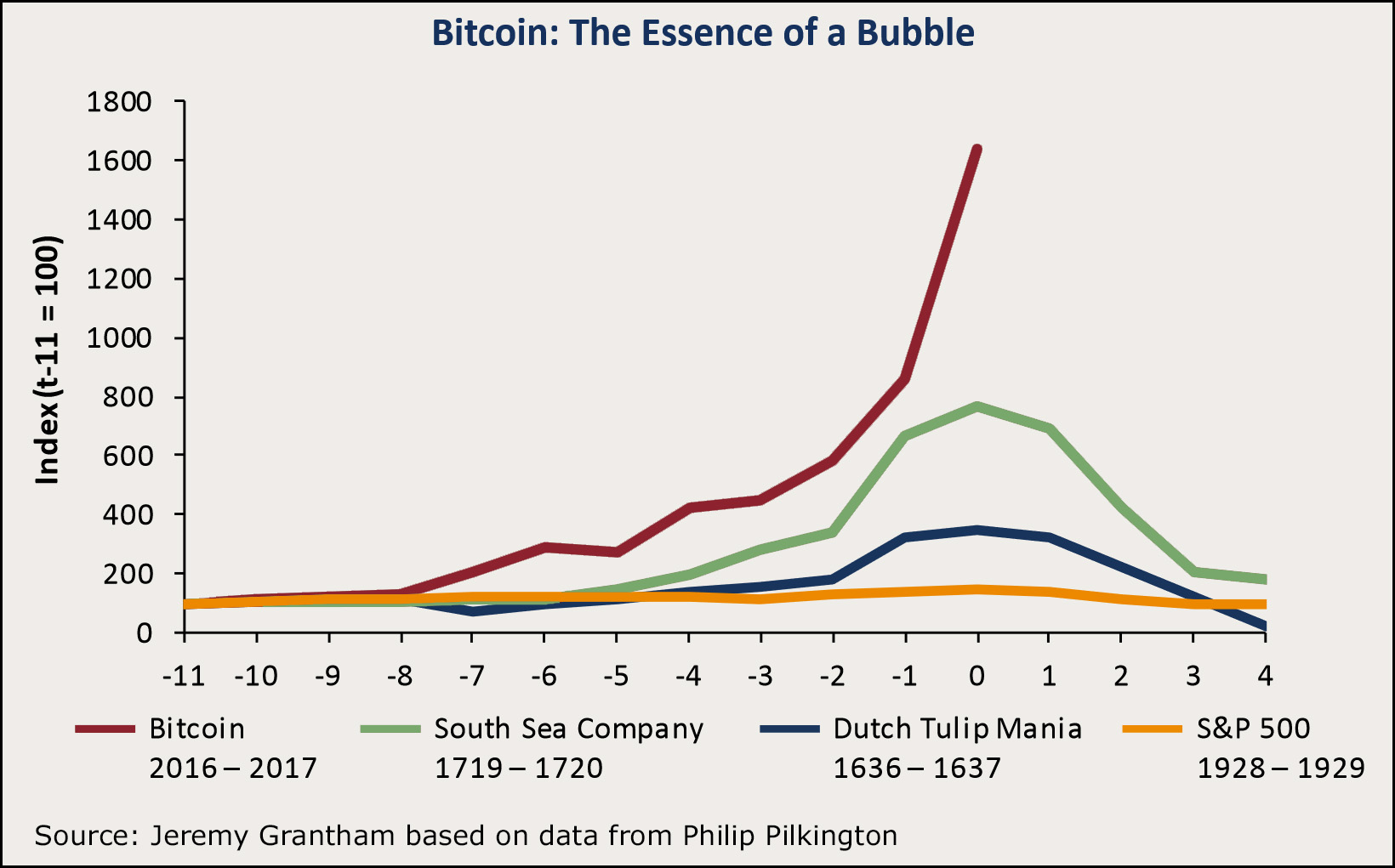
    For all you bitcoin skeptics out there, here’s a lovely chart from Jeremy Grantham that compares bitcoin to other famous bubbles in history:

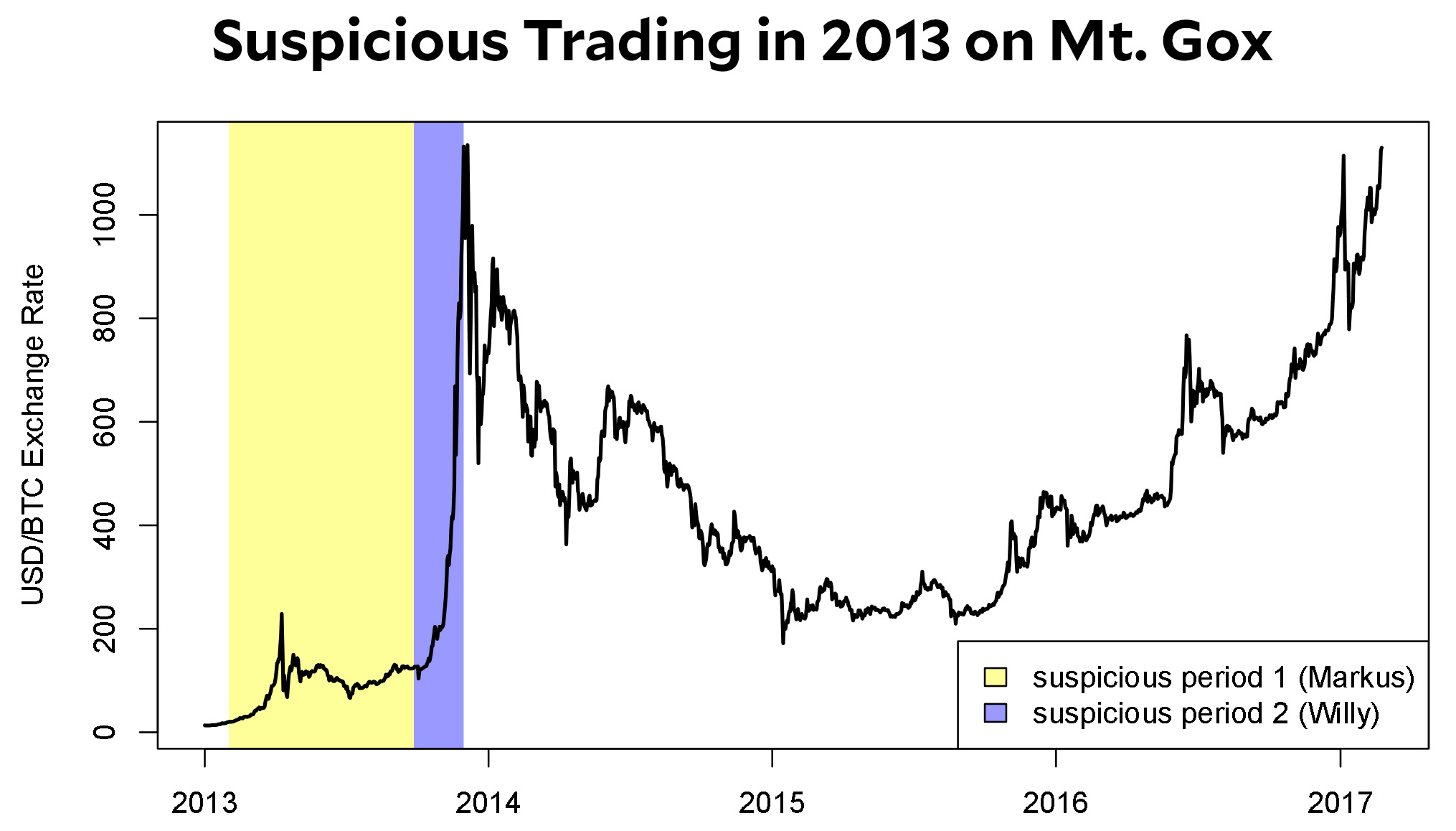
    In other bitcoin news, I’ve wondered aloud several times about how many bitcoin trades involve real money vs. other cryptocurrencies (tether, ethereum, etc.). I still don’t know, but Tyler Cowen points to a recent paper suggesting that plain old fraud was responsible for quite a bit of bitcoin’s rise in 2013. The researchers investigated trades on the Mt. Gox exchange made by two traders identified as Markus and Willy:

    Markus’s trades raised many red flags. He never paid transaction fees and reportedly paid seemingly random prices for bitcoins. Most curious of all, we identified many duplicate transactions in which the amount paid was changed from an implausibly random price to one that was consistent with other trades that day. In the end, we have concluded that Markus did not actually pay for the bitcoins he acquired; rather, his account was fraudulently credited with claimed bitcoins that almost certainly were not backed by real coins.

    ….Unlike Markus, Willy did not use a single ID; instead, it was a collection of 49 separate accounts that each rapidly bought exactly 2.5 million USD in sequential order and never sold the acquired bitcoin. The first Willy account became active… a mere 7 hours and 25 minutes after Markus became permanently inactive…. Why do we suspect foul play?… Normal accounts for this time period had IDs that capped around 650000 where the users at the center of this research had IDs in the range of 658152-832432. Furthermore, several reports can be found online of the Mt. Gox trading API going offline for various periods of time in which no trading activity was being processed with one exception….During this time period the only activity being processed followed the exact buying pattern of Willy when he was active: 10-19 bitcoins purchased every 6-20 minutes.

    ….Unlike, Markus, it appears that Willy was interacting with real users. While accounts of these users were “nominally” credited with Fiat currency, Willy did not actually pay for the bitcoins. Hence, together, these unauthorized traders “acquired” around 600,000 bitcoins by November 2013. Perhaps unsurprisingly, this is very close to the number of bitcoins (650,000) that Mt. Gox claimed to have lost when it folded in early 2014.

    And here’s the chart:

    On February 14, 2013, when Markus started trading, bitcoin was worth less than $30 and showed no real signs of taking off. By the time Willy and Markus were done, bitcoin was worth more than $1,000.

    Now, it’s true that after Willy and Markus were finished and Mt. Gox finally folded, the price of bitcoin crashed back to earth and stayed flat for years. So obviously this has nothing to do with bitcoin’s latest bubble, which took off in 2016. Still, it’s a reminder that, blockchain or not, cryptocurrencies are the wild west of daytrading. Is everything now on the up and up? Maybe. But what evidence does anyone have for that? Shady commodity manipulation is regrettably common even with a whole bunch of national regulators keeping an eye on things. How common do you think it is in a market where there are almost literally no rules and no regulatory bodies at all?

  • California Is Doing Fine, Thank You Very Much

    Whenever I see an op-ed insisting that California is a total, um, shithole of a state, I always check the credit line at the bottom. Four times out of five it comes from City Journal, often by professional California scold Kerry Jackson. Sure enough, that’s where today’s piece in the LA Times is from:

    Guess which state has the highest poverty rate in the country? Not Mississippi, New Mexico, or West Virginia, but California, where nearly one out of five residents is poor. That’s according to the Census Bureau’s Supplemental Poverty Measure, which factors in the cost of housing, food, utilities and clothing, and which includes noncash government assistance as a form of income.

    Ah. The SPM. There’s an obvious reason that California performs poorly on the SPM, but Jackson instead blames it on his usual tired litany of bugaboos: generous welfare policies, lack of pro-work welfare reform, self-interested bureaucracies that want to keep the welfare rolls high,¹ restrictive land-use regulations, out-of-control environmental rules, high minimum wage, and high-speed rail.

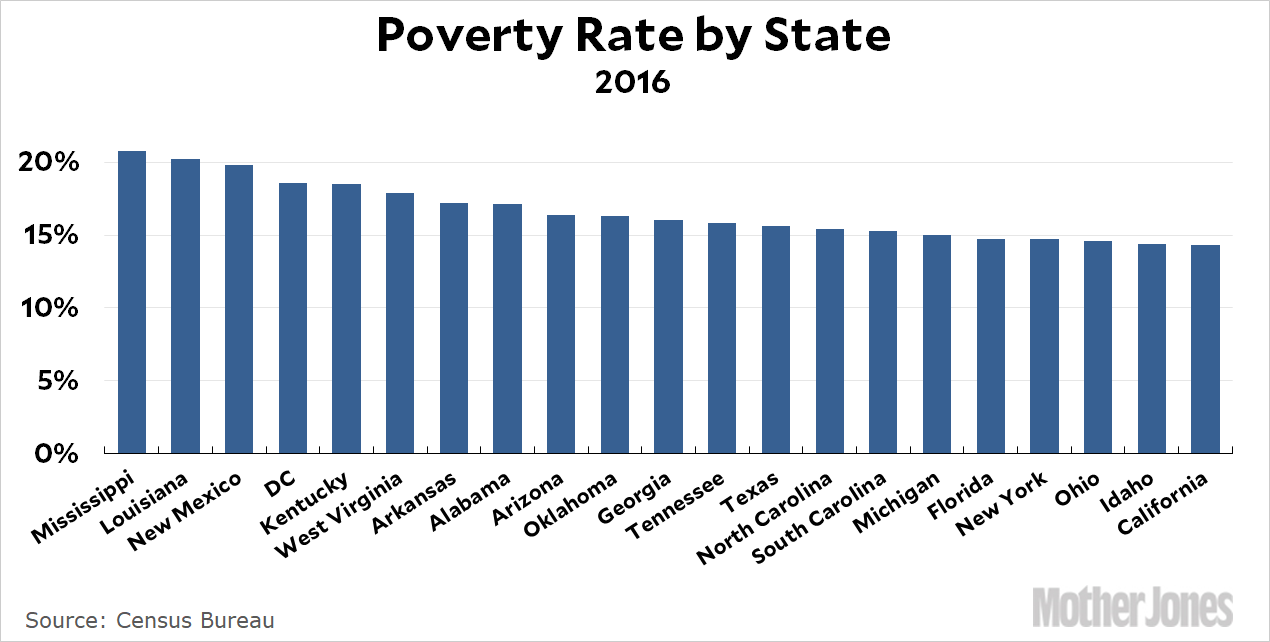
    I’m not sure why the LA Times bothers printing this dreck, but let’s take a look at some basic measures of how California is doing. Jackson is careful not to use the standard poverty rate, and it’s pretty obvious why that is:

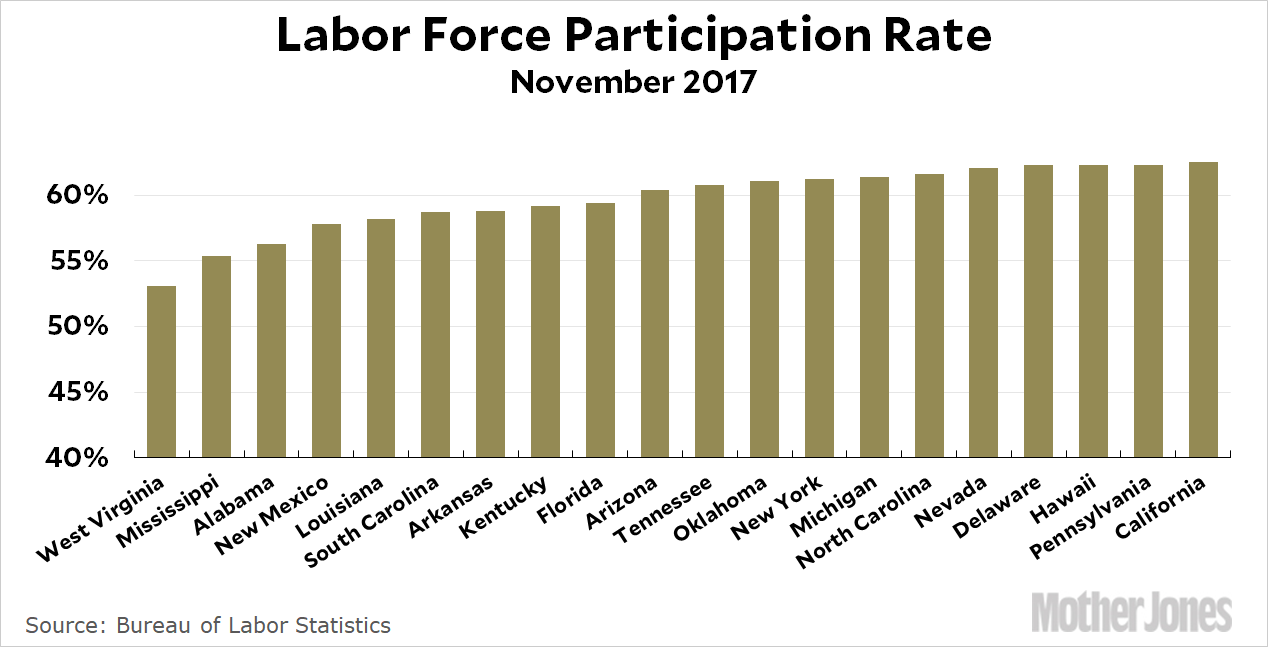
    California ranks 21st. Nothing out of the ordinary there. But what about our lack of welfare reform? Does that mean we have lots of people idling away on the public dime? Not really. We do have an unemployment rate a smidge worse than it should be, but our labor force participation rate is dead average:

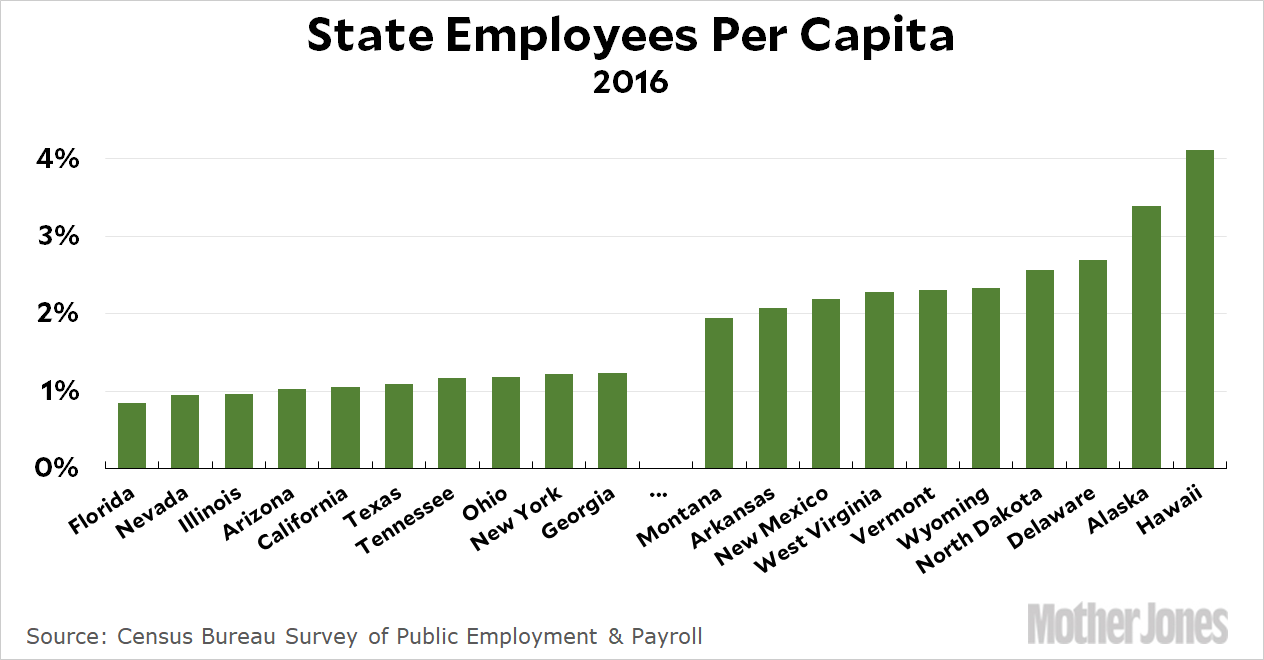
    California ranks 20th. West Virginia, Mississippi, and New Mexico are way behind us. How about our massive state bureacracy?

    California is the fifth lowest. So if absolute poverty is average; labor force participation is average; and the state bureaucracy is under control; then whatever could put California at the top of the SPM poverty ranking?

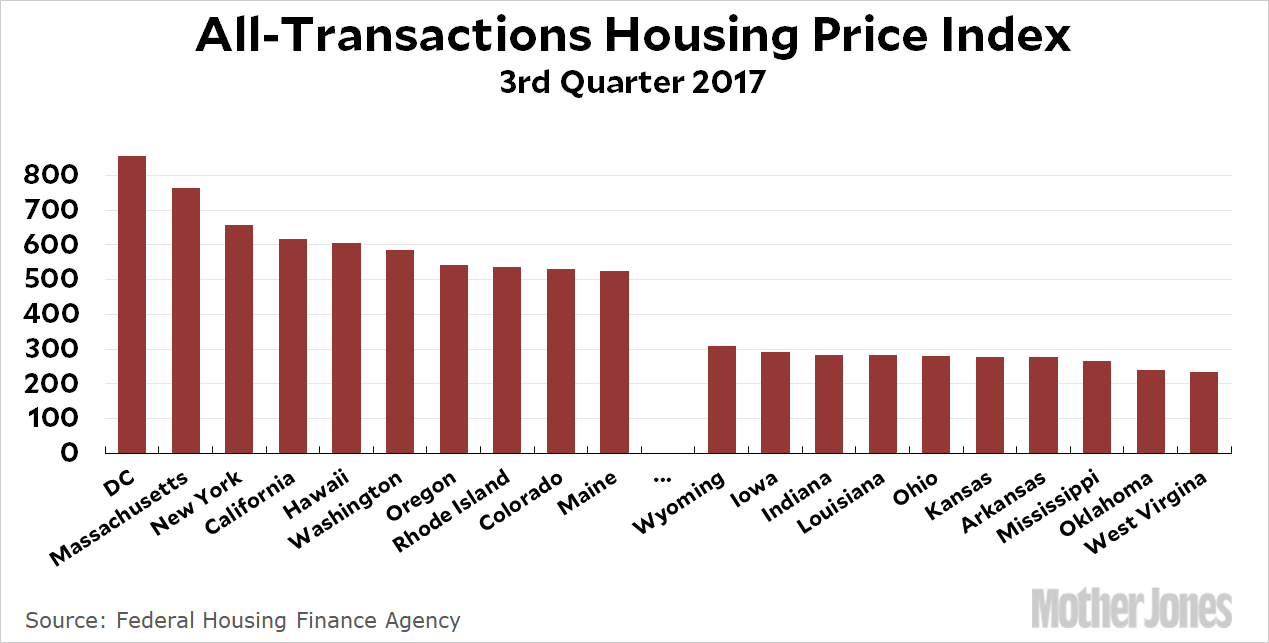
    Oh, right: housing. California has the fourth-highest housing prices in the nation, and the SPM incorporates housing prices in its estimates. Are California’s high housing prices due to restrictive land-use regulation? Sure, that’s some of it. But I don’t know of any evidence that California is wildly out of the ordinary on this measure, and at this point I’m too tired to look for it. If you want to argue that California should have looser land-use regulations, go for it.² I won’t argue.

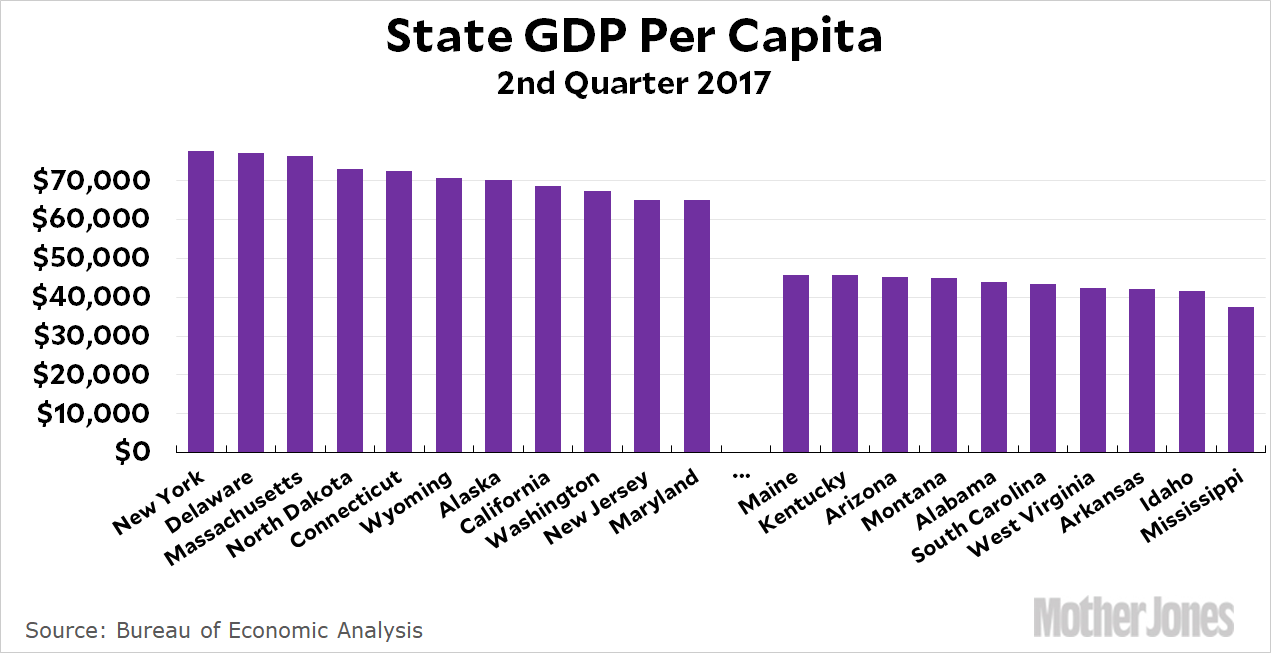
    There’s a whole cottage industry on the right dedicated to the proposition that California is a hellhole. Why? Because California is the most liberal state in the nation, and the existence of a high-tax, high-service state that nonetheless has a great economy is an affront to their principles. And yet, California’s economy is doing fine:

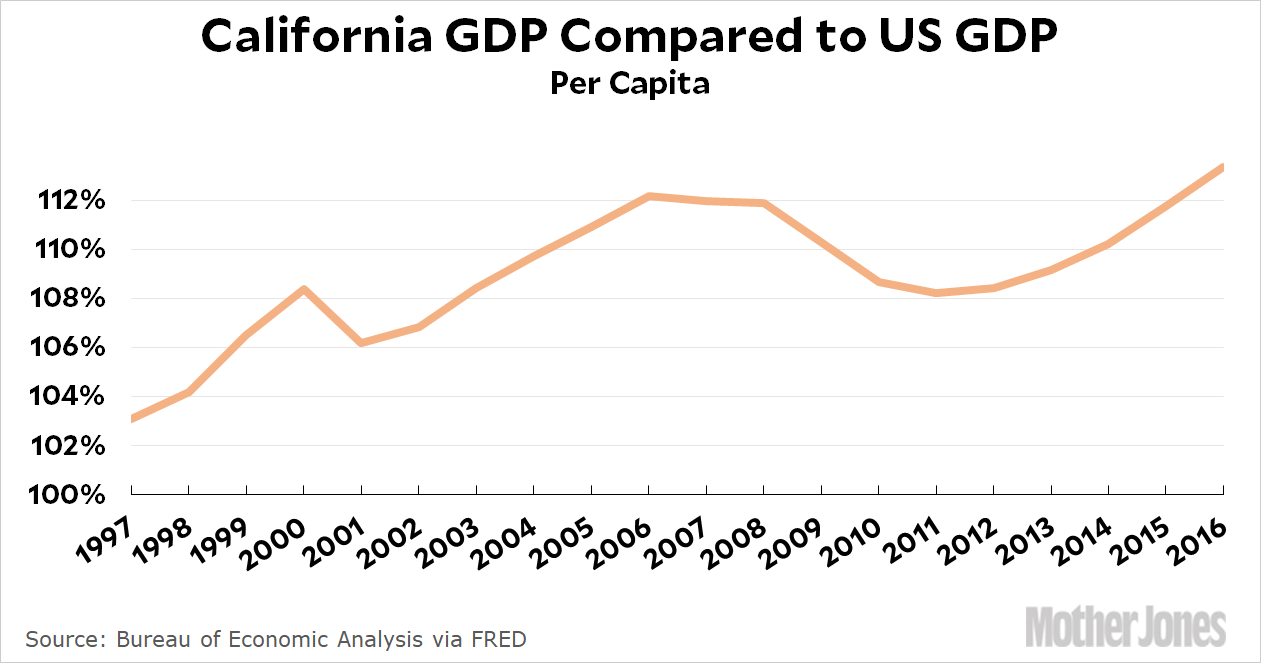
    We rank 8th in GDP per capita—and that’s without an oil boom but with a high level of illegal immigration. What’s more, California’s GDP per capita has grown faster than national GDP over the past two decades:

    In 1997, California’s GDP per capita was only 3 percent higher than the country as a whole. Today, it’s 13 percent higher. This is not the sign of a sputtering economy that’s choked by bureaucracy and environmental regulations.

    God knows California has its problems, and obviously our location and weather allow us to attract high-value workers despite those problems. Nonetheless, the plain fact is that California has high taxes, good services, vigorous environmental regulations, and still has a strong economy. All the cherry picking in the world won’t change that.

    But yes, we also have very high housing prices, and that hurts the poor. I don’t think anyone disputes that.

    ¹I’m not making this up. Here’s what Jackson says: “With 883,000 full-time-equivalent state and local employees in 2014, California has an enormous bureaucracy. Many work in social services, and many would lose their jobs if the typical welfare client were to move off the welfare rolls.”

    ²Just don’t embarrass yourself looking for egregious state regulations. Most of the relevant land-use rules are at the city and county level.

  • White House Denies Reality Yet Again

    Alex Edelman/CNP via ZUMA

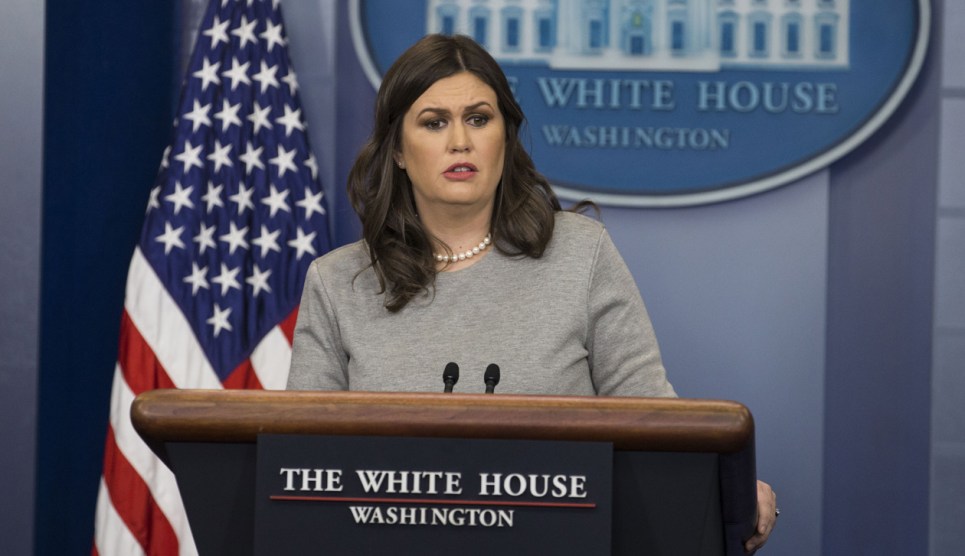
    In his recent interview with the Wall Street Journal, President Trump said “I probably have a very good relationship with Kim Jong Un of North Korea.” It was certainly a peculiar thing to say. Today, instead of explaining it, the ever shameless Sarah Huckabee Sanders simply insisted that the Journal was lying:

    Unsurprisingly, it turns out it’s Sanders who is lying:


    Go ahead and play the audio. It’s short, and there’s not much question about what Trump said. I don’t doubt that Trump meant to say “I’d,” but he didn’t.

    Any normal White House would have simply explained that Trump misspoke slightly and meant to say “I’d.” Case closed. But this White House is the first in history to routinely deny the documentary evidence of audio and video that we can all see and hear for ourselves. It helps them keep up their faux war with the media, and I guess that’s all that matters.

  • Can We Please Get the Mark Wahlberg Feeding Frenzy Right?

    TriStar Productions/Entertainment Pictures via ZUMA

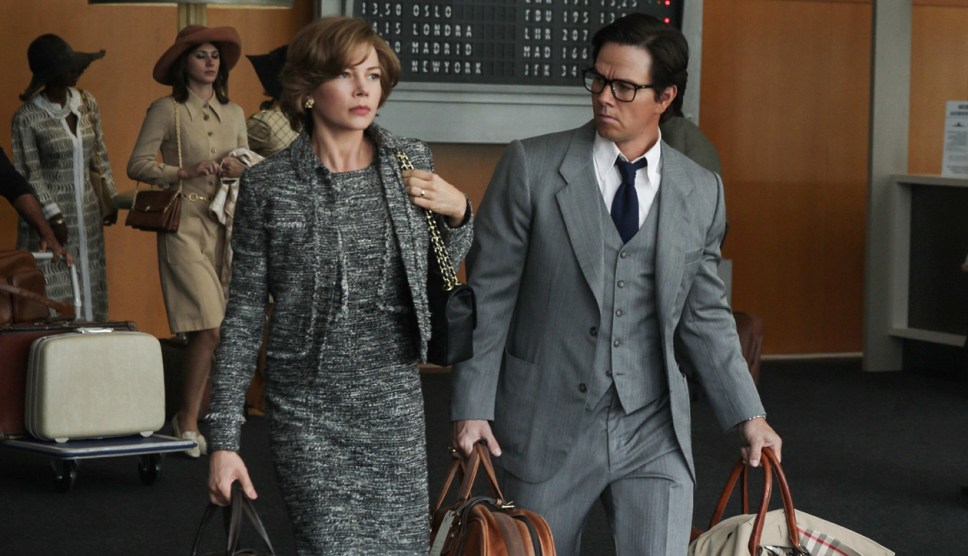
    Chris Barton of the LA Times reports that Mark Wahlberg and his agent will donate $2 million to Time’s Up in an effort to make amends for the huge fee Wahlberg got for reshoots of All the Money in the World:

    “All the Money in the World” director Ridley Scott embarked on a whirlwind of hasty reshoots late last year when the news broke that the film’s original star, Kevin Spacey, faced multiple allegations of sexual misconduct….Wahlberg, who played a former CIA agent who helped the Gettys with the case, and [Michelle] Williams, who played Gail Harris, the mother of the kidnapped boy, reconvened for multiple days of reshoots.

    Williams was said to have received only a per diem that totaled about $1,000 while Wahlberg and his agent negotiated an additional fee of $1.5 million. The news of the pay discrepancy caught fire on the internet, fanned by a climate of increased awareness of sexual harassment and gender inequality in Hollywood that followed Ronan Farrow’s expose on sexual misconduct by mogul Harvey Weinstein, which ran in the New Yorker in October 2017.

    I keep seeing the Wahlberg story reported this way, as if it illustrates the sexist divide in Hollywood. But that’s not how it happened. Apparently everyone involved with the reshoot volunteered to work for a nominal fee except for Wahlberg. But even if Wahlberg knew that everyone else was doing this,¹ he had no special obligation to work for less than his usual fee. At most, it might mean he’s a bit of a jerk, but it has nothing to do with sexism.

    I think Wahlberg is well advised to donate his fee to Time’s Up, but the feeding frenzy over this is misplaced. Better feeding frenzies, please.

    ¹This is unclear. I’ve seen no reporting about whether or not Wahlberg knew he was the only one being paid a normal fee.

  • “Date Lab” Shows Its True Colors

    It’s time for some weekend trivia. Every week the Washington Post gives some money to a couple of readers who use it to go on a date. In the latest edition of this merrymaking, the young couple (ages 25 and 30) spent more than the Post had given them. Rich Juzwiak describes what happened:

    In my short time writing Date Lab, I’ve now heard multiple accounts of well-meaning gestures of caretaking on the part of men that went over about as well as if they had kept inserting “actually” in a conversation about feminism. But in the case of James Carty, he unknowingly erred too far on the side of under-chivalrous, rather than over-chivalrous.

    ….[Jade] hadn’t counted James out completely until their check came and it ran $70 over the amount The Washington Post had agreed to cover. Jade said James suggested that they split it, which cooled her on him even further. “As much as women’s equality is a thing now, and whatever, I do think that chivalry is not dead and should not be,” Jade said. “When a guy offers to pay … it shows a sign of, ‘I’m interested in you and I want to keep this going.’ ”

    Why does the Date Lab writer describe this as James making a mistake? At most, it’s a difference of opinion with no mistakes involved. For my money, though, any 25-year-old who says that women’s equality “is a thing now, and whatever” is probably the one who’s a little out of touch with contemporary norms.

    Anyway, it’s a bad idea for people with similar first names to get involved with each other. This was never destined to work out.

  • World Bank Gamed Data to Make Chile’s Socialist Party Look Bad

    Photo of Augusto Lopez-Claros from his personal website.Photo by Vic Voytek

    Paul Romer, the chief economist of the World Bank, told the Wall Street Journal yesterday that the bank’s “Doing Business” rankings had been systematically gamed over the past few years to change Chile’s ranking:

    The former director of the group responsible for the report, Augusto Lopez-Claros, didn’t immediately respond to requests for comment sent to personal and work email addresses listed on his personal website….A former professor at the University of Chile, Mr. Lopez-Claros is on leave from the World Bank this year.

    ….Over time, World Bank staff put a heavy thumb on the scales of its report by repeatedly changing the methodology that was used to calculate the country rankings, Mr. Romer said. The focus of the World Bank’s corrections will be changes that had the effect of sharply penalizing the ranking of Chile….Chile’s overall ranking has fluctuated between 25th and 57th since 2006. During that period, the presidency of Chile has alternated between Ms. Bachelet, of Chile’s socialist party, and Sebastián Piñera, a conservative. Under Ms. Bachelet, Chile’s ranking consistently deteriorated, while it consistently climbed under Mr. Piñera.

    First off, I’m going to guess that Lopez-Claros’s leave from the World Bank will last more than a year. Second, WTF? It’s bad enough that Lopez-Claros used his perch to make his preferred party look good and the opposing party look bad. But it’s hardly conceivable that no one involved in preparing the report noticed what was going on. I guarantee there’s more to this story.