Primary Sources: DOJ Memos to CIA

Get your news from a source that’s not owned and controlled by oligarchs. Sign up for the free Mother Jones Daily.


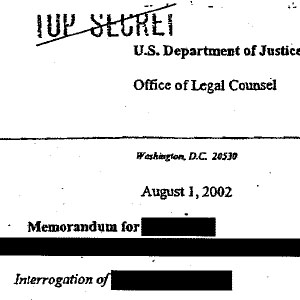
Last week, the ACLU released three previously sealed memos written by various CIA and Department of Justice officials, from George Tenet on down the line, that outlined the departments’ policies on torturing prisoners. The heavily redacted notes shed more light on just how slyly the two agencies sidestepped the law to escape any blame for torture.

One memo from 2004 indicates interrogators should only use “interrogation techniques, including the waterboard” if they clearly understand the “legal and policy matters” of those devices. The problem is those policy matters contradict each other and ultimately present an incredibly narrow opinion of what constitutes torture. The memo reminds the interrogator the US has implemented Article 16 of the UN’s Convention Against Torture. Article 16 outlaws “cruel, inhuman or degrading treatment” during an interrogation that do not necessarily amount to torture.

But the memo also directs interrogators to be aware of a document drafted in 2002 by legal councils at the Department of Justice informing (.pdf) the CIA of their opinion that “a good faith belief” that the interrogator was not intently inflicting any “prolonged” mental or physical harm on the subject does not amount to torture or cruel treatment, and therefore makes the act legal.

So, in the Department of Justice’s view, strapping someone to a board and pouring water on their face to drown him is humane and legal if the interrogator says he had no intention of causing the subject long term mental and physical suffering. Of course, it doesn’t matter that the entire point of waterboarding and other forms of torture is to do just that.

DECEMBER IS MAKE OR BREAK

A full one-third of our annual fundraising comes in this month alone. That’s risky, because a strong December means our newsroom is on the beat and reporting at full strength—but a weak one means budget cuts and hard choices ahead.

The December 31 deadline is closing in fast. To reach our $400,000 goal, we need readers who’ve never given before to join the ranks of MoJo donors. And we need our steadfast supporters to give again—any amount today.

Managing an independent, nonprofit newsroom is staggeringly hard. There’s no cushion in our budget—no backup revenue, no corporate safety net. We can’t afford to fall short, and we can’t rely on corporations or deep-pocketed interests to fund the fierce, investigative journalism Mother Jones exists to do.

That’s why we need you right now. Please chip in to help close the gap.

DECEMBER IS MAKE OR BREAK

A full one-third of our annual fundraising comes in this month alone. That’s risky, because a strong December means our newsroom is on the beat and reporting at full strength—but a weak one means budget cuts and hard choices ahead.

The December 31 deadline is closing in fast. To reach our $400,000 goal, we need readers who’ve never given before to join the ranks of MoJo donors. And we need our steadfast supporters to give again—any amount today.

Managing an independent, nonprofit newsroom is staggeringly hard. There’s no cushion in our budget—no backup revenue, no corporate safety net. We can’t afford to fall short, and we can’t rely on corporations or deep-pocketed interests to fund the fierce, investigative journalism Mother Jones exists to do.

That’s why we need you right now. Please chip in to help close the gap.

We Recommend

Latest

Sign up for our free newsletter

Subscribe to the Mother Jones Daily to have our top stories delivered directly to your inbox.

Get our award-winning magazine

Save big on a full year of investigations, ideas, and insights.

Subscribe

Support our journalism

Help Mother Jones' reporters dig deep with a tax-deductible donation.

Donate

