Article created by The Center for Economic and Policy Research.
It’s a quiet war against America’s working poor: refuse to raise the minimum wage for a decade and watch rising prices eat away at the living standards of millions. That is what the United States Congress has done, and the minimum wage today buys less than it did before the last increase in 1997. In fact, it buys less than it did 50 years ago – a shameful new milestone in our country’s long march toward Third World levels of inequality.
At $5.15 an hour, today’s minimum wage won’t even buy two gallons of gas. At $10,300 a year for a full-time worker, it’s not even close to the meager poverty threshold of $13,000 for a single parent with one child.
But some 7.7 million workers are today working at minimum wage, or close enough that they would benefit from an increase. On average they are contributing about two-thirds of their family income. The majority are over 25 years old, and only 30 percent are teenagers. So much for the stereotype of minimum wage workers as high-school kids who live with their parents.
It was just over 10 years ago, in May 1996, that the U.S. House of Representatives passed the last increase in the federal minimum wage, from $4.25 to $5.15 an hour; it finally became law in August of that year. It was a hard-fought victory for the Democrats in a Republican-controlled Congress. Senator Ted Kennedy (D-MA) had to force a vote in the Senate by threatening to attach the wage increase to every piece of legislation in that chamber. But interestingly, when the vote came to the floor, it passed the Senate 74-24. Similarly, in the House, it passed by a vote of 281-144, despite the Republican majority.
Then, as now, more than 80 percent of the public favored the increase. Many Republicans didn’t want to be on the wrong side of that issue in an election year.
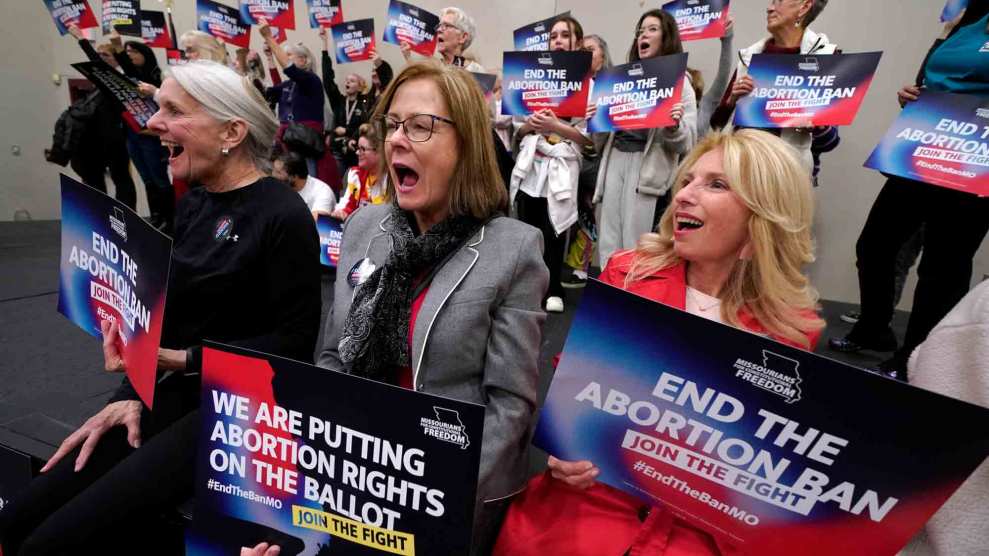
Now Kennedy is back, with proposed legislation that would increase the federal minimum wage to $7.25 per hour over the next 26 months. And last week Republicans on the House Appropriations Committee bucked their leadership and approved the increase.
The increase to $7.25 isn’t enough. In terms of its real purchasing power, it wouldn’t bring the minimum wage to its level of 1968. When one considers that productivity (output per worker) has more than doubled since then, it’s hard to justify anyone working for less than what was paid nearly four decades ago. But $7.25 is at least a step in the right direction.
The loss of real income at the bottom of the wage ladder is part of a broader long-term trend that ought to be the dominant theme in any national election: the failure of the majority of American employees to share in the gains from economic growth. Over the last 30 years the median wage has grown by about 9 percent, while productivity has increased by more than 80 percent. This is a sharp break with the past, when wages tended to grow with productivity, allowing for broadly shared prosperity.
To make things even worse, we have had a series of tax breaks in recent years – for example on stock dividends and capital gains – that are targeted toward upper income groups.
The minimum wage increase will buck this ugly trend toward increasing polarization of income and wealth, but it is hard to argue against. The Right will haul out the usual arguments, dating back to the 18th century, that such legislation will only hurt the people it is proposing to help, by making labor unaffordable and thereby reducing overall employment. But the mainstream of the economics profession has rejected this argument on the basis of empirical research. Why should anyone else believe it?
While minimum wage workers have been losing ground to inflation, Members of Congress have been hiking their own salaries, now at $165,200 per year. A House vote recently paved the way for another cost-of-living increase worth thousands of dollars annually. Congressional elections are about five months away. If Republicans in Congress want to block the minimum wage increase while raising their own pay, they could be playing with fire.