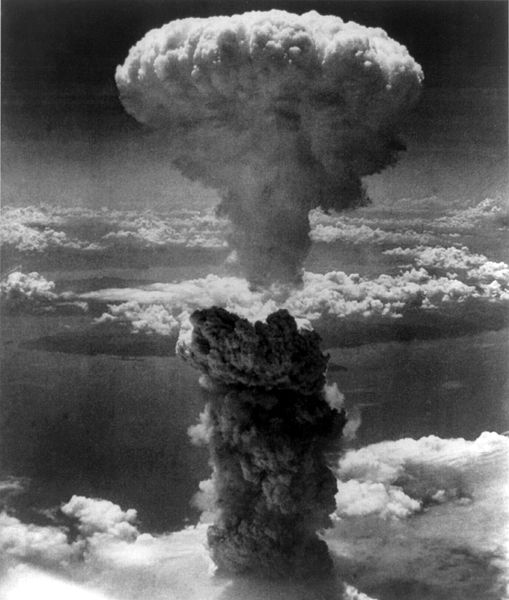
 A limited nuclear weapons exchange between Pakistan and India using their current arsenals could create a near-global ozone hole, triggering human health problems and wreaking environmental havoc for at least a decade. According to a new computer modeling study from Brian Toon and Michael Mills of the University of Colorado Boulder, the ozone losses would be much larger than losses estimated in previous “nuclear winter” and “ultraviolet spring” scenarios.
A nuclear war between the two countries involving 50 Hiroshima-sized nuclear devices on each side would cause massive urban fires and loft as much as 5 million metric tons of soot about 50 miles into the stratosphere. The soot would absorb enough solar radiation to heat surrounding gases, setting in motion a series of chemical reactions that would break down the stratospheric ozone layer protecting Earth from harmful ultraviolet radiation—including ozone losses of 25 percent to 40 percent at mid-latitudes, and 50 to 70 percent at northern high latitudes.
Two 2006 studies led by Toon showed that such a small-scale regional nuclear war could produce as many fatalities as all of World War II and disrupt global climate for a decade or more. A nuclear exchange involving 100 15-kiloton, Hiroshima-type weapons is only 0.03 percent of the total explosive power of the world’s nuclear arsenal, he said.
Julia Whitty is Mother Jones’ environmental correspondent, lecturer, and 2008 winner of the Kiriyama Prize and the John Burroughs Medal Award. You can read from her new book, The Fragile Edge, and other writings, here.