Dioxins Impair Breastfeeding

Ken Hammond, USDA

Get your news from a source that’s not owned and controlled by oligarchs. Sign up for the free Mother Jones Daily.


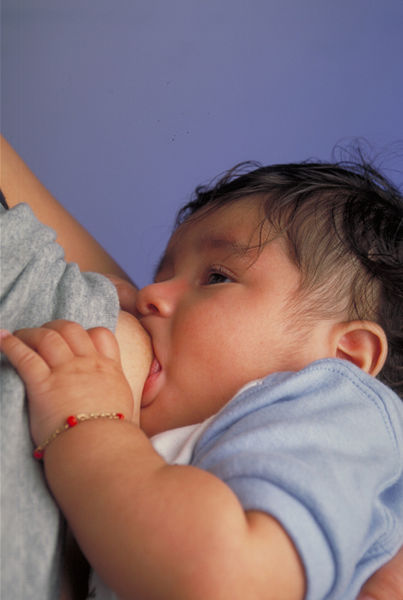
Exposure to dioxins during pregnancy harms the cells in breast tissue which in turn impairs the ability to initiate breastfeeding or to produce enough milk.

The data are demonstrated only in mice at this point. But the researchers from the U of Rochester Medical Center believe dioxin exposure may account for at least some of the 3 to 6 million mothers worldwide who cannot breastfeed.

The study is published online in Toxicological Sciences and shows that dioxin has a profound effect on breast tissue by causing mammary cells to stop their natural cycle of proliferation as early as six days into pregnancy and lasting through mid-pregnancy. Exposure to dioxin causes mice to produce 50 percent fewer new epithelial cells. Normally mammary glands cells proliferate rapidly during early to mid-pregnancy. Dioxin also alters the induction of milk-producing genes that occurs around the ninth day of pregnancy.

Dioxins are generated by the incineration of municipal and medical waste, especially plastics, and emitted through the air to settle onto crops, pastures, and waterways. People acquire the toxins through eating contaminated meat, dairy products, fish, and shellfish. The toxin settles in the fatty tissues and natural elimination occurs extremely slowly.

The team is looking into whether the harm occurs directly in the breast or if it’s found throughout the body but manifests uniquely in the fatty mammary tissue. They’re also studying a hypothesis that dioxin exposure might cancel the protection pregnancy normally awards against breast cancer.

Makes the UN’s call to ban all plastic bags seem farsighted. So how about banning municipal- and medical-waste incinerators?

DECEMBER IS MAKE OR BREAK

A full one-third of our annual fundraising comes in this month alone. That’s risky, because a strong December means our newsroom is on the beat and reporting at full strength—but a weak one means budget cuts and hard choices ahead.

The December 31 deadline is closing in fast. To reach our $400,000 goal, we need readers who’ve never given before to join the ranks of MoJo donors. And we need our steadfast supporters to give again—any amount today.

Managing an independent, nonprofit newsroom is staggeringly hard. There’s no cushion in our budget—no backup revenue, no corporate safety net. We can’t afford to fall short, and we can’t rely on corporations or deep-pocketed interests to fund the fierce, investigative journalism Mother Jones exists to do.

That’s why we need you right now. Please chip in to help close the gap.

DECEMBER IS MAKE OR BREAK

A full one-third of our annual fundraising comes in this month alone. That’s risky, because a strong December means our newsroom is on the beat and reporting at full strength—but a weak one means budget cuts and hard choices ahead.

The December 31 deadline is closing in fast. To reach our $400,000 goal, we need readers who’ve never given before to join the ranks of MoJo donors. And we need our steadfast supporters to give again—any amount today.

Managing an independent, nonprofit newsroom is staggeringly hard. There’s no cushion in our budget—no backup revenue, no corporate safety net. We can’t afford to fall short, and we can’t rely on corporations or deep-pocketed interests to fund the fierce, investigative journalism Mother Jones exists to do.

That’s why we need you right now. Please chip in to help close the gap.

We Recommend

Latest

Sign up for our free newsletter

Subscribe to the Mother Jones Daily to have our top stories delivered directly to your inbox.

Get our award-winning magazine

Save big on a full year of investigations, ideas, and insights.

Subscribe

Support our journalism

Help Mother Jones' reporters dig deep with a tax-deductible donation.

Donate