Too Much Night Light Makes Us Fat, Cranky—and No Safer


National Park Service

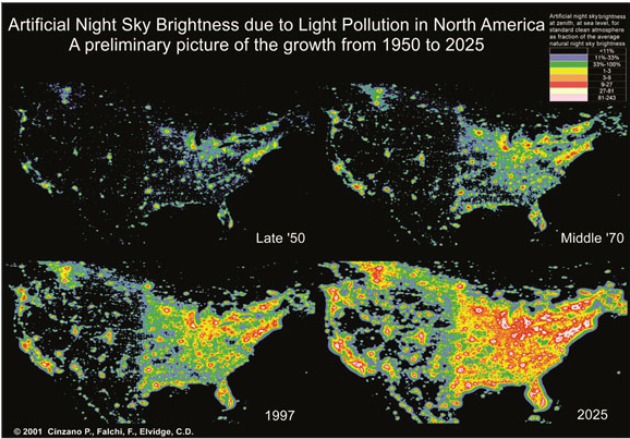
Sometimes a bright idea can be too bright. Today’s gas stations and parking lots are often ten times brighter than they were 20 years ago. The ubiquitous glare confuses wildlife, degrades our mental health, and occludes our view of the universe—all because we think that it makes us safer. But does it? Not necessarily, as Paul Bogard, the author of “End of Night: “Searching for Natural Darkness in an Age of Artificial Light,” points out:

In 2008, PG&E Corp., the San Francisco-based energy company, reviewed the research and found “either that there is no link between lighting and crime, or that any link is too subtle and complex to have been evident in the data.”

The data actually speaks more clearly about how light pollution makes us less safe. A recent American Medical Association report (pdf) concludes that the disrupting effects of nighttime lighting on our bodies’ circadian rhythms may contribute to “obesity, diabetes, depression and mood disorders, and reproductive problems.” Moreover, artificial light causes our bodies to suppress the release of melatonin, elevating our risk of contracting cancer, and especially breast cancer.

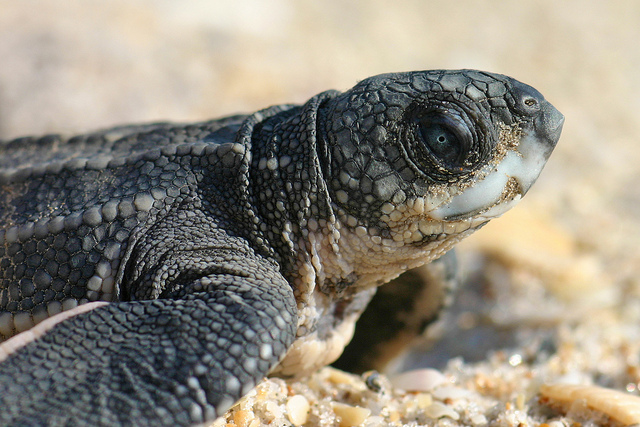
Eight in ten kids born in the US today will never see the Milky Way, according to Bogard. Of course, we have it easy at night compared to songbirds, sea turtles, and countless other creatures whose mating and eating habits have been thrown off by our glare.

None of which is to say we ought to start driving without headlights or getting around Manhattan with flashlights. But why not take a cue from the City of Lights? Starting in July in Paris and other parts of France, window lighting and lights on building facades will be turned off after 1 a.m., saving the annual equivalent of 750,000 households worth of energy. Now there’s a truly bright idea.

BEFORE YOU CLICK AWAY!

December is make or break for us. A full one-third of our annual fundraising comes in this month alone. A strong December means our newsroom is on the beat and reporting at full strength. A weak one means budget cuts and hard choices ahead.

The December 31 deadline is closing in fast. To reach our $400,000 goal, we need readers who’ve never given before to join the ranks of MoJo donors. And we need our steadfast supporters to give again today—any amount.

Managing an independent, nonprofit newsroom is staggeringly hard. There’s no cushion in our budget—no backup revenue, no corporate safety net. We can’t afford to fall short, and we can’t rely on corporations or deep-pocketed interests to fund the fierce, investigative journalism Mother Jones exists to do.

That’s why we need you right now. Please chip in to help close the gap.

BEFORE YOU CLICK AWAY!

December is make or break for us. A full one-third of our annual fundraising comes in this month alone. A strong December means our newsroom is on the beat and reporting at full strength. A weak one means budget cuts and hard choices ahead.

The December 31 deadline is closing in fast. To reach our $400,000 goal, we need readers who’ve never given before to join the ranks of MoJo donors. And we need our steadfast supporters to give again today—any amount.

Managing an independent, nonprofit newsroom is staggeringly hard. There’s no cushion in our budget—no backup revenue, no corporate safety net. We can’t afford to fall short, and we can’t rely on corporations or deep-pocketed interests to fund the fierce, investigative journalism Mother Jones exists to do.

That’s why we need you right now. Please chip in to help close the gap.

We Recommend

Latest

Sign up for our free newsletter

Subscribe to the Mother Jones Daily to have our top stories delivered directly to your inbox.

Get our award-winning magazine

Save big on a full year of investigations, ideas, and insights.

Subscribe

Support our journalism

Help Mother Jones' reporters dig deep with a tax-deductible donation.

Donate