“It’s going to really negatively impact us over time, in terms of the quality of the people we can get to come in.”
The bill is an example of a national trend of Republican-led states seeking to rein in what they see as runaway liberal politics in higher education—a sentiment that threatens to undermine the rigor and accuracy of teaching about arguably the greatest threat to the environment and economy.
“You can say gravity isn’t true, but if you step off the cliff, you’re going down,” said Katharine Hayhoe, an atmospheric scientist who teaches at Texas Tech University and a well-known writer and commentator about climate change and responding to climate denial. “And if you teach other people that gravity is not true, you are morally responsible for anything that happens to them if they make decisions based on the information you provided.”
The Chronicle of Higher Education has tallied 35 proposals across the country that limit the use of diversity programs at colleges and universities, with many of the bills taking additional steps to regulate what happens on campus. So far, Florida and North Dakota are the only states where the bills have been signed into law, and those laws do not have provisions about curriculum dealing with climate policies.
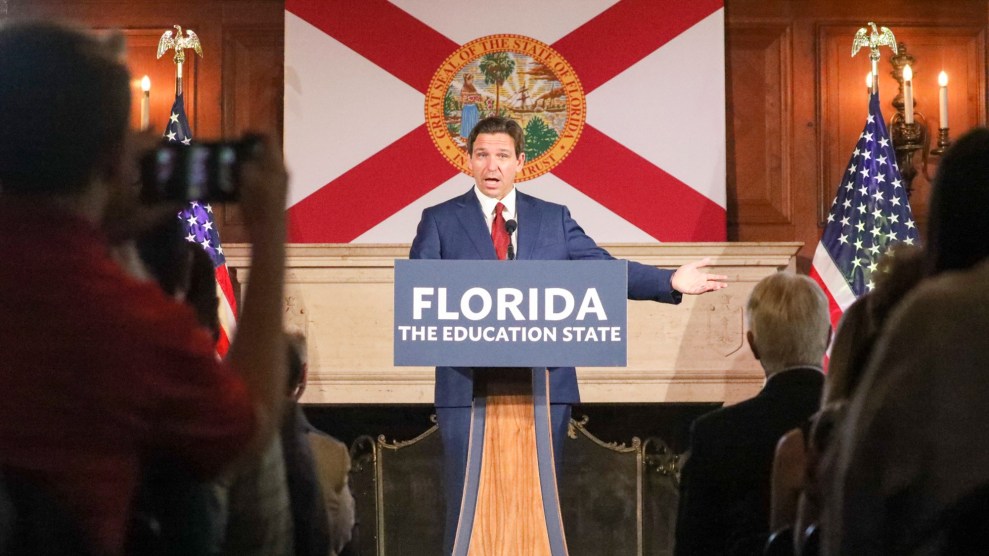
Florida’s Senate Bill 266 , signed by Gov. Ron DeSantis this month, says colleges cannot spend state or federal money on programs that advocate for diversity, equity, and inclusion. It also bans courses that teach theories “that systemic racism, sexism, oppression, and privilege are inherent in the institutions of the United States.”
The Ohio bill bans state colleges and universities from requiring diversity, equity, and inclusion training for students and staff; bans unions at at colleges and universities from going on strike; requires the use of student surveys in evaluating faculty; requires all students to take an American government or history course; and has a variety of provisions aimed at protecting students and faculty whose views may be out of line with those of the administration or a majority of people on campus.
The measure has passed the Ohio Senate and is now being considered by the Ohio House, both of which have large Republican majorities. Gov. Mike DeWine is also a Republican.
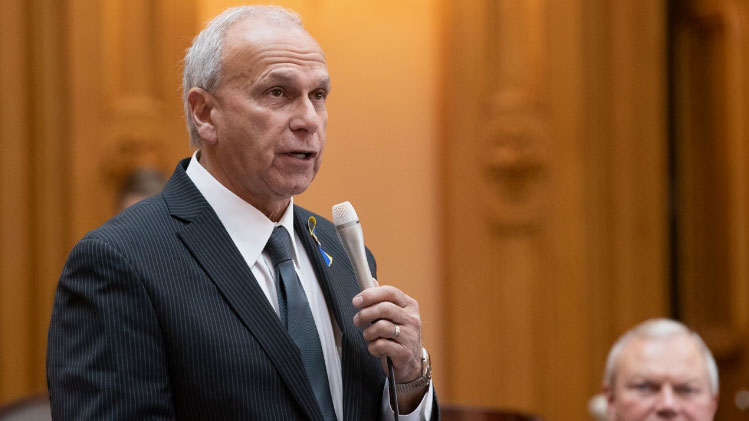
“Academics want to protect their woke fiefdom so they can continue to churn out like-minded and intolerant opponents of intellectual diversity,” said Sen. Jerry Cirino, a Cleveland-area Republican and lead sponsor of the bill, in a guest column last month in The Columbus Dispatch . His office did not respond to a request for an interview.
“When you attempt to share both sides of the story, you give them equal weight…For some of these issues, there’s not equal weight.”
The “controversial concepts” specified in the law include “climate policies, electoral politics, foreign policy, diversity, equity, and inclusion programs, immigration policy, marriage, or abortion.”
Colleges would be required to declare that they will not endorse any controversial belief or policy.
The bill has inspired intense pushback from people tied to Ohio colleges and the general public. Opponents have filled the seats and hallways of the statehouse during marathon hearings on the measure, with some in the audience wearing black tape over their mouths to symbolize what they view as a state overreach into what is said in classrooms.
Ohio State’s Board of Trustees has said it opposes the bill. “Academic rigor is at the foundation of a quality education; SB 83 threatens to impair it by proposing limitations on faculty speech not ‘favoring or disfavoring’ controversial views,” the board said in a statement . “Limiting challenging classroom dialogue will diminish the rigor of teaching when, to the contrary, the university should strive to appoint faculty who challenge students to think deeply and analytically.”
Cirino and the bill’s supporters have made changes in response to critics. For example, they changed “climate change” to “climate policies” in the list of controversial concepts to indicate that they are taking aim at colleges and faculty endorsing policy responses to climate change, as opposed to regulating discussion of climate change as a concept.
At a committee hearing last week , one of the bill’s opponents asked Cirino if college faculty would be required to teach both sides of the question of whether the Holocaust happened. “Nobody should be shouted down as ridiculous as their views might be and as wrong as they might be,” Cirono said. “That’s not what our universities are about. Our universities should be about accepting even views that are uncomfortable.”
“Nobody should be shouted down as ridiculous as their views might be and as wrong as they might be,” says the bill’s main sponsor.
Robyn Wilson, a professor at Ohio State’s School of Environment and Natural Resources, said some of her colleagues are losing sleep over the proposal. “It’s going to really negatively impact us over time, in terms of the quality of the people we can get to come in to live here and to participate in the institutions that are impacted by these political decisions,” she said.
She also has practical questions about how faculty members are supposed to teach about the science, politics and social ramifications of climate change if the bill passes.
“When you attempt to share both sides of the story, you give them equal weight,” Wilson said. “And the problem is that for some of these issues, there’s not equal weight.”
Hayhoe said the idea behind proposals like the one in Ohio is often that faculty members are chilling discussion about climate change by insisting that one view is correct and others are wrong. But the reality, in her classes at least, is more nuanced. She’s trying to teach students how to review evidence and recognize disinformation.
Students can interject if they have a different view, but she responds by guiding them to accurate information. Her goal is for them to learn for themselves if their view is correct or not. For a small number of students, this is an affront. “They feel silenced when all you’re doing is correcting,” she said.
Fisher, the Ph.D. student, said lawmakers need to be cognizant of the damage they are doing to colleges that are some of the state’s greatest assets. “We shouldn’t be pushing environmentalists and people who care about climate change away from the state,” she said.