
Adam Serwer

Adam Serwer

Reporter

Adam Serwer is a reporter at Mother Jones. Formerly a staff writer at the American Prospect, he has written for the Washington Post, the Root, the Village Voice, and the New York Daily News

Get my RSS |

Advertise on MotherJones.com

Terror Attacks on Sporting Events, Especially Marathons, Are Surprisingly Rare

| Tue Apr. 16, 2013 9:52 AM PDT
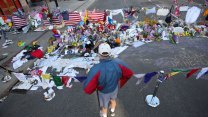
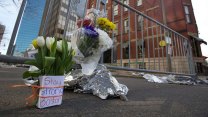
The aftermath of the attack on the Boston Marathon Monday, April 15 2013.

The bloody attack on the Boston Marathon that caused over a hundred casualties Monday seemed designed to maximize media coverage and cause as much harm as possible. But despite the potential for media attention and mass casualties, attacks on sporting events are relatively rare compared to attacks on other sorts of targets, says Bill Braniff, who runs the National Consortium for the Study of Terrorism and Responses to Terrorism (START) at the University of Maryland.

The Olympics and the World Cup have occasionally been targets for terrorists because of their prominence on the international stage. But attacks on marathons are even less common than attacks on sporting events in general. According to START, counting Monday's attack in Boston there have been seven terrorist attacks on marathons. Only one was more lethal than the Boston bombing. Here's a summary:

Sri Lanka, 2008: The separatist Tamil Tigers detonated a bomb at a marathon outside the capital city of Colombo, killing 14 people and injuring 83. The attack was a successful assassination attempt on the Sri Lankan minister of highway and road development, Jeyaraj Fernandopulle.

Ireland, 1998, 2003, and 2005: There were three attacks associated with the Belfast Marathon between 1998 and 2005, in which local authorities suspected the Irish Republican Army or its radical offshoot, the Real IRA, were responsible. In 1998 the IRA was suspected of firing mortars at a local police station, prior to the marathon, which was "disrupted" as a result, but the mortars did not explode. In 2003, there was a bomb placed in a van prior to the marathon, but the van owner called the police who defused it. In 2005, a pipe bomb was placed along the marathon route that was again disabled by police. 

Pakistan, 2006: START counts as two incidents violent protests in response to a marathon in Lahore, by groups opposed to the fact that men and women were both allowed to participate. There were arson attacks and two police officers and two civilians were injured. 

Bahrain, 1994: START lists as one of the incidents an attack on marathon runners along the al-Budayyi’ Highway. START lists the motive as "unknown," but speculates that the attackers may have been motivated by the dress of the runners, some of whom were women, or the route's proximity to the "remains" of a former mosque.

Terrorists might be reluctant to strike at sporting events because "there is so little perception that the people watching a sporting event are responsible for any grievance," Braniff says. "A backlash is very likely because people will see this for what it is, which is an indiscriminate attack on innocent civilians," he adds. "It's very hard to come up with an argument that the people running this marathon are legitimate targets, even for an international terrorist organization." That's not always the case—extremist Islamist groups in Somalia have targeted sports fans and events in part because they see identifying with sports teams as a threat to the strict religious identities they are trying to force on others. 

The final number of deaths and injuries from the attack in Boston is not yet known, but if the early number of casualties holds it will be the highest-casaulty attack on a marathon in history. According to the START database, there have been over 2000 terrorist attacks in the US between 1970 and 2011, less than two percent of which have caused more than ten casualties.

Rand Paul Does Not Deserve a Gold Star for Speaking at Howard University

| Fri Apr. 12, 2013 11:00 AM PDT
rand paulSen. Rand Paul (R-Ky.).

Some supporters of Sen. Rand Paul (R-Ky.) think he got a bum rap from critics of his speech at historically black Howard University this week. Andrew Sullivan wrote that "the sheer lack of any grace among some liberal commenters on what was an obvious outreach to African-Americans depresses me." Others, like National Journal's Josh Kraushaar, who gave Paul a hearty pat on the back for "showing up to make a case," were impressed that Paul went to Howard in the first place.

We can count Paul among the people impressed that Paul showed up. "Some people have asked if I'm nervous about speaking at Howard," Paul joked. "They say 'You know, some of the students and faculty may be Democrats.'" That landed like a brick on a concrete slab. After that, as though Paul had spent no time learning about Howard itself, Paul proceeded to lecture his audience on the history of black voters and the Republican Party, using the abridged version preferred by Fox News pundits: Lincoln freed the slaves, Democrats were the party of the Jim Crow, so black people should vote Republican. Paul mangled the name of one of the only elected black senators and a Howard alum, Massachusetts Republican Edward Brooke, calling him "Edwin Brooks," and then asked the audience if they knew that the founders of the NAACP were Republicans. The people in the audience replied, laughing and incredulous, that they did. Later he tried to whitewash his position on the Civil Rights Act of 1964, and an audience member pointed out that Paul's opposition to a key provision of the act was "on tape."

From his first lame joke, Paul condescended to his audience by repeatedly underestimating their knowledge of a subject they almost certainly understand better than he does. Institutions like Howard exist in part because much of America once refused to educate blacks and whites together. Paul might as well go to NASA to lecture the scientists on astrophysics.

Also strange is the presumption that somehow Paul was doing something risky or brave by speaking at a historically black college. Howard University is not a Greyhound bus station at midnight. It is way past time for pundits to retire the notion that white politicians deserve extra credit for being willing to talk to a room full of black people. This is, as one Republican once put it, the soft bigotry of low expectations. The history of Republican politics and the conservative movement means that a black audience has every right to be skeptical of the GOP, and that the burden is rightfully on that party to reconcile with black voters. Politicians are supposed to reach out to voters, not the other way around. No more gold stars for attendance.

The official Republican history of race in America should no longer ignore the fact that Republicans abandoned black people after Reconstruction in the name of "reconciliation" between North and South or elide the party's post-1964 embrace of the politics of white racial resentment. That the party that was once the party of Jim Crow now gets upwards of 90 percent of the black vote is not an indictment of the Democratic Party. It is an indictment of the Republican Party.

Some of Paul's defenders, such as The Atlantic's Conor Friedersdorf, have complained that Paul was unfairly mocked as being "hilariously backward about race," even though Paul's positions on war and drug enforcement are much more progressive than other politicians, including many Democrats. Aside from the fact that the Howard audience was quite receptive to Paul on those issues, it's beside the point. In college, I used to hear all the time from liberals that simply being liberals somehow meant that they couldn't do or say anything racist. Paul wasn't being unfairly mocked for his positions on America's various wars against abstract concepts. He was justifiably mocked for dishonestly condescending to his audience. Having the "correct" politics no more absolves him of that than they would the annoying campus liberals I encountered as a college student.

Paul's unorthodox (for a Republican) positions on drug enforcement and national security, and even his recent shift on immigration, make him a better messenger to minority voters than most for Republicans. They reflect an admirable empathy for the marginalized and less powerful that the Republican party in general rarely expresses. Despite its misses, during Paul's Howard speech you could hear the beginnings of a small-government message that might appeal to minorities. But if that message is delivered with a comical underestimation of those who are meant to receive it, then don't be surprised if they toss the envelope in the trash without opening it.

Mon Apr. 23, 2012 8:55 AM PDT
Thu Apr. 19, 2012 10:18 AM PDT
Tue Apr. 3, 2012 9:10 AM PDT
Thu Mar. 29, 2012 8:49 AM PDT
Wed Mar. 28, 2012 3:45 PM PDT
Tue Mar. 27, 2012 12:00 PM PDT
Mon Mar. 26, 2012 11:43 AM PDT
Fri Mar. 23, 2012 12:45 PM PDT
Fri Mar. 16, 2012 1:10 PM PDT
Tue Mar. 6, 2012 8:12 AM PST
Mon Mar. 5, 2012 3:07 PM PST
Wed Feb. 29, 2012 4:30 PM PST
Tue Feb. 21, 2012 9:27 AM PST
Thu Feb. 16, 2012 1:46 PM PST
Tue Feb. 14, 2012 4:35 AM PST
Thu Feb. 9, 2012 11:00 AM PST
Thu Feb. 9, 2012 9:25 AM PST
Tue Feb. 7, 2012 12:42 PM PST
Mon Feb. 6, 2012 8:05 AM PST
Fri Feb. 3, 2012 4:00 AM PST
Wed Feb. 1, 2012 8:46 AM PST