

Gavin Aronsen

Gavin Aronsen

Reporter

Gavin is a Mother Jones reporter in the DC bureau.

Full Bio | Get my RSS |

Gavin is an Iowa native, and covered the 2008 first-in-the-nation presidential caucuses for the Ames Tribune. He has also contributed to the Agence France-Presse, Daily BeastIowa Independent, Manhattan Media, and Village Voice.

What We Know About the Tsarnaev Brothers' Guns

| Tue Apr. 23, 2013 3:22 PM PDT

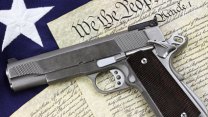
We still don't have a full account of where and how the Tsarnaev brothers obtained the firearms and explosives they allegedly used in the deadly attacks that began on April 15 at the Boston Marathon. Here are the details about their guns that have emerged so far:

How may firearms did they have?
Along with several pipe bombs, law enforcement officials recovered four guns they believed the Tsarnaevs used, according to a report in the New York Times (Update: officials are now saying only one 9 mm handgun was recovered.) Authorities believe three of the firearms—two handguns of unspecified makes and models, and a BB gun—were used in the dramatic early morning shootout with police in Watertown that left Tamerlan dead.

Did they have military-grade weapons?
The other gun, described by the Times as an M-4 carbine rifle "similar to ones used by American forces in Afghanistan," was reportedly found on the boat in the Watertown driveway where Dzhokhar was captured. It is unclear whether the rifle is a semi-automatic civilian model or the selective-fire model used by the military.

What gun laws would they have been subject to?
Both Dzhokhar and Tamerlan Tsarnaev were residents of Massachusetts, a state with strict gun laws including a ban on assault weapons and magazines holding more than 10 rounds of ammunition. Along with Washington, D.C., Massachusetts is one of just seven states with some form of assault weapons ban. No such restrictions exist under federal law, but if the M-4 is a selective-fire model it would fall under the highly restrictive National Firearms Act of 1934 that requires the registration of automatic weapons.

Did they have gun permits? Could they have gotten any?
Reuters reported that neither brother had a valid handgun permit in the state of Massachusetts. Because he is younger than 21, Dzhokhar could not have legally owned a handgun even with a permit. He also did not have the firearms identification card he would have needed to legally possess a semi-automatic rifle with a 10-round magazine. BB guns don't require licensing for non-minors in Massachusetts.

Advertise on MotherJones.com

Why Did These 4 Democrats Vote No on Gun Background Checks?

| Thu Apr. 18, 2013 9:46 AM PDT

When reporters asked Sen. Max Baucus (D-Mont.) why he voted against an amendment to expand gun background checks on Wednesday, he replied, "Montana." That may sound a bit obtuse, but in February the Sunlight Foundation was already on the case, charting the number of gun businesses per 100,000 people in the states of senators likely to be key to the gun vote. With 120 gun businesses per 100,000 people, Montana topped the list.

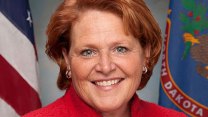
And Baucus is up for reelection in 2014. Montana Sen. Jon Tester, also a Democrat, voted for the bill, but he's not up for reelection until 2018. Along with Baucus, Democrats Mark Begich of Alaska (104 gun businesses per 100,000 people), Heidi Heitkamp of North Dakota (62 gun businesses per 100,000 people), and Mark Pryor of Arkansas (45 gun businesses per 100,000 people) also voted no on Wednesday.

The Sunlight Foundation had predicted that Baucus would be one of four Democratic senators most likely to vote against gun reforms for the above reasons as well as the relative number of their constituents who supported President Obama in 2012. Sunlight also focused on Begich, Pryor, and Tim Johnson of South Dakota (66 gun businesses per 100,000 people).

Johnson, who announced in March that he would not run for reelection in 2014, voted for the background check amendment. All of the above senators' states voted for Mitt Romney for president.

key senators on background checks
Sunlight Foundation


The Sunlight Foundation also took a look at how much money senators received from the National Rifle Association during their previous campaign. Baucus, who has an 'A+' rating with the NRA, topped the list among Democrats, accepting $7,450 in 2008. In 2010, Senate Majority Leader Harry Reid, who has a 'B' rating, took in $4,950. Joe Manchin, who has an 'A' rating and led compromise efforts on the background check amendment with Pat Toomey (R-Pa.), comes in third with $4,500 in 2012.

Begich and Pryor, who are both up for reelection in 2014, didn't receive any donations from the NRA in 2008. (Begich doesn't have an NRA rating; Pryor's is a 'C-'.) Heitkamp, who has an 'A' rating, didn't receive any NRA cash either during her last campaign; she's not up for reelection until 2018.

Here Are the 8 Other Gun Bills About to Face a Vote in the Senate

| Wed Apr. 17, 2013 9:59 AM PDT

UPDATE 2, Thursday, April 18: The Senate today voted for both Barrasso's gun privacy and Harkin's and Alexander's mental health amendments.

UPDATE, Thursday, April 18: On Wednesday, the Senate voted on seven of the nine amendments to Harry Reid's gun control package. They were all rejected. Today, the Senate is scheduled to vote on the privacy amendment introduced by Sen. John Barrasso (R-Wyo.) and the mental health amendment introduced by Sens. Tom Harkin (D-Iowa) and Lamar Alexander (R-Tenn.).

ORIGINAL POST: On Wednesday morning, Sen. Joe Manchin (D-W.Va.) and Pat Toomey (R-Pa.) both publicly conceded that the background check compromise they forged—which would expand scrutiny of gun buyers online and at gun shows, but would also grant many concessions to the gun lobby—won't receive 60 votes this afternoon to survive a Republican filibuster. But the gun debate isn't over yet: The background checks bill is just the first of nine amendments proposed for Senate Majority Leader Harry Reid's gun control package that will get a vote beginning at 4 p.m. ET. Here's a quick rundown of the others in the order in which they will come up:

Sen. Chuck Grassley's (R-Iowa) mental health amendment:  Grassley's Protecting Communities and Preserving the Second Amendment Act of 2013 (PDF), which is cosponsored by five other Republicans, is the conservative alternative to Reid's gun package. Both include measures on improving background checks, school safety, and gun trafficking prosecutions. But Grassley's bill would also "place limitations on Fast & Furious type operations," according to a fact sheet his office put out.

Sens. Patrick Leahy's (D-Vt.) and Susan Collins' (R-Maine) gun trafficking amendment: The Leahy-Collins amendment would make gun trafficking a federal felony and strengthen penalties against straw purchasers, including a measure subjecting a gun seller involved in a straw purchase to criminal charges. Convicted gun traffickers would face prison sentences of up to 25 years.

Tue Jun. 11, 2013 9:09 AM PDT
Mon Jun. 3, 2013 10:01 AM PDT
Wed May. 15, 2013 5:55 PM PDT
Tue Apr. 23, 2013 3:22 PM PDT
Thu Mar. 21, 2013 3:56 PM PDT
Tue Mar. 19, 2013 8:51 AM PDT
Mon Mar. 18, 2013 1:03 PM PDT
Fri Mar. 15, 2013 3:00 AM PDT
Fri Mar. 1, 2013 3:29 PM PST
Fri Feb. 15, 2013 4:01 AM PST
Fri Jan. 11, 2013 4:01 AM PST
Fri Nov. 30, 2012 4:08 AM PST
Thu Nov. 15, 2012 5:00 PM PST