- ‹ previous
- 491 of 1535
- next ›
New Evolution: 100 Proofs
Genes have long been considered the only way biological traits are passed down through generations of organisms. Now we know that non-genetic variations acquired during the lifespan of a plant or animal can be passed along to its offspring.
The phenomenon is known as epigenetic inheritance. We don't yet know how prolific this mechanism is. But a new study in The Quarterly Review of Biology lists more than 100 well-documented cases of epigenetic inheritance between generations of organisms.
In other words, non-DNA inheritance happens a lot more than we thought. For example:
- Fruit flies exposed to certain chemicals transmit changes—bristly outgrowths on their eyes—down at least 13 generations.
- Exposing a pregnant rat to a chemical that alters reproductive hormones leads to generations of sick offspring.
- People malnourished in adolescence transmit higher rates of heart disease and diabetes to their children and grandchildren.
In these and 97 other cases the changes in subsequent generations were not from changes in DNA but from epigenetics.
There are four known mechanisms for epigenetic inheritance. The best known involves on-off switches (sort of) that render genes active or inactive—without actually changing the DNA. The revelations of epigenetics are rewriting the study of evolution. And no, epigentics does not make creationism right.
The rewrite is a vindication of sorts for 18th-century naturalist Jean Baptiste Lamarck, whose writings predated Charles Darwin's and who believed that evolution was driven in part by the inheritance of acquired traits.
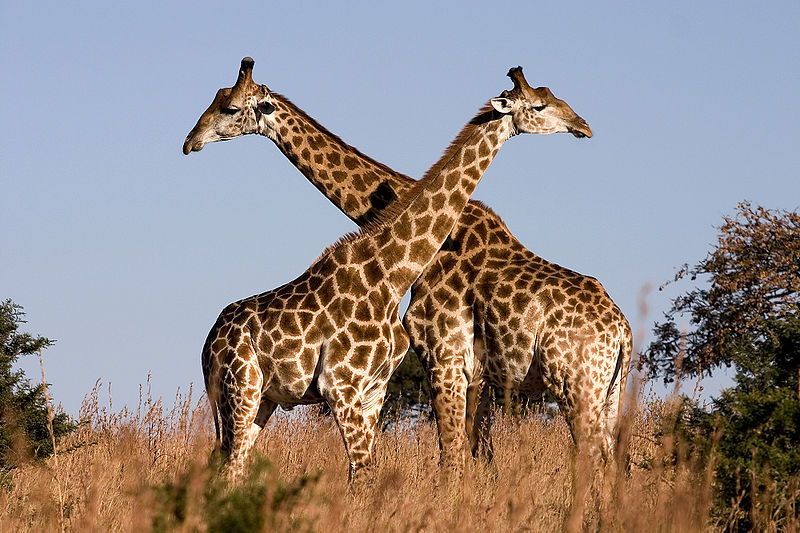
His wonkiest supposition: Giraffe ancestors reached with their necks to munch leaves high in trees, stretching their necks to become slightly longer—a trait passed on to descendants.
More accurate: All the stuff we're synthesizing and creating from plastics to nanomaterials is going to live in our bodies and take its toll down the generations for a long, long time.











Inheritance of Acquired Traits.
Does this mean Spiderman's kids will inherit his Spidey powers?
شات حبي
منتديات |
القرآن الكريم |
مركز تحميل|
صور|
دليل المواقع |
العاب |
جوال | الاسرة المسلمة
| شات |
يوتيوب |
المجلة |الطب البديل
|لعبة التحدي
|
دليل دردشات |
شات كتابي |
نكت وطرائف | اكواد الوان |
توبيكات |
شات صوتي |
دردشة صوتية
|
دردشة القصيم |ماسنجر|
جافا |
زخرف اسمك
|
قيس حبك|
دردشة |
حبي | اقوى شات
صوتي | اقوى
دردشة صوتية |
اقوى شات سعودي
this is definitely great
this is definitely great work. I am so glad to see it.
Genes are working subunits
Genes are working subunits of DNA. DNA is a vast chemical information database that carries the complete set of instructions for making all the proteins a cell will ever need. Each gene contains a particular set of instructions, usually coding for a particular protein.
genes are so interesting to
genes are so interesting to read about. this is interesting how this works with animals. This deals with plants too. i want to hear more.
A gene is the basic unit of
A gene is the basic unit of heredity in a living organism. All living things depend on genes. Genes hold the information to build and maintain their cells and pass genetic traits to offspring. In general terms, a gene is a segment of nucleic acid that, taken as a whole, specifies a trait. The colloquial usage of the term gene often refers to the scientific concept of an allele.
M4R Converter is an powerful
M4R Converter is an powerful music converter to m4r format tool. It helps iPhone and iPhone 3G users to convert music to m4r as iphone ringtone easily.
iPhone Ringtone Maker,
M4R Converter for Mac
A gene can be defined as a
A gene can be defined as a region of DNA that controls a hereditary characteristic. It usually corresponds to a sequence used in the production of a specific protein or RNA.
dna is definitely the
dna is definitely the future. this will help use combat diseases for our kids. I am glad to see the hard more going on for this.
"no, epigenetics does not make creationism right"
maybe not, but it certainly supports ID in favor of unguided evolution. NS can only act on what it is presented with. Either it is presented with random variations, which are virtually never helpful, or it is presented with immediately advantageous (read: anticipated or purposeful) variations. Epigenetic inheritance clearly indicates the latter.