MoJo Forum: Is Recycling a Waste?

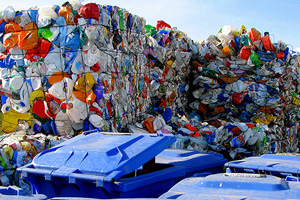
Join a MoJo writer, a recycling pro, a consumption critic, and a historian of garbage for some serious trash talk.

—Image by flickr user ThreadedThoughts used under a Creative Commons license
Mon April 20, 2009 7:00 AM PST

The modern recycling movement got its start alongside the first Earth Day, nearly 40 years ago. In the months surrounding April 22, 1970, around 3,000 voluntary recycling programs sprung up around the country, started mostly by counterculture types looking for a practical, virtuous way to minimize their environmental impact. Since then, recycling's gone mainstream: Americans now recycle and compost a third of their trash, up from just 6 percent in 1970. Yet even as we load up our recycling bins, we're generating more waste than ever before. In just 5 minutes, we use another 1,060,000 aluminum cans, 2 million plastic bottles, and 15 million sheets of paper. We're still drowning in plastic, New York recycles only a fifth of its garbage, and trash haulers still find landfill more profitable than recycling. Then consider that municipal solid waste—that's the stuff that fills our home garbage cans and office paper bins—is just 2.5 percent of our total "Gross National Trash" output. While we've been agonizing over whether our plastic yogurt lids can be recycled, have we been missing the big picture? Is recycling giving us a false sense that we're solving our waste problem?

We put that question to four experts: Elizabeth Royte, Eric Lombardi, Annie Leonard, and Susan Strasser. Check out their answers below. Then post your comments or questions for them. For the rest of this week, they'll be checking in to respond to readers, discuss and debate the future of recycling and waste, and perhaps even solve the mystery of the yogurt lid.  


story continues below story continued from above

Elizabeth Royte is the author of Bottlemania: How Water Went On Sale and Why We Bought It and Garbage Land: On the Secret Trail of Trash. Her article on zero-waste zealots appears in the current issue of Mother Jones.

Yes, I think that people feel they're doing their part for the environment by putting recyclables into containers at the curb or bringing them to a drop-off center (and they are helping the earth). But that feeling also allows some to continue business as usual—to consume and waste ever more stuff: "I recycle those single-use plastic bottles, so it’s okay to keep buying them." We need to re-emphasize the other R's: Reducing consumption of new goods and reusing what you've already got. We need to reconsider, also, how much local governments and taxpayers are willing to pay to deal with product waste. Getting manufacturers or brand owners to take responsibility for their products' end of life would relieve some of that burden—and give those manufacturers a strong incentive to redesign goods to last longer, to contain fewer hazardous materials, and to more easily come apart for remanufacture or recycling. A couple of examples of "producer responsibility" already in place: computer take-back programs and bottle bills.

 

Eric Lombardi is the executive director of Eco-Cycle, one of the nation's largest nonprofit recyclers. He is a cofounder of the GrassRoots Recycling Network and the Zero Waste International Alliance.

Recycling is a bit of a pacifier for a young nation, but that perspective is also a narrow one. In the bigger picture, recycling is like a gateway drug in that it is the first environmental action of every good Republican. I think the recycling stage is a very large one, and those of us who work on it have unlimited opportunities to create stories, presentations, and visions about all sorts of important environmental issues, including "game-changing ideas" like zero waste, zero carbon, and zero population growth. Add to that the fact that recycling is one of those real activities we can do every day that is good and virtuous, and what you end up with is a wonderful, visceral connection between message, action, and vision.

I agree with the view that if recycling is all you're doing, then it's a bad joke. But I would add that I don't believe people stop at just recycling, and that if you believe that then you're just looking for a justification for your own cynicism. Over the last 20 years I have watched a widespread green consciousness emerge and sweep over our culture, and I believe that the recycling revolution had everything to do with that.

 

Annie Leonard is an environmental researcher and campaigner. She is also the author and host of The Story of Stuff, an animated online exposé of the hidden costs of consumption.

There is a reason that recycling comes last in the oft-repeated mantra of "reduce, reuse, recycle." That is where it should be: a last resort. Recycling is what we do with something when our back is against the wall, when we have exhausted all opportunities to redesign the product to be more durable, to reuse or repair it, or to simply do without it altogether. As a last resort, recycling is better than landfill or incineration for sure. And hats off to those dedicated people who have built and voraciously defended the recycling infrastructure that does exist in this country. But let’s be clear about what recycling is. My friend Paul Connett says that recycling is an admission of failure. I say that recycling is the opiate of the masses. It makes us feel good, like we’ve done our part.

I spent last week chaperoning my daughter’s fourth-grade class trip to an outdoor environmental school in the Sierra Mountains. At the end of our stay there, the kids were asked to think of things they could do in their lives to help the periled planet. The overwhelming majority cheered: "Recycle!" Look, globally we’re using 1.4 planets worth of resources each year. Fisheries are collapsing, aquifers are drying up, the climate is in chaos, more than 100 species a day become extinct. Putting our bottles and paper in a blue bin just won’t cut it. That doesn’t mean we shouldn’t do it, but let’s get over all the hoopla about it. Yes, recycle. Of course, recycle. But don’t believe for a second that recycling, alone, is enough to turn things around.

 

Susan Strasser is a professor of history at the University of Delaware and the author of Waste and Want: A Social History of Trash. She has been praised by The New Yorker for "retrieving what history discards: the taken-for-granted minutiae of everyday life."

Americans have sorted trash for recycling for centuries. Old rags were once made into paper, bones into fertilizer; peddlers and general stores collected these and other recyclable materials from households and sold them to factories. During the first years of municipal solid waste collection, cities required residents to sort out materials that could be recycled—paper and bottles then as now, but also ashes and organic garbage.

These practices were forgotten during the mid-twentieth century, and in recent years, sorting trash for recycling has become a symbol of care about the environment. To call it a symbol is not to diminish its significance. Recycling provides a limited contribution to solving a problem that is more about consumption than about trash. But it reminds us of the threads that bind our individual households to the planet and the activities of our daily lives to its future.
 

Get Mother Jones by Email - Free. Like what you're reading? Get the best of MoJo three times a week.
Comments
no profile pic for comment author

Annie Leonard hits it

Annie Leonard hits it squarely on the head. We're not done with the "Reduce, Reuse, Recycle" slogan yet. Materialistic consumers are still gobbling down resources, using recycling to assuage their guilt. Until we can quell consumerism, dealing with the detritus is an uphill battle.

no profile pic for comment author

I agree with Annie Leonard

I agree with Annie Leonard and Elizabeth Royte. People think they are doing something good when they recycle, but really they should be reusing. Folks will only reduce their use of plastics, etc. when it costs more, like oil. Companies should have to pay for the impact of the plastic bottle they sell something in; let's start at $1 a bottle and that's low. Some city in Norway or Sweden started charging for how much rubbish you produced and they collected, and it had a huge impact on how much packaging people used.

Recycling reminds me of carbon credits, a way for folks to feel better about continuing their lifestyle, when really they need to change a few things. Buy a Kleen Kanteen, take the bus, stop buying more stuff.

It's not time for small steps anymore, there's a huge plastic bag mass in the ocean the size of Texas (at least right?). Let's do more.

no profile pic for comment author

I laugh

I can't take the bus... (who ever said take the bus) If I could I would have, not to save the earth, to save MONEY! (even before gas prices went up) Recycling and using less SAVES MONEY. That's how we should FRAME many of these things, MONEY because that's all Americans as a whole care about. People talk about recession, I just laugh. Black/Brown People have been living in a recession pretty much since Ronald Regan, welcome to "our reality".

I also work two jobs, something else "Uniquely American", I had no problems finding it. I am also layoff proof, when you keep your car longer you come see me, that's how we stay in business and our stock price has doubled in recent weeks just because of that fact. Yeah you got your wish, people aren't buying what they don't need, unless they can afford it of course. I continue to buy what I need or what I can use/enjoy and hardly ANYTHING I don't need, I never experience "Buyer's Remorse".

I wish people would stop with the holier than now attitude and start with the basics like making sure everybody has EQUAL PROTECTION UNDER THE LAW and that LAWS ARE ENFORCED FAIRLY. Once you get that, then we can all work together on a ZERO waste society. I don't know about "Zero Population Growth" I still want to have my own children...

no profile pic for comment author

About equality for all...

Yes, equality and even-handedness are both important issues that need to be addressed, but they are not mutually exclusive to our most pressing environmental issues. Those who are least represented and often those who suffer the greatest and most damaging effects of environmental degradation.

Dave Gilson

Bag Taxes?

Over at the Blue Marble, reader Slocko wonders:

"What are your opinions on taxing plastic (or even paper) bags at the grocery store? Some people (erroneously, in my opinion) have been led to believe that a plastic bag tax would be unfair to poor people. Do you agree?"

For more on the messy realities of recycling plastic bags, check out this story in our current issue: http://www.motherjones.com/environment/2009/05/left-holding-plastic-bag
________________
Dave Gilson, senior editor
http://www.motherjones.com/authors/dave-gilson

no profile pic for comment author

Bag Tax

A bag tax is an easy target for anyone who's weary of more taxes – not just poor people. While I hardly think the $.5-$.15 it could amount to is worth protesting and could likely do some good, it seems to me there could be less controversial ways of encouraging people to use less plastic and paper. And should we make plastic and paper grocery bags the center of debate? Prepared foods (including those tasty entrées from Whole Foods) have tons of packaging. It seems those items should be just as much if not more of a concern.

Slocko

But Bag Taxes are Proven

Ireland instituted a 10 cent tax on plastic bags and within months bag consumption was down 90%. The only reason its controversial is that the plastic bag lobby is giving a hard sell on the position that the tax 'hurts the poor'. We could use the money to give everyone in the country a re-usable set of bags and the poor will be fine!

** Slocko! ***

Laura McClure

Yes, yes, but how do you convince the non-recyclers?

There are still so many places where recycling isn't the norm—easy to forget if you live in a place where it is. How do we convince those people—less green friends and relatives, let's say—to take baby steps without sounding shrill? Is it really productive to dismiss recycling as a last resort?

Eric Lombardi

Re: Yes, yes, but how do you convince the non-recyclers?

Great question, and I hear this in many places across the country. To remedy that, I suggest that eco-conscious people get organized with another 10 or so folks and demand that their elected officials start doing their jobs of creating local "sustainable community infrastructure", which includes energy efficiency, non-car transportation, and recycling that is as convenient as wasting—because in truth having three "discard" bins (recycling, composting, landfill) instead of one "trash can" isn't that difficult or expensive to create.

Once the community invests in placing recycling bins everywhere, then the price of using trash cans has to be increased according to the amount they are used—this system is called Pay-As-You-Throw (PAYT). Even the Bush EPA and conservative think-tanks support PAYT! This combination of convenient recycling and expensive trash works to change behavior for most people.

The work ahead for Laura, and all of us who care about resource conservation, is in getting the local officials to actually change the rules of how we live and do business. The "green economy" is just waiting for leadership to open the doors for the clean companies to win the profits.

no profile pic for comment author

How about teaching people to

How about teaching people to use less. There never used to be 12 packs of Coke or Pepsi. The mentality right now is to use and recycle. As long as you use no one cares because it is money for the corporations. Use less and stop being consumer whores and product junkies. Stop buying a new car every three years. Capitalism and market driven economies are destroying the earth with the people in it. Limit corporate greed with laws and save the world.

Elizabeth Royte

Responding to "Bag taxes?"

I don't think bag taxes are a bad idea, and they've been shown to reduce usage significantly. They remind us, where it hurts, that our choices have consequences. My food coop quit supplying plastic bags (for free or a charge) and there has been zero complaint. The coop sells re-usable tote bags for as little as 50 cents. Even low income shoppers can afford this. But here's another idea, for those who forget a bag and wince at the thought of bringing yet another tote into the house: could we make it possible to return those lower-cost reusable bags to the store, where folks in a similar position (that is, uninterested in buying/having another bag) can rent them at an even lower price, or perhaps take one after leaving a deposit?

no profile pic for comment author

Gas tax, fuel tax. Seems to

Gas tax, fuel tax. Seems to me to be part of the overall solution. For example, this will increase the cost of bottled water over tap water. It will increase the cost of all energy-intensive products and encourage better behavior.

It's not the type of people who are reading this who need the encouragement. For the most part, it's the great majority of people who need to be reformed by a significant change in economic incentives.

no profile pic for comment author

i love how Westerners,

i love how Westerners, specially Americans solution to everything is to use money and more cost to fend people off. What this does basically punish the poor. The message here: if you have money you can afford to waist and leave the poor and the tax paying working class holding the bag!

no profile pic for comment author

Recycling, waste and overpopulation

Excellent information by all writers: however, recycling will not work until we give every bottle, can and plastic container bought at ever store a 10 cent deposit return incentive. That, and only that action will bring successful recycling to the USA and world. Otherwise, the amount of waste extends beyond our comprehension and its destruction of our world, especially our oceans with such nightmares as the Great Pacific Garbage Patch with 3 million tons of plastic swirling in an area twice the size of Texas. Over 46,000 pieces of plastic on every square mile of ocean! Plastic drift nets killing millions of marine creatures. Finally, we must stabilize human population if we are ever going to solve the rest of our environmental dilemmas. Frosty Wooldridge www.frostywooldridge.com

no profile pic for comment author

Repairing vs. Recycling

Slightly off topic, but Annie Leonard's comment reminded me of the new fan my wife bought the other day. We already have a semi-functional fan, except that it kind of shorts out every so often--goes on and off unpredictably.

It's a perfectly good fan that needs a simple fix, but nobody fixes stuff like that any more, and if they do it costs as much as buying a new fan. How about government-sponsored fix-it stations where people can take small appliances to be repaired rather than thrown out or recycled?

TopoTail

no profile pic for comment author

re:Repairing vs. Recycling

How about opening another tab in your browser, learning how to do the "simple fix" to a "perfectly good fan," closing your laptop, getting yourself outta your chair and fixing the thing, instead of driving your SUV down to a big box store and buying another chinese piece of crap?

no profile pic for comment author

The key is to consume bulk

The key is to consume bulk products. I lived in a city that has a community food store with a large choice of bulk food. You bring your own containers and fill up on your shopping list then weigh the container and pay a price. After three month my garbage would be enough to fill a shopping bag. Now I live in a city where everything is packaged for name brand purposes. Candies are individually wrapped, then packaged in a bag that is placed in a box that is placed in a shopping bag. Now in one week my garbage is enough to fill a shopping bag. We need change our ideas about packaging and name branding. We can still have choice and name brands printed on bulk bins but let me bring my own durable, washable container to take home.

no profile pic for comment author

Recycling and climate change

One aspect that hasn't been mentioned is the climate change angle. Recycling a ton of paper not only saves energy because it's easier to make paper from paper than from wood pulp, it also leaves a couple of trees in the ground. If we were to get serious about recycling, we could cut our emissions as much as taking half the country's cars off the road. Check out this analysis: www.stoptrashingtheclimate.org. Of course, reducing consumption is still the top priority; but we're always going to use some material goods, and we should recycle everything we do use.

Susan Strasser

Repairing skills

The anonymous responder who suggests that the owner of the broken fan should learn how to fix it points to a crucial element in the historical development of consumer culture: the loss of skills. Fixing and finding uses for worn and broken articles entail a consciousness about materials and objects that is tied to the process of making things to begin with: if you know how to sew or do carpentry, you also understand how to mend a torn jacket or repair a broken chair.

As the responder points out, the internet provides an unprecedented opportunity for people to learn something about skills that are new to them. Unfortunately, they will not learn the tactile understanding of materials that comes from working with our hands, and they may have problems finding parts.

no profile pic for comment author

recycle

Recycling is sometimes a waste of resources. It all depends on current prices and such. It is a good goal to recycle but it is not always helpful. The more vibrant an economy the more technology we gain to better deal with this garbage in the future.

Man Made global warming is a Hoax BTW I thought you should know.

no profile pic for comment author

recycling

Until the people of this country wake up, get involved & VOTE we will continue to be abused by the financial interests that control our government. It is the government's role to establish & enforce new programs in any area that improves the quality of life for the people - that's their job. Until waste management & its primary function of protecting our environment is enforced on all levels we will continue our pathetic effort to do what little we are allowed to protect our environment. Although the honor system of recycling is better than nothing, it is in fact a joke. If we want to save our environment our government needs to start with the manufacturing sector (as Europe has done) & work its way down to the household; & any company that balks about the cost to them can simply go out of business cause there's plenty of competition to fill their niche & the employees they will let go. Has anyone noticed our economy?? How do you think we got here?? It's lack of government enforcement to keep greedy humans in check - STUPID!!!
Wake up, pay attention, & vote the corruption out of our government!!!!

no profile pic for comment author

Landfills As Major Sources of GreenHouse Gases i.e. methane

Frank DePinto
Box 6194
Chattanooga, TN 37401
fdepinto@hotmail.com

4/19/09
Environmental Protection Agency
633 3rd St. NW
Washington, DC 20001

Re: Greenhouse gas regulations also
for city, county and state landfills i.e. methane gas, 21xs more toxic as a
green house gas as carbon dioxide.

Dear Agency,

First I want to thank you to pass tougher regulations concerning greenhouse gases. During research for an advocacy environmental program I was shocked and surprised that carbon dioxide gas from autos was not regulated.
City, County and State landfills should also be added as sources of greenhouse gases to be regulated for methane gas (21xs more toxic than carbon) and carbon gases.
Our local landfill in Chattanooga emits almost 200,000,000 CY of greenhouse gases per year. The way to limit landfills is to require recycling. In Oregon the state has mandated a goal of 60% recycling of all materials. Portland, OR recycles over 50% of its residential and commercial waste.
The State of Tennessee and the City of Chattanooga are a very dismal state for recycling
and continuing increases of waste instead of recycling i.e. enclosure
Two other critical points:
1) Recyclable waste i.e. aluminum cans, newspaper, mixed paper, glass, plastic, etc. which isn’t recycled and winds-up in a landfill is considered a ‘carbon footprint,’ enclosure which represents a carbon cycle that will completely be repeated i.e. using natural resource to create the same new products which creates more carbon than if the product were recycled. I consider emissions from autos, coal plants, etc as ‘carbon airprints.’
2) There is a philosophy which states to use methane coming from a landfill for energy, however, a) such energy/methane capture is only 65% and b) using methane for energy would have a mindset for a municipality to increase landfill waste rather than recycle.

Sincerely,

Frank DePinto

no profile pic for comment author

I think recycling is a great

I think recycling is a great start, however, we need to reduce our overall consumption of everything. Given that April seems to be the month that everyone pays attention to the Earth and corporations roll out all sorts of "earth-friendly" products (read: wal-mart), I think we are long overdue for a discussion in corporate responsibility. Everyone here knows that Americans buy what they are told to buy, either through the powerful forces of the status quo or through advertisements. We also know that Americans aren't willing to change their lifestyles unless they aren't given a choice. In my opinion, we need to focus on the producers of the goods that people over consume. For example, toilet paper. We (through our demand) are cutting down three-hundred year old trees so that Americans can use quilted and triple-ply toilet paper. This is outrageous. Toliet paper companies should only supply recycled toilet paper and no new forests should be eliminated in order for people to use the bathroom. Toilet paper is only the tip of the iceberg, not everything needs to be individually wrapped in materials that are not recyclable. If these companies only supplied recycled, sustainable products then people would have no choice but to buy them. I realize that we live in a choice culture and people enjoy being able to choose from a variety of toilet papers, but lets be serious. The choice is truly this: either continue to use non-recycled toilet paper and destroy forests or realize that we need to fix the problem. I believe that serious change could come from companies that only produce recycled, sustainable products. Obviously Americans aren't making the right choice, so let's not give them a choice!

Eric Lombardi

re: I think recycling is a great start

Wow… there are a lot big statements in this one! Which to focus on?

My overall response to your bottom line, "Obviously Americans aren't making the right choice, so let's not give them a choice!" is that I agree, within limits. In fact, I think you bring up a much bigger but related issue of how the "free market" is failing us on many environmental issues and thus the time is ripe to discuss the idea of removing certain products and services from the "free" market (which really is a myth anyway) and creating a new "social enterprise market" where the needs for profit and community benefit are in balance.

Let's look at your toilet paper example. I was in eastern Romania a decade ago consulting on setting up recycling, and all they had there was "government toilet paper" made from 100% recycled paper in a local paper mill. It was so bad that I brought some home to show everyone, and I still have a roll in my office to show folks. It was like thin tree bark, so the issue of "quality" is real, and having the government as overlords on quality or price just does not work. So, the challenge for us all is to go forward and create a new "community product and service delivery system" that taps the strengths of the free market and the strengths of the community vision, but without creating the "overlord" power system of the planned economies of the 20th century. I recommend that everyone Google "social enterprise" (SE) and read the news from outside the US, because the action is really in the UK on this right now. I am very excited about SE being the vehicle that will transform the waste management industry into a resource management industry.

This whole issue of "over consumption" is rather complicated once you get beyond the talking stage. I will leave that issue to my good friend and expert on the topic, Annie Leonard. I will say only that the Zero Waste Future requires all products and packaging to made out of non-toxic materials, and are designed to be easily reused, repaired, recycled or composted at their end-of-life. All of us should be pushing our elected officials to create these "new rules" so that the clean companies win the profits.

Elizabeth Royte

Re: I think recycling is a great start

Readers may also want to check out the Product Stewardship Institute (www.productstewardship.us/) and the Product Policy Institute (www.productpolicy.org) to learn about ways that local governments can quit enabling (or subsidizing) product waste by shifting responsibility for its "end of life" back onto its manufacturers and consumers (instead of onto the general taxpayer).

no profile pic for comment author

MTA recycles?

Elizabeth,

I've been dying to know if the MTA actually goes through the cans in the subway stations for recyclables. The new posters they feature in the stations have all kinds of figures and statistics, and I can't imagine that the MTA is doing anything more than dumping the contents into the trash. The majority of items I see thrown in there are newspapers, plastic bottles, and coffee cups -- a lotta recyclables. Do you have any information or thoughts about this?

Megan

Annie Leonard

Beyond Recycling: Zero Waste

I am glad to see agreement among those commenting here that while recycling is important, it isn’t enough. Necessary, but insufficient. The other approaches mentioned – reducing consumption, redesigning products to be more durable and toxics-free, extended producer responsibility, even basic things like sharing – are all equally important.

Eric Lombardi, who is about as visionary as any recycler can be, used a term that I’d like to see incorporated into the public discourse even more: Zero Waste. Zero Waste is not the same thing as 100 percent recycling. Zero Waste refers to an approach to waste that aims for Zero, just like many in industry uses the “Zero Accident” or “Zero Defect” goal for operations. Zero Waste refers to a collection of practices and policies designed to reduce waste all along the materials economy. It starts with the question “is there another way to meet this need without making more stuff?” When stuff is needed, a Zero Waste approach prioritizes judicious use of non-toxic materials, so the product and the production process itself is compatible with ecological systems. Zero Waste is a holistic approach, rather than a techno-fix. It seeks to eliminate unnecessary packaging, composts organics, and design products from the start to be repairable and durable. My vision of Zero Waste, also means Zero Wasting of communities and workers. That means no more sacrifice zones where landfills and incinerators are sited. No more disposable workers and community members whose health is sacrificed to dirty production processes. No wasting of the planet’s beautiful resources or diverse communities.

The Grassroots Recycling Network describes Zero Waste like this:

Zero Waste:
• redesigns the current, one-way industrial system into a circular system modeled on Nature's successful strategies
• challenges badly designed business systems that "use too many resources to make too few people more productive"
• addresses, through job creation and civic participation, increasing wastage of human resources and erosion of democracy
• helps communities achieve a local economy that operates efficiently, sustains good jobs, and provides a measure of self-sufficiency.
• aims to eliminate rather than manage waste

There is no current community that has fully achieved Zero Waste, but there are lots of places from Kerala India to San Francisco which have adopted Zero Waste goals to ensure that they are moving in the right direction.

Transforming our industrial production, consumption patterns and disposal practices towards Zero Waste won’t always be easy and it won’t happen overnight. It will take hard work and creativity, but this hard work will be moving us towards a solution. That is far preferable to the hard work we’ll need to figure out how to survive on the planet that is being rapidly trashed from the current linear take-make-waste approach. We can definitely do better, and a Zero Waste commitment is a great way to start.

blindspotter

zero waste circular system

China has extended the circular zero waste idea into a national planning goal called 'circular economics'. Although they're struggling to implemented it, this suggests a potential for zero waste to be applied globally as a market 'game change', and hence in every community not just the most determined. Such a game change would mean that waste disposal would be phased out and there would be no need to keep banging our heads against officialdom planning more incinerators. Better yet it would set up the economy to combine ecological, climate and economic recovery, creating lasting wealth to replace the historical 'borrowing from the future' economy. This can be set up fairly simply; please see this work in the NATO Science Programme http://books.google.com/books?id=vnq5eBNf5-oC&pg=PA139

james greyson

Elizabeth Royte

Re: MTA recycles?

Hi Megan,
I'm working on an answer for you, but getting information from the city is, um, not always a streamlined process. So far, I've learned that about 50 percent of the waste collected on subway platforms gets recycled (8,444 tons in 2008). The refuse is separated off-site by a private collector, says my New York City Transit source. Separated where and by whom, and then what? I'll get back to you when I know.

no profile pic for comment author

thanks!

thanks, looking forward!

no profile pic for comment author

False morality

The issue is not that recycling gives people a false sense that they are solving the problem. It is that it gives people the false sense that there is a problem in the first place, that they are responsible and should feel guilty about it.
There is nothing wrong with landfill – today’s landfill is tomorrows highly profitable mine. Recycling should only occur when it makes economic sense to do so – i.e. not very often.
Environmentalists are masters at promoting their own aesthetic judgements into moral principles and other people’s guilt. This article is a prime example. It is basically saying that whatever you are doing, it is not enough; you should still feel guilty and have a long way to go before you can share in the moral rectitude of we the authors. I say bah humbug!

no profile pic for comment author

Recycling

Recycling is the way to go with Plastic... I am an agent for a Company that makes products from all recycled bottles etc... the machine can use 12 tonne of plastic per day... approx the amount of plastic 500,000 people throw away every day..
I will send pictures of the products the machine can produce.. all sorts of product can be made.. Pallets, Building blocks, sheets, Street Bollards, Curbing etc etc.. Just e.mail me ... with the code...R/Plastic. ctodd@matilda.net.au

Elizabeth Royte

Re: MTA recycles

Hi Megan,
Metropolitan Paper Recycling picks up the waste from NYC Transit and delivers it to All-American Recycling, in Jersey City. You can read about the sorting process here: http://www.wnyc.org/news/articles/89503/
To find out what happens next, call All-American at (201) 656-3363‎.
Good luck.
Elizabeth

no profile pic for comment author

I come from India and in my

I come from India and in my place, the use of plastic is decreasing rapidly. There was a 'Say No To Plastic Bags' campaign that was held in my city and the response was amazing. Are such campaigns held all over the world ?

no profile pic for comment author

I come from Zimbabwe and

I come from Zimbabwe and here the use of plastics and aluminium cans is increasing rapidly. Before our economic meltdown, we had a proud history of reusing and recycling - every coke and beer bottle had value in the form of a deposit and cans were not common. Now with the dollarisation of the economy, almost no local production and massive imports of goods from neighbouring South Africa (a consumer nation in the American tradition), we have a serious waste problem. With local services operating on a shoestring, garbage is collected on a pretty random basis and most households either burn it in their garden or in the street or dump it. Things had to change here and sometimes change requires a complete breakdown, but it's going to be a mammoth task to get back to a point where we can be a proud nation of re-users and re-cyclers (and other things of course).

no profile pic for comment author

Recycling As A Last Resort

As one who earns his living in the recycling business (scrap metals) I agree that recycling is always a last resort. We sell as many products as we can sell directly back to the public and private sectors as reuse is always more profitable than recycling. Why sell a piece of metal for pennies per pound when the same item will fetch dollars per pound when resold for reuse?

As I point out in my series, Return to Gilligan's Island. when it comes to plastics the system is very broken. Plastics are not designed to last a lifetime and the vast majority of plastics have never been and may never be recycled. And while solutions are out there (one proposed by me) the plastics industry and the American Chemistry Council appears to have no real interest in solving problems they've helped to create.

As to the commenter who mentioned future mining of landfills: Mining landfills is a great idea but only for scrap metals as paper and plastics that are sent to landfills too often become contaminated to the point they can no longer be recycled.

no profile pic for comment author

tiffany jewelry

of tiffany jewelry on ebay are cheaper than tiffany jewellery outlet store, why is that?

You will find the newest tiffany jewelry on sale fashion release on their official website.

I am planning to give my wife a big surprise with tiffany and co as a birthday gift, but I don’t know which one to choose, any ideas?

no profile pic for comment author

We are providing all kinds

We are providing all kinds of louis vuitton handbags, wallets and purses in ourgucci Online Store, all items of which have the most popular styles and are the newest and at discounted prices.

We also provide helpful shopping guide tips for you to choose and compare our bags and other accessories. Get your sale of replica handbags today and you will never be disappointed with it.

no profile pic for comment author

Welcome to our company, our

Welcome to our company, our company Huayi Trade Co.,LTD are good at selling the top quality designer bags (Balenciaga ,Chanel , Chloe' ,Christian Dior ,Dolce&Gabbana , Fendi , Gucci , Hermes , Galliera GM ,Miu Miu , Prada ), they are mirror image bags which are identical to the real onesLouis Vuitton Galliera GM . Our company locates inthe leather town in China, Speedy 25since 2003 we did this business we have won great trust and popularity from our customers from all over the world. We areexpanding our business, any inquiry for wholesale business is warmly welcome, Louis Vuitton Speedy 25just contact us, you can get our prompt reply.We have enlish speaking representative to answer phone call, or we can call you if convenient for you.

no profile pic for comment author

Ecology Now

Since Earth day 1970 I have regularly taken outdoor dumps on railroad easements, golf courses and highway shoulders. I also recycle cans, plastics and bottles and use as little in the way of paper as I can. Ecology Now!

Post a comment
Alternately, you may login to or register an account
The content of this field is kept private and will not be shown publicly.
  • Web page addresses and e-mail addresses turn into links automatically.
  • Allowed HTML tags: <a> <ul> <ol> <li> <blockquote> <img>
  • Lines and paragraphs break automatically.

More information about formatting options


Jail.org - Inmate Search
Criminal records, instant public records & people search & current court records. www.jail.org

U.S. Public Records Search
Search County & State Court Records, Criminal records, Vital and Adoption Records www.PublicRecordsInfo.com

Records.com - People Search
Public Records and Background Checks. Instantly Search Criminal Records, Addresses and Court Records www.Records.com

Court Records & County Records
Find Instant Public Records, Criminal Records as Well as County Property Records Search. www.PublicRecordsIndex.com

Mother Jones Podcast
Get in on the conversation! We talk about culture, politics, the environment, the economy and more. Listen now!

TalkBackTees.com
A treasure trove of liberal wit, wisdom and quotations, from ancient to modern, on colorful, cotton tees.

Support Independent Artists
Amazing art, crafts, apparel, paper-goods and more. A carefully curated selection of sundries since 1999.

FREE CONNECTIONS FOR GREEN SINGLES
Meet progressive singles in the environmental, vegetarian & animal rights community who share your values