In The Blogs

A Taxonomy of Consumer Credit

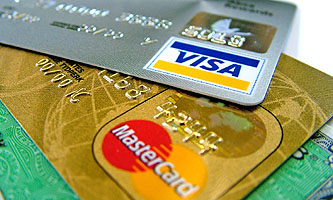
Are credit cards, generally, good things?  Steve Waldman says we have to distinguish between two benefits they provide.  The first is transactional credit, which is simply the convenience of using a card to buy stuff instead of hauling around cash or checks.  This type of credit gets paid off every month.  The second is revolving credit, which is when you deliberately buy more than you can afford with the intention of paying off the charges over time.  It's essentially a preapproved loan available anytime you have an emergency — or merely an irresistable urge to buy a pair of shoes you don't happen to have the money for right now.

Steve is right that transactional credit is basically beneficial, while revolving credit isn't.  In moderation it's fine, but human nature being what it is, it's often not used in moderation, which suggests it might be a good idea to limit its availability.  I'm tentatively on board with this so far, but then things go off the rails:

In fact, while transactional credit provision is a perfectly good business, it might be reasonable for the state to offer basic transactional credit as a public good. This would be very simple to do. Every adult would be offered a Treasury Express card, which would have, say, a $1000 limit. Balances would be payable in full monthly. The only penalty for nonpayment would be denial of access of further credit, both by the government and by private creditors. (Private creditors would be expected to inquire whether a person is in arrears on their public card when making credit decisions, but would not be permitted to obtain or retain historical information. Nonpayment of public advances would not constitute default, but the exercise of an explicit forbearance option in exchange for denial of further credit.) Unpaid balances would be forgiven automatically after a period of five years. No interest would ever be charged.

Let's think about how this would work. For most people, access to various forms credit — transactional credit, auto and home loans, unsecured revolving credit, whatever — is worth more than $200 per year. Although people might occasionally fall behind, for the most part borrowers would pay off their government cards, simply because convenient participation in the economy is worth more than a once-in-five-years $1K windfall. However, people with no savings and irregular income (for whom transactional credit is a misnomer, since they haven't the capacity to pay) might well take the money and run. The terms of the deal amount to a very small transfer program to the marginal and disorganized, and a ubiquitous form of currency for everyone else. People with higher incomes would want more transactional credit, or revolving credit, which they would acquire from the private sector.

I don't really get this.  We already have "Treasury Express" cards: this is basically what debit cards are, and they provide the same benefits of transactional credit that regular Visas or Mastercards do.  Why do we need the government for that?

That leaves us with the problem of limiting revolving credit, which is the same problem we have now.  Do we need firmer rules on interest rates, fees, and penalties?  Better bankruptcy protection?  Bans on things like universal default?  An end to tricks and gimmicks and fine-print-laden marketing come-ons?  More sensible ways of setting credit limits?  Maybe.  Probably.  But unless Steve is suggesting that we essentially ban credit cards entirely — and then create some kind of federal mega-authority to limit every other kind of consumer credit too — those are all the same issues we have now.  I'm not really sure what his proposal would accomplish.
image
image

Get Mother Jones by Email - Free. Like what you're reading? Get the best of MoJo three times a week.
Comments
no profile pic for comment author

Consider me a big fan of the

Consider me a big fan of the debit card. However, I think there is a difference between what Waldman is taking about and the debit card, mostly because a large segment of the population simply can't get a debit card. Debit cards require a bank account, and bank accounts are increasingly checking things like credit ratings. Also, a bank account costs money -- if you want a "free" one, then you must do things such as have your employer automatically deposit your check every payday, or else maintain a balance which might be $1000 or higher.

Both of these are out of the realm of possibility for the working poor. Thus they aren't able to use a debit card where they might be able to use another form of transactional credit. In fact, many of them already are -- but it's unfortunately called "Pay Day" loans.

Trippp

I see the point about a

I see the point about a debit card not being available for the poor.

Still, I worry about privacy when the government starts to talk about a cashless society. If all transactions are traceable then privacy goes out the window.

Tripp

no profile pic for comment author

revolving credit

We already have limits on revolving credit... they are called "credit limits" in fact. They're not all that well enforced, perhaps, but the new law reins that in a bit, right?

And a debit card is not a transactional credit mechanism, unless debit=credit in the new economy. I'm not a fan of gov't-backed transactional credit at any limit. As it stands now, the choice between credit being transactional or revolving is almost wholly within the consumer's domain, so how is gov't involvement going to improve one that?

no profile pic for comment author

To be honest, I personally

To be honest, I personally don't believe this is the way to handle the credit issue for anyone, working poor or not. I'm not sure that I would want the government running a program such as this. I was simply trying to answer Kevin's question about why the program, at its most basic level, might be different from a debit card.

no profile pic for comment author

American provicialism

Steve is normally quite sophisticated about finance. So I'm surprised he doesn't realize how much the US is an outlier in the use of credit cards for transactions. For much of the rest of the developed world, when electronic transactions were introduced they came via debit cards, not credit cards. Credit cards were/are much, much rarer. And their issuance depends, not unreasonably, on personal credit rating.

By making credit cards the standard means of electronic transaction, lots of people like students "needed" them for their payment function, not for their credit function, which they couldn't actually afford. But the credit card co's preferred the system of making everybody credit "junkies" and charging fees if you didn't clear up what was essentially your transaction balance within a couple of weeks after the end of the month.

The credit card co's also absolutely hate any thought there'd be a difference in what the merchant or customer has to pay for the service, even though in theory the debit transaction should be less expensive because it doesn't involve as much anti-fraud protection etc.

So the new credit card bill puts some limits on the most outrageous behavior. But it doesn't really change the perverse logic of the US credit-dominated system. That will require more and more folks shifting to debit cards. And maybe some attention paid to making it easier for people to access financial services through no-frills bank accounts with debit cards attached.

Another great example of the strange results that can be produced by path dependency.

Art Eclectic

Agree

The dependency on credit cards has been indoctrinated into the American culture over the years. Countless commercials and policies have fed the "get it now" philosophy that only losers save and plan. Kid wants a toy? Dad has no cash? Whip out the card and GET IT NOW. Smiling child; Dad hero. Also coming into play is the tendency toward laziness and multitasking...I mean, we are talking about a culture here that has drive-thru coffee. We will drive-thru anything if it can save us two minutes. Especially if we can do it while talking on a cell phone, writing down notes, shaving, applying makeup and munching on a pastry. We have cultural obsessions with saving time and not denying ourselves anything. We work hard, we deserve to have everything right now, not three months from now when we've saved for it.

Retailers and credit issuers have been only too happy to feed this dependency because anyone with a brain knows that impulse buys are highly profitable. Give someone time to think about whether or not they need a $2000 flat screen and they might talk themselves out of it. Retail needs to close the deal ASAP, before the customer can get out the door or go home to price compare on the internet or decide to talk it over with a partner.

When you are a consumer based society, there is a huge emphasis on getting people to consume as much as possible, as quickly as possible and as easily as possible.

Visa - it's everywhere you want to be.
For everything else, there's Mastercard.

no profile pic for comment author

Treasury Express

Do you really want to share that level of information with the government?

no profile pic for comment author

nadezhda04: That will

nadezhda04: That will require more and more folks shifting to debit cards.

Which in turn will require better debit card fraud protection. IIRC you're only liable for $50 on credit card fraud, whereas with debit cards the sky is the limit and the onus is on you to get the money back (good luck!). That's what keeps me away from debit cards.

no profile pic for comment author

@ alex re Debit card fraud

I'm not qualified to talk about the details of how the specific services, cost structure, protections etc differ between credit and debit cards in the US. But I'd note that it's precisely that sort of difference in fraud protection you point out which is part of what I meant by path dependency. Because we started down the "credit card" path, it got the bulk of the attention, and then as potential competition emerged from "debit cards" the vested interests tended to privilege the established system over the newcomer.

If we really wanted a shift towards a system found in many other countries, federal legislation would be needed to enforce changes that at the least levelled the playing field among alternative services. The merchants have been screaming for some of these sorts of changess for years, but the credit card companies have always been able to beat them off. In the most recent bill, it appears that the merchants won a bit that will make debit cards and cash more competitive as transaction instruments. But probably not enough changes to encourage a major shift in consumer behavior.

But then, not many folks in the legislative process were interested in fundamentally challenging the system on behalf of consumers. Just limiting some of its worst abuses.

no profile pic for comment author

@ alex re Debit card fraud

I'm not qualified to talk about the details of how the specific services, cost structure, protections etc differ between credit and debit cards in the US. But I'd note that it's precisely that sort of difference in fraud protection you point out which is part of what I meant by path dependency. Because we started down the "credit card" path, it got the bulk of the attention, and then as potential competition emerged from "debit cards" the vested interests tended to privilege the established system over the newcomer.

If we really wanted a shift towards a system found in many other countries, federal legislation would be needed to enforce changes that at the least levelled the playing field among alternative services. The merchants have been screaming for some of these sorts of changes for years, but the credit card companies have always been able to beat them off. In the most recent bill, it appears that the merchants won a bit that will make debit cards and cash more competitive as transaction instruments. But probably not enough changes to encourage a major shift in consumer behavior.

But then, not many folks in the legislative process were interested in fundamentally challenging the system on behalf of consumers. Just limiting some of its worst abuses.

no profile pic for comment author

Number otB

Do you really want to share that level of information with the government?
A large segment of the U.S. population would think of it as the Beast Card, the card number being the number of the beast. There would be an entire, profitable industry catering to people who feel the need to avoid using the card. (For whatever reason. Privacy nuts and fundies, initially.)

no profile pic for comment author

Debit cards have fewer legal protections

Credit cards are governed by the Truth in Lending Act which has decent protections for the consumer against disputed charges. While in dispute, the consumer does not have to pay. Debit cards are governed by the Electronic Fund Transfers Act which has far fewer protections for the consumer, and of course the money is gone from your checking account until the bank decides in its own sweet time to give you back access to your money. Mastercard and Visa have tried to phony this up for the consumer by volunteering to treat consumer protections the same. You do not deal with them, however, but with your bank. And anyway, they are the same outfits that brought you high interchange fees and provide the networks within which all credit cards operate. They have not been highly trustworthy or consumer-friendly. They are more consumer fleecing than anything. They only give you enough skin back to keep you in the fleecing game.

serial catowner

You really don't get it

For starters, the US has always been a credit society. Even the Revolution was paid for on the installment plan. But a larger reason the US has always been a credit society is because there wasn't enough money. Everyone could plainly see the wealth that lay in the land, but there wasn't money to pay the costs up front. Credit and bankruptcy have always been two of the most distinguishing characteristics of American life.

Until quite recently the corner grocer and the coal merchant and the hardware store supplied the credit. Even today some businesses will not sell wholesale to you if you don't have an account with them.

The credit and debit cards got the small merchants out of the credit business- for a price. This is bad for a small business that doesn't gain much from accepting credit cards, but good for businesses that do.

For example, to buy a book or CD or DVD, you can get on the internet and find the lowest price in the whole country. If you need a part tomorrow, you don't need to wait for your money order to reach the seller before they ship.

A credit account with the government would be good for the poor because paydays fall on Fridays or the end of the month, but due dates can come any time. Maybe you need to actually have been poor to understand how that works.

A government credit card is also good for the economy because it increases the speed at which money circulates. If, for example, a dollar takes ten days to go from buyer to seller, that allows three transactions per month. If it takes one day, that allows thirty transactions per month. IOW, without increasing the amount of money in circulation, you can increase the size of the economy by increasing the speed at which the money circulates.

Steve's idea strikes me as a great way to deal with the fact that we are very close to being a cash-free economy.

no profile pic for comment author

Bollocks, Provincial Bollocks: Credit Culture =/= Existence of..

he US has always been a credit society. Even the Revolution was paid for on the installment plan. But a larger reason the US has always been a credit society is because there wasn't enough money.

This is utter tripe. One could write something similar for virtually any economy from a historical perspective. The US credit model spoken to above by Nadezdha is comparative and further emerged in the past 50 years. The remainder of the comments are equally poorly founded.

A Government led payment card is a silly and expensive proposition (never mind the technicallly incorrect presentation - any "Amex" type card where one has a spending limit beyond one's actual cash balance is by definition credit, it is short-term (25-30 days), but remains credit with a need for proper underwriting. Governments are notoriously poor at such, and such exposure is ridiculous to propose. A simple solution to the debit versus credit card protection is merely to pass an equalising law between the two.

Trippp

Color me paranoid on cash-free

catowner,

Cash-free would have to be done right though, or we'd simply create a black market alongside the real market.

You'd need a free debit card with consumer protection against fraud and anonymity to do it right. Without the anonymity people will either use cash or barter for the transactions they want to keep private.

Tripp

no profile pic for comment author

Correct.

Cash has a high value for transactional anonymity to large numbers of persons.

no profile pic for comment author

punishment

It is very hard to survive in the US WITHOUT a credit card. Try renting a car without one.

On CNBC a week back a woman insisted that everyone needs three or four credit cards in order to have a good credit rating. My sister's house insurance went up because she ONLY has one credit card.

I've never owned a credit card but I use my debit card regularly. But then I paid for my car with a check and don't own a house.

no profile pic for comment author

I was never allowed to pile up debt

When I was 63 years old, I decided to get my very first credit card, so that I could purchase something on the internet. I was shocked when I went to my bank (Wells Fargo), where I had been a reliable customer for decades with no overdrafts or late fees, and learned that I had to BUY a credit card.

I paid them $300 dollars for my card with a $300 limit and had monthly charge payments automatically deducted from my checking account. After one year, I was deemed trustworthy enough to be given a real credit card and my $300 was refunded to me with no interest.

I have NEVER been able to understand why so many people—and their dogs—have been freely offered credit cards and allowed to run up enormous debts they couldn’t pay.

no profile pic for comment author

Credit cards

We talk about how necessary a credit card is in American society. Today, while going on the Dulles Toll road here in VA, the most basic reality of this face was striking. On this road, outside of very few toll plazas, and then only during certain hours, you must pay the toll with either a credit card or a "Smart Tag". What do you need to get a Smart Tag/EZPass? A credit card -- I went to the website to make sure before I wrote this message.

So here in VA, there are literally roads that you cannot travel on without a credit card. No matter how much money you have, no matter how thrify you are, and no matter who you are. No credit? No road.

Post a comment
Alternately, you may login to or register an account
The content of this field is kept private and will not be shown publicly.
  • Web page addresses and e-mail addresses turn into links automatically.
  • Allowed HTML tags: <a> <ul> <ol> <li> <blockquote> <img>
  • Lines and paragraphs break automatically.

More information about formatting options


Jail.org - Inmate Search
Criminal records, instant public records & people search & current court records. www.jail.org

U.S. Public Records Search
Search County & State Court Records, Criminal records, Vital and Adoption Records www.PublicRecordsInfo.com

Records.com - People Search
Public Records and Background Checks. Instantly Search Criminal Records, Addresses and Court Records www.Records.com

Court Records & County Records
Find Instant Public Records, Criminal Records as Well as County Property Records Search. www.PublicRecordsIndex.com

Mother Jones Podcast
Get in on the conversation! We talk about culture, politics, the environment, the economy and more. Listen now!

TalkBackTees.com
A treasure trove of liberal wit, wisdom and quotations, from ancient to modern, on colorful, cotton tees.

Support Independent Artists
Amazing art, crafts, apparel, paper-goods and more. A carefully curated selection of sundries since 1999.

FREE CONNECTIONS FOR GREEN SINGLES
Meet progressive singles in the environmental, vegetarian & animal rights community who share your values