In The Blogs

Regulating Risk

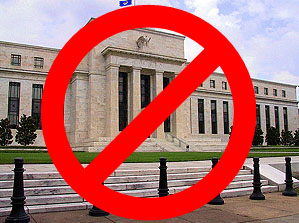
I'm not really sure if the federal government needs a "systemic risk regulator."  I just don't have a strong opinion about whether this is the right way to think about managing credit bubbles.  But a couple of days ago I said that if we do have such a thing, it shouldn't be the Fed.  Instead, "you want to give the authority to an agency that's institutionally dedicated to reducing risk and considers it a primary task.  That ain't the Fed.  It's just going to get buried in the bureaucracy and forgotten there."  Tyler Cowen responds:

Assuming we are going to do it, I think it has to be the Fed, whether we like it or not.  It's the Fed who is the fireman with the awesome power to print money, move markets, lend to the banking system on a large scale, and now even conduct fiscal policy, all without Congressional approval.  Our textbooks speak of the Fed as a lender of last resort but very often it is the lender of first resort too.

Now, this might be right.  It's possible that we just don't have any choice.  But at the risk of a bit of incoherence, let me offer an alternative.

It's true that the Fed is the agency with the brute force to make things happen in an emergency.  But I'm not sure that's the relevant thing to think about.  What we want is some kind of body that works to prevent emergencies.  That requires credibility and influence, but it doesn't necessarily require a trillion dollar balance sheet.

I guess the model I have in mind here is the Congressional Budget Office.  The CBO is unknown to most people, but despite its small size and low public profile it has a remarkable amount of power.  This power comes from two sources.  First, it has institutional credibility.  I honestly don't know how it's managed to keep this credibility in the face of what must be enormous partisan pressure, but it has.  It's widely considered an honest broker and its budget estimates are taken seriously by everyone.

Second, although the CBO itself doesn't have a huge staff or control of a huge budget, Congress has agreed to abide by its cost estimates for legislative programs.  This means that CBO analysts have considerable indirect control over a lot of money.  And in Washington, money equals power.

So my question is: could we create an agency like the CBO, but charged with monitoring systemic risk in the financial system?  It would have to be nonpartisan and independent.  It would need to have risk management baked into its DNA as its primary mission, rather than being #7 on a list of ten goals — with everyone knowing that only the top three get any real attention anyway.  Its director would need the kind of credibility that makes people listen when he warns that other agencies are allowing too much giddiness on Wall Street.  And, finally, it would need the right mix of authority, either direct or indirect, that's enough to force people to take it seriously when its mere credibility isn't quite enough.

But here's the incoherent part: I'm not quite sure how you'd construct such an agency or what authority might be sufficient for it to do its job without getting it hopelessly at odds with other regulatory agencies.  One way or another, though, I feel that giving this mission to the Fed is simply a waste of time.  Right now, virtually every impulse — both at the Fed and in the private sector — works in the direction of either ignoring credit bubbles or actively cheering them on.  If we're going to put a brake on this, we need to think about institutional priorities and balances of power, and figure out what it would take to get systemic risk established as a bureaucratic turf with a built-in constituency dedicated to protecting it over the long term.

Smart people, help me out.  What should this look like?  Or is it foolish to think this is even possible?
image
image

Get Mother Jones by Email - Free. Like what you're reading? Get the best of MoJo three times a week.
Comments
g. powell

Balance of power

I'm not smart, but I've come around to the idea of the Fed as the uber-regulator.

The balance of power issue isn't a question of restraining government power, it's giving enough heft to the government to rein in the finance industry, which can now play the different agencies to get what it wants. We need a powerful institution that isn't afraid to interpret and enforce the rules as it sees fit. Only the Fed can do that.

The issue to me is what happens if the Fed fucks up. After all, Greenspan was the main cheerleader for the practices which just went to hell. But at least we would know who to blame. I actually think an international regulator would be useful as a watchdog over the Fed. And having a CBO-like, independent, financial system auditing agency is not a bad idea either.

no profile pic for comment author

I agree..

this is really an interesting and informative article .thanks for sharing this one..I learned a lot here..free food samples

no profile pic for comment author

shiller's ideas on creating macromarkets?

In terms of protecting the little guy, I was always intrigued by Robert Shiller's ideas in Irrational Exhuberance, about creating markets which would allow small investors to better hedge risk. But I'm not sure how it would work. If you've read Irrational Exhuberance, what did you think of it?

Chris Brown

Why Not The FDIC

The FDIC currently regulates the risks taken by commercial banking. Why not just expand its purview to include the so called "non-bank" banks?

I don't buy the current narrative that the Fed somehow wouldn't be able to handle additional regulatory functions, and finding some of those arguing against consolidation of financial industry regulatory functions supported creation of the Dept. of Fatherland Security.

Strive For The Ideal, But Deal With What's Real

no profile pic for comment author

FDIC is an insurer as core function

Although evidently Americans do not feel they can learn from international practise, globally deposit insurers have not been involved in successfully overseeing banking systems, as there are fundamental conflicts.

no profile pic for comment author

Fundamental conflicts? Let's

Fundamental conflicts? Let's see, the FDIC doesn't want to have to pay out on its deposit insurance, or take a bank into receivership, and we don't want them to have to do those things. Where's the conflict? Oh, right, they might not treat banks as though they have a God given right to endlessly increase their profits.

As for international practice, should we take a lesson from Iceland? The only international example worth following is Canada, whose banks are primarily regulated by the Office of the Superintendent of Financial Institutions (which reports directly to the Minister of Finance), and not by the Bank of Canada. Amazing how fast you can shoot holes in some arguments merely by consulting Wikipedia, isn't it?

no profile pic for comment author

Charming, a Wiki expertise - now facts

First, my dear dimwit, your FDIC is a Deposit Insurance specialist, it has supervisory functions for Deposit Taking institutions. As you might have heard, much systematic risk is in Non Deposit Taking Institutions. The concept of a Systematic Risk regulator goes well beyond the supposed purview of a Deposit Insurer, never mind its expertise in

So, on point one you not only fail to understand the actual subject under discussion, you fail in understanding the extent of deposit versus non-deposit taking financiers. In the US of A, I believe the statistics are something like 70% of debt financing is extended off of Non Depository sources.

Second, even allowing for this rather significant hole in your proposition (and of course it has been perhaps reported now and again... the whole "shadow financial system" line, but we must make allowances for your dimness), the proposition to put systematic risk supervision in the hands of an Insurer entirely puts one in a conflict of interest situation, and a dangerous set of incentives for your deposit insurance. These, to be brief, are the same perverse incentivisation issues that lead regulators to deprecate self-insurance of risk, there is a systematic incentive in instances of crisis for the insurer that is also involved in management of the insured entity to undercount risk and loss. Separation of the Insurance mgmt from operational mgmt is done for a reason.

Now, do yourself a favour not pretend googling up some things you don't actually grasp on the most basic level is either fact or expertise.

As for your opining on other regulatory schemes in the world, that you read an article on Canada that Drum linked to and read wiki is hardly a basis of commentary

no profile pic for comment author

fail safe regulation

I think the key factor in a bubble is that most people develop irrational expectations and that there is no way government regulators will be able to, or even try to, stop it.

Last year the CEOs of Lehman and Bear each lost something like a billion dollars.

If people like that were willing to put so much (almost all) of their own money on the line how will a regulator stop the firms they run?

I do not think bubbles can be stopped but their cost can be minimized by adopting regulations that will help even if regulators get swept up in the bubble.

The best idea I have heard on this is that any firm that is systematically important has to have its debt be convertible to equity in the event of a regulatory event.

This way the government would be able to force debt holders to absorb their share of the losses without the government needing to force an actual bankruptcy.

During a bubble firms would feel no need to escape this requirement because they would not believe that there will be any regulatory events.

The goal should be to implement this and find other similar requirements that will mitigate the crashing of future bubbles.

Beyond that increasing leverage is the most important thing. However in the last bubble there were leverage requirements that firms got around by doing off balance sheet transactions.

The government should do what it can to stop this but there are many ways to hide an increase in leverage. In a bubble firms will do their best to increase leverage.

no profile pic for comment author

regulating risk?

regulating risk? Considering the fed's role in the last 4 or 5 bubbles I'd be happy if they just stopped cheering for risk.

I feel like we're still dealing with a "no one could have anticipated . . ." CYA stuff. We need some stern talk and a few heads rolling around (other than they pyramid schemers) or we will never learn from our mistakes.

Assign the blame and make it harder to do again, both legally and politically. The fed needs to be further insulated from politics and the private sector. As do current and future regulatory agencies.

no profile pic for comment author

WHAT "regulatory reform"?

Both Krugman and Joe Nocera see serious, serious issues with Plan Obama. No new regulation of ratings agencies like Moody’s; no regulation of designer derivatives; banks “too big too fail” still allowed.

So, other than not tightening regulations on the three main causes of the financial sector meltdown, it’s a great plan.

no profile pic for comment author

In other words Drum, you wish to construct a Central Bank

Whatever your incoherent thinking about the American Central Bank, from a Systematic Risk point of view, in terms of real operational capacity (versus the decisional bias of its head, which merely means you appointed the wrong person), the Central Bank is the appropriate place for a systematic risk regulator.

Confusing dislike of Fed Monetary policies or with Mr Greenspan (the later more supportable) with structure is unhelpful

no profile pic for comment author

Ah, the old "merely means

Ah, the old "merely means you appointed the wrong person" problem. Hey, if we could fix that, then we could appoint the right king and do away with all this messy representative government business.

Trivia: did you know that we once fought a war to get rid of a king (you guys lost). Of course that was back in the early days when Americans seemed to object to getting screwed, as opposed to the the current practice of saying "thank you sir, may I have another".

no profile pic for comment author

Kings have nothing to do with this

Despite your confusion. Of course a Central Bank Governor has a limited term, so right away the demarche is w/o foundation.

Rather it is simply an observation that BOTH personality and charter & structure are important to an institution. You may design the most elegant of entities with whatever fine goal your dimwitted mind could think up, but if a President contrary to your politics (that would appear to be any President, but leaving that aside), appointed someone philosophically unwilling to excercise said powers... well the gameis spoiled.

Having a modicum of knowledge of the US Central Bank by osmosis as it were, and having known over the years a goodly number of senior US Central Bank officials over the years, it does not strike me that the institution lacks the tools, per se, but rather the last Governor was an ideologue who blocked action in the overdone belief that the market resolves most all. Of course also in that equation is the Board of Governors, but as all are appointees of the Government - President, one returns to the same problem.

There are not magic wands to wave away the opposition.

no profile pic for comment author

"The Fed" is the wrong

"The Fed" is the wrong place, because of course, "The Fed" is independent entity from the US Government. It's called the Fed, but that's a misnomer.

The Fed works for the bankers and the bankers work for the guys with the money who are too big to fail.

So the Fed is the wrong place to look for regulation that's opposed to their interests.

no profile pic for comment author

The Fed works for the

The Fed works for the bankers and the bankers work for the guys with the money who are too big to fail.

Exactly. Hence, the next question should be how to get rid of it...

no profile pic for comment author

What we need

Kevin Drum >"...could we create an agency like the CBO, but charged with monitoring systemic risk in the financial system?..."

Yes, of course "we" could but "we" are not likely to because of the current power of "big money".

What we NEED is a real monetary system & not one based on fantasy delusions fostered by scribblings of long dead elites. A monetary system based on the laws of biology, chemistry & physics, the real world. No externalities period.

Start with the work of the Odum brothers and build from there.

Oh and ignore Looneybury who is babbling from the 19th Century mind set (the delusion of the elite) & has zero clue about 21 Century reality.

Of course it won't happen because "we" don't have the balls to tell "big money" & their mouthpieces/shills (Looneybury for instance) to go screw themselves.

"If you don't deal with reality, reality will deal with you" - C.J. Campbell

no profile pic for comment author

I suppose you were too deep into your hash.

Nevertheless this is quite funny: "A monetary system based on the laws of biology, chemistry & physics, the real world. No externalities period."

I would love to know what this even means. A monetary system based on biology, chemistry and physics. You have some objection it would appear to various forms of printers' inks? Or perhaps to the manner in which electrons move in electronic payment systems? Really, I eagerly await your explanation on this and "21st Century" money - I rather thought that was electronic units of account and the virtualisation of monetary exchanges as such, but really, please I pray elucidate your thinking, such as it is, here.

no profile pic for comment author

Institutional Requirements

So you want a Systemic Risk Facility whose job it is to anticipate problems, but will basically sit on its hands until an emergency occurs. Ok, maybe they will issue a boring report now and then.

You need an institution with the capability of ramping up and ramping down as the situation demands. That would be the Fed. You need an institution with solid ties to academia, both social and via small grants or salaries. That would be the Fed. You want an institution with a deep institutional knowledge of financial markets. That would be... the Fed.

no profile pic for comment author

Spot on.

Of course, there is confusion in the populist ranters minds between the Fed as an institution and its most recent Governor.

Art Eclectic

The Fed

I agree with the anonymous comment above. The Fed, as it currently stands, is inappropriate. The Federal Reserve is privately owned, not subject to government control. The Fed does what it wants, when it wants and refuses all requests for transparency. Monetary dealings behind closed doors, regulated by an agency that exists outside the system and cannot be audited = recipe for even more fraud than we've already seen.

How about we just let these bastards fail, like what is supposed to happen in capitalism? Out of work investment bankers won't have time to whine about their bonuses.

no profile pic for comment author

Financial System Fraud has not been the source of problems

Indeed vanishingly little fraud has been reported inside the banks. Not all problems are Fraud, and shrieking fraud when the real problems are substantive and economic is like shrieking terrorism every time one runs into opposition.

Art Eclectic

Semantics

Lounsbury, I know in your world that everything done was perfectly legal within the system. My counter is that it shouldn't have been in the first place. Fraud is fraud, whether it is legal or not. Fraud was pervasive throughout the entire system, from mortgage underwriters to homeowners to realtors to assessors to ratings agencies to insurance agencies. They may have been operating within the legal framework, but what they did was nothing less than fraud. The entire financial sector of the United States has been one large stinking cesspool of fraud for the past 10 years or more. Our system here is corrupt beyond words...legally corrupt...but corrupt none the less. It will continue to be corrupt as long as any politician, any where, needs money for a campaign.

no profile pic for comment author

Fraud is not merely being wrong

As much as populist rage would confuse the two (to avoid in no small part complicity in the errors made).

"Fraud is fraud" is a meaningless statement. Fraud has a particular meaning in the English language, which I understand you still speak. Intentional and criminal deception; that is different than merely being completely wrong in one's assumptions. The later is merely stupidity or hubris more likely (insofar as not all error is 'stupid').

It may give you emotional satisfaction to rage against fraud, but it fundamentally blinds to understanding and solving real underlying issues. As does merely asserting everything is corrupt. Meaningless statement, unless of course "corruption" means that the world is not as to my Leftist egalitarian fantasies.

As to the assertion of pervasiveness of fraud, on the un-supervised non-bank originators of mortgages (mortgage brokering), it would be appear that this is in fact factual at least in some regions if the reported data is accurate. It may also be true of the semi-supervised entities under non-central supervision; I do not recall seeing any documentation of fraud - according to the standard common law definition of the word as understood in its ordinary English meaning, among supervised entities.

Rather more troubling, however, is the failure of entirely honest, but utterly wrong models for risk. Asserting airily this is due to fraud actually evades the more fundamental problems, however superficially emotionally satisfying it is.

no profile pic for comment author

Financial System Ubber Regulator

Any system will steer off track sometimes if it has a certain amount of energy and is some allowed random movement, even one with mechanisms to prevent this. As an analogy, this can be seen in biological systems as cancer or simply allergies.

Now, better mechanisms mean better containment and fewer misdirections toward undesirable outcomes in a system. But as Krugman has noted, financial crises seem to be becoming more common. So make no mistake, we need to find better mechanisms for keeping our financial systems harnessed toward productive ends (as opposed to utter disaster), with appropriate feedback and boundary systems.

Now, the problem with the concept of "too big to fail" is that nothing is too big to fail. And we did have some failures (Lehman). If we wait long enough, one of these banks will indeed fail (hopefully not in my lifetime) and bring about a catastrophic crisis (not just a 10 year stagnation, or nasty recession). So the stakes are high. On the whole, as bad as it is, I think we got away lucky this time.

We probably need every mechanism at our disposal. So an ubber regulator is probably needed, but the only problem is that it only deals with large fluctuations within the financial system, and not the incremental steps that led to them. Such fluctuations unfortunately, probably carry a lot of momentum, so really are hard to regulate, no matter what the agency. This sort of like when your doctor steps in, either to prescribe an antihistamine, or perhaps chemotherapy.

So the additional, more immediate and incremental feedback systems and boundaries really should be thought through. (Sort of like your body having a properly functioning immune system). What about independent rating agencies for systemic risk? Banks are rated, and they pay insurance premiums to the government for their systemic risk. What about the old fashion boundary of segregating risk by defining what types of risk certain types of banks take on, and setting up separate rules for each type of bank?

So my point here is not really to define the best policy (there are surely better people), but just point out that the smaller everyday feedback and boundaries for the financial system are probably a lot more important than the ultimate ubber regulator.

no profile pic for comment author

Remember Alan Greenspan???

It was Greenspan, as Fed Chairman, who adamantly opposed regulation, believing markets were self-regulating. Sub-prime loans, credit default swaps, derivatives of all stripes -- these were all endorsed explicitly or implicitly by Greenspan at one time or another during his tenure. So, what if the Fed has another chairman like Greenspan after the central bank has become the super regulator? It will be just like the Bush administration when the heads of regulatory agencies refused to honor their mission and instead let the industries under their jurisdiction run wild.

Obama continues to disappoint as his administration works overtime to create window dressing, while restoring the system that brought us to this state. Very sad.

no profile pic for comment author

Your central bank is not "owned" by your banks

Good bloody lord, what half-learned populist tripe. Member banks have to buy non-voting stock in the regional reserves, which effectiely acts like a base reserve deposit. A strange system to say the least, but not ownership in any real sense.

A perfect illustration of the dangers of populism, fundamental ignorance combined with passion leads to idiocy.

no profile pic for comment author

I Have No Problem

letting a wise-up Ben Bernanke have this authority for the next 20 years or so that he might hold office. We'll be ok. But what all the concern is really about is what happens when the next Republican yob gets the Presidency (possibly, like Bush, a man who has been the target of SEC investigations and warnings), and appoints the next Alan Greenspan.

no profile pic for comment author

Now as to the real needs

If one had bothered to read in detail the description of the Systematic Risk Regulator, either in the 2008 US Treasury paper (quite good actually, I learnt items about regulatory history in the US of A) or that formal paper from the present US administration (rather than 2nd hand accounts), one should have taken away that the Sysematic Risk Regulator aims to have a multi sector (or sub-sector, relative to the financial sector in all its components, banking, the significant non-bank sector, etc) to better apprehend what has become significant cross-bank to non-bank risk via counterparty and cross credit exposure. It also recognised that in a rather more tightly intertwined world - the 21st century monetary system if you will, single bank prudential focus misses a serious risk of multi-institutional risk - that is it may seem reasonable to let a Bear Sterns take a certain level of risk on its own, when the regulator is effectively just looking at that risk, but it may become collectively dangerous, in particular in areas where one might expect "contamination" or panic.

There is a natural tension between individual financial institution oversight and a systematic view - on an individual level, an institution may be perfectly fine and well-placed; a collective view might say there is a real problem with overall system exposure to untested exotic mortgage based securities, and that while at a 15% of assets exposre (total system) that looks like acceptable experimentation, at 30% of assets exposure, that looks like a time bomb. The sort of view that does not presently exist in a formalised way in most financial regulatory systems, and is not codified as an objective point of action (making taking that action difficult pre-crisis; post crisis of course it is "obvious" to everyone and was clearly everyone else's fault - pre crisis the Left would have wailed on about the overweening reach of the Bankers of the Fed... and the American Right would have come up with even queerer anti-Central Banking as a concept conspiracy theory).

Once one understands this is not simply bank financial regulation, but financial system supra-oversight, then one should understand (if one understands the role of the institutions) that there are really only two institutional choices. Treasury / Ministry of Finance or Central Bank for these roles.

What Drum describes is merely a research and commentary office. That is absurd, and merely highlights that he is simply reacting, rather than bothering to do some deeper reading. In any event, to be an effective Regulator (rather than mere commentary office), such an entity needs liquidity tools (ahem, the Cen Bank), needs experience and staffing for national level on-site supervision for institutional verifications (ahem, the Cen Bank), needs macro-level financial and wider economic analytical staffing (ahe, the Cen Bank), needs a good understanding of micro or sub-regional events for a country the size of the US (that would seem to be found in the 'Regional' reserve banks.

In essence you need the Central Bank to actually do this job.

Again, it is rather clear that the Left here is mixing up its unbounded (although not unfounded) dislike bordering on irrational hatred of Greenspan and the appointees of the era of the Bush taint its perception of the Central Bank. The Governor and his Board of the time did indeed fail, although it is very clear from the record the actual regulatory staff was proposing expanded powers, etc. That he rejected, as I recall. But not all the failure rests on Greenspan - it would seem as well no one here bothered to review the list of prime regulators for the failed banks (even allowing the big 3 rescues), the majority of the problem institutions in the US are found outside of the Central Bank regulatory perimeter; a rather clear indictment of the complexity and jerry rigged nature of your system.

no profile pic for comment author

No tax break for capital gains

Until capital gains income is taxed at the same rate as wages and bank interest, there will always be a huge incentive to sink as much wealth in the stock market as possible. Regulation will never stop it.

Cutting the capital gains rate over the years has had its desired effect. It encouraged the formation of capital. The unintended consequence is that way too much was created. Wall St created more money than what the real world could spend it on, and the results of that are inflationary bubbles.

no profile pic for comment author

Eh. Equity Market bubbles exist in markets where US style

capital gain tax advantages are not present.

That observation is not really relevant to the US (and global) housing market bubble, nor the counterparty risks that this aims at. Different issue, different problem.

Post a comment
Alternately, you may login to or register an account
The content of this field is kept private and will not be shown publicly.
  • Web page addresses and e-mail addresses turn into links automatically.
  • Allowed HTML tags: <a> <ul> <ol> <li> <blockquote> <img>
  • Lines and paragraphs break automatically.

More information about formatting options


Jail.org - Inmate Search
Criminal records, instant public records & people search & current court records. www.jail.org

U.S. Public Records Search
Search County & State Court Records, Criminal records, Vital and Adoption Records www.PublicRecordsInfo.com

Records.com - People Search
Public Records and Background Checks. Instantly Search Criminal Records, Addresses and Court Records www.Records.com

Court Records & County Records
Find Instant Public Records, Criminal Records as Well as County Property Records Search. www.PublicRecordsIndex.com

Mother Jones Podcast
Get in on the conversation! We talk about culture, politics, the environment, the economy and more. Listen now!

TalkBackTees.com
A treasure trove of liberal wit, wisdom and quotations, from ancient to modern, on colorful, cotton tees.

Support Independent Artists
Amazing art, crafts, apparel, paper-goods and more. A carefully curated selection of sundries since 1999.

FREE CONNECTIONS FOR GREEN SINGLES
Meet progressive singles in the environmental, vegetarian & animal rights community who share your values