And now for something completely different. Last night I saw The Adjustment Bureau, and it reminded me of a common problem with modern movies. I’m curious to know if others agree. Don’t worry; no spoilers ahead.
The basic premise of the movie is that Matt Damon meets Emily Blunt, falls immediately in love, loses her, and then spends the next several years fighting desperately against the massive and mysterious forces trying to keep them apart. Fine. That’s as good a 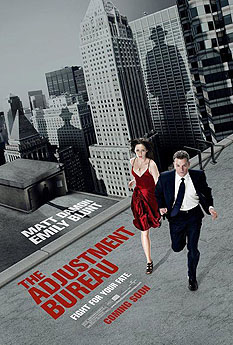 premise for a movie as any. But for it to work, the audience has to believe that Damon’s character is really, truly, irrevocably in love with Blunt’s. And they have to believe this based on a first meeting that lasts three or four minutes.
You can guess what’s coming next: I didn’t believe it. Maybe Damon and Blunt just didn’t do a good job. Maybe the dialogue in the scene where they first met was unusually clumsy. Maybe it’s close to impossible to pull this off in just a few minutes of screen time, and it’s one of those things you have to accept as a premise without really believing it, like light sabers, or the notion that Katherine Heigl has a hard time attracting men.
But anyway, I’m curious: anyone else feel that movies routinely fail to pull off this kind of first act chemistry these days? Did they really do it better in the past? It seems like they did, but I’m not enough of a movie buff to say so with any conviction. What say ye, commentariat?
UPDATE: And the movie overall? Meh. I’ve seen worse. But you can wait for it on Netflix.
UPDATE 2: And how many movies have now been made from Philip K. Dick novels or short stories? According to his Wikipedia entry, nine. Is that some kind of record?
UPDATE 3: What’s more, according to Wikipedia, there’s a French film based on my favorite Dick novel, Confessions of a Crap Artist. I had no idea. It’s called Barjo in its English-language release. Doesn’t seem to be available from Netflix, though.