The Media Loves a Scandal, But Loses Interest When the Scandal Turns Out to be Bogus


This probably won’t come as any surprise, but it turns out that media outlets pay a lot of attention when a shiny new scandal erupts, but a whole lot less attention when the scandal turns out to be a nothingburger. As an example, Brendan Nyhan presents this chart showing coverage of the IRS scandal:
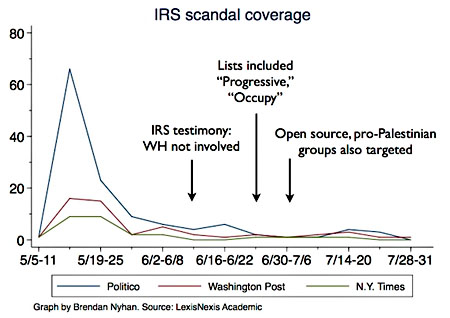
As Nyhan says, this is sort of a subset of the general tendency of the media to pay lots of attention to a new event when it first erupts, and then less as time goes by. This is perfectly normal: public interest in something like the Sandy Hook massacre or the Boston bombings only lasts so long, after all. Eventually there’s nothing new to report and we all move on.

But in the case of an event like the IRS scandal, this can leave the public with a serious misimpression. Everyone heard about it when it first happened, but a month later hardly anyone heard about the new revelations that turned it into a non-scandal. This means that an awful lot of people are left thinking it was a big scandal even though it wasn’t.

I think the most interesting followup question about this is whether this is just normal behavior or whether it’s driven by the fact that conservative media promoted the original story heavily but didn’t promote the followups. Perhaps a bit of both. Stories don’t last forever, and the followup coverage tends to be a lot less exciting than the original allegations. So diminishing attention is hardly surprising. At the same time, it’s hardly plausible that coverage of the followup stories would have been so meager if the Fox/Drudge/Limbaugh axis had been promoting them heavily. Try as it might, the liberal media still doesn’t have the same kind of clout when it comes to driving media narratives.

DECEMBER IS MAKE OR BREAK

A full one-third of our annual fundraising comes in this month alone. That’s risky, because a strong December means our newsroom is on the beat and reporting at full strength—but a weak one means budget cuts and hard choices ahead.

With only days left until December 31, we've raised about half of our $400,000 goal—but we need a huge surge in reader support to close the remaining gap. Whether you've given before or this is your first time, your contribution right now matters.

Managing an independent, nonprofit newsroom is staggeringly hard. There’s no cushion in our budget—no backup revenue, no corporate safety net. We can’t afford to fall short, and we can’t rely on corporations or deep-pocketed interests to fund the fierce, investigative journalism Mother Jones exists to do. That’s why we need you right now. Please chip in to help close the gap.

DECEMBER IS MAKE OR BREAK

A full one-third of our annual fundraising comes in this month alone. That’s risky, because a strong December means our newsroom is on the beat and reporting at full strength—but a weak one means budget cuts and hard choices ahead.

With only days left until December 31, we've raised about half of our $400,000 goal—but we need a huge surge in reader support to close the remaining gap. Whether you've given before or this is your first time, your contribution right now matters.

Managing an independent, nonprofit newsroom is staggeringly hard. There’s no cushion in our budget—no backup revenue, no corporate safety net. We can’t afford to fall short, and we can’t rely on corporations or deep-pocketed interests to fund the fierce, investigative journalism Mother Jones exists to do. That’s why we need you right now. Please chip in to help close the gap.

We Recommend

Latest

Sign up for our free newsletter

Subscribe to the Mother Jones Daily to have our top stories delivered directly to your inbox.

Get our award-winning magazine

Save big on a full year of investigations, ideas, and insights.

Subscribe

Support our journalism

Help Mother Jones' reporters dig deep with a tax-deductible donation.

Donate