Don’t Let Small Differences Fool You. Democrats All Support Pretty Similar Health Care Plans.

Last night’s scrum over health care was a pretty good example of the narcissism of small differences. Among the candidates who are polling above 0 percent, there’s universal agreement that we need to move toward universal health care. The argument, roughly speaking, is over:

  • How fast should the transition be?
  • Should private insurers have no role or a small, regulated role?
  • Should consumers have small deductibles and copays or no deductibles and copays?

There’s not really a whole lot more to it, and these are truly minuscule differences. But the truth is that Democrats don’t have an awful lot to argue about, so they have to turn molehills into mountains wherever they can. It’s the only way to stand out from the crowd.

For what it’s worth, I’d point out that most European countries adopted universal health care bit by bit, not via a single big bang; they vary in their use of private insurance; and they don’t pay 100 percent of health care costs. Here’s the latest OECD data on average out-of-pocket costs in rich countries:
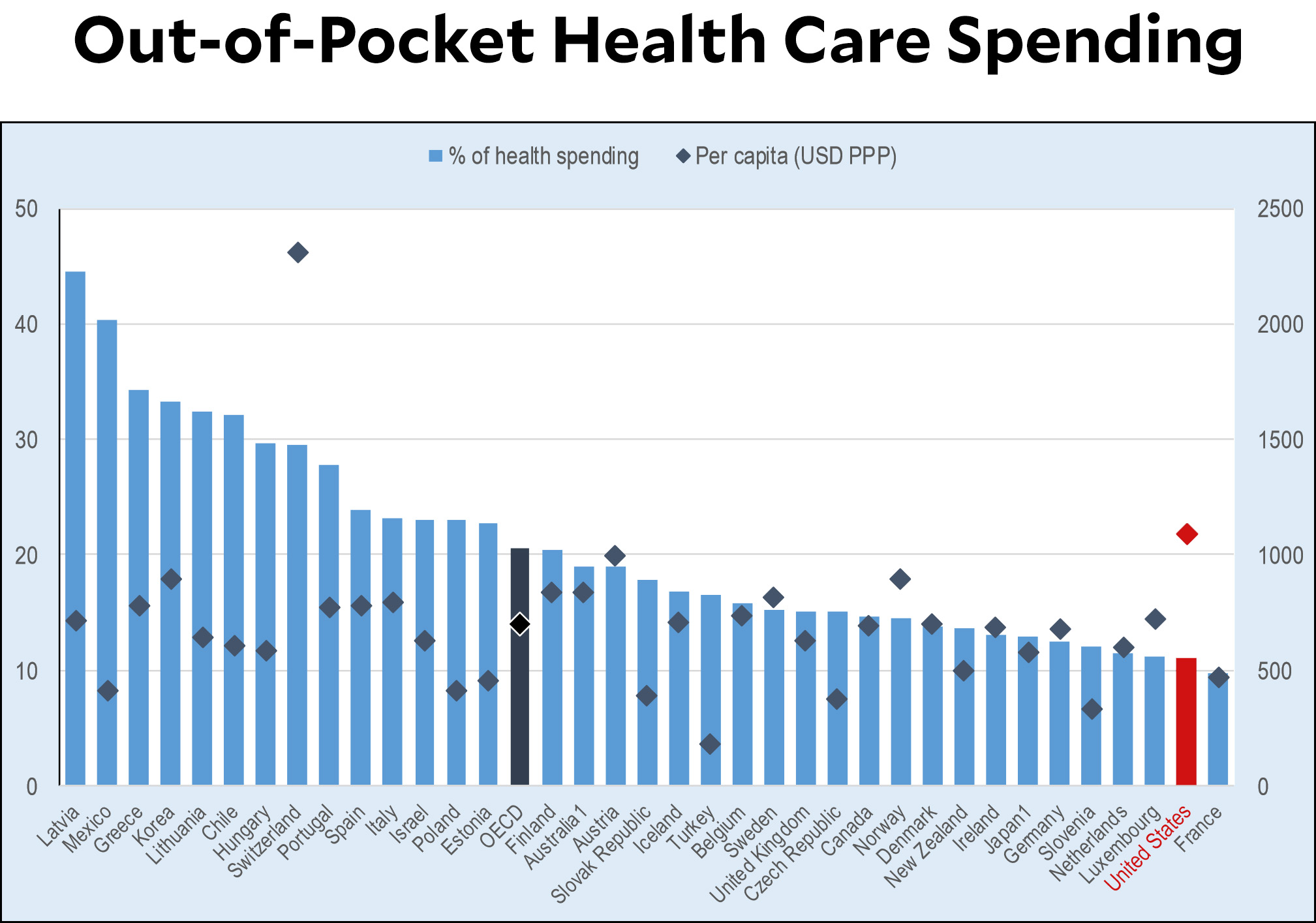
On a percentage basis, the US is actually pretty good on this score. The problem is that our health costs are so high that even a low percentage of OOP spending translates into a pretty high absolute dollar amount. And needless to say, this chart shows only averages. The real problem with the American health care system is that it works OK if you’re not sick but turns brutal when you are. In other countries, your OOP spending is generally pretty limited no matter how high your bill. In the United States, conversely, a big bill can often turn into a household catastrophe.

In any case, while it’s fine to argue about the minutiae of different health care plans, we should all keep in mind that at its core this is a fairly technical policy discussion. You don’t lose your progressive membership card because you support one over another.
DECEMBER IS MAKE OR BREAK

A full one-third of our annual fundraising comes in this month alone. That’s risky, because a strong December means our newsroom is on the beat and reporting at full strength—but a weak one means budget cuts and hard choices ahead.

The December 31 deadline is closing in fast. To reach our $400,000 goal, we need readers who’ve never given before to join the ranks of MoJo donors. And we need our steadfast supporters to give again—any amount today.

Managing an independent, nonprofit newsroom is staggeringly hard. There’s no cushion in our budget—no backup revenue, no corporate safety net. We can’t afford to fall short, and we can’t rely on corporations or deep-pocketed interests to fund the fierce, investigative journalism Mother Jones exists to do.

That’s why we need you right now. Please chip in to help close the gap.

DECEMBER IS MAKE OR BREAK

A full one-third of our annual fundraising comes in this month alone. That’s risky, because a strong December means our newsroom is on the beat and reporting at full strength—but a weak one means budget cuts and hard choices ahead.

The December 31 deadline is closing in fast. To reach our $400,000 goal, we need readers who’ve never given before to join the ranks of MoJo donors. And we need our steadfast supporters to give again—any amount today.

Managing an independent, nonprofit newsroom is staggeringly hard. There’s no cushion in our budget—no backup revenue, no corporate safety net. We can’t afford to fall short, and we can’t rely on corporations or deep-pocketed interests to fund the fierce, investigative journalism Mother Jones exists to do.

That’s why we need you right now. Please chip in to help close the gap.

We Recommend

Latest

Sign up for our free newsletter

Subscribe to the Mother Jones Daily to have our top stories delivered directly to your inbox.

Get our award-winning magazine

Save big on a full year of investigations, ideas, and insights.

Subscribe

Support our journalism

Help Mother Jones' reporters dig deep with a tax-deductible donation.

Donate