• Should the Left Stop Annoying People Over Climate Change?

    Keiko Hiromi/AFLO via ZUMA

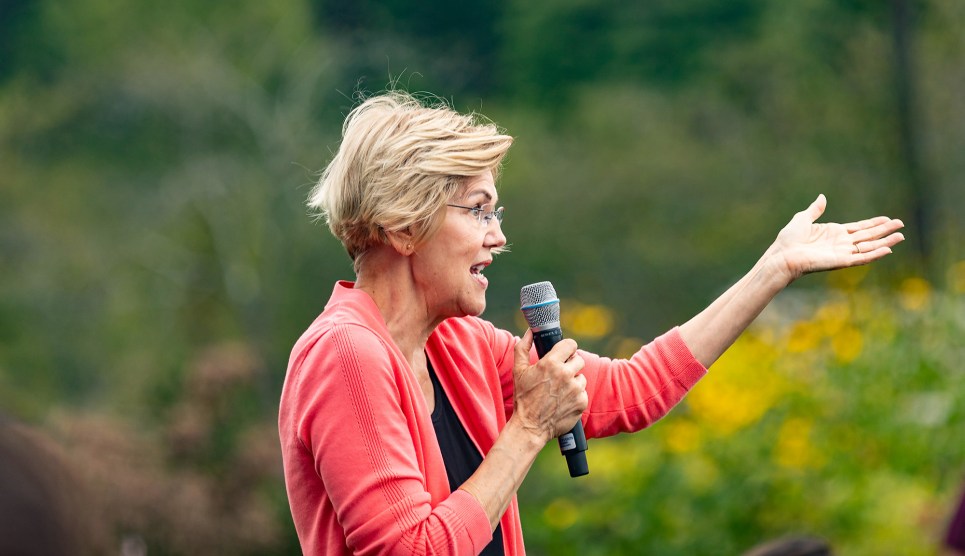
    I didn’t watch yesterday’s CNN climate marathon, but Rebecca Leber reports that Elizabeth Warren won the night after Chris Cuomo asked her about light bulbs:

    The real subtext of his question wasn’t about Trump rollbacks, it was one of the right’s favorite talking points: the argument that climate change requires a major personal sacrifice of individual autonomy to government control.

    “Oh come on, give me a break,” Warren said with exasperation. “This is exactly what the fossil fuel industry wants us to be talking about. That’s what they want us to talk about: This is your problem.”

    There was an inexplicable amount of talk about cheeseburgers throughout an evening that was otherwise filled with substantive climate questions. Throughout the conversations with the candidates, CNN anchors kept returning to questions concerning false fears that a president could take away plastic straws, red meat, and even Amazon Prime. A president can’t and won’t be doing that in 2021. All of those fears about great personal sacrifice come straight from a Fox News obsession with deliberately misreading the non-binding Green New Deal resolution early on.

    This kind of stuff is irritating, but at the same time it really does pose a dilemma for the left. Maybe we don’t want to take away anyone’s cheeseburgers, but we really are the ones who want to regulate light bulbs. And plastic bags. And straws. And SUVs. And urban sprawl.

    You can make good arguments for these regulations and others, but there’s no question that it also gives ammunition to the right. The question is whether regulations like this do enough good to be worth the loss in public support they provoke by being annoying. I don’t have a good answer to that, but the obvious corollary to Warren’s point that “70 percent of the carbon that we’re throwing into the air comes from three industries” is that we should focus our attention on those industries and stop annoying people with light bulb laws and attempts to build high-rises in the suburbs.

    This is a genuinely hard problem, and I don’t have a settled opinion about it. On the one hand, the flip side of annoying people is that it gets their attention—and that’s good. Maybe they’ll kvetch, but they’ll also get the message that it’s time to get serious about climate change. On the other hand, no one thinks that personal commitments to lifestyle changes will ever have a serious impact on global warming. Only large-scale government action can do that. So maybe we should stop annoying people for something that produces little benefit.

    It’s a tough question.
  • Health Care in America: Searching for Ways to Make $2 Million Seem Less Like $2 Million

    The Wall Street Journal reports that health insurers are desperately searching for ways to make expensive treatments somehow seem less expensive:

    Insurers are scrambling to blunt the expense of new drugs that can carry prices of more than $2 million per treatment, offering new setups aimed at making the cost of gene therapies more manageable for employers.

    Cigna Corp. plans to announce Thursday a new program that allows employers and insurers to pay per-month fees for a service that will cover the cost of gene therapies and manage their use. CVS Health Corp. says it plans to offer a new layer of coverage specifically for gene therapies, which would handle employers’ costs above a certain threshold. Anthem Inc. said it is looking at special insurance setups to help employers protect themselves from the financial impact of the drugs.

    The core problem here is that employers end up paying for these treatments, not insurers. If you’re a big company, that doesn’t matter much. It all comes out in the wash. But if you’re a small company, a sudden $2 million increase in your premiums is a killer. That’s the downside of having a small risk pool.

    The answer, obviously, is to quit playing games with insurance companies and move everyone into the biggest risk pool of all: the entire country. This is one of the things that makes universal health care more efficient than our current Rube Goldberg system. Not only can the US government negotiate better prices for new treatments like this, but it can spread the costs far more widely than any single company or insurer. That’s both efficient and sensible.

    But instead of doing the efficient and sensible thing, apparently we’re going to continue spending time arguing about whether Bernie Sanders lied when he said 500,000 people declare bankruptcy every year due to medical debt. The Washington Post fact checker says he did, and has declined to issue a correction despite abundant evidence that Sanders was basically right. Not that it matters anyway. Obviously bankruptcy has many causes, and it’s a matter of judgment whether any particular case is “due to” medical debt. You can probably make a case for any number you want. But the bottom line is that whatever the number is, it’s too big. And anyway, it’s a small fraction of the number of people who don’t declare bankruptcy but are put in severe financial trouble just because they got sick. Why do we put up with this idiocy?

  • Donald Trump Goes Full Queeg Over Alabama

    On Sunday, President Trump tweeted this:

    Alabama? The National Weather Service in Birmingham quickly tweeted a correction:

    Normally this would be the end of things: a minor mistake quickly straightened out. But then it made the news, and since TV is the only reality Trump cares about he naturally went into a frenzy:

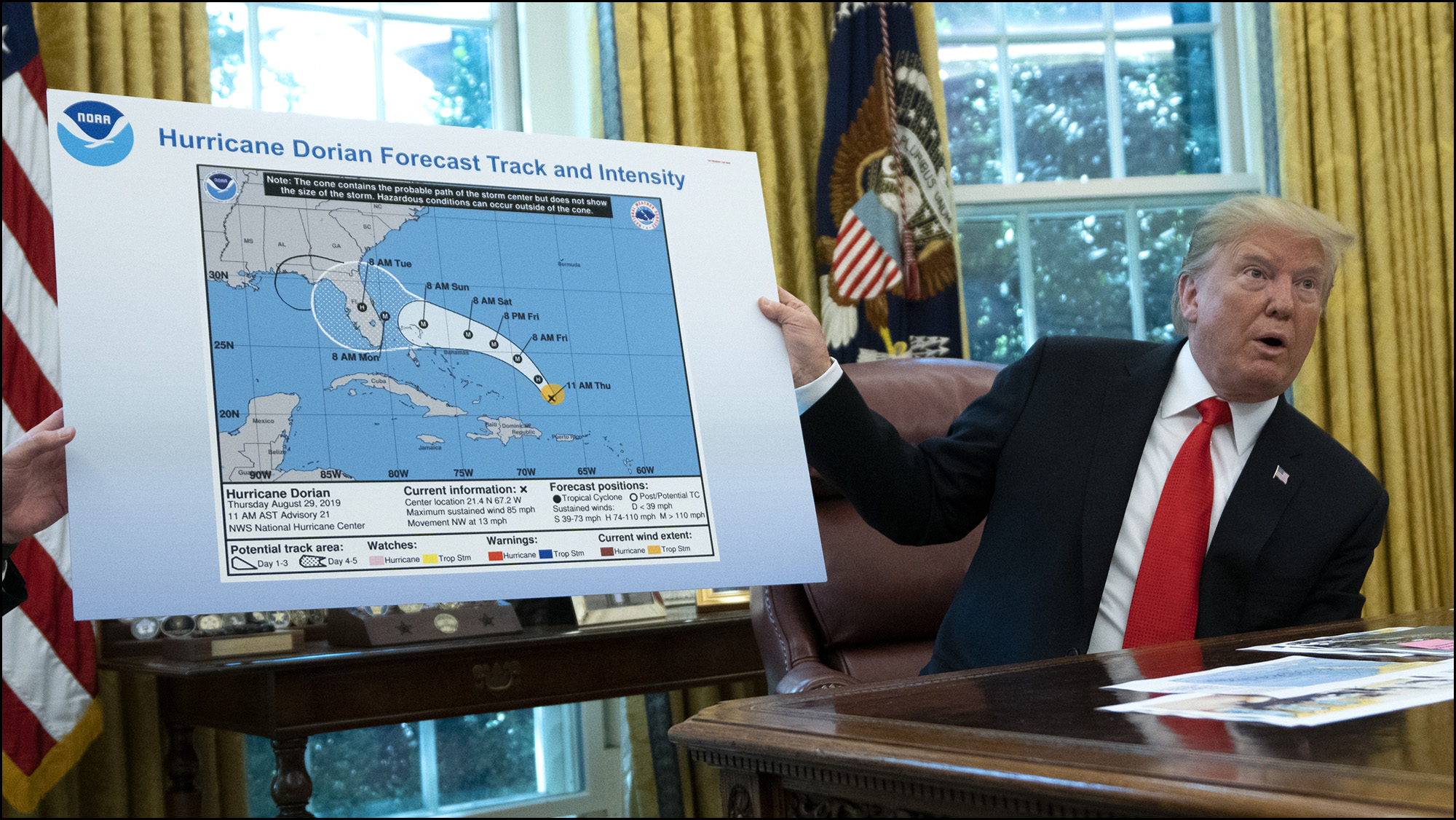
    No, it wasn’t true, and two days later Trump still couldn’t let it go, trotting out this visual aid for reporters in the Oval Office:

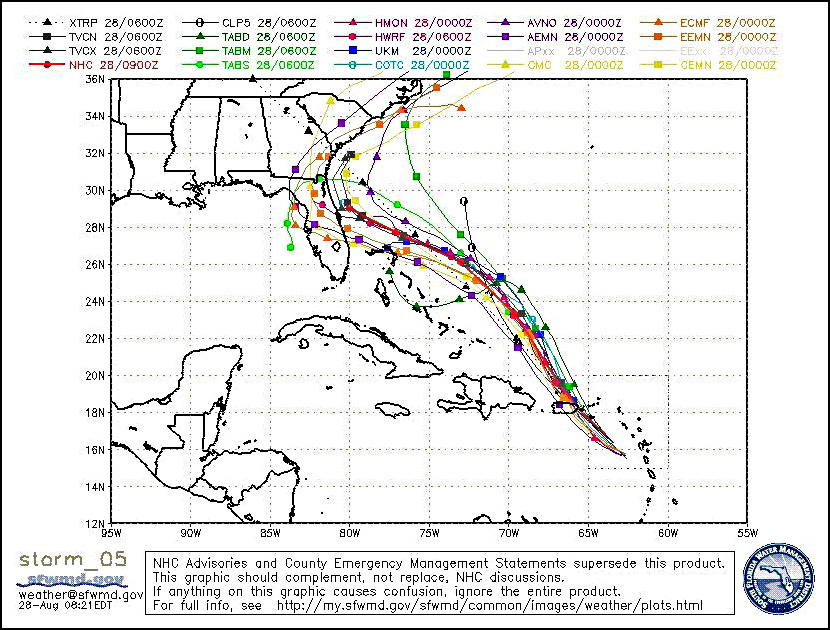
    This map from last week shows Dorian tracking toward Florida, but someone used a big Sharpie to add Alabama to the probable path. Trump insisted that this was in the original briefing and that he didn’t know who had added the Sharpie line. Uh huh.

    But wait! Believe it or not, there’s more. Apparently thinking that he hadn’t embarrassed himself enough already, he took this spaghetti plot:

    Which is already pretty useless for non-professionals, and dug up one with lots of underlying “ensemble” spaghetti that’s completely meaningless without expert translation:

    This is truly Queeg-like behavior: an unhinged obsession over the most minuscule imaginable criticism combined with repeated defenses so clumsy that even a child would see through them. And it’s obvious that Trump spent a fair amount of time stewing over the whole thing and coming up with these absurd maps.

    This is truly nuts. But I suppose by tomorrow the official word will be that Trump was joking all along.

    UPDATE: This post has been updated with a more detailed description of the spaghetti plots.

  • Kamala Harris Gets a D- For Her Climate Plan

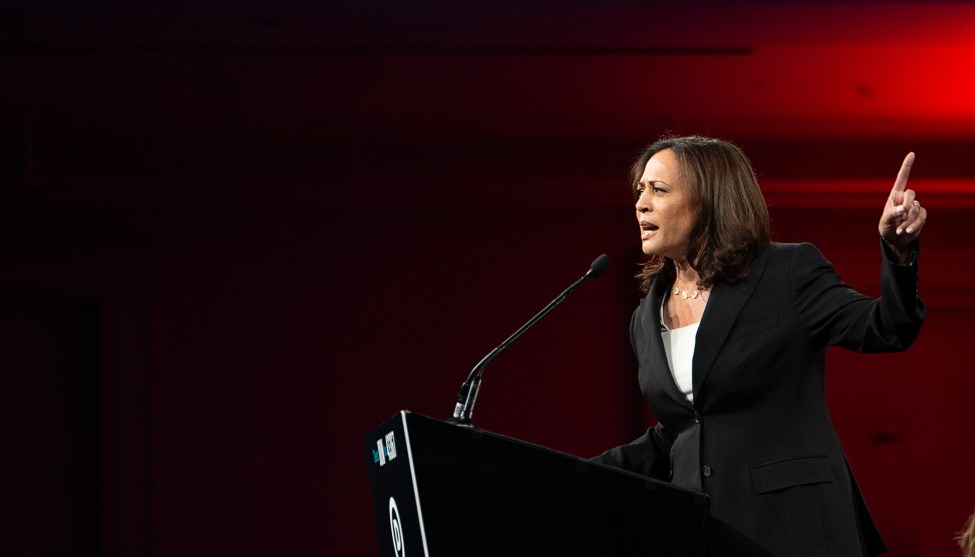
    Paul Kitagaki Jr./ZUMA

    Kamala Harris has released her climate plan, and I’m sorry to say that it’s a dog’s breakfast. I don’t really even want to evaluate it, but I suppose I have to. Here are the highlights:

    • I have no idea how big it is. Harris says her plan calls for “$10 trillion in public and private funding,” which is meaningless except to get her headlines that call it a $10 trillion plan. The only thing that matters is direct public spending, and she doesn’t put a number to that.
    • “Pillar 1” of her plan—presumably the most important part—is “A Foundation for Justice.” I’m all for justice, but it has little to do with keeping the planet from burning up.
    • Pillar 2 is “Holding Polluters Accountable.” Getting revenge on oil companies is lovely, I’m sure, but also does nothing to keep the planet from burning up.
    • Pillar 3 finally gets to climate-related proposals. Harris says she will generate 100 percent of our electricity with renewables by 2030, which is laughable, and get to a completely carbon-neutral economy by 2045. This frankly sounds more like lefty one-upmanship than a serious plan.
    • Pillar 3 is surprisingly hazy. It has lots of details, but only barely mentions buildout of solar and wind. Harris talks about electric buses and cash for clunkers and various tax credits, but says nothing about spending on renewable infrastructure, which is far more important.
    • There’s a small section about R&D, but it’s vague and, as usual, contains no actual dollar commitment. It does, however, contain stuff like this: “She would work with Congress to pass STEM diversity legislation, including her Combatting Sexual Harassment in STEM Act and 21st Century STEM for Girls and Underrepresented Minorities Act. Additionally, Kamala has proposed a $60 billion plan to boost STEM at Historically Black Colleges and Universities and other minority serving institutions.” Seriously?
    • There is nothing about nuclear either pro or con. Harris is apparently afraid of taking a stand on this.
    • Pillar 4, once again, has nothing to do with climate change.
    • Pillar 5 is “Asserting International Leadership.” This is good. It’s nice to see a significant chunk of her plan acknowledging that we have to do more than just reduce carbon emissions in America. The details of this are a little fuzzy, but I think that’s probably inevitable.

    I hate to be so harsh toward a candidate that I like, but Harris’s plan reads to me more like a 10,000-word pander than the work of someone who has genuinely spent any time on climate change and takes it seriously.

    I have updated my summary of all the Democratic climate plans here.

  • Lunchtime Photo

    This is a picture of a pretty little wildflower taken shortly after a rainshower in Sumapaz National Park in Colombia. I’ve been unable to identify it, and there’s not a lot to go on here. Still, perhaps the hivemind can help. Does anyone know what this is?

    August 8, 2019 — Sumapaz National Park, Colombia
  • Climate Change Is Our Only Existential Problem

    MHJ/Getty

    Michael Grunwald is no climate squish. He’s all in favor of radical action to fight global warming. But he’s not so sure about using it as a pretext to socialize the entire economy:

    Then there’s the other climate radicalism, the GND idea that focusing on climate isn’t enough, that the entire system needs to change….The left is saying yes, we have a climate emergency, but also a health and jobs and justice emergency, all equally urgent. Conveniently, the left says the solution to all these emergencies is the same bold agenda the left pushed before the climate emergency. But politically, adding universal health care and the rest of the never-enacted liberal agenda to the climate ask seems risky, too.

    I am willing to be less polite than Grunwald: this is madness. Either climate change is an existential problem or it’s not. If it is, then everything takes a back seat to finding a solution. If that requires progressives to compromise, then we compromise. What we certainly don’t do is pile on an endless list of additional demands that makes it ever less likely to gain a political consensus that we need to take serious action.

    Climate change has already exposed the worst of conservatism, but it poses a test for progressives too. We have our own comfort zone and we naturally prefer climate plans that fit nicely into that zone. But what if the plan most likely to work is outside the zone? What if it includes some regressive tax elements? What if it requires that we expand our use of nuclear power? What if it takes priority over other things like universal health care and free college? What if it requires us to essentially bribe the fossil-fuel industry into cooperating?

    I’m not saying it requires any of those things. But it might. Are we still willing to fight for whatever is truly most likely to work? How willing are we to move outside our comfort zone in order to avoid planetary suicide?

  • Parliament of Cowards

    Kevin Drum

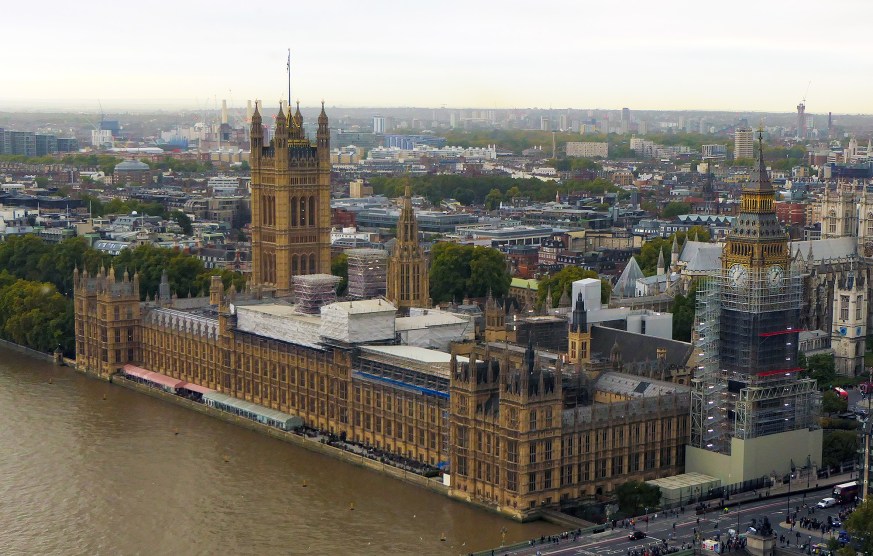
    If Boris Johnson weren’t such a blithering jackass I’d almost feel sorry for him. I mean, what does Parliament want? They refused to accept Theresa May’s Brexit deal. They refuse to exit without a deal. They refuse to call a snap election. They refuse to hold a second referendum. They’ve basically refused to do anything.

    Personally, I think a majority of MPs understand by now that Brexit is just a bad deal, but too many of them are afraid to say so publicly. They’re cowed by the Murdoch-indoctrinated old guy in Manchester who’s by God tired of Poles coming over and not speaking the Queen’s English very well. You’d think a few more of them could bravely stand up against the massive 52 percent Brexit vote and just call for a new referendum, but I guess not.

  • Is Tax-and-Dividend a Good Idea?

    Mother Jones illustration; Getty

    Yesterday I wrote that carbon taxes, by their nature, are regressive: they hurt poor families much more than richer families. To take care of this, most carbon tax proposals these days are versions of “tax and dividend,” in which part of the money is rebated to low-income families. I didn’t think much of that:

    But now you have a different problem. The whole point of a carbon tax is to make energy more expensive so that people will use less of it. But if you just give the money back, it means people can use their dividend to partially offset that higher cost. They can go on using the same amount of energy as always with minimal pain.

    This immediately brought me into the crosshairs of a surprisingly eminent group of economists, who unanimously say this just isn’t true. And according to conventional economics, they’re right. Here’s the argument:

    Let’s say you double the price of gasoline from $3 to $6. That would raise about $2,000 from the average person. The goal, obviously is to get people to use less gasoline by making it more expensive compared to other options. Some people might start taking the bus to work. Some people might trade in their gas-guzzler for a Prius, or maybe even an electric car. Others would just cut down on driving around town.

    But the effect on the poor would be dramatic. An extra $2,000 expense is bad enough if you earn $60,000 per year, but it’s devastating if you earn $20,000 per year. So let’s say we rebate $1,500 to all low-income families. It still causes them some net pain, but it’s now proportionate to what middle-class families feel.

    So far so good. But here’s where the disagreement comes in. Conventional economics says the rebate has no significant effect on buying behavior. It’s just a slug of money that increases your income a bit. The price of gasoline is still way higher than it was before, and a slight income increase doesn’t change that. You still have roughly the same motivation to cut back that you did before.

    But I don’t believe this, even though it’s textbook micro. Here’s the thing: this is a carbon tax rebate, and humans are not rational actors. That matters. There are three things that are likely to interfere with the textbook version of how a rebate would work:

    • Mental accounting. This is a cognitive bias attributed to Richard Thaler and supported by a considerable amount of empirical evidence. What it says is that although people should treat all money the same, in reality they don’t. They mentally put money in compartments where it’s “saved” or “reserved” for specific things. In the case of a gasoline tax rebate, people would almost certainly view it as “gasoline money” designed to offset the higher cost of gasoline. This lessens the incentive to cut back produced by the higher price.
    • Loss aversion. This is a well-known cognitive bias and it means that people really, really hate to lose things they already have. It’s normally applied to goods and money, but it applies to lifestyle changes too. Most people hate to cut back on things they’re used to far more than is rational given the strict dollar value of the cutback.
    • Elasticity. This is specific to carbon taxes. Long experience has shown that high prices for gasoline and other forms of energy have only modest effects on consumption. One of the reasons is that for most people in most places, there are very few good substitutes for a car. So if gasoline prices go up, you suck it up somewhere else instead of cutting down on your driving. This means that carbon taxes tend to have modest effects to begin with, and this is the backdrop against which the two cognitive biases above play out.

    Now, just to be crystal clear here: I’m not saying that a rebate eliminates the effect of higher gasoline prices. But I am saying that it weakens it, and I think it would be worth some study to figure out just how effective a tax-and-dividend plan would be in real life. My own guess is that at modest levels it would end up being too weak to be worthwhile, and at high levels it would be politically impractical. But that’s just my guess.

    POSTSCRIPT: There’s an oddity here that might have already occurred to you. If a carbon rebate activates a mental accounting bias, why not just rebate the money some other way that’s not associated with the carbon tax? And we could do that. For example, we could impose a gasoline tax and pair it up with a reduction in the Social Security tax, which would favor poor families. Would that work? Probably! That really would be a slug of money out of nowhere and families would (a) barely notice it, and (b) not associate it with anything in particular. They’d just compare their income to the price of stuff they want to buy, and since the price of gasoline is way higher than it used to be, they’d buy less of it.

    That seems pretty peculiar, but severing the rebate from the tax really would be a smart move. You’d still have elasticity problems to deal with, but even those get more tractable over the long term.