• I Have a Question for High School Guidance Counselors in Michigan

    Annie Ma writes today about a new study at the University of Michigan that tests a simple intervention to get more applications from smart kids who can’t afford UM’s tuition:

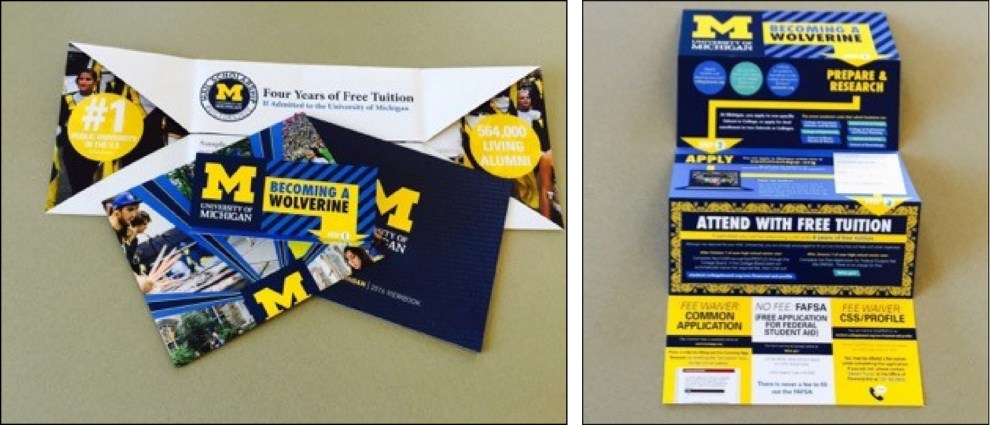
    A new working paper suggests that removing those barriers with a promise of financial aid can significantly increase the number of low-income students who apply to and enroll in a selective college….The school sent personalized mailers to high-achieving, low-income students, their parents, and their principals, telling them that if the students got into UM they’d get full tuition because they qualified for a High Achieving Involved Leader Scholarship.

    Of the students who received the letters, 67 percent applied to UM—more than twice the rate of the control group, made up of similar students who only got a postcard informing them of the school’s application deadlines. The group that heard about the scholarship was also twice as likely to enroll at UM; 27 percent of them did.

    But wait. Perhaps UM is merely poaching kids who would have gone to another selective university if UM hadn’t sent the packet? The researchers say no: “Nearly half of HAIL’s effect on enrollment is diversion from two-year colleges and non-attendance. The other half of the enrollment effect is drawn from four-year colleges that are less selective than University of Michigan….Typical among the target institutions mentioned by students were regional, four-year institutions such as Grand Valley State, Ferris State, Central Michigan University, Wayne State University, and Eastern Michigan University.”

    Let’s take this at face value: a simple packet telling low-income students about state financial aid that they already qualify for increased applications from 26 percent to 67 percent and admissions from 12 percent to 27 percent. At the risk of displaying terminal naivete, WTF is going on here? If mere knowledge of state aid programs is all it takes to make a huge difference in application and enrollment, what are high school guidance counselors doing these days?

    I know, I know, they’re overworked and underpaid and spend a ton of time on ADHD kids and personalized plans for disabled kids and so forth. I get that. But advising bright kids about their college options and letting them know about financial aid they qualify for—isn’t that part of their core mission? Are they doing it, but somehow a blue and maize mailer is wildly more convincing? Or are they not doing it at all, and the mailers come as a surprise to the families that get them?

    I demand another study.

  • Kansas Farmers Are Finally Seeing Climate Change With Their Own Eyes

    Curt Dennison/Planet Pix via ZUMA

    The Guardian talks to Richard Oswald, a farmer in Kansas:

    “When I was a kid, my dad would say an inch of rain was a good rain. That’s just what we needed. Now we get four inches, five inches, six inches in one sustained wet spell that lasts two or three days. I don’t ever remember that as a boy. I’ve never seen the sustained wetness in the land that we have now.

    ….Before the flood in 2011, Oswald, a Missouri river valley crop farmer, was skeptical about the warnings that rising temperatures heralded a more difficult future. Since then, the routines of planting and harvesting that his family has pursued on the same land for five generations have given way to a haphazard cycle governed by waves of extreme heat and intense rains.

    ….A decade ago, Oswald was on the fence about climate change. “At a certain point you just have to look at what’s going on in your own world and try to decide what you think the impacts of that are,” he said. “One of the problems farmers have is when we start talking about environment, a lot of times Sierra Club comes to mind and Sierra Club is pretty radical in their approach. When you have a group that says cows are the problem, you need to get rid of all the cows, and raising corn is a problem, we need to get rid of all the corn, then you’re not going to have a lot of farmers who want to join in and follow you,” he said.

    Still, Oswald believes that denial is in retreat. Where farmers, including him, were once skeptical they now see the change with their own eyes.

    Several years ago I wondered how bad climate change would have to get before skeptics finally accepted the evidence of their own eyes. I figured it would happen at least by 2024:

    Trend #4: The fact of climate change will become undeniable. The effects of global warming, discernible today mostly in scary charts and mathematical models, will start to become obvious enough in the real world that even the rightest of right wingers will be forced to acknowledge what’s happening.

    I’m still not seeing much evidence of this with only five years to go. But who knows? Maybe farmers will lead the way among the right-wing coalition.

  • Is America Taking Hostages Over Trade Negotiations With China?

    Alexei Druzhinin/TASS/ZUMA

    For several months the United States has sought to arrest Meng Wanzhou, the CFO of Chinese tech giant Huawei, on fraud charges related to the evasion of sanctions on Iran. Earlier this month, they asked the Canadian government to take her into custody during a layover at Vancouver airport, which they did. The Justice Department is now fighting an extradition case so they can try her in a US court.

    China’s leaders are not thrilled about this, of course, and it’s one of many things we’re at loggerheads over. Today Donald Trump was asked about her case:

    When asked if he would intervene with the Justice Department in her case, Trump said in an interview with Reuters: “Whatever’s good for this country, I would do.”

    If I think it’s good for what will be certainly the largest trade deal ever made — which is a very important thing — what’s good for national security — I would certainly intervene if I thought it was necessary,” Trump said.

    Let me get this straight. The president of the United States is suggesting that in order to close a trade deal with another country, he would offer to release one of its citizens who’s on trial for criminal conduct. But if they don’t agree on a trade deal, then this citizen will be tried and most likely tossed into prison.

    In other words, Trump is treating Meng Wanzhou as a hostage pending concessions from China over trade relations.

    Do I have this right? Am I missing some nuance? This hasn’t gotten a ton of play in the press, but it seems like a big deal even in the Trump era. It’s the kind of thing thug states and banana republics do, not democratic nations dedicated to the rule of law.

    Am I taking this too seriously? Or is it as shocking as I think it is?

  • Lunchtime Photo

    On Sunday I was up at the LA County Arboretum to see their annual “Moonlight Forest” display. Just as I was about to leave, I wandered down a path into a little area where it turned out they were staging a show of young folks performing traditional Chinese dancing and acrobatics. Naturally I stayed to take a few pictures.

    It’s a funny thing. For years I’ve been telling people that the best photography investment they can make is a monopod, but I’ve never had one myself. I always just used my tripod. However, the arboretum doesn’t allow tripods on the premises, so I bought myself a cheap monopod and used it all evening. It was great! I’m glad to learn I’ve been giving people good advice all these years. The best display of its prowess is below, two frames from a series of pictures of a Chinese dancer. After experimenting for a bit, I settled on a shutter speed of a quarter of a second in order to get a blurred sense of movement from the dancer. The results were spectacular, and as you can see, the background is nice and crisp, which means the monopod kept the camera steady even at a very slow shutter speed. Three cheers for monopods!

    December 9, 2018 — LA County Arboretum, Arcadia, California
  • Donald Trump Tried His Best to Ruin Obamacare, But He Failed Utterly

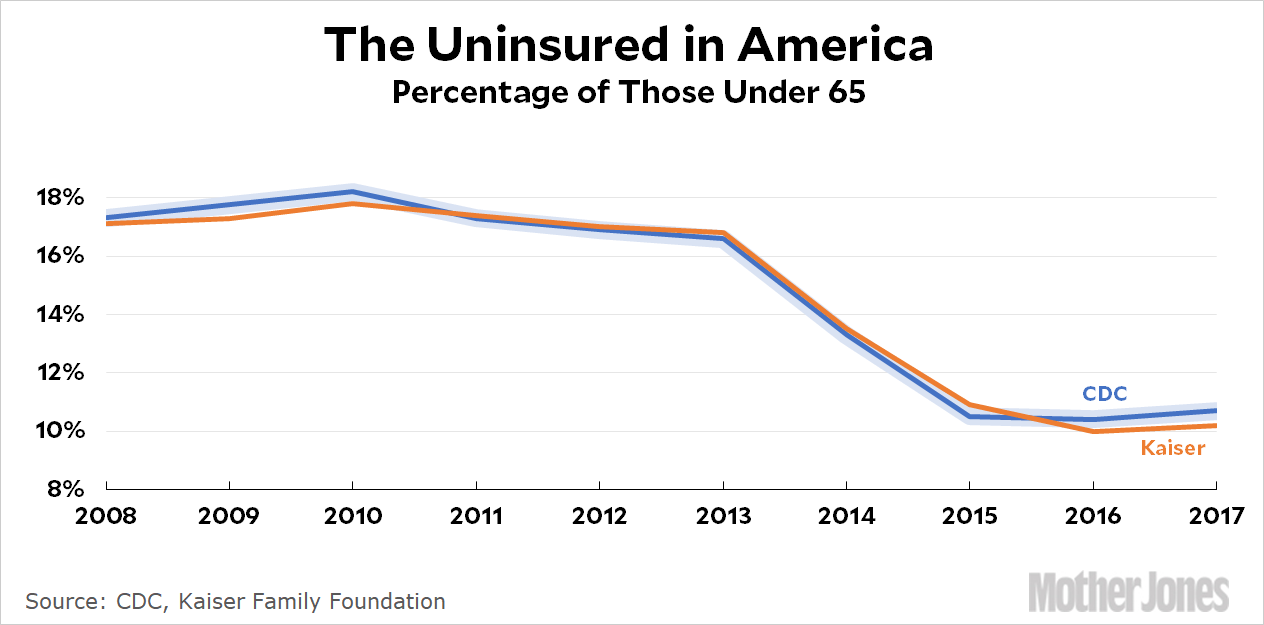
    Here’s a chart showing estimates of the uninsured from two reliable sources: the CDC and the Kaiser Family Foundation.

    As you can see, both ticked up slightly in 2017 by about three-tenths of a percentage point. Is this Donald Trump’s fault? It could be. He certainly tried his best. On the other hand, the CDC survey includes standard error bars, which are represented by the light blue on the chart. Any change within that light blue could be real or could just be a statistical artifact that will go away during the next few surveys.

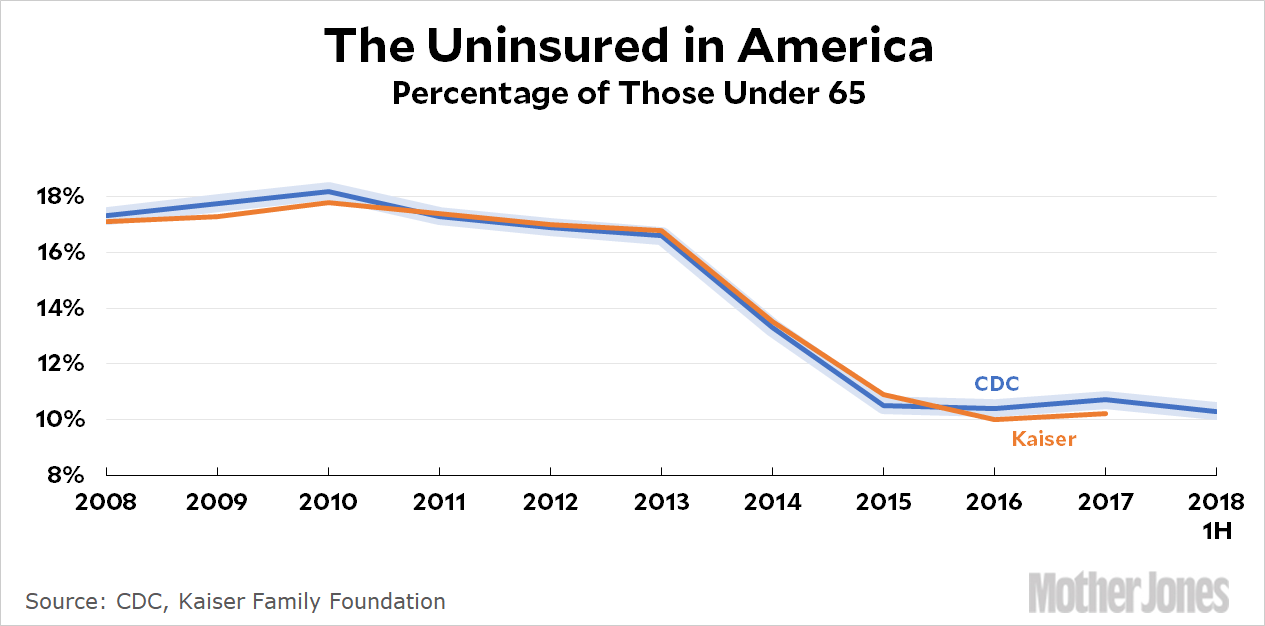
    So which is it? Well, the CDC has done two quarterly surveys so far in 2018, and the uninsured rate for January-June is down four-tenths of a point. For the time being, then, I think the best guess is that the uptick in 2017 is just a meaningless statistical artifact. Donald Trump tried his best, but in the end he accomplished nothing at all. Here’s an up-to-date chart:

  • Here’s How the Rich Get Their Money’s Worth From Republicans

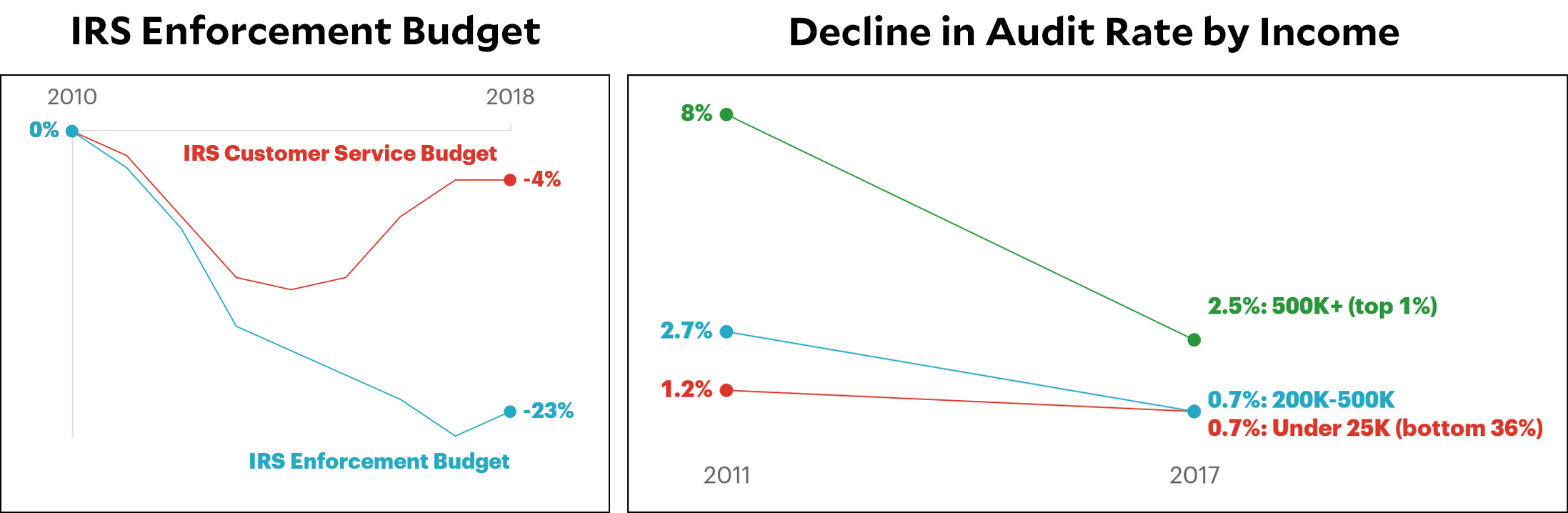
    Paul Kiel and Jesse Eisinger write today about “How the IRS Was Gutted.” The nickel answer to the question is easy: The IRS was gutted by Republicans who didn’t like having their rich friends audited all the time. For the longer answer, you’ll have to click the link and read the story. In the meantime, however, here are two charts:

    On the left, you can see that the IRS enforcement budget has been slashed since 2010. But it’s the chart on the right that shows exactly what effect that’s had. Poor folks have seen a small decline in audits of their little annual EITC payments, but that was always peanuts anyway. The real revenue-loser is in the green line, showing that audits of rich people have plummeted from 8 percent to 2.5 percent. If you’re rich, the odds of being audited has gone down by two-thirds over the past decade or so.

    This GOP war against the IRS has been going on since the mid-90s, when Republicans first started describing IRS agents as jackbooted thugs knocking down doors at midnight and scaring the women and children. But in 2010 Republicans won control of the House. Finally they could really do something to help their donors. And they did. They trashed the IRS enforcement staff and cut the revenue from audits by more than a third, from $23 billion to $14 billion. Mission accomplished.

  • Quote of the Day: “This is most likely the largest cartel in the history of the United States”

    Roman Vondrous/CTK via ZUMA

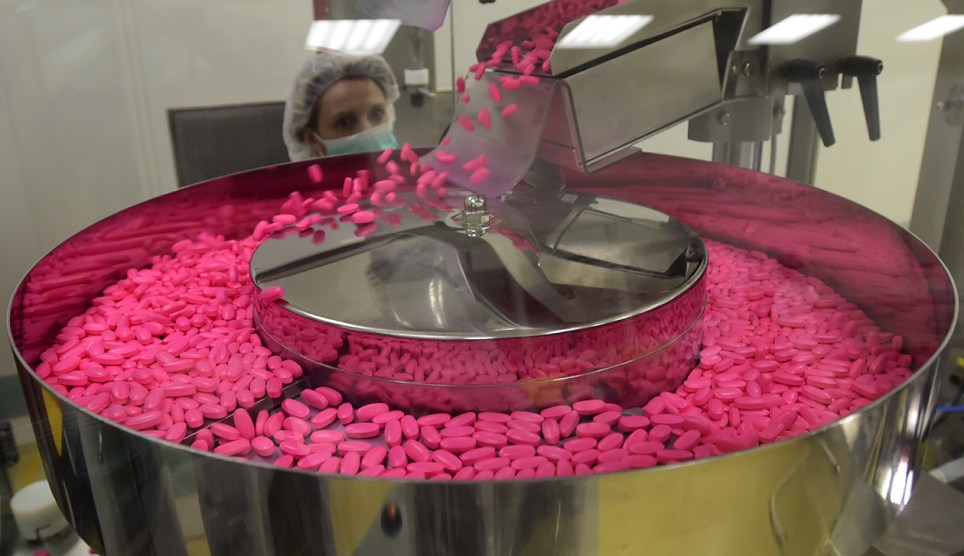
    Aren’t generic drugs great? Once a drug patent expires, generic manufacturers are allowed to copy the drug and sell it for far less than the brand name. Since the production cost of most generics is just a few pennies per pill and competition is fierce, this is a great deal for consumers.

    More accurately, it would be a great deal if all the generic manufacturers weren’t conspiring with each other to fix the price of generic medications. However, if the US government is to be believed, executives at these companies meet regularly to split up the market like gentlemen and keep prices nice and high. Naturally they’ve developed their own special patois:

    The “sandbox,” according to investigators, was the market for generic prescription drugs, where everyone was expected to play nice. “Fair share” described dividing up the sales pie to ensure that each company reaped continued profits. “Trashing the market” was used when a competitor ignored these unwritten rules and sold drugs for less than agreed-upon prices.

    ….What started as an antitrust lawsuit brought by states over just two drugs in 2016 has exploded into an investigation of alleged price-fixing involving at least 16 companies and 300 drugs….“This is most likely the largest cartel in the history of the United States,” Nielsen said. He cited the volume of drugs in the schemes, that they took place on American soil and the “total number of companies involved, and individuals.”

    ….In just one instance of extraordinary cost spikes, the price of a decades-old drug to ease asthma symptoms, albuterol, sold by generic manufacturers Mylan and Sun, jumped more than 3,400 percent, from 13 cents a tablet to more than $4.70. The example is documented in a lawsuit brought against the generic industry by grocery chains including Kroger.

    ….The alleged collusion transformed a cutthroat, highly competitive business into one where sudden, coordinated price spikes on identical generic drugs became almost routine. Competing executives were so chummy they had an alphabetical rotation for who picked up the tab at their regular dinners, according to a person familiar with the investigation who spoke on the condition of anonymity because the case remains under investigation.

    This is why we have antitrust rules. I sure wish we used them more often, not just in open-and-shut cases like this.

  • Lunchtime Photo

    I mentioned on Thursday that I had replaced a picture of a bird at the last minute in order to post a picture of a rose that had been rained on. Here’s the picture that got bumped. The bird itself is just a common duck, but I was lucky to catch it in flight near the sun an hour before sunset. Someday I’d like to get a picture like this of a flock of Canada geese, but that will require me to be at just the right place at just right time and then to snap the shutter at just the right moment. And it will require the autofocus to work perfectly. So far that hasn’t happened.

    April 8, 2018 — Irvine, California
  • Donald’s Next Deal: Handing Afghanistan Over to the Taliban

    From the LA Times:

    The Trump administration is pressing to open formal peace talks with insurgents in Afghanistan by April, a timetable driven by the president’s mounting impatience with the stalemated 17-year-old war. The short-term goal, current and former officials say, is a cease-fire agreement to at least temporarily curtail an alarming rise in attacks by Taliban insurgents that have caused hundreds of Afghan civilian and military casualties a month.

    But prospects for a far-reaching political settlement still appear dim….Without signs of progress in coming months, Trump could face the same dilemma as his predecessors: withdraw all or most of 14,000 U.S. troops and risk a Taliban takeover, or leave them there indefinitely, even though he and his advisors consider the war unwinnable.

    I’m sure the Dealmaker-in-Chief will have no problem with this. Just like he’s had no problem negotiating with China, North Korea, Canada, Mexico, Russia, and about half of Europe.

    But the thing that should make it go really swimmingly is that he’s apparently made it plain that he’s sick of the whole war and just wants to withdraw. That’s exactly the kind of thing that usually brings fanatical insurgents to the table, amirite? Nice work, Donald.

  • Today’s Outrage: A 14-Year-Old Tweeted Anti-Gay Slurs Back in 2011

    Scott Gleeson, USA Today reporter.

    Here’s an entry from my once-in-a-blue-moon series “I Agree With a National Review Writer.” It’s my way of showing that we could all get along if only we’d restrict ourselves to a tiny subset of the political issues that divide us.

    You may have heard that Oklahoma quarterback Kyler Murray won the Heisman Trophy on Saturday. Good for him! — although personally I thought Alabama quarterback Tua Tagovailoa should have gotten the nod. But shortly after his win, the entire country learned that he had written some homophobic tweets and he was forced to apologize for them.

    I was busy and didn’t really know about this until this morning, when I read that the tweets were six years old. Six years old? The guy is a sophomore. So, um, subtract 19 and carry the four and he was—

    Fourteen years old when he wrote those tweets. That’s eighth grade, isn’t it? Without any kids of my own, I’m a little fuzzy on this. Anyway, here is Charles Cooke:

    All shame to Scott Gleeson, of USA Today, who waited until the exact moment that Murray had been selected for the award before amplifying a national shaming campaign that had been built atop a handful of tweets that Murray wrote when he was 14….Gleeson’s story begins with these words:

    Heisman Trophy winner Kyler Murray had a Saturday to remember. But the Oklahoma quarterback’s memorable night also helped resurface social media’s memory of several homophobic tweets more than six years old.

    Ah, I see. It was Murray’s “memorable night” that “helped resurface social media’s memory of several homophobic tweets more than six years old,” and not, say, Scott Gleeson — and others in the press — who decided to run with the story and hype it all around the Internet. How tough it must be to serve as a bystander to your own work!

    ….What, one has to ask, is the public interest angle here? Fourteen-year-olds say stupid things constantly. Yes, all of them. What possible good can it do to punish them as adults for the thought crimes they committed as minors? Had Murray committed an actual crime — say, shoplifting or joyriding or the like — it would likely have been expunged from his record when he reached the age of majority, especially given how impressive a young man he has become in the interim. And even if it hadn’t, the press would likely have been circumspect about bringing it up. But tweets? Apparently, we just Have to Know — and on the day of his triumph, to boot.

    Cooke is right. This stuff has gotten way out of hand. It’s one thing if we’re dealing with adults. Or if the tweets are a year old. Or if they reveal something truly newsworthy. But dumb anti-gay tweeting from a 14-year-old? Back in 2011? Come on. This accomplishes nothing except to convince people that the cultural tolerance movement has completely jumped the shark. Knock it off.