• Two Things Can Be True at Once: Class Warfare Edition

    Matt Yglesias quotes Cory Booker:

    “I am so frustrated with the obvious changes going on between my dad’s age and now,” said Sen. Cory Booker (D-NJ) delivering a stem-winder of a midday keynote address Tuesday at the Ideas Conference, hosted in Washington by the Center for American Progress to celebrate its 15th anniversary. “It’s like we inherited this incredible house from our parents and we trashed it.”

    ….Without stinting the importance of the civil rights movement, he also argued Tuesday that “you don’t even need to use race as one of the lenses” to understand how kids born into low-income families are disadvantaged in life. He said explicitly that when he read Hillbilly Elegy and other work about poor rural whites, it reminded him of his neighbors in Newark. “My neighbors are incredible folks who work hard — in many cases, they work harder — than their parents did, but they’re making less money.”

    Here’s the closest I can come to showing how median income has changed over the past half century for Booker’s neighbors in Newark:
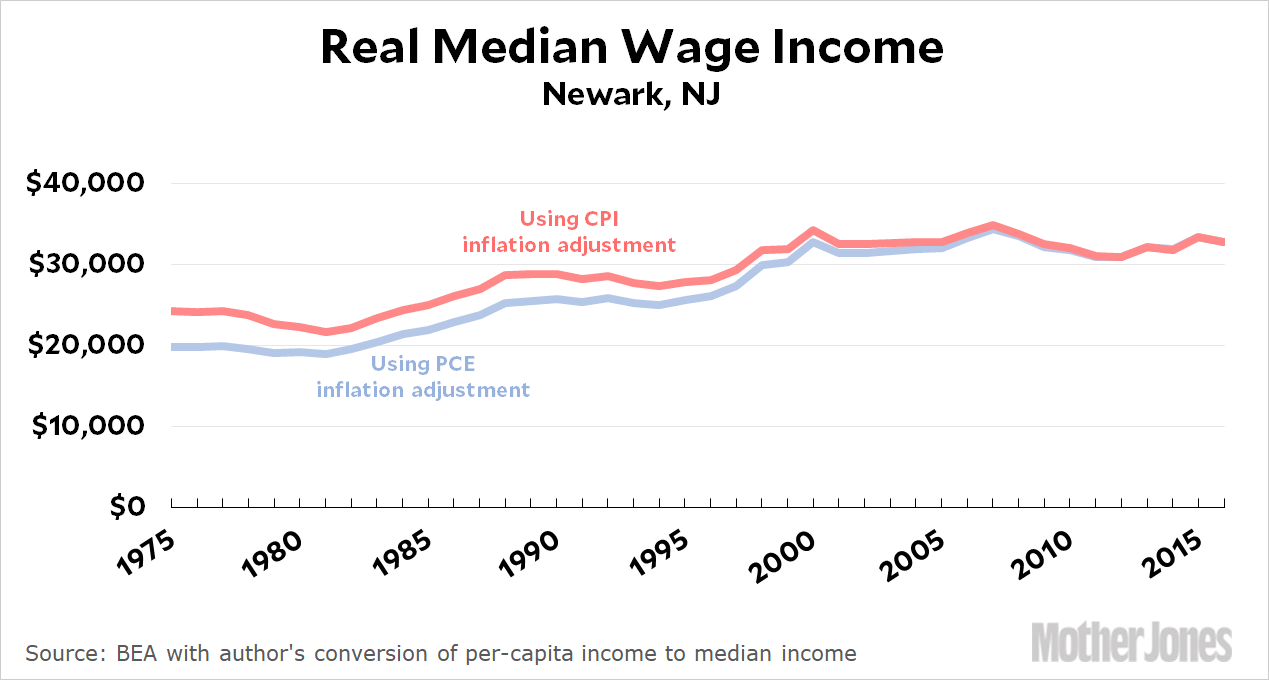
    This chart is not perfect. “Newark” includes the entire Newark metro area, not just the city itself. And there’s no data for median income, so I had to perform a rough-and-ready conversion of per-capita income to median income based on national data. That said, this chart probably understates Newark’s income growth anyway. It includes only ordinary wage income, not income from dividends or interest or capital gains or Social Security or any other government transfers. Nor does it include noncash income like Medicaid or CHIP. If you add in all those things, the life of the average Newark resident hasn’t gotten 50 percent better since 1975, it’s gotten more like 100 percent better.

    I find myself in a weirdly precarious position these days. I pretty firmly believe that the explosion of income inequality since 1980 has been a disaster for America. Sluggish income growth, which eventually turned into completely stagnant income growth, has sapped the spirit of the average middle-class worker, who grew up still believing that life was supposed to get better and better every year thanks to the growth of the American economy. By the early 90s that had turned into a faint memory, and after 2000 it was just a sick joke. Meanwhile, the rich just kept on getting richer and richer as wages were squeezed in order to set aside a bigger and bigger share of corporate profits for executives and wealthy shareholders. The whole thing was profoundly disheartening. What was the point of that whole “fair day’s pay for a fair day’s work” thing if lawyers and CEOs and Wall Street bankers were just going to hoover up all the money for themselves?

    And yet, even in the era of Trump, Booker’s hyperbole bothers me because I think it motivates unwarranted despair more than it motivates action. For him to say that folks in Newark are working harder than they were 30 or 40 years ago is almost certainly untrue, and to say they’re making less money is absolutely untrue. I hate to hear stuff like this partly because I value the truth, but even more so because telling people how miserable they are makes them discouraged, not raring for a fight.

    That said, Booker would be a good messenger for the message Democrats should embrace: unapologetic class warfare that doesn’t pretend we’re all miserable wretches. Bernie Sanders tried the class warfare part of this, of course, but Booker has a couple of big advantages over Sanders. First, he’s not a socialist. He grew up in a comfortable, suburban, middle-class household, and that makes him a much more acceptable messenger.¹ Second, he’s black, which means that he knows (or should know) how to deliver this message without the racial tone deafness that sometimes dogged Sanders.

    This is the main point of Yglesias’ post, in fact. The question is, how do Democrats run a racially sensitive presidential campaign without alienating the working-class white voters they need? One answer is to run a class-based campaign that will obviously benefit people of color, but without actually saying so explicitly. This is sort of a mirror-image dog whistle: blacks and Hispanics understand and accept what you’re not saying, while white folks don’t know anything is happening at all. Barack Obama did this on a smallish scale, but in the same way that Sarah Palin paved the way for a more effective Palin, perhaps Sanders paved the way for a more effective Sanders.

    A more effective Sanders couldn’t expect much corporate support. But the fact is that a class-based campaign doesn’t really have to be especially anti-corporate. You can be fully in favor of a business-friendly economic climate (as I am) while also believing that the profits it generates should be more broadly shared (as I do). And if Trump has re-taught us anything, it’s that people love enemies. For Trump, it was China. For Booker it could be Wall Street. Why not?

    ¹Maybe this is fair, maybe it’s not. But it’s true. Politics isn’t always fair.
  • In Huge Disappointment, the FBI’s Super-Secret Trump Informant Looks to Be . . . Stefan Halper

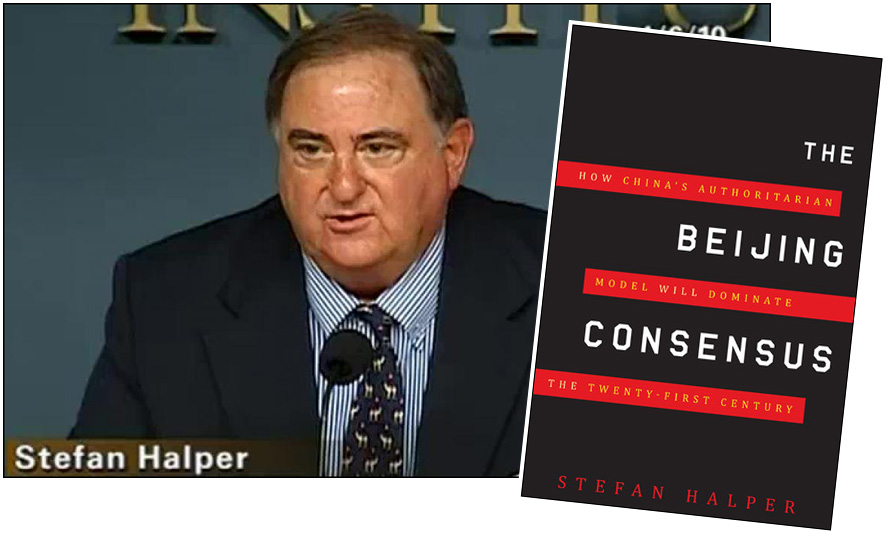
    Top secret spy Stefan Halper in 2010 promoting his latest book on CSPAN. In the acknowledgements, he thanks Henry Kissinger and the former head of MI6—both of whom blurbed the book—and an all-star cast of other world-class military and intelligence officials.

    Devin Nunes has been fighting with the FBI for some time in an effort to get them to reveal the name of the informant they used in 2016 to gather information about the Trump campaign’s ties to Russia. On Friday, the New York Times wrote this:

    The informant, an American academic who teaches in Britain, made contact late that summer with one campaign adviser, George Papadopoulos, according to people familiar with the matter. He also met repeatedly in the ensuing months with the other aide, Carter Page, who was also under F.B.I. scrutiny for his ties to Russia….The informant is well known in Washington circles, having served in previous Republican administrations and as a source of information for the C.I.A. in past years, according to one person familiar with the source’s work.

    This was enough information to identify the informant almost instantly, but the authors didn’t do that. “The New York Times has learned the source’s identity,” the article explained, “but typically does not name informants to preserve their safety.” A few minutes later, one of the authors of the Times piece tweeted this:

    This is just bizarre. They obviously wanted his name to become public, but also wanted to pretend that they weren’t the ones who had done it. Why? In any case, not to keep you in suspense any longer, by several accounts the FBI’s informant was Stefan Halper, a guy who worked in the Nixon, Ford, and Reagan administrations and is now Director of American Studies at Cambridge University. He’s the son-in-law of a former CIA executive, and as a member of the Reagan campaign in 1980 he was instrumental in stealing classified documents from the Carter White House and handing them off to the Reagan team, which was paranoid about the possibility that Carter might announce an end to the Iran hostage crisis and thus gain in the polls. He’s such an obvious candidate to be the FBI’s informant that the connection was being publicly bandied about more than a week ago.

    Glenn Greenwald has much, much, much more here,¹ and he is unsurprisingly skeptical about complaints that revealing Halper’s name endangered a longtime intelligence asset. After all, Halper’s connections to both the CIA and to high-ranking mucky-mucks in general is pretty well known. He’s not exactly operating under deep cover.

    So it’s unclear what’s really going on here. Halper does not, in fact, appear to be someone in need of the highest levels of secrecy. The fact that he was pretty friendly with establishment intelligence services was well known. On the other hand, he also obviously wasn’t an FBI “spy,” as the Trump camp keeps claiming. He appears to have been just a well-connected guy who could chat with targets of FBI investigations without raising suspicions that they were targets of FBI investigations. I don’t see anything especially untoward about this, but neither do I really understand the scorched-earth campaign to prevent Congress from knowing what Halper told the FBI. It’s all very strange.

    ¹I guess that’s unfair. His piece is about 2,600 words, which is just a brief sketch by Greenwaldian standards.

    POSTSCRIPT: I probably should have been clearer about this, but I understand that the FBI is opposed to naming any of its sources, regardless of how much or how little danger there is in outing one particular source. And this makes sense: aside from any specific damage, the FBI obviously needs its sources to know that they can trust them to keep their names secret. Outing any of them hurts their credibility.

    And yet … still. Something seems a little off here. There was an awful lot of talk about lives being in danger, networks being blown up, etc. etc. Obviously I have no insight into what Halper might have been doing, and I support the general principle of keeping sources secret, but he sure doesn’t seem like an especially sensitive source. He was so publicly close to the CIA for so long that surely anyone who cares would already assume that anything said to him was pretty likely to end up in official US hands?

  • Who Hates It When Disinformation Is Exposed?

    That Atlantic Council is a think tank of the great and good. It’s basically a centrist, mainstream organization dedicated to free trade, economic development, and generally strong relationships between America and Europe. It’s an apex organization, so to speak, with its senior members frequently being tapped to serve at high levels in new administrations. A couple of days ago one of their programs, the Digital Forensic Research Lab, announced a new partnership:

    Today @DFRLab announced that we are partnering with Facebook to expand our #ElectionWatch program to identify, expose, and explain disinformation during elections around the world. The effort is part of a broader initiative to provide independent and credible research about the role of social media in elections, as well as democracy more generally.

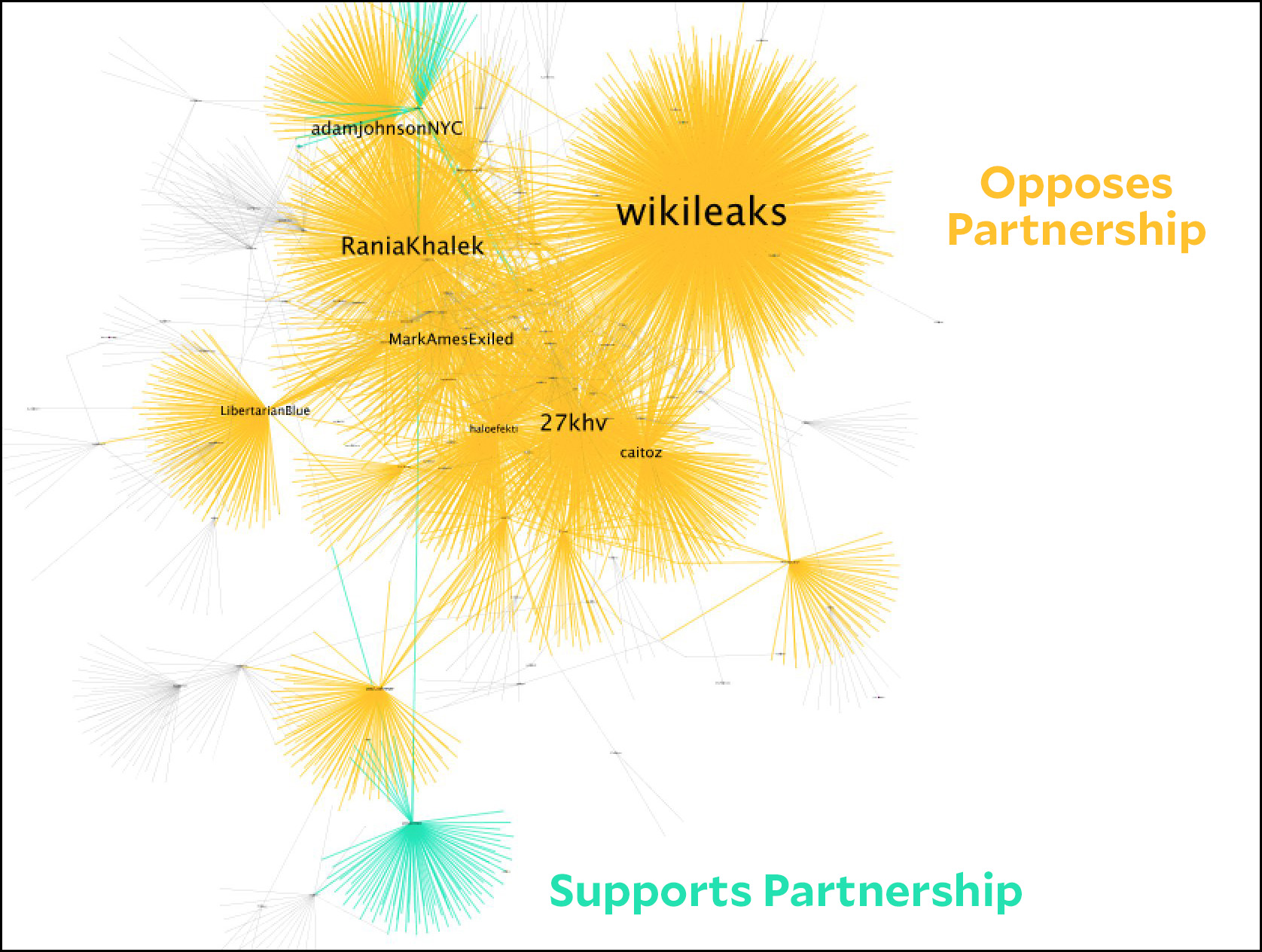
    That sounds like a fine idea, doesn’t it? Who could possibly object to exposing disinformation? This social network diagram of Twitter mentions from Conspirador Norteño provides a clue:

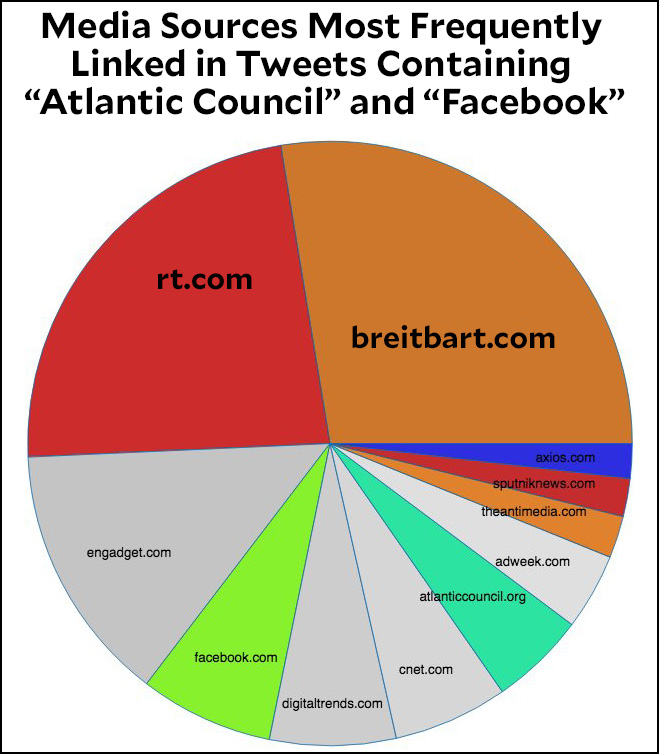
    Huh. How about that? Could you provide a little more detail, Senor Norteño?

    Fascinating! Anything else you’d like to add?

    Well, there you go. This has been your weekly message from my NATO propaganda overlords.

  • Saturday Waterfowl Extravaganza

    This has been a very fecund year for the ducks and geese here in our little suburban watering hole. Last year we had no ducklings and only two broods of goslings. This year we’ve had three broods of ducklings and either four or five broods of Canada goose babies—so far.

    Our favorite ducks are a pair of white ducks who seem delightfully attached to each other. They’re always together, usually within a few feet of each other and never more than ten or twenty yards apart. They’re such lovebirds, and we always thought they deserved a family. This year they got one, an adorable brood of five yellow ducklings:

    But duckling season has resurfaced an old mystery. We also have a pair of gray ducks who hang around with the white ducks. At first I wondered if maybe white ducks start out gray and then turn white, and these were children of the white ducks. But I guess that’s not the case. They’re still gray. However, they’ve also hatched a family, and they still seem to hang around with their white duck friends:

    That’s the entire brood, seven gray cutie pies with yellow chests. And here are the kids playing together as if down color doesn’t matter a bit:

    “Ebony … and ivory.” Come on! Sing it with me. Here’s a closeup of one of the yellow ducklings:

    And here they all are after an exhausting hour of paddling around in the wading pool:

    Check out the one in front. He looks like a kitten after a few minutes of chasing a string around. But it’s not just ducklings around here. We also have plenty of goslings. Here’s the most recently hatched, a brood of one:

    And here’s the middle batch, a few days older. This is either a brood of seven or two smaller broods that have decided to join forces:

    And here’s the oldest, part of a brood of three:

    The new camera takes way better pictures of baby waterfowl than the old one. Goslings always looked a little fuzzy with the old camera, and I chalked it up to the nature of gosling down. It’s so soft that I figured it looked out of focus even when it wasn’t. But in reality it was the soft lens on the old camera. The Sony has better autofocus, which helps, but it also has a far better lens and less aggressive image compression. The down on a duckling actually looks like down. Hooray!

  • Friday Cat Blogging – 18 May 2018

    We got our patio cover painted a couple of days ago, so I figured today’s catblogging should be a picture of Hilbert frolicking on the newly painted wood. Naturally he didn’t take the hint on his own, so I picked him up and deposited him up there. He loves prowling around on the patio cover, so he immediately started investigating things.

    I took lots of pictures, but unfortunately I wasn’t really paying attention to the shutter speed, which was much too low. Pretty much everything was just a blur of Hilbert flopping and rolling and sticking his nose through the slats. So this morning I hauled him up again. The bad news is that he just roamed around on the roof and then got bored and came down. The good news is that I happened to get this one terrific shot of him. You’ll just have to take my word that he’s posing on a freshly-painted patio cover.

    POSTSCRIPT: Hilbert will not be on our new team of disinformation killers. He was willing to work cheap, but we eventually disqualified him for his inability to understand that “disinformation” did not apply to dog food commercials. However, if you’d like to make a donation to help pay the human members of our team, click here.

  • If China Really Wants to Buy $200 Billion More Stuff From Us, We Can Make It For Them

    The New York Times warns that concessions by the Chinese in trade negotiations are probably a mirage:

    Chinese negotiators are preparing to offer the administration a deal to buy up to $200 billion worth of American goods….But the Chinese promises would be largely illusory, economists cautioned….“The short answer is these are unrealistic numbers,” said Chad Bown, a senior fellow at the Peterson Institute for International Economics….“It would even be a stretch to get it to $50 billion,” Mr. Bown said.

    That is because the United States economy is already running near its full productive capacity, meaning it would not be able to produce enough new goods to meet Chinese demands, especially in the short term.

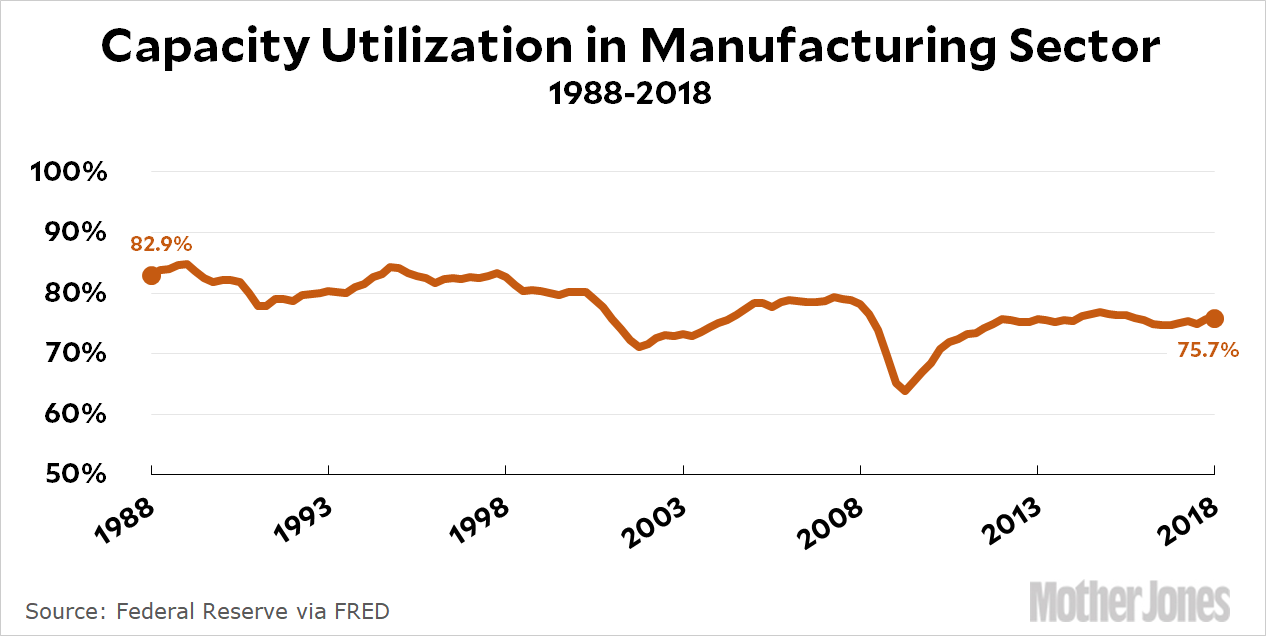
    Hmmm. Dean Baker has some thoughts about that. And me? Naturally I have a chart:

    Manufacturing currently contributes about $2 trillion to GDP. That would go up about $150 billion if capacity utilization merely returned to its 1988 level—which is obviously not impossible—and it would require adding a little less than a million workers to the manufacturing sector. Assuming that some of them came from other jobs while others rejoined the workforce, it would probably mean an increase in the employment-population ratio of about one percentage point. That would put us at the same level we were at for 20 consecutive years until the Great Recession. And this would happen over the course of several years, not overnight.

    That’s a big lift, but there’s nothing literally impossible about it. And the funny thing is that the Chinese might actually be serious about this offer. They might welcome an excuse to steer their economy away from being so dependent on the US as an export market.

    In the end, I suppose I doubt that. Still, the idea that our economy is so maxed out that it couldn’t produce an extra $200 billion worth of goods if China wanted to buy them is a pretty dubious proposition.

  • Flip Charts Send Woman Into Therapy

    Speak English, you smug white flip-chart using bastards.Kuerbs, B/DPA via ZUMA

    Huh?

    Jordan Peterson, a University of Toronto psychology professor turned YouTube philosopher turned mystical father figure, has emerged as an influential thought leader. The messages he delivers range from hoary self-help empowerment talk (clean your room, stand up straight) to the more retrograde and political (a society run as a patriarchy makes sense and stems mostly from men’s competence; the notion of white privilege is a farce).

    ….Why did he decide to engage in politics at all? He says a couple years ago he had three clients in his private practice “pushed out of a state of mental health by left-wing bullies in their workplace.” I ask for an example, and he sighs.

    He says one patient had to be part of a long email chain over whether the term “flip chart” could be used in the workplace, since the word “flip” is a pejorative for Filipino. “She had a radical-left boss who was really concerned with equality and equality of outcome and all these things and diversity and inclusivity and all these buzzwords and she was subjected to — she sent me the email chain, 30 emails about whether or not the word flip chart was acceptable,” Mr. Peterson says.

    I’ve lived a pretty placid life, and I’ve certainly learned that not everyone’s life is as placid as mine. Stuff that doesn’t bother me can be a big deal to other people. But a dumb email chain sent a woman into therapy? I hope everyone will excuse me if I find this unlikely. Perhaps Peterson should have explored his patient’s problem a little more deeply?

  • OKC Schools May Have Reduced Suspensions, But It’s Still Mostly Black Kids Getting Sent Home

    The Wall Street Journal has an article today about the Oklahoma City School District. Back in 2015, under pressure from the Obama administration, they decided that school suspensions were out of control and were unfairly targeted toward black kids:

    In Oklahoma City, the school district opted to make changes in 2015 after a broad investigation by the Education Department’s Office for Civil Rights found stark disparities in the way black and white students were being treated: more than a third of black students here were suspended at least once, according to federal civil-rights data, compared with 15% of white students.

    “I always say this complaint was a blessing because, until the complaint came about, you didn’t have district administrators saying, ‘We’ve got an issue with suspending black students or Hispanic students,’” said Chuck Tompkins, the head of a new “school climate” office charged with carrying out the changes. “This forced us.”

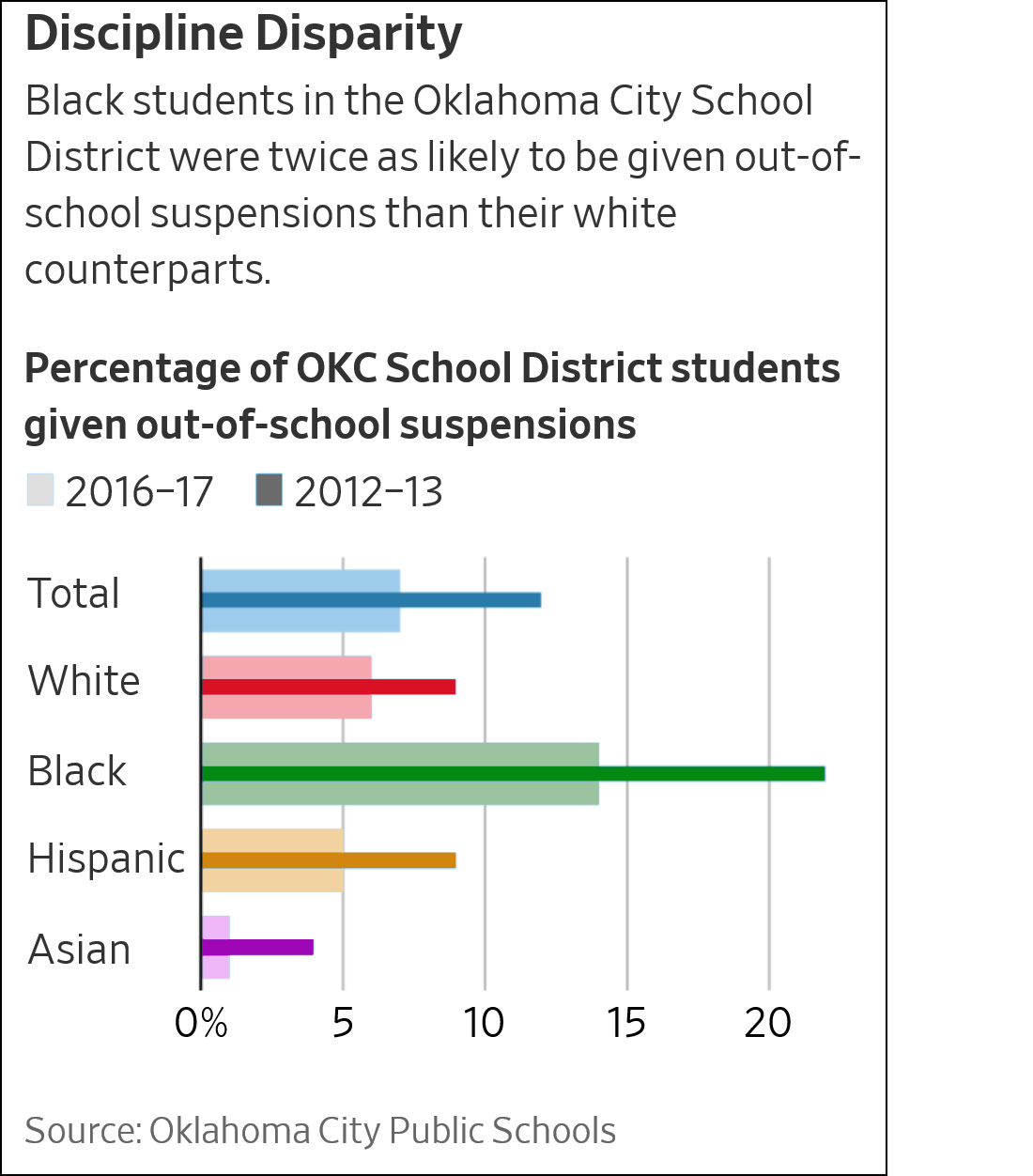
    Suspensions are down in Oklahoma City schools, and maybe that’s a good thing. I don’t have an informed opinion about it. However, by applying careful and rigorous analysis to the data provided by the school district, I can say this:

    • In 2012-13, black students were suspended at a rate 144 percent higher than white students.
    • In 2016-17, black students were suspended at a rate 133 percent higher than white students.

    If the goal was to rein in the disparate treatment of black kids, OKC’s new policy isn’t accomplishing anything. Not yet, anyway. How is it possible to report on this and not even mention something like that?