• Trump Rescues Summit With Appeasing Words For Kim Jong-un

    Olivier Douliery/CNP via ZUMA

    A couple of days ago, North Korea released a statement saying that it might have to “reconsider” its upcoming summit meeting with President Trump after inflammatory remarks from National Security Advisor John Bolton:

    But now prior to the DPRK-U.S. summit, unbridled remarks provoking the other side of dialogue are recklessly made in the U.S. and I am totally disappointed as these constitute extremely unjust behavior.

    High-ranking officials of the White House and the Department of State including Bolton, White House national security adviser, are letting loose the assertions of so-called Libya mode of nuclear abandonment, “complete, verifiable and irreversible denuclearization,” “total decommissioning of nuclear weapons, missiles and biochemical weapons” etc. while talking about formula of “abandoning nuclear weapons first, compensating afterwards.” … We shed light on the quality of Bolton already … Setbacks owing to the likes of Bolton.

    Today Trump responded:

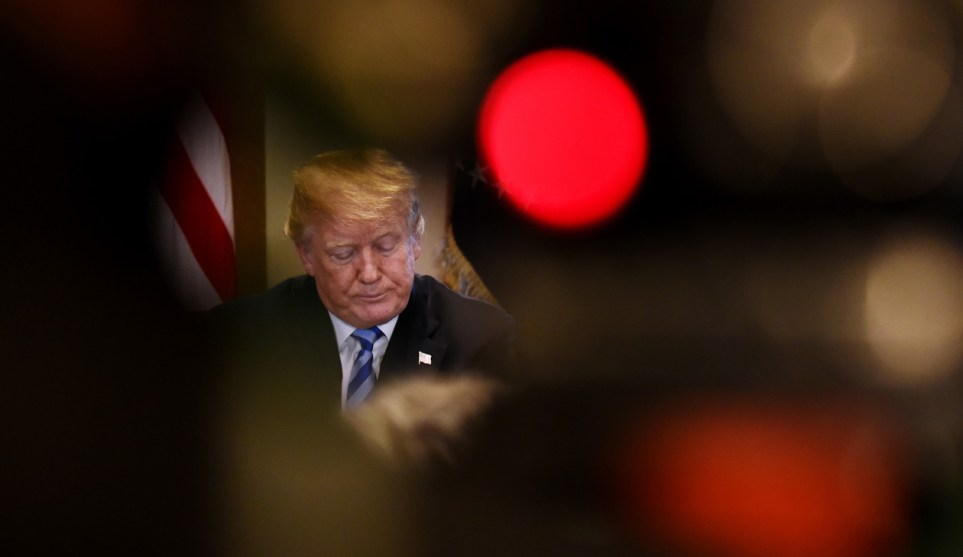
    “The Libyan model isn’t a model that we have at all,” Trump told reporters during a photo session with the visiting secretary general of NATO. “We decimated that country.” By contrast, if the U.S. reaches a deal with North Korea, Kim will “get protections that would be very strong,” Trump said. “He will have very adequate protection.”

    North Korea pushed, and Trump backed away. Stay tuned.
  • The Cryptocurrency Bubble Is Entering Its End Stage

    In news that should surprise no one, the Wall Street Journal reports that many cryptocurrencies are fraudulent:

    Hundreds of technology firms raising money in the fevered market for cryptocurrencies are using deceptive or even fraudulent tactics to lure investors. In a review of documents produced for 1,450 digital coin offerings, The Wall Street Journal has found 271 with red flags that include plagiarized investor documents, promises of guaranteed returns and missing or fake executive teams.

    “Jeremy Boker” is listed as a co-founder of Denaro, an online-payment project. In investor documents for a public offering in March, which claimed to have raised $8.3 million, Mr. Boker boasted of his cryptocurrency startup’s “powerhouse” team. In his biography, he noted a “respectable history of happy clients” in consulting before he launched Denaro. In fact, Mr. Boker’s bio image was a stock photo, there is no evidence he exists and the rest of his team appears to be fictional, except for two freelancers who said they were paid by people unknown to them to market the project, the Journal found.

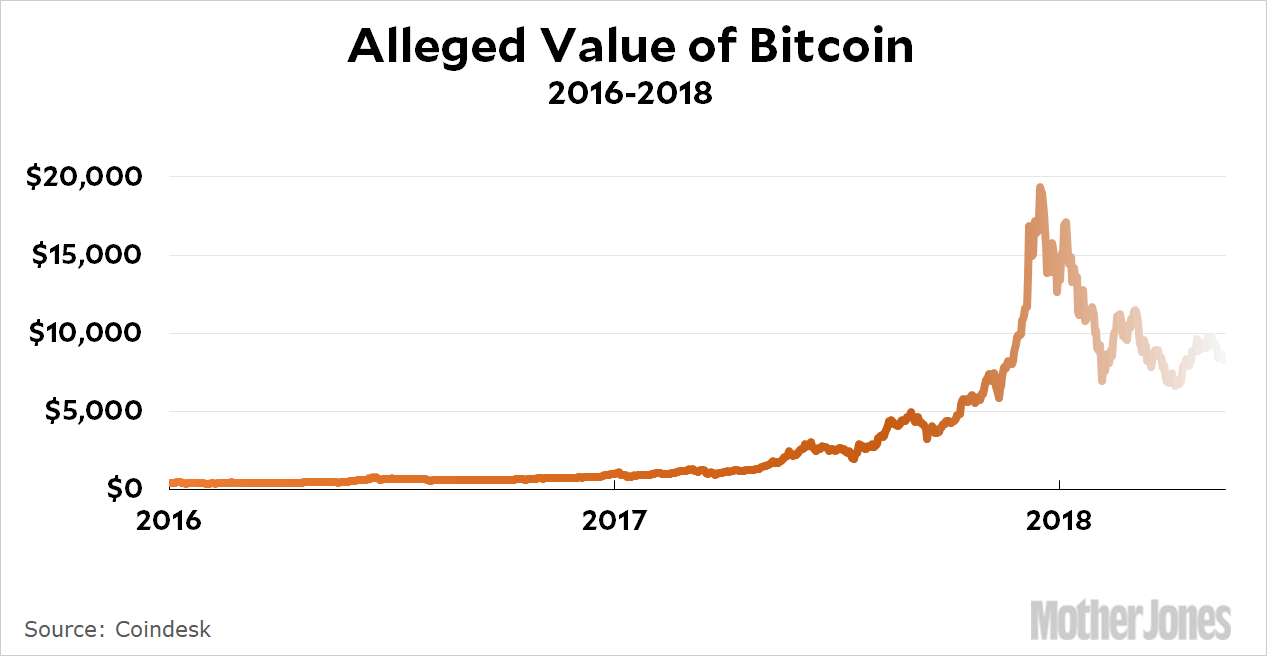
    I think a better choice of words would be that 271 ICOs are more obviously fraudulent than the other 1,179 ICOs that are just normally bamboozley. In any case, this kind of outright fraud is the kind of thing that becomes widespread when a bubble is about to go kablooey.

    Back in the day—namely, a few months ago—I thought that maybe I just didn’t quite get blockchain technology. There must be something to it that was escaping me. But I’ve given up on that after reading quite a bit more about it. Blockchain is an interesting, if minor, innovation that has some potentially useful applications. But that’s it. It’s not a world-changing technology and it doesn’t decentralize the management of fiat currencies unless you decide not to count all the extremely centralized infrastructure that’s required to make it useful in the real world. And cryptocurrencies themselves are just a straight-up bubble of the kind that makes tulips look perfectly sensible. At least tulips are pretty. I’m pretty sure that if the trade in bitcoin were required to obey the normal rules of financial exchanges—for example, trades being recorded only if they’re made with normal, legitimately acquired money, not other flim-flam cryptocurrencies—it would collapse overnight.

    So when does it collapse? Bubbles always seem to last about 50 percent longer than you’d think they possibly could, so I suppose the cryptocurrency bubble has a little while longer to go. But its implosion can’t be too far away.

  • Forget Laurel and Yanny. Take the “Animals” Test Instead.

    Richard B. Levine/Levine Roberts/Newscom via ZUMA

    For many years the internet has been torn apart over how to pronounce GIF. In 2015 we had the great white-gold-blue-black dress sensation. A few days ago brought us the Laurel-Yanny conundrum. And now we have this:

    SHERIFF MIMS: Thank you. There could be an MS-13 member I know about — if they don’t reach a certain threshold, I cannot tell ICE about it.

    THE PRESIDENT: We have people coming into the country, or trying to come in — and we’re stopping a lot of them — but we’re taking people out of the country. You wouldn’t believe how bad these people are. These aren’t people. These are animals. And we’re taking them out of the country at a level and at a rate that’s never happened before. And because of the weak laws, they come in fast, we get them, we release them, we get them again, we bring them out. It’s crazy.

    Question: who does Trump think are animals? All the people we deport out of the country? Or just MS-13 gang members? This is the very latest internet Rorschach test.

  • Scott Pruitt Is At It Again

    Back in 2016, the EPA released a health advisory for a class of chemicals called PFOA and PFOS, setting a limit in drinking water of 70 parts per trillion. Over the past decade these chemicals have mostly been phased out, but years of use had poisoned the groundwater in many areas, which now have to be cleaned up.

    Then, earlier this year, the Agency for Toxic Substances and Disease Registry, a part of HHS, wrote a toxicological profile advising that drinking water limits should actually be much lower, in the range of 10-20 parts per trillion. The EPA level might be adequate for most people, they advised, but was too high for infants and breastfeeding mothers. Luckily, EPA administrator Scott Pruitt, whatever his other faults, has declared that water safety is one of his signature priorities, so EPA embraced the new limits and instructed Superfund cleanup sites to implement them immediately.

    Ha ha. Just kidding. Here’s what actually happened when the White House and EPA caught wind of the new report:

    “The public, media, and Congressional reaction to these numbers is going to be huge,” one unidentified White House aide said in an email forwarded on Jan. 30 by James Herz, a political appointee who oversees environmental issues at the OMB. The email added: “The impact to EPA and [the Defense Department] is going to be extremely painful. We (DoD and EPA) cannot seem to get ATSDR to realize the potential public relations nightmare this is going to be.

    ….Some of the biggest liabilities reside with the Defense Department, which used foam containing the chemicals in exercises at bases across the country. In a March report to Congress, the Defense Department listed 126 facilities where tests of nearby water supplies showed the substances exceeded the current safety guidelines. A government study concluding that the chemicals are more dangerous than previously thought could dramatically increase the cost of cleanups at sites like military bases and chemical manufacturing plants, and force neighboring communities to pour money into treating their drinking water supplies.

    It’s been three months since ATSDR drafted its report. It still hasn’t been published.

  • Republicans Prove They’re the World Champs of Working the Refs

    Rex Shutterstock via ZUMA

    In a political context, “working the refs” usually refers to the press. It’s an effort by one side or the other to complain so loudly about unfair coverage that reporters start bending over backward to provide positive coverage instead.

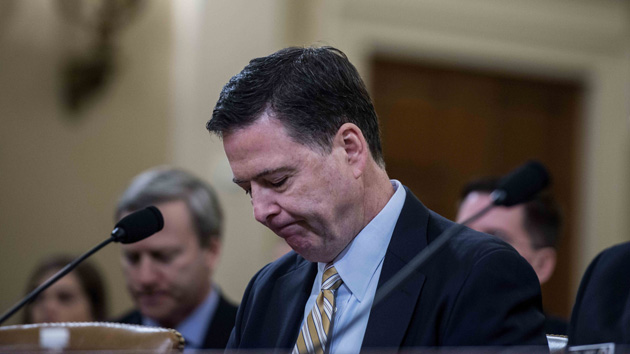
    But it doesn’t apply only to the press. The same tactics can be used to muffle, say, the FBI. The New York Times reports today that this is exactly what happened during the 2016 campaign, when James Comey went out of his way to publicly berate Hillary Clinton over her emails while deliberately staying mum about the agency’s investigation of Donald Trump:

    Underpinning both cases was one political calculation: that Mrs. Clinton would win and Mr. Trump would lose. Agents feared being seen as withholding information or going too easy on her. And they worried that any overt actions against Mr. Trump’s campaign would only reinforce his claims that the election was being rigged against him….Agents had just closed the Clinton investigation, and they braced for months of Republican-led hearings over why she was not charged.

    FBI agents were intimidated by the Republican-led investigations in Congress as well as by fear of Republican backlash over “rigging” the election against Trump. They were, apparently, not afraid of anything similar from Democrats.

    Of course, working the refs still applies to the press too. The article finally acknowledges—19 months after the fact—what critics have been saying forever: that the Times blew it when they ran a piece eight days before the election headlined, “Investigating Donald Trump, F.B.I. Sees No Clear Link to Russia.”

    In late October, in response to questions from The Times, law enforcement officials acknowledged the investigation but urged restraint. They said they had scrutinized some of Mr. Trump’s advisers but had found no proof of any involvement with Russian hacking. The resulting article, on Oct. 31, reflected that caution and said that agents had uncovered no “conclusive or direct link between Mr. Trump and the Russian government.” The key fact of the article — that the F.B.I. had opened a broad investigation into possible links between the Russian government and the Trump campaign — was published in the 10th paragraph….The article’s tone and headline…gave an air of finality to an investigation that was just beginning.

    In the end, then, all the howling over Benghazi paid off, as did Trump’s endless bellyaching about the election being rigged. The result was just what Republicans wanted: The press played along eagerly with both Benghazi and Hillary’s emails, while the FBI cowered in a defensive crouch over fear of Republican attacks on them. There hasn’t been a more masterful game of working the refs in recent history.

  • Senate Republicans, Acknowledging the Obvious, Admit That Russia Tried to Sabotage Hillary Clinton

    Tom Williams/Congressional Quarterly/Newscom via ZUMA

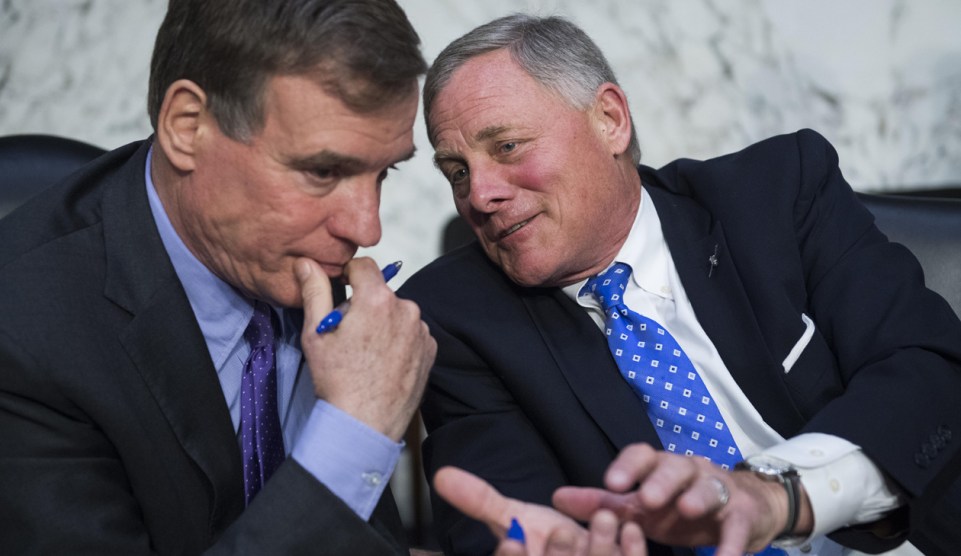
    The Senate Intelligence Committee is, for the time being, just about the last redoubt of bipartisanship on Capitol Hill. For the most part, they take national security seriously and work across party lines to assess threats. Today they stated the obvious:

    The Senate Intelligence Committee has determined that the U.S. intelligence community was correct in assessing that Russia interfered in the 2016 presidential election with the aim of helping then-candidate Donald Trump, contradicting findings House Republicans reached last month.

    “We see no reason to dispute the [intelligence community’s] conclusions,” the committee’s chairman, Sen. Richard Burr (R-N.C.), said Wednesday in a joint statement with its vice chair, Sen. Mark R. Warner (D-Va.), who added: “Our staff concluded that the … conclusions were accurate and on point. The Russian effort was extensive, sophisticated, and ordered by President Putin himself for the purpose of helping Donald Trump and hurting Hillary Clinton.

    There’s really no reason to dispute this. After all, the fact that Putin interfered with the election doesn’t reflect in any way on the question of whether Trump colluded with Russia. Nevertheless—and despite the voluminous evidence implicating Russia—this simple statement was something that Devin Nunes couldn’t countenance over in the House Intelligence Committee. It’s just another sign of how ridiculous Nunes has become in his goal of becoming Trump’s most loyal lackey.

  • Wall Street Journal: Relax, Climate Change is No Big Deal

    The Wall Street Journal editorial page, dedicated as always to telling its readers what they want to hear, tells them today that climate change is no big deal. Here is longtime climate denier Fred Singer on sea level rise:

    By studying a very short time interval, it is possible to sidestep most of the complications, like “isostatic adjustment” of the shoreline (as continents rise after the overlying ice has melted) and “subsidence” of the shoreline (as ground water and minerals are extracted).

    I chose to assess the sea-level trend from 1915-45, when a genuine, independently confirmed warming of approximately 0.5 degree Celsius occurred. I note particularly that sea-level rise is not affected by the warming; it continues at the same rate, 1.8 millimeters a year, according to a 1990 review by Andrew S. Trupin and John Wahr. I therefore conclude—contrary to the general wisdom—that the temperature of sea water has no direct effect on sea-level rise. That means neither does the atmospheric content of carbon dioxide.

    This conclusion is worth highlighting: It shows that sea-level rise does not depend on the use of fossil fuels. The evidence should allay fear that the release of additional CO2 will increase sea-level rise.

    Big words? Check. Cherry-picked timeframe? Check. Climate change is bunk? Check. No long-term chart just for laughs? Check.

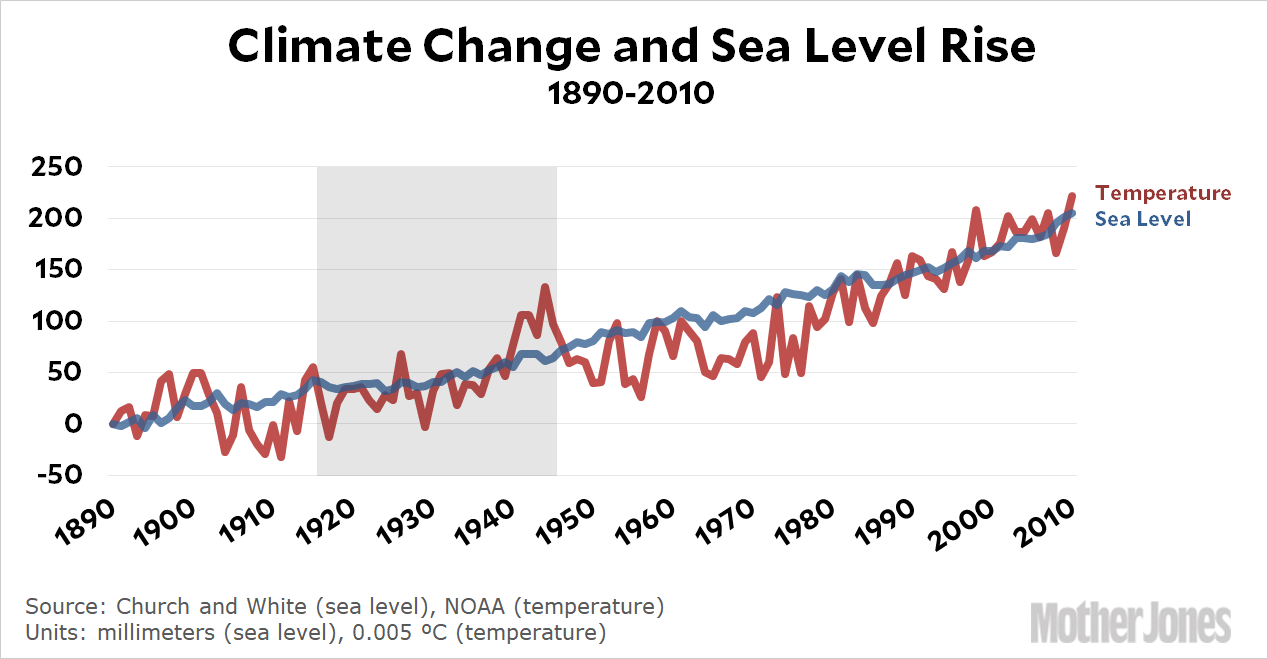
    I’m no scientist, but I can copy numbers into Excel and then present them to the world. This task was probably too time consuming for the Journal—they’re busy people, after all—so I’m happy to lend a hand in my own poor way. Here it is:

    As you can see, global temperature increases in fits and spurts, but has nonetheless been rising steadily. Sea level rise follows at the same rate, but its growth is steadier since the oceans are vast heat sinks that tend to react slowly to a single year’s change in average temperature. The period from 1915-1945 is nothing special.

    Most of us in the lefty pundit biz have long since taken a pledge not to waste time responding to the Journal’s op-ed page. Virtually every piece is a deliberate attempt to misstate the truth in some way, and once you go down the rabbit hole you could dedicate your entire life to nothing else. And make no mistake: despite all the earnest calls from conservatives for more ideological diversity in the nation’s op-ed pages, the Journal has no intention of hiring any liberal columnists to provide their readers with an alternate worldview. If they ever call to offer me a weekly slot, I’ll let you know.

    Still, every once in a while I see something so dumb that I weaken and feel like I have to respond. Today was one of those days.

  • The World Needs More Exciting Passports

    Here are all the world’s passports. They’re basically all shades of red, green, and blue, with a few blacks thrown in. Why are there no yellow passports? No white passports?¹ No orange passports? And only a couple of legitimate purple passports (Kosovo and Ethiopia)? And why no borders, or stripes, or two-tones? Why are passports so boring?

    ¹Including, of course, eggshell, beige, cream, bone, snow, and every other allegedly unique shade of white.

  • There’s Value in Weird Questions From Pollsters

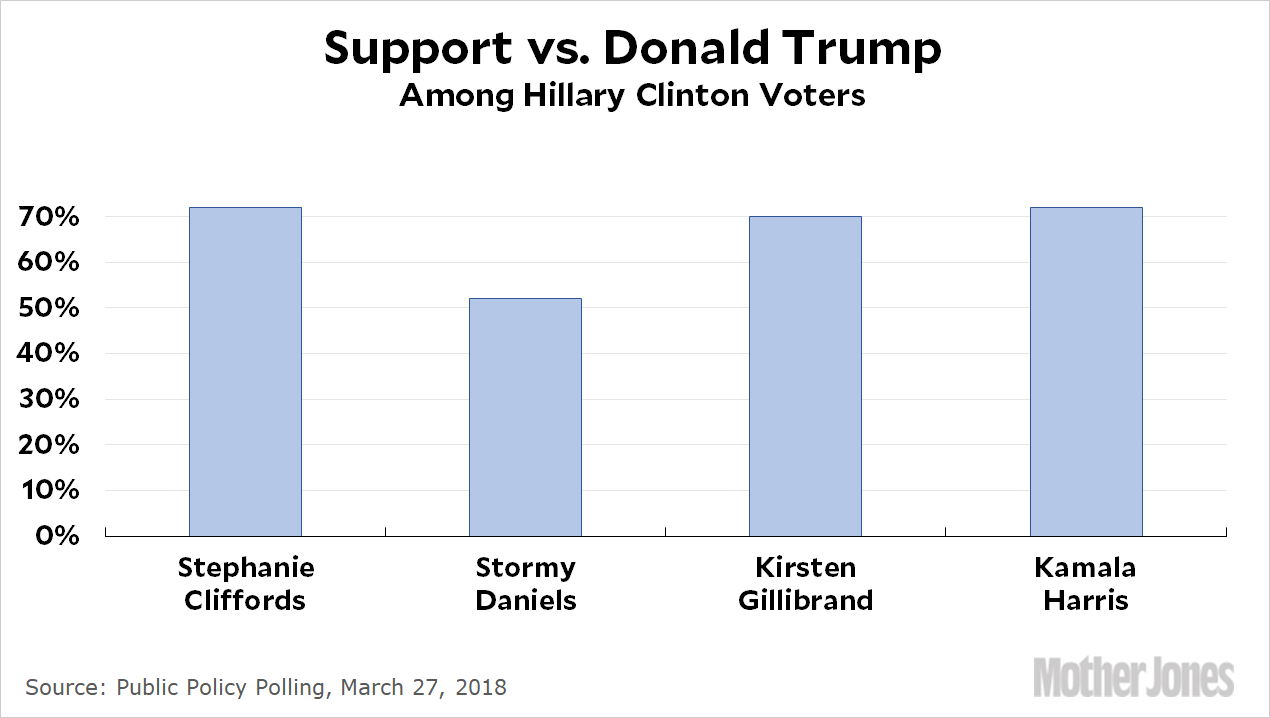
    Public Policy Polling is well known for its periodic inclusion of off-the-wall survey questions. In its March national poll, for example, they asked whether Joe Biden could whup Donald Trump in a fistfight. (Answer: Democrats chose Biden and Republicans chose Trump.) But they also ask some questions that seem kind of batty at first glance but actually reveal something interesting. For example, here’s a question about the level of support for various candidates in a 2020 campaign against Trump:

    There are two interesting things here. First, a lot of Democrats obviously have no idea who Stephanie Cliffords is (it’s Stormy Daniels’ real name) but would vote for her anyway. Second, Gillibrand and Harris are supported at the same rate. What this demonstrates is something that we all know: polling candidates this far ahead of the election is dumb. It’s based on nothing but name recognition and is essentially meaningless, something that this poll question demonstrates viscerally. Then there’s this:

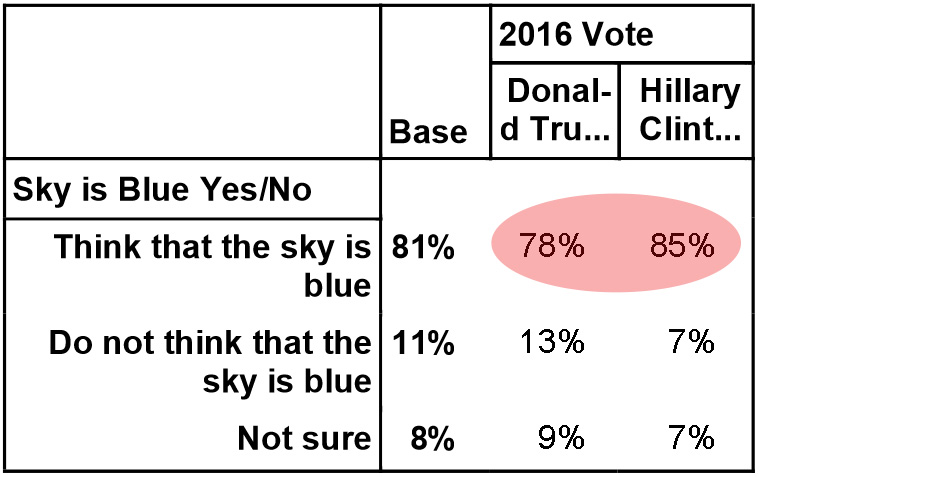
    This seems weird: Why would Trump supporters be less likely to think the sky is blue? Especially since they’re more likely to live in rural and suburban areas, where the sky really is blue? I can think of a few possibilities, but the real answer is probably that there’s no difference at all. Despite the official 3 percent margin of error, polls really have much higher margins of error. That 3 percent is just the statistical error, but there’s also error from bad sample design, question wording, question order, and a bunch of other stuff. A question like this brings the real margin of error to life.