• Ask a Pundit: Why Does Scott Pruitt Still Have a Job?

    Mother Jones; Andrew Harnik/AP

    Martin Longman asks a provocative question: Why is Scott Pruitt untouchable? Trump has fired loads of other people, but despite Pruitt’s almost comical accumulation of embarrassing scandals, he has somehow managed to hang on. What’s the deal with this? How does Pruitt do it? I’m here to help:

    • He has not called Donald Trump either a moron or an idiot.
    • He does not argue with Trump about policy.
    • He does not bore Trump with lengthy white papers.
    • He believes climate change is hogwash.
    • Liberals hate his guts.
    • The press is gunning for him.
    • He is nakedly avaricious and enjoys taking revenge on his enemies—two traits that Trump approves of.
    • Trump doesn’t really care about scandals per se, only about scandals that threaten to touch him in any way.
    • Pruitt’s scandals don’t touch Trump in any way.

    Any other questions?

  • Chart of the Day: The Trump Plan for Prescription Drugs

    After griping for hours about President Trump’s upcoming speech on reducing prescription drug prices, you’d think I’d at least listen to the damn thing and then comment on it, wouldn’t you? I guess so. That would be the fair thing to do.

    But here’s the thing: Sometimes I get tired of being sucked into long, dry analyses of Republican plans that we all know perfectly well are meaningless. Someone has to do it, and very often that someone is me. It’s my role in the vast politico-industrial complex, after all. But seriously, who cares? Trump himself barely understood what he was reading, and whatever it was, Congress is going to ignore it. Plus it’s Friday, and I’m tired. So fuck it.

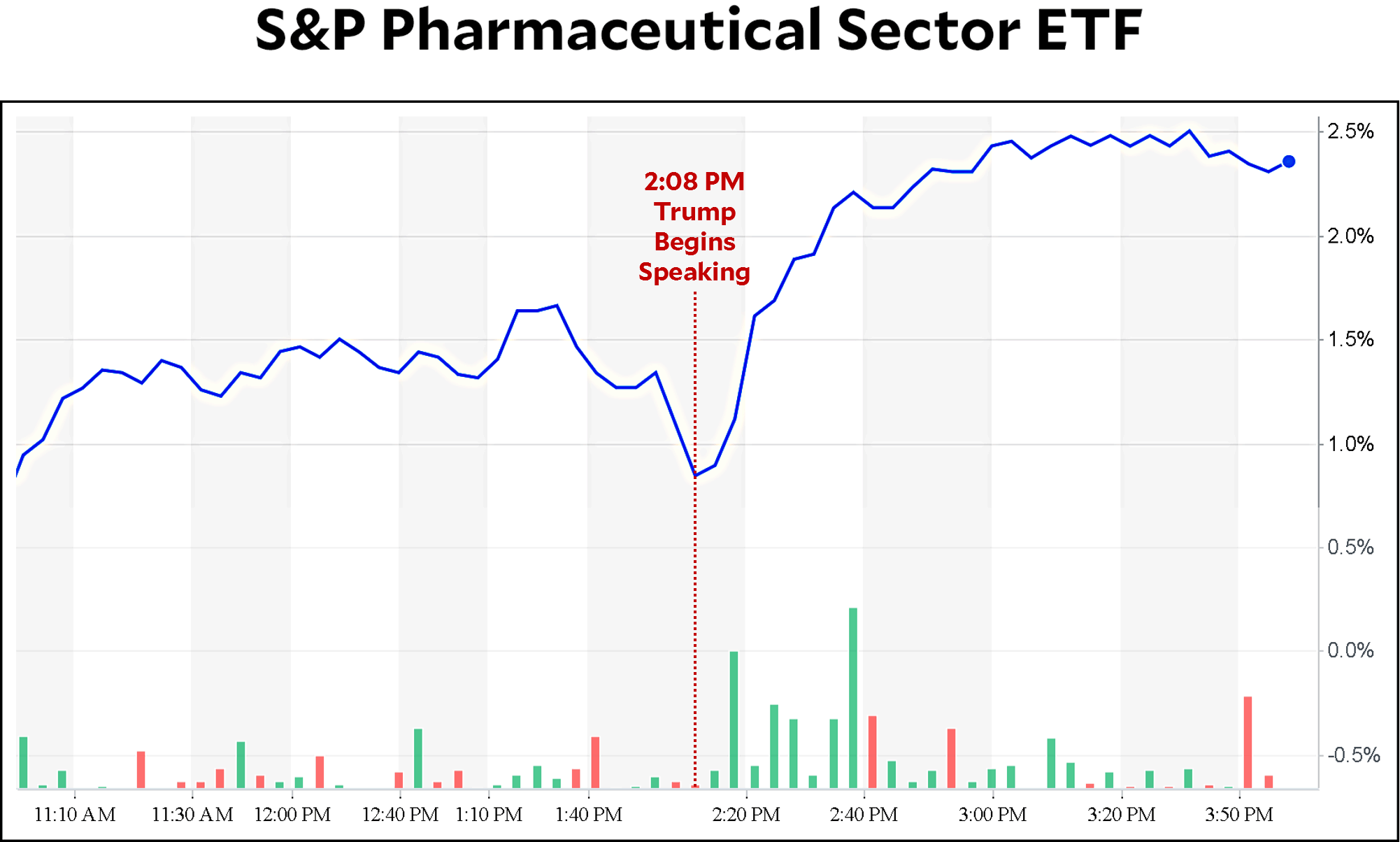
    Besides, there’s really no need for all that work. There are hundreds of analysts out there who know more than me about this stuff, and they render instant decisions on it via the stock market. So if all you want to know is whether Trump’s plan is good for consumers or good for pharmaceutical companies, just check out how pharmaceutical stocks did as Trump was delivering his speech. If stocks went down, that’s good news for consumers. If stocks went up, it’s good news for drug companies.

    Can you guess which way pharmaceutical stocks went? Huh? Can you?

  • Friday Cat Blogging – 11 May 2018

    We have a raised planter bed in our backyard, and lately Hopper has decided it’s her new favorite place to take a nap. It’s quiet and shady and provides a terrific opportunity to roll around and then track dirt into the house. In today’s picture, she’s giving me that squinty cat look which suggests I’ve taken plenty of pictures already and can I now just leave her in peace to snooze the day away?

  • AT&T Takes Bold Action to Pretend It Disapproves of Michael Cohen

    From the Wall Street Journal:

    AT&T Inc. boss Randall Stephenson said it was a mistake to hire Trump attorney Michael Cohen and ousted the telecom’s giant’s top Washington executive after his office paid Mr. Cohen $600,000 last year. The company told employees Friday in an internal memo that Senior Executive Vice President Bob Quinn was retiring, but people familiar with the matter said the policy chief was forced to leave.

    I realize I’m just saying the sky is blue here, but I want to point out that Randall didn’t fire Quinn because he hired Cohen. That happened a year ago and Randall has been fine with it ever since. He only fired Quinn when the arrangement became public and “something had to be done.” So he did something.

    POSTSCRIPT: Since writing my last post, I have had a cookie. A lemon Oreo. But I am still feeling crabby.

  • Symbolic Labor Bill Should Have No Trouble Getting Democratic Support

    Jim West/ZUMA

    Eric Levitz says that every Democrat should back “Bernie Sanders’s new labor bill”:

    On Wednesday, Bernie Sanders introduced the Workplace Democracy Act, a bill that aims to increase America’s unionization rate….Thirteen of Sanders’s Democratic colleagues have signed onto this legislation — including virtually every suspected 2020 hopeful in the upper chamber (Cory Booker, Kirsten Gillibrand, Elizabeth Warren, and Kamala Harris are all represented). And yet, a wide array of (self-identified) progressive senators — including ones from states with strong labor presences — have not signed onto the bill.

    Somebody should stop me if I’m missing something big, but this bill is basically card check plus a few other things. In other words, it’s the Employee Free Choice Act, which garnered 47 cosponsors in 2008 (92 percent of all Democrats in the Senate), but then slumped to 41 cosponsors (71 percent of all Democrats) when it actually had a chance of passing in 2009. Since the bill has no chance of going anywhere with a Republican in the White House, we’re politically in the same situation as we were in 2008. This means that Bernie’s bill should have no trouble getting cosponsorship from nearly every Democrat.

    If the bill had a real chance of passing, that would be a whole different story. Probably a bunch of Democrats would drop out, citing some detail or other as unacceptable. But as long as it’s just symbolic, it should be able to do at least as well as those dozens of Republican votes to repeal Obamacare back when it had no chance of passing either.

    POSTSCRIPT: I seem to be feeling a little grumpy and cynical this morning, no? Perhaps I need some cookies.

  • Trump Proposes to Cut Drug Prices by Allowing Companies to Charge More

    Julien Behal/PA Wire via ZUMA

    From the New York Times:

    President Trump will lay out on Friday a broad strategy to reduce prescription drug prices, but in a break from one of his most popular campaign promises, he will not call for Medicare to negotiate lower prices with drug manufacturers, senior administration officials said.

    I am shocked that Trump is breaking this campaign promise. Who would ever have guessed? So what will he be proposing?

    The administration will, as expected, put pressure on foreign countries to relax drug price controls, in the belief that pharmaceutical companies can then lower prices in the United States.

    So Trump is proposing to increase drug prices overseas and then do nothing to leverage this into lower prices here. Sounds great! I can hardly wait for this novel approach to slash my prescription bill.

  • What Made Marxism So Deadly?

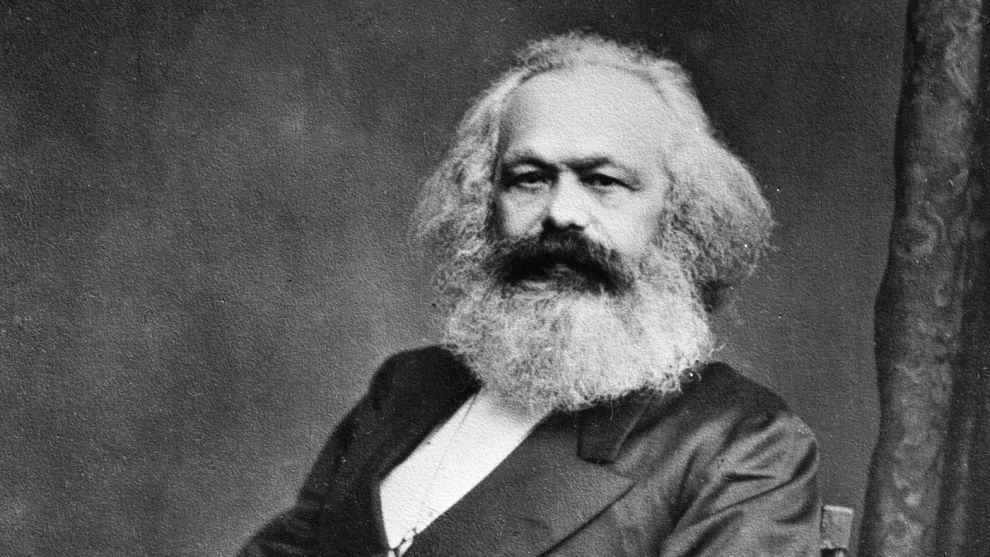
    Karl Marx: His economic theories weren't that great, but he sure rocks a helluva beard.

    Brad DeLong points me to Noah Smith, who uses the occasion of Karl Marx’s 200th birthday to muse about the many, many failings of real-world communism:

    For those who have read history or lived through the 20th century, it’s hard to forget the tens of millions of people who starved to death under Mao Zedong; the tens of millions purged, starved or sent to gulags by Joseph Stalin; or the millions slaughtered in Cambodia’s killing fields. Even if Marx himself never advocated genocide, these stupendous atrocities and catastrophic economic blunders were all done in the name of Marxism. From North Korea to Vietnam, 20th century communism always seem to result in either crimes against humanity, grinding poverty or both. Meanwhile, Venezuela, the most dramatic socialist experiment of the 21st century in a nation with the world’s largest oil reserves, is in full economic collapse.

    I realize I’m barging into a conversation that’s been going on for many decades, and also that I’m woefully inadequate to comment. But I’m going to comment anyway. It strikes me that Smith has the causation backward here. It’s not that Marxism inherently leads to crimes against humanity, but that ruthless autocrats—the kind likely to commit crimes against humanity—find Marxism a convenient economic doctrine to adopt.

    Why convenient? Because autocrats desire centralized control, and Marxism delivers by insisting that the state should own the means of production. Autocrats also like to pose as populists, and Marxism delivers there too. Even more conveniently, Marx himself said that full communism would take a long time to develop, which provides an endless series of excuses for underachievement. Also conveniently, Marxism contrasts itself explicitly to market capitalism, which provides autocrats in poor countries with an automatic enemy in the capitalist West to keep the masses enthralled.

    All in all, if I were an autocrat, I’d probably find Marxism pretty congenial. Would I care about what Marx actually wrote or what his economic ideas really were? Not really. Every autocrat has his own national version of Marxism anyway.

    As for the grinding poverty, that’s because Marxism is (a) deeply flawed, (b) adopted only by poor countries in the first place, and (c) generally just a thin veneer over the usual autocratic kleptocracy that’s impoverished countries for centuries.

  • Donald Trump to Propose Biggest Drug Reform In All of History Tomorrow

    GMVozd/Getty

    If you’ve been waiting on the edge of your seat for Donald Trump’s thoughts on how to reduce prescription drug prices, your wait is finally over:

    President Trump will deliver Friday afternoon a twice-delayed, much-anticipated speech about his plan to lower drug prices — after a year when harsh rhetoric against drugmakers was accompanied by little action….“What I’m hearing is that they’re looking at a clean slate and going after everybody: the drug companies, the pharmacy benefit managers, everyone,” said one health care lobbyist, who spoke on the condition of anonymity to speak frankly.

    Hahaha. Of course he’s going after everybody. Trump is a man of the people, after all. And of course your source needs anonymity to offer up a pearl of praise like this to the great man.

    So in reality, what can we expect? I quail to even think about it. And more to the point, how likely is it that his strategy to get it through Congress will consist of more than a few tweets? Zero?

    If I had to guess, I’d say that Trump might propose some modest reforms aimed at reining in massive price increases for orphan drugs. It would be popular, and his FDA chief supports it. He might also propose some new rules prohibiting drug companies from trying to keep generic competitors off the market. This is about the most I’d expect. Beyond that, I imagine it will be predominantly corporate-friendly stuff—and if congressional Republicans even bother spending any time on this, that’s probably all that will remain by the time they’re finished with it.

  • Wages Are No Longer Growing At All

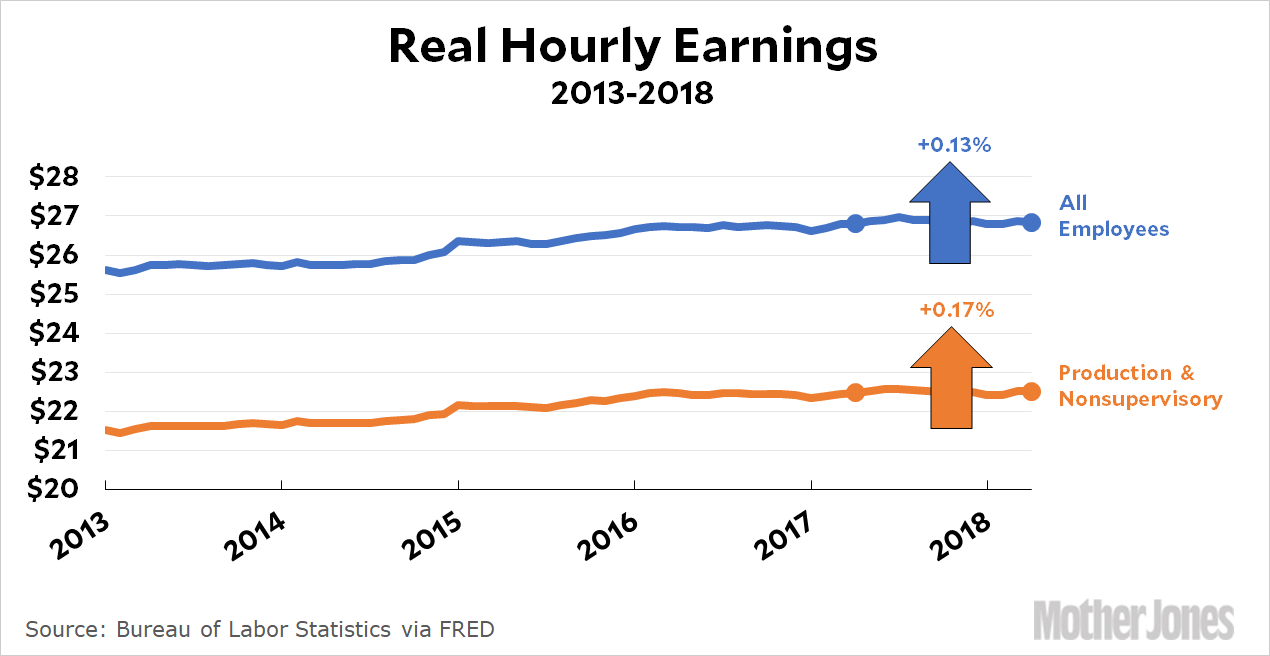
    The inflation figures for April are in, which means we can take a look at how much wages went up last month. First, here’s a broader look:

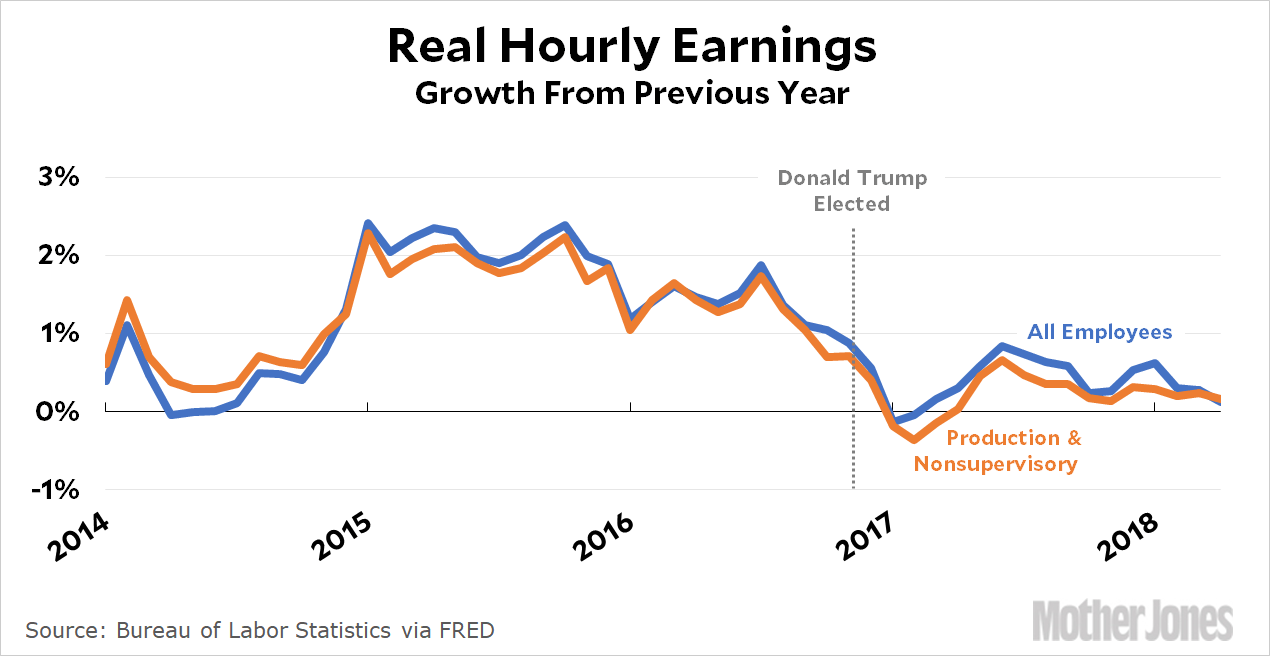
    Up through 2016, wages were rising at about 1 percent per year (adjusted for inflation).

    In the past 12 months, wage growth slumped to 0.13 percent. For blue-collar workers, wage growth was 0.17 percent.

    In April, wages fell slightly. Wages for blue-collar workers were flat. The growth rate has been heading down, down, down.

    Here’s a chart showing wage growth over the past few years. It’s totally unfair to point out the month Donald Trump was elected, but what can I do? I’m all about the facts, you know. In any case, no worries here. The CEOs and other rich folks who really elected Trump are doing great, even if the blue-collar workers who supposedly elected him aren’t getting anything out of his presidency. The Republican Party suckered them again.