This is it: the best honeybee picture I’m going to get. By chance, this bee was right at the closest point my camera is able to focus on. The background is clean and uncluttered. And the autofocus did its job perfectly. A different camera might be able to do better, but this is as good as it gets for mine.
Of course, when I say “by chance,” what I really mean is “I took a huge number of pictures.” According to my painstaking recordkeeping, the burst mode on my camera allowed me to take 6,070 pictures of bees between March 9 and April 26 even though the total elapsed time spent on this was probably no more than an hour or two. I think I can now stop taking pictures of bees on my morning walk.
Calling for a tax hike on the rich of a trillion or two dollars just isn’t enough to get people’s attention these days. I guess that’s because my Twitter feed is still obsessed with various forms of outrage over Michelle Wolf’s comedy routine at the White House Correspondents’ Association dinner on Saturday. I didn’t watch it, and the usual conservative complaints that she “wasn’t funny” don’t interest me. They say the same thing every year. Besides, the real outrage is over Wolf’s treatment of Sarah Huckabee Sanders, who was sitting at the head table right next to her. Here is Wolf’s entire bit:
We are graced with Sarah’s presence tonight. I have to say I’m a little star-struck. I love you as Aunt Lydia in The Handmaid’s Tale. Mike Pence, if you haven’t seen it, you would love it.
Every time Sarah steps up to the podium I get excited, because I’m not really sure what we’re going to get — you know, a press briefing, a bunch of lies or divided into softball teams. “It’s shirts and skins, and this time don’t be such a little bitch, Jim Acosta!”
I actually really like Sarah. I think she’s very resourceful. She burns facts, and then she uses that ash to create a perfect smoky eye. Like maybe she’s born with it, maybe it’s lies. It’s probably lies.
And I’m never really sure what to call Sarah Huckabee Sanders, you know? Is it Sarah Sanders, is it Sarah Huckabee Sanders, is it Cousin Huckabee, is it Auntie Huckabee Sanders? Like, what’s Uncle Tom but for white women who disappoint other white women? Oh, I know. Aunt Coulter.
I’ll skip over whether this was funny. It depends on your taste in comics, I suppose. And Wolf is right: Sanders really does lie a lot. A lot. So I can’t say that I personally care if she was offended. Plenty of people, however, thought Wolf’s bit was really rude, and the liberal response has generally been: Have you heard what Donald Trump says??? That’s a thousand times worse!
This is what gets me about my fellow lefties sometimes. Are we really this clueless about how most human beings react to stuff like this? Namely that normal human beings draw a big distinction between saying mean things generally at a rally and saying mean things aimed at a specific person in that person’s presence.
That’s not so hard, is it? Why do we pretend not to know it? We do this an awful lot, too. Maybe we need to get out more.
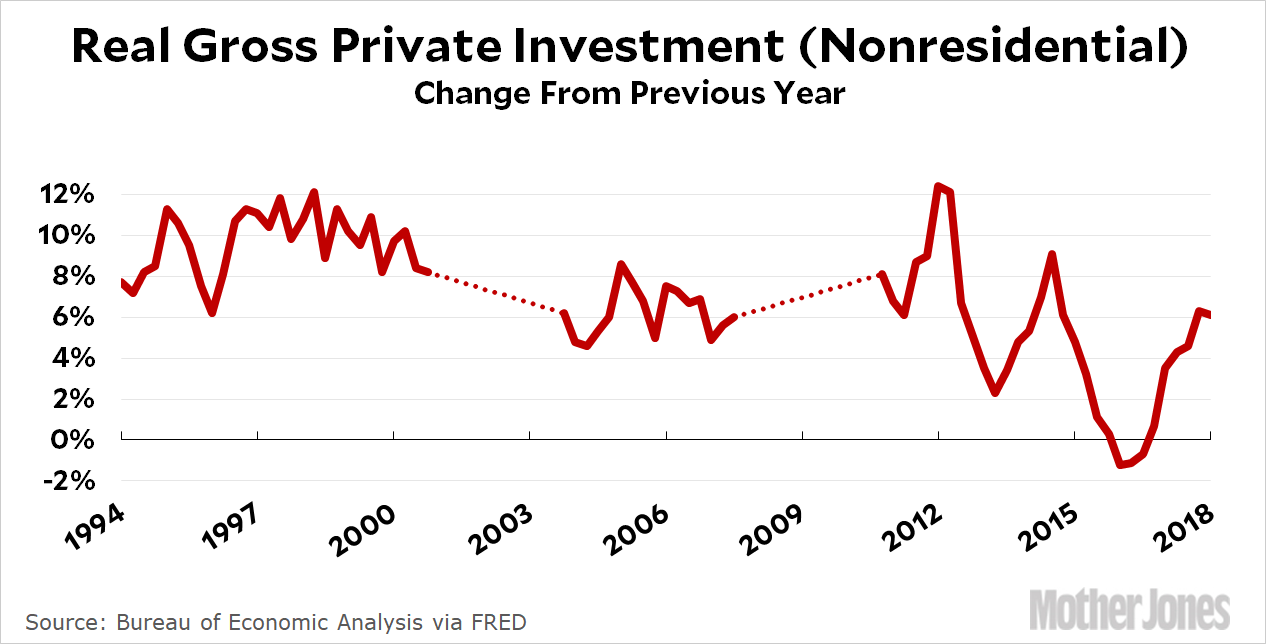
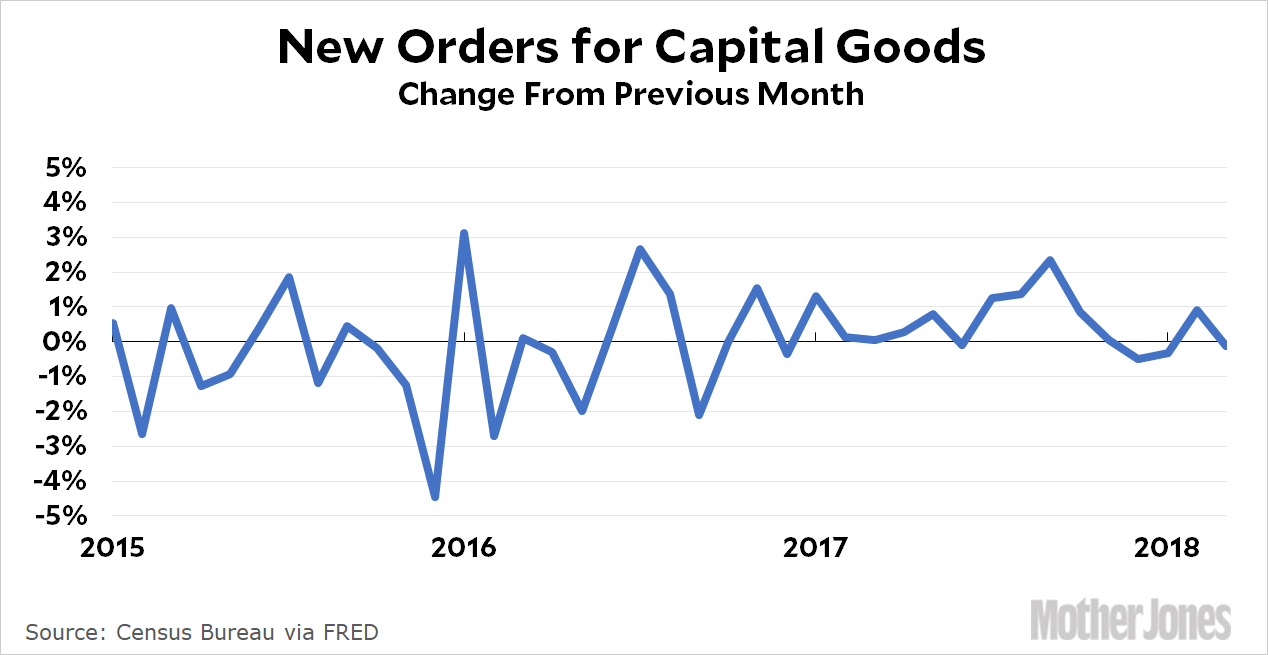
The Commerce Department report showed a robust contribution from business investment, which rose more than 6 percent. That seemed at odds with Thursday’s Census Bureau report that nondefense capital goods orders, excluding aircraft, fell 0.1 percent in March and that preliminary results from earlier months had been revised lower.
Baker explains why there’s no contradiction here at all, but naturally I prefer showing it in chart form (I’ve removed recessions to make the chart easier to read):
There are two things to note. First, growth of 6.1 percent is not especially robust. It’s OK, but it’s been higher than that plenty of times. Second, it went down in Q1. What’s more, as Baker explains, this mostly tells us about investment decisions made at least a year ago. To get a read on current levels of corporate optimism, you want to look at orders for capital goods:
There’s just no there here. Business investment is at normal levels; it went down a bit in Q1; this has nothing to do with current corporate decisionmaking anyway; and orders for capital goods have been pretty lethargic since the tax plan passed. Let’s check back in a year, OK?
Richard Uihlein, a wealthy shipping-supplies magnate from Illinois who shuns the spotlight, has risen to become one of the most powerful — and disruptive — GOP donors in the country.
For years, Uihlein has given money to isolated races in the service of his anti-union, free-market and small-government views. But he has dramatically increased his giving this cycle, pouring $21 million into races from Montana to West Virginia to ensure more conservative victories in the upcoming midterm elections, Federal Election Commission records show.
Every election cycle there’s some new Republican billionaire who’s dumping bucketloads of money into races all over the country in service of his unique view that Republicans just aren’t conservative enough. Inevitably, this includes a deeply held belief that unions are a tool of Satan, despite the fact that unions apparently didn’t prevent them from becoming billionaires in the first place.
Anyway, Uihlein is the latest Fox News fan to decide that the Republican Party needs a shot of real conservatism and the RINOs need to be ridden out of town on a rail. Honestly, though, since this has been happening regularly for at least the past decade, I have a hard time calling this “disruptive.” It’s just business as usual.
What happened to the good old days, when robber barons were assholes during their business careers but then settled down to a life of philanthropy after their kids took over the business? Shouldn’t Uihlein be funding a children’s hospital or a nationwide chain of free internet cafes for inner-city kids or something?
This is for men aged 25-54, so retirement doesn’t play a part. It’s possible that increased use of disability payments does, but not a big one. Long story short, no one knows. It’s a matter of considerable dispute, and this is one reason that I think a federal jobs guarantee is a bad idea: if we don’t even know why the employment rate has been dropping for the past 50 years, we certainly don’t know if a jobs guarantee would turn it around.
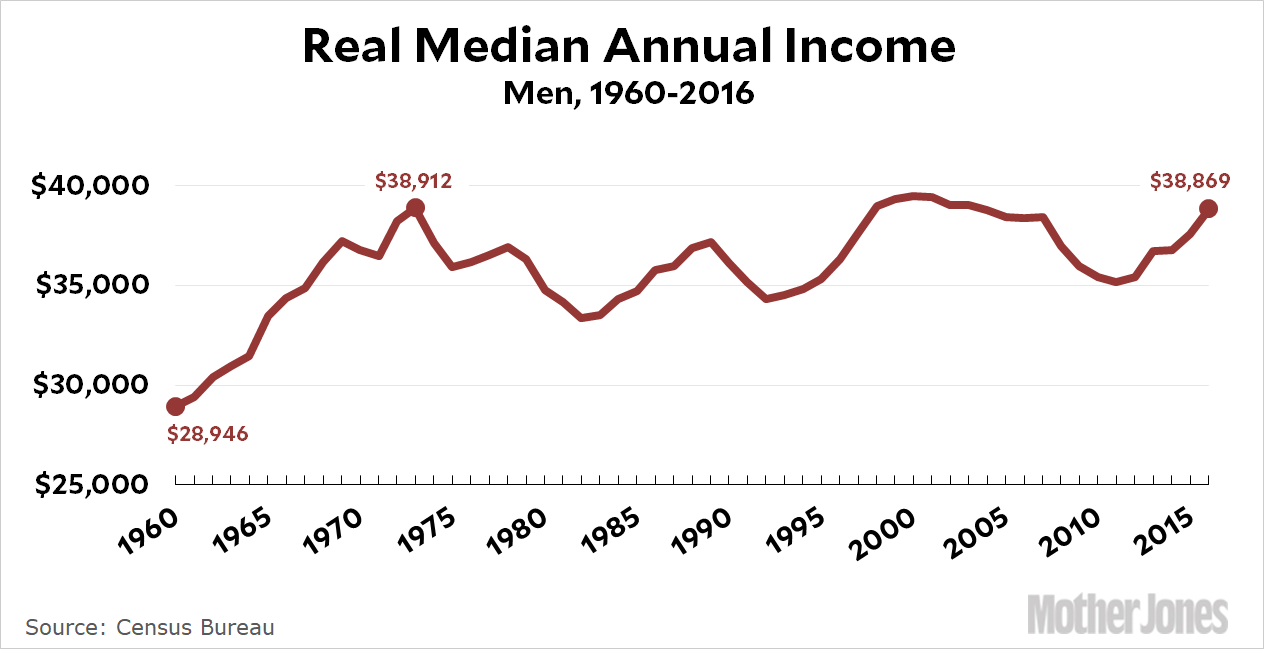
So think bigger. There are some things we do know. For example, men’s wages, which increased nicely during the immediate postwar era, have stagnated since 1973. Despite four decades of strong US economic growth, the average American man today doesn’t earn a single dime more than the average man in 1973:
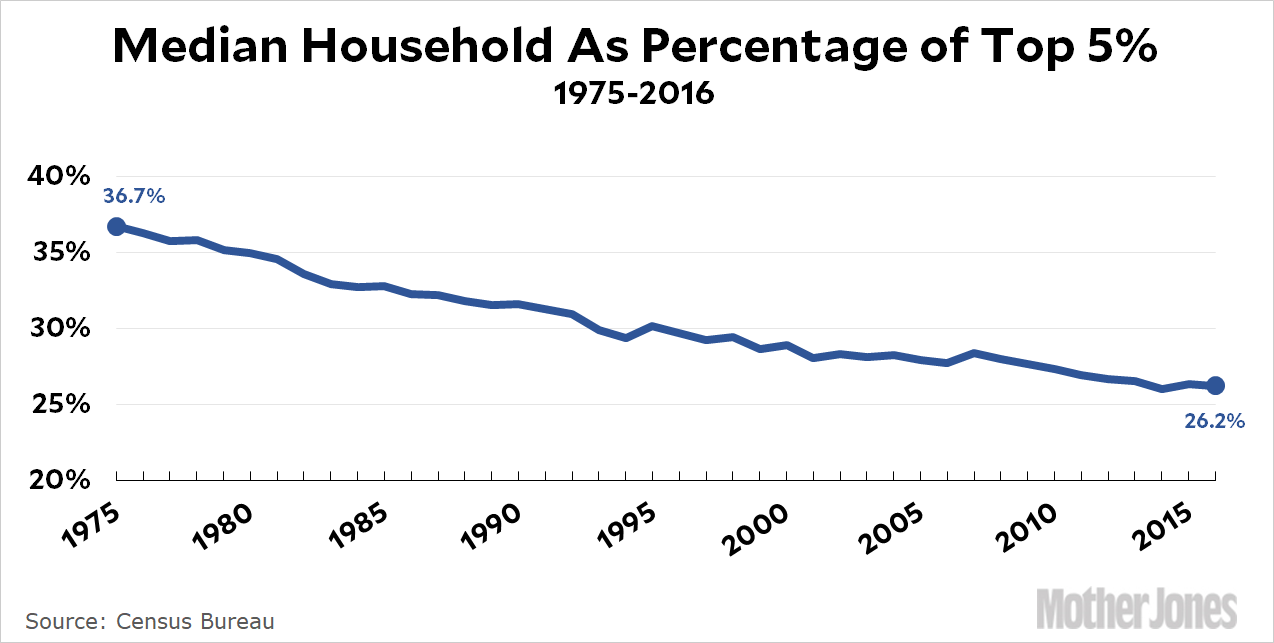
There are other ways you can calculate earnings, and some them show a slightly brighter picture. But not by much. At worst, men’s wages have stagnated, and at best they’ve grown sluggishly. This is important, but I’d argue that relative wages are even more important. Here are median household earnings compared to the top 5 percent:
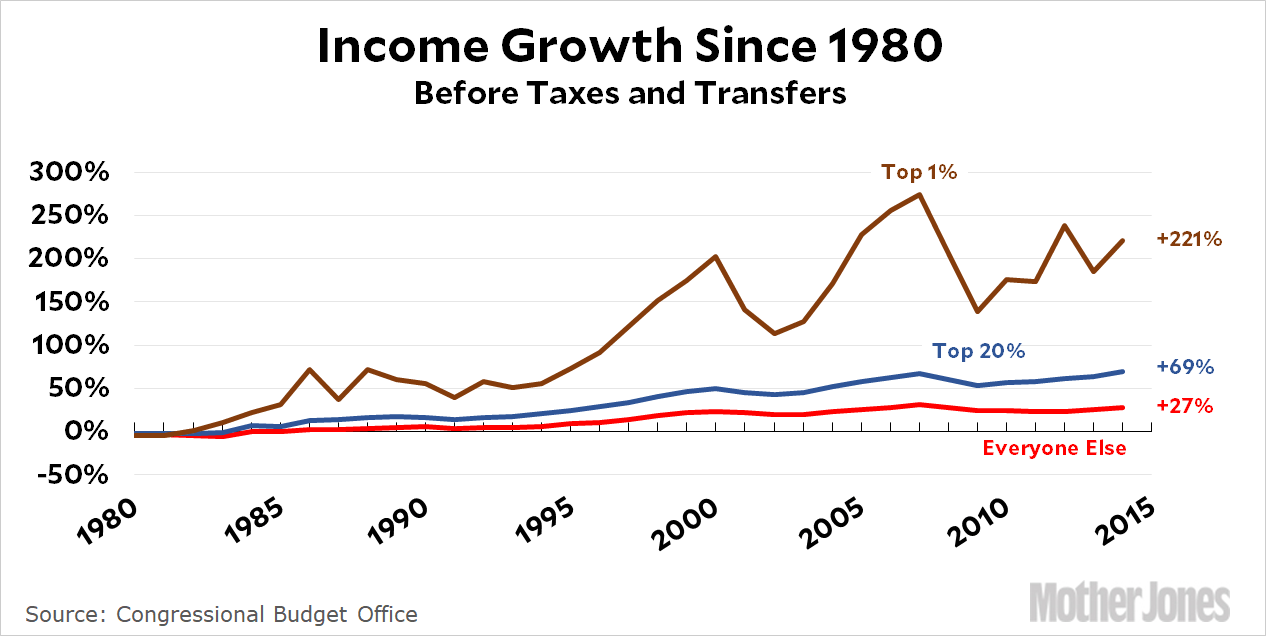
The top 5 percent aren’t millionaires. They’re doctors and lawyers and accountants—and the average household has fallen steadily farther behind them for the past 40 years. This is all familiar stuff. Everyone knows that income inequality has increased over the past several decades, as the middle class has stagnated while the upper middle has kept doing better and the rich have done lots better. We’ve all seen the chart:
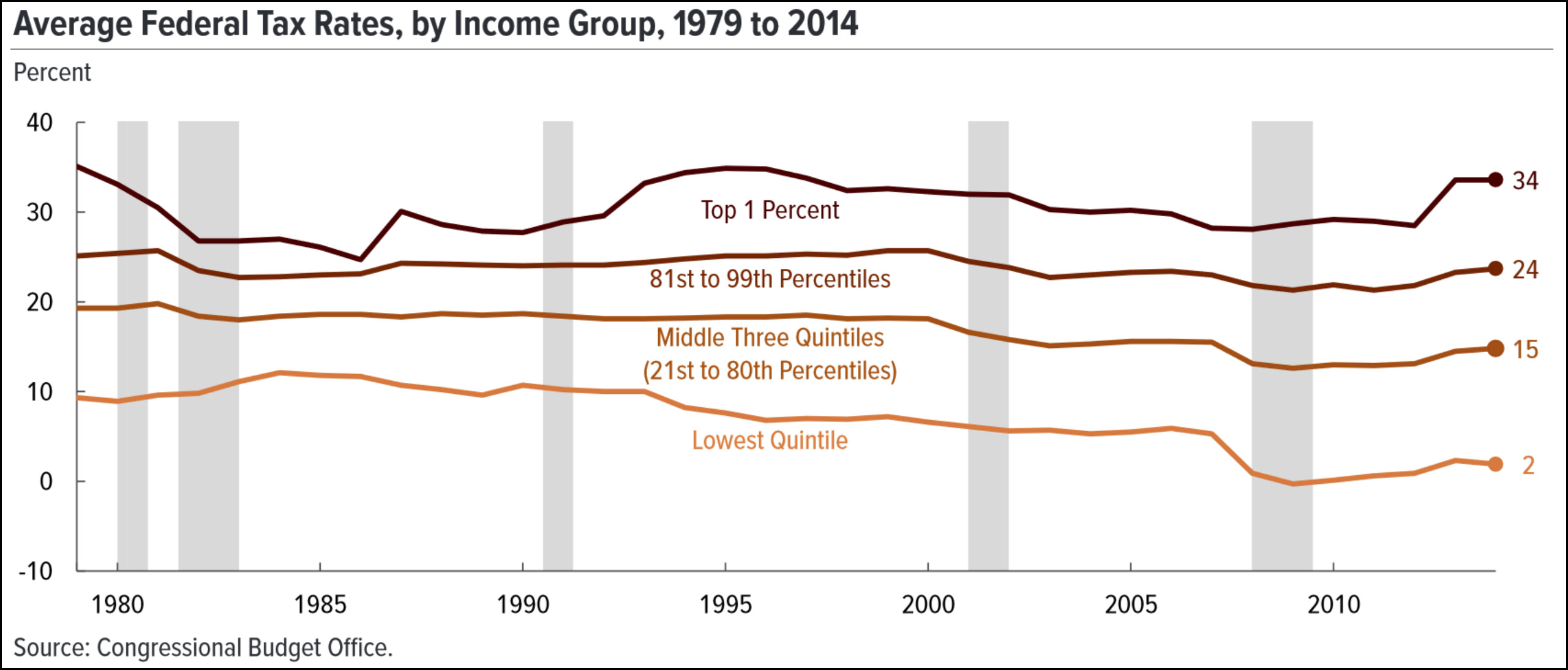
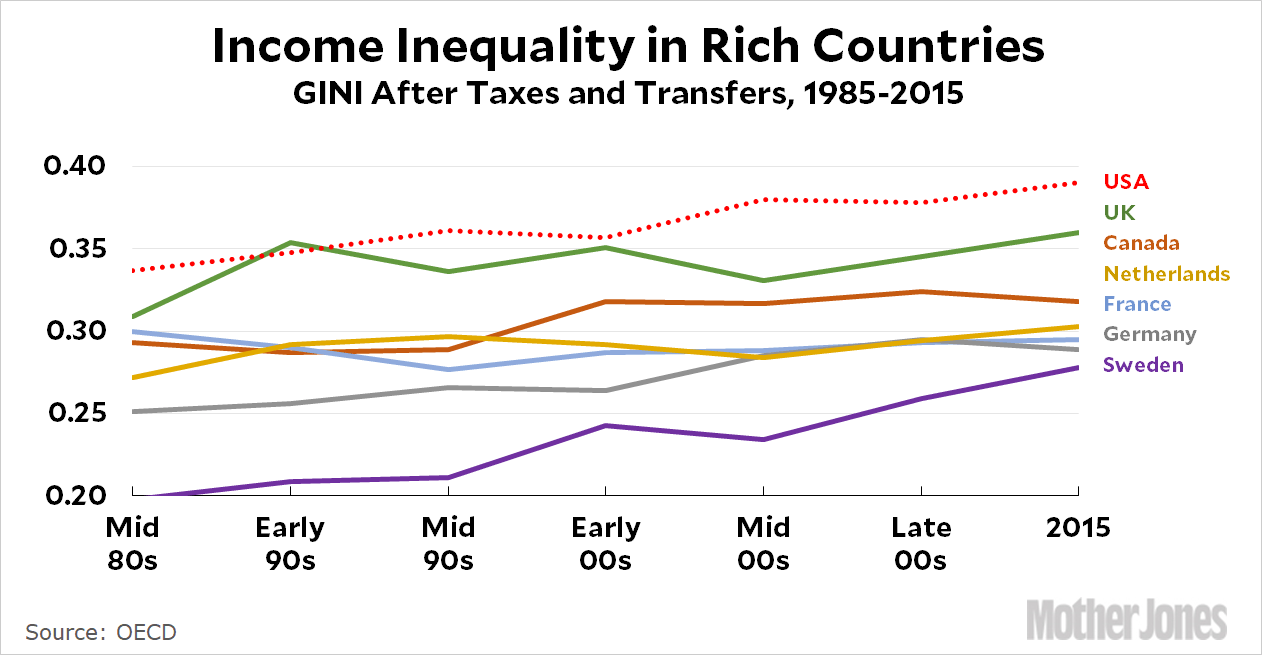
Now, this has happened all over the world, not just in the US. Income inequality in France and Germany are about the same as here. The difference is in how we tax it. You’d think that as their incomes skyrocketed, the average effective tax rates of the rich would go up too. Needless to say, you’d be wrong:
The result is that when you include both taxes and transfers (i.e., Medicare, Medicaid, unemployment insurance, etc.), income inequality in the US is considerably higher than it is in other rich countries:
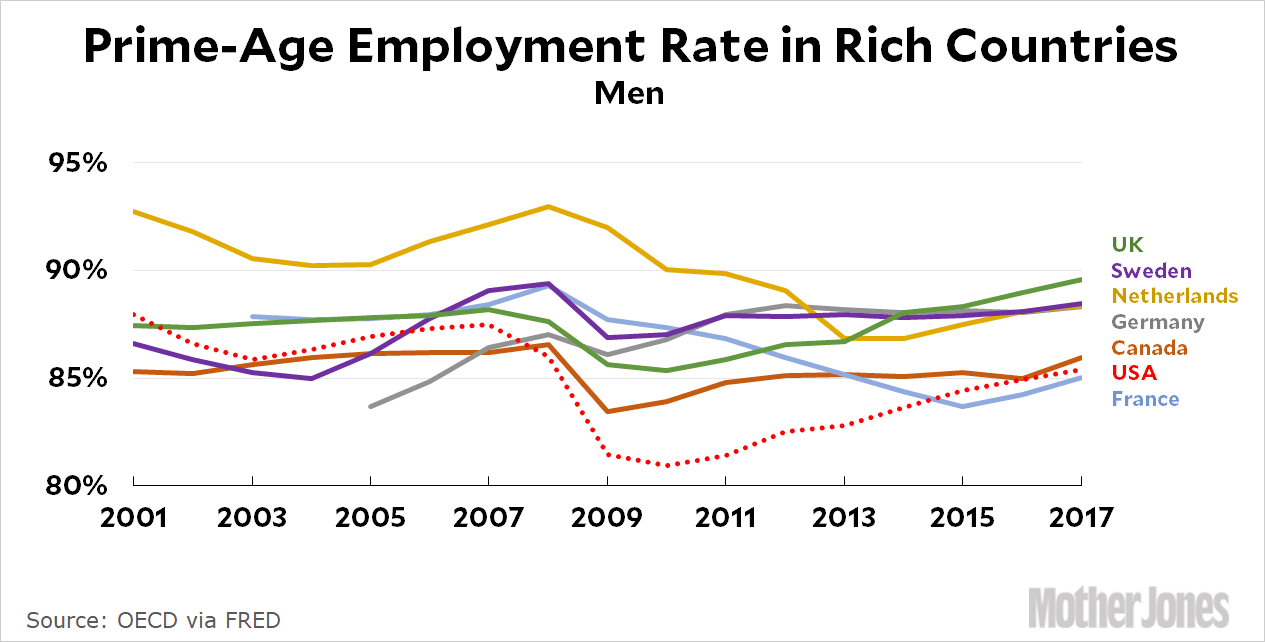
None of these other countries have job guarantees. What they have is high taxes on the affluent, which are used to pay for things that help level out inequality: universal health care, universal child care, decent unemployment benefits, and so forth. This doesn’t make them nirvana, but neither does it wreck their economies. They’re mostly doing better than we are on the employment front:
So instead of a jobs guarantee, think about this instead: how can we best smooth out the huge increase in US income inequality, which leads to a quite reasonable feeling among the working class that they’re being left behind while elites hoover up all the money? The best answer would be reforms in the market economy that made income distribution fairer, but nobody really knows how to do that. That leaves us with the second-best answer: tax the rich and use the proceeds to give money and benefits to the not-rich.
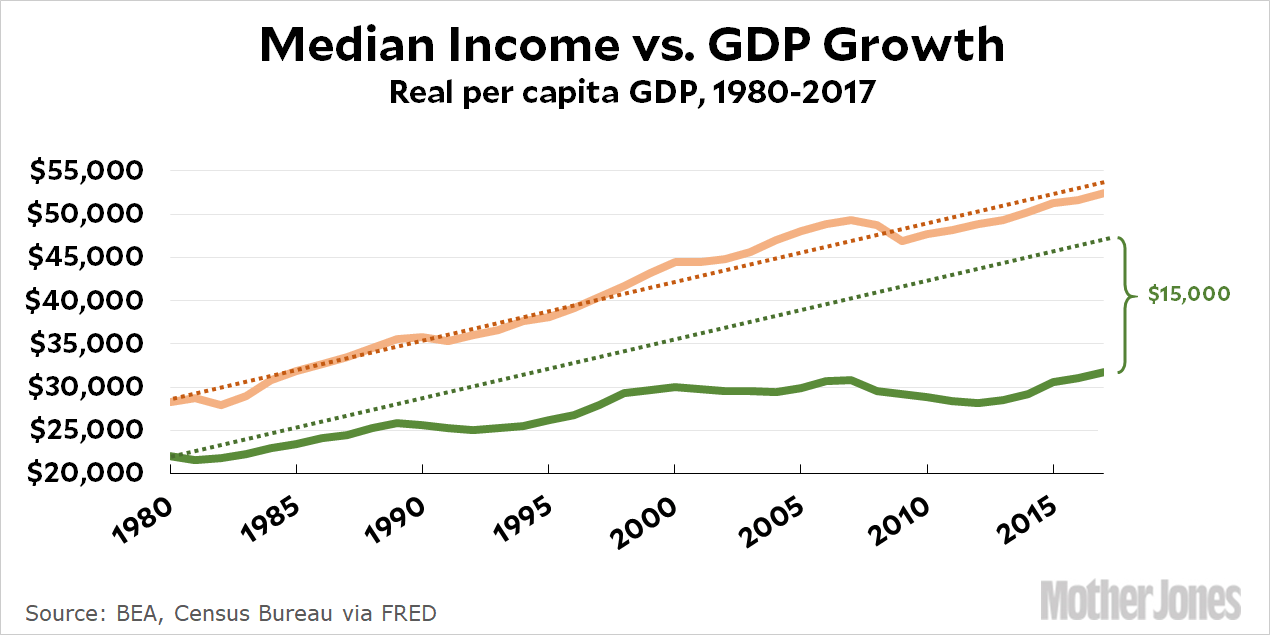
But how much should we tax the rich? Here’s a chart that at least gives you a starting point to think about this:
Since 1980, per-capita GDP has grown 85 percent. If all that growth had been shared equally, median income would also have gone up 85 percent. It hasn’t, and we all know why: because most of the money has gone to the upper middle class and the rich. If we want something fairer, we need to increase taxes on the affluent by enough to raise about $15,000 for most working adults. I’ll let others do the arithmetic. In round numbers, call it a trillion dollars or two.
The obvious candidates for this money are universal health care and universal child care. The former goes a long way toward leveling the benefits of living in a rich country while the latter makes it far easier to hold a job. But what about something that directly tackles employment? My favorite idea is job subsidies.
This is an idea that’s popular among some conservatives, and I propose to take them up on it—on an industrial scale. There are lots of different versions floating around out there, but they all share some common elements. The basic idea is to leave the minimum wage alone and allow businesses to hire people for whatever the market says they’re worth. But then the feds top up the pay. Maybe everyone gets at least $15 per hour ($30,000 per year), with subsidies then declining between incomes of $30,000 and $60,000. Or something else. I’m not too worried about the details, only the scale. The basic impulse here is simple: earnings have stagnated over the past few decades—especially for men—and if we want more people working, the best way to attract them is to pay them more. It’s the easiest way of finding out who really wants to work and who doesn’t.
A jobs subsidy accomplishes several things. First, it doesn’t change the incentives of the market. Second, it makes jobs more lucrative, which should pull a lot more people into the labor market. And third, a jobs subsidy does what government does best: it writes checks, which ordinary people then spend on whatever they want. A jobs guarantee, by contrast, does what government does worst: it specifies exactly where the money will be spent; what it will be spent on; who will get it; and what the rules are for allocating it.
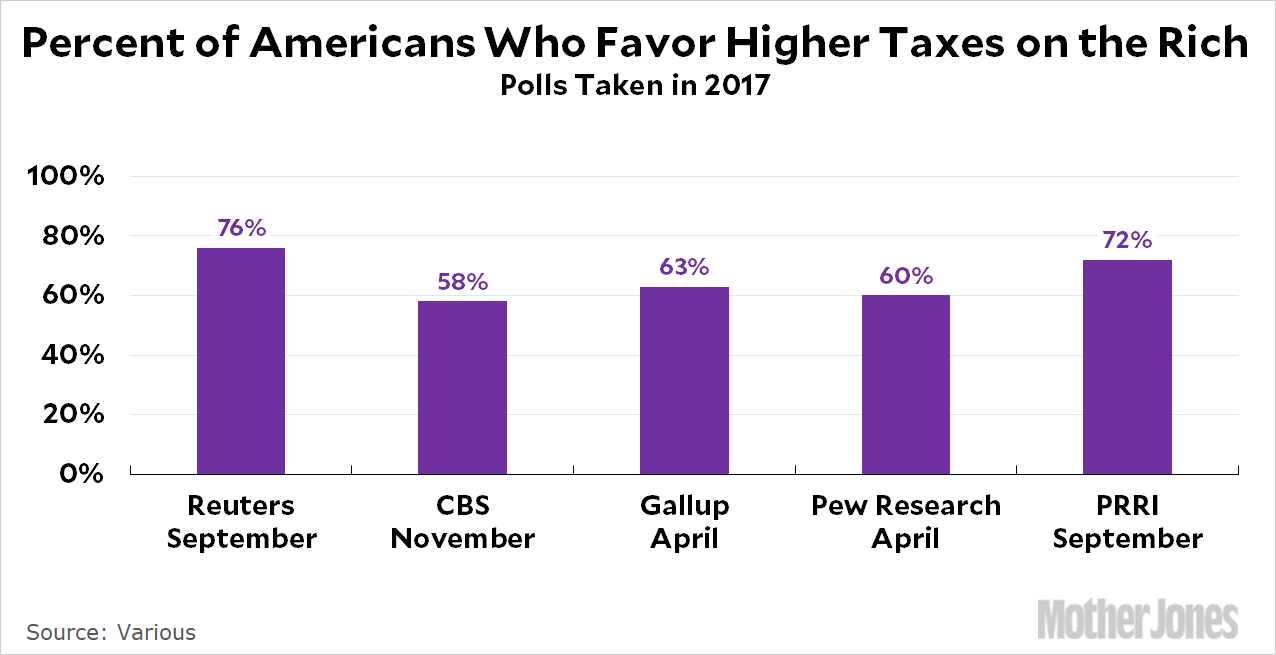
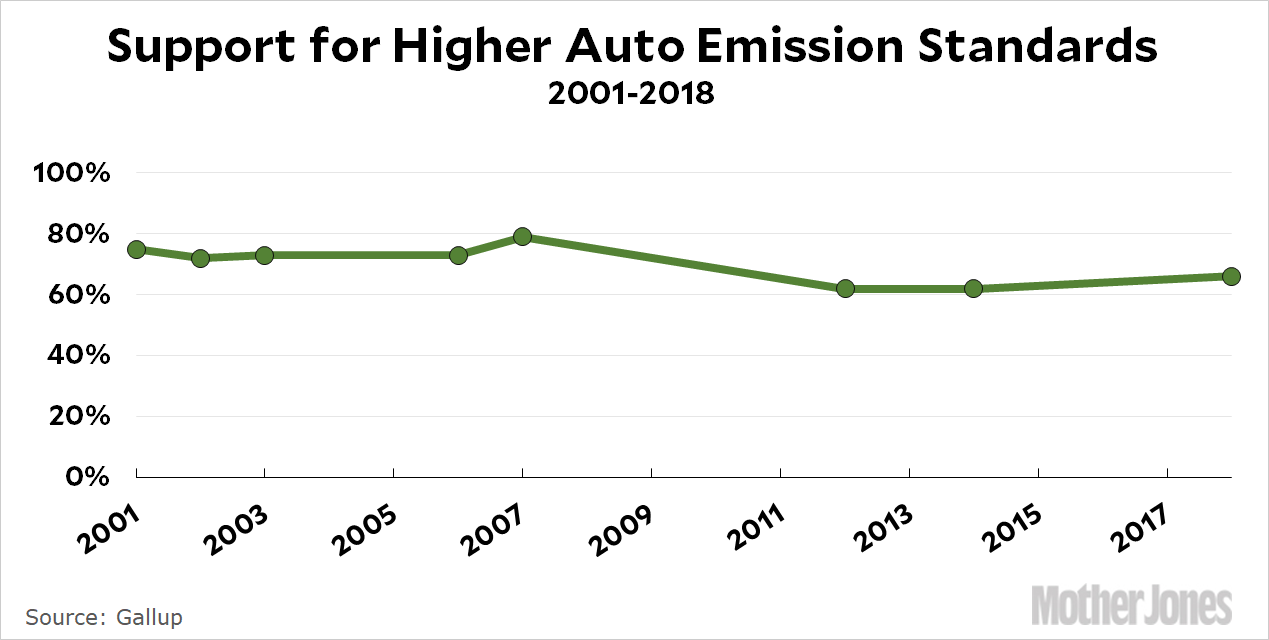
Bottom line: over the past few decades, the rich have taken all this money. Let’s take it back. In the same way that Republicans compete to offer the biggest tax cut plans during primaries, Democrats should be competing to offer the biggest tax increases on the rich. That will give us all a nice, quantitative measure of just how progressive each candidate really is. And as a bonus, this is already an extremely popular position even before anyone really makes a case for it:
Finally, on a completely different note, I’d add that this is good practice for our robot future, when we’re going to have to get used to redistributing income on a huge scale as people are steadily put out of work. Why not work out the kinks now?
The unemployment rate is currently 4.1 percent, a number so low that it’s been matched only one other time since 1970—and that was during the tail end of the dotcom bubble. But does that mean everyone who wants a job has one? It’s hard to say for sure. After all, there are people who have simply dropped out of the labor force and are no longer being counted. There are people working part-time who’d rather be working full-time. And there are people who stay at home voluntarily, but who might be enticed back into the labor force if they were offered enough money. So the unemployment rate doesn’t tell us conclusively if we’re really employing every single person that we could be.
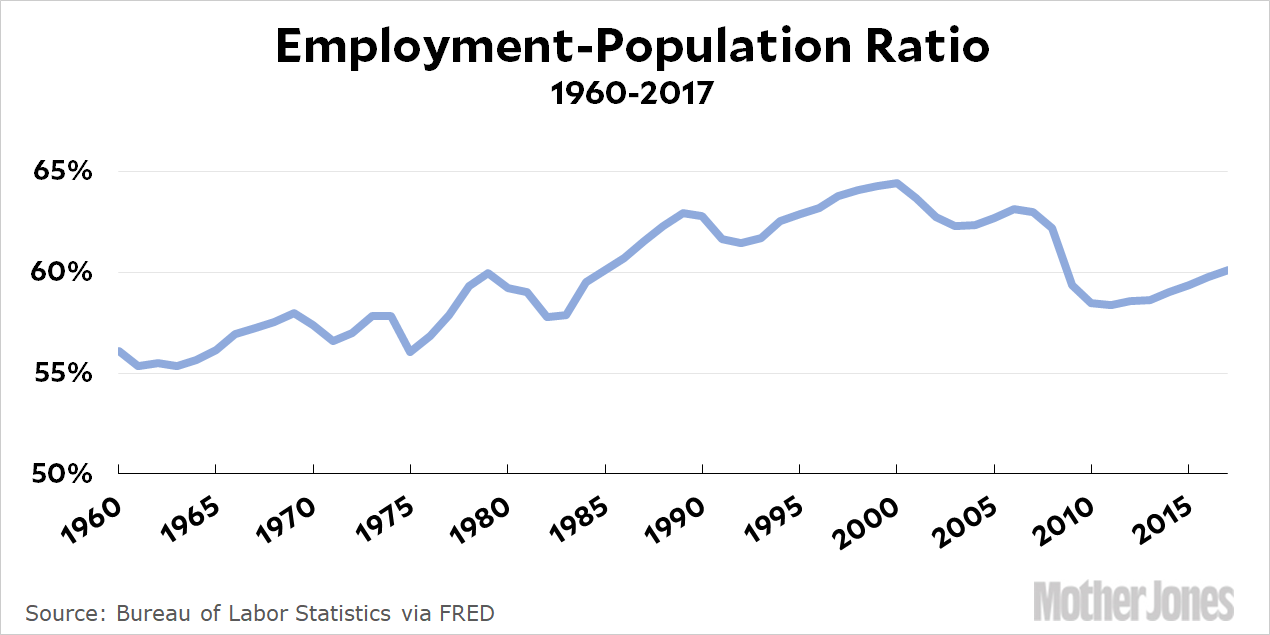
But if the unemployment rate doesn’t tell us if we’re at full employment, what does? A popular alternative is the employment-population ratio, which just measures the number of people with jobs, full stop. It looks like this:
Th empop ratio increased steadily until about 2000, and then slumped. So this means we used to have a lot more people working than we do now. Right? Not necessarily. The baby boomers started retiring around 2000, and that reduced the empop ratio even though it doesn’t mean there’s anything wrong with the labor market. And should the peak of the dotcom bubble be our yardstick anyway? When you take those things into account, maybe 60 percent is just fine.
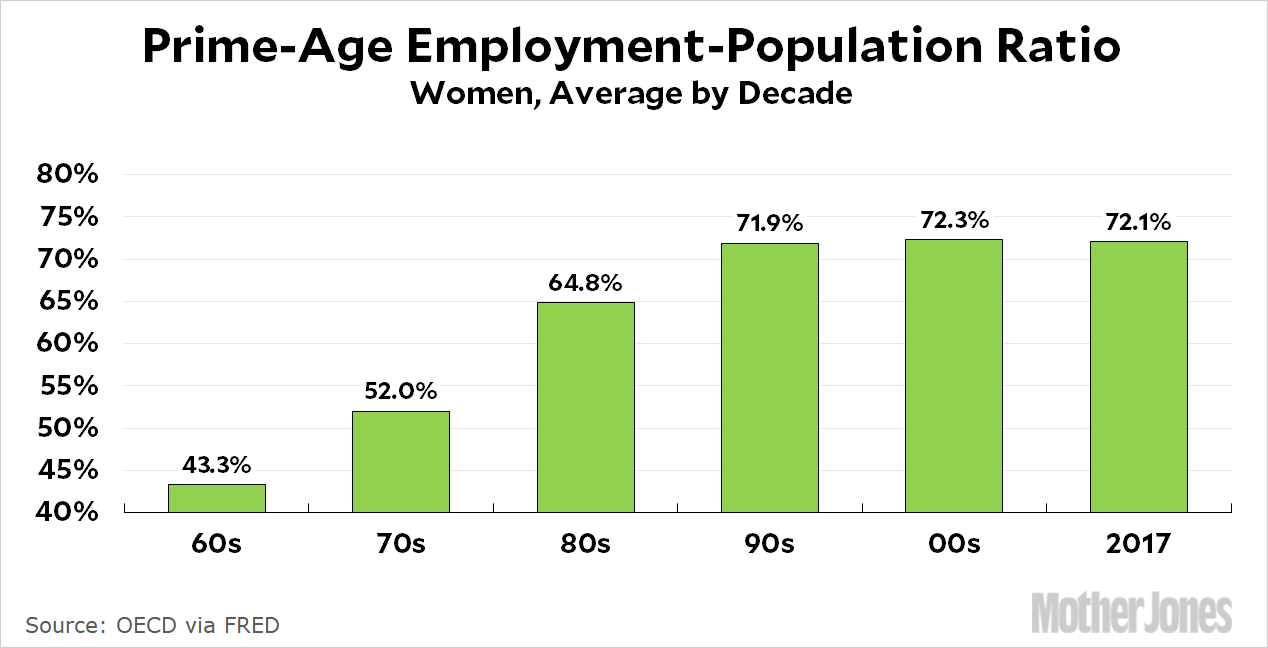
Here’s a better way of looking at it: prime-age workers only; for men and women separately; by decade. First up, here are women:
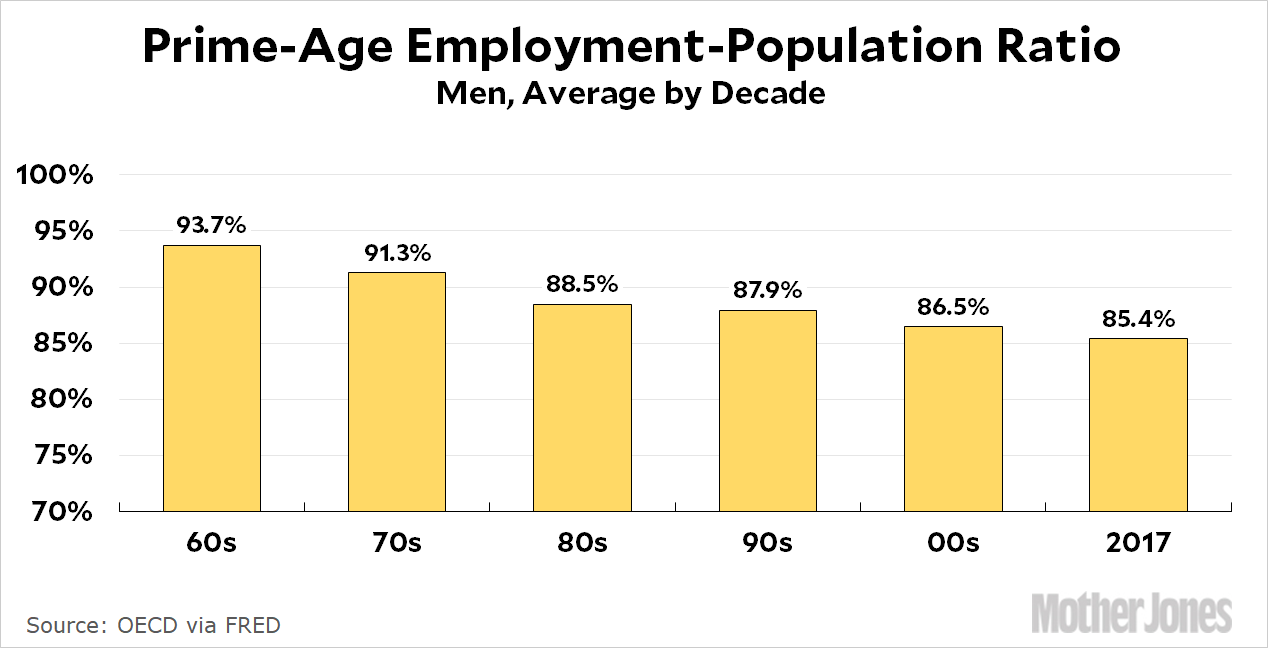
Women entered the labor force in greater numbers starting in the 60s and their employment-population ratio rose. Then it peaked and flattened out. If you want, you can argue that more women should be working, but that’s more in the nature of a dogma than a clear fact. Roughly speaking, there’s nothing really wrong with this picture. Now, here are men:
This is the problem: the number of men in the labor force has dropped by eight percentage points since the 60s. But why? This didn’t start in the Reagan era. Nor did it start during the Great Recession. Prime-age men have been slowly but steadily leaving the labor force during nearly the entire postwar era—even during the 60s and early 70s, when the economy was booming.
This is one reason that I’m not excited about a federal jobs guarantee. There’s a very specific problem here, and solving it requires something that’s both more expansive and more focused than a jobs guarantee. It also needs to be something more likely to work. More on that later, after everyone has had time to mull this over.
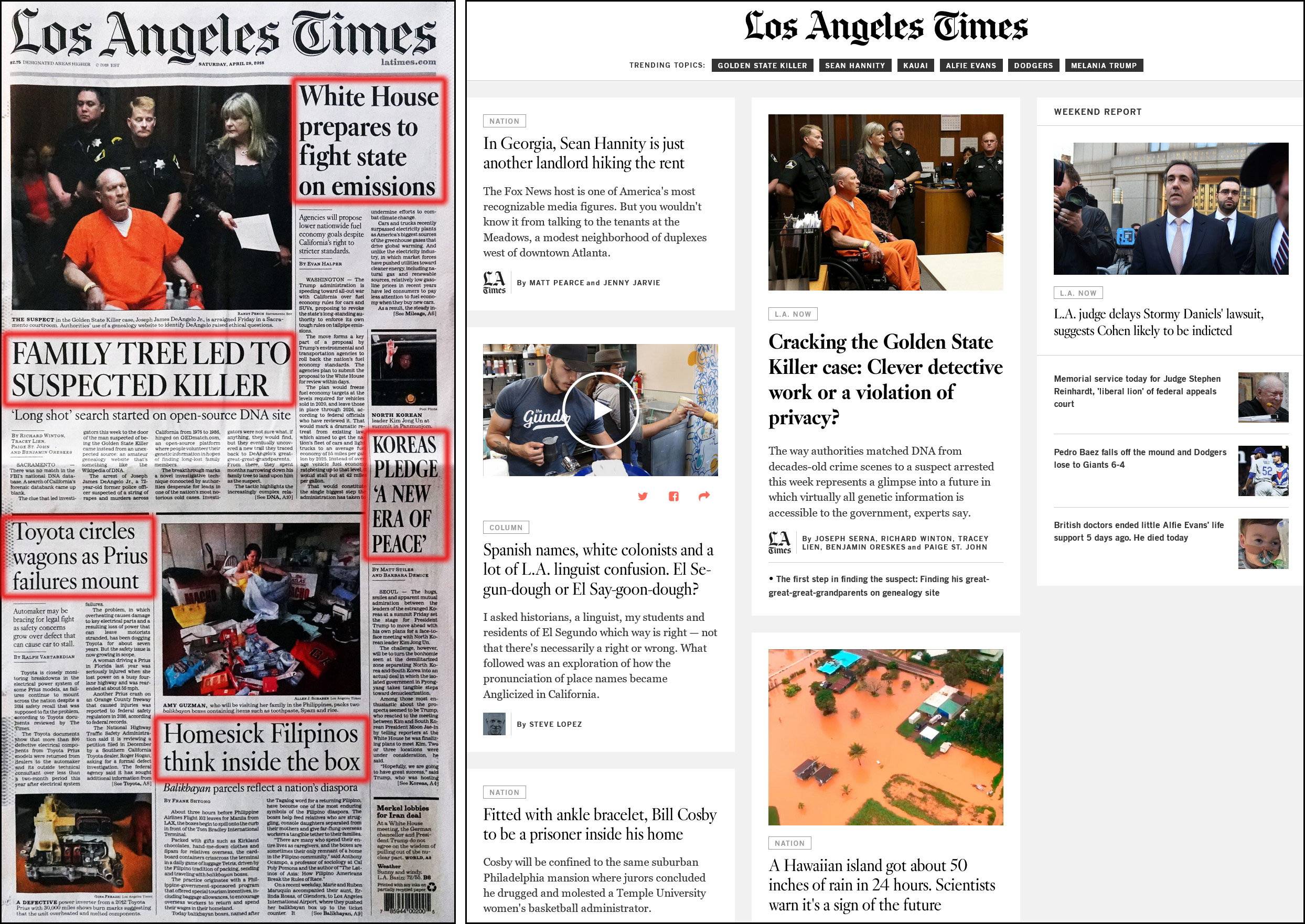
Having now griped about the LA Times, here’s the story that kicked off today’s griping. It took a while, but I finally found it online:
The Trump administration is speeding toward all-out war with California over fuel economy rules for cars and SUVs, proposing to revoke the state’s long-standing authority to enforce its own, tough rules on tailpipe emissions…. Within the administration, officials have disagreed about how far and how quickly to push changes in fuel economy rules, according to officials familiar with the discussions. Some officials attuned to the concerns of the auto industry have warned against a proposal that over-reaches and could lead to years of litigation and uncertainty.
Wait. The auto industry is opposed to this because they want more certainty? How hard have they been lobbying the Trump administration to back off?
The auto industry began lobbying Trump to relax fuel economy standards soon after his election. But company officials have been clear that they want a deal with California, not a war with the state. In backroom negotiations, industry officials have urged the administration not to create a situation where California pursues one standard and the federal government pursues another.
Nice work, guys. Trump gets into office promising to raze everything President Obama ever did, so you jump on board. Then you’re dismayed when Trump is uninterested in half measures and instead wants to destroy the Obama fuel economy standards completely and, for good measure, take some revenge on California, his great white whale.
The American auto industry is bound and determined to always pursue the stupidest course of action available to them. They’ve been doing it for decades, all the while wondering why their cars aren’t more popular. This time, they could have finally done something smart. They could have loudly lobbied the Trump administration to leave the fuel economy standards alone. After all, they know perfectly well they can meet the tighter standards, and it would have been both good PR and a sign of confidence that they can compete with overseas manufacturers.
But no. As usual, they’re too dumb to go down that road. Doing something that’s both good for the planet and popular with the American public just never occurred to them.
Today is pet peeve day. Keep in mind that a pet peeve is something that (a) bugs me but (b) the rest of you don’t care about, and (c) I have to gripe about anyway. So here it is:
On the left is today’s print edition of the LA Times, which showed up on my driveway around 5 am. It has five stories. On the right is the online front page of the LA Times at about 10 am. It has nine stories, none of which are the ones in the print edition.¹
What’s the deal with this? It happens nearly every day. You’d think that if a story is important enough for the editors to put it on the front page of the print edition, it would be important enough to show up somewhere on the front page of the online edition a mere few hours later. But no.
Like I said, all of you are just shrugging about this and wondering what’s eating me. All I can say is that it sure makes it hard to link to stories I read in the print edition. They frequently aren’t anywhere on the front page, even if you scroll down forever. So then I try to figure out which section it might be in. Business? Local? Nation? Politics? Sometimes that works, sometimes it doesn’t. Frequently it turns out that the story ran two or three or even five days ago online. Then I try to search for it, but stories often don’t show up in a search, for reasons that baffle me.
In addition to fixing their search funtion and syncing up the print and online publishing dates, maybe they could at least include a “Today’s Front Page” box in the online edition? That wouldn’t be so hard, would it?
¹The “Golden State killer” story in the online edition is different from the one in the print edition. But if you want to count that one, that’s fine. They’re now 1 for 5 instead of 0 for 5.
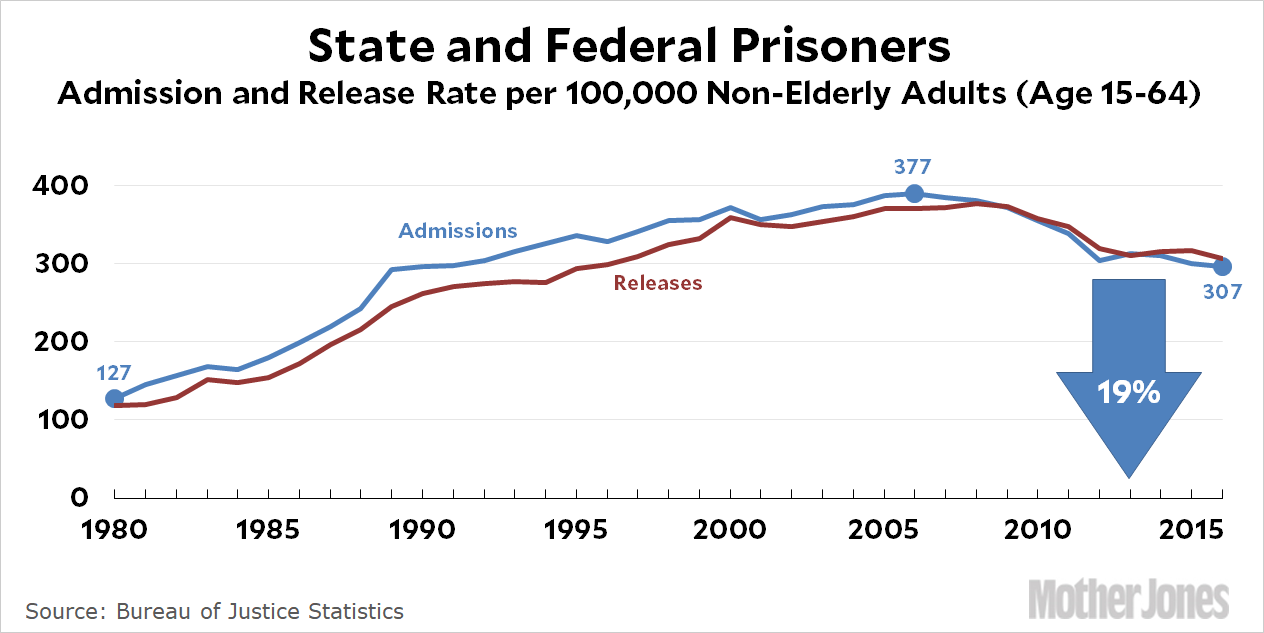
Yesterday I posted a chart showing the (slight) decline in the US incarceration rate in 2016. However, a reader points out that the prison admission rate is more interesting as an indicator of what’s happening right now, and the decline there is more impressive. Here are admissions and releases over the past three decades:
Since its peak in 2006, new prison admissions have dropped by 19 percent. When admissions fall below releases, the total prison population shrinks—something that happened in 2009 for the first time since 1980 and has continued since then. Eventually, as some of the prisoners with long sentences doled out in the 80s and 90s come up for release at the same time that new admissions continue to decline, the incarceration rate should start dropping more steeply.
If we want the overall incarceration to come down even faster, the key is not just fewer admissions, but shorter sentences. US sentences tend to be far longer than those in the rest of the world, and now that crime rates have declined to the levels of 50 years ago we can probably afford to start handing out more reasonable sentences.
POSTSCRIPT: Note that this data is for prisoners only, not local jail inmates. The average jail sentence is only a few months, so admissions rates don’t have the same meaning as they do for prisons.
POSTSCRIPT 2: As with yesterday’s chart, I calculated these rates as a share of the non-elderly population, not the entire population. This means that the exact numbers are different from the ones you’ll see in other charts—though the basic shape isn’t much different. Why do I do this? Because if you use the entire population, some of the decline in the prison numbers is simply due to the growing number of those over 65, who account for about 0 percent of the prison population. I think it’s more useful to look at incarceration rates as a percentage of the population that’s actually responsible for nearly all crime and nearly all prisoners.
And we respect that! But maybe you’re of a mind to support our work directly instead? We have until December 31 to raise the last $400,000 we need to keep our nonprofit newsroom running at full strength into 2026. Will you make a gift today?
We noticed you have an ad blocker on. Can you pitch in a few bucks to help fund Mother Jones' investigative journalism?
Billionaires own the media,
but they don’t own us.
At Mother Jones we know these aren’t conventional times, and they require unconventional coverage. That’s what deliver every day: fierce, independent journalism you can’t find elsewhere. Perhaps never in the history of our country has that been more necessary than now. But we can’t do it without reader support—your support. Please chip in today.
Billionaires own the media,
but they don’t own us.
At Mother Jones we know these aren’t conventional times, and they require unconventional coverage. That’s what deliver every day: fierce, independent journalism you can’t find elsewhere. Perhaps never in the history of our country has that been more necessary than now. But we can’t do it without reader support—your support. Please chip in today.