• Chart of the Day: GDP Growth in Q1

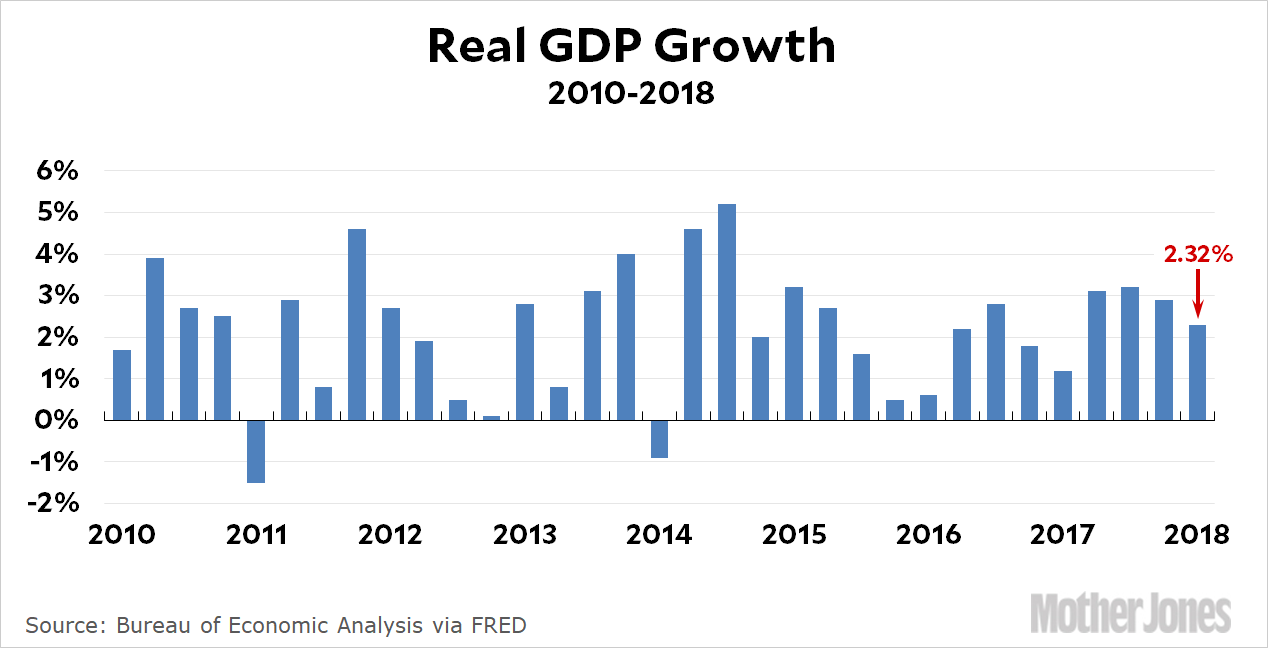
    The economy grew 2.3 percent in the first quarter:

    There’s not a whole lot to say about this. Given our current demographics, 2.3 percent growth is fine. At the same time, it doesn’t suggest that the big Republican tax cut had much effect on consumer pocketbooks. This is hardly surprising since most of the tax cuts went to corporations—who are mostly using it for stock buybacks—and the rich—who are just tossing it into their investment accounts. The poor and middle class, who are more likely to spend a tax cut, got only a few dollars.

  • What Is a “Jobs Guarantee”?

    If I think that a federal jobs guarantee is a bad idea, then how should we reduce the ranks of the unemployed and make sure that everyone who wants a decent job can get one? Without diving too deeply into things, the answer is twofold:

    • More jobs-friendly monetary and fiscal policy. That is, the Fed should generally be willing to run a hotter economy and the federal government should be more willing to spend money when it needs to.
    • Specific programs. I’d expand the EITC. Maybe look at job subsidies. Raise the minimum wage. Strengthen the ability of unions to organize. Fund a big infrastructure program. Etc.

    Over at Vox, Matt Yglesias broadly agrees with this. But here’s the twist:

    Jobs guarantee proponents themselves are fond of citing the New Deal-era Works Progress Administration and Civilian Conservation Corps programs as antecedents of their thinking, but these programs fell short of offering a universal employment guarantee. FDR rhetorically endorsed the goal of a right to a job in his second bill of rights, but specifically invoked “the industries or shops or farms or mines of the Nation” — i.e., the private sector — as central to that vision.

    ….A much wiser path is to follow Roosevelt’s actual model — the goal is a robust labor market, relief jobs are one of several tools to achieve it (and not necessarily the most important one), and it’s an enduring commitment, not a one-off policy shift.

    ….It polls well, and while some versions of the idea are unworkable or a hazy rhetorical smokescreen for total transformation of American society, others are perfectly sensible. Rather than argue about the phrase, people who agree that macroeconomic policy in the 21st century has been too complacent about the state of the labor market should pitch in and put our own better ideas into the mix.

    I’ve had a post along these same lines rolling around in my head for a while, but I haven’t felt quite ready to write it. I’m still not. One of the big differences between Hillary and Bernie in the 2016 primaries was stylistic: Bernie got everyone excited with a promise of Medicare for All while Hillary, knowing that this had no chance of going anywhere, more cautiously proposed a steady improvement of Obamacare. Meanwhile, over on the Republican side, Donald Trump simply declared health care “so easy” and blithely promised to pass a bill that would provide great coverage for everyone without any need for higher taxes.

    Trump won. So does that mean liberals should stop being so damn cautious and go down the same road? Should we campaign on a jobs guarantee for everyone, but skip the usual white papers and instead simply talk in generalities, with occasional excursions into bashing the Fed and supporting labor unions and so forth?

    In other words, should we accept that rhetorical flourishes are no big deal in politics? Should we accept that most people don’t take the details of political proposals very seriously, and just want to know which side a politician is on? Or should we insist on staying more reality bound and not giving in to Trumpism?

    I’ve been mulling this over for a while, and I’m still not sure. Consider this an open thread.

  • The US Incarceration Rate Went Down a Tiny Bit Again in 2016

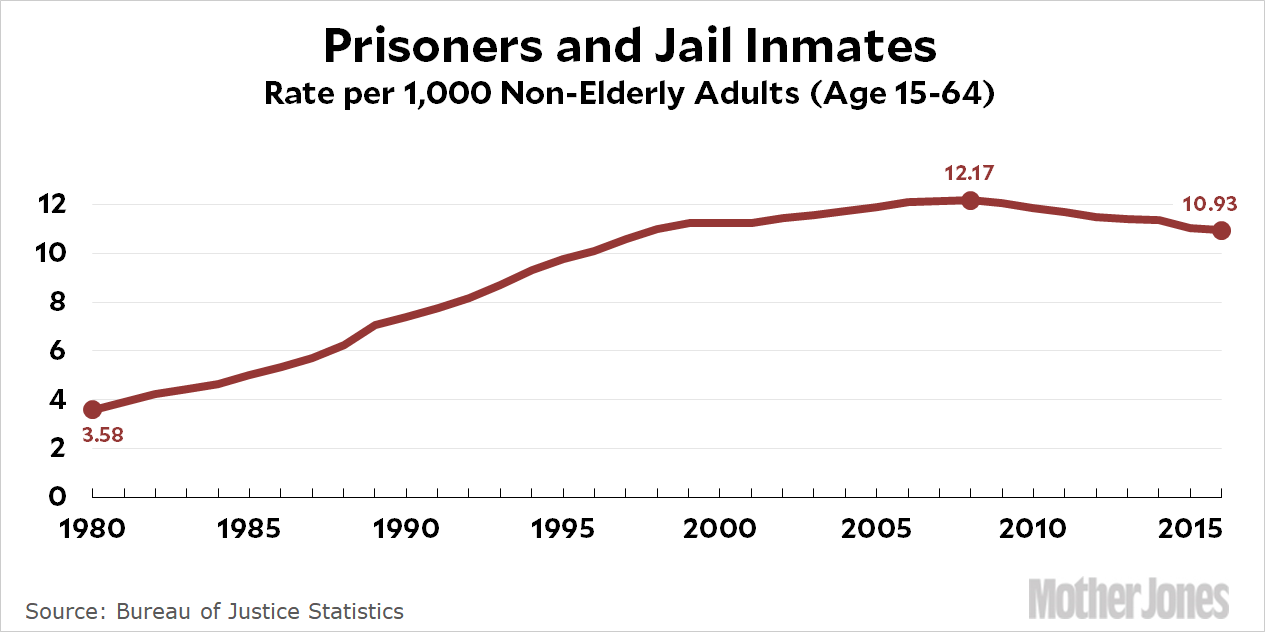
    Keith Humphreys reminds us today that 2016 prison statistics are now available, and once again the total incarcerated population has declined. That’s good news, but it’s also a good opportunity to show you the long-term incarceration picture:

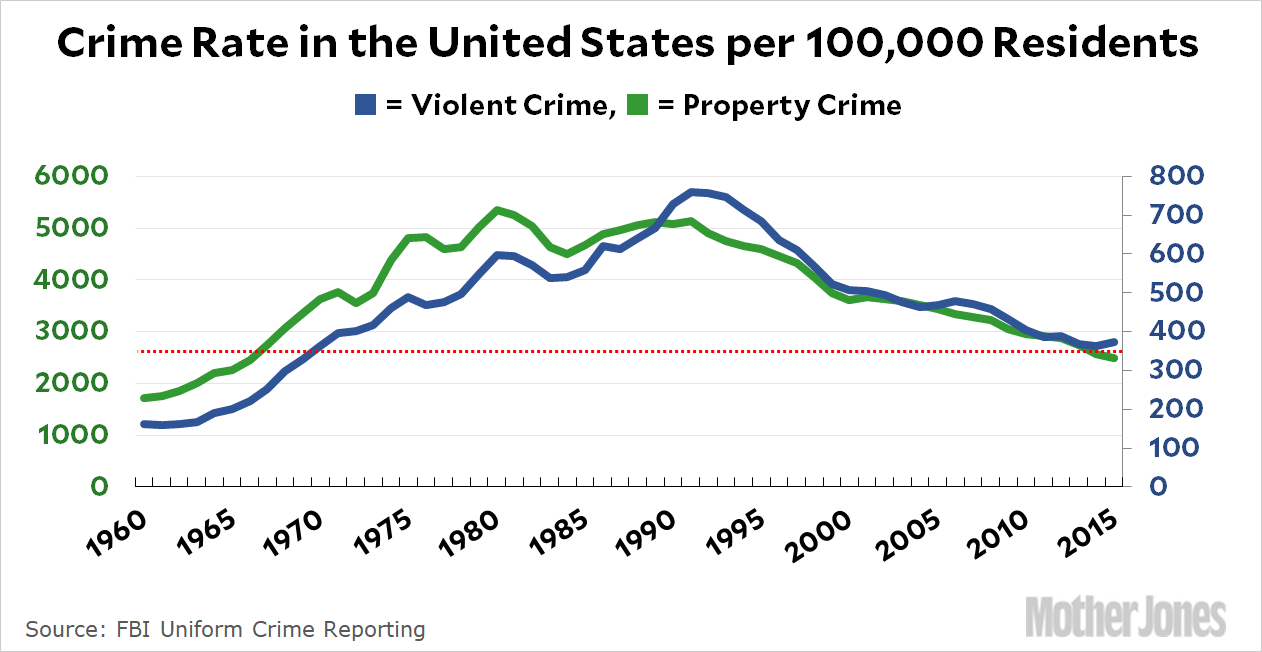
    Between 1980 and 2000, the incarceration rate quadrupled before slowing down and finally peaking in 2008. The incarceration rate has declined 10 percent since then, and while that’s nothing to sneeze at, we have a very long way to go before we get back to anything resembling a sensible rate. We need to cut this in half, to a rate around 4 or 5. After all, our current crime rate is about what it was in the late 60s. There’s no reason our incarceration rate should be much higher.

    UPDATE: The top chart originally had the wrong data. The shape was the same, but the numbers were systematically too high. Also it was originally labeled “Rate per 100,000 Non-Elderly Adults.” It’s actually the rate per 1,000.

  • The Mystery of the Great Congressional Youth Revolution

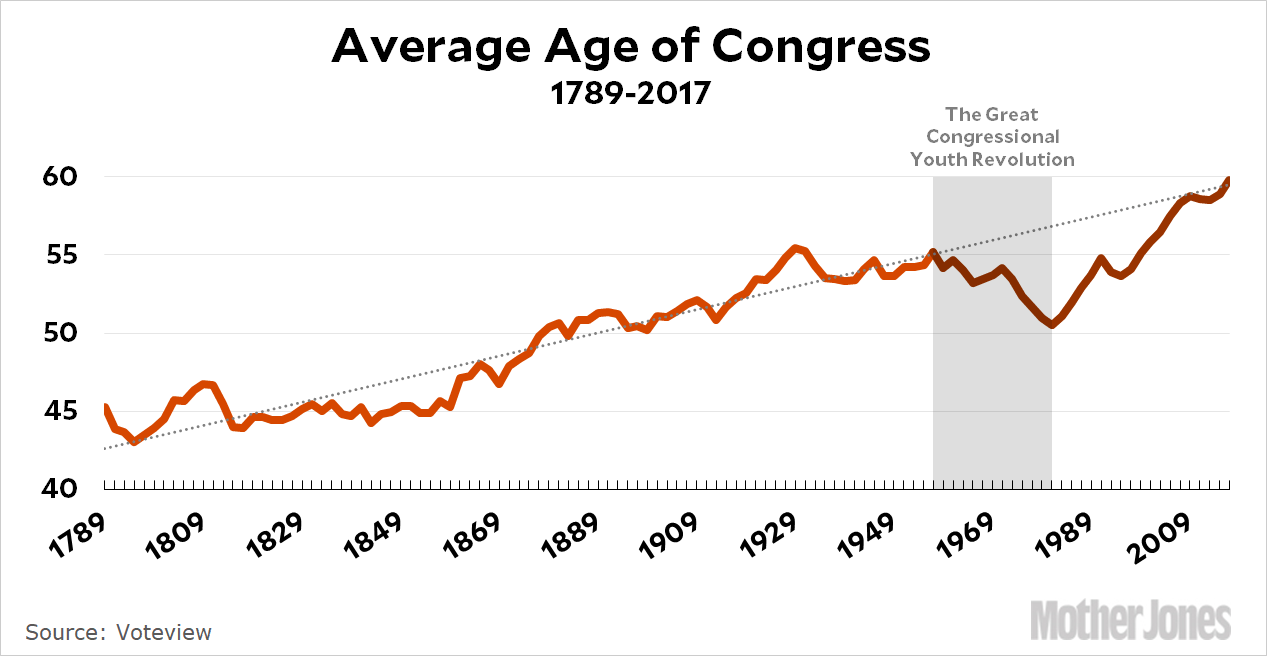
    Evan Soltas is concerned about the graying of Congress:

    Looking at these charts, I got curious about something. The age of Congress increases steadily from the beginning, just as you’d expect given lengthening lifespans. But then there’s a sudden drop in age from about 1958 through 1980. So what would Congress look like if there had been no decline and average age had continued to go up as it had for the previous 170 years? Like this:

    We’re right where we ought to be. Life expectancy at age 30 has gone up about 15 years since 1789, and the average age of Congress has also gone up 15 years. So there’s no mystery there. The real question is, why was there a sudden drop over the 20-year period from 1958-1980? Perhaps something related to the World War II generation getting old enough to run for Congress? Followed up later by the post-Watergate congressional classes? Anybody got any other ideas?

  • Dodgers’ High-Speed Gondola Stops Short of San Francisco By 347 Miles

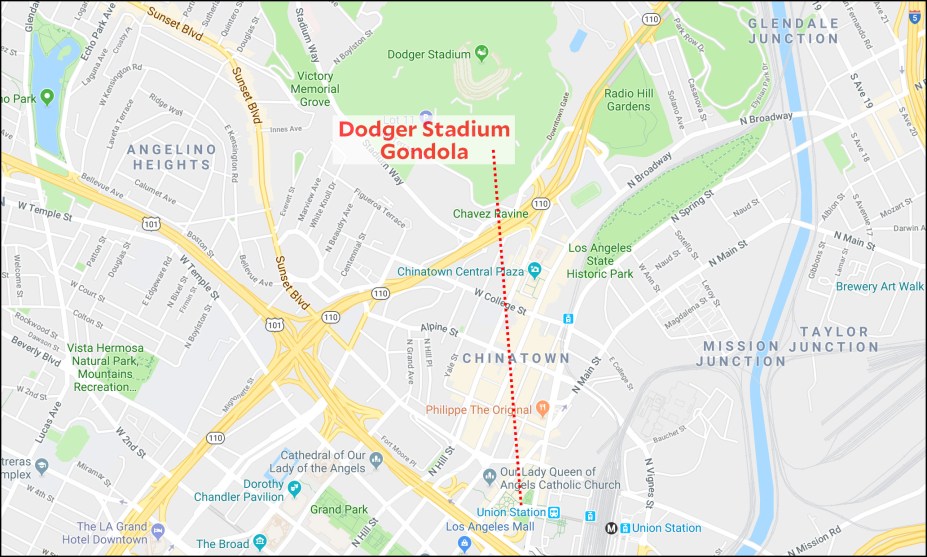
    Dodger Stadium is one mile from Union Station in downtown LA. But that’s a mile as the crow flies. In real life, it’s a very long and very slow mile.

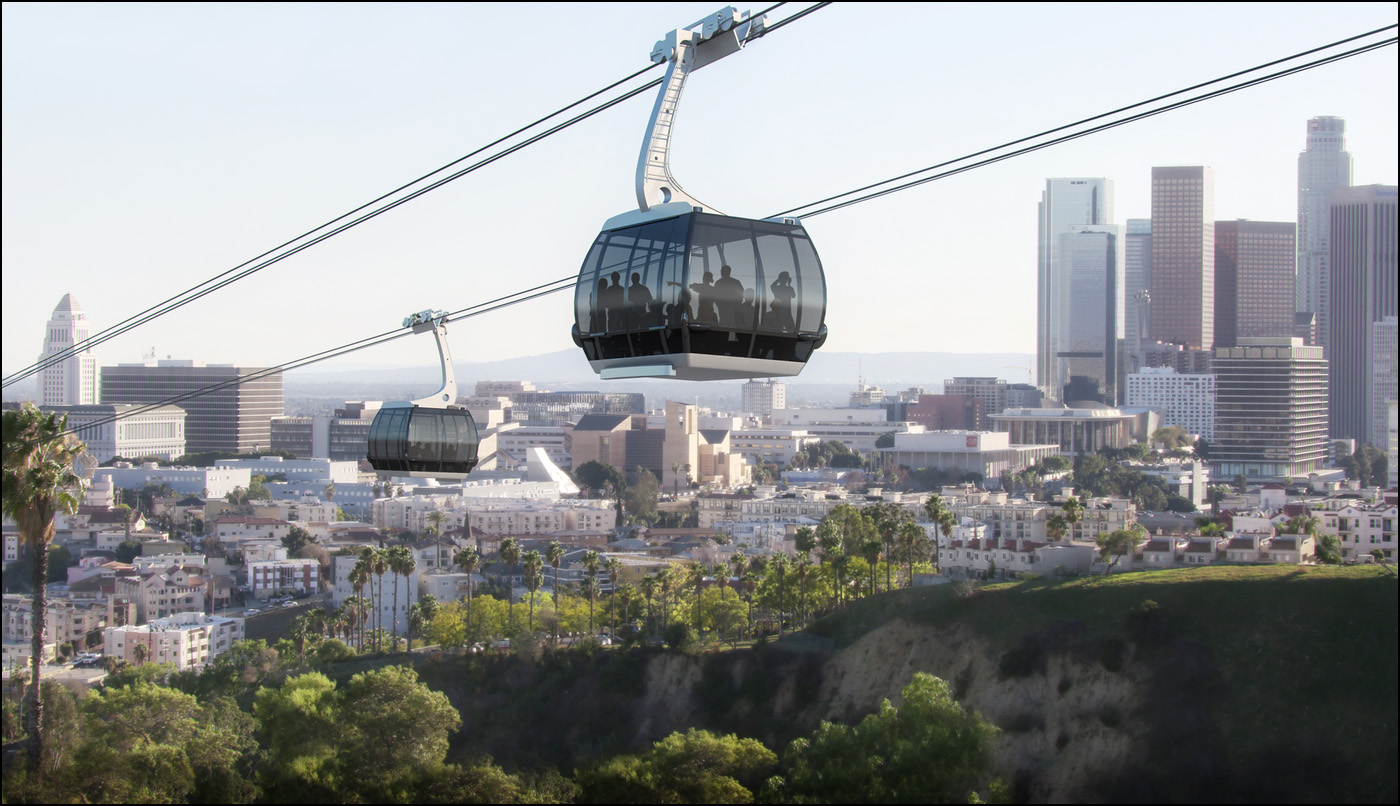
    The solution, apparently, is to get there the same way crows do: fly. The Dodgers are proposing an aerial gondola that would start in Union Station, climb high over Chinatown and the Harbor Freeway, and then dock itself in the parking lot at the stadium. The cost is a mere $125 million and it would allegedly be funded entirely privately. The fare would be “less than” $20.

    I am totally into this. But I have a suggestion: how about a competition? We could pit the gondola people against Elon Musk’s boring company. Which one could build a one-mile, point-to-point transit system for the least amount of money?

  • Europe’s Cap-and-Trade System Is Finally Getting a Workout

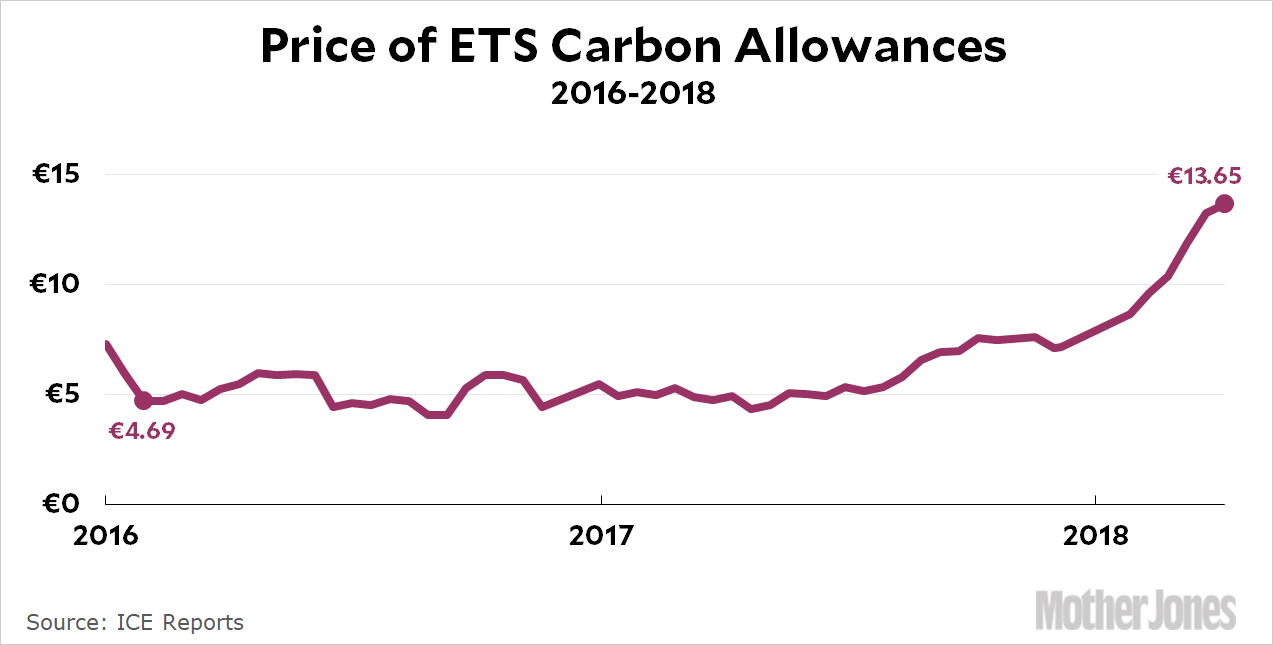
    Do cap-and-trade systems work? The first one certainly worked to reduce acid rain. But what about carbon emissions? The biggest and most ambitious carbon trading system in the world is Europe’s ETS, which has been widely viewed as a failure because the price of its carbon allowances was so low for so long. If the cap on carbon is so loose that it hardly costs anything to buy carbon allowances, you’re not reducing emissions much, are you?

    A big part of the problem with ETS was bad luck: by the time it really got rolling, the world had fallen into a deep recession that would last for years. As a result, starting around 2010 demand dropped for just about everything in Europe, and along with that so did carbon emissions. For a long time, ETS wasn’t really needed because the recession was keeping emissions low all by itself. But now the world economy is recovering and emissions are going up:

    Emissions regulated under Europe’s carbon market rose for the first time in seven years in 2017 due to stronger industrial output, data published on Tuesday by the European Commission and examined by carbon analysts at Thomson Reuters showed.

    ….According to the analysts’ interpretation of the data, emissions totalled 1.756 billion tonnes of CO2 equivalent (CO2e) last year for companies under the ETS excluding airlines, up 0.3 percent on the previous year.

    And guess what? With emissions rising, so is the price of ETS carbon allowances:

    One of the virtues of any emissions system is predictability: companies prefer to deal with fairly steady requirements, rather than being buffeted by big swings in how much they’re allowed to emit or how much they have to pay for it. This is the Achilles’ heel of cap-and-trade: it can produce big swings in allowance pricing, as we’re seeing now. But every system for limiting greenhouse gas emissions—whether market-based or purely regulatory—has weaknesses. Generally speaking, a well-designed cap-and-trade system regulates exactly what we want to regulate: emission levels. And it does it efficiently by allowing companies to trade allowances, which ensures that the least important emissions are the first ones cut.

    And it’s going to get better: next year the EU’s Market Stability Reserve goes into effect, and this will cut back on emissions even further. ETS isn’t perfect, but its history shows what can happen when a government is dedicated to reducing greenhouse gases and just keeps plodding along. Eventually things start to work pretty well.

  • Trump: Cohen “Represented Me” In Stormy Daniels Payoff

    Stormy Daniels: Clinton Wallace/Globe Photos/ZUMA; Michael Cohen: Tom Williams/Congressional Quarterly/Newscom via ZUMA

    Even doing softball interviews on Fox & Friends, Donald Trump can’t manage to keep his stories straight. First, he straight-up admitted that he had been lying when he said he knew nothing about Michael Cohen’s hush money payment to Stormy Daniels:

    “Michael represents me, like with this crazy Stormy Daniels deal, he represented me,” Trump said. “And from what I’ve seen, he did absolutely nothing wrong. There were no campaign funds going into this.”

    Then, despite the fact that the FBI’s recent seizure of Cohen’s records was directly related to Stormygate, he went back to his old story that he knew nothing, nothing:

    Trump went on to attempt to distance himself from Cohen, in keeping with the president’s tendency to claim he has little to do with associates once they get into trouble….“This doesn’t have to do with me,” Trump said. “Michael is a businessman. He’s got a business. He also practices law. I would say, probably, the big thing is his business. I have nothing to do with his business.”

    If the FBI finds evidence related to the payment to Daniels, it might very well have to do with Trump. But at least the president is keeping his chin up.

  • Legal Marijuana Dispensaries Appear to Reduce Opioid Abuse

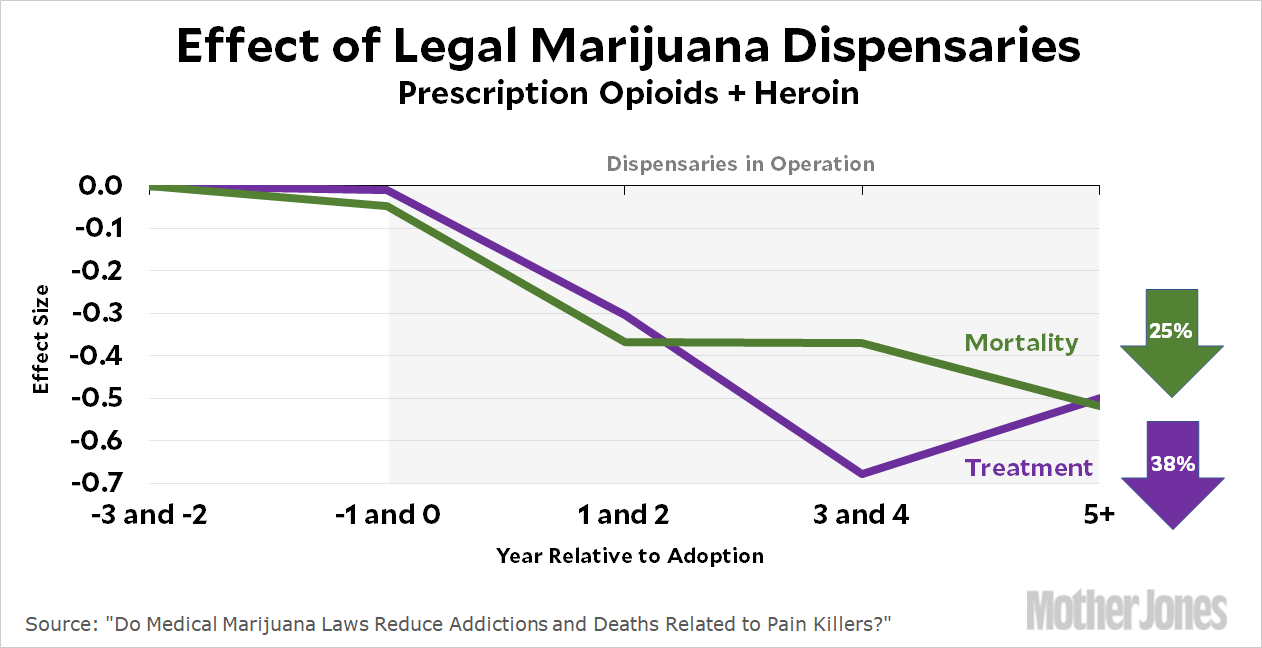
    Does access to legal marijuana reduce opioid abuse? It’s a tricky question to answer, but Mark Kleiman points today to a recent Rand report that tests the effect of medical marijuana laws between 1999-2013 on both opioid deaths and treatment for opioid addiction.

    The study finds that medical marijuana laws appear to have almost no effect on opioid use. What’s important, it turns out, is the existence of legally-protected dispensaries. Once those are in operation, the authors estimate that within a few years admission to addiction treatment programs declines 38 percent and opioid deaths decline 25 percent:

    It’s worth noting a couple of things. First, these numbers tend to vary a fair amount depending on precisely which years are included in the study and which controls are used. Second, the total distribution of legal opioid painkillers doesn’t decline after legal marijuana dispensaries become active. Taken together, this means that (a) the findings aren’t especially robust, (b) the paper is unable to say why opioid abuse seems to decline after legal dispensaries are opened, and (c) the sample sizes are fairly modest—something that’s inevitable since we’re still in the early days of legal pot dispensaries.

    Those are all good reasons not to treat these results as gospel. FWIW, I’d add another: the results seem too large. It makes sense that opioid abuse might decline when a different kind of pain therapy becomes widely available, but it’s a little hard to believe that the effect would be this large within just a few years. For more reasons to be cautious about these results, Kleiman has you covered in his post. However, we both agree that if we had to bet, we’d now bet that legalizing marijuana probably helps to cut down on opioid abuse. The effect might not be as large as this study suggests, but it’s probably greater than zero.

  • Donald Trump’s Plan to Reduce Illegal Immigration Isn’t Going Very Well

    How are things going down on the Southwest border? Not so good according to the Border Patrol: “During the month of March CBP saw a 37 percent increase overall when compared to February, but a 203 percent increase compared to March 2017.”

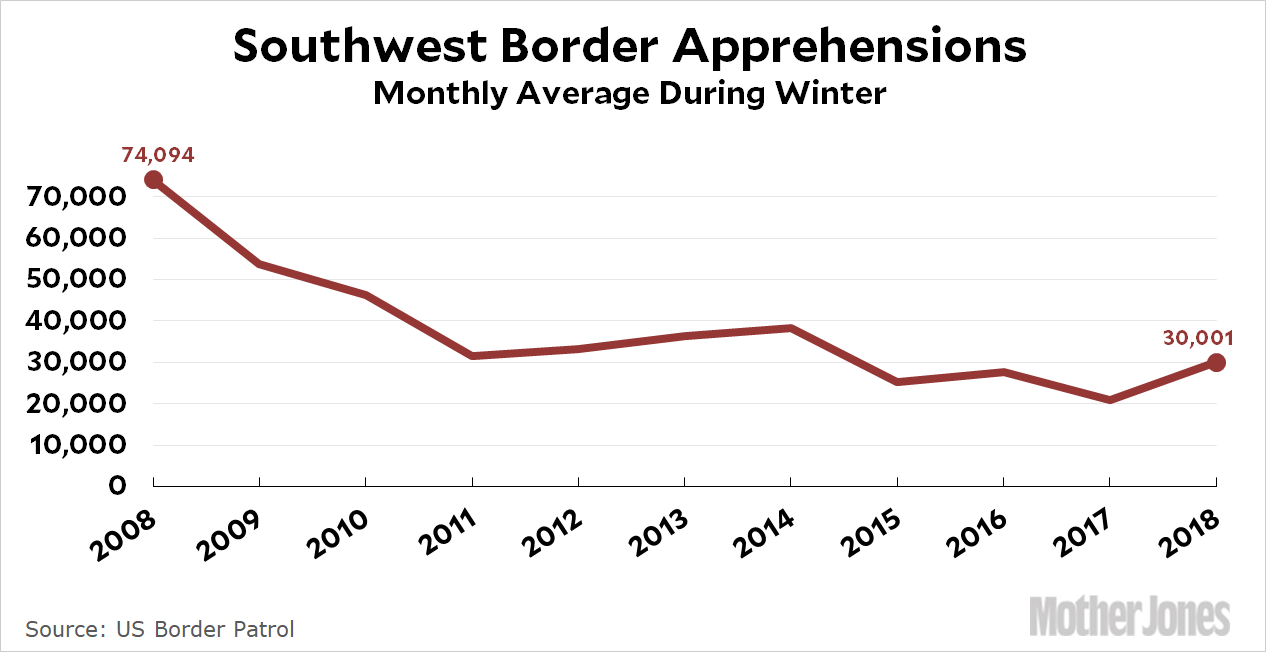
    Yikes! An increase in apprehensions usually means that more people are trying to cross the border, so this represents a big jump in illegal immigration. But how are things really going? Illegal immigration is seasonal, so let’s take a look at border apprehensions just in winter so we’re comparing apples to apples:

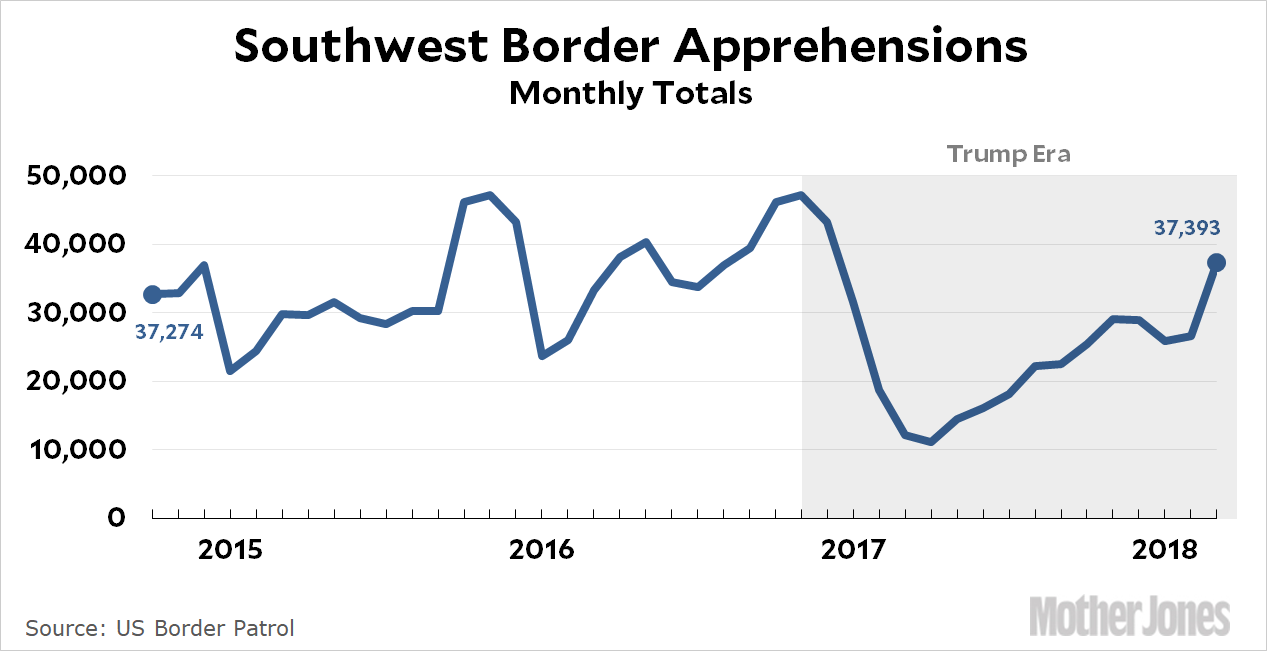
    Even if you use the average for all of winter, apprehensions are up 50 percent compared to last year. However, seasonality isn’t what it used to be. Over the past few years illegal border crossings have been only mildly seasonal, so it might be more helpful to zoom in on all monthly totals for the past few years:

    A moderate drop in January followed by a rebound in February isn’t unusual, but in 2017 we got an enormous drop from January all the way through April, bringing border apprehension levels to historic lows. This is something I thought might happen: there are a few areas where pure bluster can accomplish something, and this is one of them. After Trump was elected, it’s quite possible that his loud talk, followed up by some showy raids after he took office, scared a lot of potential border crossers away:

    This is a case where fear works. But will it work for long? The problem with amping up the bluster is that eventually it becomes the new normal and no longer has much effect. By that time, you really need to have an effective policy in place, and it’s not yet clear if Trump has the attention span or political skills to make that happen. We’ll see.

    To give him his due, I’d say that Trump’s attention span has been fine on this issue. He keeps hammering away at it. But he hasn’t been very effective at putting together actual policies to keep illegal immigration levels low, even though Democrats have offered him some pretty good deals. But that’s our negotiator-in-chief for you. He’s spent 30 years screwing up every deal he got his hands on, and now he has an even bigger canvas to screw up on.