• Maybe Politicians Don’t Really Represent Anybody

    Here’s some political science geekery combined with some chart geekery. Dylan Matthews has a post up today about a recent paper that compares public opinions on key issues with votes cast by members of Congress. How well do members of Congress represent the views of their constituents? Here’s the chart in the paper:
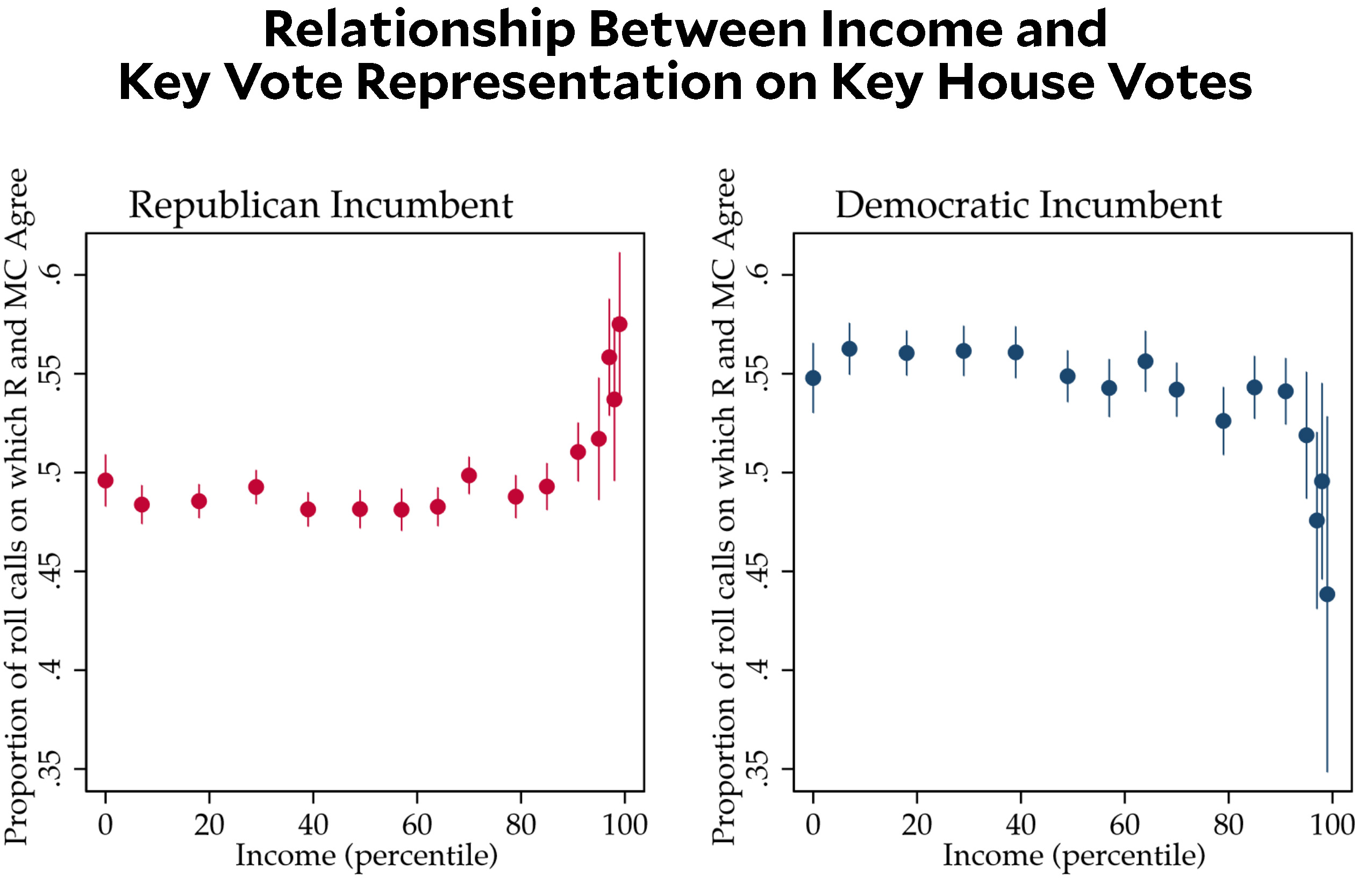
    Basically, it looks like everybody at all income levels gets represented about the same until we get to the very tippy top. The views of rich people get represented a lot better by Republicans and a lot worse by Democrats. But there are two things that make these charts a little misleading. The first is our old friend the y-axis: it goes only from 35 percent to 60 percent, which makes the upward and downward spikes look sharper than they are. The second is the error bars: they get pretty big at the high-income end of the charts, which makes the size of the upward and downward spikes ambiguous. Visually, however, they add to the effect that the spikes are big. Here’s a redrawn version of the charts:
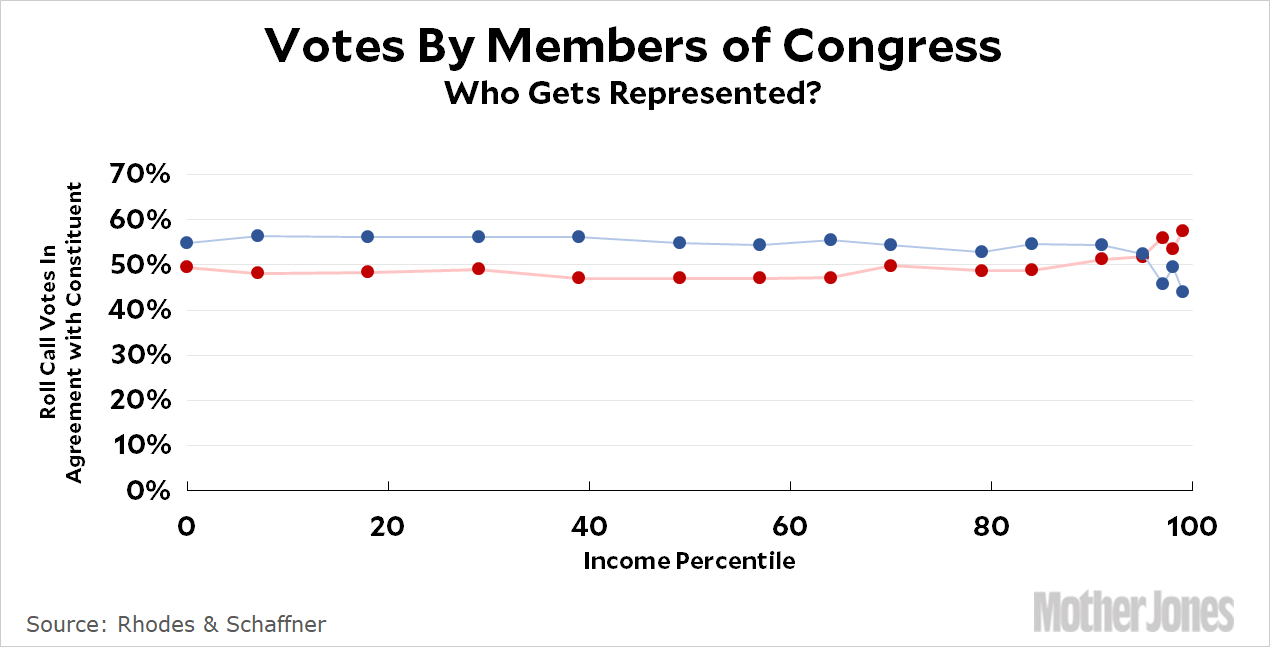
    It’s a judgment call which one of these best represents the data visually, but I suspect it’s the second one. The views of most constituents don’t matter much at all, while the rich wield a very modest influence. Republicans represent rich people about 7 percent better than everyone else, while Democrats represent them about 8 points worse. That’s not much.

    A different paper suggests that members of Congress respond mostly to interest groups, not constituents, but in the end Matthews concludes that we might be making a mistake in thinking that Congress represents constituent views at all:

    It’s not actually clear that Republican and Democratic senators are purposefully taking their views from the public, even when politicians’ views match their constituents’. It’s also possible — even likely — that it’s happening the other way: Politicians are shaping the public’s views. That helps explain why Democratic constituents align their views so closely with Democratic senators, and similarly for Republican constituents.

    ….“Longstanding political science suggests that the path of information from governing elites to the public is stronger than the reverse,” Grossmann and Isaac note. “More troubling, affluent Americans may hear official opinions first, meaning we would observe a greater association between their opinions and policy even if the true channel of influence were from government to the affluent.”

    Bottom line: members of Congress form their views, which are then communicated to their constituents. Only then do constituents form their own views: conservatives adopt the Republican view and liberals adopt the Democratic view. This would explain a number of things:

    • Why conservative voters continue to think that Republicans are better on pocketbook issues despite their long history of catering to the rich.
    • Why voters line up so neatly even on obscure issues that don’t have an obvious ideological component (net neutrality, for example).
    • Why views on issues can reverse so quickly when elite views reverse (Trump on Russia, for example).

    Naturally this doesn’t apply to me or to any of the fine people who read this blog, all of whom are independent thinkers who don’t just follow the crowd. But all those other guys? What a bunch of sheep.
  • Sessions: Immigration Judges Should Complete 700 Cases Per Year

    From the Washington Post:

    Trump administration, seeking to speed deportations, will impose quotas on federal immigration judges

    A new quota system will be tied to the judges’ annual performance reviews, according to Justice Department memos, and judges will be expected to clear at least 700 cases a year to receive a “satisfactory” rating….A union representing the judges called the move “unprecedented,” saying it risks undermining the independence of the judicial process.

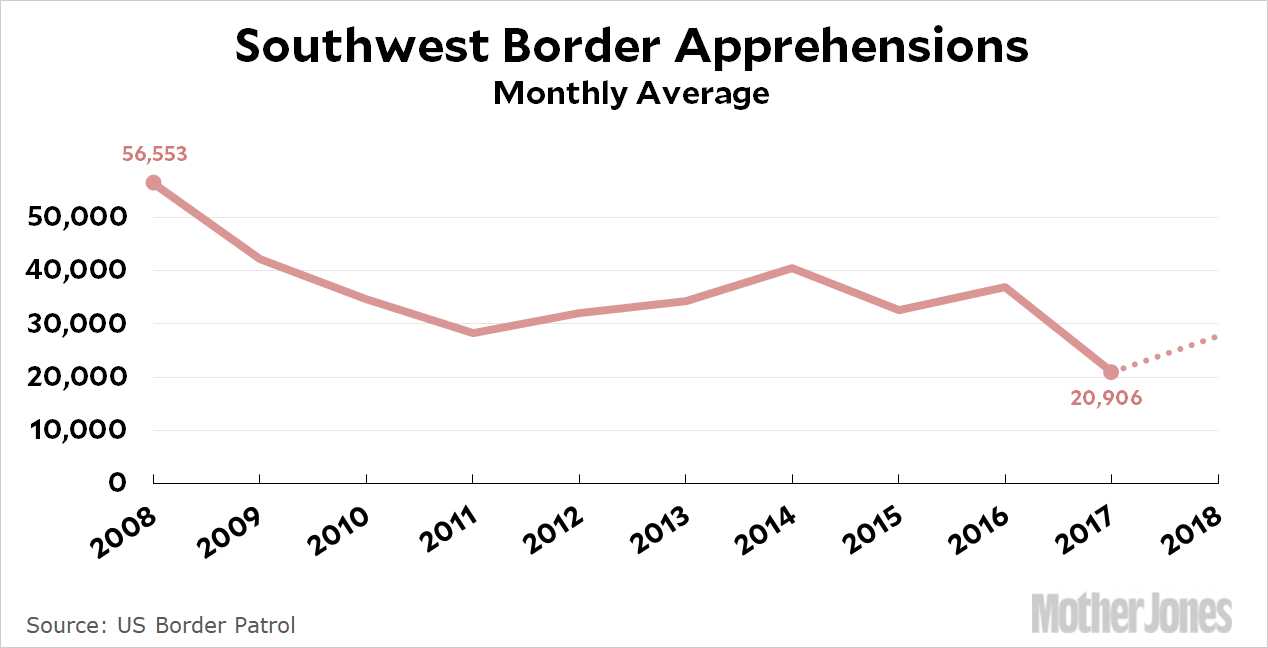
    This has been coming for a while. Immigration courts have been overwhelmed for years, with backlogs skyrocketing from 200,000 cases to 700,000 cases over the past decade. Everyone agrees that we need more judges, but there’s also a question of how productive judges are. Here is one of the recommendations of a recent GAO report:

    Establishing comprehensive case completion goals would help EOIR more effectively monitor its performance. In addition, systematically analyzing the cause of certain continuances, particularly operational continuances, could provide EOIR with valuable information about potential challenges the immigration courts may be experiencing or areas that may merit additional guidance and training. Updating policies and procedures to ensure the timely and accurate recording of NTAs would provide EOIR greater assurance that its case management data are accurate—including the size of its case backlog.

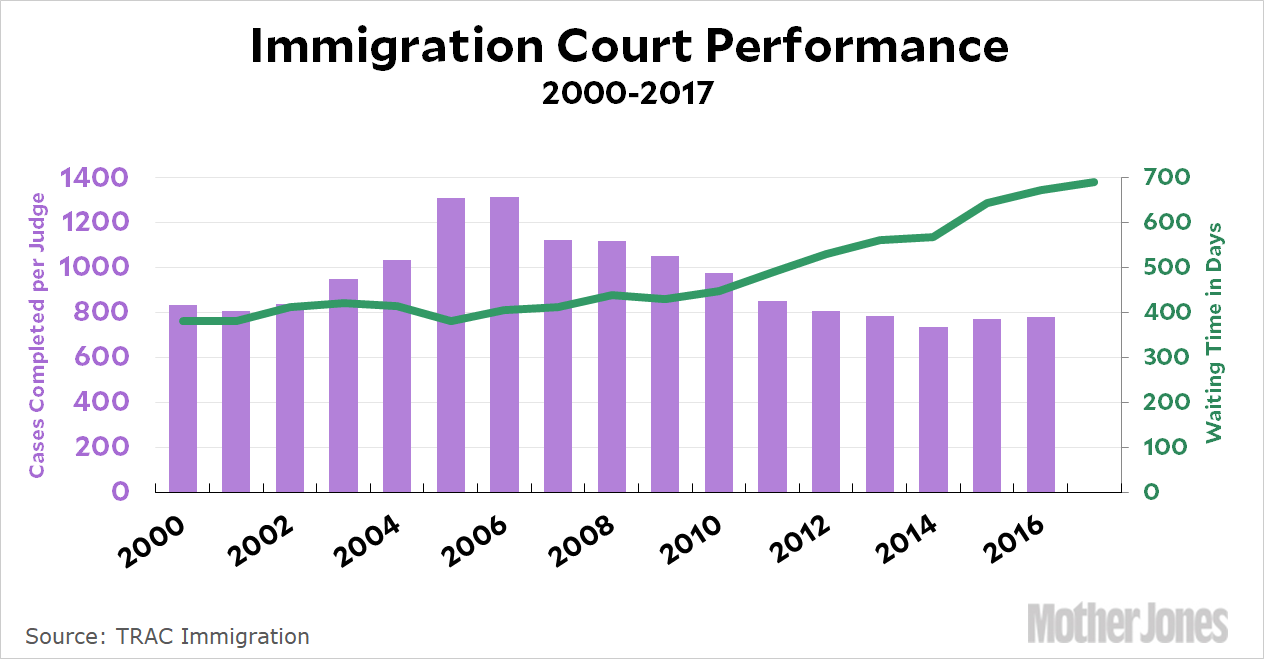
    And here’s the average efficiency of immigration judges:

    As you can see, since 2000 immigration judges have cleared a pretty steady 800 cases per year on average, with an upward spike that started in 2003 but dwindled away starting in 2007. However, the number of new cases has increased substantially over the past decade, and the time to clear each case also increased as motions for continuance rose steadily. This is why the backlog is now so enormous.

    I’m not sure that judge efficiency per se is the big problem here, but in any case, a goal of 700 completed cases per year is probably not out of line. More important, probably, is getting a handle on continuance requests, which have risen from both prosecutors and defense attorneys. Today’s cases aren’t inherently more complex than they were a decade ago, so it’s not clear why wait times have gone up so dramatically.

  • Why Isn’t Donald Trump Polling at 0%?

    Nancy LeTourneau asks the eternal question: is there any amount of fuckuppery that will cause Donald Trump’s supporters to abandon him?

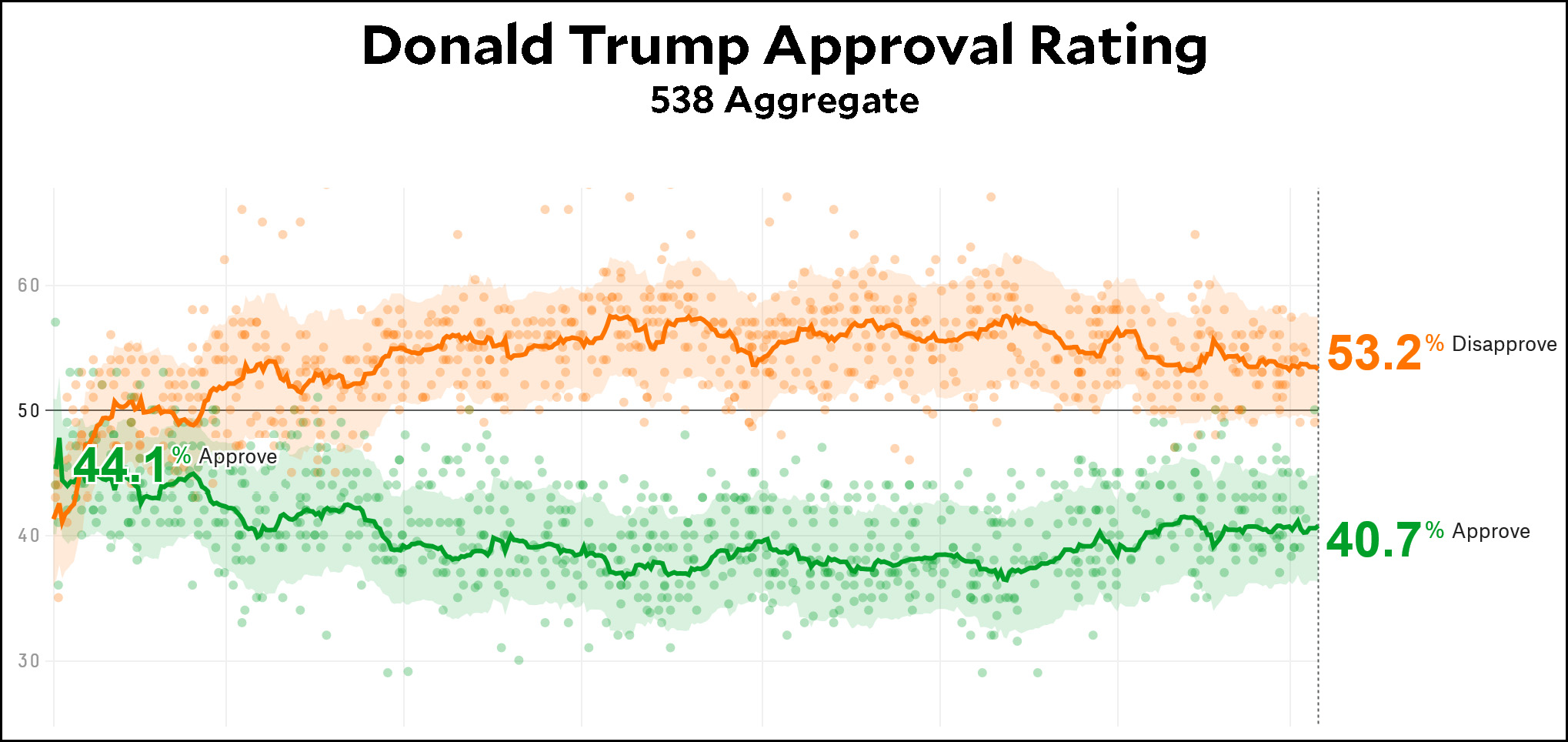
    There will always be the hardcore support for Trump—that can be expected in a country as large and diverse as the United States. But the fact that Trump’s approval rating continues to hover in the 40 percent range is appalling. Is there anything that could chip away at that? I see both good news and bad news on that front.

    When it comes to good news, the one frame of reference for me is that my father, a staunch conservative Republican, continued his support for Richard Nixon through all of the revelations about his lies, corruption and obstruction of justice. In the end, dad finally abandoned him when the Oval Office tapes were published in book form because he couldn’t abide the frequency with which the president swore.

    Holy hell. This is the good news? That even historically insane levels of corruption and abuse of power aren’t likely to move the Republican base?

    Of course, this isn’t much of a surprise, especially these days. As LeTourneau points out (this is the bad news), conservative media mostly shields Trump’s base from even knowing about this stuff in the first place. But I’m not sure that’s really crucial anyway, since it affects only the hardcore Republican base, and that isn’t enough to keep Trump in office. The question is why Trump retains substantial support even from centrist conservatives.

    For now, I think the answer is this: nothing much has gone wrong. What I mean by this is that despite the endless wailing of liberals like me, your average Republican voter hasn’t really seen anything falling apart. They still have jobs. Their 401(k) accounts are doing fine. North Korea is coming to the negotiating table. The Middle East is the same as always. Global warming continues to seem like no big deal. We’re sticking it to China. On TV Trump seemed pretty reasonable about both guns and immigration, so it’s not his fault that nothing is happening on those fronts.

    And look: for people who are right of center and don’t eat and breathe politics, this is a perfectly sensible worldview. Sure, maybe these folks would prefer that Trump tone down the rhetoric and lay off the tweets, but at least his heart is in the right place. Why not give his policies a chance?

    That said, Trump’s support has fallen over the past year: since his inauguration, Gallup has him down 6 points; 538 has him down 3.4 points; and Pollster has him down 2.4 points:

    Modern American politics is played at the margins. It takes a lot to move voters by as much as 5-10 percent, especially when the economy is doing well. Right now, it looks like there’s a good chance of a huge blue wave in the November midterms even though the economy is growing and unemployment is low, and that says a lot. Trump’s support is more fragile than it seems at first glance.

  • Lunchtime Photo

    This week is family week. Before Easter dinner on Sunday, I asked everyone to curate a photo for the coming week, and this is the first one up. Marian chose a picture of heather from Killarney Park in Ireland. This particular heather was on a path leading to the “Meeting of Waters,” where three bodies of water come together. Sadly, after getting to the end of the trail, everything was closed. We never did get to see the actual point where all the waters met.

    September 16, 2017 — Killarney National Park, Ireland
  • Chart of the Day: The Gun Homicide Mystery

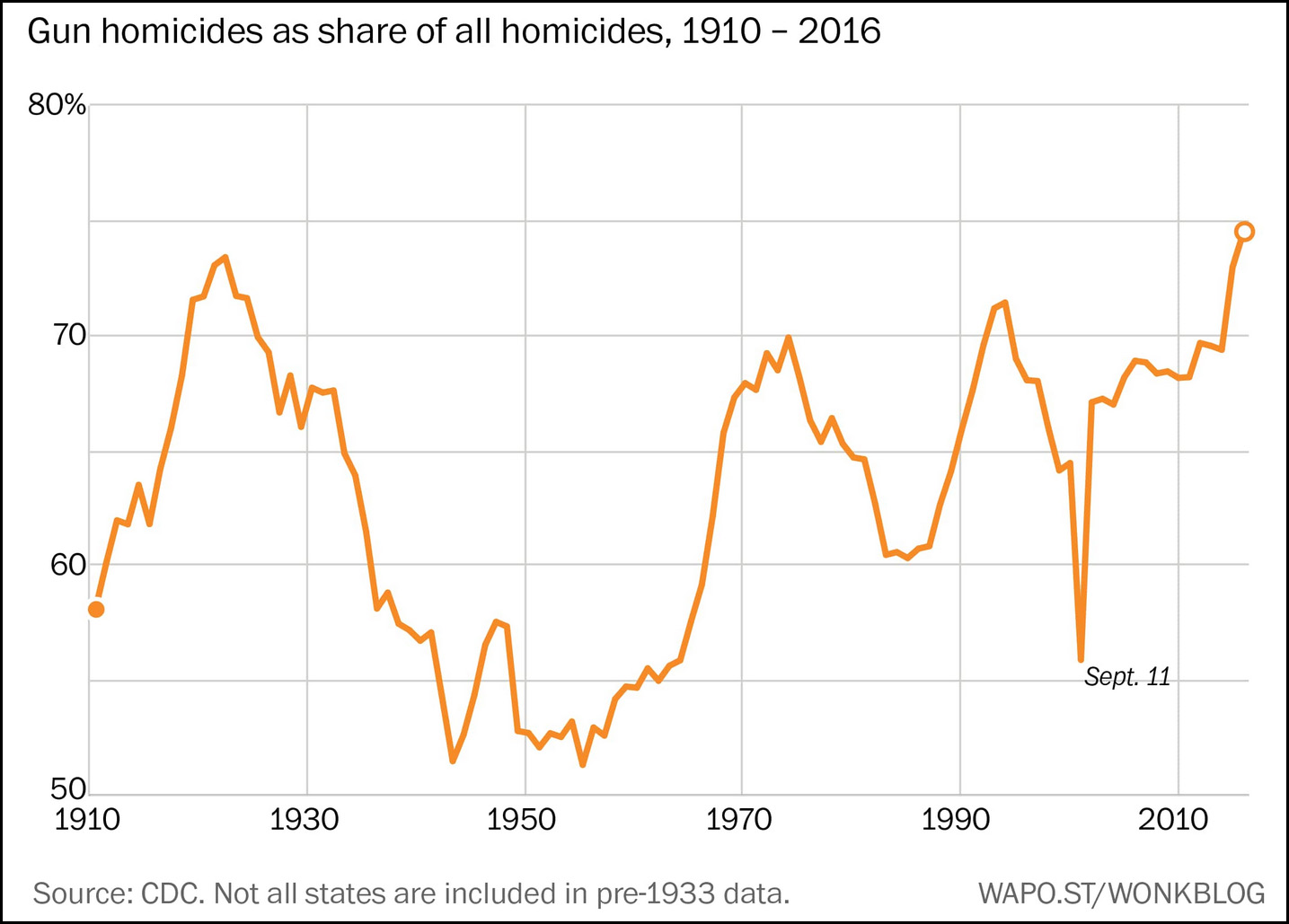
    Wonkblog has an intriguing chart up today. It shows the percentage of homicides committed by guns over the past century:

    Note that this is not the homicide rate. It shows only the relative popularity of using guns to kill people:

    • There’s a big spike in gun popularity around 1920.
    • There’s another big spike around 1970.
    • There’s another big spike around 1990.
    • Finally, there’s a moderate spike starting in 2015.

    I find this mysterious. Why do guns bounce up and down so much as the weapon of choice for murdering people? And what took their place in, say, the 1950s? Knives? Is there any other method of killing people that accounts for a big share of homicides?

    I can think of possible explanations for each wave of gun violence. Maybe it was mob killings in 1920; a tidal wave of cheap handguns in 1970; crack in 1990; and gang violence in 2015. But those are just guesses based on nothing at all. However, I can’t even think of a wild guess that might explain the general cyclical nature of gun popularity. It seems to go in a roughly 20-year cycle with the exception of 1950.

    Anyone have any ideas?

  • Let’s Review the Tape on DACA

    Michael Nigro/Pacific Press via ZUMA

    Just in case you’ve lost count, here’s a rough timeline of negotiations over DACA, the “mini-DREAM” act that protects immigrant children who have lived in the US for many years:

    • September: Trump kills DACA.
    • Later in September: Trump tells Nancy Pelosi and Chuck Schumer that he supports a legislative fix for DACA if he gets more border security funding in return. They agree.
    • The next day: Trump denies offering this deal.
    • October: Trump suddenly releases a long list of demands that he wants in return for DACA.
    • January: Trump says he’s fine with a clean DACA bill.
    • The next day: Aides remind Trump that, actually, he’s not fine with a clean DACA bill.
    • Later in January: Chuck Schumer offers Trump border security funding plus funding for the wall in return for DACA. Trump turns him down.
    • Still later in January: Trump now demands “four pillars” of immigration reform in return for DACA.
    • March: The Senate takes up DACA. Republicans reject every deal offered.
    • Later in March: Enraged at the lack of a deal, Trump begins a Twitter campaign insisting that Democrats are responsible for killing DACA.
    • Yesterday: Trump unleashes a barrage of staggeringly ignorant tweets about DACA and immigration in general. He blames Mexico and Democrats for all of it.
    • Today: A reporter asks Trump, “But aren’t you the one who killed DACA?” Trump doesn’t reply.

    This is the guy who claims to be the greatest dealmaker ever in history. He killed DACA; he refused every possible deal to reinstate it; he changed his demands almost daily; and he demonstrated approximately zero influence over Congress. So now he’s red-faced with anger and desperately trying to deflect blame for something that everyone knows he’s responsible for. What a putz.

  • Meet Juul, the Latest Teen Sensation

    Richard B. Levine/Levine Roberts/Newscom via ZUMA

    Cigarette smoking may be on the decline, but vaping is on the rise. The Wall Street Journal reports that the popularity of the Juul among high-school kids is skyrocketing:

    After two decades of declining teen cigarette use, “Juuling” is exploding. The Juul liquid’s 5% nicotine concentration is significantly higher than that of most other commercially available e-cigarettes. Juul Labs Inc., maker of the device, says one liquid pod delivers nicotine comparable to that delivered by a pack of cigarettes, or 200 puffs—important for adult smokers trying to switch to an e-cigarette. It is also part of what attracts teens to the product, which some experts say is potentially as addictive as cigarettes and has schools and parents scrambling to get a grip on the problem.

    But it’s not aimed at teens. Of course not:

    One big concern, addiction researchers say, is that Juul lacks many characteristics that deter people from smoking in the first place, such as a harsh smell and burnt-tobacco taste. Juul flavors include “Creme Brulee,” “Fruit Medley” and “Mango,” in addition to “Classic Tobacco.” … A Juul device fits easily in a pocket and looks nondescript when plugged into a laptop’s USB drive to recharge or sitting on a desk. Teachers say students gather in bathrooms, library carrels and locker rooms to pass Juuls. The minimal vapor and barely there smell makes it harder to detect than some other e-cigarettes.

    ….Criticism that it was designed to appeal to kids is “absolutely false,” says Ashley Gould, Juul Labs chief administrative officer. “It’s non-cylindrical because when smokers move away from cigarettes they don’t want to be reminded of cigarettes.” Something that could be plugged directly into a USB port was also convenient, she says….Ms. Gould says the company is trying to find more ways of working with local law enforcement to prevent sales to under-age customers. It is also looking at technologies that could disable the device on school grounds, she says.

    Easy come, easy go.