I don’t know what this is, but it’s pretty. That’s reason enough to post it today.
UPDATE: It’s a red-flowering currant.


I don’t know what this is, but it’s pretty. That’s reason enough to post it today.
UPDATE: It’s a red-flowering currant.

Jeff Gritchen/The Orange County Register via ZUMA
Here in Orange County, we’ve been busily removing makeshift homeless camps from the concrete banks of the Santa Ana River. Under the prodding of a federal judge, the plan was to move the residents into temporary tent cities in Irvine, Huntington Beach, and Laguna Niguel. Unsurprisingly, that’s not going to happen. The good citizens of these cities made it vocally clear that they wanted nothing to do with homeless encampments, and the county Board of Supervisors has now backed down.
Up north, in related news, state Sen. Scott Wiener has introduced Senate Bill 827, which would override local zoning rules to allow dense, medium-rise apartment buildings in all “transit rich” areas. Yesterday, the Los Angeles city council voted unanimously to oppose the bill.
Why are these related? First, because the opposition in both cases is pretending to be high-minded. In the homeless case, Orange County protesters say the homeless deserve better than tents. The real reason for their opposition, of course, is that no one wants a homeless shelter in their backyard. In the SB 827 case, says one councilman, the problem is that “Los Angeles has a long and painful history of displacement in the name of progress, and of well-intended bills that uproot communities and destroy neighborhoods.” The real reason is that no one wants lots of poor people and lots of traffic in their backyard.
The second similarity is that in both cases someone is trying to force a solution on local residents. This happens all the time, and it’s just never going to work. You might win a few victories here and there, but never anything more. Local residents have objections both good and bad to these things, and they will fight forever to stop them. In a democracy, there’s simply a limit to how much you can force people to accept things they don’t want.
I’m not really sure what the answer is. In the case of Orange County’s homeless, it’s probably to quietly face reality and make sure that homeless shelters aren’t put in affluent residential communities. That’s hard to swallow, but you’ll be in court forever otherwise. Conversely, if you put them somewhere less threatening to middle-class homeowners, those homeowners will actively support you. This is both appalling and unfair, but is it worse than never finding an answer for the homeless that can actually move forward?
In the case of housing, the biggest complaint is usually traffic, and all the liberal happy talk in the world isn’t going to convince people that these apartment buildings won’t really have a big impact on their commute. If you want their support, you have to genuinely do something about the traffic problem. You also have to convince them that the new buildings will be neither so affordable that they attract lots of poor people nor so high-end that they push out all the current residents. This is, again, sort of appalling and unfair, but it’s also reality. There’s a limit to what you’ll ever be able to accomplish in the face of entrenched local opposition. To make real progress, you have to offer locals actual solutions to their problems.
This is why local politics sucks. Do you give in to selfishness and ill-will in order to accomplish some good things? Or do you stay pure and bang your head repeatedly against a wall, never accomplishing much of anything? It’s not an easy decision, is it?

Wayne Hutchinson/DPA via ZUMA
You have perhaps heard about the idea of giving small cash grants to the poor in Africa. The effects are miraculous: generally speaking, the money isn’t wasted. It’s used to start farms or buy equipment or otherwise improve the ability of villagers to earn money. But Berk Ozler, a development economist at the World Bank, points to a recent interview between Tyler Cowen and Chris Blattman:
COWEN: What’s the last important thing you learned about cash transfers?
BLATTMAN: We recently went back to some cash transfers that were given almost 10 years ago, following up a randomized control trial in Uganda in the north, and we’re just, in some sense, putting out those results. What we found is, the initial result after two and four years was like other places seeing big advances in incomes. People get cash. They’re poor. They couldn’t invest in some of their ideas, but they had good ideas, and so they take off.
Now what we’ve seen is, essentially, they’ve converged with the people who didn’t get the cash. The people who didn’t get the cash have caught up because they saved and accumulated slowly and got up to the point where they have the same levels of success. They converged to a good level. But this means that cash transfers are much more of a temporary acceleration than they are some sort of permanent solution to poverty.
I am not surprised at the finding….What did surprise me is that I had to read the transcript of the interview to find out about this new finding….Remember that women almost doubled their income compared to the control group five years earlier. It’s not news that these effects are gone?
We are all guilty. If the quote had been about the durability of the effects of cash transfers — even at half of the short- and medium-term levels — many of my tweeps would be shouting it from the rooftops….Many of you will politely retweet one of my posts about this or that hype about cash transfers, but deep down you know what you think: unconditional cash transfers are great and there is not a thing any researcher can do about it…
There’s more at the link. It’s also important to keep in mind that being “merely” a temporary acceleration is not such a bad thing. If we can reduce poverty quickly, rather than making people wait ten years, that may well be worth doing. On the other hand, it’s also possible that the effect of unconditional cash grants will change substantially for the worse if they become a routine thing, rather than an unexpected bonus that happens to only a few people.
Bottom line: keep an open mind. Unconditional cash grants may or may not have long-term positive impacts, regardless of what we personally think of them. The evidence isn’t all in yet, and it’s starting to look decidedly sketchy.
According to the FBI, here’s what crime rates look like in Chicago over the past few years:
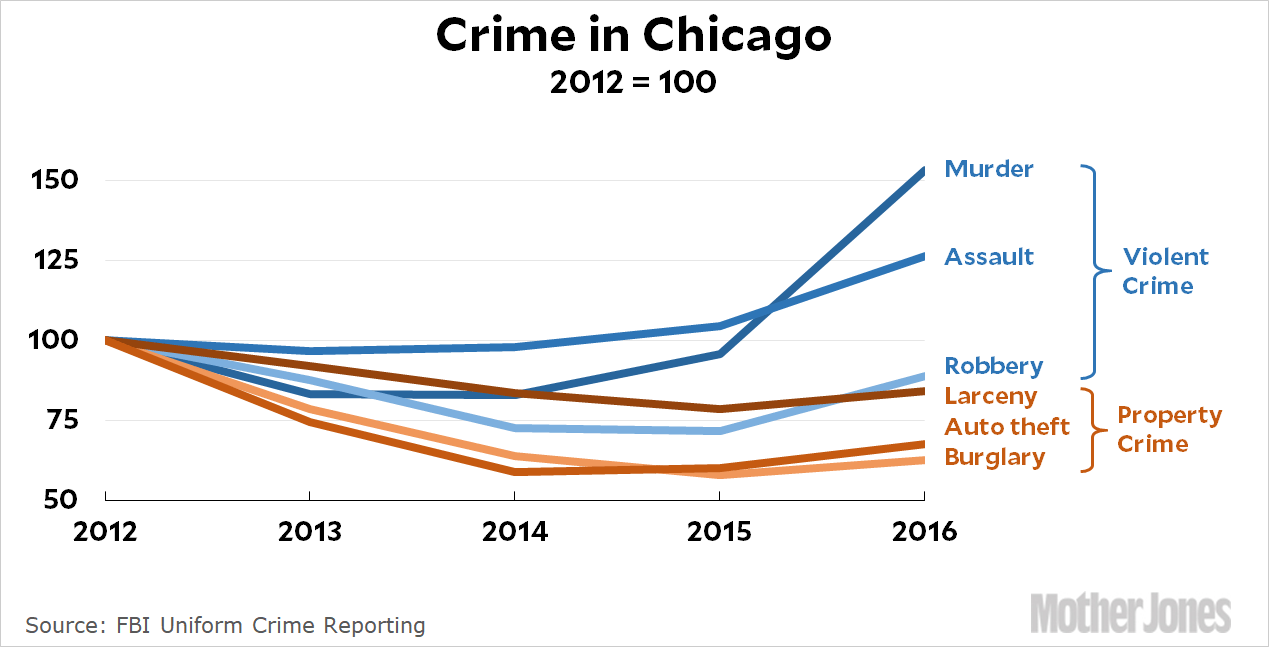
Between 2015 and 2016, property crime was basically flat. Among violent crimes, robbery and aggravated assault were up some, but homicide skyrocketed. Why? In late 2015, the Chicago Police Department reached an agreement to drastically cut back its use of stop-and-frisk, which has led some to call the murder epidemic a result of the “ACLU effect.” Is that fair?
Paul Cassell and Richard Fowles of the University of Utah think it is. After all, homicide spiked upward almost immediately after the stop-and-frisk agreement took effect. But what about New York City? They also reined in their stop-and-frisk program, but their murder rate declined. The authors try to show that New York City is so different from Chicago that the comparison is invalid, but their case is fairly unconvincing. There’s also this:
As Professor Franklin Zimring has noted in questioning whether NYPD’s success in lower crime rates could be directly transported to other cities, “New York’s success may have been assisted by its low rates of civil handgun ownership. Even when there were a substantial number of handguns on New York’s streets, the number in homes was much smaller than in other big cities.” This means that removing guns from New York’s streets may have been an especially powerful tactic there, because handguns were harder to replace than in other cities.
I don’t think this makes the point the authors want to make. If stop-and-frisk was an especially powerful tactic in New York City, then cutting back on stop-and-frisk should have led to an especially powerful rebound in homicide. It didn’t. Likewise, if replacing a gun in Chicago was easy, then stop-and-frisk should have been pointless, and ending it should have produced only a minor effect.
The other evidence they present is similar. Most other big cities, they say, didn’t see a big increase in murder rates in 2016. True enough. But six of them did, a fact they try to handwave away. If a third of the 20 biggest cities all saw big homicide increases, then there are obviously lots of reasons for homicide to increase. This means there’s no special reason to insist that the end of stop-and-frisk is the only possible explanation in Chicago.
What’s more, as the chart above shows, other crimes didn’t follow the path of homicide in Chicago. As the authors say, this could be because homicide is uniquely tied to guns, so it’s the most strongly affected by stop-and-frisk. That’s certainly possible. At the same time, common sense suggests that a generalized change in policing that supposedly reduces inhibitions on criminal activity would have an effect on lots of different kinds of criminal activity. That’s sort of the case in Chicago, but not entirely.
I dunno. We’ve got broken windows. We’ve got community policing. We’ve got stop-and-frisk. We’ve got targeted drug raids. We’ve got the Ferguson effect. And now we’ve got the ACLU effect. We have a long history of trying to blame crime rates on specific police tactics—or the lack of them—and in the long run they never seem to hold up. In the case of Chicago, we’ve got one data point, namely that homicides started to increase at the same time that stop-and-frisk ended. Despite the length of this latest paper, that’s really all the authors have—and even that’s belied by the fact that murder rates had already increased 15 percent the year before. Maybe Cassell and Fowles are right, but I’d keep an open mind about this until and unless we get a whole lot more evidence.
Twentieth Century Fox
I had no idea this was happening until I read about it last night:
Atlanta’s municipal government has been brought to its knees since Thursday morning by a ransomware attack — one of the most sustained and consequential cyberattacks ever mounted against a major American city….Threat researchers at Dell SecureWorks, the Atlanta-based security firm helping the city respond to the ransomware attack, identified the assailants as the SamSam hacking crew, one of the more prevalent and meticulous of the dozens of active ransomware attack groups.
….In Atlanta, where officials said the ransom demand amounted to about $51,000, the group left parts of the city’s network tied in knots. Some major systems were not affected, including those for 911 calls and control of wastewater treatment. But other arms of city government have been scrambled for days. The Atlanta Municipal Court has been unable to validate warrants. Police officers have been writing reports by hand. The city has stopped taking employment applications.
[Keisha Lance] Bottoms, the mayor, has not said whether the city would pay the ransom. The SamSam group has been one of the more successful ransomware rings, experts said. It is believed to have extorted more than $1 million from some 30 target organizations in 2018 alone.
This ransomware group is tightly managed. A ransom of $50,000 is enough to be worthwhile but low enough that it’s a rounding error to lots of large organizations. And apparently SamSam refrains from bollixing up infrastructure that might get people killed—which probably helps them keep a low profile.
But this strategy only works if breaking into systems is so easy that $50,000 represents a substantial profit vs. the time spent doing it. Out of tens of thousands of organizations big enough to be worth going after, I suppose it’s no surprise that several dozen are easy pickings. But it’s still kind of shocking. It makes the second Die Hard movie seem a little less ridiculous, doesn’t it?
Reihan Salam points today to an interesting paper written a couple of years ago. The question at hand is: how do we get more low-income students to go to college? Part of the answer is to get more low-income students to apply to college. And the first step to accomplishing that is for them to take either the SAT or ACT college entrance exams.
About a decade ago several states changed the way these exams worked. Instead of requiring students to pay up-front for them and then show up on a weekend to take the test, they prepaid for every student to take the test and then administered it during school hours. In Michigan, this resulted in nearly every high-school student taking the ACT. So how many kids who otherwise wouldn’t have taken the ACT ended up scoring as college-ready? Joshua Hyman applied a bit of arithmetic to the before-and-after results and came up with this:
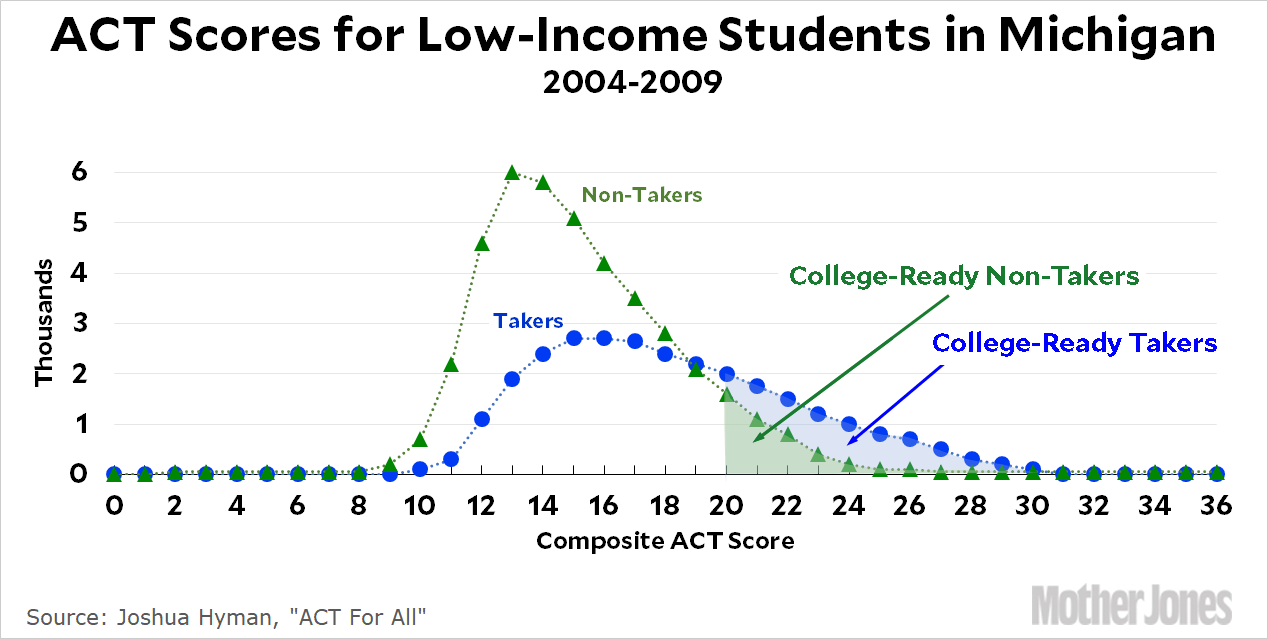
Hyman uses a score of 20 as the cutoff for college-ready. The area under the blue line is the number of test-takers who scored 20 or higher. The area under the green line is the number of students who otherwise wouldn’t have bothered with the test but ended up scoring 20 or higher when they did. The green area is almost half the size of the blue area. These are all students who qualified for college but never would have known it.
This means that among low-income students, the supply of college-ready grads increased nearly 50 percent simply by having everyone take the college entrance exam. The bottom line, it turns out, is that there are plenty of good students among the poor who never take the ACT because (a) college just hasn’t occurred to either them or their high-school counselor or (b) even the small cost of taking the exam is a barrier to trying.
ACT (or SAT) for all seems like a pretty efficient, low-cost way of ensuring that, at the very least, everyone who is college-ready is identified as college-ready. It’s a good start to getting more low-income students into college.
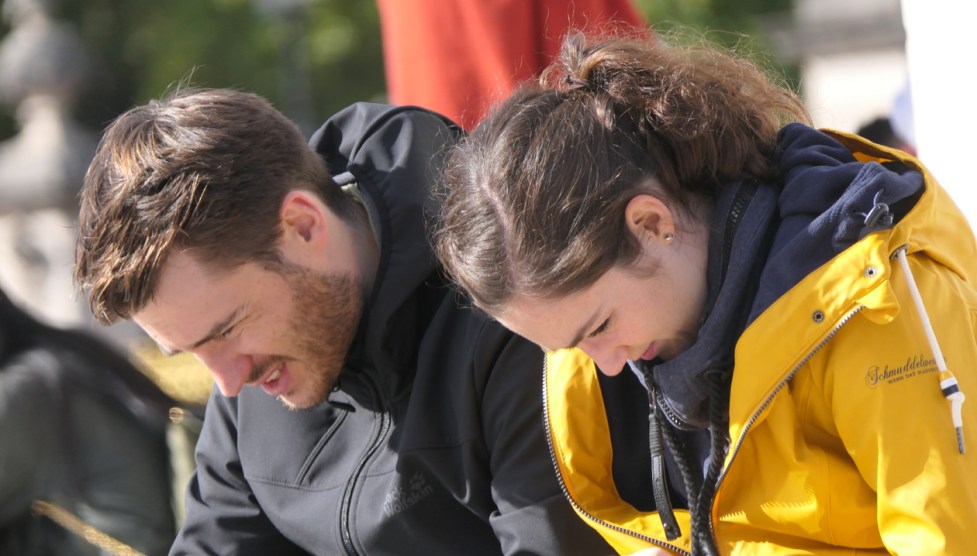
Come on, talk to each other!
Over at Vox, indefatigable interviewer Sean Illing speaks with Sherry Turkle, a technology skeptic (for lack of a better word) who worries that all our tech toys are doing more damage than we think:
Illing: Her most recent book, Reclaiming Conversation, is a warning about the consequences of living in a world where face-to-face interaction is less and less frequent.
Turkle: Mobile technology means we’re always on, always plugged in, always stimulated, always in a constant state of self-presentation….I watched kids grow up, spent time in classrooms, and saw how these changes were impacting their development….This is why I became so interested in the themes I’m exploring now — the flight from conversation, the flight from solitude, the flight from silence, the flight from boredom, all of these things that are so important to our development and to our ability to be with other people.
Illing: You’ve called face-to-face conversations “the most human thing we do.” What are the consequences of living in a world where we do this less and less?
Turkle: Well, I’m not so sure we’re going to continue doing it less and less….There are certain kinds of communication that can’t be done via texting or video messages or whatever, and I think people are starting to see that. If you want to be a true friend or partner or lover or colleague and you want to really connect, then you have to look at the person you’re engaged with; you have to actually be with them. That’s how progress is made. I think enough people are beginning to understand this.
I want to put aside the question of whether smartphones are harming culture or merely changing it, because I don’t know and I don’t think anyone else knows either. What I’m curious about is the foundational assertion that underlies this entire conversation: namely that face-to-face interaction is on the decline. Is that actually true? I’m not aware of any serious research on this question, so I’m just going to toss out some blue-sky thoughts:
…that’s the whole question, isn’t it? My guess is that time spent texting/Facebooking/Instagramming is mostly replacing time spent reading or watching TV or playing videogames. We get together in the flesh with people just as much as we used to, and the resulting conversations are much the same as always. It’s true, of course, that dinosaurs like me can get annoyed when our conversation partners are looking at their phones regularly and texting while we’re talking. But as near as I can tell, most people who do this aren’t being rude and aren’t ignoring you. They just have different cultural mores, ones that young people are comfortable with and old people aren’t.¹
Anyway, my primary question is this: do young people, on average, spend less time in face-to-face conversation than either (a) older people or (b) young people of past generations? Also, is there any evidence that people are just “beginning” to understand that real relationships require plenty of physical presence? I have no idea how you could measure either of these things, but that’s what they give people PhDs for. In the meantime, unless there’s some really persuasive evidence of this thesis, put me down as skeptical that it’s happening.
¹It’s a separate question to ask if addiction to smartphones in general is harming people. I suspect it is, but that’s just my instinct, not some hill I’m ready to die on.
These are low-lying clouds on Angeles Crest Highway leading to Mt. Wilson. At about 5,000 feet, the low-lying clouds became car-level clouds and the fog was pretty thick, though only in patches. It’s a very pretty drive.

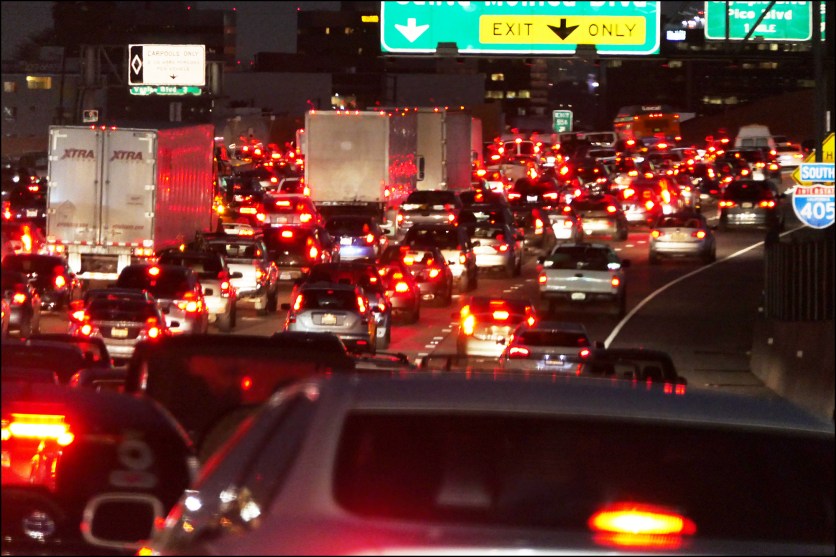
Is this the future of self-driving cars?
David Roberts writes that he doesn’t share the current disillusionment that autonomous vehicles might never become safe enough to navigate city streets. But there’s a second problem that he is worried about:
The other form of disillusionment has to do with a growing concern among urbanists that AVs will, by making personal-vehicle travel so much more convenient, induce more of it. They worry that AVs will increase vehicle miles traveled (VMT), further clogging America’s already congested city streets….In fact, I don’t think people are worrying about it enough. There are reasons to believe that any private autonomous vehicle industry will not just increase VMT, but will pursue more VMT aggressively.
Roberts spins this out into a Space Merchants-esque dystopia where cars are free but we’re forced to watch advertising at all times to pay for them. I dunno. If taxis could be paid for solely by advertising, I figure it would have happened by now. So color me skeptical about this scenario.
However, I don’t there’s any doubt that self-driving cars will increase the total amount of driving. Of course they will. There are plenty of trips I don’t take because I don’t feel like fighting the traffic or I just don’t feel like driving for an hour or two. But with my new robot car, why not? All I have to do is settle back into the La-Z-Boy installed in my vehicle and do whatever I was going to do anyway. Take a nap. Read a book. Surf the web. Write a blog post. Of course I’d drive more.
There’s a limit to this. It will still cost money to drive, and there’s a limit to how many places we all want to go, no matter how easy it is. Still, car usage will go up.
Self-driving cars will be coming to a garage near you within a few years, no matter how many people gloat whenever there’s a blip of bad news. So how do we keep travel from skyrocketing? The increased traffic from self-driving cars is a classic externality, and the usual solution to an externality is to charge for it. So what we probably need is a graduated mileage tax on autonomous vehicles. We have to do something to keep those robots in their place, after all.
Chris Owens Asp Inc/ASP via ZUMA
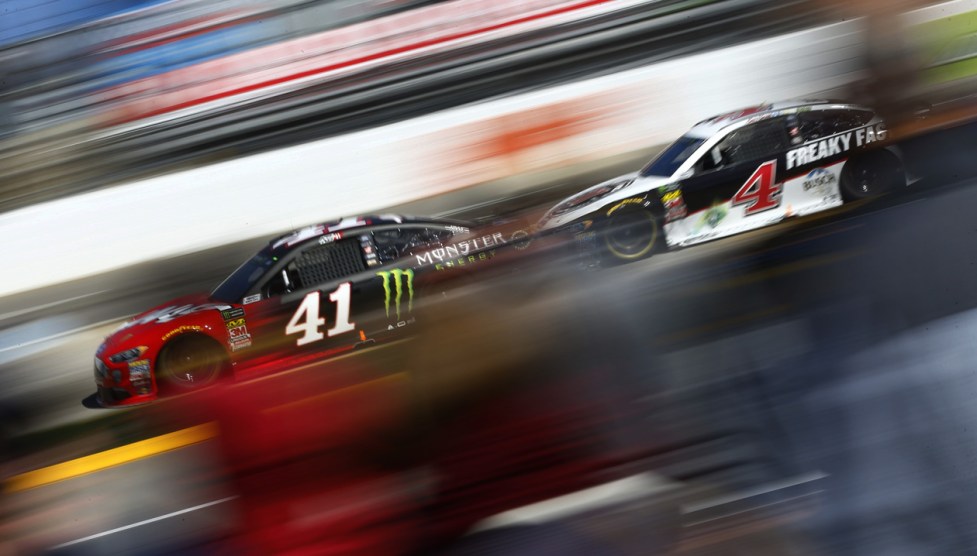
Here’s a random bit of news from the “Huh” files. Lewis Hamilton almost won the Australian Grand Prix this weekend, but he ended up losing to Sebastian Vettel by a few seconds. The reason was pit stops. As you may know, race drivers prefer to take their pit stops when the cars are running under a caution flag. Since everyone is moving more slowly, the other cars eat into your lead a little less during the few seconds you’re off the track.
Of course, this isn’t always possible. You can delay your pit stops to try to catch a caution flag, but only for so long. If you need new tires or more fuel, then you have to pit. That’s what Hamilton did in the late stages of the race, losing the lead to Vettel but assuming he’d get it back when Vettel pitted, even if Vettel pitted under a caution. But it didn’t turn out that way: Vettel got his caution, pitted, and came out of the pit ahead of Hamilton. What happened?
Toto Wolff blamed a glitch in Mercedes’ software for the situation that cost Lewis Hamilton the Australian Grand Prix on Sunday….Team principal Wolff said Hamilton’s shortfall was down to a miscalculation by the systems used by Mercedes to calculate the gaps between their drivers and those from other teams…. “We thought we had about three seconds’ margin. I don’t know what happened to them, we need to ask the computers and that’s what we are doing at the moment. Whether we had a software problem somewhere, we need to fix it. I think the problem is within our systems. I think we have a bug somewhere that said 15 seconds is what you need, we had 12, it should have been enough but it wasn’t.”
Damn. They use software to figure out the gaps between cars so they know if it’s safe to pit? I had no idea.
Personally, I think the next step beyond this is robot drivers. Think about it: this is the perfect application. It’s a closed course. There are no pedestrians or obstacles or any of that. You just pilot the car around a track really, really fast. But that’s no problem: even at 200 mph, computers have far better reflexes than any human. They can gauge closing distances and gaps perfectly, and the rules of the road are trivial compared to what a robot car has to do in the outside world.
This seems like it would be a great PR stunt for, say, Google and NASCAR. Google could outfit a car that would compete in the entire regular season and everyone would be fascinated. I’ll bet the coverage would be wall-to-wall. Naturally the robot car would exit the field during the season-ending playoffs, since no one wants to run the risk of it winning. But it would be a lot of fun until then.

Award-winning photojournalism.
Stunning video. Fearless conversations.


