• Spending Bill Held Up at Last Minute by Dueling Jackasses

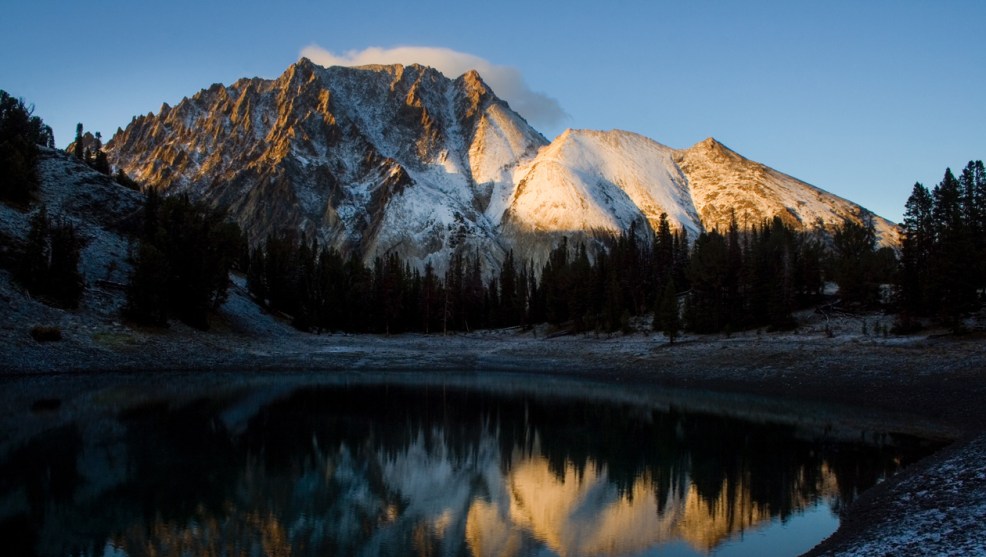
    Castle Peak in the White Clouds Wilderness preserve. Despite Sen. James Risch's best efforts at petty revenge against a dead man, it will probably be renamed the Cecil D. Andrus-White Clouds Wilderness preserve in the near future because the House is unlikely to even take up Risch's bill to rescind the renaming.Eric Zamora/VW Pics via ZUMA

    The Senate passed a 2018 spending bill on Thursday night, and President Trump has said he’ll sign it. So there will be no government shutdown. But first we had to have a contest to see who could be the biggest asshole in the Senate. Rand Paul started off strong, but eventually decided he had done enough grandstanding and allowed the bill to proceed:

    But just as Paul stood down, it emerged that he was not the only Republican senator objecting to the bill. Even as Paul was railing publicly against the bill, Sen. James E. Risch (R-Idaho) had been complaining behind the scenes, demanding that congressional leaders remove a provision in the bill naming the White Clouds Wilderness after former Democratic governor Cecil D. Andrus, according to two congressional aides familiar with the dispute.

    Risch and Andrus had clashed when both served in state government. The renaming provision passed the House in February and has the support of Rep. Mike Simpson (R-Idaho), chairman of a House Appropriations subcommittee.

    The last time Andrus and Risch were both in state government was 1988. That’s three decades ago. And here’s the kicker: apparently no one can even remember what their dispute was about:

    Aides in both parties were still trying to figure out what had occurred. At one point, a 2008 profile of Risch’s political rise began circulating that recounted Risch’s time as the majority leader in the Idaho state senate when Andrus, who died last year, was governor. The Idaho Statesman profile noted Risch “clashed with Democratic Gov. Cecil Andrus, particularly over education funding in the 1980s.

    Education funding. Huh. It must have been pretty serious though. Here’s a snippet of a report about a state budget bill from 1989:

    The panel did approve the governor’s request for a secretary, a proposal that was killed at the end of the 1988 session in what many viewed as a parting partisan shot at Andrus by former Senate Republican President Pro Tem James Risch.

    He tried to kill Andrus’s request for a secretary! Apparently Risch is a guy who takes political disagreements personally. But we may never know what really happened back in the 80s. Andrus died a few months ago, and Risch isn’t talking. “What part of ‘no’ don’t you understand?” he told reporters who asked what his objection was. “Do I have a problem with my English? I don’t have any comment.”

    In the end, Mitch McConnell bought off Risch by passing a standlone bill to rescind the name change. However, the House is likely to ignore the bill entirely, which means the renaming will go through. What a pointless and petty waste of energy.

  • Charts of the Day: Here’s Why Republicans Are Terrified About the 2018 Midterms

    Here’s a couple of fun charts to finish off the evening. They’re from Geoffrey Skelley of Sabato’s Crystal Ball, and they show how many members of Congress have retired in previous midterm election cycles. First up is total retirements over time, starting at 600 days before the election and going through 75 days before the election:

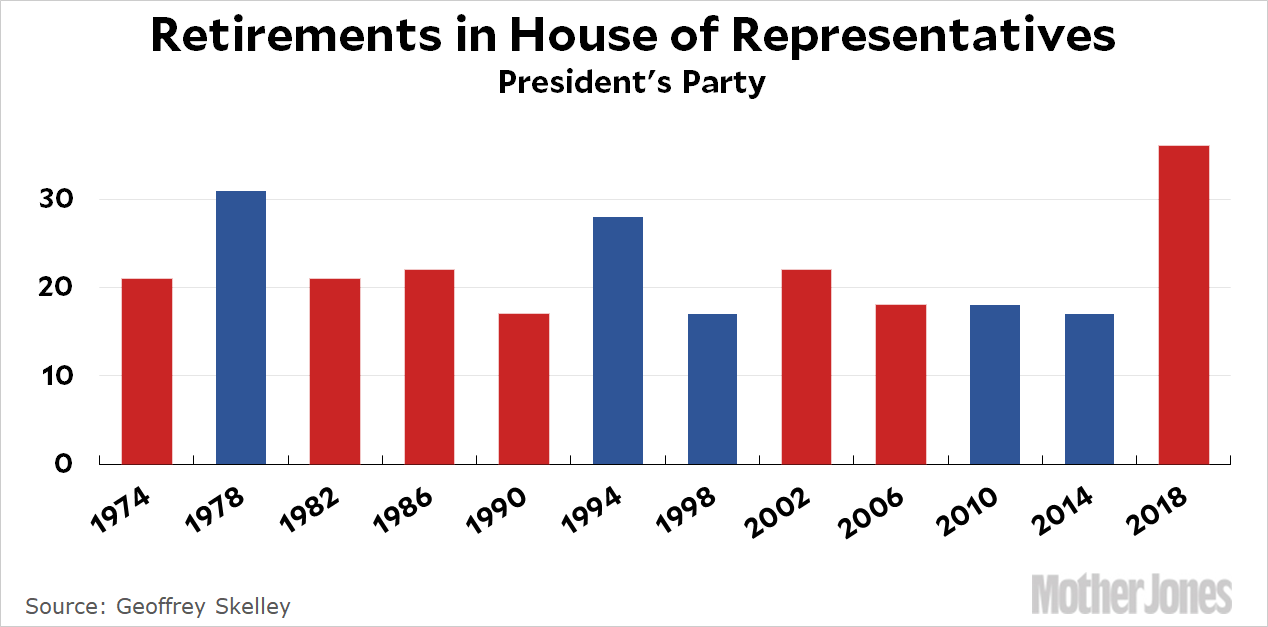
    As you can see, 2018 is already a huge outlier. At 300 days before the election, 52 House members had announced their retirement, breaking the all-time record held by 1978 with months still left to go. And a record number of them are from the president’s party:

    There have already been 36 retirements by Republican House members, well above the previous record. This is, obviously, good news for Democrats on two fronts. First, it demonstrates a general fear among Republicans that 2018 is going to be a landslide defeat, prompting lots of them to simply give up. Second, it opens up a lot of Republican seats, making a landslide defeat even more likely. It’s a vicious circle. And that circle gets even worse when you consider the flip side: Democrats can smell the fear, and that means far more high-quality candidates are running in districts that previously had a hard time attracting people to spend time on what seemed like a hopeless cause.

    And then it gets even worse, because it’s not just Congress at risk for Republicans. As Joan Walsh writes today, there’s also a huge surge of Democrats running for seats at the state level:

    As we head into the first national elections since Trump’s inauguration, Democrats are talking less about “the Trump effect” than they are about “the Virginia effect”—the unprecedented surge of women, minority, and millennial candidates running for seats in their state legislatures, many in deep-red districts long written off by the Democratic Party establishment. These candidates have been buoyed by a raft of outside and resistance groups, including Indivisible, Emily’s List, Run for Something, Forward Majority, Sister District, and BlackPAC, among many others. But party leaders have also taken note of this wave and are finally beginning to invest meaningfully and systematically in local candidates.

    What does it take to get young people to vote? That’s the eternal question for Democrats. But the answer might be: getting young people to run. And it doesn’t hurt to have a racist, sexist, boorish pig¹ as the leader of the opposition, does it?

    ¹Who, by the way, might get us all killed if he happens to get mad at something he sees on Fox & Friends some morning.

  • DNC Hacker Was a Russian Military Spy

    Danil Shamkin/NurPhoto via ZUMA

    Spencer Ackerman and Kevin Poulsen have some interesting news:

    Guccifer 2.0, the “lone hacker” who took credit for providing WikiLeaks with stolen emails from the Democratic National Committee, was in fact an officer of Russia’s military intelligence directorate (GRU), The Daily Beast has learned. It’s an attribution that resulted from a fleeting but critical slip-up in GRU tradecraft.

    The US intelligence community long ago concluded that Russia was behind the DNC hacks and that Guccifer 2.0 was a persona invented by GRU, so in one sense this is nothing new. But if the CIA and NSA knew that the DNC hacker was a GRU officer, then they certainly must have briefed President Trump about it. And yet he continued to insist in public that no one really knew for sure if the Russians were behind the campaign hacks.

    Then there’s the fact that Trump confidante Roger Stone has admitted to conversations with Guccifer 2.0. Did Stone know that he was a GRU agent? I’ll bet Robert Mueller is trying to find out.

  • Trump’s War Cabinet Is Taking Shape

    Justin Lane/DPA via ZUMA

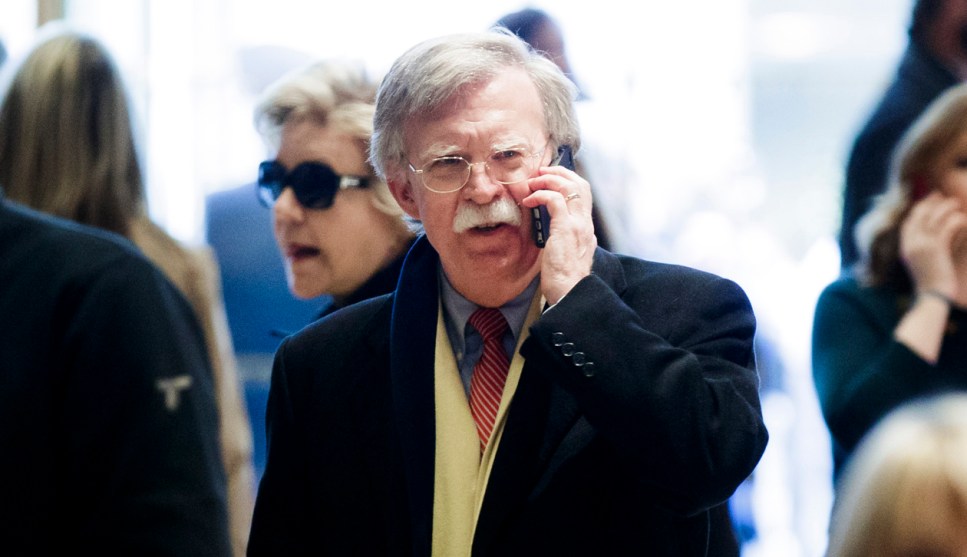
    A few days ago the White House said that H.R. McMaster still had the president’s full confidence. That’s a death sentence, of course, and today the axe fell. He’s out and John Bolton is in:

    General McMaster will retire from the military, the officials said. He has been discussing his departure with President Trump for several weeks, they said, but decided to speed up his departure, in part because questions about his status were casting a shadow over his conversations with foreign officials.

    ….Mr. Bolton, who will take office April 9, has met regularly with Mr. Trump to discuss foreign policy, and was on a list of candidates for national security adviser. He was in the West Wing with Mr. Trump to discuss the job on Thursday.

    Hell, even George Bush wasn’t crazy enough to let Bolton serve as his National Security Advisor. But Trump is. He wants someone who agrees that we should threaten every bad guy on earth with war, and Bolton’s that guy.

    Back in 2016, rumor had it that Trump didn’t pick Bolton for a top job because he thought Bolton’s mustache looked stupid. For once, I applauded Trump’s idiocy. I’m dismayed that he managed to get over his contempt for dumb facial hair.

  • Lunchtime Photo

    On the West Coast it’s pouring rain. On the East Coast they’re suffering through yet another nor’easter. In the south they have tornadoes coming through. So I’m here to remind you that summer will be back soon. Only a few more months to go!

    June 25, 2017 — Huntington Beach, California
  • Quote of the Day: Donald Trump’s Imaginary Wall

    From Nancy Pelosi to Donald Trump, on the $1.3 trillion spending bill the House passed today:

    If you want to think you’re getting a wall, just think it and sign the bill.

    She hasn’t lost a step, has she? As near as I can tell, Democrats didn’t lose much of anything in this bill. There’s a token amount for rebuilding some border fencing, but that’s all. The defunding of sanctuary cities got dropped. Domestic programs were fully funded. Opioids got more money. The Gateway Tunnel that Trump opposed as revenge against Chuck Schumer will probably get half a billion dollars, but it’s not actually mentioned in the bill so Trump can pretend it doesn’t exist. There are no restrictions on Planned Parenthood funding.

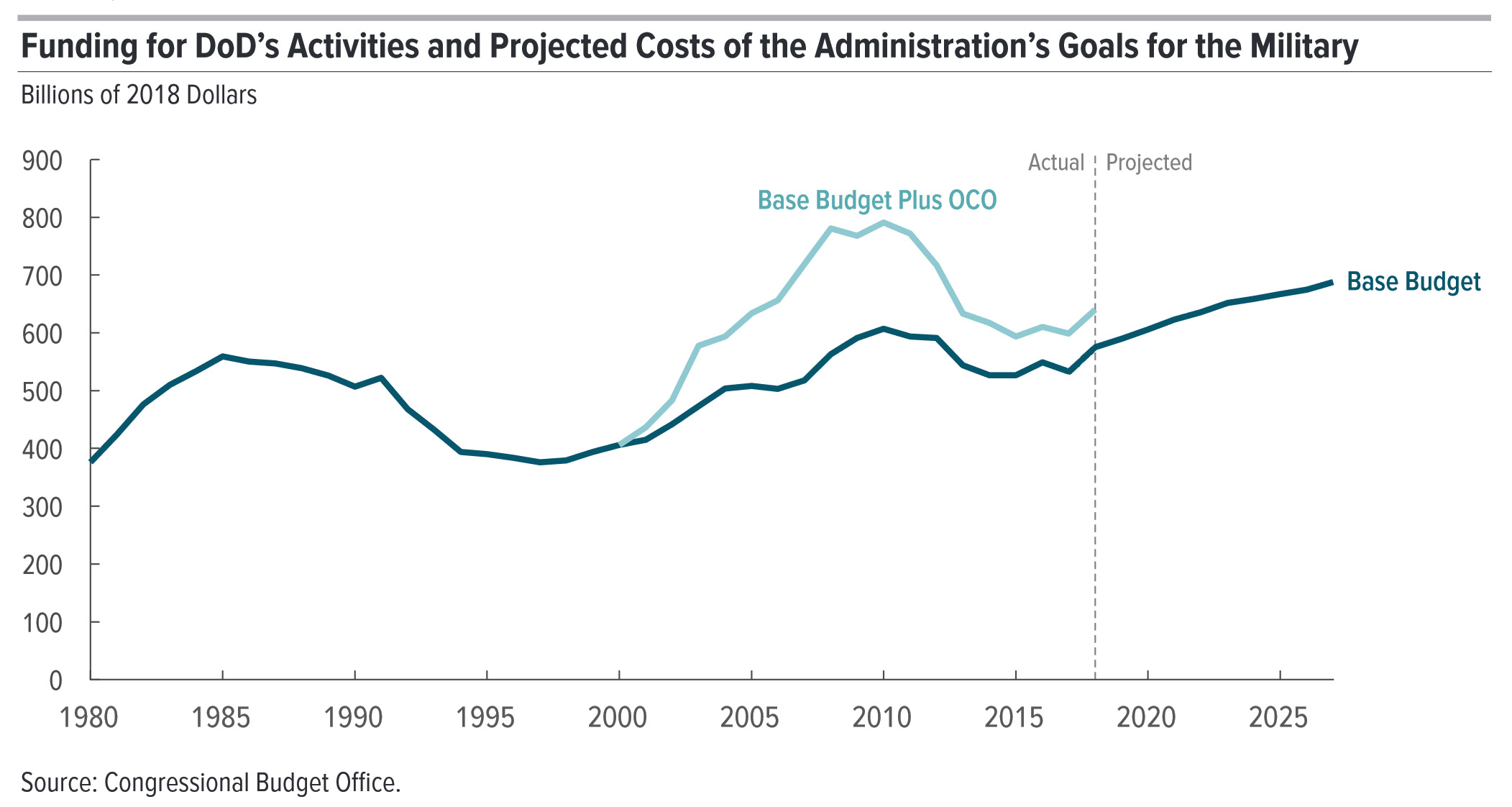
    Democrats already agreed to a big increase in defense spending, which will increase to $590 billion this year plus another $65 billion for “overseas contingency operations,” aka “wars.” Then there’s another $45 billion for defense-related spending outside of DoD, for a total of $700 billion. Here’s what the DoD portion of that spending looks like:

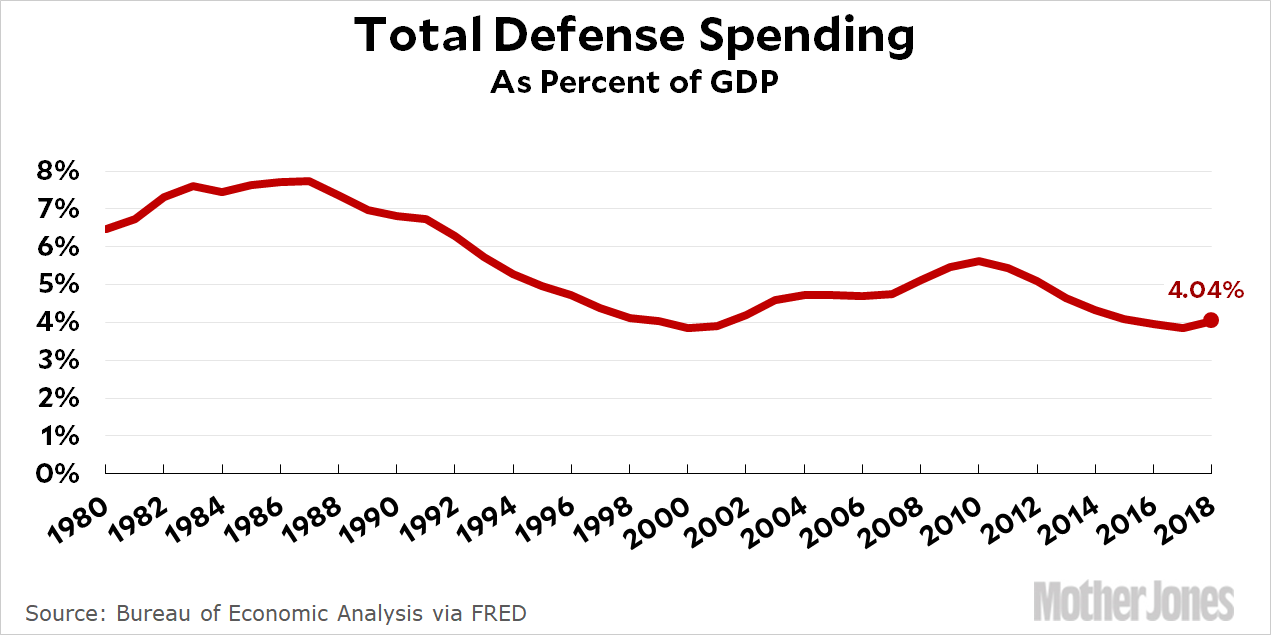
    I’m not entirely sure why we need such a huge defense budget, but it’s not the kind of thing that gets me lathered up either. And it’s not as though it was something Democrats fought. Most of them wanted to see it increased too. Here’s what total defense spending looks like—including war funding and all defense-related departments—expressed as a percentage of GDP:

    UPDATE: Apologies. There are several different ways of totting up defense spending, but some are more defensible than others. The one I used initially wasn’t right, so I’ve redrawn the chart with better numbers. It now includes (a) base spending, (b) overseas contingency spending, (c) directly defense-related spending in other departments (for example, nuclear weapons development in the Department of Energy), and (d) spending on veterans. The Bureau of Economic Analysis provides this as “National Defense Consumption Expenditures and Gross Investment.” That is, operational spending + spending on capital goods (like jets and aircraft carriers).

  • Yet More Trade Antics From the President

    So many soybeans.Imago via ZUMA

    Let’s catch up on trade news. First, there’s this:

    Speaking at a meeting of the Senate Finance Committee, Mr. Lighthizer said that the European Union, along with Argentina, Australia, Brazil and South Korea, would be exempted. Canada and Mexico were earlier left off the list of countries subject to the tariffs.

    That’s three-quarters of all the tariffs that were originally announced, and I imagine Japan and Taiwan will get themselves on this list shortly too. Among big exporters of steel, that will leave only Russia and Turkey. So what was the point of all this?

    Next up, Trump is getting ready to slap tariffs on either $50 or $60 billion worth of Chinese imports. No one knows which. But the tariffs will cover thousands of different products. Earlier, China had sounded pretty low-key about this, but not anymore:

    It is readying retaliatory tariffs against U.S. exports of soybeans, sorghum and live hogs, targeting products from Farm Belt states that supported President Donald Trump, according to people with knowledge of the policies. But Beijing’s response would be calibrated to minimize escalation, the people said.

    China imports about $12 billion worth of soybeans from the US. The other stuff is minor. In any case, I suppose we’re now in for another round of farmers who voted for Trump wailing that they didn’t know he was actually going to do any of the stuff he spent a year saying he’d do. They just figured he was lying in order to sound like a tough guy—which, admittedly, might not have been a bad guess. But it didn’t pan out.

    Unlike a lot of people, I’m not especially worried about a trade war. I just think this whole thing is pointless. Why we are wasting our time on this stuff?

  • Here’s a Textbook Criticism of Econometrics Gone Bad

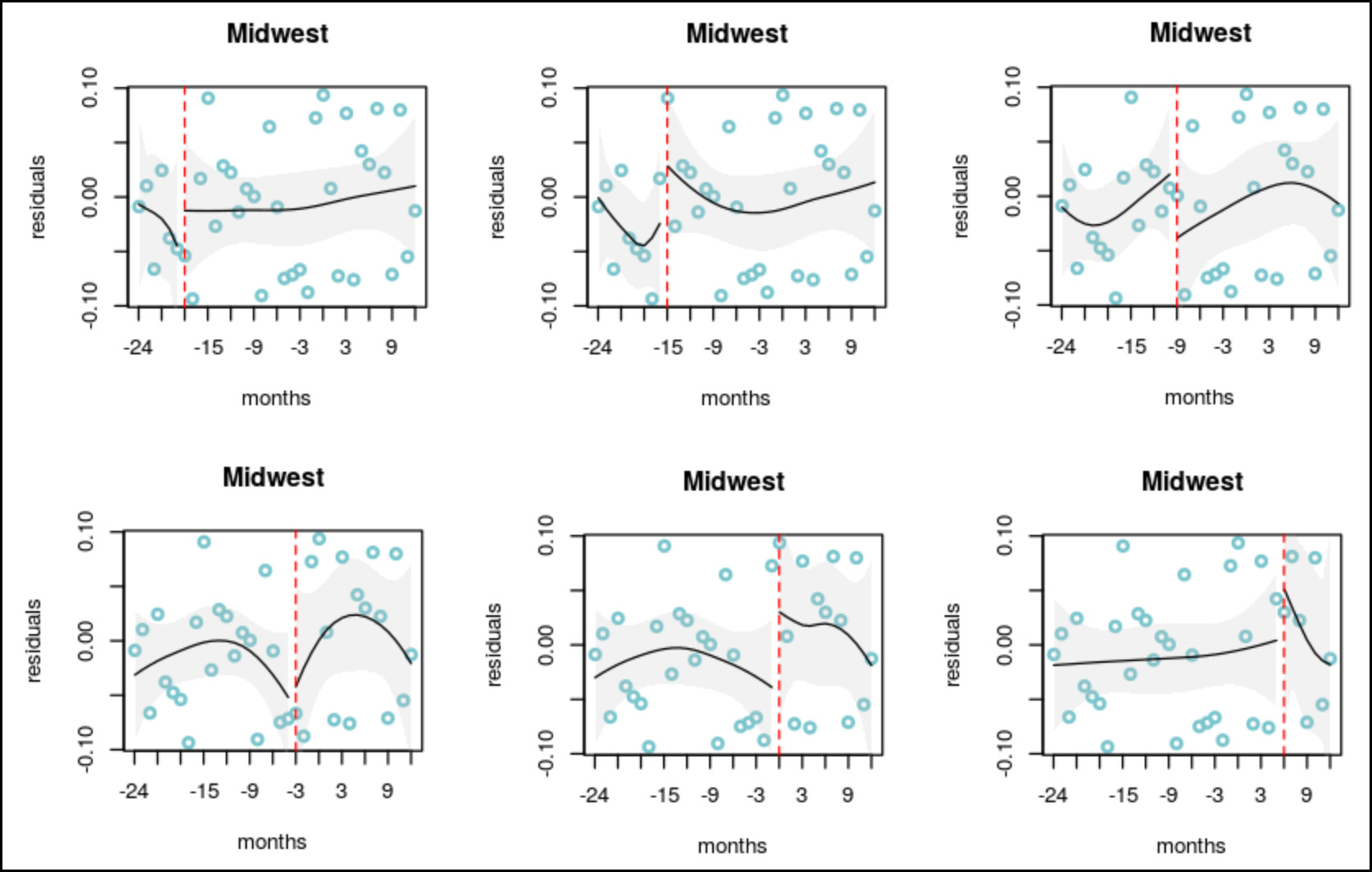
    A couple of weeks ago I linked to a study that suggested the anti-overdose drug Nalexone might, on net, actually cause more opioid deaths. I was skeptical because the data seemed to show no real pattern. The authors drew a dashed red line at the point where Nalexone was legalized, and sure enough, it looked like opioid deaths jumped after the new laws were passed. But the line seemed entirely arbitrary.

    Now Andrew Gelman has weighed in. He has pretty much the same criticisms I did, but he also has the statistical chops to be taken seriously. However, he also links to Richard Border, who doesn’t say a word but lets the numbers speak for themselves:

    This is a textbook criticism of statistics based on too few data points. As Border shows, you can put the cutoff line anywhere and it looks like there’s a big jump in opioid deaths. But that doesn’t mean anything. The error bars are enormous, and the before-and-after “trends” are meaningless.

    I’d add that this also shows the value of simply using common sense. If you remove all the lines and the error bars and simply look at the scatterplot, there’s nothing there. That should make you skeptical from the very start. It’s true that occasionally you can tease real results out of data like this, but you’d better be damn sure of what you’re doing and you’d better check it ten different ways. The authors of this study didn’t do that.

  • Donald Trump’s Popularity Among Republicans Is Very Average

    Yesterday Greg Sargent highlighted a comment from Sen. Bob Corker about why Republicans are hesitant to get tough with President Trump over the possibility of him firing Bob Mueller. It’s all about the midterms:

    Amid sky-high Democratic enthusiasm and a developing “blue wave,” Republicans can’t afford a war with Trump that depresses GOP turnout….“The president is, as you know — you’ve seen his numbers among the Republican base — it’s very strong. It’s more than strong, it’s tribal in nature,” said Sen. Bob Corker, R-Tenn., who decided to retire when his second term concludes at year’s end, after periodically sparring with Trump.

    “People who tell me, who are out on trail, say, look, people don’t ask about issues anymore. They don’t care about issues. They want to know if you’re with Trump or not,” Corker added.

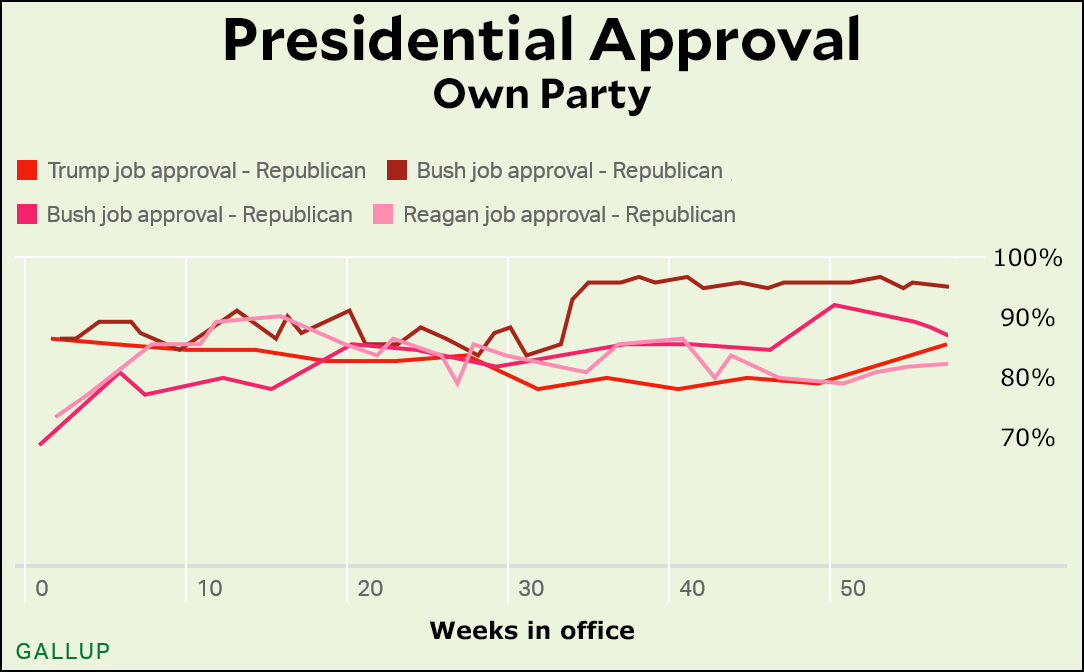
    Generally speaking, Corker is right that it makes sense not to go to war with your own president in an election year. Still, the fact is that Trump is only normally popular right now:

    Trump’s numbers have risen over the past couple of months, but he’s still very much middle-of-the-pack compared to other Republican presidents at this point in their terms. He’s also only about three points higher than Obama was among Democrats.

    So sure: Trump is popular among Republicans. But he’s hardly sky high or anything. Right now he places third out of the past four Republicans.

  • The Real Enemy of the White Working Class Is … the White Middle Class

    Tucker Carlson is getting some flak over this:

    On his top-rated Fox News show Tuesday night, conservative pundit Tucker Carlson opined on demographic change and immigration in America….The segment was focused on a National Geographic article featured in the magazine’s April issue. Though the article, centered on the Pennsylvania town of Hazleton, was titled “As America Changes, Some Anxious Whites Feel Left Behind,” Carlson focused his remarks on the growth of Hazleton’s Hispanic population, which has increased exponentially since 2000 — a change that Carlson said “makes societies volatile.”

    ….But he saved his strongest words for “our leaders … who caused all this,” who, in his words, live in neighborhoods that “are basically unchanged — they look like it’s 1960. No demographic change in their zip code.” He concludes, “Our leaders are for diversity, just not where they live.”

    I’m not here to defend the thrust of Carlson’s weeklong jihad against immigrants, which has been generally repellent. I want to comment only on this specific point, because it explains something that a lot of people don’t pay enough attention to.

    I first learned this years ago when I read Kevin Kruse’s White Flight, a portrait of Atlanta in the 60s. From the viewpoint of working-class whites, here’s what he says happened:

    1. Up through the 50s, Atlanta is nicely segregated. Working class whites live in all-white neighborhoods and everyone is happy.
    2. Then the Civil Rights era surges into Atlanta, and its leaders realize that segregation has to go.
    3. Middle and upper-middle-class whites support desegregation, but only because they have enough money to flee Atlanta for the suburbs, where they live in white communities and send their kids to private white schools. Needless to say, working-class whites are stuck in Atlanta as their neighborhoods become steadily blacker.
    4. Because of this, working-class whites feel a deep sense of betrayal. They are angry not just—or even mostly—at blacks, but at affluent whites. These folks have supported segregation for decades, and by voting with their feet they make it plain that they still support it. But they’re willing to throw their fellow working-class whites under the bus for the sake of buying peace for the business community.

    This is the root cause of working-class white resentment toward—well, blacks, of course. But if you dig down, their real resentment is toward the political establishment that, in their view, cynically sold them out. This is what Carlson is getting at. He knows his audience.

    This is a big part of why working-class whites are always on the lookout for politicians who rail against the establishment. Or the swamp. Or the elites. Or the deep state. Sure, they prefer Republicans, who are opposed to affirmative action and callout culture and political correctness. But when push comes to shove, what they really want is someone who will take a wrecking ball to the establishment that screwed them. That’s why some of them thought well of Bernie Sanders: they might not have liked his tolerant racial politics, but that was secondary to the fact that he wanted to bust up elite control of the country. That’s what they want too.

    Donald Trump, of course, appealed to them even more: he also wanted to bust up the elites and he had the right racial politics. So they put him in the White House. It’s the ultimate act of revenge from the folks who weren’t rich enough to flee to the suburbs in the 60s and 70s—an act of revenge that’s now carried on by their children. Hispanics may be the scapegoats this time around, but as before, their real animosity is saved for the folks who have sold them out: the white establishment that’s rich enough not to care about about illegal immigration because they’re rich enough to avoid it.