• Why Are Two FBI Agents Being Smeared By the Right?

    Rex Shutterstock via ZUMA

    The latest bit of manufactured outrage from Trumpland involves a pair of FBI agents who apparently enjoyed gossiping about politics during the 2016 campaign. Margaret Hartmann provides the nickel summary:

    In the 375 texts shared with Congress, Strzok and Page make it clear they’re not fans of Trump. They called him an “idiot,” a “douche,” and a “loathsome human.” After Trump made an allusion to his penis size during a debate, Page texted “This man can not be president.” At another point Strzok commented, “God, Hillary should win 100,000,000-0.’’ They both said they were concerned that Trump might actually win, and Strzok remarked, “I’m scared for our organization.”

    They also criticized a number of Democrats, including Eric Holder, Martin O’Malley, and Bernie Sanders. “I just saw my first Bernie Sanders bumper sticker. Made me want to key the car,” Page wrote in August 2015. “He’s an idiot like Trump. Figure they cancel each other out,” Strzok replied.

    Needless to say, there’s nothing wrong with this. Just like the rest of us, FBI agents are allowed to say whatever they want about presidential candidates on their own time. If we released the texting history of every FBI agent in the country we’d almost certainly find hundreds more conversations like this. I, for one, would certainly be interested in the texting history of the FBI’s New York office. But I’m not going to get it, since it’s none of my business unless there are credible accusations of misconduct being investigated. So what’s the deal with Strzok and Page?

    We still know almost nothing about the bigger questions raised by these reports. For starters, what prompted the inspector general to look into top FBI officials’ private text messages, and why are we hearing about this now? The Times notes it’s “highly unusual” for the government to release such documents in the middle of an investigation, and concludes, “By releasing the texts, the Justice Department has given Mr. Trump both a shield and a sword in his political battle with Mr. Mueller’s investigators.”

    This is all mysterious as hell. Strzok and Page did nothing wrong that we know about. Their political opinions are perfectly OK. The texting all happened last year, long before Strzok ever worked for Robert Mueller. There’s apparently no suggestion that they displayed any favoritism in their work. And yet their texts were released and Strzok has been removed from the Trump-Russia investigation. It sure seems as if the public deserves an explanation from FBI Director Christopher Wray.
  • Social Security Will Be Solvent for the Rest of the Century

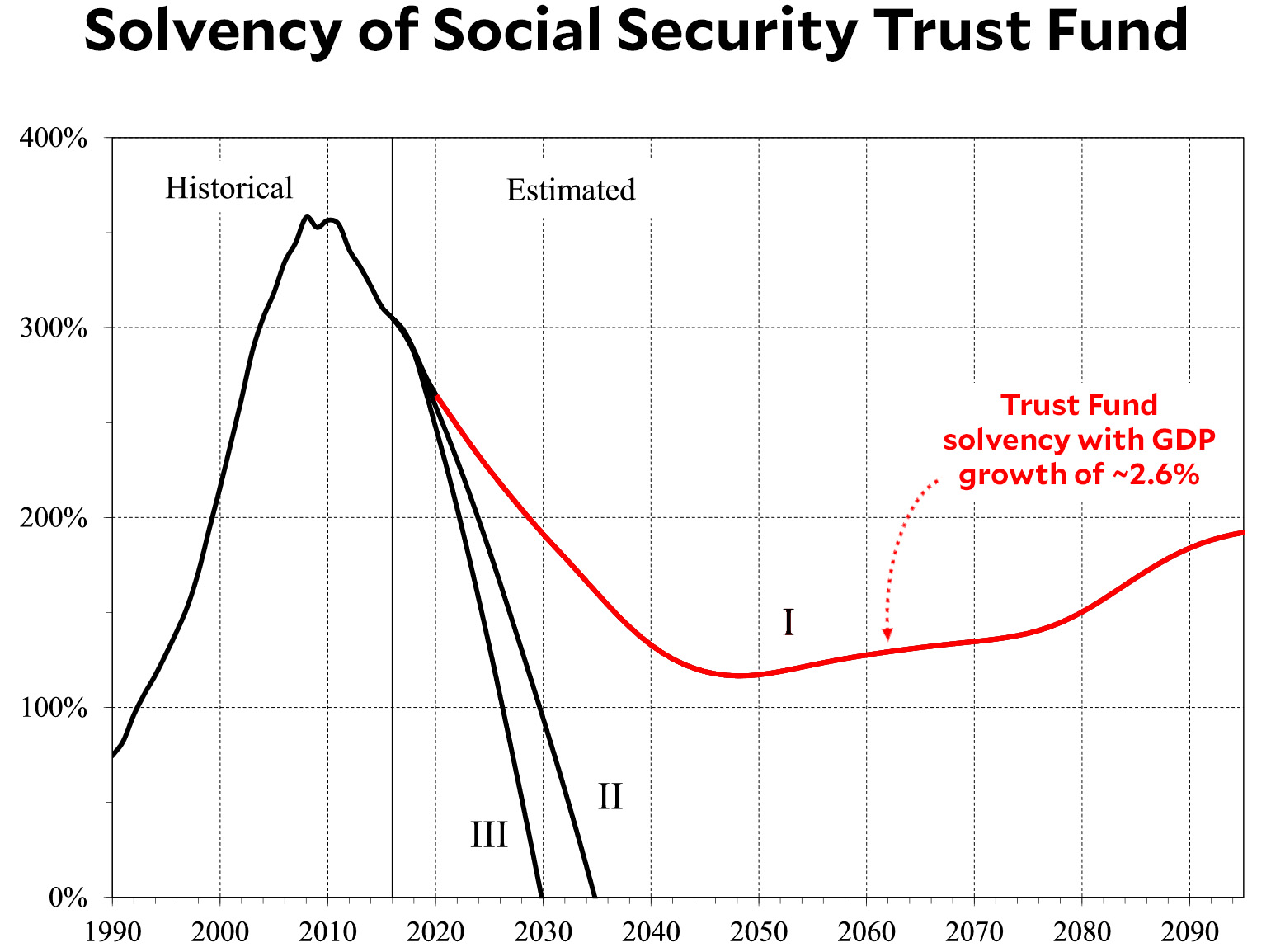
    While we wait for results from Alabama, I have some good news to share. I was browsing through the 2017 Social Security Trustees report, and it turns out that Social Security will be solvent through the rest of the century. Here’s their chart of how things look based on different estimates of economic growth:

    As we all know, the official OMB/Treasury estimate of future economic growth is 2.9 percent, which means the trust fund will be flush with cash far into the future. This means everyone can stand down and leave Social Security alone. In fact, it’s doing so well that Congress might want to think about raising benefits. Hooray!

  • Republicans Finally Have Kumbaya Moment on Tax Bill

    House and Senate Republicans are working busily to reconcile their versions of the tax bill, but it’s tough sledding. They have a lot of disagreements to hammer out, and of course they also have to deal with demands from Donald Trump. What, oh what, can finally bring them together?

    Congressional Republicans are in advanced talks to lower the top tax rate for individuals from 39.6 percent to 37 percent as they finalize a massive $1.5 trillion tax package, said three people familiar with the negotiations.

    ….The change, if finalized, would amount to a major tax cut for the wealthiest Americans….After the House and Senate passed their versions of the tax bill, complaints from wealthy Americans – particularly in New York – grew louder….Trump has received an earful from friends and supporters in New York, and last week signaled that he could support changes that he said would help a “sliver” of people.

    It’s heartwarming, isn’t it? When things are at their roughest, Republicans can always find comfort in the old traditions.

  • Does Rising Inequality Harm Economic Growth?

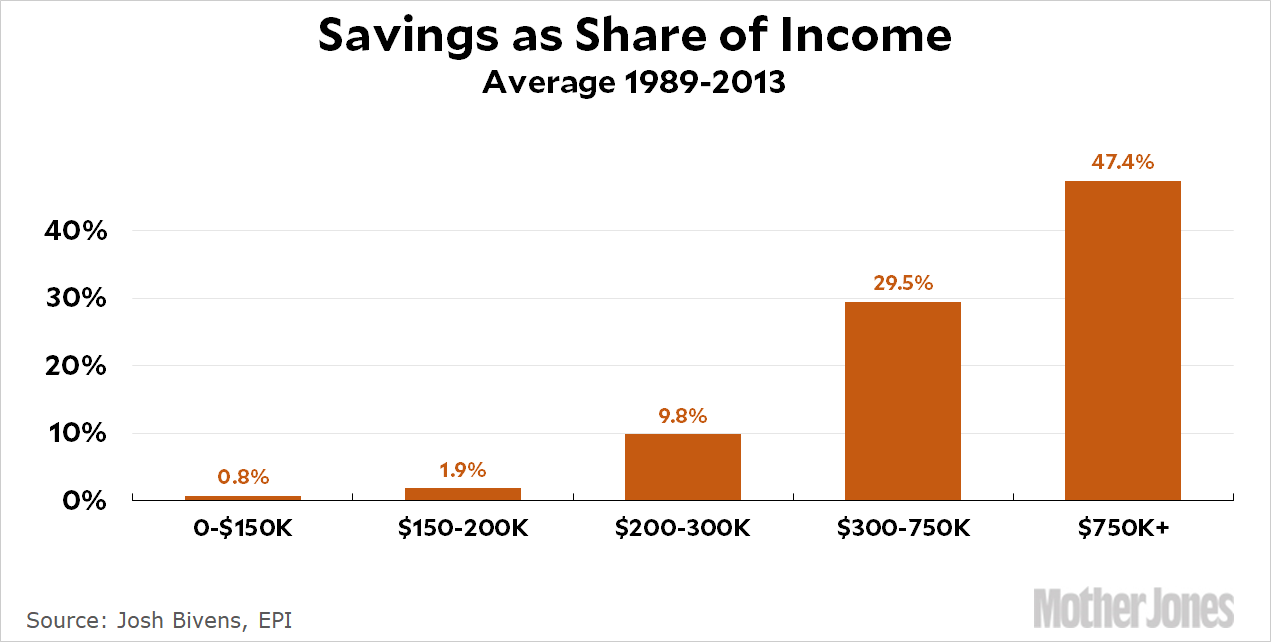
    Does rising income inequality reduce economic growth? EPI’s Josh Bivens takes another crack at this hypothesis today, starting with some (uncontroversial) evidence that the rich save more than the non-rich:

    If the rich squirrel away their income instead of spending it, then total national consumption will be highest when the non-rich have a bigger share of total income. As Bivens says: “A straightforward back-of-the-envelope estimate of [blah blah blah]. Table 2 shows the results of this procedure.” Long story short, Table 2 shows that total national consumption is about 2 percent lower than it would be if income inequality hadn’t risen since 1979.

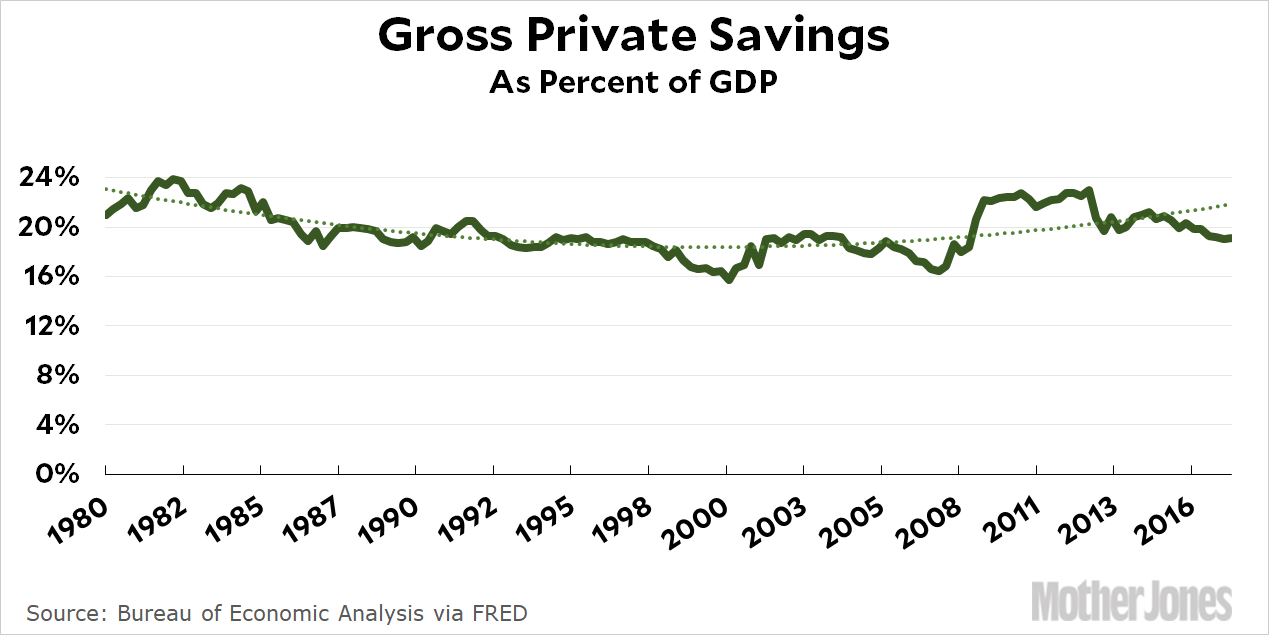
    So far, so good. But there’s always been a big problem with this theory: if the rich save more of their income, this implies a higher overall savings rate as income inequality rises. But that’s not what happened: From 1980 through the early aughts, the savings rate dropped:

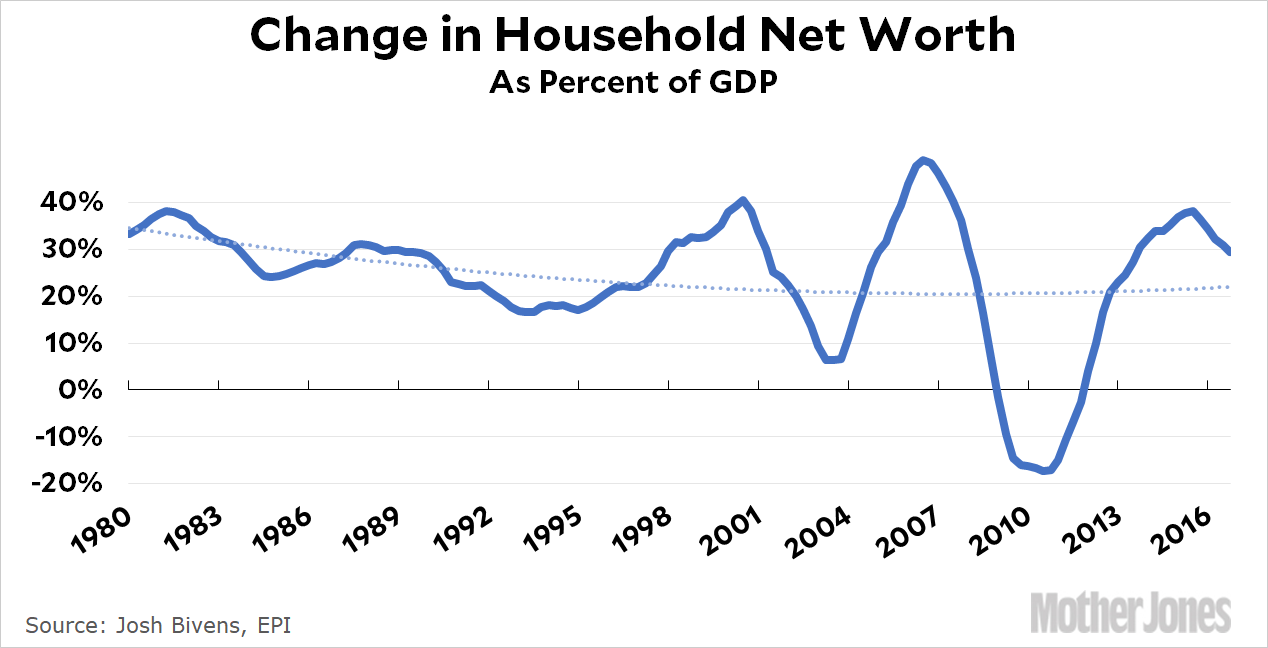
    Bivens agrees this is a problem for the inequality hypothesis, but suggests that it’s something of an illusion because normal measures of saving don’t include unrealized capital gains, a substantial source of household net worth for the rich. If you include that, the savings rate looks different:

    It’s true that there’s more volatility in this measure, but in fact it doesn’t look much different from the standard savings chart. Once you fit a trendline, you get the same result: savings decreased from 1980 through the mid-aughts.

    Unrealized capital gains don’t represent reduced spending from current income, so I don’t know if Bivens’ approach is kosher in the first place. Unfortunately, it’s not clear if that matters since it doesn’t change the overall trendlines anyway. The hypothesis that increased income inequality reduces overall demand remains one of those tantalizing theories that seems like it’s obviously true, but just doesn’t fit the data. For the time being, I continue to think of it as one of our great mysteries.

  • Donald Trump’s Gillibrand Tweet, Explained

    Ron Sachs/CNP via ZUMA

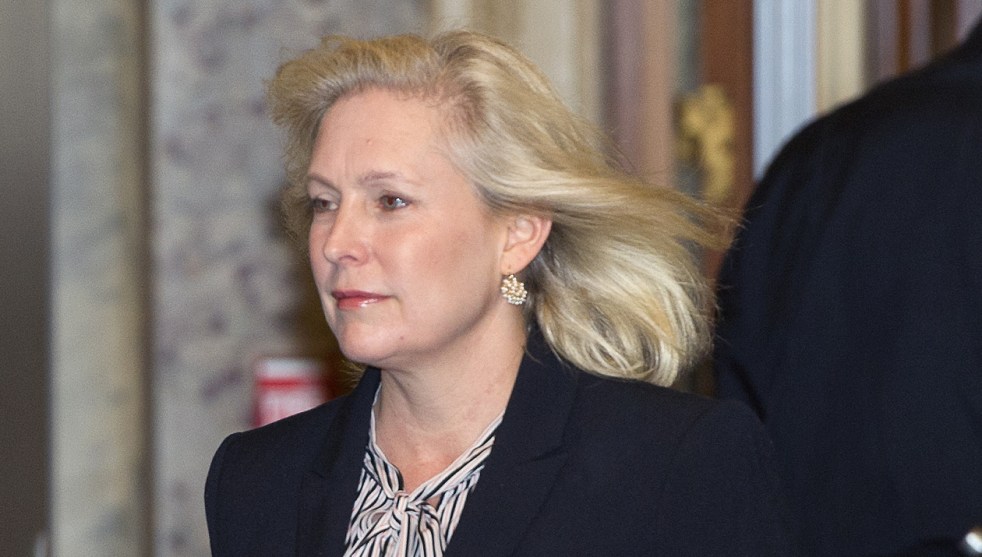
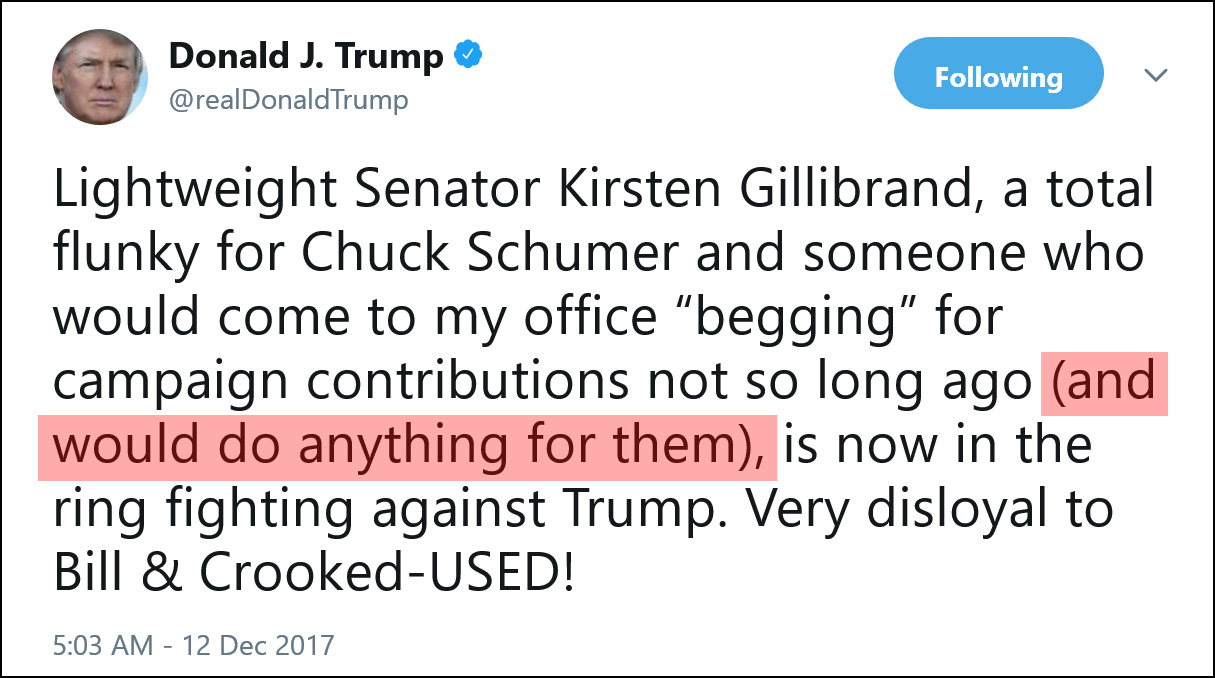
    Everyone wants to know what this tweet means:

    I’m here to help. As you know, I’ve long been a proponent of the theory that Trump’s tweets are designed primarily (solely?) to create an alternate universe for his fans. They aren’t meant for the rest of us. But I’m now edging toward accepting a different theory: they are meant to keep Trump’s name in the news because he really likes it when CNN talks about him. As the New York Times put it, “One former top adviser said Mr. Trump grew uncomfortable after two or three days of peace and could not handle watching the news without seeing himself on it.”

    Trump has real talent at self-promotion, and a sort of animal cunning about what kinds of insinuations will get everyone talking. The obvious insinuation here is that Gillibrand did something sexual, but Trump didn’t actually say that and can self-righteously deny it if anyone mentions it.

    So that’s what this is all about. It puts Trump back in the news and might even give him an opportunity to launch another wave of FAKE NEWS tweets. What’s not to like?

  • Your Smartphone Is the Latest Excuse for Low Inflation

    Here’s the latest bizarre excuse for low inflation:

    Holiday shoppers with smartphones can retrieve instant price comparisons that make bargain hunting easier—and the Federal Reserve’s job tougher….Most Fed policy makers agree they should keep gradually raising short-term rates in the months ahead to prevent the buoyant U.S. economy from overheating. But some are hesitant because inflation remains puzzlingly weak, running below 2% for most of this year. Moving too quickly could stall growth.

    ….In a nod to the growing practice, Ms. Yellen said in September that increased competition created by online retailers “may have reduced price margins and restrained the ability of firms to raise prices in response to rising demand.” She said in October that online shopping “could be helping to hold down inflation in a persistent way in many countries.”

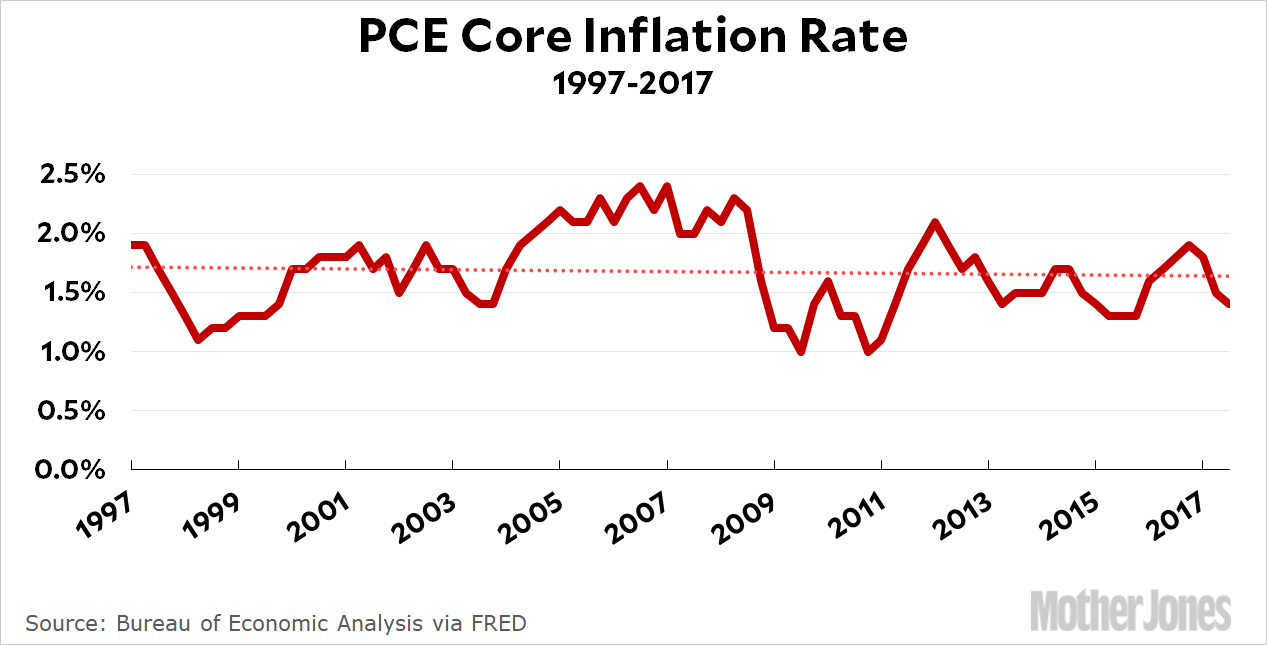
    For most of the 20th century, inflation was low. Then, starting in the late 60s, it climbed steeply for about 15 years, peaking around 1980. Then it spent the next 15 years declining to its old rate. Here’s what it’s looked like since then:

    Core inflation—the Fed’s preferred bellwether—has been dead flat for 20 years. It hasn’t been very noisy, either, staying tightly within a band of 1-2.5 percent. It’s maintained this level through recessions and expansions, through war and peace, and even during the tight labor market of the late 90s. For a while, it was globalization that was supposedly to blame. But even after the China shock had mostly passed, inflation stayed low. So then it was because of retiring boomers. Or maybe the Great Crash of 2008. Then came the subsequent expansion, and inflation still remained quiet. So then it was because even though unemployment was low, the labor market was too loose. But now the labor market is starting to genuinely tighten, and inflation is going nowhere. So we’re adding web-based comparison shopping to the list.

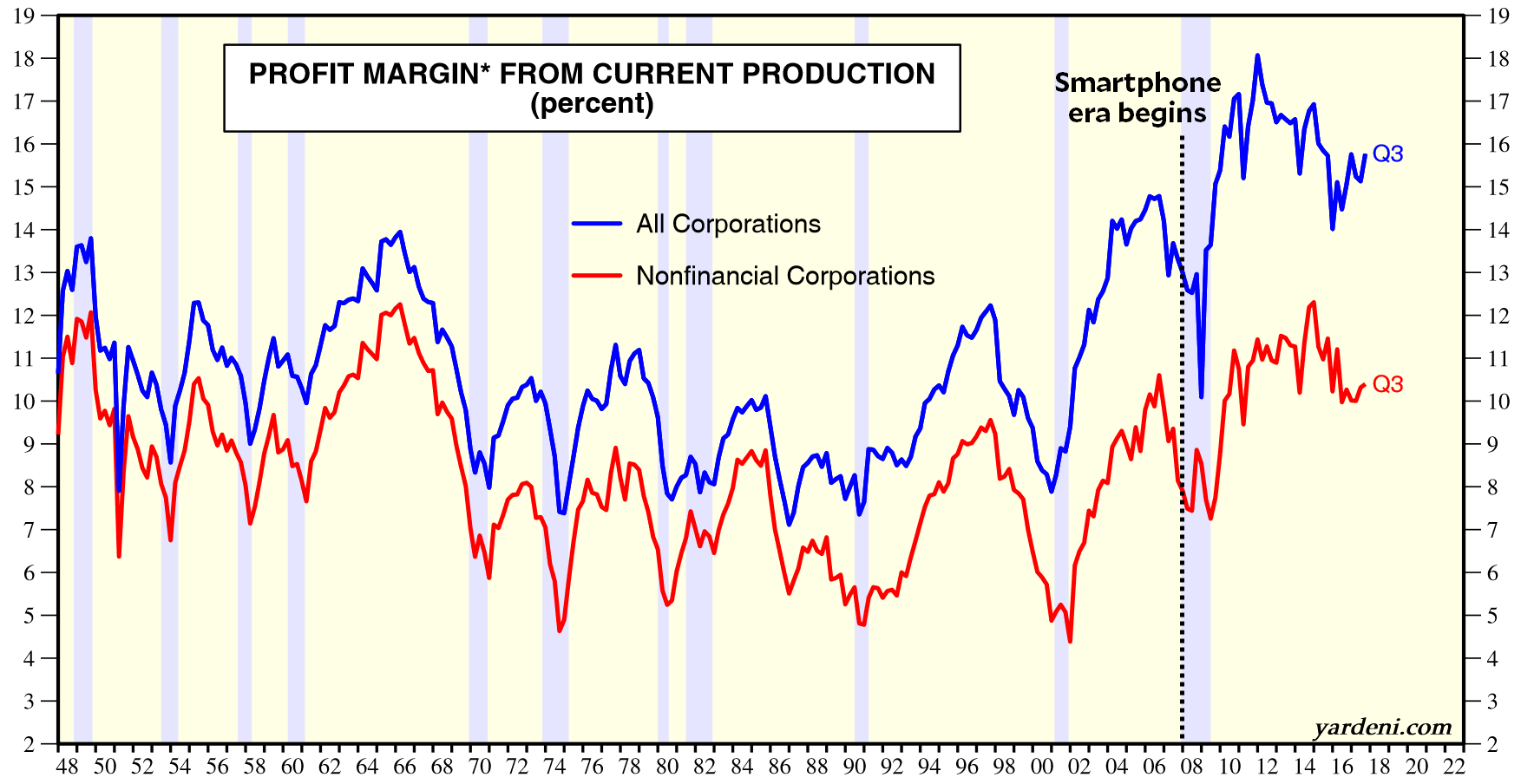
    Come on. If web shopping has constrained the ability of companies to raise prices, you’d expect corporate profit margins to be down. But they aren’t:

    Granted, this shows profit margins for all corporations, and web shopping only affects a subset of consumer products. Still, you’d expect to see something. Instead, starting around the time smartphones took off, what we see is higher margins. They’re now at their highest point in 50 years.

    I’m not smart enough to know what’s going on. But when inflation has stayed flat so widely and for so long, it’s hardly credible that it’s the result of a bunch of factors that have coincidentally followed one after the other. There’s something more fundamental going on. And this something has been at work for at least 20 years, and probably more like 30.

    I’ll toss out one possibility that I think gets too little attention in general. The late 60s and 70s, when the world truly left the gold standard and opened up financial markets, represented a massive financial sea change that neither governments nor central banks were prepared to deal with. Add in a couple of oil shocks and the global economy became unmoored. It took years for financial rules to adapt and for the major central banks to learn from experience what they had known only academically before. But then they learned. They’re nowhere near perfect, but ever since the late 80s they’ve been surprisingly good at dealing with recessions and expansions—and just generally keeping the economy on an even keel. The result is that inflation is roughly as quiet as it was for most of the 20th century until the mid-60s.

    Feel free to leave your own guesses in comments.

  • Another Look at Donald Trump’s Job Approval Rating

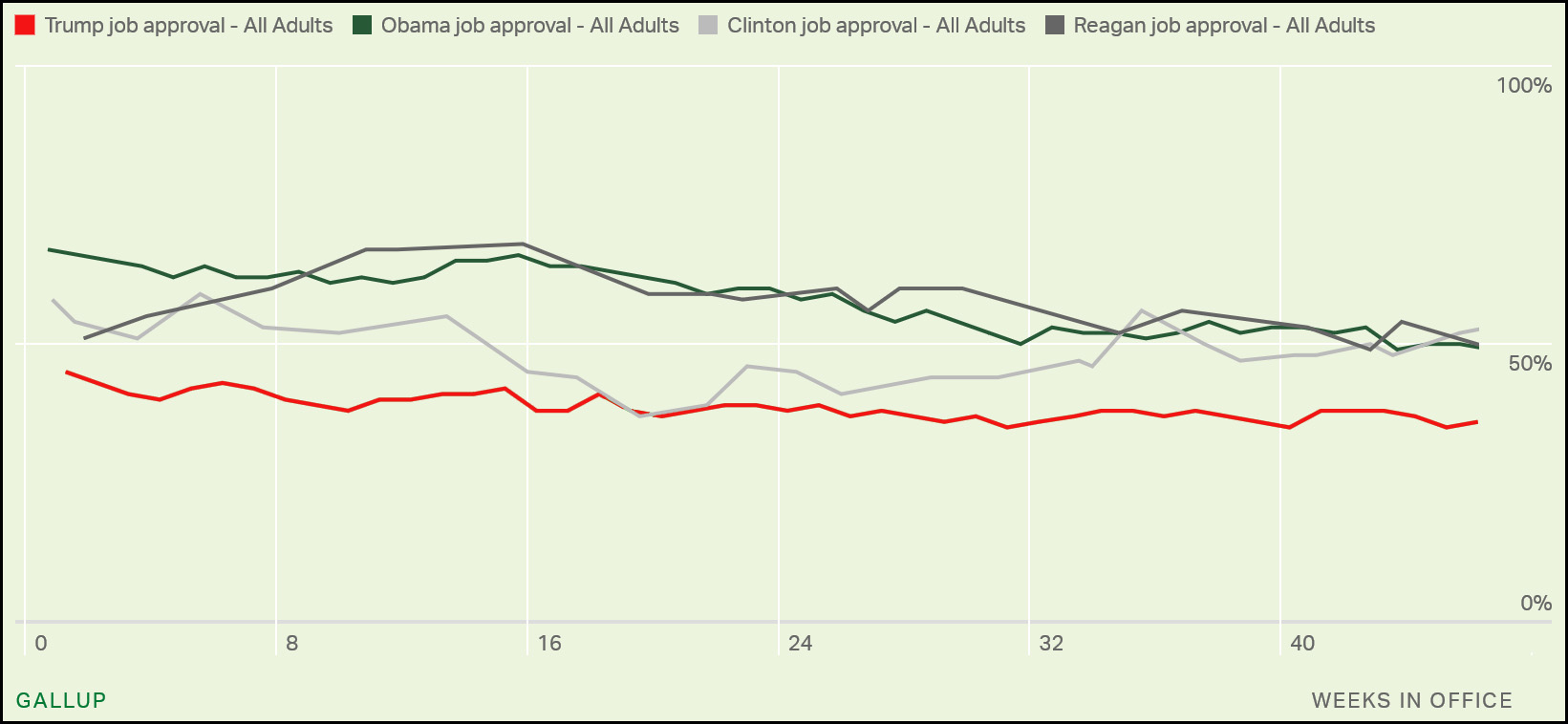
    Via Gallup, here’s the latest look at approval levels of Donald Trump and three other recent presidents¹ during their first year in office:

    It’s worth noting that Trump’s decline is pretty normal. On average, the other three presidents declined from 58.7 percent approval to 50 percent approval by this time in their first term. That’s a drop of 8.7 percentage points.

    Trump has declined from 45 percent approval to 36 percent approval. That’s 9 percentage points.

    Despite everything, Trump’s performance has been completely average. The big difference is that he started office with an historically low approval rate. Since then, nothing unusual has happened.

    ¹You can’t use George W. Bush in this kind of comparison because his job approval spiked massively after 9/11. Nor can you use George H.W. Bush since his first term was essentially the ninth year of the Reagan/Bush administration. So I used Reagan instead.

  • Lunchtime Photo

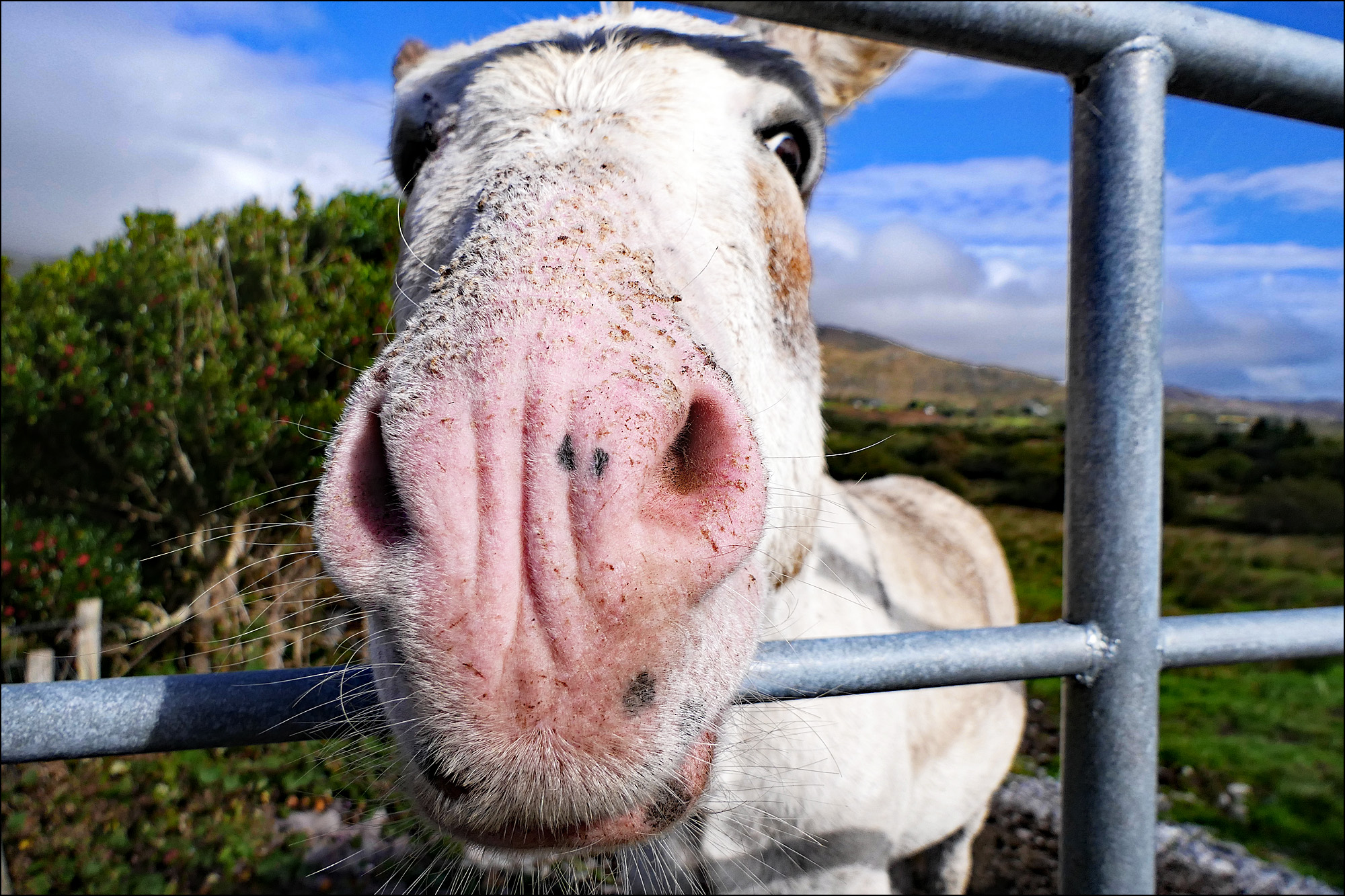
    Ireland is famous for its donkeys, though for reasons not entirely clear to me. We didn’t see many donkeys on our travels around Kerry, but we did see a few on a farm a few miles north of where we stayed. Mostly they just stood around and looked at us, but as you can see, one of them was pretty friendly. Perhaps he was hoping for an apple or something?