This is the Jack Sparrow actor at Disneyland. He crosses back and forth on the raft to Tom Sawyer’s Island, and he was really good. You can see that he has the look down (we’ll forgive the sunscreen on his nose), and he had the accent and mannerisms close to perfect too. And he was great with the kids, who swarmed around him and squealed with delight whenever he said something funny—which was often. I’d like to say that he has a bright future in Hollywood, but it probably turns out that he’s pre-med studying to be a neurosurgeon or something. Isn’t that always the way?
Starting in 2014, the webpage, corporate.comcast.com/openinternet/open-net-neutrality, contained this statement: “Comcast doesn’t prioritize Internet traffic or create paid fast lanes.” That statement remained on the page until April 26 of this year. But on April 27, the paid prioritization pledge was nowhere to be found on that page and remains absent now.
What changed? It was on April 26 that FCC Chairman Ajit Pai announced the first version of his plan to eliminate net neutrality rules. Since then, Pai has finalized his repeal plan, and the FCC will vote to drop the rules on December 14.
And so it begins. This is just a toe in the water.
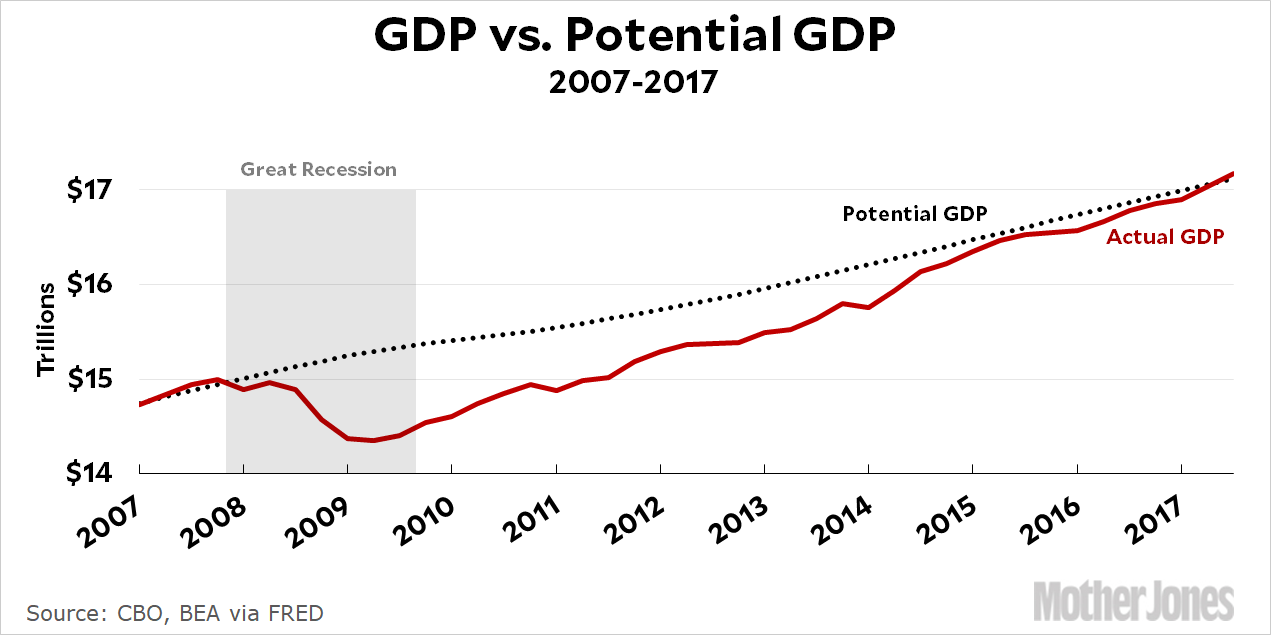
I’ll be damned. Wonkblog’s Andrew Van Dam points out today that GDP has finally closed the huge gap with potential GDP that opened up after the Great Recession. He’s right:
I’m not sure I ever believed this would happen, even though CBO predicted exactly this a couple of years ago.
Unfortunately, there’s some bad news embedded here: one or two quarters of GDP above potential is an almost infallible predictor of a recession. All we need now is a housing bubble, a stock bubble, and a spike in oil prices and we’ll have everything in place to kick off 2018.
I’m sitting here trying to absorb my previous post. I just woke up, so give me a minute.
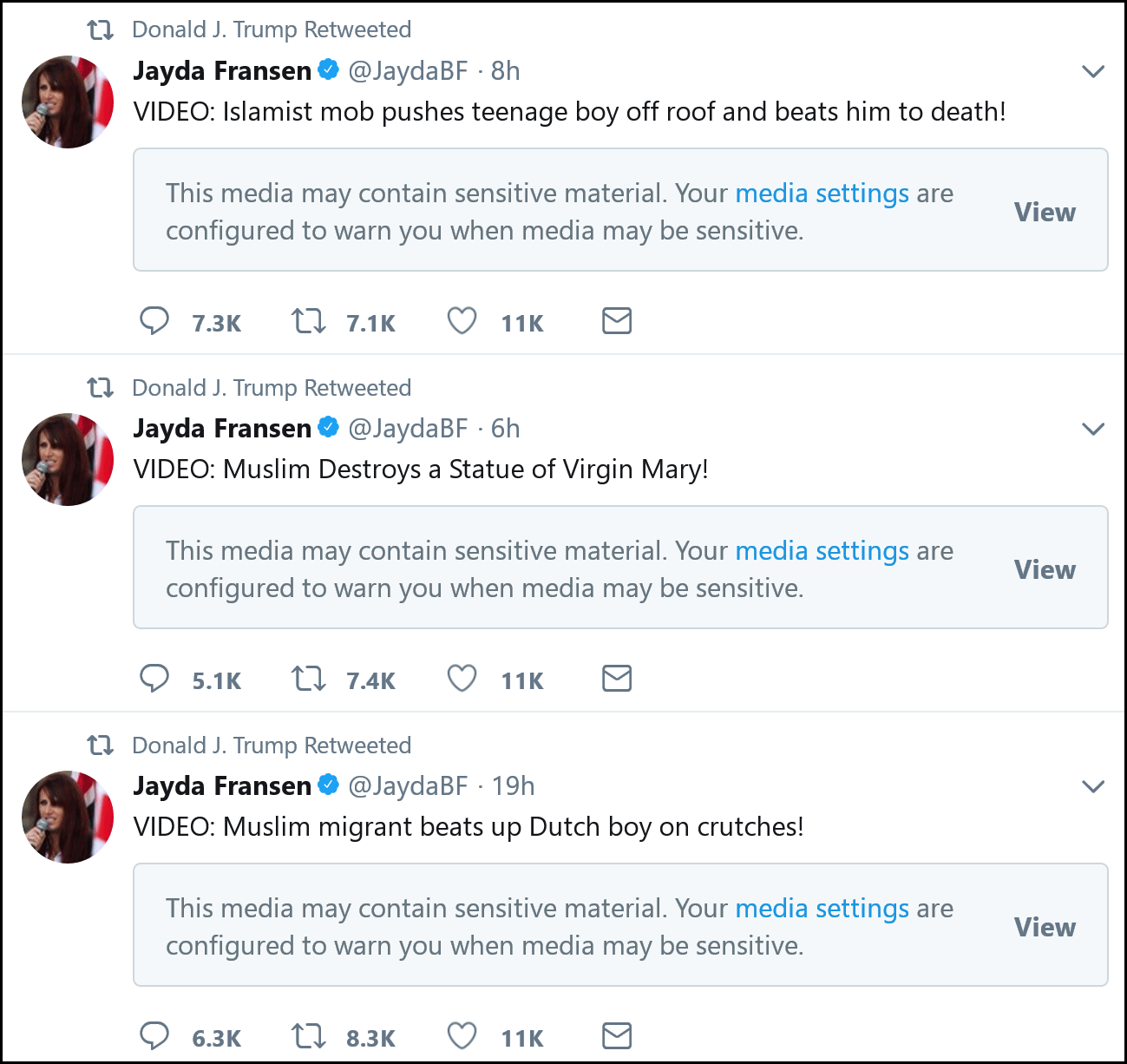
OK. Here’s what happened. It’s 6 am on the East Coast. Donald Trump is up and puttering around. He fires up Twitter and sees this from stale old rabble rouser Ann Coulter:
Intriguing! So he clicks and heads over to Jayda Fransen’s Twitter feed. It’s got a big picture of Donald Trump on top! He likes that. So he scrolls. Ooh, more videos of Muslims acting horrifically. Are they real? Well, they’re real enough if they come from the president of the United States! So he picks a few and retweets them. Then it’s back to his usual puerile boasting about the economy and rants against the fake news.
This is not normal, even for Trump. He’s not a subtle man, but he usually has the animal cunning to at least leave himself a veneer of deniability for his ethnic hatreds. This time, though, he goes full frontal. Why?
It’s his way of helping Roy Moore.
He wants people talking about this instead of the appalling tax bill Republicans are moving through Congress.
He’s officially gone from occasionally delusional to full crazy uncle.
Who the hell knows?
I know we’ve all said this a hundred times, but are Republicans ever going to seriously do something about this? I know they want to pass their tax bill and don’t want to get involved with stuff like this, but when is enough enough? Are any of them planning to say anything at all about this? Ever?
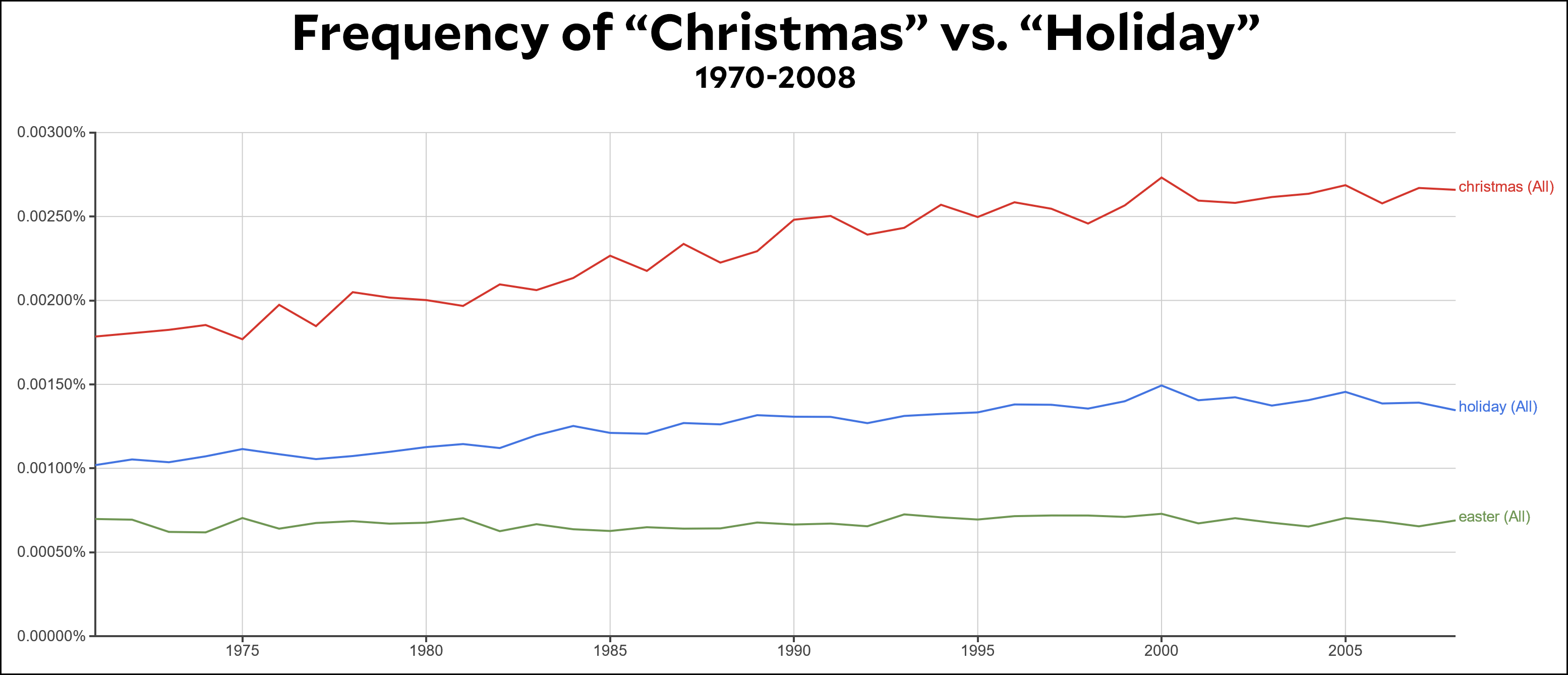
With Bill O’Reilly gone, is Fox News keeping up the good fight against us secular liberals and our war on Christmas? Probably. So here’s some raw data for you, courtesy of Google’s ever-entertaining Ngram Viewer:
Hmmm. Since 1970, use of the word Christmas has gone up by almost 50 percent, while the word holiday has gone up only about 33 percent. As a check, Easter has stayed totally flat. Apparently there was never really much of a war in the first place: it turns out that the forces of Santa Claus have been implacably grinding out a victory all along. Except at the White House, of course:
So important to thank our service members for their service, especially those away from their families during the holidays. pic.twitter.com/QSOM8elUNx
Does the individual mandate work? CBO estimates that if it’s repealed, 13 million fewer people will buy insurance. That’s something like two-thirds of all Obamacare enrollees, which means that CBO thinks it has an enormous impact. Without it, Obamacare collapses.
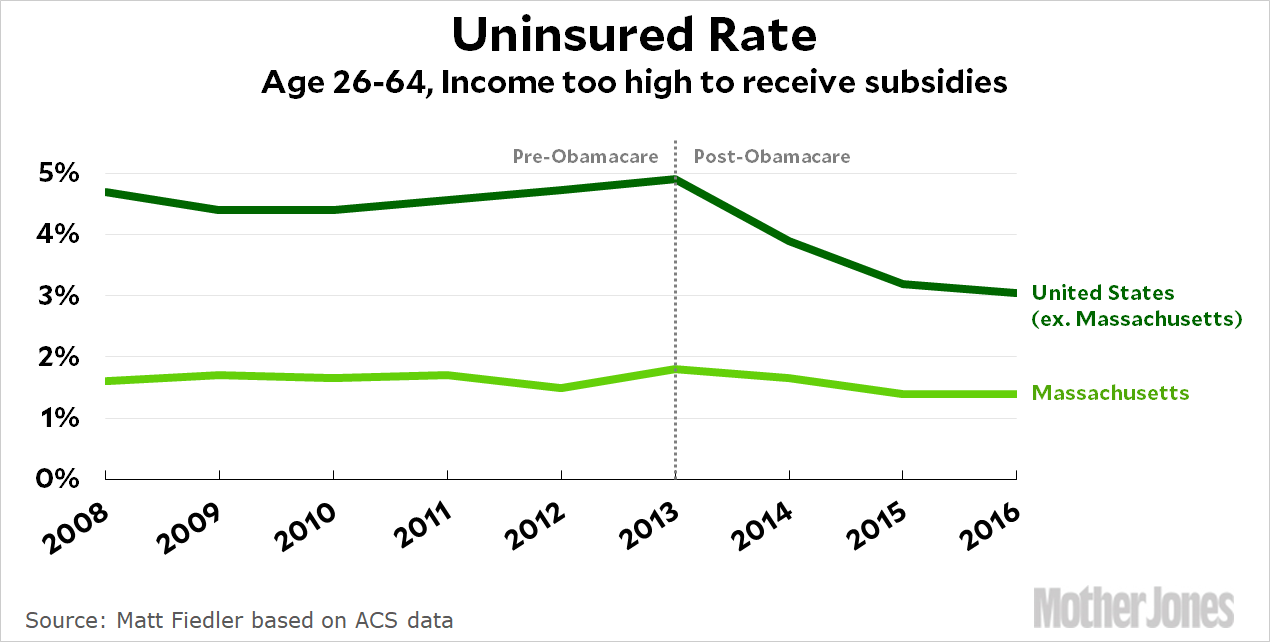
A few weeks ago I linked to a study of traffic fines that suggested the CBO estimate was at least plausible. But that’s all it did. Today, though, Matt Fiedler—formerly chief economist of Obama’s CEA and currently a Brookings fellow—presented some evidence about the mandate that was much more on point. He looks solely at people whose income is above 400 percent of the poverty level, which means they don’t qualify for federal subsidies. If they didn’t buy insurance before Obamacare, the only reason they have to buy it now is the mandate penalty. So did they?
Starting in 2014, when the mandate took effect, the number of uninsured in this group dropped by a third. As a check, nothing happened in Massachusetts, which already had a mandate.
This is strong evidence that the mandate works. These people receive no subsidies, so there was really nothing that made insurance more attractive to them when Obamacare went into effect. They started buying it because they didn’t want to pay the fine, even though they made enough money that the fine wasn’t that big a deal. For poorer people, it makes sense that the mandate penalty would have an even greater effect. When you’re poor, you really can’t afford to pay this kind of penalty, especially when you qualify for subsidies and might as well spend the money on something useful instead.
I’m still not sure that killing the mandate would cause two-thirds of Obamacare customers to drop out, but it might. And it sure looks likely that at least half would drop out. Either way, Obamacare would be toast.
And we probably won’t have to wait long to find out. If the mandate is eliminated, it doesn’t really matter whether CBO is right or wrong. All that matters is whether insurance companies think CBO is right. If they do, we won’t have to linger around for a death spiral to kill Obamacare. Insurers will just exit the market en masse, and that will be that.
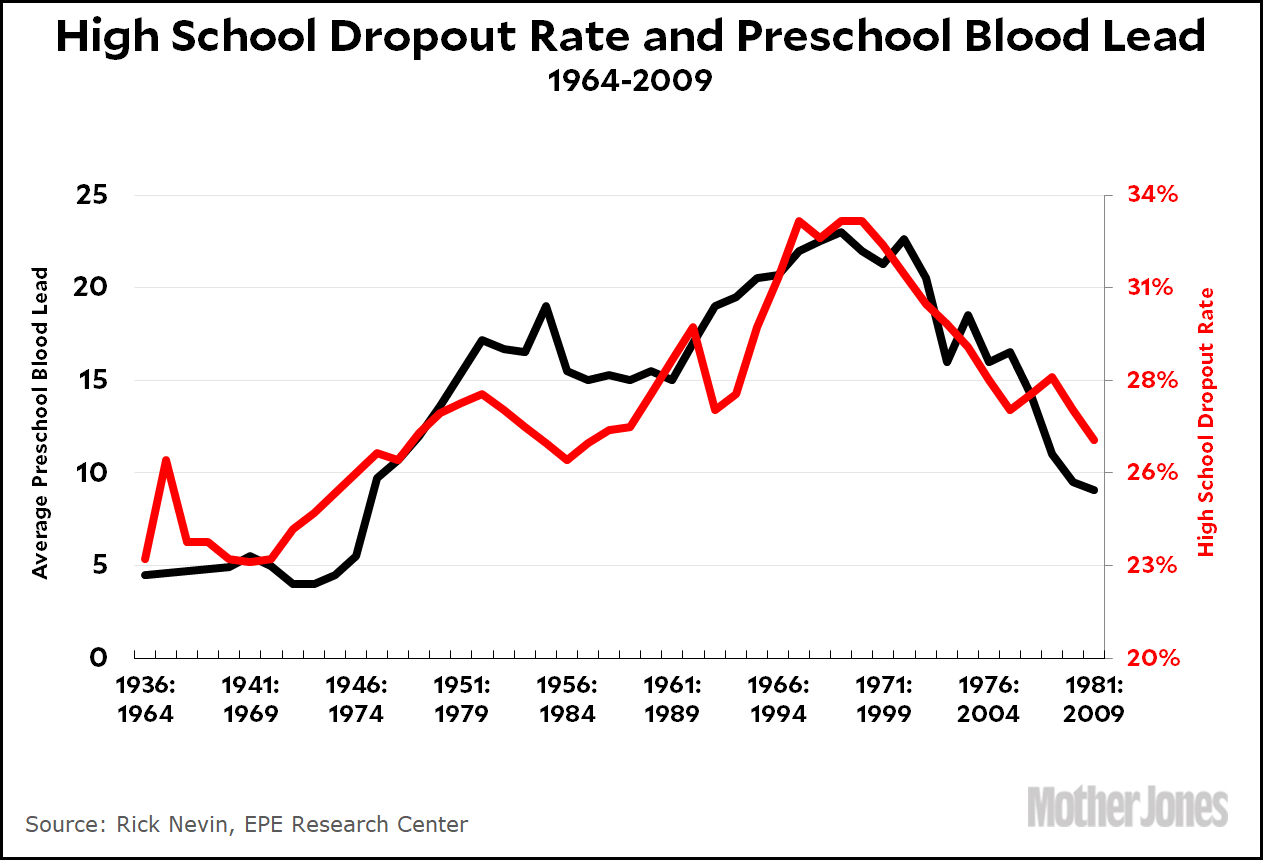
In a meandering post yesterday that ended up on the subject of lead and crime, I posted some charts showing the correlation of childhood lead levels with crime, teen pregnancy, and high school dropout rates. Here’s the dropout chart:
This correlation should come as no surprise. The connection between lead and crime may still be debatable, but the connection of lead with IQ and learning deficiencies is rock solid. There’s literally no one who doesn’t accept the research on this. So it makes sense that as lead poisoning in children increases, the dropout rate of these children a couple of decades later would increase too.
But if you look at this chart closely, you’ll see something funny: the best fit suggests a lag time of 28 years. That’s not right. The lag time ought to be 16 or 17 years, or at least something in that ballpark. What’s going on?
One possibility, of course, is that this is just a chance correlation. Something else caused the rise and fall of the dropout rate and lead had only a little to do with it. Without further study, there’s no way to know for sure. Alternatively, this could be a statistical artifact. Dropout rates are tricky to measure, and not everyone agrees on how to do it. Does a GED count as “graduation,” for example?
In other words, there could be a bunch of things wrong here. But let’s suppose this correlation is real. If so, what would account for the 28-year lag?
The best guess I can come up with is that dropout rates depend about equally on both parents and kids. The rate increases if the kids are duller or if the parents are duller. So if the lag time for the the children themselves is, say, 16 years, and the lag time for the parents is 40-years, the best fit for the final curve is a 28-year lag.
I have no idea if this holds water, and I’m not even slightly invested in it. I’m mostly curious about whether this correlation is meaningful, and if it is, whether there’s some reasonable explanation for the odd lag time. If you have any guesses, toss ’em out in comments.
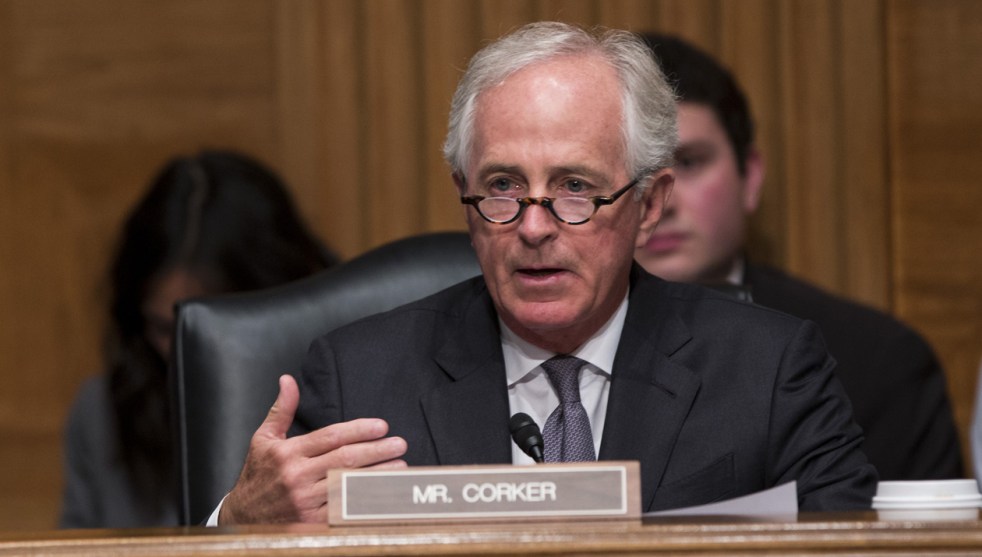
Sen. Bob Corker said Tuesday a “backstop” to curb future budget deficits could help to win his crucial vote for the GOP tax bill. The Tennessee Republican and others are seeking the protection in case the nearly $1.5 trillion in proposed tax cuts do not meet the GOP’s expectations for sparking economic growth. The “trigger” described by Corker would raise taxes if the plan does not boost the U.S. economy enough.
“What several of us have asked for is a backstop or trigger in that event we don’t meet the projections that have been laid out — since we’re not going to score it — that we have a backstop. And so that’s what we’ve been working on throughout the weekend and feverishly today,” Corker told CNBC’s “Squawk Box.”
The Senate could just wait to score the bill, of course. That would certainly be the easiest option. The thing is, everyone knows what a CBO score would show: even with dynamic effects taken into account, the Republican tax bill blows up the deficit big time.
So instead of dealing with that certainty, Republicans are apparently trying desperately to whomp up some kind of “trigger” language in record time. I’ll toss out three options for how this could turn out:
The trigger will be mostly for show and will have little actual power.
The trigger will be effective, which means that taxes will go up when the economy is slow and down when the economy is booming.
The trigger will be a Rube Goldberg concoction and no one actually knows what it will do.
Mitch McConnell, of course, would prefer #1. Corker, presumably, prefers #2 even though it makes no sense. And in the end, I suppose we’re most likely to get #3.
Like Spinal Tap drummers, the folks tapped to lead Rex Tillerson’s overhaul of the State Department just keep imploding. The latest is Maliz Beams, former CEO of Voya, who lasted only 90 days:
An early leader of the overhaul was William Inglee, a former Lockheed Martin executive, who quickly moved on. Then came Deputy Secretary of State John Sullivan, who was confirmed by Congress in May but stopped leading the effort after a listening tour involving 300 interviews of diplomats and civil servants. Then Beams stepped in to begin distilling the various ideas and recommendations of the overhaul into a workable concept, but in her three-month tenure, she never finished the job.
That’s from BuzzFeed. There are two basic possibilities here:
Tillerson is crap at hiring people.
The people are fine, but after they take the job they quickly realize that Tillerson’s plans are unworkable and poorly thought out.
If I had to choose, I’d guess that it’s a little bit of #1 and a lot of #2.
And we respect that! But maybe you’re of a mind to support our work directly instead? We have until December 31 to raise the last $400,000 we need to keep our nonprofit newsroom running at full strength into 2026. Will you make a gift today?
We noticed you have an ad blocker on. Can you pitch in a few bucks to help fund Mother Jones' investigative journalism?
Billionaires own the media,
but they don’t own us.
At Mother Jones we know these aren’t conventional times, and they require unconventional coverage. That’s what deliver every day: fierce, independent journalism you can’t find elsewhere. Perhaps never in the history of our country has that been more necessary than now. But we can’t do it without reader support—your support. Please chip in today.
Billionaires own the media,
but they don’t own us.
At Mother Jones we know these aren’t conventional times, and they require unconventional coverage. That’s what deliver every day: fierce, independent journalism you can’t find elsewhere. Perhaps never in the history of our country has that been more necessary than now. But we can’t do it without reader support—your support. Please chip in today.