• The “Retail Apocalypse” Could Dominate the 2020 Election

    A reader drew my attention to this Bloomberg story about the “retail apocalypse,” and after reading it I wanted to add a couple of points. Unfortunately, I went off to eat dinner, and when I got back to my desk I could remember only one of them. This morning I could still remember only one of them. So here it is:

    Basically, retail’s problems aren’t new. The sector was doing fine until, suddenly, employee growth flatlined starting in 2000. (Yes, this is another example of the Great Inflection of 2000.) This flatline had almost nothing to do with e-commerce, which accounted for less than 2 percent of retail sales back in 2000. The more likely culprit is twofold. First, automation started taking away some jobs. Second, a wave of leveraged buyouts and private equity takeovers loaded up retailers with debt and forced them to focus on shedding staff as a way of cutting costs. This worked for a while, but as Bloomberg reports, it’s not working anymore. Thanks to retail’s weakness—which in 2017 is partly due to e-commerce—rolling over their debt is getting harder and harder. What we’ll see over the next few years is a “debt apocalypse”:

    Until this year, struggling retailers have largely been able to avoid bankruptcy by refinancing to buy more time. But the market has shifted, with the negative view on retail pushing investors to reconsider lending to them. Toys “R” Us Inc. served as an early sign of what might lie ahead. It surprised investors in September by filing for bankruptcy—the third-largest retail bankruptcy in U.S. history—after struggling to refinance just $400 million of its $5 billion in debt. And its results were mostly stable, with profitability increasing amid a small drop in sales.

    ….Just $100 million of high-yield retail borrowings were set to mature this year, but that will increase to $1.9 billion in 2018….Even worse, this will hit as a record $1 trillion in high-yield debt for all industries comes due over the next five years, according to Moody’s. The surge in demand for refinancing is also likely to come just as credit markets tighten and become much less accommodating to distressed borrowers.

    There’s a political side to this too:

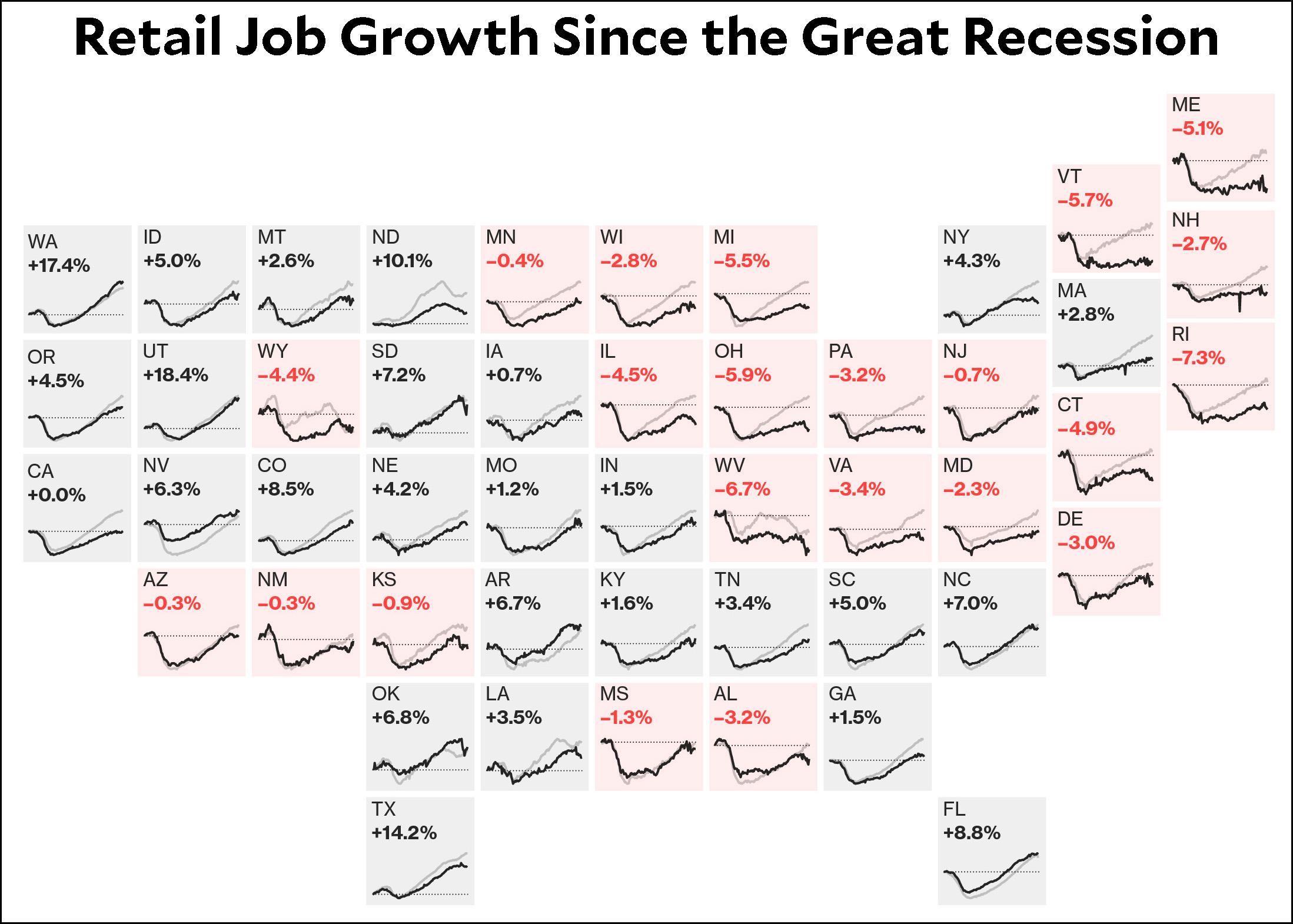
    The spillover will likely flow far and wide across the U.S. economy. There will be displaced low-income workers, shrinking local tax bases and investor losses on stocks, bonds and real estate. If today is considered a retail apocalypse, then what’s coming next could truly be scary….States like Ohio, West Virginia, Michigan and Illinois have been among the hardest hit, with retail employment declining over the past decade, and now those woes are likely to spread. Many states, such as Nevada, Florida and Arkansas, have overly relied on retail for job growth, so they could feel more pain as the fallout deepens.

    Here is Bloomberg’s map of where retail pain is the greatest:
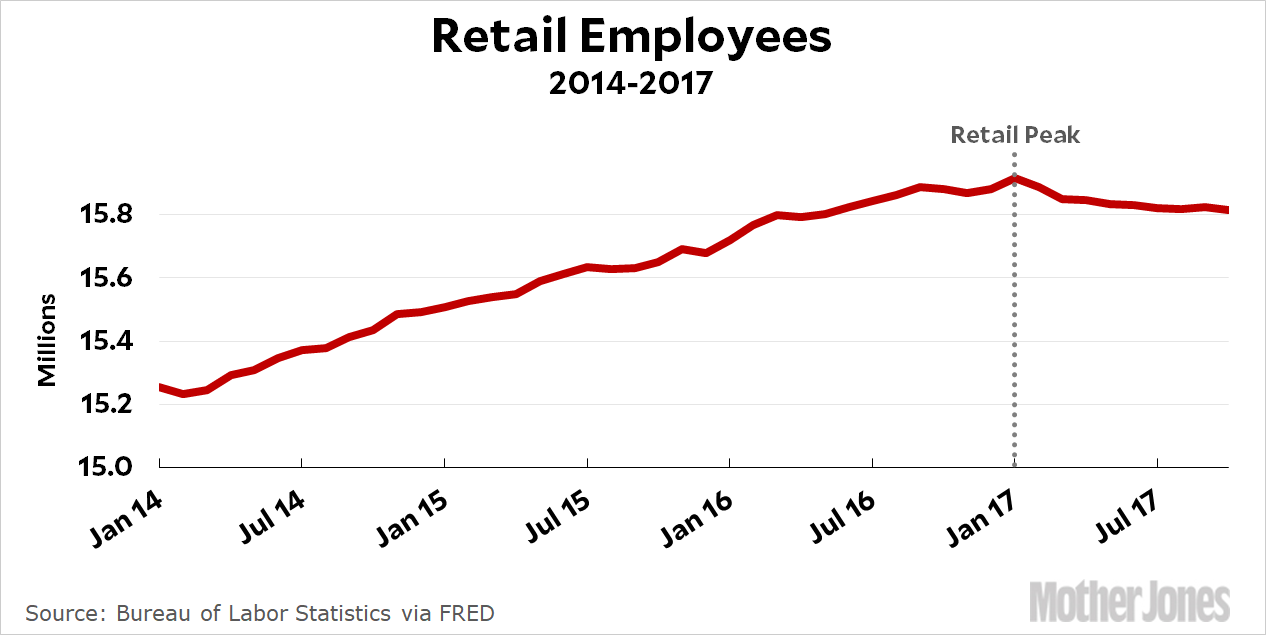
    If it’s true that “economic anxiety” in 2016 was mostly code for underlying racial resentment, in 2020 it’s likely to be all too real. But not because of coal mining jobs, which are minuscule: we’ve lost about 20,000 coal mining jobs since 2000. By comparison, the flatlining of retail has cost about 3 million jobs, and in 2017 retail employment started to actually decline:
    Politicians take note. It’s a mug’s game to predict the political future, but this might well be a big issue in 2020.

  • Republican Tax Plan Descends Into Smoke and Mirrors

    Here’s the latest news on the tax front:

    Senate Republicans on Thursday plan to propose delaying a cut in the corporate tax rate from 35 percent to 20 percent until 2019, four people briefed on the planning said, a major departure from President Trump’s insistence on immediate changes that he says are necessary to spur the economy….To try to prevent companies from waiting until 2019 to invest, Senate Republicans will propose to allow companies to immediately deduct all capital investments in 2018 to incentivize them to spend more money immediately, the people said.

    I have two comments:

    • This is idiocy in the extreme. The sole reason for delaying the tax cut is to reduce the cost of the plan in its first ten years. It makes no sense as policy, but it’s a good way to game the CBO score.
    • It’s not a “major departure” from anything. Donald Trump doesn’t have a clue what he really wants, and he will praise anything that Republicans produce.

    We are now entering serious smoke-and-mirrors territory.

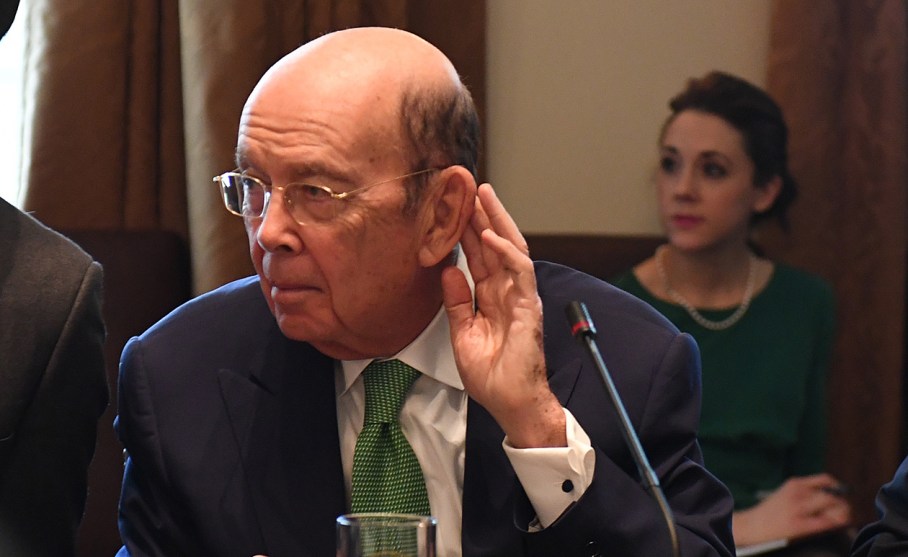
  • Wilbur Ross Seems to Have a Serious Shipping Problem

    Pat Benic/CNP via ZUMA

    Remember Wilbur Ross, Donald Trump’s Commerce Secretary? He’s the guy who held onto his stake in Navigator Holdings, a shipping company, without really letting Congress know about it. But it turns out he owns more than just a stake in Navigator:

    An APM Reports investigation reveals Ross has financial ties to 36 previously undisclosed ships that are spread among at least nine companies….Ross has a financial interest in at least 75 ships, most of which move oil and gas products across the globe. The value of those ships stands to grow as Ross negotiates trade deals on behalf of the U.S. and advises on U.S. infrastructure policy.

    How about them apples? But it’s all OK because Ross says that from the very start he recused himself from any decisions focused on transoceanic shipping. Or maybe not. Here is David Dayen:

    In May, the commerce secretary personally negotiated a deal to facilitate the transport of American liquefied natural gas, or LNG, to China. Ross touted the deal on CNBC, saying it would open the lucrative Chinese LNG market to American producers and “liberate American energy.” He has cited LNG as a way to reduce America’s trade deficit.

    LNG, you say? What a coincidence. Navigator just happens to own a lot of LNG tankers. Dayen adds this nugget:

    A member of the Navigator board, Wendy Teramoto, held that position while serving as a part-time adviser to Ross. Teramoto didn’t resign the board seat until July 17 and was then hired as Ross’s chief of staff August 1.

    So one of Ross’ advisors was a board member of Navigator, and when she finally resigned her seat she was immediately hired as Ross’ chief of staff. Nothing fishy about that! I guess that’s one more Trump cabinet member to start investigating.

  • Three Things to Know About Obamacare

    Here are three little public service announcements about Obamacare:

    • Enrollment is ahead of last year. But after the first week, things will get tougher. If you know anyone who uses Obamacare, tell them to get going NOW NOW NOW. Most of them have only until December 15 to sign up, and that will arrive sooner than they think.
    • Shop around! THIS IS IMPORTANT. The premium hikes due to Donald Trump’s elimination of the CSR subsidy have a very different effect on different plans. You might be able to get a bronze plan for free. You might be able to get a gold plan cheaper than a silver plan. If you’re lazy and just renew your current plan, it could cost you hundreds or thousands of dollars.
    • If you don’t get a subsidy, DON’T SHOP ON THE OBAMACARE EXCHANGE. Premiums have gone up a lot thanks to the CSR business, but if you go to a broker you’ll probably find off-exchange plans that aren’t affected by it. This could save you a ton of money. And if you don’t get a subsidy, there’s really no point to enrolling in Obamacare anyway.

    Oddly enough, most people who qualify for subsidies will probably be able to buy health insurance more cheaply this year. But only if they shop around. I know that’s a pain, but it’s more important than ever thanks to Trump’s sabotage, and it means starting your shopping early. Be sure to spread the word.

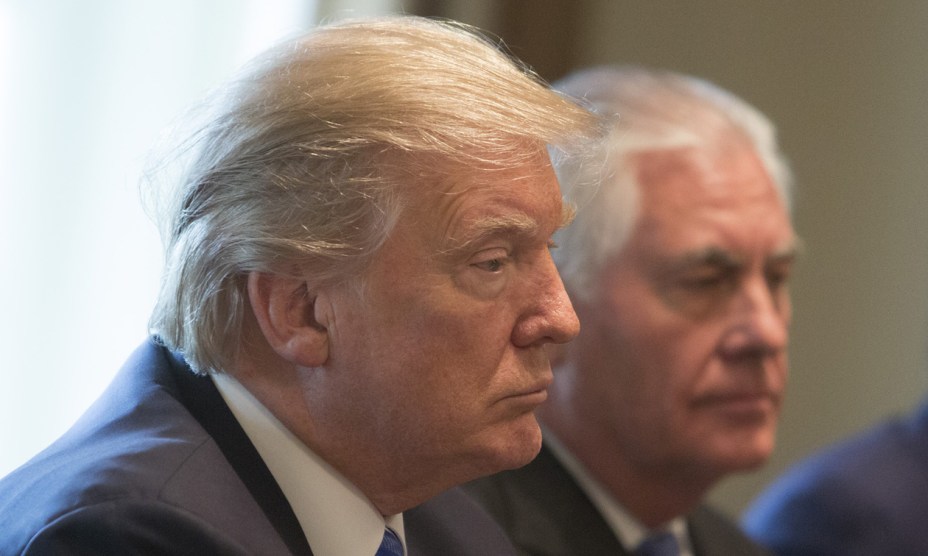
  • Why Is Donald Trump Destroying the State Department?

    Chris Kleponis/CNP via ZUMA

    Ambassador Barbara Stephenson describes what’s happening at the State Department:

    Our leadership ranks are being depleted at a dizzying speed, due in part to the decision to slash promotion numbers by more than half. The Foreign Service officer corps at State has lost 60 percent of its Career Ambassadors since January [the equivalent of a four-star general]. Ranks of Career Ministers, our three-star equivalents, are down from 33 to 19. The ranks of our two-star Minister Counselors have fallen from 431 right after Labor Day to 369 today—and are still falling.

    ….Not surprisingly, given the blocked entry path, interest in joining the Foreign Service is plummeting. I wrote with pride in my March 2016 column that “more than 17,000 people applied to take the Foreign Service Officer Test last year,” citing interest in joining the Foreign Service as a key indicator of the health of the institution. What does it tell us, then, that we are on track to have fewer than half as many people take the Foreign Service Officer Test this year?

    The big question is why this is happening. Republicans have long had a distrust of the “striped pants brigade” in the State Department, but that’s never led to a wholesale decimation of the diplomatic corps. It’s led—as you’d expect—to Republican presidents appointing lots of conservatives to senior positions. And Republicans in Congress aren’t pushing for this anyway. They mostly want funding and staffing levels to stay about the same.

    So this is all Trump—and Rex Tillerson appears to be wholly on board. And yet, Trump isn’t pleased with Tillerson:

    “The one that matters is me,” Trump said. “I’m the only one that matters because, when it comes to it, that’s what the policy is going to be.” Asked if he planned to keep Tillerson on board for the rest of his term, Trump told Fox, “Well, we’ll see. I don’t know.” 

    ….On Thursday, Trump said many of the posts were not needed and he is “not happy” with others already there. “I want my vision, but my vision is my vision,” he said. “Rex is in there working hard … he’s doing the best he can.”

    This is a mystery. Is it possible that Trump is destroying the State Department solely because it was once run by Hillary Clinton? Even for Trump that seems like a stretch. But why else would he be doing it? Can the career diplomats at State really be so unhappy with Trump that they’re actively obstructing his policies? I’ve heard nothing along those lines.

    So what’s going on?

  • The Republican Tax Plan Is a Disaster for Families With Children

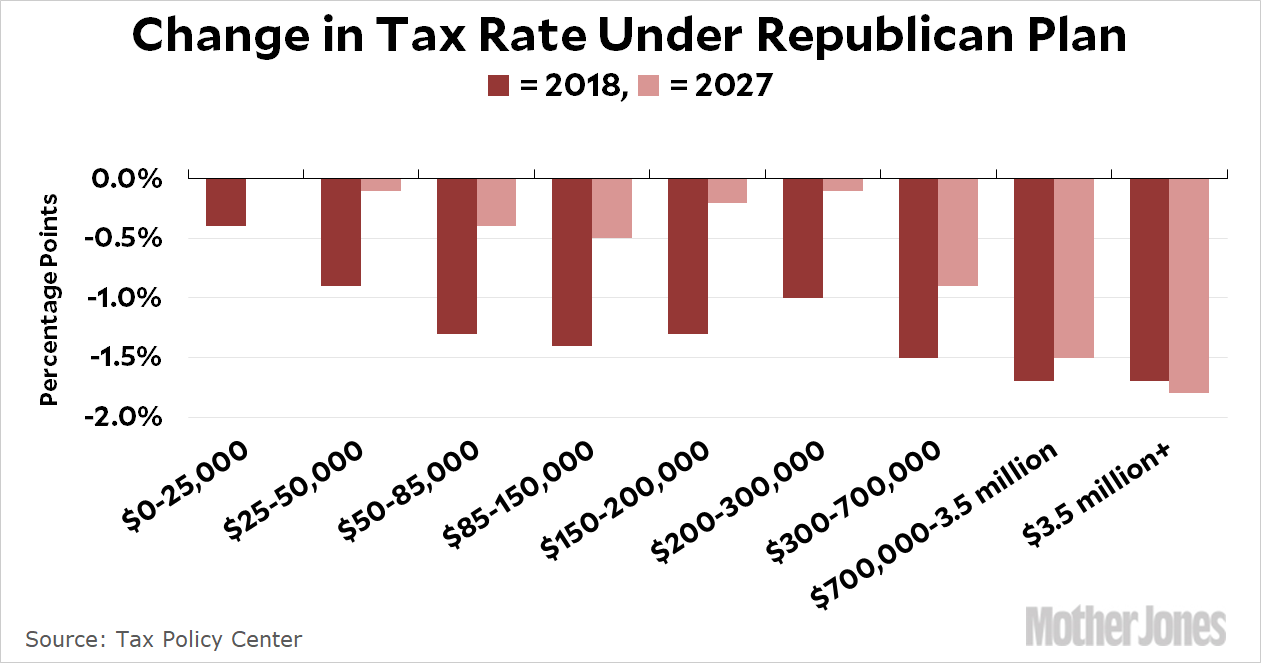
    After correcting an error in their model, the Tax Policy Center has re-released their analysis of the Republican tax plan. The basic numbers are no surprise.:

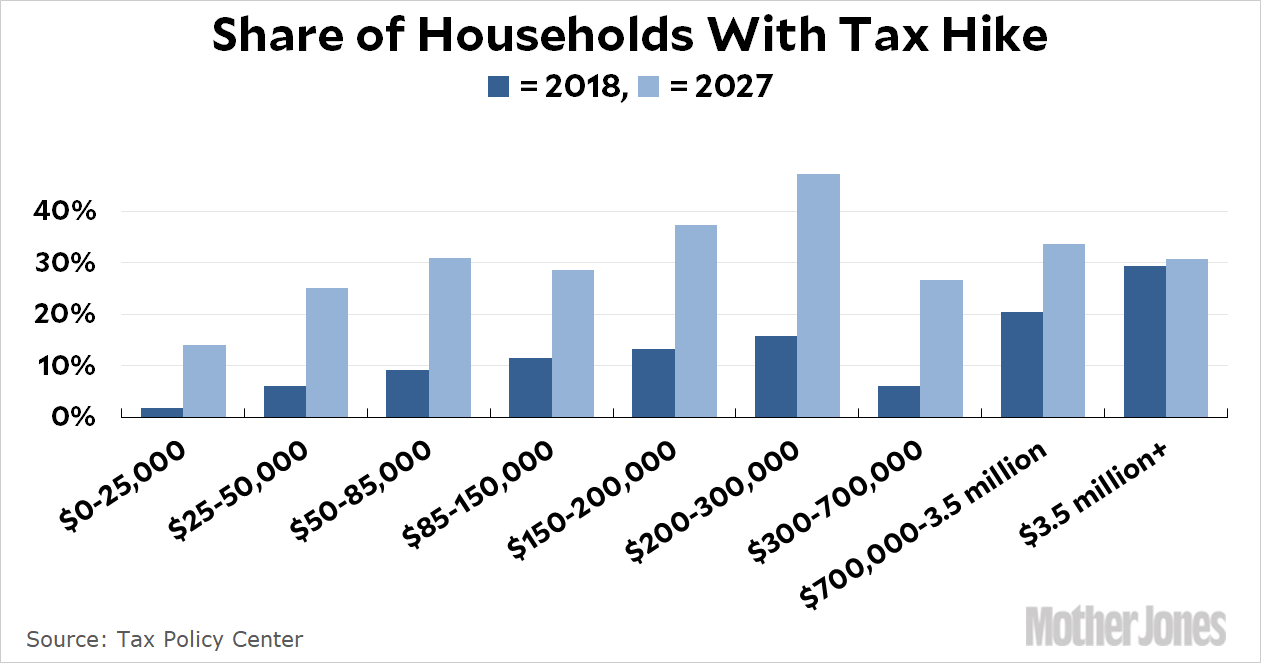
    The biggest cuts go to the rich, and this lopsidedness gets even worse ten years down the road. Here’s the number of households who will see their taxes increase:

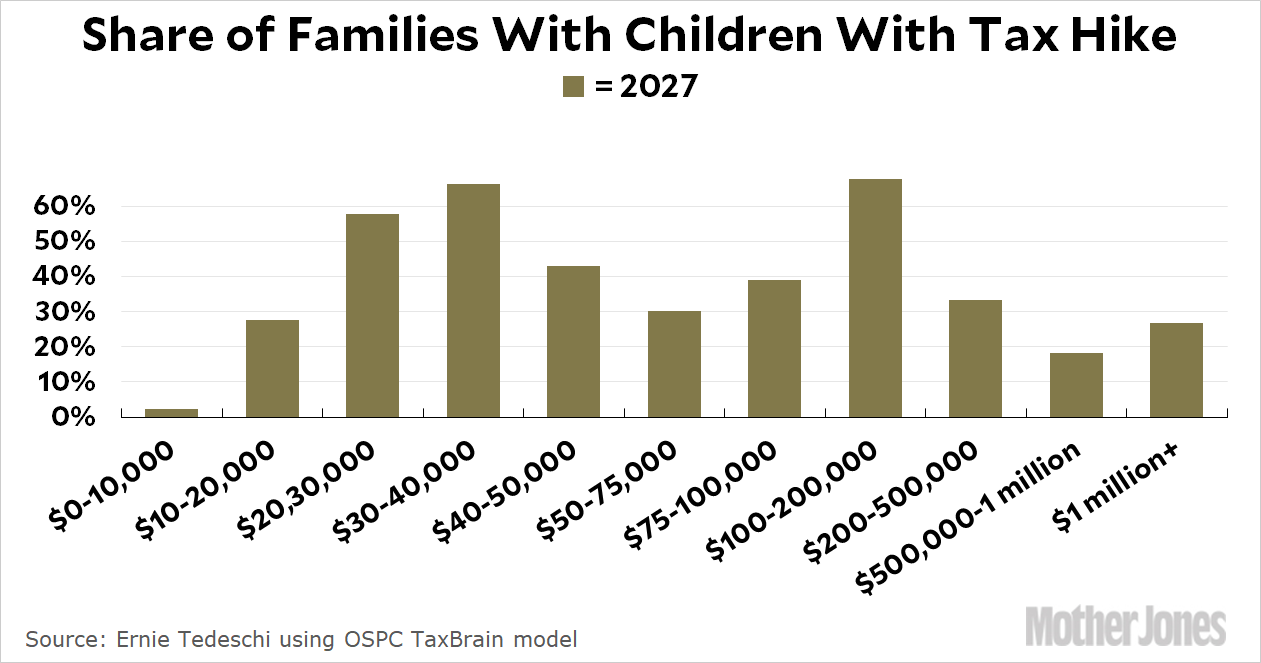
    This is pretty similar to the estimates from ITEP that I showed you on Monday. And here’s an estimate from a different source on the effect of the Republican tax plan solely on families with children:

    Keep in mind that the Republican plan has already changed to the tune of about $100 billion, and it’s likely to change more. So these estimates are already out of date. However, I doubt that the changes will dramatically change these results.

    It’s a little hard to understand how Republicans think they’re going to sell this. They’re already in trouble with their base over things like ending the adoption credit and killing off the deduction for state and local taxes in blue states:

    There’s a lot of families with kids who are going to see a tax hike, and that’s marketing gold for Democrats. It’s pretty easy to send mailers just to families with children, and the disclosure that these figures are for 2027 is likely to be a very tiny footnote on the back page. In fact, it’s quite possible to break down the tax implications even more precisely and then target mailers and social media to very narrow segments of the population.

    What happens to the suburban vote when families learn that a third or a half of them are getting a tax hike so that Republicans can fund a tax cut for big business and the rich? Or in Republican districts in blue states where lots of people learn that their net taxes are going up thanks to the elimination of the mortgage interest deduction or the state and local tax deduction? And that’s all on top of a Democratic electorate that’s pissed off and ready to vote in big numbers. I sure wouldn’t want to be the guy who has to defend this.

  • Lunchtime Photo

    Several months ago I promised to take a picture of a local bumblebee. Sadly, the very next day our association’s gardeners pruned back the hedges around our lake where the bumblebees hung out. That was it for bumblebees.

    But patience is a virtue, no? Irvine’s bumblebees may have flown off somewhere else, but Ireland still has plenty of them. When we got back from our trip to the Skellig Islands, Marian noticed this bush swarming with bumblebees, so I snapped off a few dozen shots. It may have taken a while, but thanks to the town of Portmagee you are finally getting your long-promised bumblebee.¹

    ¹This is assuming that some smart-aleck doesn’t come along to tell us that this isn’t really a bumblebee, just some kind of pseudo-orchid bee that looks like a bumblebee but is actually a member of the Fettucini family native to northern latitudes. I’ll wait.

  • A Little Bit of Chart History for Wednesday

    As you all know, I’m smitten by all things lead related. A couple of days ago I came across an interesting little historical anecdote that I’m going to tell you now.

    When I was writing my big lead-crime piece several years ago, one of the things I was curious about was why the EPA decided to phase out leaded gasoline starting in 1975. Unfortunately, there aren’t very many people around today who were personally involved in this stuff 40 years ago, and I ended up getting several conflicting answers that I couldn’t really reconcile. Since it wasn’t central to my story anyway, I gave up and skipped the whole thing.

    Then, last week, reader David P. pointed me to a column by Barry Nussbaum, chief statistician at the EPA for over a decade and currently president of the American Statistical Association. As soon as I read it I called Nussbaum, who was a young EPA analyst in the late 70s when he—well, we’ll get to that. First, though, the answer to my question.

    According to Nussbaum, EPA wanted places like California to reduce smog, and that meant cars would have to be fitted with catalytic converters. However, since gasoline lead ruins catalytic converters, refineries needed to produced unleaded gasoline. This was the initial impetus behind unleaded gasoline. The fact that it also reduced atmospheric lead was basically a happy accident.

    Once that was done, however, EPA started looking more closely at the health effects of lead. It was no secret that high levels of lead poisoning were dangerous, but new research was showing that even moderate levels could be dangerous, especially in young children. So now EPA had two reasons to phase out leaded gasoline.

    As it happens, they were doing this on two tracks. One track was unleaded gasoline. The other was a phasedown of the amount of lead in leaded gasoline: from 1.7 grams per gallon in 1975 to 1.2 in 1976, 0.9 in 1977, and 0.6 in 1978. But there was a problem with this: reducing the amount of lead also reduced the amount of gasoline you could refine from each barrel of crude oil. The difference wasn’t huge, but after the oil embargo of 1973 it was enough to raise policy questions. Thanks to all this, in 1979 Jimmy Carter was considering whether to halt the EPA phasedown of lead in gasoline.

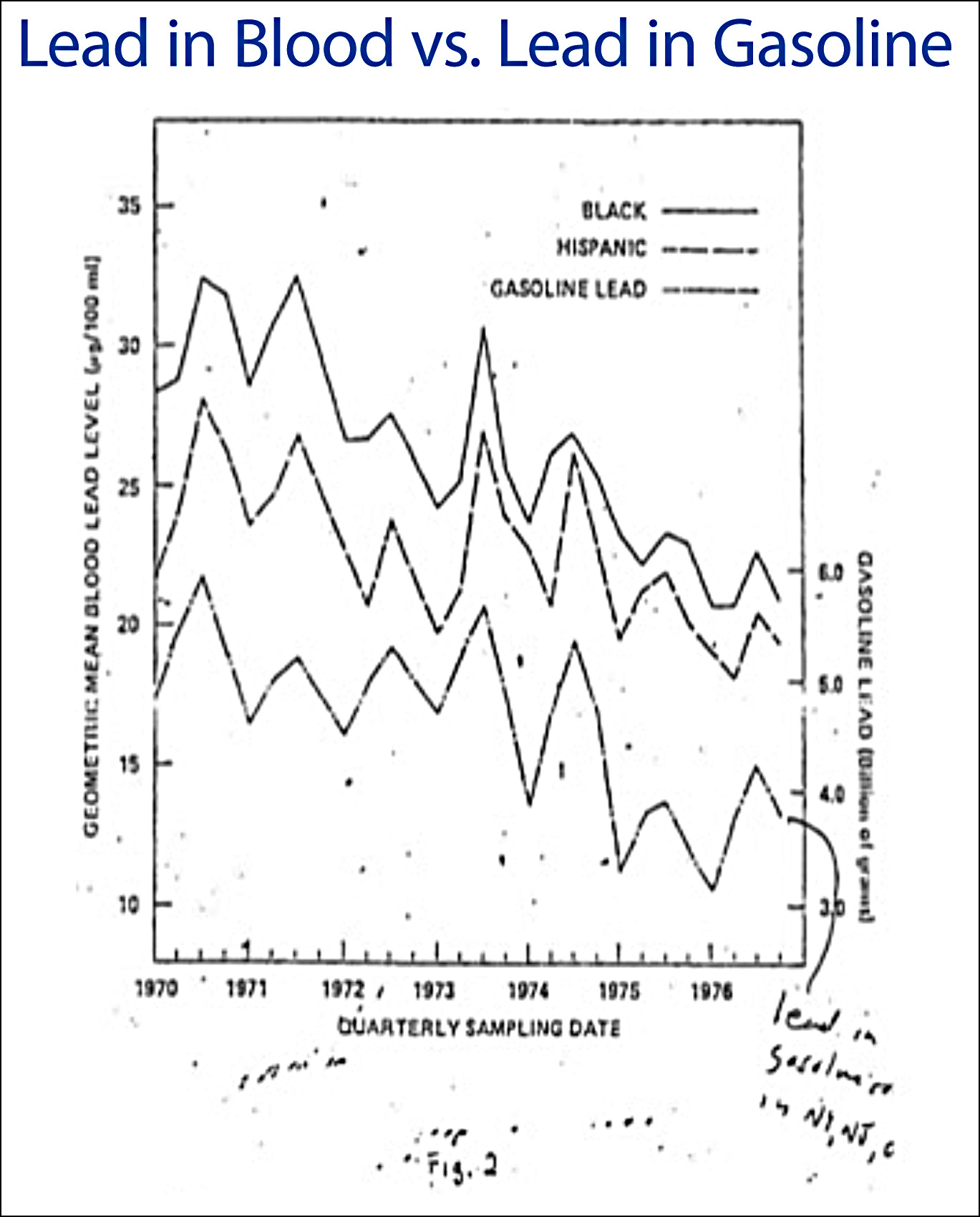
    By coincidence, at the same time HUD was trying to get more funding for its program to remove lead paint from old housing stock. As part of this effort, EPA looked at the incidence of high blood lead levels in children, and Nussbaum produced the following chart:

    There are three things to notice about this chart:

    • It shows that blood lead levels spike every year in the summer.
    • It shows that lead levels in children appear to be correlated with gasoline lead emitted into the atmosphere.
    • It shows that black and Hispanic children had really high levels of lead poisoning.¹

    The first item—unfortunately for HUD—suggested that lead poisoning was not correlated with lead paint in housing. After all, there’s no reason to think that kids are exposed to more lead paint in the summer. The second item suggests that lead poisoning is correlated with gasoline lead.² And the third item immediately convinced Carter to continue the lead phasedown. “He stated he did not want any policy that might have a particularly deleterious effect on these two groups,” Nussbaum says.

    On a statistical note, Nussbaum adds this: “With the benefit of hindsight, Carter was concerned about the harmful effects on minority populations. Would he have even have known this if the graph just had one composite line for blood lead?” Maybe not. Sometimes flukes of data presentation are all it takes to influence public policy.

    This chart is probably one of the earliest known visual correlations of gasoline lead with lead poisoning in children. As an historical artifact it deserves a little place in history.

    ¹If you’re wondering why the chart doesn’t show white children, the answer is lost to history. Nussbaum thinks it might have something to do with the limits of plotting technology at the time. In any case, everyone knew what the line looked like: just like the other two, but lower.

    ²Ironically, they got the right answer for the wrong reason. EPA figured the summer spike was due to increased driving. In fact, we now know it’s due to lead that settles into the soil and then gets resuspended into the air every summer when the soil dries up.

  • Corey Lewandowski “Forgot” He Gave Carter Page Permission for Russia Trip

    Trump campaign advisor Carter Page during a trip to Moscow in December 2016.Korotayev Artyom/TASS via ZUMA

    Carter Page, the idiot cousin of the Trump campaign, went on a trip to Russia last June. It was, he insists, a personal visit, not something done on behalf of the campaign. And he didn’t talk to any Russian officials anyway.

    But guess what? Email exchanges suggest that, in fact, he did meet with Russian officials. And he reported back to the campaign about them. And he got permission from the campaign to take the trip. And he offered to step aside if Trump himself wanted to go in his place.

    The Trump campaign, of course, says that Page—who was part of Trump’s five-person foreign policy team—was just some random volunteer guy that nobody ever even talked to. And Corey Lewandowski says that as Trump’s campaign manager at the time, he never gave Page permission for anything. No how, no way. Except, um, for those pesky emails:

    During an interview on Fox News on Tuesday evening, former Trump campaign manager Corey Lewandowski claimed the distraction created by Father’s Day resulted in him being unable to remember an email sent to him by former campaign foreign policy adviser Carter Page. In the email, Page sought and ultimately received permission from Lewandowski to travel to Moscow.

    “You have to remember, in the context of the campaign world––now, my memory has been refreshed, but to be clear, from what I understand and what I recall, that email was sent on June 19th of 2016, so about 18 months ago,” Lewandowski said. “It also happened to be Father’s Day on a Sunday, and it also happened to be the day prior to me being terminated from the campaign, so with all due respect, there were many other things on my mind that day other than trying to understand why a volunteer was telling me he may or may not be traveling outside the country.”

    I really wonder what the story is with Trump and Russia. The full-blown collusion theory still seems pretty unlikely to me.¹ But obviously there was something. Just for starters, Trump wouldn’t be so obviously panicked by the whole thing if nothing untoward happened. And every day brings new evidence of something that some Trumpkin “forgot.” This whole thing is weird as hell.

    ¹Partly this is because I don’t think even Trump and his team could be so dumb. The evidence is clear that they’re pretty dumb, but are they that dumb? I dunno. Nixon was, and he was actually a pretty smart guy.