• Republicans Mystified That Trump Isn’t Selling Their Health Care Plan

    The Washington Post asks an intriguing question about our president:

    Trump has spoken out repeatedly during his tenure about the shortcomings of Obamacare, which he brands a “disaster.” But he has made relatively little effort to detail for the public why Republican replacement plans — which fare dismally in public opinion polls — would improve on the former president’s signature initiative….“It’s a mystery,” said Barry Bennett, a Republican operative who advised Trump’s campaign last year and remains close to the White House. “I don’t know what they’re doing.”

    Hmmm. That’s a chin scratcher, all right. What possible reason could there be for Trump to avoid talking in more detail about the Republican plan? What could it be? What, oh what, could it be?

    POSTSCRIPT: For those of you slow on the uptake the answer is: (a) there is nothing good to say about the Republican plan, which is why no one else is trying to sell it either, and (b) Trump has no clue what the Republican plan does anyway.

  • Yet More Jaw-Dropping Lies From the Trump Administration

    I suppose we’re all used to it by now, but the brazenness of the lies from the Trump administration is pretty jaw dropping. Here’s the latest:

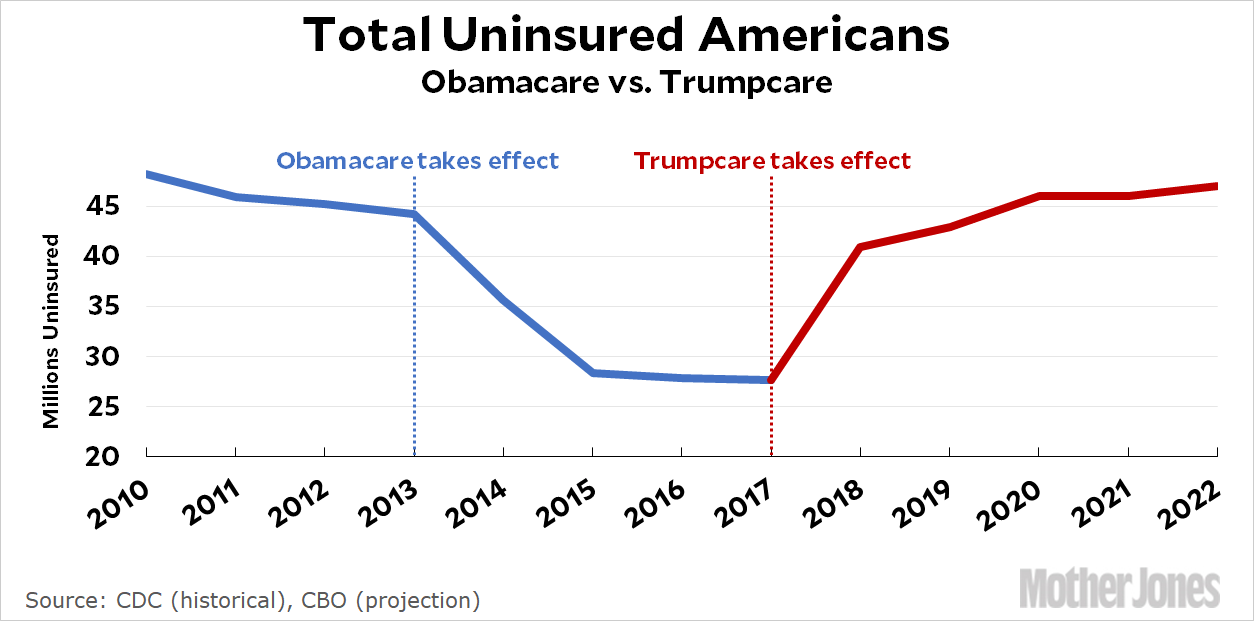
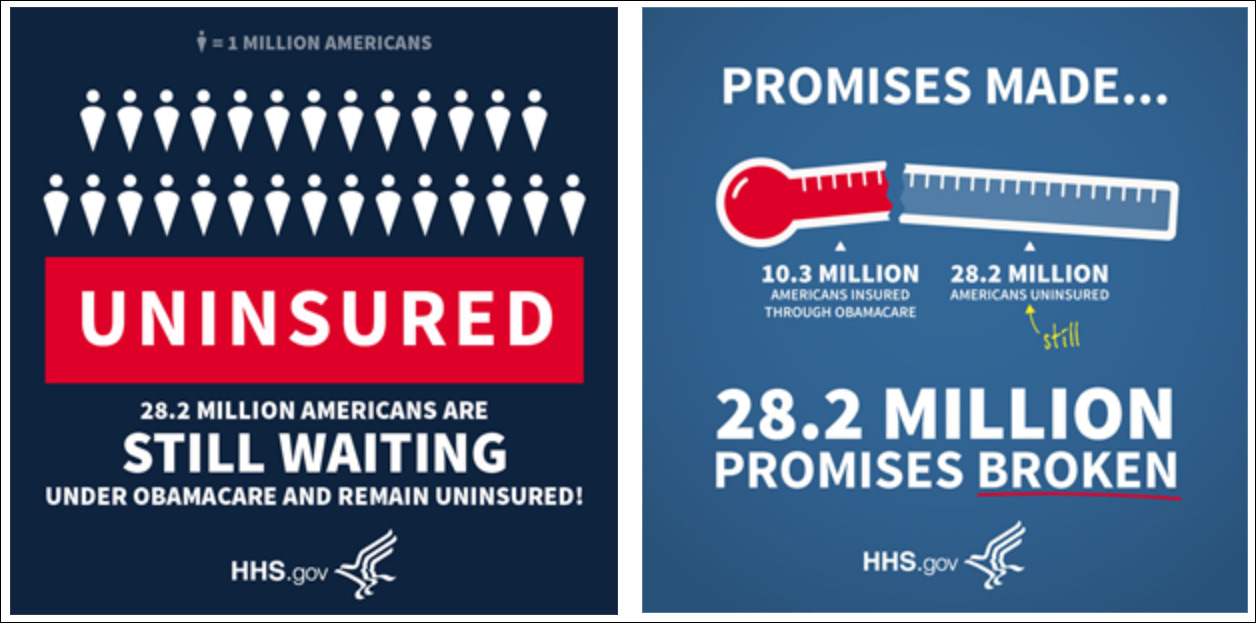
    Actually, over 20 million people have been insured by the Affordable Care Act, not 10.3 million, but that’s sort of a garden-variety Trump lie. The real chutzpah comes from his crocodile tears over the fact that 28 million people remain uninsured. Here’s what the numbers look like under Obamacare and Trumpcare, as estimated by the CDC and the CBO:

    Obamacare reduced the number of uninsured from 44 million to 28 million. Trump is right that this is still too many, but Trumpcare would increase the number to 47 million within five years of passage.

    Oh, and Obamacare didn’t raise average family premiums by $3,000 either. The best comparison I can find is for individual premiums, and Brookings estimates that they decreased about $700 after Obamacare went into effect. Add in an average subsidy of about $400, and individual premiums went down $1,100. Family premiums followed the same trajectory, and probably decreased about $3,000 or so.

    Obamacare is hardly faultless, but overall it’s been enormously successful. It delivered insurance to millions who couldn’t get it before; it reduced premiums for most people; it required health care policies to deliver decent coverage; and it prohibited insurance companies from turning down people with pre-existing conditions. Trumpcare would undo all of that. All of it.

    UPDATE: I almost forgot: that 28 million number includes 10 million undocumented immigrants. Is Trump suddenly outraged that they aren’t covered by Obamacare?

    Actually, I did forget. Thanks to reader RB for reminding me.

  • Did Donald Trump Invent a Chemical Attack in Syria?

    Ford Williams/U.S. Navy via ZUMA

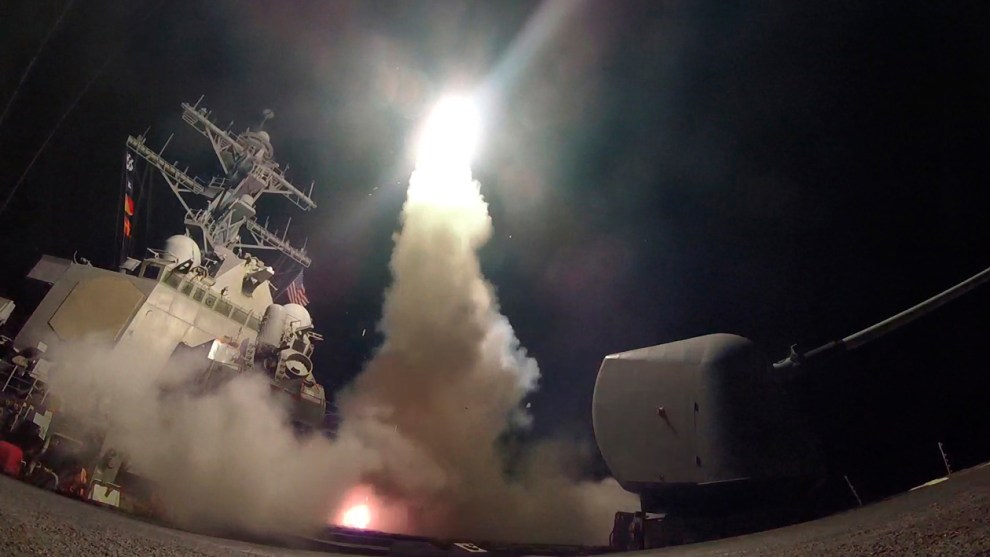
    A reader emails to ask why I haven’t written about Seymour Hersh’s story from last week that accuses Donald Trump of ignoring evidence that Syria’s chemical attack in April wasn’t actually a chemical attack at all. It’s worth an answer.

    First off, there’s some background. Hersh’s main outlet was the New Yorker until a few years ago. But they refused to publish his 2013 article making the same accusation against the Obama administration, so the London Review of Books published it instead. But the LRB declined to publish his latest one, so it ended up in a German newspaper. That’s two well-respected publications that have parted ways with Hersh. Why?

    Second, Hersh’s latest piece is almost completely single-sourced to a “senior advisor to the American intelligence community.” That’s mighty vague. And boy, does this advisor know a lot. He seems to have an almost photographic recall of every meeting and every decision point that preceded Trump’s cruise missile attack. It’s hardly credible that a civilian advisor could be as plugged in as this guy apparently is.

    These things don’t inspire confidence. So now let’s take a look at the piece he wrote. Here’s an excerpt:

    Some American military and intelligence officials were especially distressed by the president’s determination to ignore the evidence. “None of this makes any sense,” one officer told colleagues upon learning of the decision to bomb. “We KNOW that there was no chemical attack … the Russians are furious. Claiming we have the real intel and know the truth … I guess it didn’t matter whether we elected Clinton or Trump.”

    And now here’s an excerpt from his 2013 piece:

    The same official said there was immense frustration inside the military and intelligence bureaucracy: ‘The guys are throwing their hands in the air and saying, “How can we help this guy” – Obama – “when he and his cronies in the White House make up the intelligence as they go along?”’

    This is way too similar. In fact, the whole 2017 piece reads like a warmed-over version of his 2013 article. I just don’t trust it.

    Plus there’s this: the Trump administration is one of the leakiest in memory. If Trump flatly ignored the advice of every one of his military advisors—which is what Hersh says—it’s hard to believe that this wouldn’t also have leaked to one of the legion of national security reporters in DC, who have demonstrated that they’re pretty sourced up. But so far, no one has even remotely corroborated Hersh’s story.

    Is this because the mainstream media is afraid to report this stuff? Please. They’d see Pulitzers dancing before their eyes. There’s not a reporter in the entire city who wouldn’t go after this story.

    You never know. Maybe Hersh will turn out to be right. It’s certainly a compelling and detailed story he tells. But for now, I don’t believe it.

  • A Very Brief Primer on Single-Payer Health Care

    Moirenc Camille/Hemis via ZUMA

    Single-payer health coverage is back in the news these days. But what is it, anyway? Here’s a very brief primer on the five basic forms of health insurance:

    • Socialist: The government owns the hospitals and directly employs the doctors. Britain’s NHS is the best known example. In the United States, VA health care works on this model.
    • Single-payer: Doctors and hospitals are mostly private entities, but are paid exclusively by the government. Canada is single-payer, with each province acting as the sole source of payment to doctors and hospitals. In the US, Medicaid and traditional Medicare are single-payer.
    • Multi-payer: Same as single-payer, but doctors and hospitals are paid by multiple sources: the government, regulated sickness funds, regulated insurers, etc. There’s a continuum in multi-payer systems, from those that are almost single payer (France) to those where other payers play larger roles (Germany, Belgium, the Netherlands, etc.). This is the most common form of universal health care, and its advantage over single-payer is that it offers a little more flexibility in coverage. In the US, Medicare Advantage is basically multi-payer.
    • Subsidized private: People are required to be covered by private insurance, but the government provides subsidies to make coverage affordable. Switzerland uses this system. In the US, this is the Obamacare model.
    • Private: In the rich world, this is used only in the United States. Employer health care in America is essentially entirely private, although government is involved indirectly via the tax code, which allows employees to receive health coverage free of taxes.

    All of these except the last are universal health care systems. They differ only in how they deliver services and pay for them, and they can all work well. France, often cited as the best health care system in the world, is technically multi-payer, but really only a hair’s breadth away from single payer. In practice, this is a semantic distinction for most of us, since there’s usually little difference between universal single-payer and universal multi-payer. Because of that, in America we tend to refer to all universal systems as single-payer.

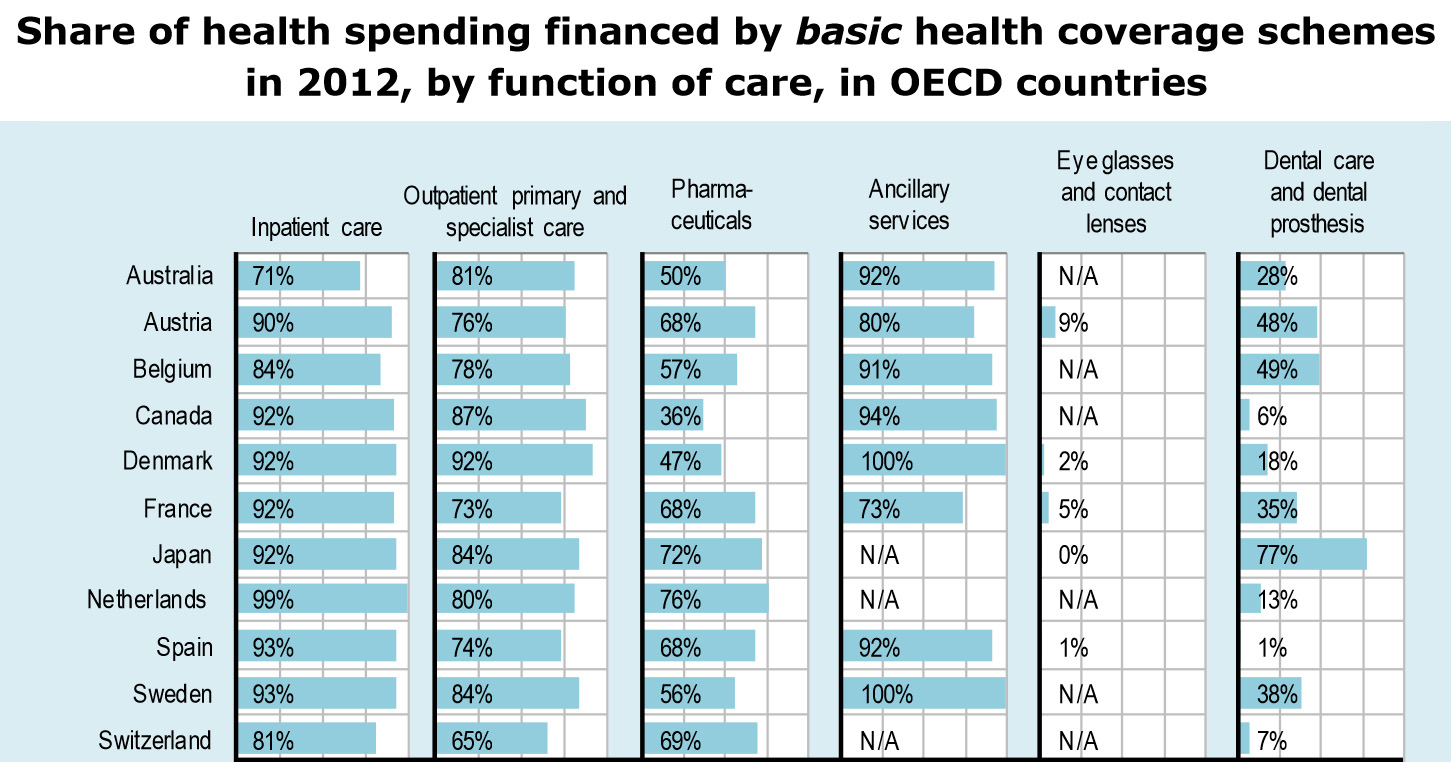
    None of these systems cover literally every dime of health care coverage. Canada, for example, is single-payer but doesn’t cover all prescription drugs. Different provinces have different rules. In most countries, it’s possible to purchase supplementary insurance to cover the gaps in the national system, something that’s necessary because they all have various copays and exceptions:

    You can put all this together to get a single number that represents how generous a national health care system is. For example, Switzerland covers about 65 percent of all medical costs. Canada covers about 70 percent. France covers about 78 percent. Medicare in the US covers about 80 percent. Denmark and Germany are the most generous, covering about 84 percent.

    UPDATE: I originally used the wrong OECD table above. The correct one for our purposes is the table for “basic” care provided by tax-funded health coverage or compulsory social health insurance. The more expansive table, which I used initially, includes coverage from supplementary policies purchased by individuals. Sorry.

  • Down Payments Are Dropping. Is That a Good Thing?

    This story has been making the rounds:

    For first-time home buyers, the challenge of coming up with a 20% mortgage down payment is often difficult enough to keep them out of the market. But the fact is, the 20% down payment is all but dead — and has been for quite some time, especially for first-time buyers.

    ….More than 70% of noncash, first-time home buyers — and 54% of all buyers — made down payments of less than 20% over at least the last five years, according to the National Assn. of Realtors….But the association’s research finds few adults ages 34 and younger (just 13%) realize they can buy a house with a down payment of 5% or less.

    ….The “traditional” 20% down payment may become obsolete, even among big lenders. Brian Moynihan, chief executive of Bank of America, told CNBC in May that lowering the down payment requirement to 10% from 20% “wouldn’t introduce that much risk but would help a lot of mortgages get done.”

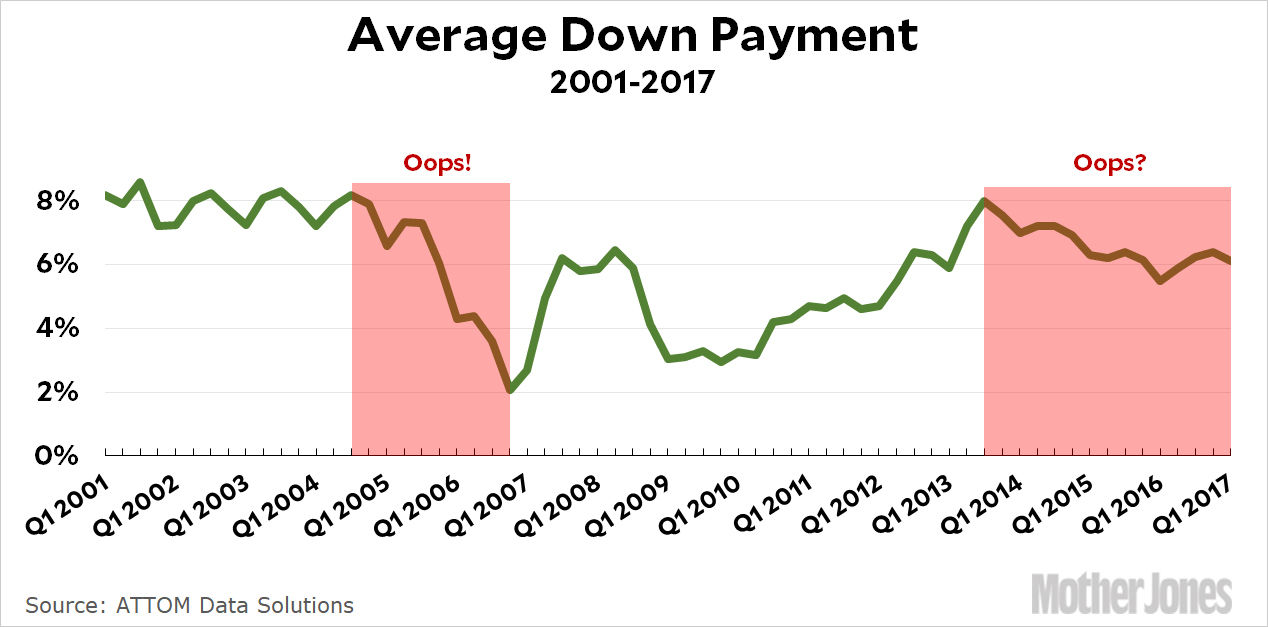
    The answer to this problem, apparently, is “correcting consumer misconceptions” and pitching ever lower down payments to make up for the fact that home prices are spiking. And maybe that’s a good idea. I don’t know where the ideal point is for average down payments. But I will offer up the chart below as something to study. In the early aughts, down payments averaged around 8 percent and things were fine. Then they started going down. Then they started plummeting. This was telling us something, but by the time we crossed the 5 percent Rubicon it was too late.

    We’re not there yet, and maybe we won’t get there. Maybe 5 percent isn’t really a warning sign after all. I’m not sure I want to find out, though.

  • Trump Oppo Group Sought Hacked Clinton Emails, Even If They Came From the Russians

    Kay Nietfeld/DPA via ZUMA

    Matt Tait is a British cybersecurity consultant. Last summer he was contacted by Peter Smith, who was working with the Trump campaign to track down the 33,000 personal emails that Hillary Clinton had deleted from her server before turning it over to the FBI:

    When he first contacted me, I did not know who Smith was, but his legitimate connections within the Republican party were apparent. My motive for initially speaking to him was that I wondered if the campaign was trying to urgently establish whether the claims that Russia had hacked the DNC was merely “spin” from the Clinton campaign, or instead something they would need to address before Trump went too far down the road of denying it. My guess was that maybe they wanted to contact someone who could provide them with impartial advice to understand whether the claims were real or just rhetoric.

    Ha ha ha ha. You betcha. Maybe they were just impartial seekers of the truth. That’s a good one, Matt. Let’s continue:

    A few weeks into my interactions with Smith, he sent me a document…entitled “A Demonstrative Pedagogical Summary to be Developed and Released Prior to November 8, 2016,” and dated September 7. It detailed a company Smith and his colleagues had set up as a vehicle to conduct the research: “KLS Research”, set up as a Delaware LLC “to avoid campaign reporting,” and listing four groups who were involved in one way or another.

    The first group, entitled “Trump Campaign (in coordination to the extent permitted as an independent expenditure)” listed a number of senior campaign officials: Steve Bannon, Kellyanne Conway, Sam Clovis, Lt. Gen. Flynn and Lisa Nelson….My perception then was that the inclusion of Trump campaign officials on this document was not merely a name-dropping exercise. This document was about establishing a company to conduct opposition research on behalf of the campaign, but operating at a distance so as to avoid campaign reporting. Indeed, the document says as much in black and white.

    According to the Wall Street Journal, Bannon and Conway say they never had anything to do with Smith. Who knows? That’s quite possible. Maybe the go-between was Trump’s bodyguard. Stranger things have happened in Trumpland. So what was Smith really after?

    Although it wasn’t initially clear to me how independent Smith’s operation was from Flynn or the Trump campaign, it was immediately apparent that Smith was both well connected within the top echelons of the campaign and he seemed to know both Lt. Gen. Flynn and his son well.

    ….Towards the end of one of our conversations, Smith made his pitch. He said that his team had been contacted by someone on the “dark web”; that this person had the emails from Hillary Clinton’s private email server (which she had subsequently deleted), and that Smith wanted to establish if the emails were genuine….In my conversations with Smith and his colleague, I tried to stress this point: if this dark web contact is a front for the Russian government, you really don’t want to play this game. But they were not discouraged. They appeared to be convinced of the need to obtain Clinton’s private emails and make them public, and they had a reckless lack of interest in whether the emails came from a Russian cut-out. Indeed, they made it quite clear to me that it made no difference to them who hacked the emails or why they did so, only that the emails be found and made public before the election.

    If all this stuff is true, Peter Smith set up an oppo group that worked on behalf of Trump but was deliberately kept at a distance “so as to avoid campaign reporting.” Smith was well connected with Trump campaign officials, especially Michael Flynn. He wanted Hillary Clinton’s emails and didn’t care if he had to play ball with the Russians to get them. And all this was happening at around the same time that Trump publicly asked the Russians to please release the 33,000 emails if they had them. But that was just a joke, of course.

    Drip, drip, drip.

  • Friday Cat Blogging – 30 June 2017

    Is it finally Friday? I swear, it’s seemed like Friday ever since Monday. But now it finally is.

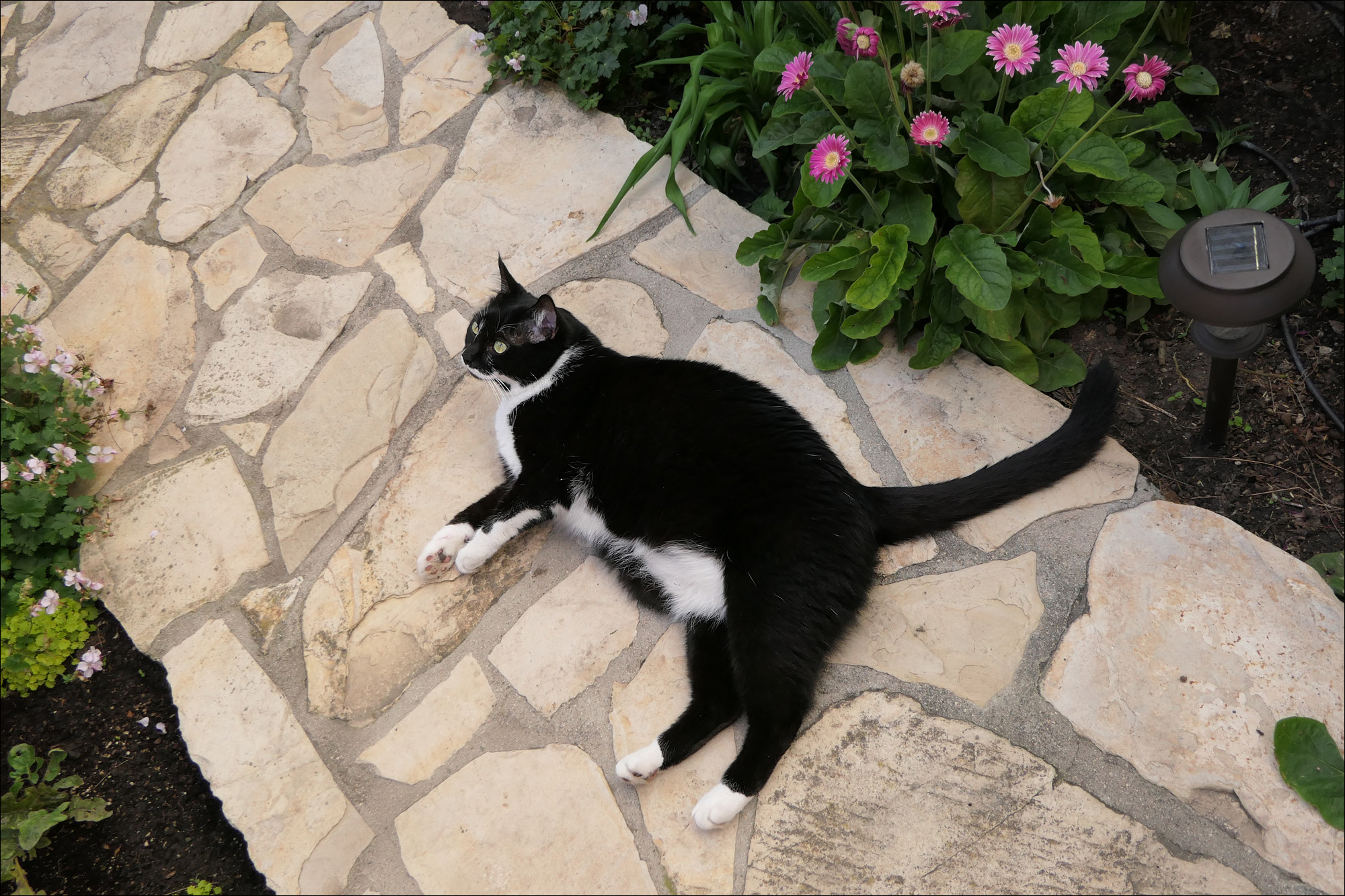
    This is Hilbert in one of his favorite spots. In the late afternoon, when it’s time to bring in the cats for the day, Hilbert likes to run away and make us chase him. Most of the time, though, he only wants us to chase him this far, where he flops on the ground and demands a tummy rub. He’s then happy to be picked up and taken inside.

    Hopper, on the other hand, is not so easily bribed. She likes being chased around because it’s fun. Sometimes the fun can last a tiringly long time. However, when we give up, all we have to do is close the door with a loud click. Within a minute she’ll be there demanding to know why she’s been locked out. We open the door and she scoots right in.