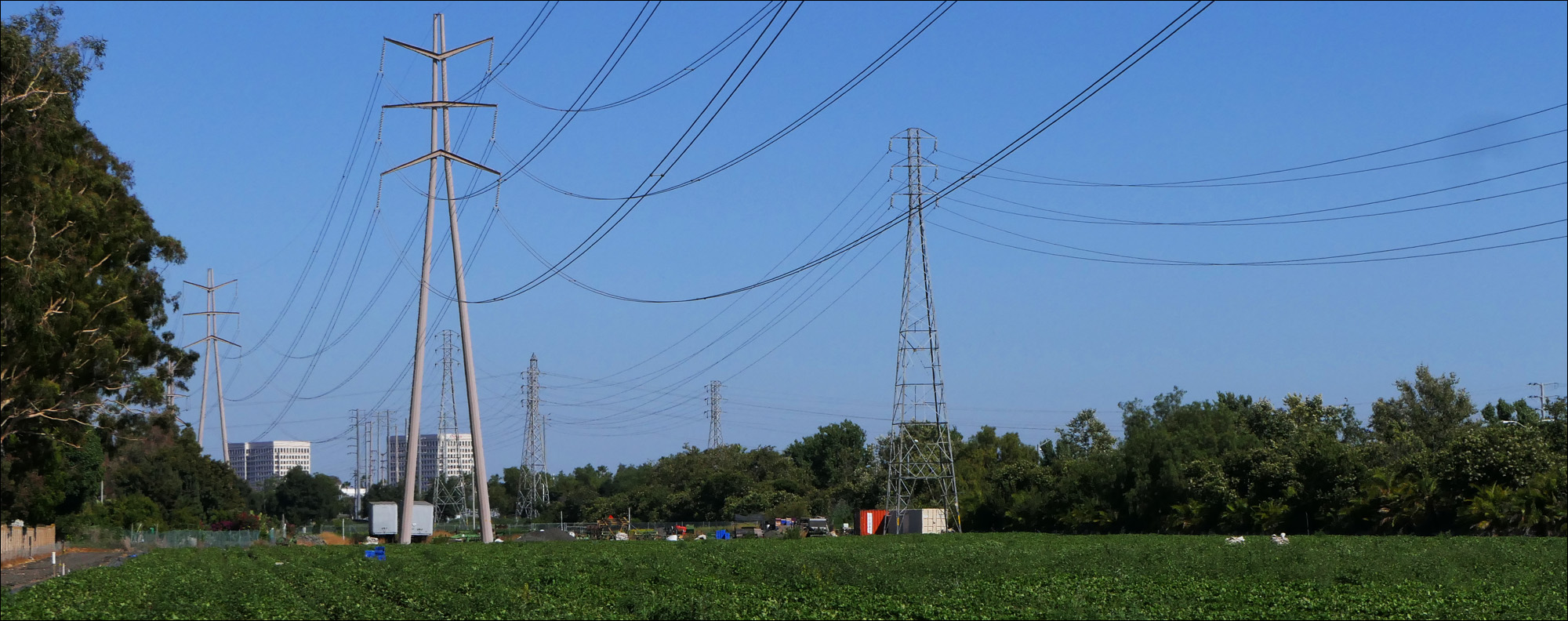
Strawberry fields are, alas, not forever. However, the harvest isn’t quite finished yet, and our local grower still has a few lovely, ripe strawberries waiting to be picked. They lease their fields from Southern California Edison, and plant corn, tomatoes, strawberries, and other delicacies on the right-of-way beneath the power pylons. They sell them in a nearby roadside stand, one of the few still left around here.
Old fashioned? I dunno Jim. Did the founding fathers have cameras? Did they have audio recorders? I think not. You are lucky Trump allows you to use the pen of your choice, rather than a quill pen.
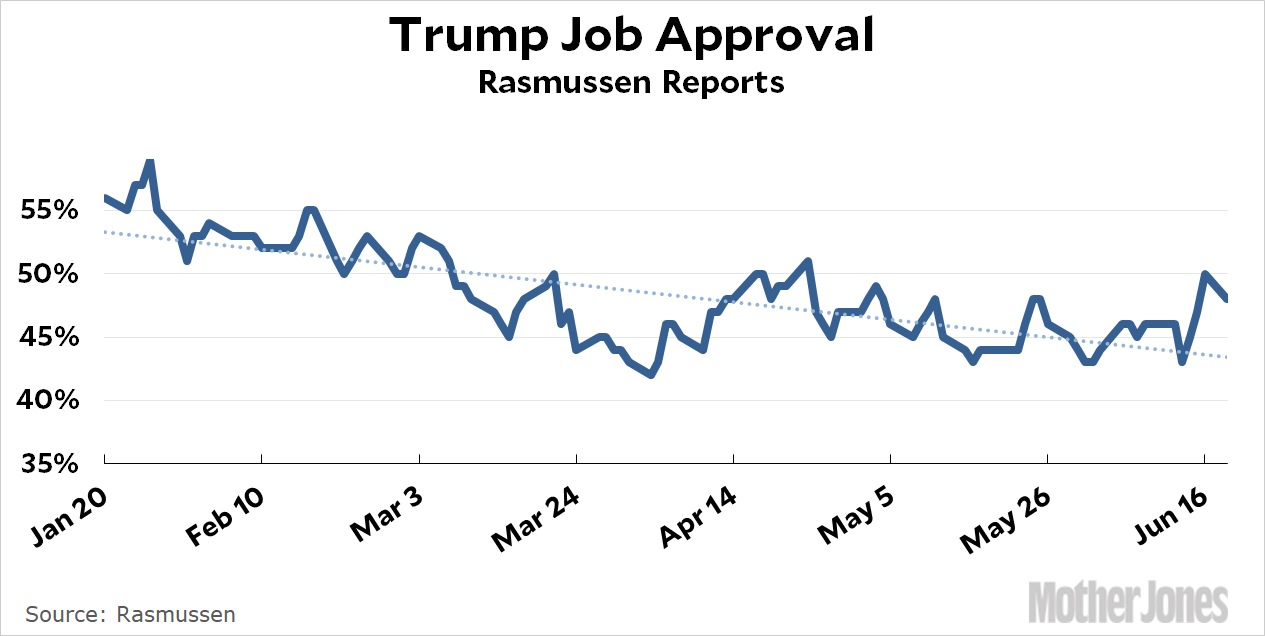
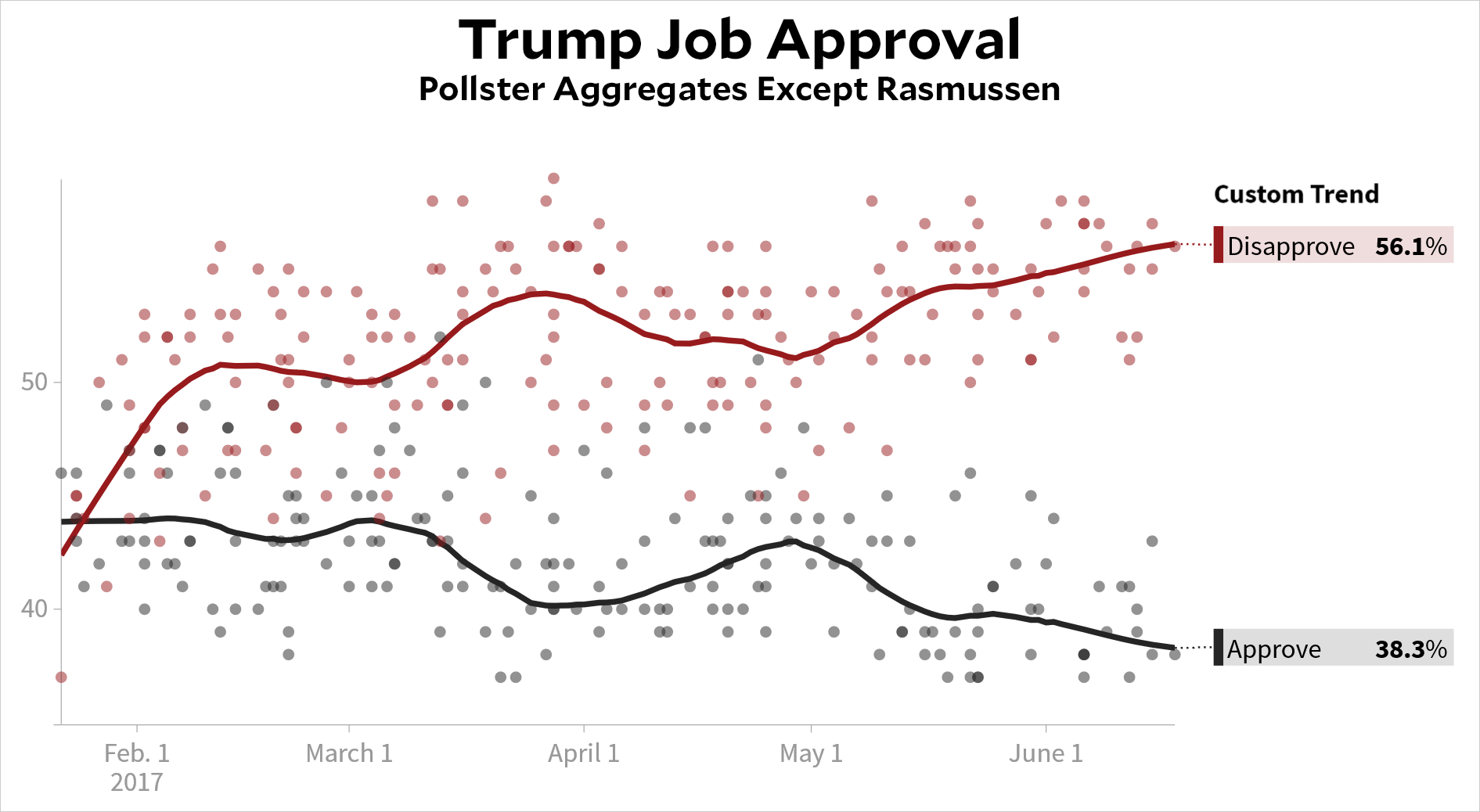
Of course, Rasmussen is famously pro-Republican, so this doesn’t mean much. Here is Pollster’s latest aggregate of Trump’s job approval rating from everyone other than Rasmussen:
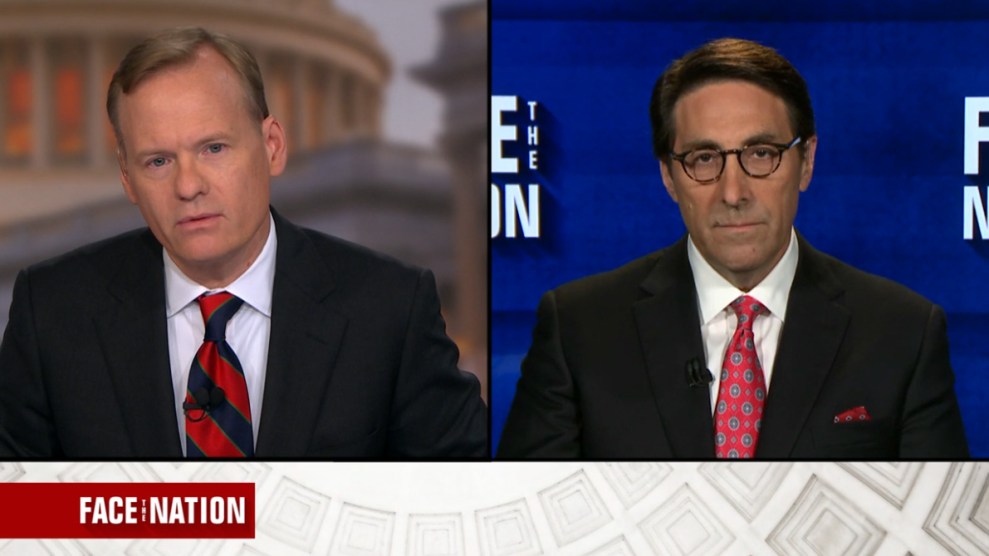
Is President Trump under investigation for obstruction of justice? His attorney appeared on TV yesterday to say it ain’t so:
SEKULOW: I want to be very clear about this, the president is not and has not been under investigation.
DICKERSON: How do you know?
SEKULOW: Because we’ve received no notice of investigation….
DICKERSON: Is it your view, and just to educate viewers, that — that if you were under investigation, there would be an obligation for the special counsel to let you know? Couldn’t you be under investigation and they’ve just not let you know yet?
SEKULOW: Well, look, I — I can’t imagine the scenario where the president would — would not be aware of it.
This is the whole story in a nutshell: Trump has not been notified that he’s the target of an investigation. That’s it. That’s all that Jay Sekulow knows. He has no idea whether Trump is or isn’t under investigation by special prosecutor Robert Mueller.
Neither do I, for that matter. The Washington Post says he is, and their evidence seems pretty strong. At the same time, it could be that Mueller is merely interviewing some folks as a way of deciding whether he should widen his investigation to include Trump.
In any case, that’s it. Mueller is interviewing some people about Trump’s firing of James Comey, but Trump has not been notified that he’s under investigation. That’s all we know.
The case started when Republicans gained complete control of Wisconsin’s government in 2010 for the first time in more than 40 years. It was a redistricting year, and lawmakers promptly drew a map for the State Assembly that helped Republicans convert very close statewide vote totals into lopsided legislative majorities.
In 2012, Republicans won 48.6 percent of the statewide vote for Assembly candidates but captured 60 of the Assembly’s 99 seats. In 2014, 52 percent of the vote yielded 63 seats.
The Supreme Court has never tossed out a redistricting map based on concerns about partisan (as opposed to racial) gerrymandering. With gerrymandering now far more widespread thanks to the use of mapping software, will they finally take the opportunity to rein it in? Rick Hasen provides reason to keep our expectations modest:
About an hour after the Court issued its order agreeing to hear this case, it issued a second order, on a 5-4 vote, granting a stay of the lower court order in this case. The four liberal Justices dissented….So this stay order raises a big question mark for those who think Court will use the case to rein in partisan gerrymandering.
Last year a district court ordered Wisconsin to produce a new, less partisan map in time for the 2018 election. The vote to stay this order suggests that five members of the Supreme Court are leaning in the direction of doing nothing about Wisconsin’s gerrymander.
Well, who knows? But I will say one thing: the primary purpose of Obamacare repeal is to get rid of Obamacare’s taxes on the rich. However, a reconciliation bill is not allowed to increase the deficit, so if you get rid of the taxes you also have to get rid of at least the same amount of spending.
This means that Senate Republicans have limited options. They can either (a) make the House bill more generous, which means not cutting taxes as much, or (b) keep all the tax cuts, which means cutting spending as much as the House bill.
I think we can all agree that option B is far more likely, can’t we? And cutting spending means cutting health care. They can blather all they want about “improving efficiency” or “letting states innovate” or whatever, but it’s just posturing. Under reconciliation rules, if you want to cut taxes, you have to cut spending. And if you cut spending, you cut health care. End of story.
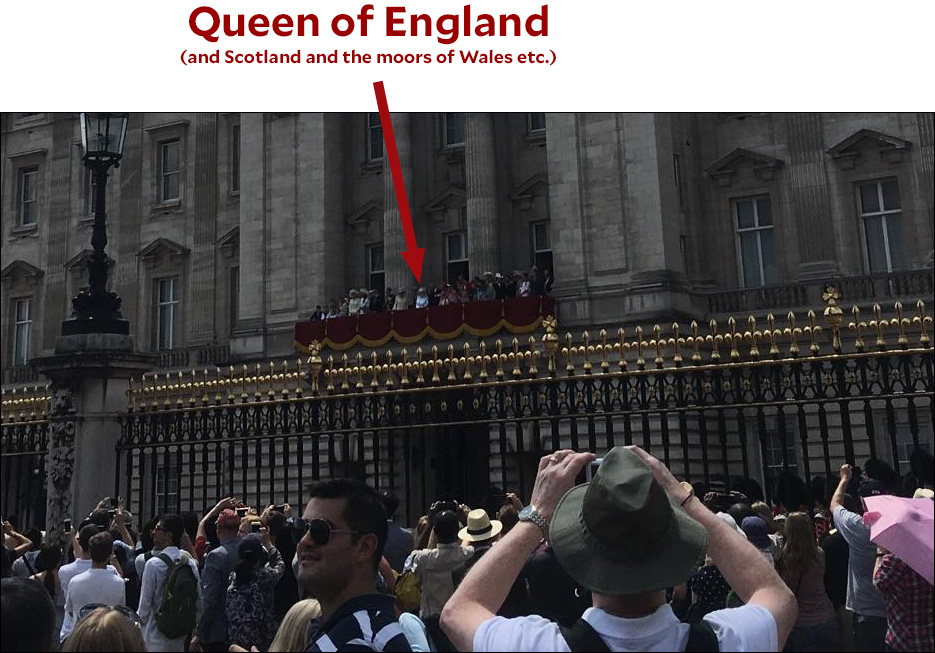
My sister is in London and sends along the following from outside Buckingham Palace. Apparently it earned her a sunburn. I guess it’s sort of warmish in London right now?
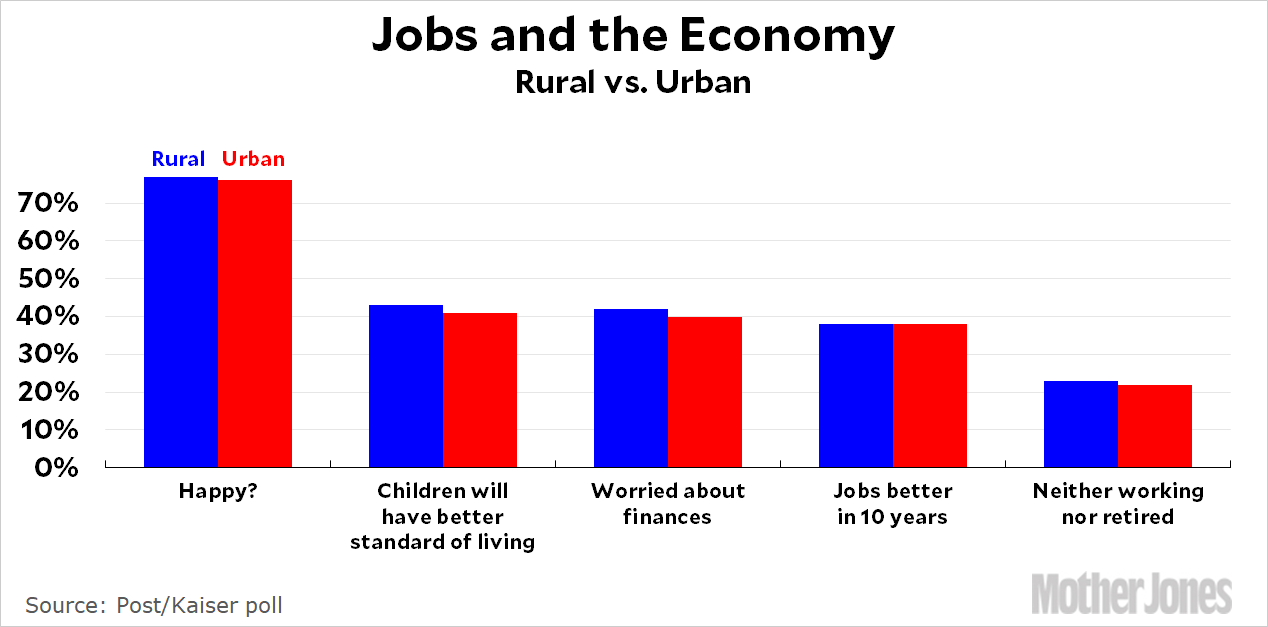
The Washington Post and the Kaiser Family Foundation released the results of a pretty interesting poll today. It focuses on the rural-urban divide, and seems to suggest that although people in rural areas are more likely to say that jobs and the economy are a big concern, they actually feel about as positively as urban dwellers. For example, 29 percent of rural folks say their community’s biggest problem is jobs and the economy, vs. only 10 percent for urban folks. About 30 percent say job opportunities are good vs. 50 percent for urbanites.
But then there’s this:
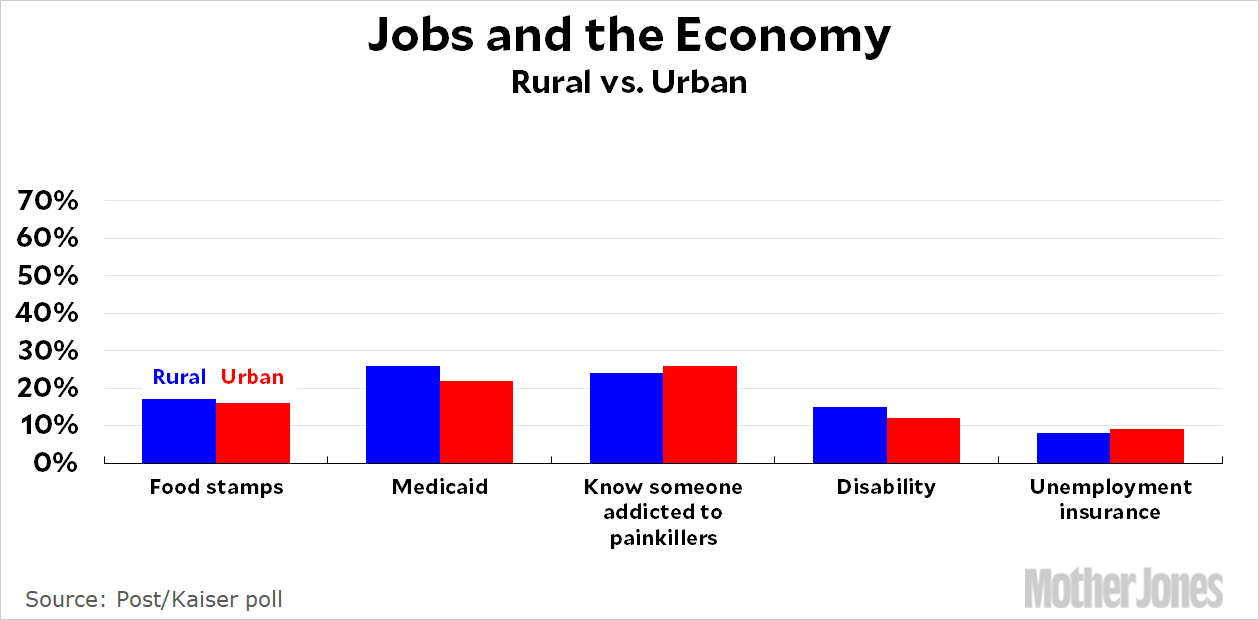
All of these are nearly identical. Overall happiness is the same, the number of unemployed is about the same, and optimism about the future is about the same. This same dynamic plays out elsewhere. In rural areas, 67 percent say their community relies a great deal on government help. But that perception doesn’t match reality:
Asked about their personal situation, only around 20 percent say they’ve relied on government programs—and there’s very little difference between rural and urban areas.
Rural areas are unquestionably poorer than urban areas: at the low end there’s more poverty and at the high end there are fewer rich people. Beyond that, though, the perceptions of rural folks about their communities are out of step with what they report about their personal lives.
There are obvious reasons for this difference between perception and reality. The most obvious one is just related to community size. The Great Recession hit urban and rural areas about the same, but when unemployment rises in a city it’s a diffuse problem that doesn’t necessarily seem related to living in a city. Conversely, when the same thing happens in a small town, it’s probably because a factory laid off 10 percent of its workforce. That’s a punch in the gut that makes you lose faith in your town. Similarly, when someone in a small town decides to move away to look for employment elsewhere, there’s a good chance it’s someone you know. In a city it’s just the guy down the hall that you nodded to every once in a while.
Bottom line: rural areas probably are doing worse than cities on a number of economic metrics. But only a little worse. The big difference is mostly in the perception of just how bad things really are.
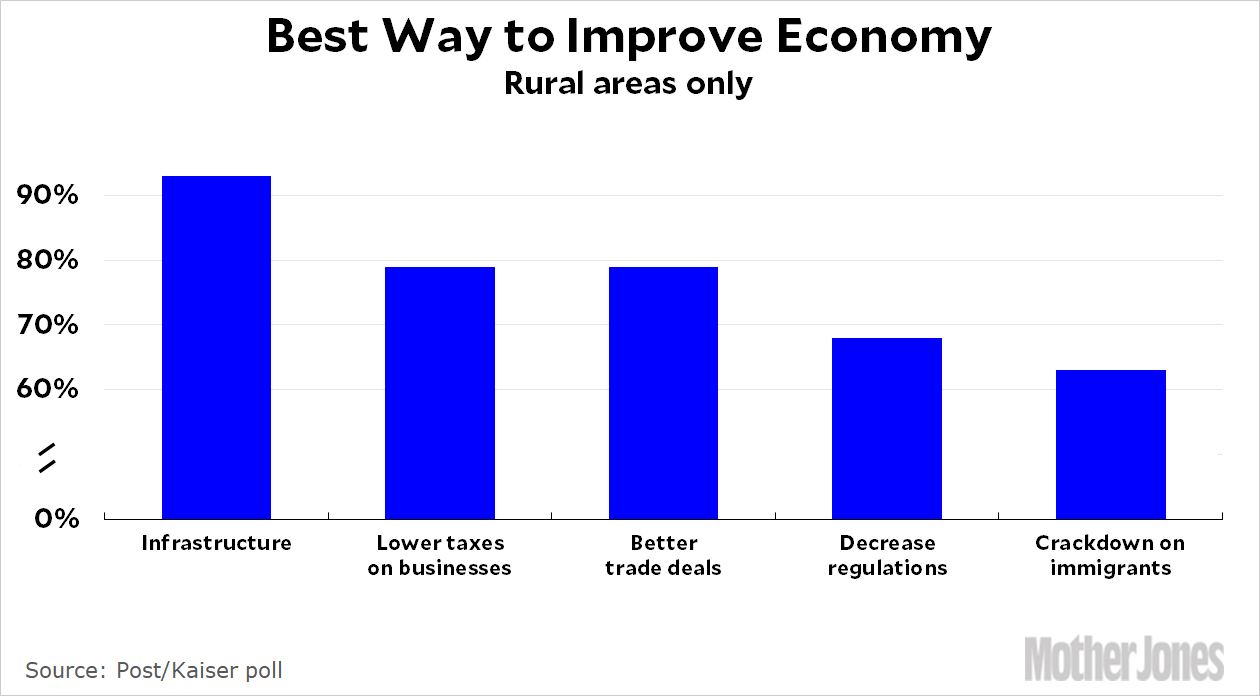
And one more thing:
Asked about the most important thing government can do to improve their economy, it’s not immigration crackdowns or better trade deals. It’s infrastructure. That’s what they want.
Hopper has been giving us all a master class in photobombing lately. Three weeks ago she showed off the classic photobomb. Last week she demonstrated the involuntary photobomb. Today, in an innovative new technique, she photobombs Hilbert from the front.
BTW, this picture is brought to you courtesy of burst mode. Remember when I told you it could pay off even for ordinary portraits where nothing was going on? Here’s the proof.
The fun folks at Vox asked eight Republican senators to explain what they want their health care bill to do. That is, what problems should it solve and what benefits should it provide for ordinary Americans? The results are mostly pretty hapless, and Chuck Grassley in particular is getting lots of Twitter play for his usual Grampa Chuck schtick.
But if you read closely, it turns out that all of them aside from John McCain actually do have a common goal:
McCain: “What are the big problems it is trying to solve?” “You name it.”
Grassley: “The rates could be way up here. [Points to sky] And if they — if we get a bill passed, it maybe wouldn’t go up or would go up a heck of a lot less than they would without a bill.”
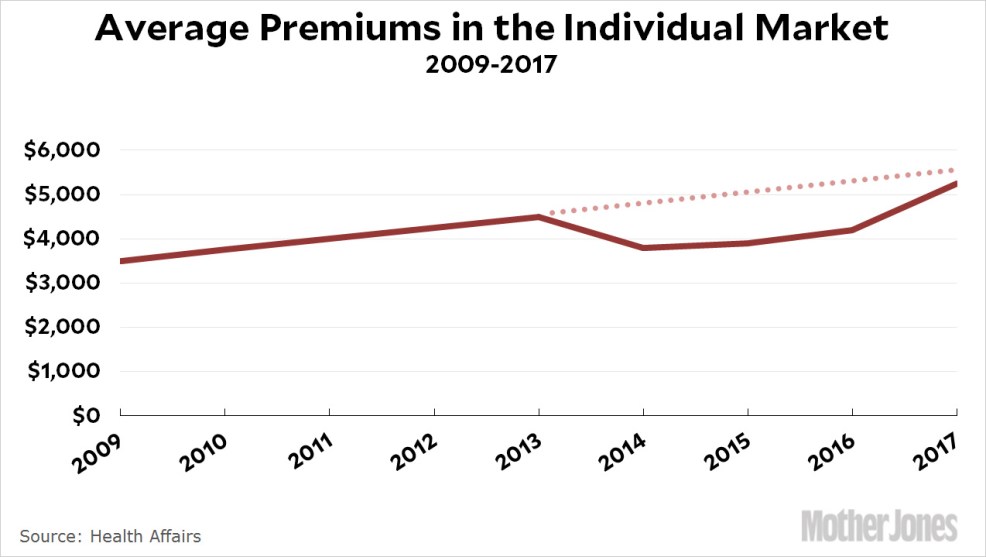
Boozman: “We’ve got so many people in Arkansas, premiums have gone up 128 percent in the past four years….And so hopefully we’ll deal with some of those problems.”
Wicker: “It will moderate prices for premiums.”
Murkowski: “I continue to hear stories of great frustration. Increasing premium costs. Increasing share of deductibles….When you ask Alaskans about their stories and what they want, they need increased affordability. Because we are slammed in every category, with premiums and the cost of care.”
Cruz: “The most important objective in repealing Obamacare is to lower health insurance premiums.”
Capito: “First of all, we’ve got to stabilize the market of the places…whose premiums are skyrocketing, whose deductibles are through the roof. This is a real phenomenon.”
Portman: “It’s the cost of health care. Premiums and copays and deductibles have skyrocketed compared to what was promised.”
Seven out of eight Republicans surveyed agree that rising premiums and deductibles are the key problem they’re trying to solve. In the House bill, Republicans actually did deliver this. However, they did it by reducing coverage levels—which naturally makes policies cheaper—and by making coverage too expensive for older people, who have the highest premiums. In other words, they did it in a way that produces a mathematical reduction, but not in a way that actually helps people in the real world. It was a bit like reducing “average” outlays on Geritol by cutting the recommended dose in half and ending sales to anyone over 50.
Will Senate Republicans do the same? Or do these senators want to reduce premiums on the coverage people actually have right now? I think you know my guess, but I suppose we’ll just have to wait and see. So far it’s still a secret.
And we respect that! But maybe you’re of a mind to support our work directly instead? We have until December 31 to raise the last $400,000 we need to keep our nonprofit newsroom running at full strength into 2026. Will you make a gift today?
We noticed you have an ad blocker on. Can you pitch in a few bucks to help fund Mother Jones' investigative journalism?
Billionaires own the media,
but they don’t own us.
At Mother Jones we know these aren’t conventional times, and they require unconventional coverage. That’s what deliver every day: fierce, independent journalism you can’t find elsewhere. Perhaps never in the history of our country has that been more necessary than now. But we can’t do it without reader support—your support. Please chip in today.
Billionaires own the media,
but they don’t own us.
At Mother Jones we know these aren’t conventional times, and they require unconventional coverage. That’s what deliver every day: fierce, independent journalism you can’t find elsewhere. Perhaps never in the history of our country has that been more necessary than now. But we can’t do it without reader support—your support. Please chip in today.