• Friday Cat Blogging – 2 June 2017


    Hopper can stand up on her hind legs pretty much forever if she has a mind to. She has a very fine sense of balance. In today’s picture, she’s putting this skill to work hunting a bug—which you can’t see because you don’t have cat eyes.1 Unfortunately for Hopper, cat eyes aren’t enough. She could see it, but she still couldn’t catch it.

    1But nothing escapes the camera’s eye! Look closely, and you can see the bug just to the right of the light lavender flower about an inch from Hopper’s nose.

  • The Biggest Beneficiaries of “America First” Are . . . Russia and China


    Donald Trump is addicted to dramatic announcements, and he’s had a bunch. He killed the Trans-Pacific Partnership on his first day in office. He’s weakened ties with Europe and trashed NATO. He’s cozied up with autocrats and given short shrift to our usual democratic allies. He’s focused all of his attention in Asia on North Korea. Yesterday he pulled out of the Paris climate accord. Who do these actions benefit?

    TPP: Mostly China, which was left out of TPP and now has an open road to create its own trading bloc. The benefit to the US is minuscule at best.

    NATO: Russia, of course. I assume this needs no explanation?

    Paris: Mostly China, which can now take the high ground and bill itself as the global leader in combating climate change. The benefit to America is probably zero or negative.

    North Korea: China. They’re pretty obviously stringing Trump along, doling out tiny claims of progress in return for concessions by Trump. I’m guessing their claims in the South China Sea are very safe as long as they keep up this charade with Trump the global bumpkin.

    Autocrats: China and Russia, which very much like the idea of the leader of the free world affirming that human rights are for suckers. America gets nothing from this policy of alienating the allies we have in return for kowtowing to autocrats who share no values with us and have no intention of becoming allies.

    I’m not saying this is a deliberate policy from Trump. I doubt he really has one. But it’s pretty remarkable that America gets nothing from “America First,” while China and Russia are big beneficiaries.

    For a more coherent take on this, check out Max Boot in the LA Times today. He has a pretty clear-eyed read on what’s going on.

  • Let’s Cut the Crap About Why Hillary Clinton Lost

    Olivier Douliery/CNP via ZUMA


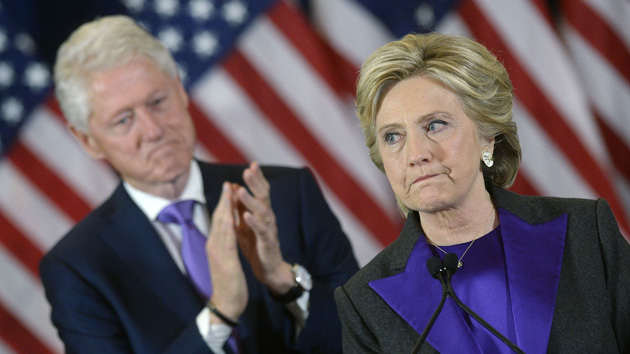
    The latest thing for the caterwauling classes to caterwaul about is Hillary Clinton’s recent interview with ReCode. Basically, she said that the big reasons she lost the election were Russia, the Comey letter, and the media’s infatuation with her email server. Everyone is outraged that she refuses to admit that she herself made gigantic mistakes that led to her loss.

    Bah. Let’s run the tape:

    • Hillary Clinton was running for a third Democratic term with an OK but not great economy. Most models predicted a roughly 50-50 race.
    • In the end, despite everything, she still outperformed the models and won the popular vote by 2 percent.
    • The Comey letter cost her 2-3 percent, and the other stuff probably cost her another couple of points. Without those things, she wins in a landslide and cruises into the White House.

    So she’s right. I guess everyone wants her to be the captain going down with her ship, but that’s stupid. She accurately described why she lost. Why shouldn’t she?

    But still, what about all the stuff she screwed up? There wasn’t that much, really, but sure, there are a few things:

    • The Goldman Sachs speeches were dumb.
    • The private email server was dumb.
    • The “deplorables” comment was dumb

    But look: no candidate is perfect and every campaign has stuff like that. It comes with the territory. And despite all that, Clinton had a comfortable 7-point lead by the end of September. Those things couldn’t have been the reason for her loss since they were all well known by then. After that, she crushed Trump in all three debates and was all set to win.

    So why didn’t she? The answer is pretty simple: despite running a pretty good campaign, she got walloped by things that decidedly don’t come with the territory: Russian interference via the WikiLeaks drip; an indefensible letter released by the FBI director; and a press corps that treated the Comey letter like the OJ trial. She got slammed late in the game, and had no time to recover.

    That’s just what happened. Denying that reality because we like losers to wear hair shirts is dumb.

    Now, there is one thing I’m still curious about: did her data analytics team blow it in the (now) infamous states of Wisconsin, Michigan, and Pennsylvania? In most recent campaigns, there’s at least one embedded reporter who promises to embargo everything until after the election, and then gives us the inside dope when it’s all over. But I guess Clinton didn’t allow that, so we don’t really have an inside view. Supposedly, though, internal polling is far more accurate than the stuff we plebs see, and it should have alerted her that something was going on in her firewall states.

    Did the analytics fail? Or did they work just fine, but she ignored them? To this day, does anyone know?

  • It’s No Mystery That Donald Trump Isn’t Paying Much Attention to Immigration


    From the Washington Post:

    Lawmakers baffled that immigration getting short shrift in Washington

    Meh. Trump never cared much about immigration. It was just a campaign tool, and he practically admitted as much at one point. That’s not to say he won’t try to get something done about it, but it’s never likely to be a huge issue for him. And without him putting a lot of energy behind it, it won’t go anywhere. There are too many Republican members of Congress who are opposed to highly punitive immigration rules.

    Eventually the immigration hawks will learn the same thing as everyone else: it’s all just one long con. Trump doesn’t care about policy. Not immigration, not taxes, not abortion, not health care, not ISIS. He has vague inclinations on all these things, but that’s all. He’s mainly driven by whatever can keep him in the spotlight for the next week or two.

    That’s probably the real reason he pulled out of the Paris climate accord. If he stays in, he gets nothing. If he pulls out, he gets a week or two of attention. It was an easy choice.

  • Chart of the Day: Net New Jobs in May


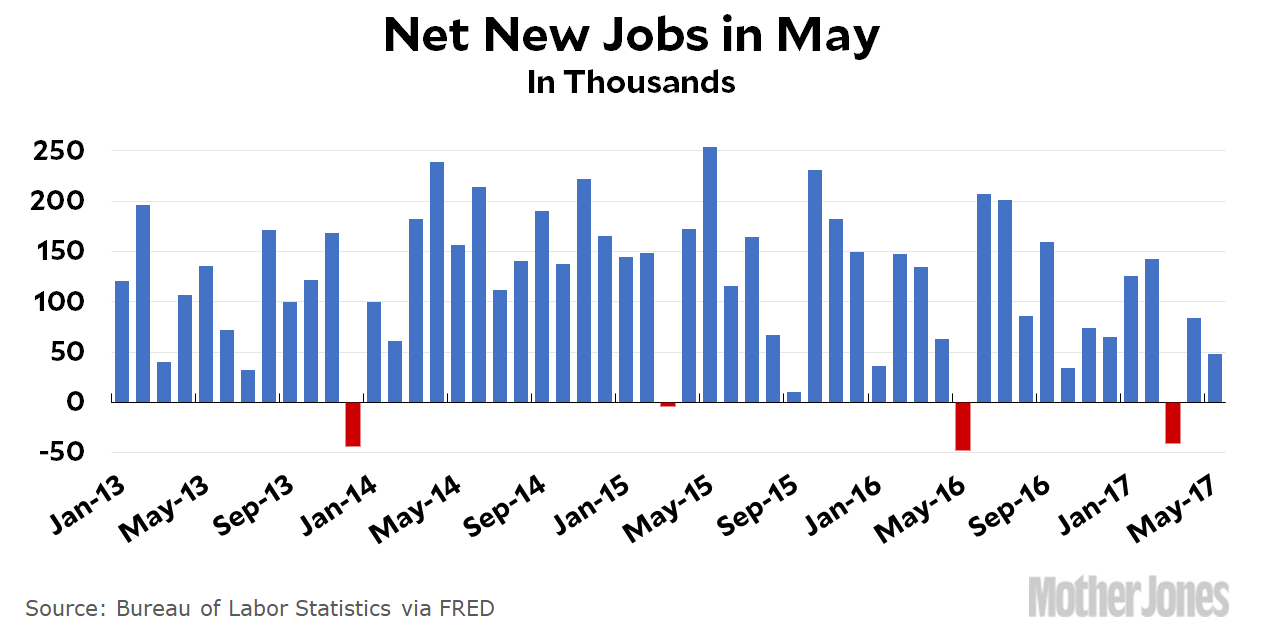
    The American economy added 138,000 new jobs last month, 90,000 of which were needed to keep up with population growth. This means that net job growth clocked in at 48,000 jobs. That’s pretty weak, but the headline unemployment rate ticked down slightly to 4.3 percent anyway. This was mainly because a whopping 608,000 people left the labor force, not because there were more people working. In fact, the number of employed workers declined by 233,000 last month and the labor participation rate declined by 0.2 percent.

    Hourly earnings of production and nonsupervisory employees went up at an annual rate of 1.7 percent. Inflation is currently running at about 2.2 percent, so this represents a decline of about 0.5 percent. Yuck. Whatever progress we had been making toward higher wages for blue-collar workers has pretty much collapsed over the past few months.

  • Why Is Mick Mulvaney Complaining About CBO’s Score of the Republican Health Care Bill?


    Republicans have a problem. The party of fiscal discipline and a balanced budget really, really wants to pass a tax cut for the rich that will blow up the deficit. Unfortunately, Senate PAYGO rules don’t allow this,1 and Democrats can filibuster any attempt to change those rules.

    But there’s a metaphysical issue embedded here: how can you know—really know—that a bill will increase the deficit? That’s like seeing into the future! What godlike intelligence could possibly do that? It’s impossible!

    Nonetheless, in our fallen state this task has been given to the Congressional Budget Office. And they have an annoying tendency to produce results that Republicans don’t like. So Trump’s budget chief, Mick Mulvaney, is making the case that we should get rid of the CBO entirely:

    “I would do my own studies here at OMB…And other folks would do their studies from the outside. And those would come with their natural biases. The Heritage Foundation comes in and says it’s going to cost a lot. Brookings comes in or the Center for American Progress says the benefits would be great.

    ….Asked what would happen in a scenario in which, say, a Democratic administration says a bill costs $500 billion and Heritage Foundation puts out a report saying the same bill would cost trillions, Mulvaney responded, “Then they would do it and if it works, they would get re-elected and if it doesn’t, they don’t. And that was the way it worked before the Congressional Budget Office.”

    In other words, there would be no rules at all. You’d just do whatever you wanted, and if you get reelected it must mean you were right. This is a fascinating ontological approach to budget estimation.

    But what’s more fascinating is Mulvaney’s pretense that what he’s really upset about is the CBO’s score of the Republican health care bill:

    Mulvaney was particularly critical of the CBO’s recent estimate that the House-passed healthcare bill would result in 23 million fewer people with health insurance. He argued that the CBO’s model assumed that the mandate requiring individuals obtain coverage has a lot more influence on people’s decisions than it does in real life.

    “Did you see the methodology on that 23 million people getting kicked off their health insurance?” he said. “You recognize of course that they assume that people voluntarily get off of Medicaid? That’s just not defensible. It’s almost as if they went into it and said, ‘Okay, we need this score to look bad. How do we do it?'”

    But CBO’s most recent estimate says the health care bill will reduce the deficit by about $100 billion. Mulvaney has no beef with this, nor any reason to be upset about the estimate of 23 million people losing insurance, since that’s the very thing that reduces costs enough to make the bill compliant with PAYGO rules. So why is Mulvaney kvetching about this?

    In fact, Mulvaney doesn’t care a fig about AHCA. He’s just preparing the ground for an assault on the CBO when it comes time to score his cherished tax bill. A few years back Republicans finally badgered the CBO into accounting for the “dynamic” effects of tax cuts, but they’ve never been satisfied with CBO’s refusal to use the most fanciful dynamic models, which assume that tax cuts pay for themselves entirely. And CBO is obstinate about this even with a Republican in charge! What to do?

    Answer: Get rid of the CBO. But Democrats would filibuster any attempt to do that. So what is Mulvaney up to? Just this: it turns out that the Senate Budget Committee isn’t actually required to use CBO estimates. They always have in the past, but that’s a custom, not a rule. They have the authority to make their own estimates, and all it takes to make them stick is a majority vote in the committee.2

    Mulvaney is basically trying to start up a campaign to put some spine into the SBC’s Republican members to ignore the CBO and simply score the tax bill using a model that will pronounce it deficit-neutral. That’s what this is all about.

    1The House has no PAYGO rules for tax cuts.

    2There are also Byrd Rule problems with the tax cut bill, but Republicans already think they might have a way around those.


  • Today’s Terror Attack Was Fake News


    Ladies and gentlemen, the president of the United States:

    I would like to begin by addressing the terrorist attack in Manila. We’re closely monitoring the situation and I will continue to give updates if anything happens during this period of time. But it is really very sad as to what’s going on throughout the world with terror. Our thoughts and our prayers are with all of those affected.

    What? A terrorist attack in Manila?

    Oh. So what was going on?

    A masked gunman stormed a hotel-casino complex in the Philippine capital early Friday, shooting up a TV screen, torching gambling tables and stuffing a backpack with casino chips before fleeing, authorities said….A guard was shot during the melee but survived, and more than 70 others suffered mostly minor injuries in a stampede to get away from the gunman, who was wielding an assault rifle.

    Within three hours of the violence at the complex near Manila’s airport, police said that they uncovered no ties to terrorism and suggested the motive could have been robbery.

    Roger that. As usual, Trump was just making stuff up.

  • The US Brings Up the Rear When it Comes to Reducing Carbon Emissions


    Donald Trump just finished up his speech about pulling out of the Paris climate agreement, and it was garden variety Trump bluster. Other countries are playing us for a sucker. It’s already cost us ONE BILLION DOLLARS. It’s crippling the American economy. They’re all laughing at us. Etc. The usual.

    I was more interested in what EPA chief Scott Pruitt had to say afterward. His remarks were a seemingly endless tribute to the amazing foresight and singular vision of Donald Trump. It was really over the top, although I don’t know how many people noticed it since Pruitt has a fairly bland speaking style. Here’s a taste:

    Your decision today to exit the Paris accord reflects your unflinching commitment to put America first….fulfilling yet one more campaign promise….fortitude, courage, steadfastness….America finally has a leader who answers only to the people….fighting for the forgotten men and women across this country….champion of the hardworking citizens all across this land….historic restoration of American economic independence….it takes courage, it takes commitment to say no to the plaudits of men while doing right by the American people. You have that courage.

    Mussolini could hardly ask for better. But there was a tiny bit of substance in Pruitt’s remarks. In particular, he said that America had reduced its carbon emissions by 18 percent between 2000 and 2014. That’s actually not right: emissions have gone down about 8 percent over that period. Pruitt must have been talking about per-capita emissions or something. He also said that carbon emissions were now lower than 2014 levels, and he actually got that part right. But take a look at what caused this decline:

    Every time the economy goes into recession, carbon emissions decline. When the economy goes into a massive recession, carbon emission decline a lot. That explains most of the reduction, which happened between 2008 and 2012.

    But there are other things at work too. More fuel-efficient cars. More solar and wind. Replacement of coal by natural gas. Less heavy manufacturing.

    So was Pruitt right to say this was accomplished “not through government mandate, but through innovation and technology of the American private sector”? Not really. Fracking lowered the price of natural gas, and that was certainly a triumph of innovation. But that was about it. The decline of heavy manufacturing was mostly a result of globalization. The recession was the result of an unsustainable housing bubble. Cars got more fuel efficient largely because of tighter CAFE standards. Solar and wind were the beneficiaries of improving technology, but also various tax credits and incentives.

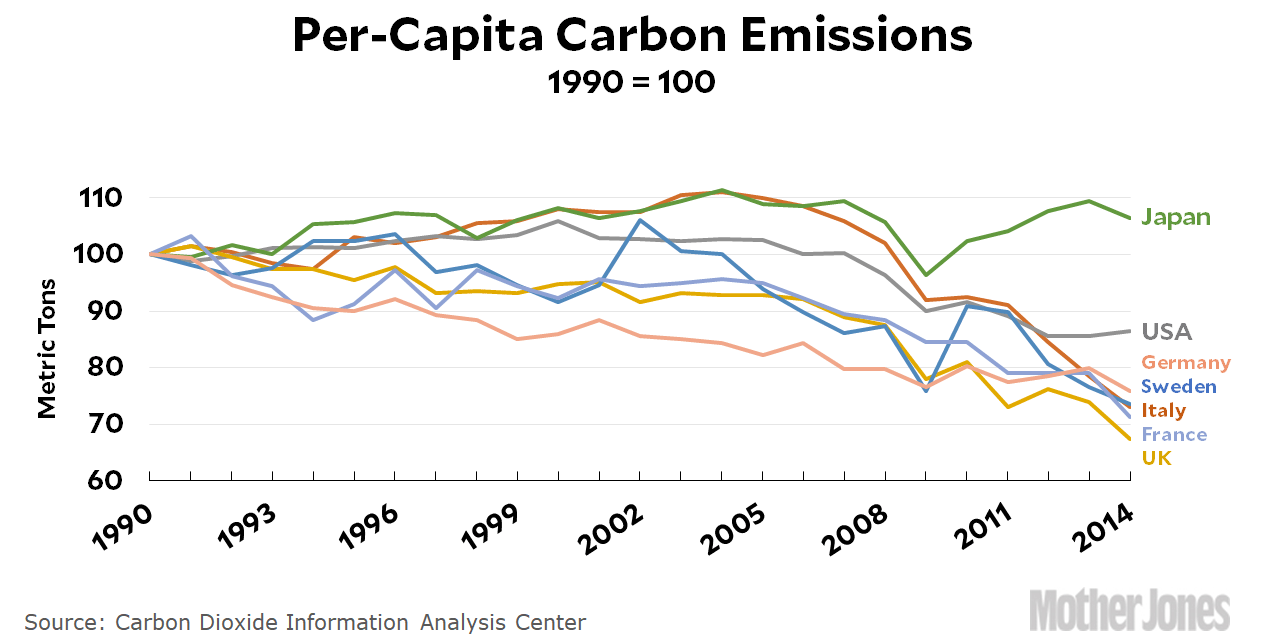
    What about Pruitt’s claim that we “do it better than anyone in the world,” “the rest of the world does little,” and “other nations talk a good game” while we lead by action? Compared to other industrialized economies, this is just wrong. Here are reductions in carbon emissions since 1990 for a representative assortment of peer countries:

    The only country we beat is Japan. All the rest have reduced their carbon emissions more than us. Of course, this only shows reductions in percentage terms. In absolute terms it’s even worse: the United States emits carbon at nearly double the level of Japan and three times the level of most European countries. The other countries started at lower levels and still managed to cut emissions more than we did.

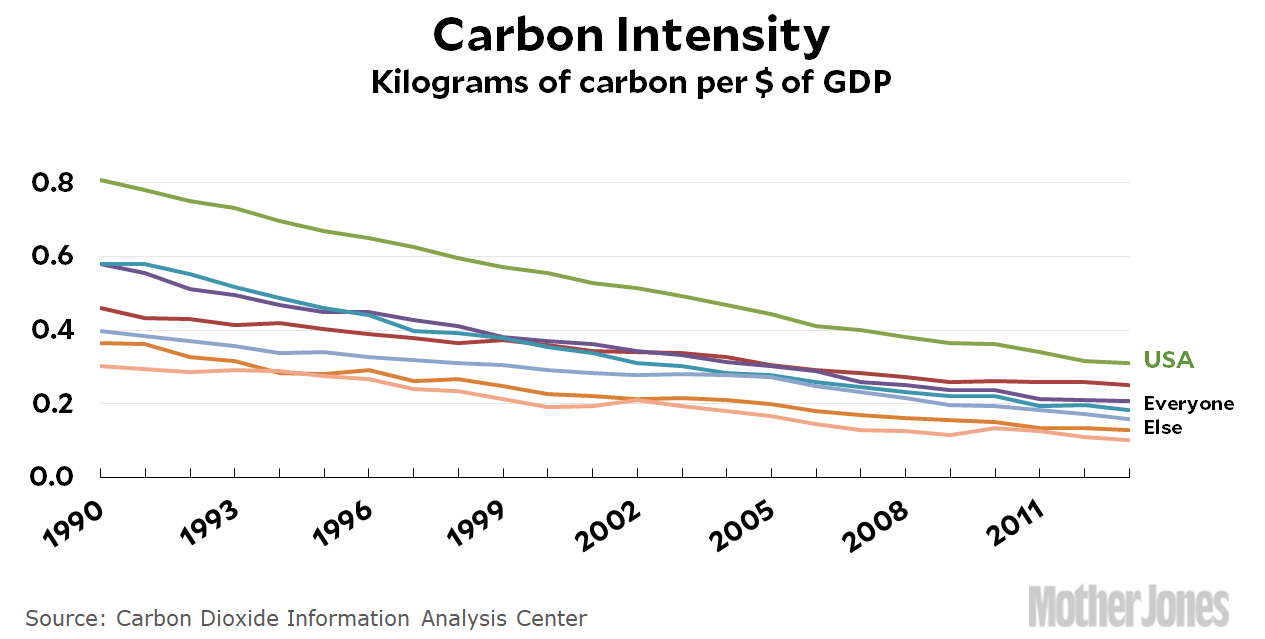
    On the bright side, we’ve done pretty well at reducing our carbon intensity. In 1990, it took 0.8 kg of carbon to produce a dollar of GDP. Today it takes only 0.3 kg:

    Sadly for our egos, the other advanced countries have done even better than us. Despite our reliance on private enterprise, we remain one of the least efficient producers of goods and services among our peers.

  • Lunchtime Photo


    Some people have a good eye for composition and color. Throw in some technical skill and lots of practice and they become great photographers.

    But what about those of us who don’t have good eyes? Well, there’s a shortcut: we take pictures of things that are so beautiful you can’t really screw them up. You know, sunsets, snowy mountain peaks, cute animals, the Taj Mahal, etc. That’s what I mostly do. I once took an entire cross-country trip with a friend on condition that we stop every night at sunset so I could take pictures. You’re lucky I don’t just post sunset pictures every day.

    With that in mind, here is Santa Monica shortly after sunset. The road on the right is Pacific Coast Highway.

  • Crime Rates Sure Are Low In Japan. You Know What Else is Low?


    Japan has always been a relatively low-crime country, but lately crime rates have gotten so low that police are getting bored:

    This means plenty of attention for crimes that would be considered too petty to investigate elsewhere, such as the theft of a bicycle or the possession of a tiny amount of drugs. One woman describes how five officers crowded into her cramped apartment after she reported her knickers being swiped from a clothesline. A small army of detectives was assigned last year to apprehend a group of 22 people who had been growing marijuana for their personal use only and smoking it in deserted rural spots.

    In fact, as the police run out of things to do, they are becoming more inventive about what constitutes a crime, says Kanako Takayama of Kyoto University. In one recent case, she says, they arrested a group of people who had shared the cost of renting a car, deeming the arrangement an illegal taxi. Some prefectures have begun prosecuting people who ride their bicycles through red lights.

    Japan was one of the first countries to ban leaded gasoline. The phaseout started in 1972, and by 1980 lead was almost entirely gone. As early as 2000, Japan had an entire cohort of teenagers that had grown up almost entirely lead-free. This only happened in the US a few years ago. Now Japan is moving into their second cohort of lead-free teenagers. Overall, the country has been virtually lead free for nearly four decades, and the lead exposure of today’s Japanese children is “among the lowest in the world.”

    Just sayin’.