• The GOP Is Running on Fear — And I’m Here to Help


    Oh man, I’m sure glad I don’t live in Iowa. Or New Hampshire or South Carolina or Nevada or Alabama or Minnesota or Oklahoma or Alaska or Vermont or Arkansas or Tennessee or Colorado or Georgia or Massachusetts or Texas or Virginia:

    Scenes of masked men toting guns and waving black Islamic State flags. Refugees scrambling across the border. Fires and explosions.

    It’s not just a Donald Trump ad. Most of the Republican presidential contenders and their allies are now waging campaigns focused on fear….Former Florida governor Jeb Bush delivers a similar message in a new spot that begins airing in New Hampshire this week. “We are at war with radical Islamic terrorism,” he declares….And in Iowa, a new ad by a super PAC supporting Sen. Ted Cruz of Texas features a frightening montage of Islamic State militants, refugees on the run and rolling tanks before mocking Sen. Marco Rubio of Florida as a lightweight.

    So that’s what we’re getting? A multi-month campaign to see who can out-fear the rest of the field? Well, good luck with that. I’ll even help out. Remember Ebola? That was a great bit of fearmongering. A true classic. But now we have something even better: Zika. Here’s the dope:

    The Zika virus, a rare tropical disease that’s causing a panic in Brazil — because it may lead to babies being born with abnormally small heads — has now made its way to Puerto Rico….”It’s spreading really fast,” said Scott Weaver, the director of the Institute for Human Infections and Immunity at the University of Texas Medical Branch in Galveston. “I think [the Zika virus] is going to be knocking on the doorstep in places like Florida and Texas probably in the spring or summer.”

    Zika is sort of an invisible virus: if you contract it, you’ll either feel nothing or, at most, flu-like symptoms that shortly go away. But it might cause birth defects. Maybe. There’s no need to include that qualifier, though. This is an unseen but implacable menace making its way across our borders and threatening our unborn babies. And what is Obama doing about it? Nothing, I’ll bet—and I really don’t think there’s any need to check on that. So let’s get those ads cranking, guys!

  • Ted Cruz Is Doing Great in Iowa


    Yesterday I forgot to put up my weekly reminder of how Republicans are doing in the latest polls, so here it is today. Ol’ Ted is doing pretty well among the evangelical cornfields of Iowa, and he didn’t even have to root for the Hawkeyes in the Rose Bowl to do it. His scheme of waiting for either Trump or Carson to implode and then picking up their votes seems to have been pretty shrewd.

    Of course, the winner of the last two Iowa caucuses were Mike Huckabee and Rick Santorum, and look where they are now. There’s still a bushel of campaigning left.

  • If You Want to Reduce Crime, Follow the Evidence


    A few years ago New York City started an anti-crime program called J-RIP. The basic idea was simple: find kids who were on the edge of trouble and “make them radioactive.” Smother them with so much attention that they’re isolated from friends with whom they commit crimes. “At the same time, officers seek to forge relationships with the teenager’s family, drawing them in with perquisites like a hand-delivered turkey on Thanksgiving Eve and toys and brand-name sneakers for younger siblings.”

    It sounds like a good idea, but like a lot of good ideas it apparently didn’t work. This isn’t uncommon. Crime is a tough nut to crack, and you need to try lots of good ideas before you find the ones that are truly effective. Of course, this also means you need to be willing to jettison ideas that aren’t effective. And according to the New York Times, J-RIP didn’t work and the police department knew it:

    That was the conclusion of a damning internal Police Department report in November 2014….But instead of making changes based on the report, which studied arrest patterns over several years among teenagers in the program and comparable teenagers outside of it, the department is pressing forward with an expansion.

    ….The Times obtained a copy of the report via a state Freedom of Information Law request; the statistics were visible but a paragraph of conclusions and several other sentences were blacked out. Two people with direct knowledge of the results said the blacked out portions spelled out the actual findings — that the numbers showed no measurable effect on recidivism — but also included the suggestion that the program could nevertheless be useful as an outreach tool.

    ….“I think it’s safe to say that the report gave the department pause,” said Zachary Tumin, the Deputy Commissioner of Strategic Initiatives, whose office conducted the analysis at Chief [Joanne] Jaffe’s request….But instead of revisiting its approach based on the findings of its own report, the department forged ahead last year with an expansion into a new area, the 114th Precinct in northwestern Queens, which includes Astoria and Long Island City.

    This is sadly normal: people get so invested in an idea that they simply won’t accept evidence that it doesn’t work. Councilwoman Elizabeth Crowley, for example, is a big supporter of J-RIP and says she remains a supporter. “How can greater surveillance not have any effect?” she asked.

    How indeed? That’s a very good question. And maybe J-RIP still has value. Maybe it can be changed to become effective. Maybe two years just isn’t a long enough period to see results. Maybe. But if you ignore your own evidence—it was Chief Jaffe herself who requested the report—you have scant chance of ever improving things.

  • In Oregon, No Doctor Needed for Birth Control Prescriptions


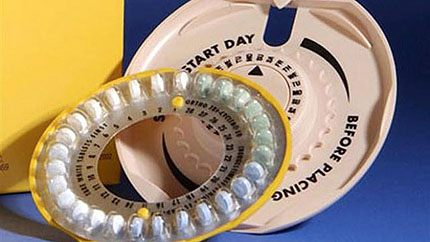
    The temporary appearance of the Bundy clan notwithstanding, Oregon is a pretty cool state. Starting this year, women in Oregon can get hormonal contraceptives directly from a pharmacy—no doctor’s prescription required. The New York Times provides the details:

    These birth control methods — which include pills, patches and rings — will still require prescriptions (so they are not technically over the counter), but now pharmacists who complete the Oregon training protocol can issue those prescriptions directly. At the pharmacy, women must complete a 20-question self-assessment so that pharmacists can determine which hormonal methods might be appropriate and safe. About 200 pharmacists in Oregon have completed the training so far and an aide to the bill’s sponsor said that most of the major chain pharmacies, including Rite Aid, Costco and Walgreens, have signed agreements to train a significant number of pharmacists.

    ….Under the Affordable Care Act, all prescription birth control is covered by insurance. The only possible additional cost is a one-time or annual fee of $25 or so for the assessment services provided by the pharmacist. It is possible that insurers will cover that fee, but that is yet to be determined.

    Good for Oregon. Making contraceptives more easily available leads to more consistent use, which in turn makes them more effective. Every state should do this.

    And California, which is also a pretty cool state, is following suit later this year. Unlike Oregon, which requires a doctor to write the first prescription for women under 18, California’s law has no age restriction at all. In the contest for coolness, California will soon be taking the lead.

  • Saudi Arabia, Our Great and Good Ally


    So what’s happening in Saudi Arabia these days? Basically this:

    1. Saudi Arabia and Iran have been in a Cold War ever since the Iranian Revolution in 1979. Needless to say, we’ve always been on the Saudi side. The deal is pretty simple: they provide oil, and we provide military protection.
    2. Lately, though, Saudi Arabia has gotten more than normally scared. The US failed to support Egypt’s Hosni Mubarak during the Arab Spring, which raised fears that the US wouldn’t support Saudi leaders if Iran managed to instigate a popular revolt by Saudi Arabia’s Shiite minority. Then came the much loathed nuclear deal with Iran, which threatened to change the Mideast balance of power in Iran’s favor. And of course, low oil prices are taking a toll on the kingdom too. Not to mention the fact that America doesn’t really need Saudi oil these days, which makes the longtime partnership between the two a little shaky. Plus the Saudis are fighting a proxy war against Iran in Yemen that’s not going well.
    3. So the Saudis decided to give Iran a great big middle finger, despite American objections. They executed the Shiite dissident Sheikh Nimr al-Nimr, knowing full well how this would be taken in Iran.
    4. Sure enough, that’s how it was taken. Iran reacted just as expected, by putting together a mob to trash the Saudi embassy.
    5. Saudi Arabia escalated the crisis they created by severing diplomatic ties with Iran and urging their allies to do the same.

    And that’s more or less where we stand at the moment. So why did Saudi Arabia do this? There are a few possibilities:

    1. It’s basically a signal aimed at President Obama: if you won’t stand up to Iran, we’ll do it ourselves.
    2. Or maybe it’s more serious. Perhaps the Saudis are trying to bait Iran into overreacting, which might somehow torpedo the nuclear deal and force America to get involved militarily on Saudi Arabia’s side.
    3. Alternatively, maybe it’s not really aimed at America at all. Maybe it’s designed to increase regional sectarian tensions, which will rally Saudi Arabia’s Sunni allies against the Shia menace from Iran.

    One way or another, there’s not much question that this was a calculated move by Saudi Arabia. They knew how Iran would react—and they hoped that it might scuttle the Syrian peace talks, maybe the Iranian nuclear deal too, and at the very least, create some chaos that they could take advantage of.

    Ladies and gentlemen, this is our great and good ally. They flog apostates. They export Sunni extremism. They treat women as chattel. They flog and imprison gays. They import slave labor from abroad. They have no truck with freedom of religion or freedom of speech. Their royal family is famously corrupt. And they really, really want to start up a whole bunch of wars that they would very much like America to fight for them.

    Your mileage may vary, but I’m not really very keen on allies like that.

  • Enough With the Middle-Age Whites, Already


    In a Washington Post column over the weekend, Fareed Zakaria wrote this:

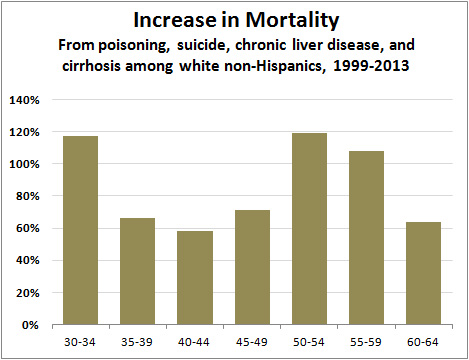
    In a well-known paper, economists Angus Deaton and Anne Case found that over the past 15 years, one group — middle-age whites in the United States — constitutes an alarming trend. They are dying in increasing numbers.

    I suppose I’m tilting at windmills here, but this misconstrual of the Case/Deaton paper really bugs me. It’s not “middle aged” whites who are dying of drug and alcohol poisonings, suicide, and chronic liver disease in vastly greater numbers. The chart on the right is taken directly from data in the Case/Deaton paper, and it shows two groups with outsize increases in mortality: 30-34 year olds and 50-59 year olds. So there are three age cohorts here. Roughly speaking, one cohort was born in the early 50s and shows big problems; another was born in the 60s and shows only moderate problems; and the third was born in the early 70s and once again shows big problems.

    These cohorts might change if you examine the data using different age buckets, different diseases, and a different timeframe. Who knows? Regardless, if you’re going to put forward an explanation about why this is happening, it better account for all three age groups. You can’t just pretend the data points only to “middle-age” whites and then spin your theories from that.

    Oh, and the paper is by Case and Deaton, not Deaton and Case. Either way, though, I sure wish one of them would step in to correct this.

  • The FDA Is Giving New Cancer Treatments a Break


    For a variety of reasons, I’ve never spent much time on the internet reading or conversing about multiple myeloma. A few days ago, however, I had reason to think I should educate myself a bit more. Among other things, I discovered that within the space of two weeks in the second half of November, the FDA had approved no fewer than three new treatments. I suppose this can’t be anything but coincidence, but then another coincidence piled on top of that: a New York Times piece about Richard Pazdur, the oncology chief at the FDA. Three years ago, his wife was diagnosed with ovarian cancer:

    In her struggle with cancer and ultimately her death in November, Ms. Pazdur had a part, her husband and a number of cancer specialists now say, in a profound change at the F.D.A.: a speeding up of the drug approval process. Ms. Pazdur’s three-year battle with cancer was a factor, they say, in Dr. Pazdur’s willingness to swiftly approve risky new treatments and passion to fight the disease that patient advocates thought he lacked.

    ….Since Ms. Pazdur learned she had ovarian cancer in 2012…the average decision time on drugs by Dr. Pazdur’s oncology group has come down to five months from six months….“I have a much greater sense of urgency these days,” Dr. Pazdur, 63, said in an interview. “I have been on a jihad to streamline the review process and get things out the door faster. I have evolved from regulator to regulator-advocate.”

    Many factors are driving him, he continued. “Was Mary’s illness one of them? Yes,” he said. But in 2012, he added, Congress also passed a law that gave the F.D.A. more money and a new pathway to work more closely with drug makers when a medicine may save lives. Another important change in the same period, he said, was a surge in advances in genetic research that made some medications more effective and easier to test.

    “The drugs simply got better,” Dr. Pazdur said.

    Again, I suppose this is mostly coincidence. But I still wonder if Mary Pazdur’s cancer played a role in all these multiple myeloma treatments getting approved recently? If so, her death may eventually play a role in saving—or extending—my life. A butterfly flaps its wings….

  • Are Liberals Responsible for the Rise of Donald Trump?

    John Fitzhugh/TNS via ZUMA Wire


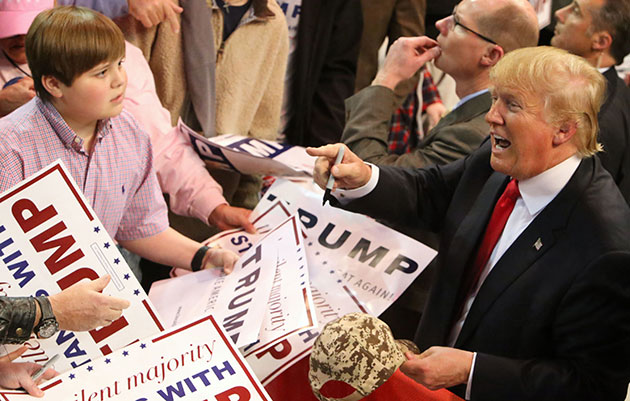
    Five-time Jeopardy! champion Tom Nichols1 writes today about why so many people are attracted to Donald Trump. Nichols is a Republican,2 but he makes it very clear that he deeply loathes Trump (“hideous,” “narcissistic,” “creepy,” “stupid,” etc.) and will never vote for him. So what’s his take on Trump’s popularity? Is it due to economic insecurity? Inchoate anger? Bubbling racism and xenophobia? Hatred of the Republican establishment?

    Nah. He says Trump’s rise is basically the fault of the left:

    To understand Trump’s seemingly effortless seizure of the public spotlight, forget about programs, and instead zero in on the one complaint that seems to unite all of the disparate angry factions gravitating to him: political correctness. This, more than anything, is how the left created Trump

    Uh-oh. That’s not going to go over well. For what it’s worth, Nichols is clear that he isn’t referring to garden variety political correctness, which is basically little more than avoiding terms that are obviously insulting or exclusionary. At worst, that stuff is annoying but well-meaning:

    Today, however, we have a new, more virulent political correctness that terrorizes both liberals and conservatives, old-line Democrats and Republicans, alike…The extremist adherents of this new political correctness have essentially taken a flamethrower to the public space and annihilated its center…Any incorrect position, any expression of the Constitutional right to a different opinion, or even just a slip of the tongue can lead to public ostracism and the loss of a job.

    …Gay marriage is a good example. Liberals wanted gay marriage to win in the Supreme Court, and it did. Leftists wanted more: to silence their opponents even after those opponents completely lost on the issue…I could reel off many other examples. When the New York Times tells the rubes that it’s time to hand in their guns, when The Washington Post suggests that Jesus is ashamed of them for not welcoming Syrian refugees the week after a terrorist attack, people react not because they love guns or hate Syrians, but because their natural urge to being told by coastal liberals that they’re awful people and that they should just obey and shut up is to issue a certain Anglo-Saxon verb and pronoun combination with all the vigor they can muster. And if they can’t say it themselves, they’ll find someone who will, even if it’s a crude jerk from Queens who can’t make a point without raising his pinky like a Mafia goon explaining the vig to you after you’ve had a bad day at the track.

    …For the record, I despise Donald Trump and I will vote for almost any Republican (well, okay, not Ben Carson) rather than Trump….But I understand the fear of being silenced that’s prompting otherwise decent people to make common cause with racists and modern Know-Nothings, and I blame the American left for creating that fear.

    …How long this will go on, then, depends on how long it will take for those people to feel reassured that someone besides Trump will represent their concerns without backing down in the face of catcalls about racism, sexism, LGBTQ-phobia, Islamophobia, or any other number of labels deployed mostly to extinguish their dissent.

    This is hardly a new critique. Conservatives have been complaining about “being silenced” forever. The only difference between Trump and the rest of the GOP field is that Trump’s complaints are a little earthier than Rubio’s or Bush’s.

    Still, even if I think Nichols is overstating things, it’s not as if he doesn’t have a point. Even those of us on the left feel the wrath of the leftier-than-thou brigade from time to time. I don’t generally have a hard time avoiding objectionable language myself because (a) I’m liberal, (b) I’m good with words, and (c) I write rather than talk, which gives me time to get my act together. But even at that, sometimes I cross an invisible line and get trounced for it.

    But for someone without my advantages, I can easily see how it might feel almost impossible to express an unpopular opinion without tying yourself in knots. And let’s be honest: We liberals do tend to yell racism a little more often than we should. And we do tend to suggest that anyone who likes guns or Jesus is a rube. And the whole “privilege” thing sure does get tiresome sometimes. And we do get a little pedantic in our insistence that no conversation about anything is complete unless it specifically acknowledges the special problems of marginalized groups. It can be pretty suffocating at times.

    For the most part, I don’t mind this stuff—and conservatives do themselves no favors by harping on supposed PC idiocy like the “war on Christmas.” But the reason I don’t mind it is that I can navigate it reasonably well4 and I mostly agree with the aims of the PC police anyway. People who have trouble with navigation obviously feel a lot more constrained. So while I don’t really buy Nichols’ argument—conservatives built the monster named Trump, not liberals—I do think he has a germ of a point. Donald Trump is basically telling ordinary people that ordinary language is okay, and since that’s the only language they know, it means they feel like they can finally talk again.

    1Okay, fine: He’s also a professor of national security affairs at the US Naval War College.

    2Former Republican, anyway: “I’m a conservative independent and a former Republican. I quit the party in 2012 because of exactly the kind of coarse ignorance that Trump represents. The night Newt Gingrich won the South Carolina primary on the thoughtful platform of colonizing the moon, I was out.”3

    3 I included that second sentence only because it tickled me.

    4 Much of this I’ve learned from reading stuff by academics, who are the masters of acceptable language. As an example: If you were to call something “black behavior,” you’d probably get mauled. The solution? Call it “behavior stereotypically coded as black.” This accomplishes so many things at once. However, it’s also phraseology that no ordinary person would ever think of. This means they literally have no acceptable way of expressing the original thought, which makes them feel silenced.

  • Photo of the Day: A Cat In Every Window


    Why? Why not? From Claudia Massie of Perth, Scotland: “Think my mum aspires to a cat in every window. So far, she’s managed just three at a time.”

  • Did Minimum Wage Increases Hurt Employment During the Great Recession?


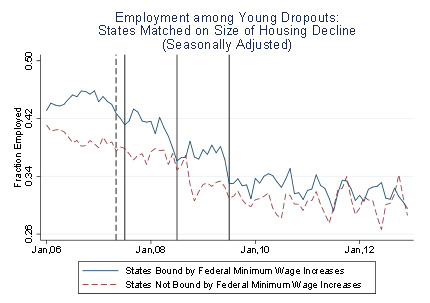
    There’s a new paper out about the minimum wage. Jeffrey Clemens of UC San Diego estimates that minimum wage increases during the Great Recession decreased employment by 5.6 percentage points among workers age 16-30 without a high school diploma. Tyler Cowen comments:

    I hope this receives the media attention it deserves. Will it?

    Here’s the problem: as near as I can tell, the world is awash in minimum wage studies. With no disrespect intended toward Clemens—whose conclusions sound reasonable—a single study just isn’t that meaningful these days.

    Because of this, I don’t usually spend much time highlighting specific new minimum wage studies. A few months ago I broke this rule to write about a paper estimating the employment shock from the Mariel boat lift, and not much later I ended up writing a second post that basically dismantled the paper. If I’d waited, I would have ignored the whole thing. There’s just too much statistical detail in these papers for a layman to gauge their reliability.

    For what it’s worth, I’d note a couple of things about Clemens’ paper. First, Clemens compares employment across states, not counties. Those are pretty big units for comparison, so a bit of caution about the results would be sensible. Second—as with the Mariel boat lift paper—this is pretty much a destruction test. If minimum wage increases don’t have an effect on employment even during a massive recession, then we might as well just bump up the minimum wage to $15 right now and not worry about it. In this case, Clemens studied the most vulnerable possible population during the biggest recession in a century, and still came up with only 5.6 percentage points. That’s not nothing, but it’s not huge either.

    I won’t be surprised if Clemens turns out to be right. It certainly seems like minimum wage increases during a sharp recession should have a disemployment effect. At the same time, it’s not clear what the policy implications of this are. We never know when a recession is going to hit, so avoiding disemployment during recessions would mean never increasing the minimum wage.

    In any case, I can’t really judge the fairly involved math that Clemens uses to extract a signal from the employment noise, so for the moment I have no opinion about this paper. Eventually a bunch of other people will weigh in, and a bunch of other studies will be done. Once all that is done, maybe we can draw some conclusions.