Only until MIDNIGHT, every dollar you give to support our nonprofit newsroom will be matched 2X. Fierce, investigative journalism doesn’t happen by accident—it happens because readers like you make it possible. We can’t do our work without you. Please don’t miss this chance!
Only until MIDNIGHT, every dollar you give to support our nonprofit newsroom will be matched 2X. Fierce, investigative journalism doesn’t happen by accident—it happens because readers like you make it possible. We can’t do our work without you. Please don’t miss this chance!
Just for the record, I suppose I should post something about our shiny new border deal, but I’ve been waiting a bit until President Trump decides what he’s going to do. It sounds like he’s going to support it:
President Trump said Tuesday he’s not happy with a bipartisan border deal in Congress aimed at averting another government shutdown, but he suggested he could add to it to build his U.S.-Mexico border wall and predicted there will not be another lapse in government funding….“It’s not going to do the trick, but I’m adding things to it and when you add whatever I have to add, it’s all going to happen where we’re going to build a beautiful big strong wall,” Trump said.
….Trump spoke with Senate Majority Leader Mitch McConnell (R-Ky.) about the deal midday Tuesday, a person briefed on the call said….“I’m hoping he will find this acceptable and sign the bill,” said McConnell.
I guess you never know whether Trump will change his mind after Ann Coulter insults him or someone on Fox & Friends says this would be a big Democratic victory. But it sounds like Trump is going to declare victory and let it go.
It’s funny. I always figured that Trump’s long-game strategy was to wait a couple of years after his inauguration and then simply say that everything is great. The wall is being built! NATO is paying big bucks for defense! China is backing down! Canada and Mexico have been taught a lesson! Health care has been fixed! Working class folks are doing great! Our military is awesome! It’s not just morning in America, it’s a supernova in America!
And sure enough, that’s pretty much what he’s doing. Last night he held a rally and told the crowd over and over that we’re making great progress on the wall. In truth, we haven’t added a single mile of wall since Trump has been president. But the crowd didn’t know that, so they were easily convinced. Likewise, how many people know how much NATO countries are spending on defense or what the details of the NAFTA 2.0 treaty are? Pretty much none. So if Trump says everything is great, then everything is great.
It’s an impressive strategy. I wonder if it can work in the long run?
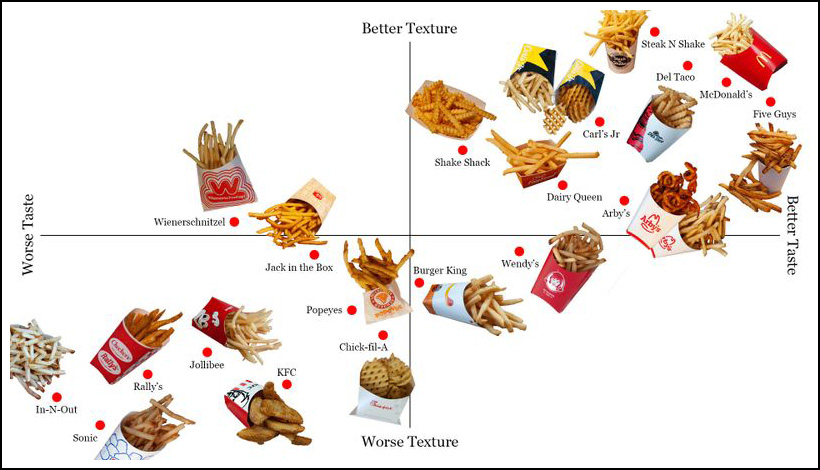
hello I am the social media intern and have to share this but I totally dont agree with it. here are @lucaspeterson’s fast food french fry power rankings https://t.co/ZeX79RNH15
Sorry, intern, but your food critic is right. Well, he’s right about one thing, anyway:
In this ranking, Del Taco is the University of Maryland, Baltimore County taking out Virginia in the first round of March Madness. I came in with the lowest of expectations for Del Taco fries — this is a Southern California-based taco chain after all, and I didn’t even know they had fries until I went in.
Hello, upset! This was a very decent batch of crinkle fries, with a crispy, salty outside and nice, fluffy center. Even better was that the employee who took my order gave me packets of both ketchup and smoky hot sauce with my order.
This is one of the best kept french fry secrets around, so good on Lucas Kwan Peterson for going beyond his preconceived notions and recognizing it. On the other hand, I’d say that Carl’s Jr. fries kind of suck and In-N-Out fries are fine. As for McDonald’s, I know they have a great reputation, but the last few times I’ve had them I’ve been unimpressed. Was this just bad luck? Maybe. But I’d put them on probation at the very least.
What’s also interesting here is that—in Peterson’s opinion, anyway—taste and texture are very tightly correlated. The upper-left and lower-right quadrants are practically empty. Hmmm again.
In a jointly written New York Times op-ed, Sanders and Schumer tout their new bill that would prohibit corporations from buying back stock — there were some $1 trillion in repurchases last year — unless they “invest in workers and communities first.” And by “invest,” they mean higher pay, including a $15 minimum wage and more health and retirement benefits. It’s a proposal of breathtaking audacity. The two senators are charging that Corporate America is badly broken — and has been so for decades — and politicians need to fix it. Indeed, only they can fix what has “become an enormous problem for workers and for the long-term strength of the economy.”
I doubt that Schumer and Sanders have the right idea here. Unfortunately, stock purchases are merely a symptom of a larger problem: corporate America is investing steadily less in ordinary expansion because they don’t think future demand will justify it. As a result, they build up mountains of cash and then spend it on nonproductive things like mergers and stock buybacks.
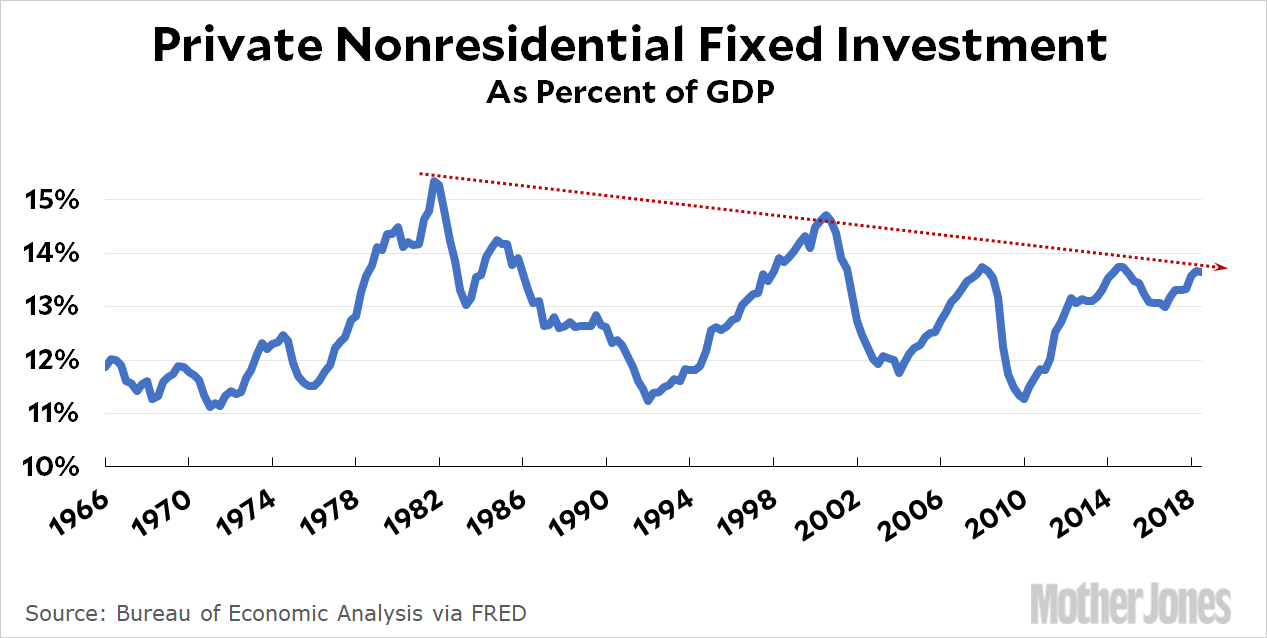
Is that a fair summary? Maybe. Here’s a look at one of the most common ways of measuring corporate investment:
This represents investment by corporations in fixed capital like factories and buildings. As you can see, it’s been on a steady decline since 1980. There are a few possible conclusions you can draw from this:
Yikes! Corporations are demonstrating a steadily dimmer view of our economic future.
Settle down. There was a big spike in the 70s and we’re now slowly returning to the postwar average. During the 60s, an investment rate of 12 percent indicated huge faith in the future, so why should we feel so dismal about a 14 percent rate today?
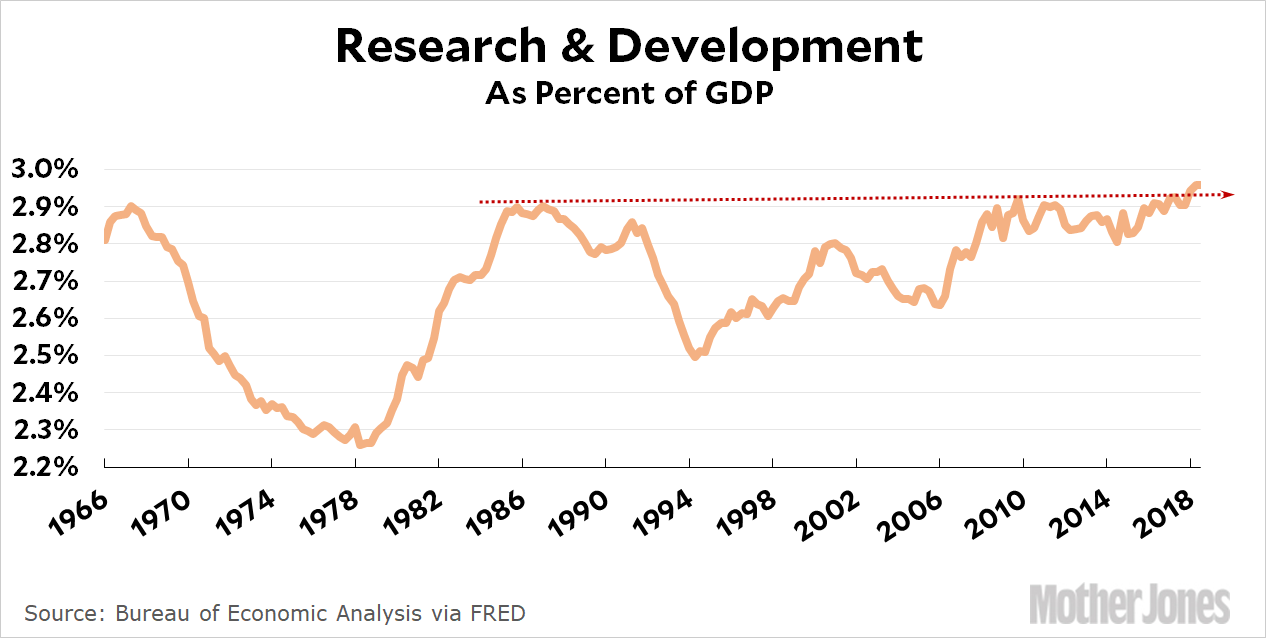
Look elsewhere. Old school fixed capital is not really a good measure of investment these days. Instead, we’re investing more in human capital. These humans all need fixed capital to do their jobs (computers, software, etc.), but not as much as a widget factory producing tangible goods. The problem with this theory is that it should ultimately show up as greater spending on R&D, and it hasn’t:
I have no firm opinions to offer, but my tentative opinion has long been Door #1: corporations are investing less because they don’t see lots of good growth opportunities. Banning stock buybacks won’t change this. It’s like pushing on a string. Instead, we need to figure out what we can do to make future demand look brighter even as our society ages.
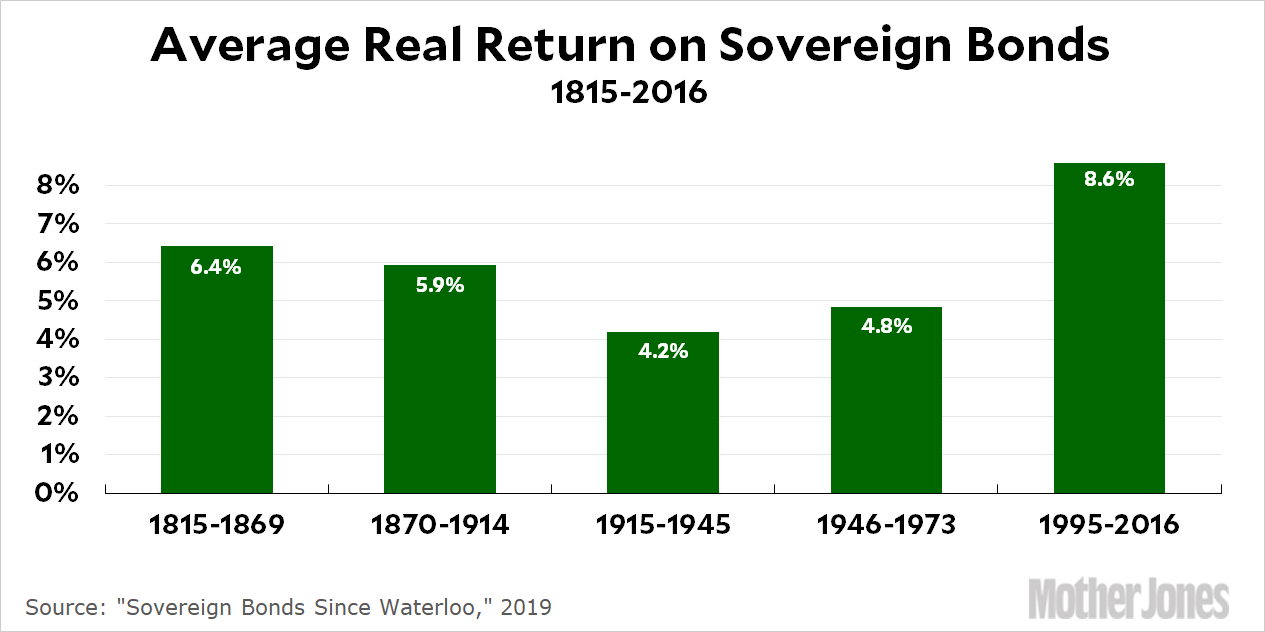
Tyler Cowen points to a new paper from a trio of researchers who investigated the returns from sovereign bonds over the past two centuries. It turns out they’re a pretty good investment:
Real ex-post returns averaged 7% annually across two centuries, including default episodes, major wars, and global crises. This represents an excess return of around 4% above US or UK government bonds, which is comparable to stocks and outperforms corporate bonds. The observed returns are hard to reconcile with canonical theoretical models and with the degree of credit risk in this market, as measured by historical default and recovery rates.
A 7 percent average over 200 years is pretty good, but that got me curious. If this average was because of high 19th century returns, that would be ho-hum news. But if it’s because of high recent returns, that’s more interesting. And that’s what it turns out to be:
So there you have it. Past performance is no guarantee of future results etc., but it sure looks like a diversified portfolio of sovereign bonds is a pretty good investment these days. Even with the occasional default and haircut, the real return exceeds 8 percent over the past two decades.
It’s unclear why the premium over US bonds should be so big, but that’s just another mystery for the equity premium folks, I suppose.
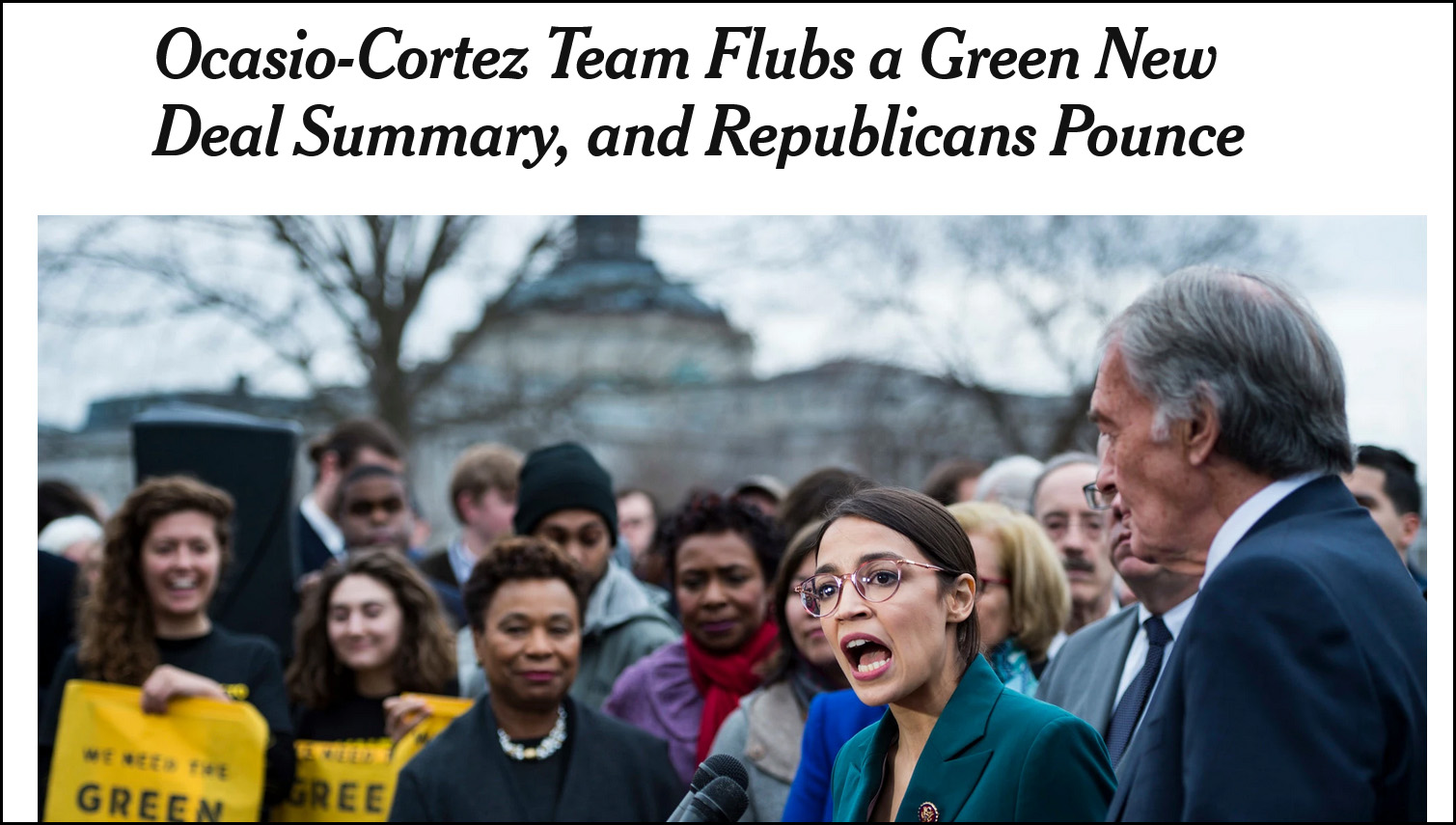
Apparently I am not aware of all internet traditions. Yesterday the New York Timesran this headline:
My Twitter feed was suddenly full of mockery. Surely even the New York Times understood that “Republicans pounce” is the dumbest kind of chiche? Tweet after tweet took them to task, and each one made me more curious. I’ve never heard of this whole “Republicans pounce” thing. What was it all about?
So I Googled around, hoping to find a nice explainer, and landed on a 2015 piece by Noah Rothman in Commentary. It started with a complaint about the lack of “shocked media coverage” when the Planned Parenthood undercover video came out, and then broadened its lens to the way the media did cover the video:
The press was searching for a particular angle: How to frame this story as a peculiar fixation of conservatives. The Hill led the way: “Republicans seize on Planned Parenthood video,” the headline read. The critical information, the pitiless discussion of human dismemberment and the value of their precious organs for traffickers, was apparently not as fascinating to The Hill as was the reaction from conservatives to Nucatola’s bloodless candor.
From there Rothman broadened his criticism even further:
Political reporters are curiously enthralled by how frequently “Republicans pounce” on stories that could imperil Democratic electoral prospects. “Gasoline prices are on the rise, and Republicans are licking their chops,” read the lead in a 2012 Politico report on the Republicans who “pounce” on skyrocketing prices at the pump….Another variation of the familiar theme holds that Republicans “seize” on news that puts the opposition party in an uncomfortable position….“Republicans seize on health law’s growing problems to slam Democrats,” the Associated Press revealed in 2014, much to the presumed glee of the majority of the public that disapproves of the law and its myriad disastrous effects on the insurance market. When President Obama failed to produce a budget in February 2014 (his previous two budgets having received precisely zero votes in the Democrat-controlled Senate), Republicans seized again.
So that’s that. Apparently Republicans believe that the mainstream press ignores stories that put Democrats in a bad light, instead waiting until there’s a Republican response. Then they can frame the stories as mere political feuding instead of focusing on Democratic perfidy.
And Republicans still believe this even after the 2016 campaign, which is sort of remarkable. Nonetheless, it prompts a question: does the press use the “Republicans pounce” framing more often than “Democrats pounce”? Just for starters, I tried doing a Google search of the two phrases to see how many hits they returned, but every time I did it the numbers changed. And anyway, an awful lot of the hits on the Republican side were just posts from conservatives complaining about some example of the “Republicans pounce” trope.¹
Of course, this wouldn’t have told us much anyway. What we really need to know is whether Republicans suffer more than Democrats from a general framing that focuses on the opposition response instead of the initial miscue. Apparently Republicans have long been convinced that they do, but I have no idea how you could test this. There are so many ways this framing can be worded that I don’t know what you could search for, or what baseline you’d compare it to. Anyone have any ideas?
¹Note that this is a proper use of “trope,” since pounce is a figure of speech.
The framework would provide $1.375 billion for barriers along the border, including 55 miles of new fencing, with certain restrictions on the location, according to a congressional official familiar with the agreement….Democrats backed down from their demand on tight limits on detention beds that Immigrations and Customs Enforcement could use to detain undocumented immigrants, pulling away from a push that that led to a breakdown in talks over the weekend.
Huh. An earlier version of this story provided hard numbers: detention bed funding would go down from 49,000 beds to 40,000 beds, but there would be no other subsidiary caps. That’s now missing from the story, so maybe those exact numbers turned out to be wrong.
Anyway, now it’s up to President Trump. If his word is good, he’ll support what the committee has produced. But as usual, that’s a crap shoot. Stay tuned.
More rain here in Southern California! And for the past couple of weeks I’ve been trying to capture a good shot of a raindrop splashing on the fence outside my window. This is harder than it sounds. First off, it turns out that even 1/1000th of a second is barely enough to freeze a splash. But a higher shutter speed, combined with a high f/stop to get some depth of field and a reasonably low ISO to keep the noise under control, only works on a bright, sunny day. But if it’s raining, then by definition it’s sort of a dim, overcast day.
Plus there’s the timing. You have to catch the raindrop at exactly the right instant, and there’s no talent or practice that will improve your timing. It’s just luck. Plus you need a good hard rain so you have nice fat raindrops.
Anyway, I put my camera on a tripod and kept trying whenever the rain got heavy. I probably took a thousand pictures or so—which sounds like a lot, but probably only took a total of 15 minutes of my time. Nonetheless, I never quite got a really great splash.
Until yesterday. It was late in the day, and a natural exposure was hopeless. So I popped up the flash and used that for fill at 1/1000th of a second. I took fewer than a dozen pictures, but by enormous good luck one of them turned out to be not only a great, sharp splash, but a double splash. Here it is. I’m putting it up right away because once it’s up, I’m not going to post another one, and that means I can pack up the tripod and end my raindrop obsession. With this photo, I think it’s over.
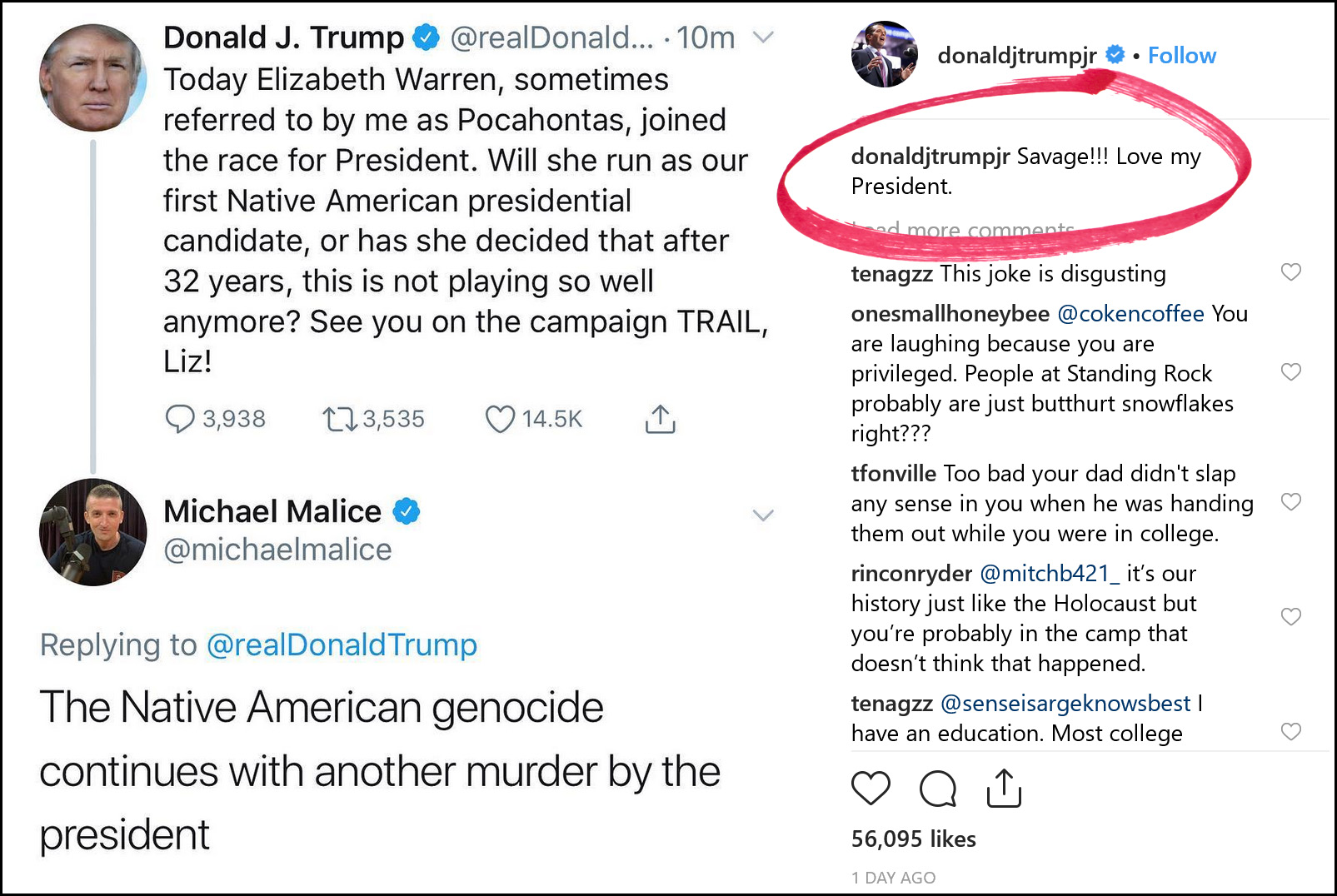
Somebody help me out. In case you missed it over the weekend, President Trump tweeted this on Saturday:
Today Elizabeth Warren, sometimes referred to by me as Pocahontas, joined the race for President. Will she run as our first Native American presidential candidate, or has she decided that after 32 years, this is not playing so well anymore? See you on the campaign TRAIL, Liz!
Trump’s eldest son certainly understood his father’s point:
Am I missing something? This is about 100x worse than anything Ilhan Omar tweeted, but it seems to have barely merited any reaction at all. Trump’s reference here is crystal clear, isn’t it? It’s gonna be a Trail of Tears, Liz! How is it that this casual reference to native genocide has slipped under the radar? Do we just shrug no matter what Trump says now?
Jamelle Bouie has the full story here. But how about the House Democratic leadership? Do we think they can rouse themselves to issue a statement?
Let’s talk words for a bit. The reason this popped up today is because of Ilhan Omar’s tweets about AIPAC. Rep. Eliot Engel, chair of the House Foreign Affairs Committee, offered a typical response: “It is shocking to hear a member of Congress invoke the anti-Semitic trope of ‘Jewish money.’ ” The word trope, in my experience, mostly seems to be used the way Engel uses it here: when you need something a little fuzzy that doesn’t quite say what you’re really thinking. In this case, for example, what Engel really means is slur or conspiracy theory or something of the sort. But that’s a little harsh for a fellow Democrat, so trope it is.
In this case, though, it’s especially unsuitable. Here’s the dictionary definition:
trope [trohp] | noun any literary or rhetorical device, as metaphor, metonymy, synecdoche, and irony, that consists in the use of words in other than their literal sense.
In response to a tweet about US politicians defending Israel, Omar tweeted “It’s all about the Benjamins baby ” and then made clear just whose money she was talking about: “AIPAC!” That’s as literal as it gets. What’s more, the historical use of this innuendo revolves around secret Jewish money and is the farthest thing from a metaphor you could imagine. On the contrary, it’s a longstanding and quite literal belief that Jews control vast sums of money and use it to bribe and control politicians all over the world.
So I’d recommend staying away from lazy uses of trope unless it’s truly what you mean. Like this lazy bastard, for example.
Can you pitch in a few bucks to help fund Mother Jones' investigative journalism? We're a nonprofit (so it's tax-deductible), and reader support makes up about two-thirds of our budget.
We noticed you have an ad blocker on. Can you pitch in a few bucks to help fund Mother Jones' investigative journalism?




 ” and then made clear just whose money she was talking about: “AIPAC!” That’s as literal as it gets. What’s more, the historical use of this innuendo revolves around secret Jewish money and is the farthest thing from a metaphor you could imagine. On the contrary, it’s a longstanding and quite literal belief that Jews control vast sums of money and use it to bribe and control politicians all over the world.