• Now There’s a Grand Jury Investigating the Trump-Russia Connection

    The Trump-Russia investigation is entering a new phase. The Wall Street Journal has the story:

    Special Counsel Robert Mueller has impaneled a grand jury in Washington to investigate Russia’s interference in the 2016 elections, a sign that his inquiry is growing in intensity and entering a new phase, according to people familiar with the matter.

    ….Grand juries are powerful investigative tools that allow prosecutors to subpoena documents, put witnesses under oath and seek indictments, if there is evidence of a crime….“This is yet a further sign that there is a long-term, large-scale series of prosecutions being contemplated and being pursued by the special counsel,” said Stephen I. Vladeck, a law professor at the University of Texas.

    More specifically, this strongly suggests that Mueller is contemplating criminal charges. You don’t need a grand jury for anything else.

  • Senate Republicans Are Tired of Donald Trump

    There’s a move afoot in the Senate to prevent President Trump from firing Robert Mueller, the special prosecutor investigating his campaign connections with Russia:

    On Thursday, Sens. Thom Tillis (R-NC) and Chris Coons (D-DE), two members of the Senate Judiciary Committee, announced they would introduce a bill to allow Justice Department special counsels, like Mueller, to challenge their removals in court….The decision is a preemptive attempt to curtail the president, who has publicly criticized Mueller and derided the Russia investigation.

    In the past week, the Senate has (a) passed a Russia sanctions bill Trump opposes, (b) snubbed Trump’s demand that they keep trying to pass health care reform, (c) spurned Trump’s position on the debt ceiling, and (d) introduced a bill to protect Mueller from possible Trump reprisals.

    Do Republicans in the Senate care at all about what Trump says anymore? It doesn’t much seem like it.

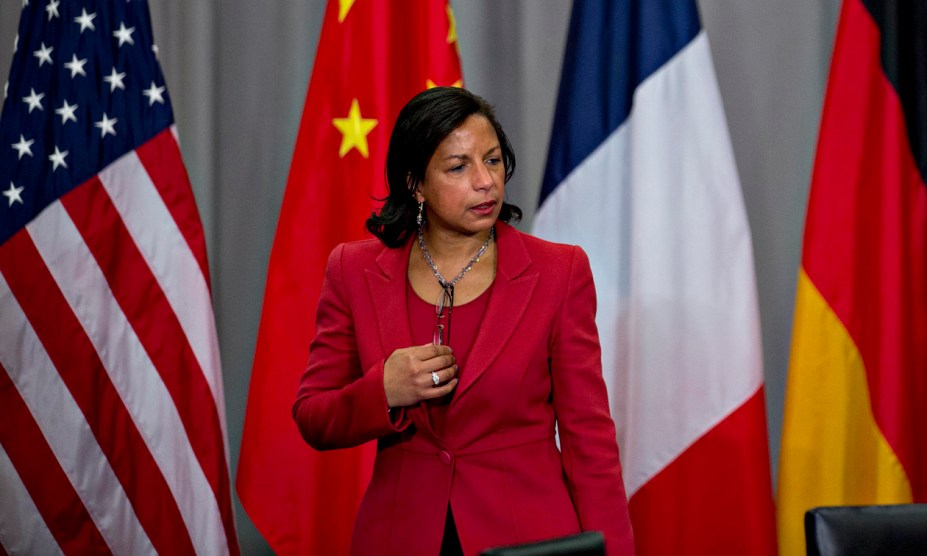
  • McMaster: Susan Rice Did Nothing Wrong

    Andrew Harrer/DPA via ZUMA

    Natasha Bertrand points us to the 13th paragraph of Eli Lake’s piece at Bloomberg today about Russia sanctions. The latest round of sanctions were, he says, driven largely by leaks. And while he appreciates the end result in this case, he’s not happy about leaks in general. In particular, he’s not happy about the practice of “unmasking,” in which White House officials ask for redacted names to be revealed so they can better understand what intelligence intercepts are about—and then maybe leak some dirt about their political opponents.

    Susan Rice was the most recent target of nonsense allegations that she had unmasked the names of Trump aides and then leaked them to the press. But Lake’s sources tell him this:

    Not everyone agrees that what Rice did was improper. She was after all receiving much new intelligence about Russia’s role in the election, some of which suggested coordination with Trump associates. National Security Adviser H.R. McMaster has concluded that Rice did nothing wrong, according to two U.S. intelligence officials who spoke to me on condition of anonymity. That might explain why Trump has yet to declassify more information on the prior administration’s unmasking requests.

    Yes, that would explain it, all right. Rice did nothing wrong; McMaster (and therefore Trump) know she did nothing wrong; and declassifying further information would simply make that clear. It’s much more fun to let things dangle. That allows the conspiracy-theory crowd to continue believing that Rice is a partisan hack who lied about Benghazi and tried to smear Trump’s campaign team.

  • Mary Beard Gets the Tweetstorm Treatment

    Last year I read SPQR, Mary Beard’s readable and not-too-long history of the Roman empire up through AD 200. It was good! You should read it if you have any interest in the Roman empire.

    Recently, however, Beard found herself under attack for confirming that black-skinned people were part of the empire and some of them migrated to Britain. Since Rome controlled large swaths of Africa, this seems unsurprising, but a lot of people were unhappy about it and did what unhappy people do these days. They took to Twitter:

    It was then that the attacks came, and have gone on for days since. True they haven’t yet got to death threats (as they have with my US colleague Sarah Bond, who had the nerve to talk about classical statues not originally being white) but a torrent of aggressive insults, on everything from my historical competence and elitist ivory tower viewpoint to my age, shape and gender (batty old broad, obese, etc etc )….And it got worse after Nicholas Nassim Taleb weighed in, not on my side. He proved a rallying cry for the insults.

    ….So why not just block them, as many kind voices suggested? Well I see the point, but have always felt ambivalent about blocking. It doesn’t stop them tweeting, it only means that you don’t see it, and it feels to me like leaving the bullies in charge of the playground. And it’s rather too much like what women have been advised to do for centuries. Don’t answer back, and just turn away. Besides, although one will probably make no difference to the hardcore, one might change the minds of some of the penumbra, as well as showing everyone that it is possible to stand your ground.

    This is the eternal question of Twitter. It’s a cesspool, but is it a cesspool we should ignore or a cesspool we need to face up to? Like Beard, I have never blocked anyone (yet), partly because I find the idiot tweetstorms kind of amusing and partly because I like to know when the mob has been aroused and what it is that aroused them. It’s better to know than to not know.

    The bigger problem, I think, is that not everyone is as thick-skinned as Beard or as bemused as me. Plus, the stuff I get is, I imagine, tinker toy nonsense compared to what women, blacks, gays, immigrants, and so forth get. Nobody has threatened my life, or told me I should be raped, or posted my address, or doxxed me to the local SWAT team.

    My dedication to free speech is such that I don’t really want to turn off this deluge, no matter how dumb and degrading it is. That’s easy for me to say, though, since it doesn’t have much effect on my life. Still, it does have some, and for others it has even more.

    At the moment, the only suggestion I have is that the rest of us should pay less attention to twitterstorms. Generally speaking, they represent only a minuscule fraction of Twitter opinion, and they only exist because tweets require virtually no effort. It takes ten seconds to add your insult to the pile and then you’re done. Until the number of tweets gets to, say, 10,000 or so—roughly 24 hours of collective effort —it should just be treated like playground mud throwing, not worth reporting on or writing about. We may not be able to stop the flamers, but neither is there any reason we have to give them the attention and influence they crave.


  • Donald Trump Is Tired of All Our Stupid Deals

    The leakiest administration ever continues to leak. Today, the Washington Post published transcripts of those calls with Mexico’s president and Australia’s prime minister that got a lot of attention a few months ago. Here’s just the Trump side of the end of his conversation with Malcolm Turnbull, prime minister of Australia, about the American agreement to vet and accept 1,250 economic refugees:

    Look, I spoke to Putin, Merkel, Abe of Japan, to France today, and this was my most unpleasant call because I will be honest with you. I hate taking these people. I guarantee you they are bad.

    ….I do not know how you got them to sign a deal like this, but that is how they lost the election. They said I had no way to 270 and I got 306. That is why they lost the election, because of stupid deals like this.

    ….This shows me to be a dope. I am not like this but, if I have to do it, I will do it but I do not like this at all. I will be honest with you. Not even a little bit. I think it is ridiculous and Obama should have never signed it. The only reason I will take them is because I have to honor a deal signed by my predecessor and it was a rotten deal. I say that it was a stupid deal like all the other deals that this country signed.

    ….We are like a dumping ground for the rest of the world. I have been here for a period of time, I just want this to stop. I look so foolish doing this. It [sic] know it is good for you but it is bad for me. It is horrible for me. This is what I am trying to stop. I do not want to have more San Bernardino’s or World Trade Centers. I could name 30 others, but I do not have enough time.

    ….I do not know what he got out of it. We never get anything out of it – START Treaty, the Iran deal. I do not know where they find these people to make these stupid deals. I am going to get killed on this thing.

    Throughout the entire conversation, Turnbull sounds like a kindergarten teacher trying to calm a screaming five-year-old. He keeps patiently explaining what the deal is actually about, and Trump just refuses to listen, instead erupting time and again about how this makes him look like a chump. I can only imagine what Turnbull said to whoever was nearby when he finally hung up.

    On the Mexican side of things, it turns out that Trump never uttered the phrase “bad hombres.” He called them “tough hombres.” The FAKE NEWS got it wrong as usual.

  • Afghanistan Plan Killed Because ‘21’ Closed For Remodeling 30 Years Ago. This Is Not a Joke.

    21 Club

    In today’s edition of “Stupid Things Donald Trump Says,” the topic is Afghanistan. The problem is that the president wants to win, but his generals are a bunch of losers. NBC News has the leak:

    During the July 19 meeting, Trump repeatedly suggested that Defense Secretary James Mattis and Chairman of the Joint Chiefs of Staff Gen. Joseph Dunford replace Gen. John Nicholson, the commander of U.S. forces in Afghanistan, because he is not winning the war….Trump complained about NATO allies, inquired about the United States getting a piece of Afghan’s mineral wealth and repeatedly said the top U.S. general there should be fired.

    The president’s advisers went into the mid-July meeting hoping he would sign off on an Afghanistan strategy after months of delays, officials said….Trump, however, appeared to have been significantly influenced by a meeting he’d recently had with a group of veterans of the Afghanistan war, and he was unhappy with the options presented to him.

    Yes, you read that right. Trump chatted with a few soldiers who were unhappy about this and that—after all, it’s the God-given right of every buck private in the Army to know exactly how the brass are botching things up—and therefore decided to reject his generals’ plan. And before you all start yammering about how Trump said last year that he already had a plan ready to go, that was for Iraq. He never said he had a plan for Afghanistan. OK?

    And now, for some more comic relief, here’s an inside look at how Trump comes up with these bright ideas:

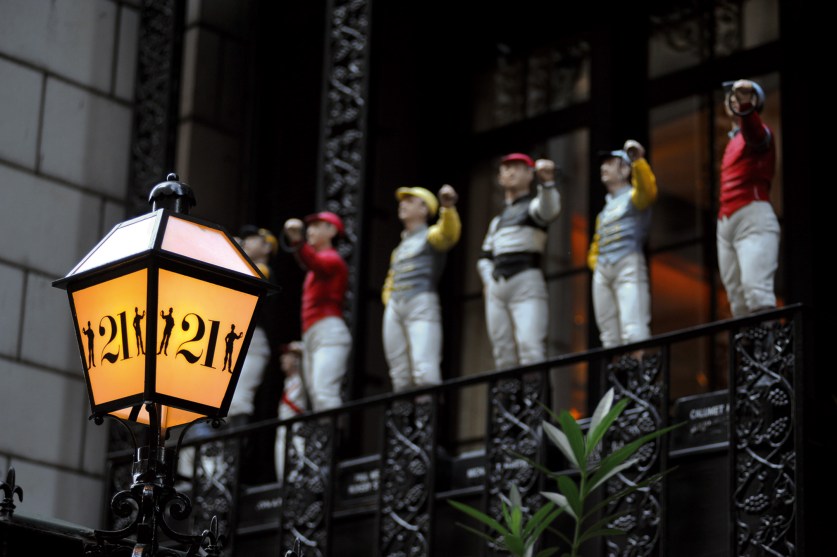
    To underscore his view that the veterans who fought in the war may be better positioned to advise him on an Afghanistan strategy, Trump compared the policy review process to the renovation of a famed New York restaurant in the 1980s, officials said. Trump told his advisers that the restaurant, Manhattan’s elite ‘21’ Club, had shut its doors for a year and hired an expensive consultant to craft a plan for a renovation. After a year, Trump said, the consultant’s only suggestion was that the restaurant needed a bigger kitchen.

    Officials said Trump kept stressing the idea that lousy advice cost the owner a year of lost business and that talking to the restaurant’s waiters instead might have yielded a better result.

    The ‘21’ Club, which has been one of Trump’s favorite New York spots, closed for two months in 1987 while it underwent a full renovation and reopened to great fanfare.

    Consensus reality is that the run-down 21 Club closed for two months after it changed ownership,¹ and then reopened after a big renovation. Trump reality is that his favorite haunt was closed forever and they didn’t even fix whatever petty gripe he probably had at the time. Because of this, he rejected the new Afghanistan plan. That’s quite the butterfly effect, isn’t it?

    I should make clear that I have no problem with presidents rejecting the advice of their military advisors. I just prefer it when they have actual, non-kindergarten reasons for doing so.

    ¹Three months, actually, but who’s counting?

  • No, There’s No “Trump Effect” In the Stock Market

    Donald Trump whines constantly that newspapers refuse to report how great the stock market is doing on his watch. Today, the Washington Post finally caved in, reporting on its front page about the Dow Jones’ “stunning rise to 22,000.” And Trump deserves the credit:

    The markets’ most recent run-up does indeed have something to do with Trump’s win in November, several analysts said. Back then, some on Wall Street cheered the ascent of a businessman into the White House and his promises to cut taxes, invest in infrastructure and increase military spending. The Dow turned sharply up right after the election and has risen 23 percent since then.

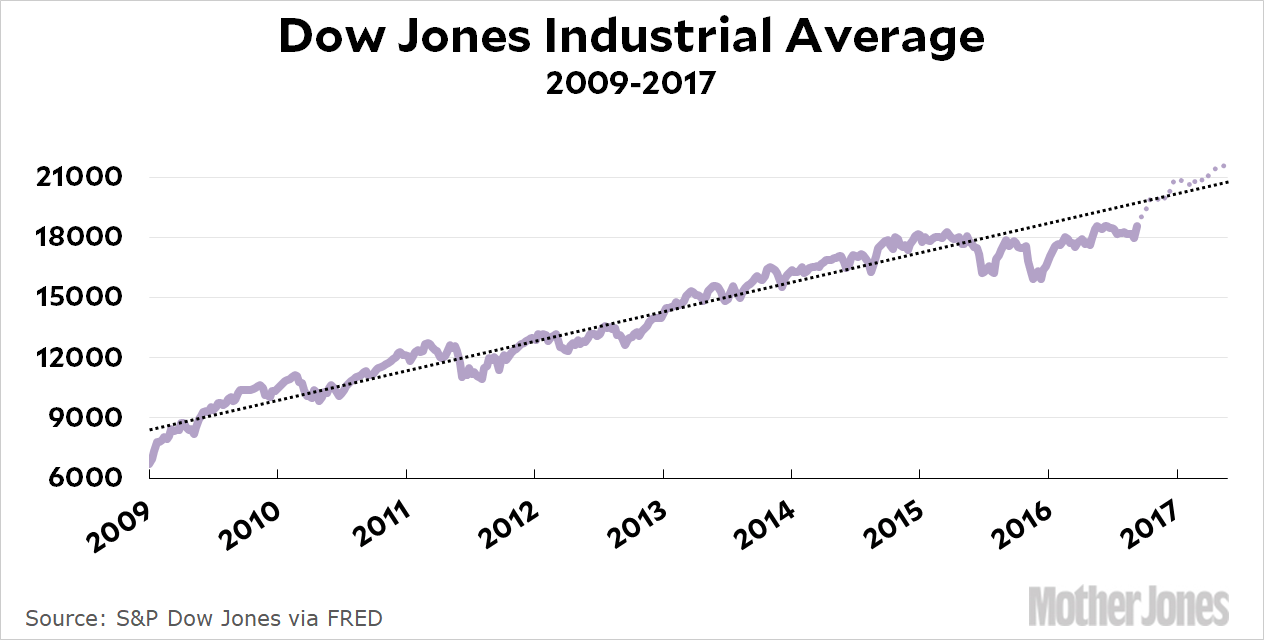
    I wouldn’t bother with this if not for the Trump nonsense, but once again, here’s an up-to-date chart of the Dow’s entire eight-year bull run:

    Yes, there was a brief rally right after Trump’s election. But it was just the Dow catching up to its trendline, and it’s been pretty close to that trendline ever since. Unless the Dow really takes off for the rest of the year, there’s just no evidence of any kind of serious Trump effect.

    Which is actually a little surprising. By all the evidence, Trump and the Republican Congress plan to be very, very friendly to big corporations. Their stock prices should be skyrocketing. But aside from the November bump, there’s not much going on.

  • Single Payer? Take a Look At How South Korea Did It.

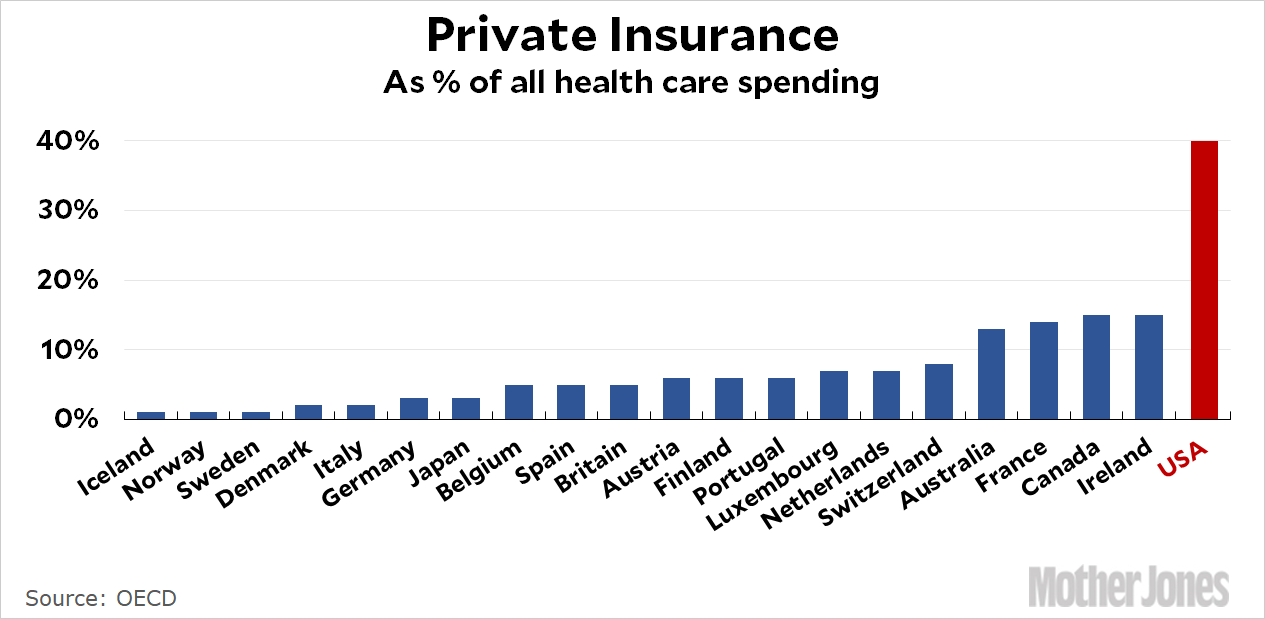
    Joshua Holland writes in The Nation that progressives need to get serious about universal health care. In a presidential campaign, it might be OK to vaguely suggest full-blown single-payer with no copays, implemented by 2018. In real life, every country relies at least partly in private insurance. Every country also requires out-of-pocket expenses: no country literally pays 100 percent of all health care bills. Nor were any of these universal systems implemented instantly, even 50 years ago. Today, health care in America is a $3 trillion business. It’s not even remotely feasible to blow up the biggest industry in the country in only a year or two.

    Holland is right about all this. If the reasons aren’t obvious to you, click the link. The takeaway should be pretty obvious too: the only feasible way to get to single-payer is to do it over a period of a decade or two. Holland mentions this briefly:

    An obvious alternative to moving everyone into Medicare is to simply open up the program and allow individuals and employers to buy into it. We could then subsidize the premiums on a sliding scale. But recent experience with the ACA suggests that this kind of voluntary buy-in won’t cover everyone, or spread out the risk over the entire population

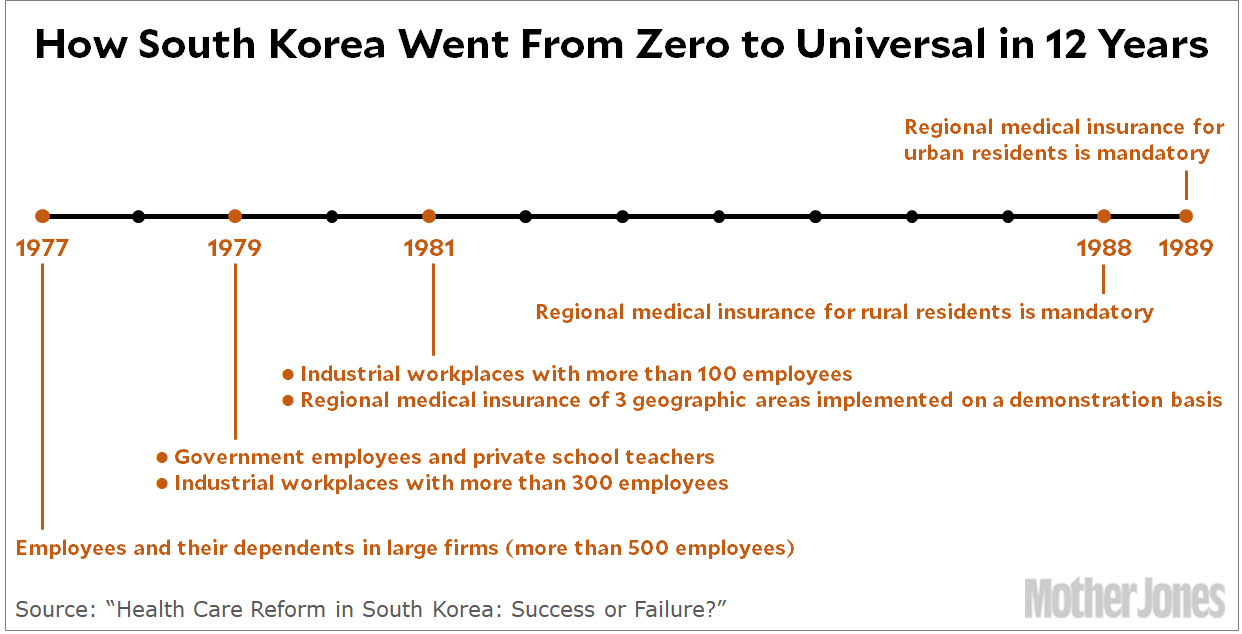
    He then goes on to describe a “Medicare for More” plan from Jacob Hacker. But a better idea might be to look at how other countries have done it. South Korea, for example, began moving to universal coverage in 1977 and finished in 1989. Jong-Chan Lee explains how it happened:

    How did Korea succeed in providing health insurance to the whole nation within 12 years? Before 1977, Korea had only voluntary health insurance. In 1977, President Park Chung-Hee and the legislature passed a law that mandated medical insurance for employees and their dependents in large firms with more than 500 employees.

    Gradually health insurance coverage was expanded to different groups in the society: in 1979 to government employees, private school teachers, and industrial workplaces with more than 300 employees, and in 1981 to industrial workplaces with more than 100 employees. In the late 1980s, health insurance expansion became regionally based, first to rural residents in 1988 and then to urban residents in 1989. Each of these expansions was mandated by government.

    This is roughly the model we need to follow. The first step might be Medicare as an option on the Obamacare exchanges. Then Medicare for everyone up to age 26. Then Medicare for all federal government employees. Then Medicare as an option for all state employees and retirees at a set price. Then Medicare as an option for small employers. Then large employers. Within a decade or two, private insurance would be, to borrow a phrase, so small you could drown it in a bathtub. At that point, the funding model would change—maybe gradually, maybe quickly—so that Medicare eventually becomes free for everyone, paid for fully by taxes.

    Alongside all of this would be gradual changes to Medicare itself. Maybe we’d keep Medicare Advantage, maybe not. We should add long-term nursing care. Negotiated drug prices. Better preventive services. Prenatal and pregnancy services. Etc. Medicare’s 80 percent actuarial rate (i.e., it pays about 80 percent of your medical bills) is in the ballpark of what other countries offer, but because it’s currently aimed at the elderly it would need some changes to make it work well for everyone else.

    I’m not offering this as a proposal, just as an illustration. There are probably better ways to phase in universal health care. But it’s at least feasible to do it this way, and it would be even more feasible (and faster) if we could actually legislate a timeline, rather than just adding bits and pieces whenever we can. That’s pie in the sky right now, but who knows what the future holds? Republicans might eventually get tired of hitting their heads against the health care wall.

  • Lunchtime Photo

    Umbrellas.