• New Report Says China Shock Badly Hurt Wages of Low-Income High School Grads

    Tyler Cowen points us to yet another paper examining the impact of the China shock during the 2000s. First, the authors decompose the effect of the China trade into both direct employment and employment from supply chain channels. It looks something like this when you combine their two charts into one:
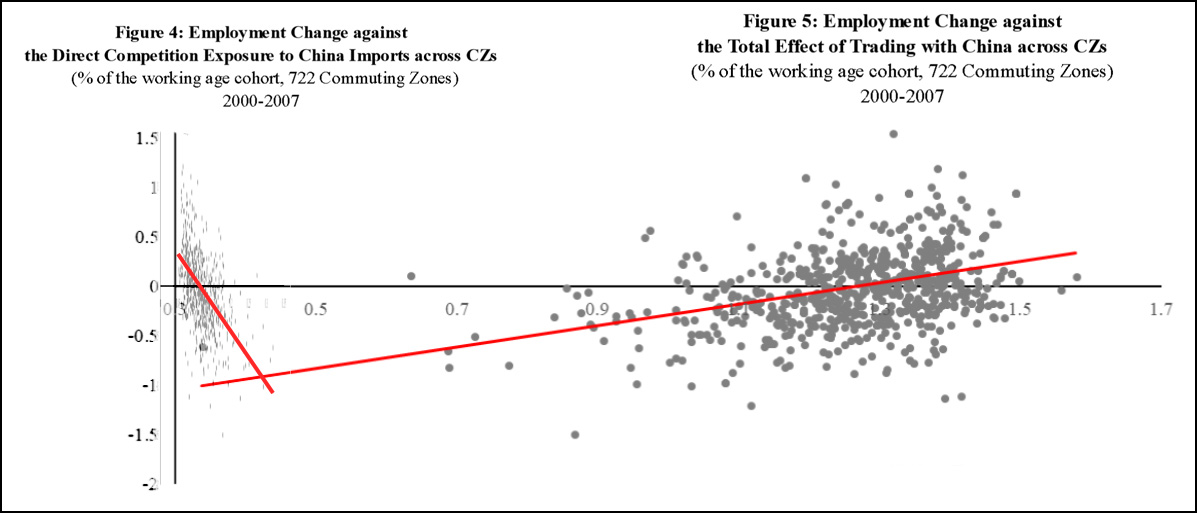
    If you look solely at the effects of direct competition (on the left), it looks like employment goes down when a region is exposed to competition from China. But when you add in supply-chain effects (on the right), total employment in areas exposed to the China trade goes up. However, the effect on wages is not so happy a story:
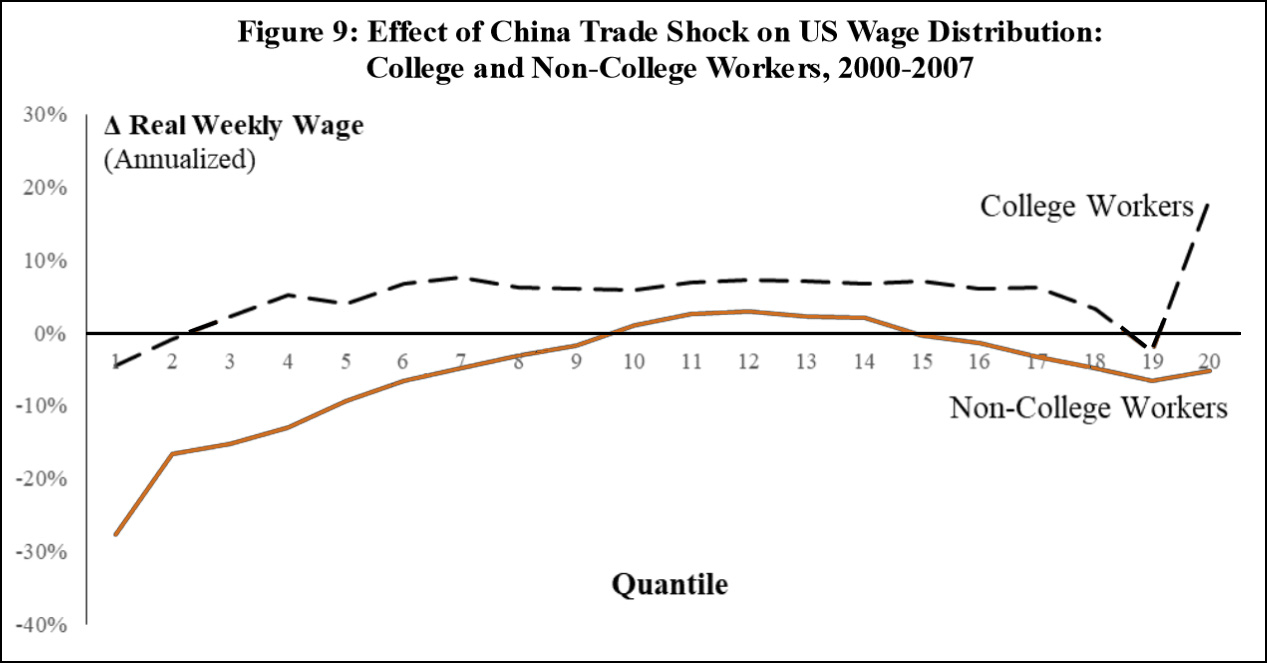
    College-educated workers almost uniformly benefited from living in places that were exposed to the China trade. However, non-college workers were just the opposite. With the exception of a few workers with incomes between the 50th and 75th percentile (i.e., individual incomes around $40-50,000), everyone lacking a college degreee suffered an income loss. The very poorest third suffered a huge income loss, losing between 10 percent and 30 percent of their initial incomes.

    As always with this kind of thing, it’s above my pay grade. It’s a serious study, but I can’t judge whether it’s correct. If it is correct, however, the bottom line is that the China shock didn’t affect employment very much but did badly hurt the wages of low-income high-school grads.
  • Capitalism? Socialism? For Democrats, It’s Really Bernie vs Donald.

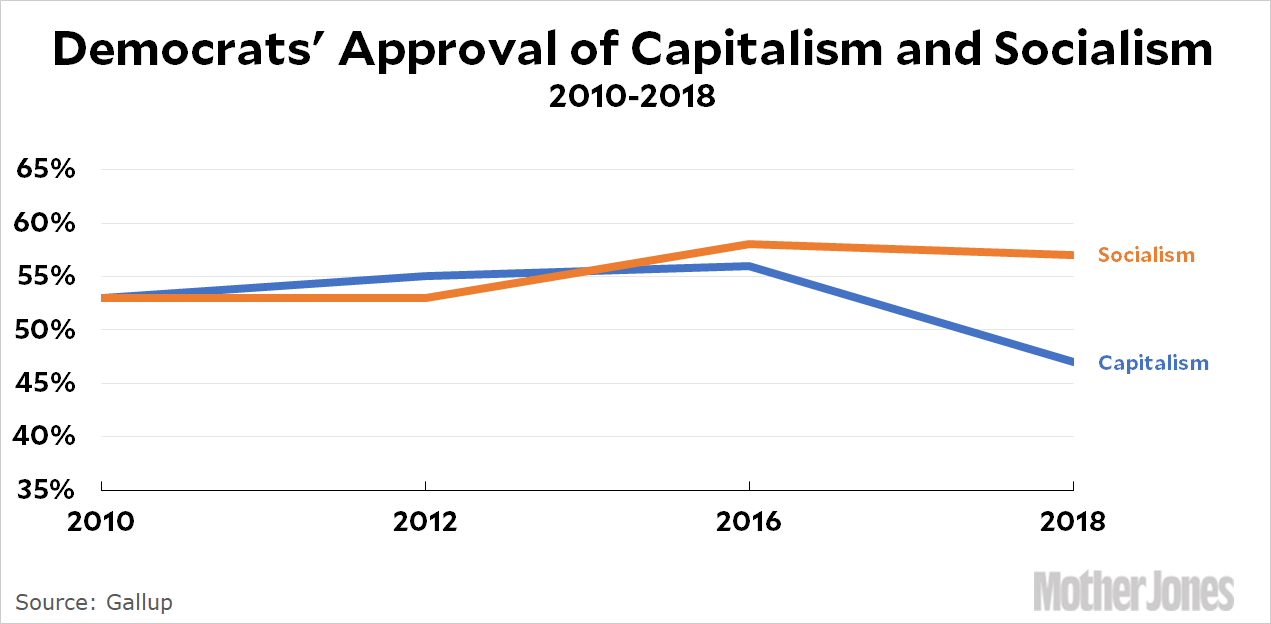
    Gallup has a new poll out showing that Democrats now feel more favorably toward socialism than capitalism. But a few folks have pointed out that this isn’t due to increased warmth toward socialism; rather, it’s due to a sudden distaste for Trump-era capitalism. This is true as far as it goes, but the full story is a little more complicated. Here it is:

    Approval of socialism took a sudden smallish jump in 2016. This was presumably the Bernie effect, which persisted but didn’t increase this year. But Bernie had zero effect on support for capitalism. The warmer attitude toward socialism was purely a personal thing.

    Likewise, this year’s drop in support for capitalism didn’t improve the outlook for socialism, Alexandria Ocasio-Sanchez notwithstanding. Once again, it appears to be more a gut reaction to what Republicans and Trump are doing with tax cuts and the economy generally.

    That’s my take, anyway. For Democrats, this isn’t the sharp ideological choice that it is for Republicans—who almost unanimously approve of capitalism and hate socialism. Basically, a fair number of Democrats like Bernie, whatever he calls himself, and hate the Republican version of the economy, whatever they call it. That’s really all these numbers mean.¹

    ¹So far.

  • Lunchtime Photo

    This picture is a tribute to my camera. I was outside with Marian and she yelled, “Hey, are those pelicans?” I whirled around, pointed the camera in the right general direction, and snapped off a burst of photos. The camera’s autofocus caught this one perfectly.

    UPDATE: Marian may have said, “Hey, are those pelicans,” but according to my commenters it’s a great blue heron. Visiting from Dana Point, maybe.

    March 5, 2018 — Irvine, California
  • Trump’s First Presidential Apology: Hiring a Black Woman

    Michael Reynolds/ZUMA

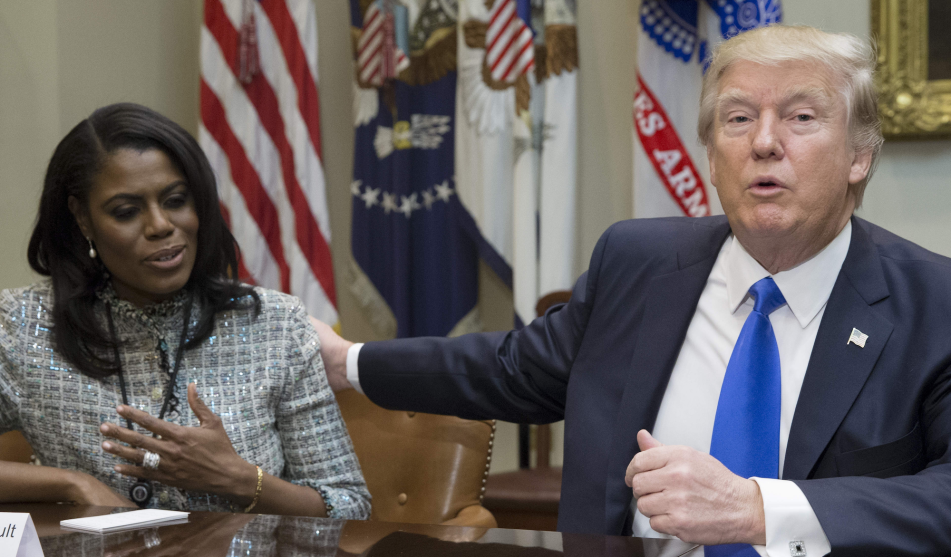
    I know I keep telling everyone to ignore Donald Trump’s tweets except as messages to his base, this morning’s tweet about Omarosa Manigault Newman is really unique:

    Wacky Omarosa, who got fired 3 times on the Apprentice, now got fired for the last time. She never made it, never will. She begged me for a job, tears in her eyes, I said Ok. People in the White House hated her. She was vicious, but not smart. I would rarely see her but heard….really bad things. Nasty to people & would constantly miss meetings & work. When Gen. Kelly came on board he told me she was a loser & nothing but problems. I told him to try working it out, if possible, because she only said GREAT things about me – until she got fired!

    While I know it’s “not presidential” to take on a lowlife like Omarosa, and while I would rather not be doing so, this is a modern day form of communication and I know the Fake News Media will be working overtime to make even Wacky Omarosa look legitimate as possible. Sorry!

    Two things here. First, there’s an outright acknowledgment that she was a terrible person and bad at her job, but Trump wanted to keep her on because she said great things about him.

    Second, he apologized for this. Screwing up the hiring of a black woman who turned out to be an incompetent sycophant is, for now, the only thing I can remember Donald Trump apologizing for since at least the start of his presidential run. Quite a coincidence, no?

  • What Do Our Budding Young Socialists Actually Want?

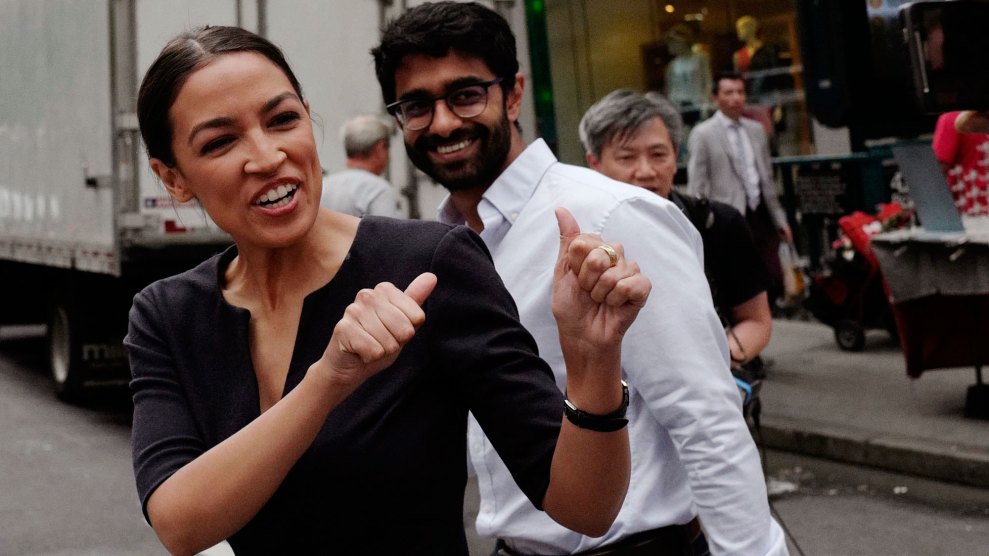
    Alexandria Ocasio-CortezMark Lennihan/AP

    Over the weekend the Washington Post ran a piece by Sheri Berman titled “Democratic socialists are conquering the left. But do they believe in democracy?”

    My first thought was: Sheri, how could you? Democratic socialists are conquering the left? Come on. Bernie Sanders has been calling himself a democratic socialist for decades with nothing much to show for it except a supporting role in putting Donald Trump in the White House. Then, a DSA candidate won a primary in the Bronx and another in Detroit, which means that both the House will have two DSA members—both of whom will caucus with the Democrats. This is not exactly a conquering horde.¹

    But then I read what Berman actually wrote:

    Democratic socialism’s strengths are its idealism and the activism generated by intense dissatisfaction with the status quo. Its proponents today are people like Ocasio-Cortez and New York state Senate candidate Julia Salazar….Democratic socialism’s weaknesses lie, as [Eduard] Bernstein charged more than a century ago, in the abstractness of its vision and its lack of pragmatism. The movement has never made clear what socialism actually means or how it will be achieved.

    ….If democratic socialism is to revitalize the Democratic Party, it should have answers to questions that have bedeviled it in the past. What does the DSA’s goal of socialism actually mean? If abolishing capitalism is its goal, as its adherents say, how are the growth, efficiency and innovation that are the prerequisites for redistribution to be achieved? And if reforms can’t create a better world (“Today’s democratic socialists don’t see positive policy reforms as something we’ll stack up until one day, voilà!, we have socialism,” as one democratic socialist wrote in Vox), then how is socialism to be achieved? Is democracy, even when flawed, a means or an end? Will democratic socialists prioritize democracy if the votes for a “socialist future” do not materialize?

    There’s much more, and it’s a genuinely interesting historical gloss. And Berman decidedly doesn’t suggest that DSA is “conquering” the left. Having some influence? Sure. But even that’s pretty limited.

    I’m also glad to hear that even Berman is confused about what modern-day DSAers really want or what they think “socialism” actually means. I thought it was just me. But if one of our foremost scholars of socialism isn’t sure, then perhaps the DSA candidates and the public intellectuals supporting them really do have some explaining to do?

    ¹I’ve corrected this to note that Bernie Sanders calls himself a democratic socialist but is not a DSA member. Also, Rashida Tlaib won her primary last week in Detroit. Since she’s a card-carrying DSA member and has no competition in the general election, the House will have two DSA members next year, not one.

  • As Usual, Donald Trump Just Can’t Bring Himself to Condemn White Nationalists

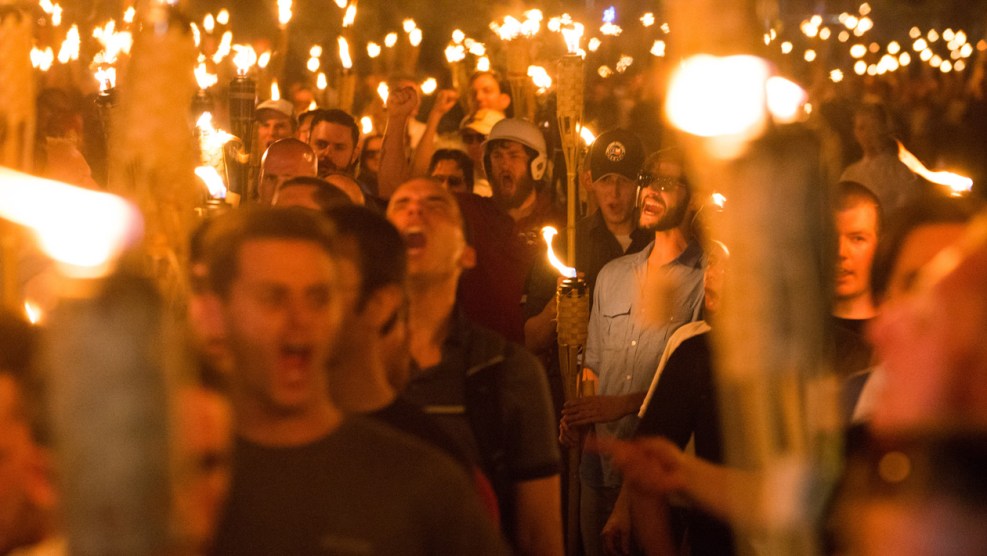
    Carlottesville last year.Zach D Roberts/NurPhoto via ZUMA

    On August 11, 2017, white supremacists invaded Charlottesville, Virginia, and held a torchlight rally dedicated to hatred of all people of color. The next day, things turned violent. More than 30 people were injured and one of the white supremacists drove a car into the crowd, killing Heather Heyer, one of the counter-protesters. President Trump lamented the “hatred, bigotry, and violence on many sides” and later insisted that there were “very fine people on both sides.

    Today, on the anniversary of the original rally, the same group of white supremacists is holding a rally in Washington DC right outside the White House. President Trump bothered only with a tweet, saying roughly the same thing he said last year: “I condemn all types of racism and acts of violence” and “Peace to ALL Americans!” As before, he made no particular distinction between the white supremacists and the counterprotesters.

    The reaction of nearly every Republican to Trump’s repeat performance was: nothing. A few made comments of their own, but almost none had even the mildest criticism of Trump.

    This comes after yet another a year of Trump’s casual—but always deniable—racism, aimed variously at black athletes, football players protesting police brutality, the usual attacks on undocumented immigrants, and so forth. Everybody knows what Trump is doing, and everyone seems to be OK with it.

    This is what truly sets the party of Trump apart from the GOP of the past. Sure, they’ve been chasing the white vote for a long time. But until now, they were basically a sister party of the Christian Democrats in Germany or the Tories in Great Britain. Today, they’re a lot closer to being a sister party to UKIP or the National Front in France. It’s revolting.

  • Whose Economy Will Trump Take Aim at Next?

    Depo Photos via ZUMA

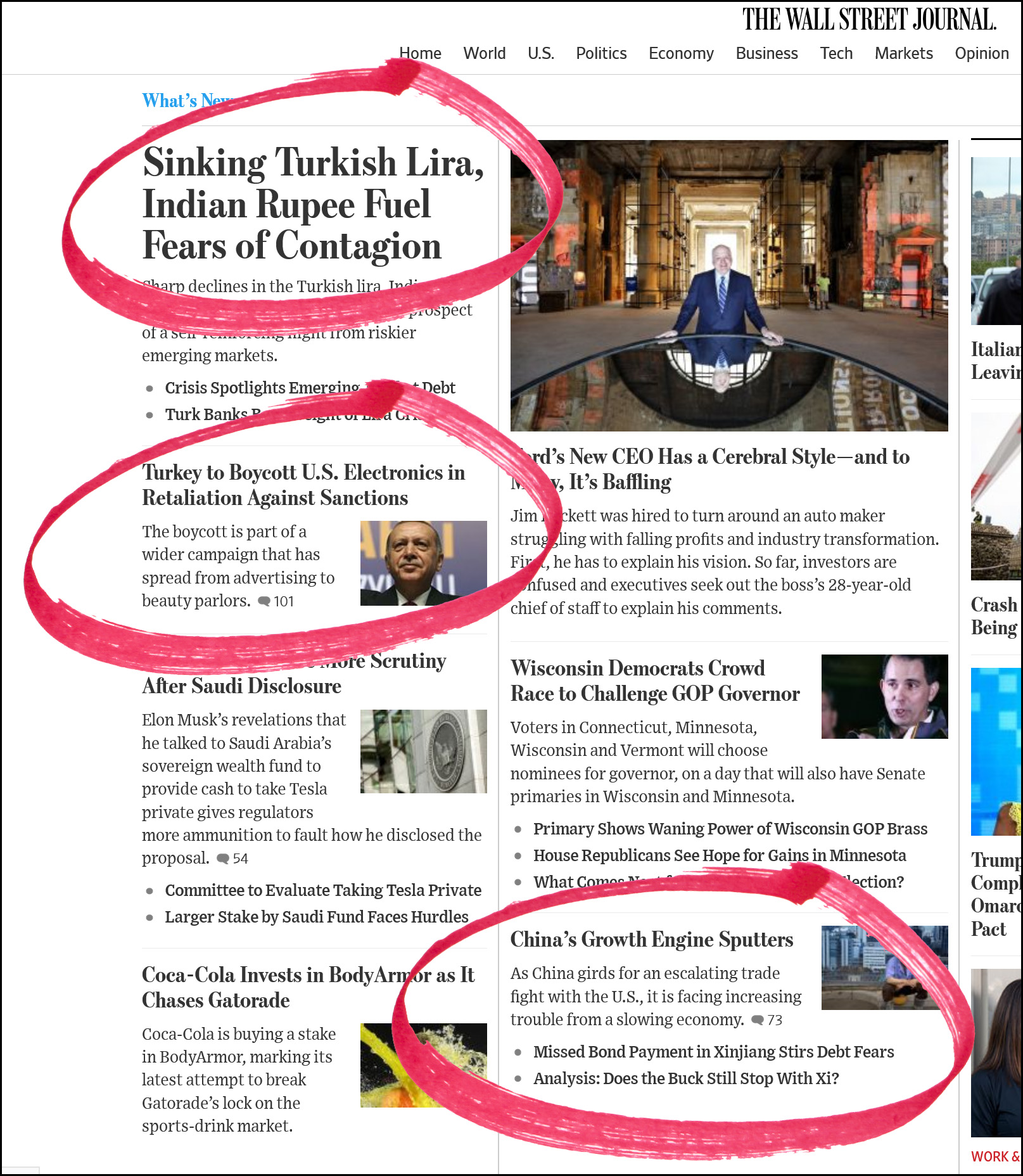
    Donald Trump appears to be on a mission to either destroy or damage the economies of China, Iran, Russia, and Turkey. I assume he’s thinking that this is all a zero-sum game, and if they do badly the United States will do great. This is, needless to say, not the case. The 1997 financial crisis started in Asia. The 1998 financial crisis started in Russia. The 1995 peso crisis started in Mexico and, luckily, stayed there because the United States intervened to help out. The 2008 crash, of course, started in the United States and then spread to Europe, China, and everywhere else. Even little Iceland played an unusual starring role.

    So what country will spark off the next big global financial crisis? It doesn’t necessarily have to be a big one. It just has to be in the wrong place at the wrong time. Turkey? Iran? Post-Brexit Britain? Russia? China? The Philippines? Greece? Who knows? It could be any of them.

    And what if the United States doesn’t intervene to help out, but instead stands on the sidelines with its president tweeting that they’re just getting what they deserve? That’s never happened before. But it would probably be bad, wouldn’t it?

  • Another Trump Rule Goes Up In Smoke

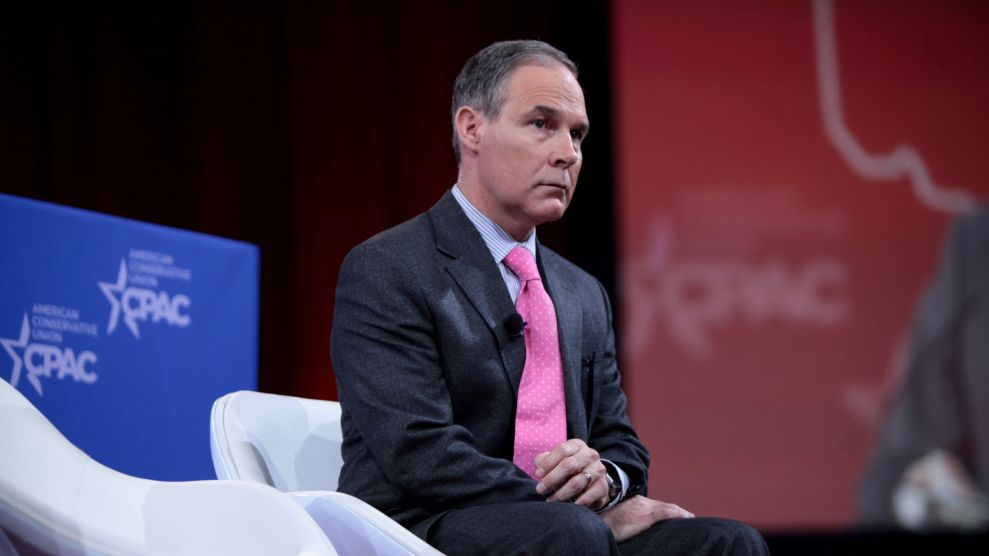
    Gage Skidmore/Flickr

    The Trump administration suffered yet another setback this week. Scott Pruitt, late of the EPA, tried to undo an Obama ban on a dangerous pesticide, but it didn’t work out. Here’s the timeline:

    March 2017: “The U.S. Environmental Protection Agency on Wednesday reversed an Obama administration recommendation to ban a pesticide linked to nervous system damage in children….‘By reversing the previous administration’s steps to ban one of the most widely used pesticides in the world, we are returning to using sound science in decision-making — rather than predetermined results,’ Pruitt said of the decision.”

    All it takes is the stroke of a pen! It just goes to show what an energetic administration can do when it comes to rolling back ridiculous regulations imposed by its far-left predecessor. But wait.

    August 2018: “A federal appeals court ordered the Trump administration Thursday to revoke approval for a widely used pesticide that studies show can harm the brains of children….The court said the EPA had violated the Federal Food, Drug, and Cosmetic Act and the Federal Insecticide, Fungicide, and Rodenticide Act. The laws require the EPA to ban a pesticide from use on food unless there is reasonable certainty that it will cause no harm, the court said. ‘The EPA has never made any such determination and, indeed, has itself long questioned the safety of permitting chlorpyrifos to be used within the allowed tolerances,’ Rakoff wrote.”

    Oh man. It turns out that Republicans can’t just reverse stuff they dislike with the stroke of a pen after all. There are rules about undertaking actual scientific studies and then taking the results seriously. You know, all the boring stuff. This is the same reason that DHS can’t repeal DACA with the stroke of a pen. The law requires agencies to explain why they want to do something and to present evidence on both its legality and its effectiveness. Trump’s appointees mostly just want the headlines without bothering about any of the tedious work involved, and that’s why their rulings keep getting overturned.

    POSTSCRIPT: By the way, this is why Pruitt’s successor, Andrew Wheeler, might be more dangerous than Pruitt. Sure, he’s going to back down on some stuff that Pruitt would have charged ahead with, but it’s mostly stuff he knows would never have survived judicial review anyway. He may be less flamboyant than Pruitt, but he also know what the law requires. I suspect Wheeler will do plenty of damage, but he’ll do it methodically and legally.